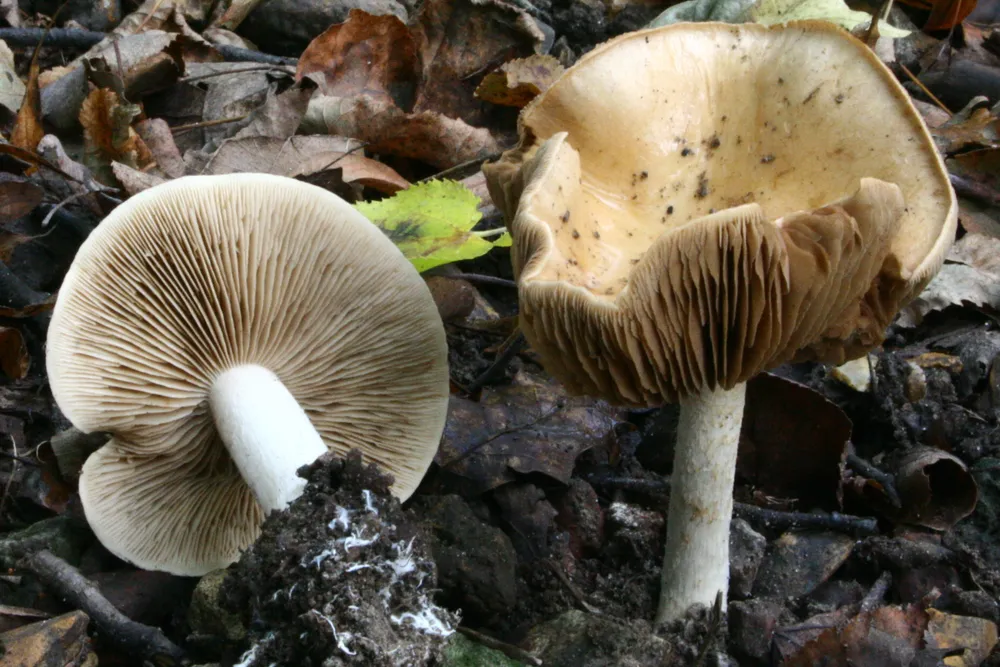
PoisonpieHebeloma crustuliniforme
Expert-verifiedUpdated June 13, 2026
Passport
- Edibility
- Inedible
- Season
- Aug — Nov
- Hymenophore
- Gilled
- Cap color
- Cream
- Size
- Medium (5–15 cm)
- Smell
- Radish-like
- Reviewed
- Yes ✓
Quick answers
Where to look?
Conifer forest, Deciduous forest, Mixed forest
When does it appear?
Aug — Nov
Active months: August, September, October, November.
How to recognize it? Three signs
- Cap color: Cream, Yellow, Brown
- Cap shape: Convex
- Smell: Radish-like
Fruiting season
August – November
Description
The Poisonpie is a common woodland mushroom with a deceptive look. A sandy-cream hemispherical cap with a distinctive sticky (viscid) sheen, reddish-brown gills with “droplets” of moisture in young specimens, and a stem with a thickened base. It looks “edible” enough to fool an inexperienced forager.
This is an inedible mushroom. Old Soviet field guides sometimes listed it as conditionally edible, but modern mycology has abandoned that view — the flesh is bitter with a strong radish smell, and toxic compounds that cause stomach upsets have been recorded in some species of the genus Hebeloma. It's safer to walk past.
In Ukraine it grows throughout the forest zone — in deciduous, coniferous and mixed forests, in groups under trees. It forms mycorrhiza with various trees (birch, oak, pine, spruce). The season is August–November, peaking in September–October. It's often found at forest edges and in young plantations.
Cap
Cap 4-10 cm, hemispherical at first, then flat-convex with a broad umbo. Color sandy yellow to creamy brown, darker in the center. Surface sticky (hence the Ukrainian name, “sticky hebeloma”) — distinctly slimy in wet weather, glossy in dry weather, as if varnished.
Hymenophore
Gilled hymenophore. Gills crowded, notched-adnate to the stem. White at first, turning reddish brown with age from the color of the spores. Young mushrooms form distinctive “droplets” of moisture on the gills — a diagnostic feature of the genus Hebeloma. Spore print rusty brown.
Stem
Stem 3-10 cm tall, 1-1.5 cm thick, often with a club-shaped, thickened base. Color white, yellowing with age, especially near the bottom. Surface covered with a fine white mealy bloom. No ring.
Flesh
The flesh is white or creamy, yellowing slightly in old mushrooms. Doesn't change color when cut. Texture firm but not springy.
Smell
distinct radish smell — the key diagnostic feature. Some authors describe it as “rotting radish.” Taste bitterish, unpleasant. Don't taste it raw — it's mildly toxic.
Lookalikes

Related species
Mushrooms of the same genus and habitat — to study side by side and never mix up.
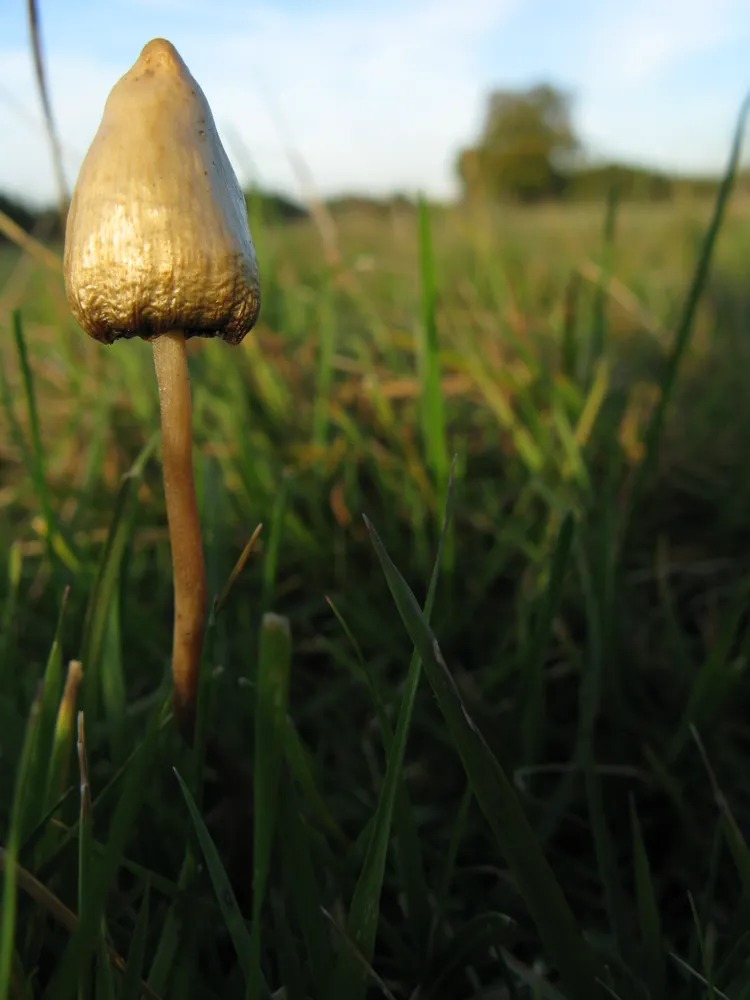
Liberty cap
Psilocybe semilanceata
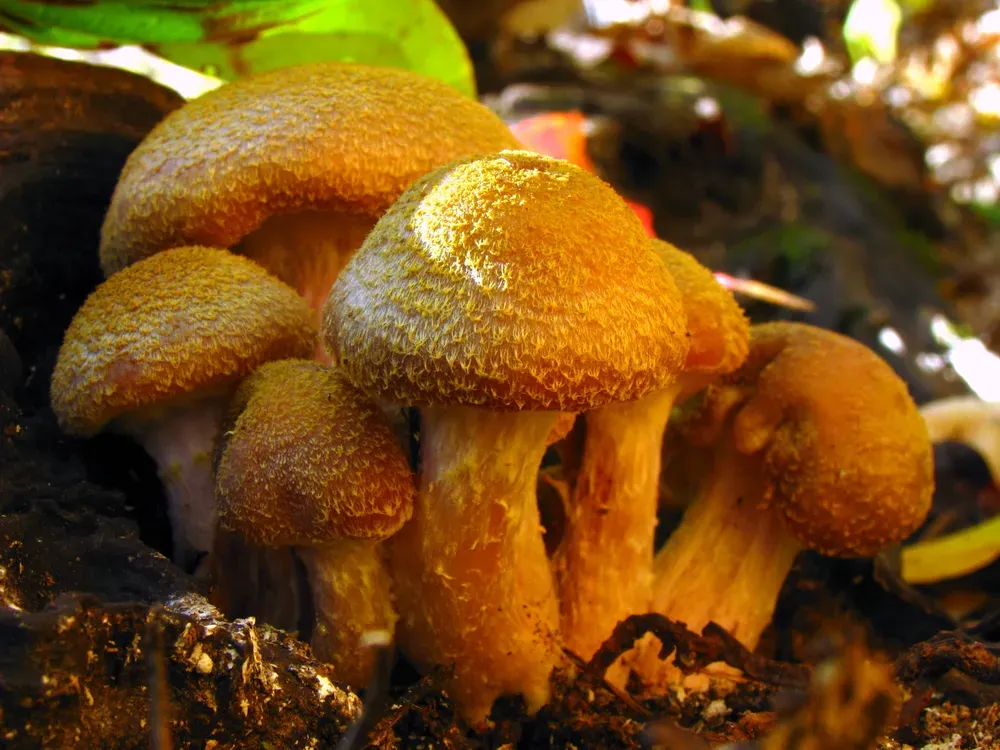
Bulbous honey fungus
Armillaria gallica
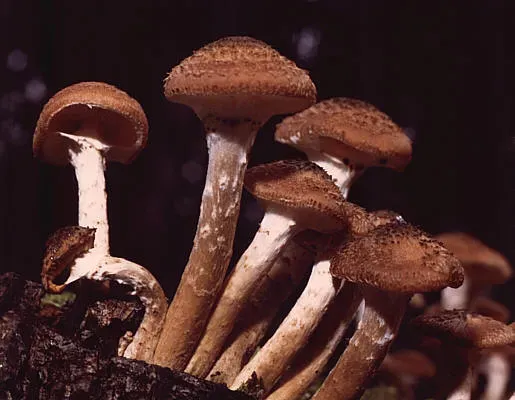
Dark honey fungus
Armillaria ostoyae
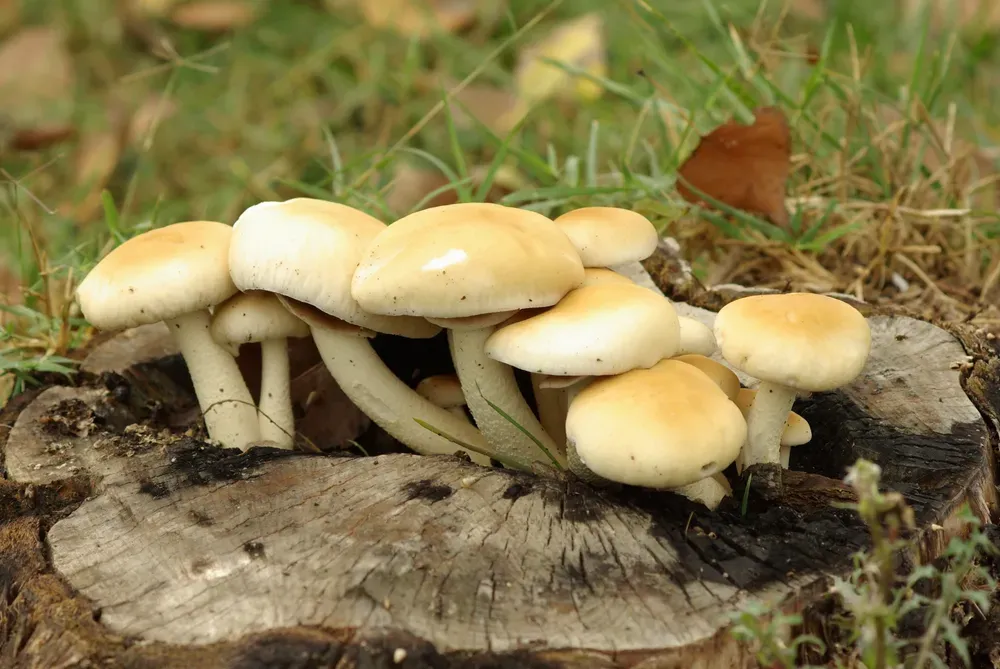
Poplar fieldcap
Cyclocybe aegerita
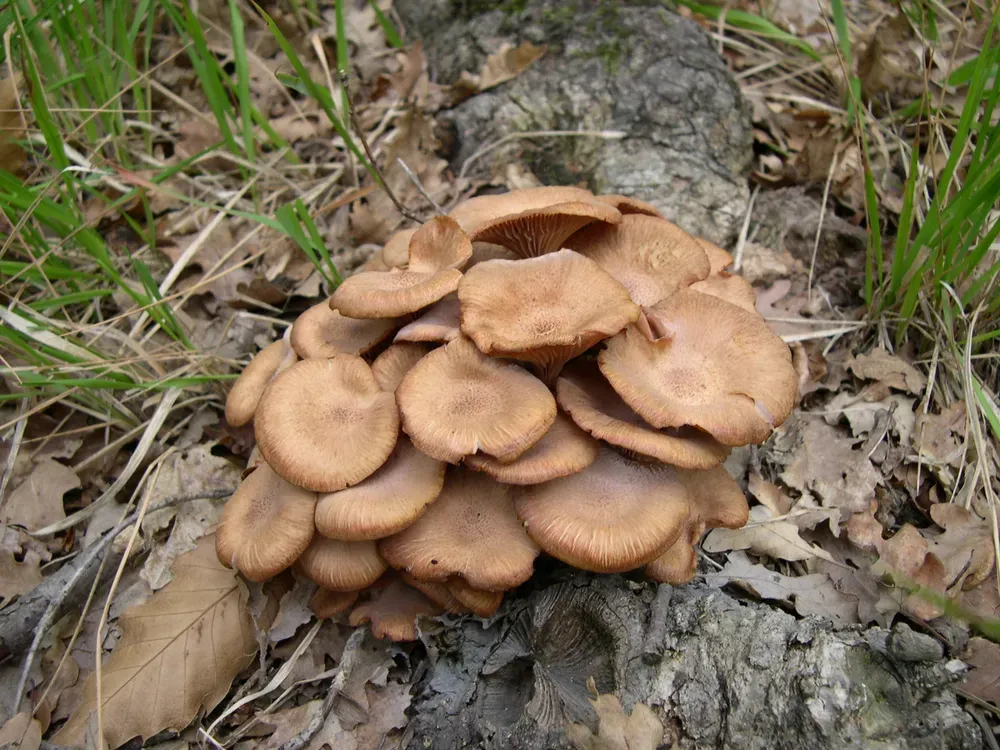
Ringless honey fungus
Desarmillaria tabescens
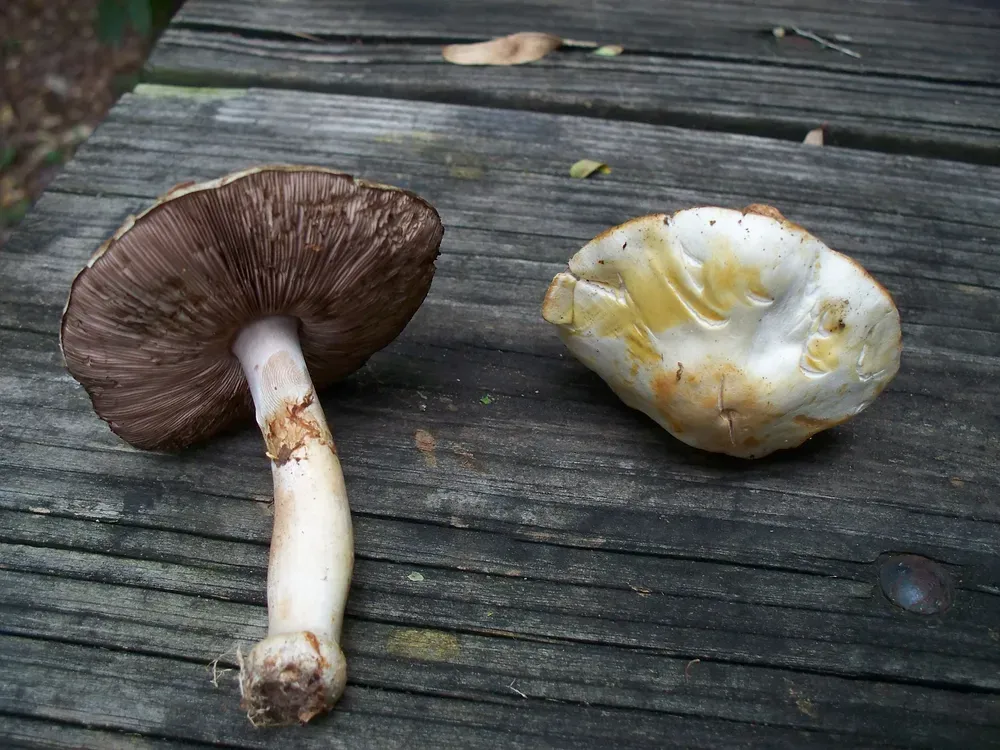
Agaricus abruptibulbus
Agaricus haemorrhoidarius
Agaricus haemorroidarius
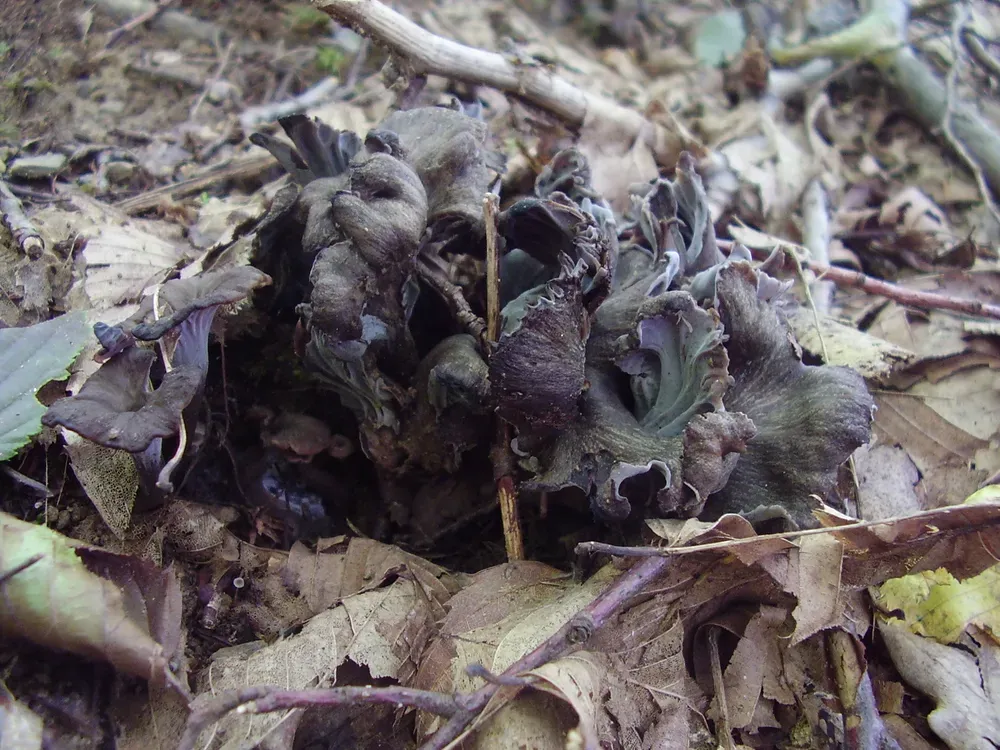
Ashen chanterelle
Cantharellus cinereus
Frequently asked questions
Can you eat it?
No. This is an inedible mushroom with bitter flesh and an unpleasant radish smell. Toxic compounds that cause gastroenteritis have been recorded in the genus Hebeloma. It's safer to avoid it.
But old field guides say it's conditionally edible?
Yes, Soviet field guides from the 1970s sometimes said so. Modern mycology has moved on: the bitter taste doesn't go away with cooking, and the risk of poisoning is real. Don't trust old sources on edibility — science has moved forward.
Where should you look for it?
Don't go looking for it — this isn't the mushroom you want. But if you come across it: it grows in deciduous, coniferous and mixed forests, in groups under trees (birch, oak, pine, spruce). Often at forest edges, in young plantations, on soil covered with fallen leaves.
Which regions of Ukraine is it found in?
Throughout the forest zone and the Forest-Steppe of Ukraine — it's a background species. Regularly recorded in the Carpathians, Polissia, Prykarpattia and the Forest-Steppe. In the steppe and Crimea it's less common — there are fewer suitable soils there.
When does it appear?
August–November. Peak fruiting is late September to mid-October, especially after good autumn rains. In a long, warm autumn it can fruit until the first hard frosts.
Does it ever appear in spring?
Very rarely. It's an autumn species with a long season, but spring finds are isolated and irregular. If in May–June you see something similar, it's more likely another sandy-yellow mushroom, not a Hebeloma.
What is it confused with?
The most dangerous mix-ups are with the Clustered domecap (Lyophyllum decastes), some honey fungus, and young boletes. Key features of Hebeloma: sticky cap, distinct radish smell, droplets of moisture on young gills, rusty-brown spore print. If even one of them is present — DON'T pick it.
How do you tell it from other Hebeloma species?
The genus Hebeloma has about 150 species, and exact identification often requires a microscope. For practical purposes one thing matters: ALL Hebeloma smell of radish and ALL are unsuitable for eating (from inedible to poisonous). If you notice a radish smell + a sticky cap + reddish gills, walk past — the species doesn't matter.
Is Poisonpie edible or poisonous?
Does Poisonpie have gills or pores?
What does the cap of Poisonpie look like?
What does the stem of Poisonpie look like?
Sources
- [1]Вікіпедія (українська)
- [2]Атлас грибів України, Зеров Д.К. (1979)
- [3]MycoBank Database
- [4]Index Fungorum
- [5]GBIF
- [6]iNaturalist Ukraine