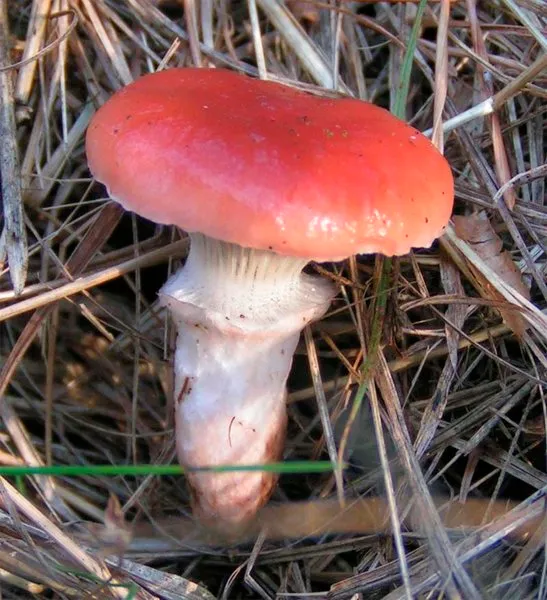
Rosy spikeGomphidius roseus
Expert-verifiedUpdated June 13, 2026
Passport
- Edibility
- Edible
- Season
- Aug — Oct
- Hymenophore
- Gilled
- Cap color
- Pink
- Size
- Small (up to 5 cm)
- Smell
- Pleasant
- Reviewed
- Yes ✓
Quick answers
Where to look?
Conifer forest, Mixed forest
When does it appear?
Aug — Oct
Active months: August, September, October.
How to recognize it? Three signs
- Cap color: Pink, Red
- Cap shape: Convex
- Smell: Pleasant
Fruiting season
August – October
Description
The rosy spike (Gomphidius roseus) is the prettiest and most distinctive of Ukraine's three spikes: its bright pink or coral-pink slimy cap makes it stand out from a long way off. No other mushroom of spruce and larch woods has such a clean pink cap paired with decurrent white gills. It works like a compass, too: if you spot a rosy spike, there is almost certainly a European larch (Larix decidua) nearby, which it is tied to through its partnership with the larch bolete (Suillus grevillei).
Edible and quite tasty. You must peel the cap skin: it is very slimy and turns rubbery when cooked. Once peeled, the flesh is tender and fragrant. Good for frying and pickling. Like all spikes, it makes a slightly cloudy broth in soup because of leftover slime, so it is better left out of soups. It goes beautifully in the same pan with the larch bolete, which it grows right next to.
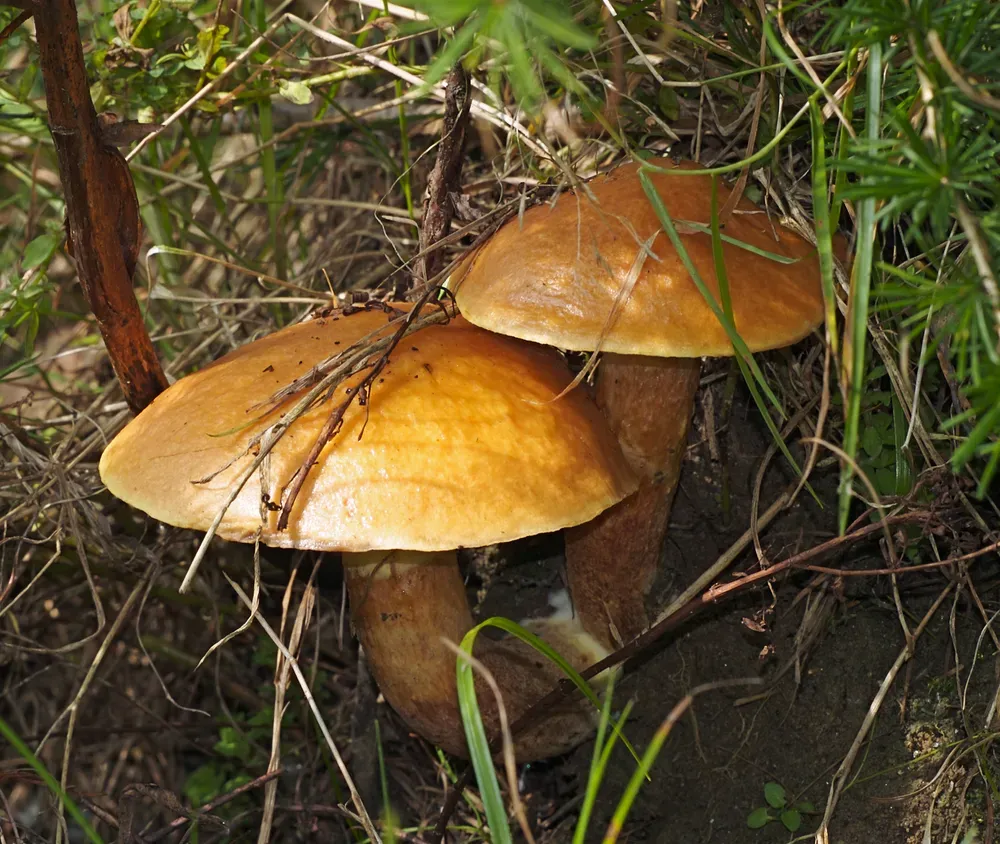
In Ukraine it is found wherever there is European larch or other larch species: mostly in plantations in the Carpathians and the Carpathian foothills, in parks and botanical gardens, and more rarely in natural high-mountain larch stands. An epiparasite on the mycelium of the larch bolete (Suillus grevillei): the two mushrooms practically always grow side by side. The season runs August to October, peaking in September. It often grows in groups of 3-10 fruiting bodies in larch litter.
Cap
Cap 2-6 cm across; hemispherical with an inrolled margin when young, later convex to flat with a shallow central depression. Color bright pink, coral-pink, salmon-pink: distinctive and unmatched among the spikes. In old mushrooms it fades to pale pink or ochre-pink. Surface very slimy, sticky; the skin peels off easily.
Hymenophore
Gilled hymenophore; gills decurrent, distant, waxy, thick. In young mushrooms whitish, later darkening to gray-black, almost black because of the dark spore print. Spore print dark brown to black. Decurrent gills plus darkening are the diagnostic features of the genus Gomphidius.
Stem
Stem 3-7 cm tall, 0.8-1.5 cm thick, cylindrical, thinner and shorter than in other spikes. Color whitish to pale pink at the top, more intensely pink lower down. A ring zone from the veil in the upper part, faint. The stem base often has whitish mycelium.
Flesh
Flesh thin, whitish to pale pink, soft. When cut it turns slightly wine-pink. Smell faint, pleasantly mushroomy.
Smell
Faint, pleasantly mushroomy, with no distinctive notes.
Lookalikes
.webp)
Related species
Mushrooms of the same genus and habitat — to study side by side and never mix up.
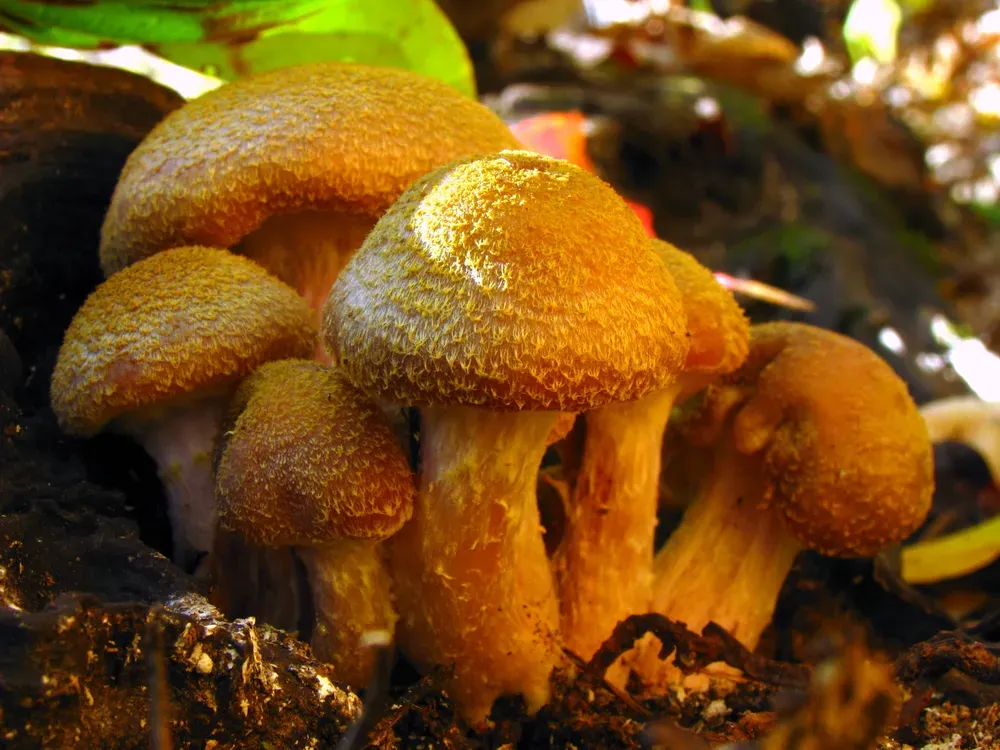
Bulbous honey fungus
Armillaria gallica
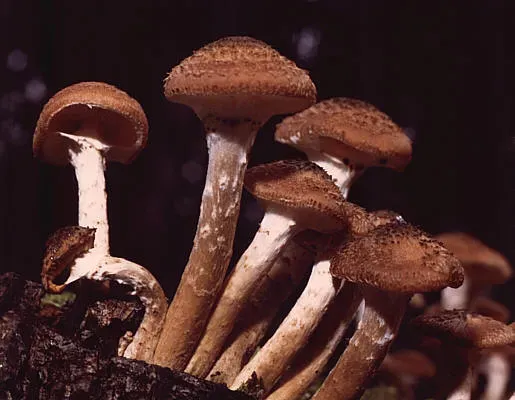
Dark honey fungus
Armillaria ostoyae
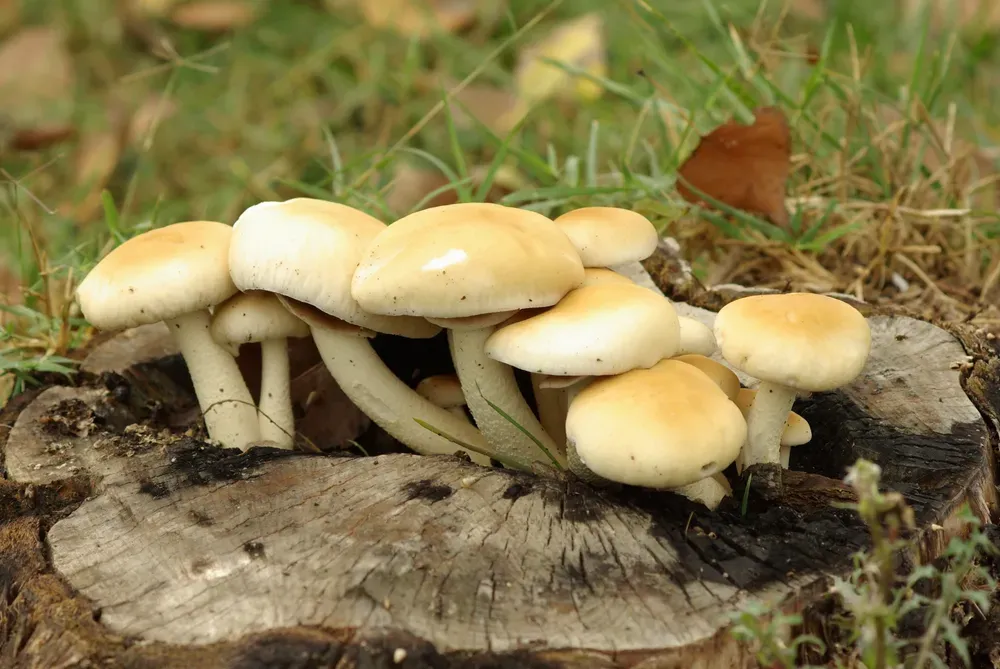
Poplar fieldcap
Cyclocybe aegerita
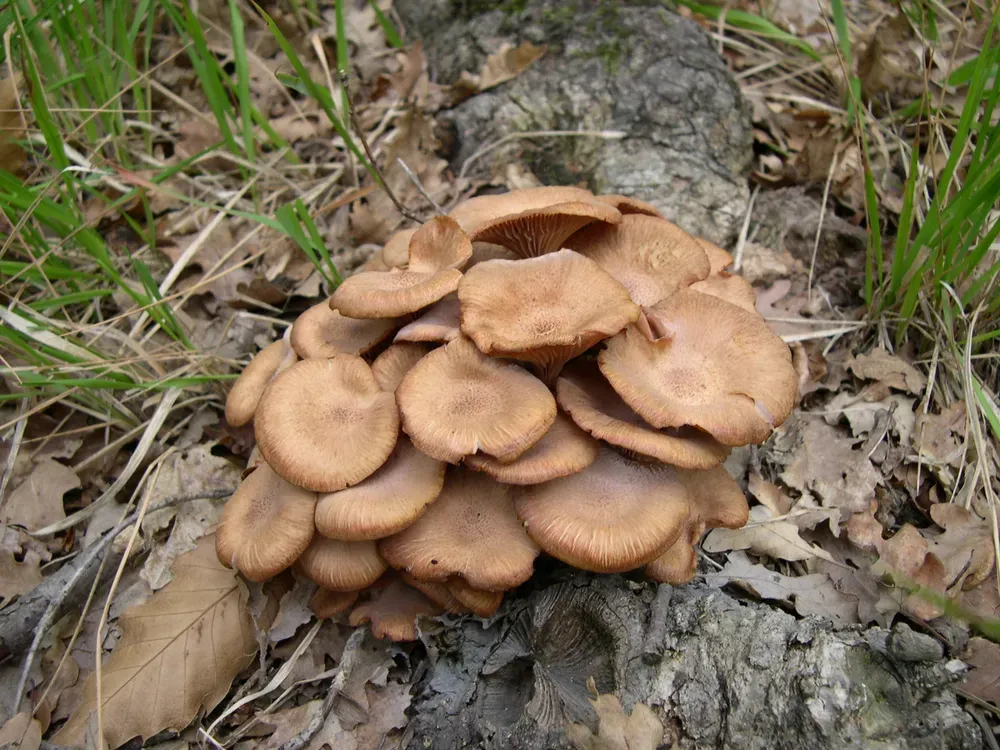
Ringless honey fungus
Desarmillaria tabescens
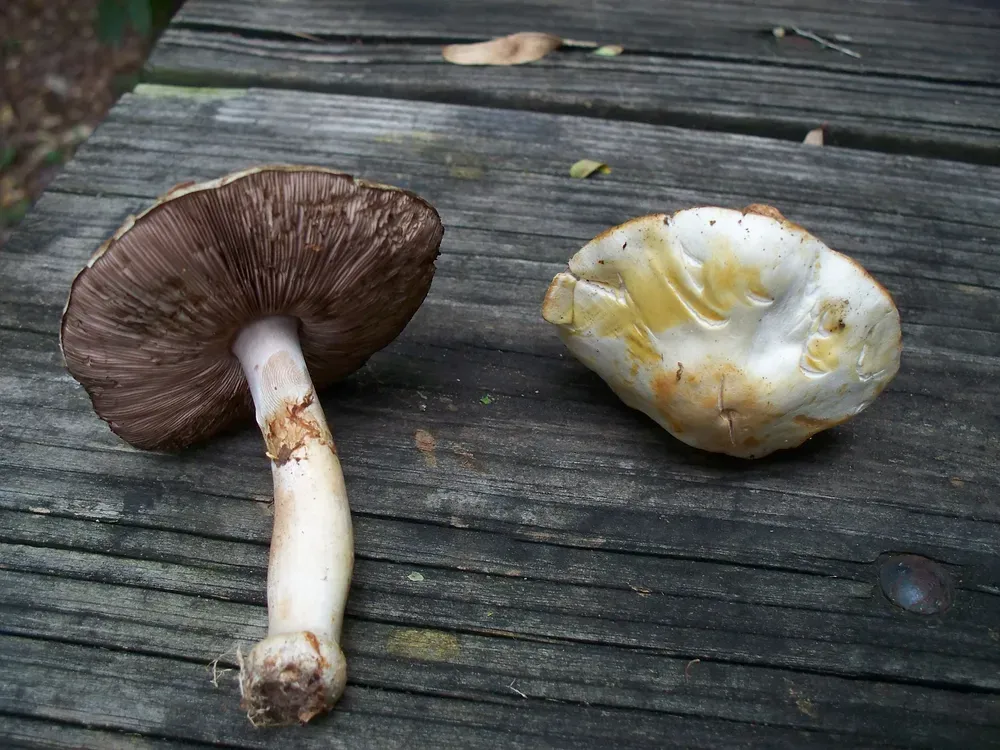
Agaricus abruptibulbus
Agaricus haemorrhoidarius
Agaricus haemorroidarius
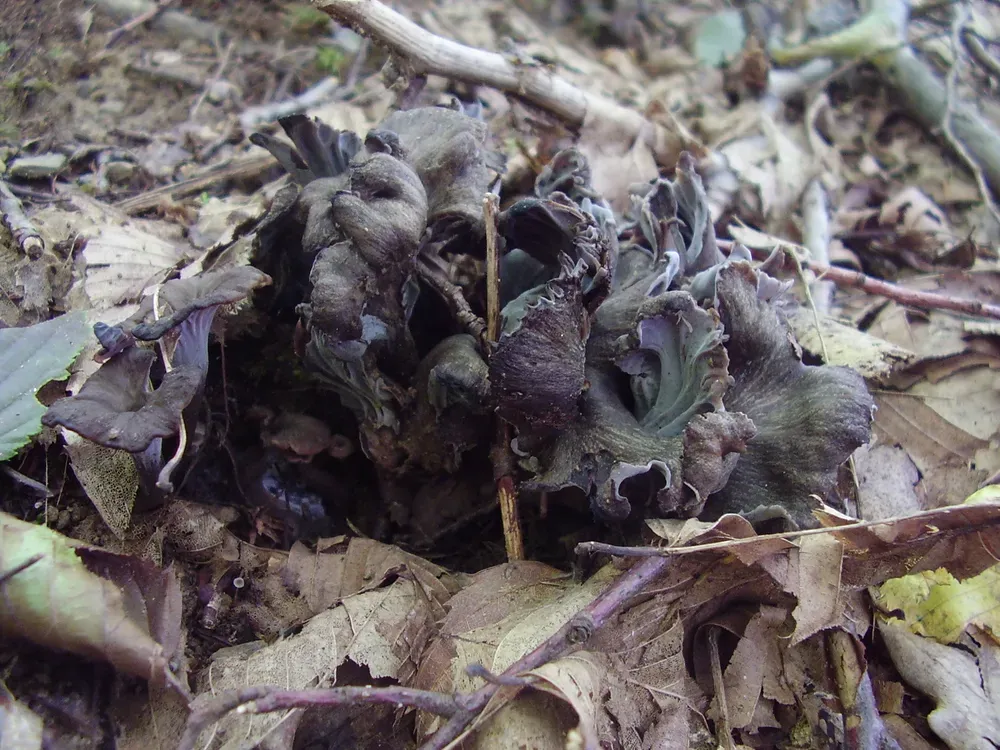
Ashen chanterelle
Cantharellus cinereus
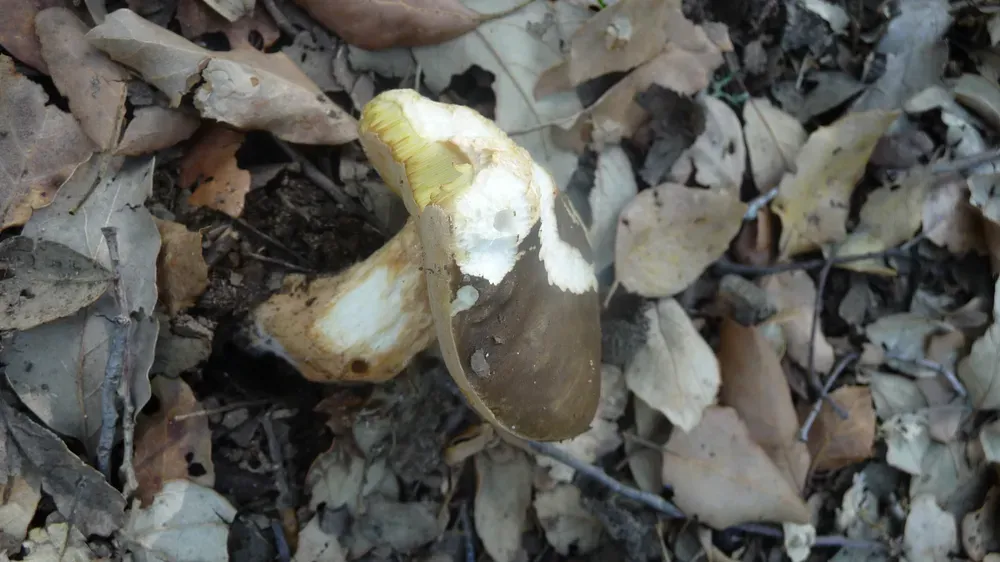
Blushing bolete
Leccinum roseofractum
Frequently asked questions
Is it safe to eat?
Yes, without restrictions. Always peel the slimy cap skin: it turns rubbery when cooked. Young mushrooms are best; in old ones the flesh becomes stringy.
Does it have dangerous lookalikes?
No serious ones. It is the only Ukrainian mushroom with such a bright pink, slimy cap. In theory you could mistake it for a young crimson waxcap (Hygrocybe punicea), also pinkish red, but that one is drier and lacks decurrent gills. Or for young pink-gilled Tricholoma (knights), which are also edible. The mistake is not critical.
Is it the same mushroom as the lilac bonnet?
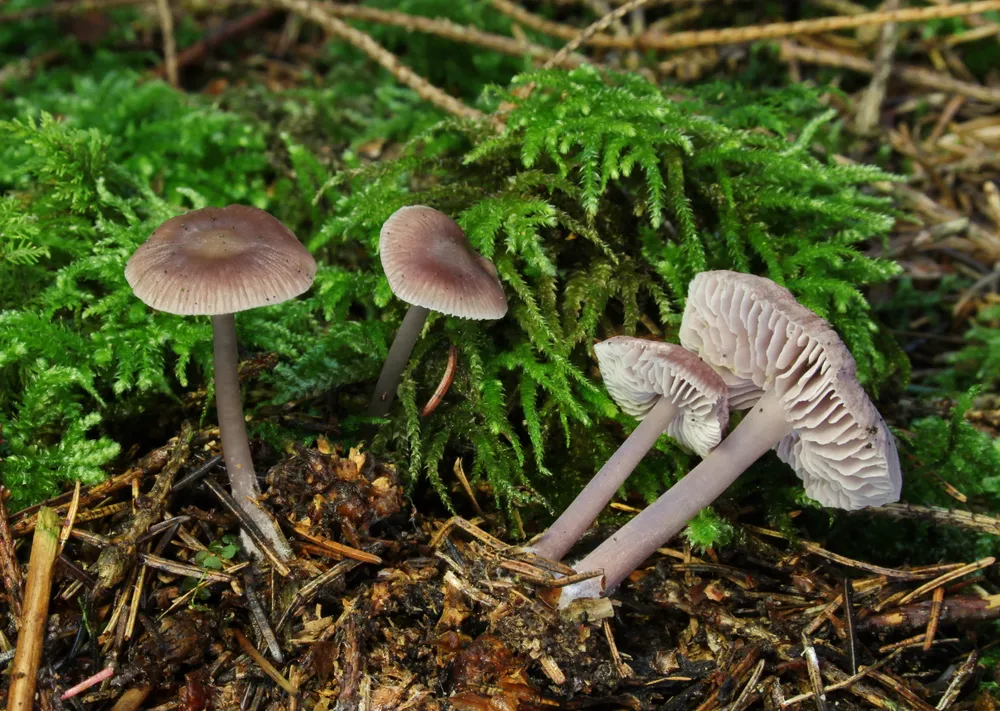
No, they are completely different. The lilac bonnet (Mycena pura) is poisonous, small (2-6 cm) and fragile, with a thin stem, a lilac-violet cap with radial grooves and a distinct radish smell. The rosy spike is edible and fleshy, with a thicker stem, a bright coral-pink slimy cap, decurrent gills (the bonnet's are notched), and no radish smell. If in doubt, look at the gills: in the spike they run down the stem, in the bonnet they don't.
Where should you look for it?
In larch woods and plantations, with European larch (Larix decidua) and other larch species. In the wild in Ukraine, larch grows mainly in the Carpathians, and elsewhere as an introduced tree in plantations. Always next to the larch bolete (Suillus grevillei): the two mushrooms live in partnership. If you've found a larch bolete, look around for the rosy spike.
Which regions of Ukraine is it found in?
The Carpathians (Zakarpattia, Lviv and Ivano-Frankivsk regions, in larch stands), the Carpathian foothills. In botanical gardens, arboretums and planted larch stands across the country: less often, but possible. Finding it is never random: there has to be a larch nearby.
When should you look for it?
August to October, peaking in September. In wet Carpathian autumns, right up to the first frosts.
How do you tell it apart from other spikes?
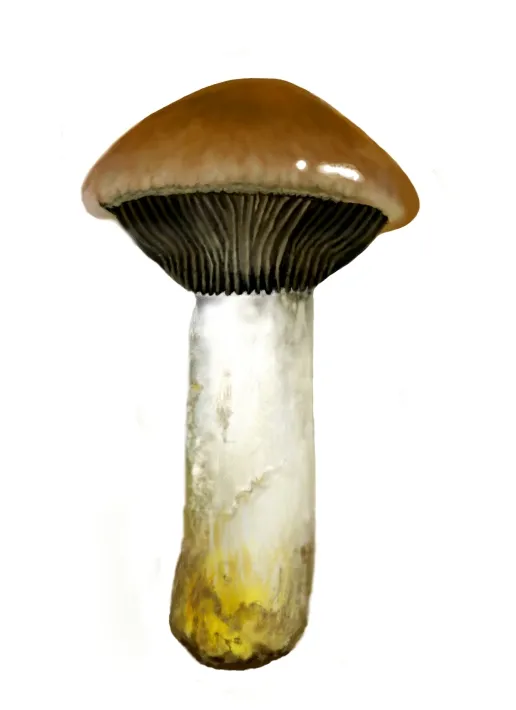
By cap color and tree. Rosy: bright coral-pink, with larch. Slimy: dark gray-brown, with spruce. Copper: coppery red, with pine. All three are edible, but the slimy spike is the most delicate in the kitchen and the rosy one is the prettiest.
How do you cook it?
Peel the slimy cap skin. Rinse. Fry it together with larch boletes (they grew side by side, and the flavors complement each other): the best dish. Pickle it after boiling for 10 min. Drying works less well, as the flesh is soft. Freezing: always boil it first.
Is Rosy spike edible or poisonous?
Does Rosy spike have gills or pores?
What does the cap of Rosy spike look like?
What does the stem of Rosy spike look like?
Sources
- [1]Вікіпедія (українська)
- [2]Атлас грибів України, Зеров Д.К. (1979)
- [3]MycoBank Database
- [4]Index Fungorum
- [5]GBIF
- [6]iNaturalist Ukraine