.webp)
Copper spikeChroogomphus rutilus
Expert-verifiedUpdated October 3, 2026
Passport
- Edibility
- Edible
- Season
- Aug — Nov
- Hymenophore
- Gilled
- Cap color
- Brown
- Size
- Medium (5–15 cm)
- Smell
- Pleasant
- Reviewed
- Yes ✓
Quick answers
Where to look?
Conifer forest, Mixed forest
When does it appear?
Aug — Nov
Active months: August, September, October, November.
How to recognize it? Three signs
- Cap color: Brown, Orange, Red, Violet
- Cap shape: Convex
- Smell: Pleasant
Fruiting season
August – November
Description
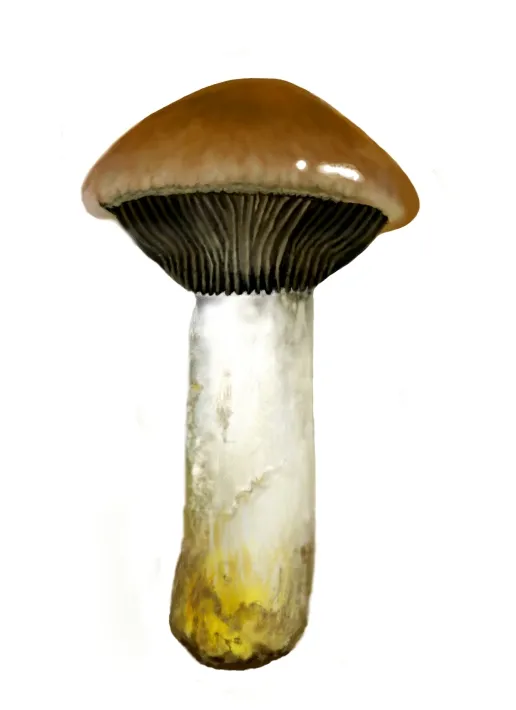
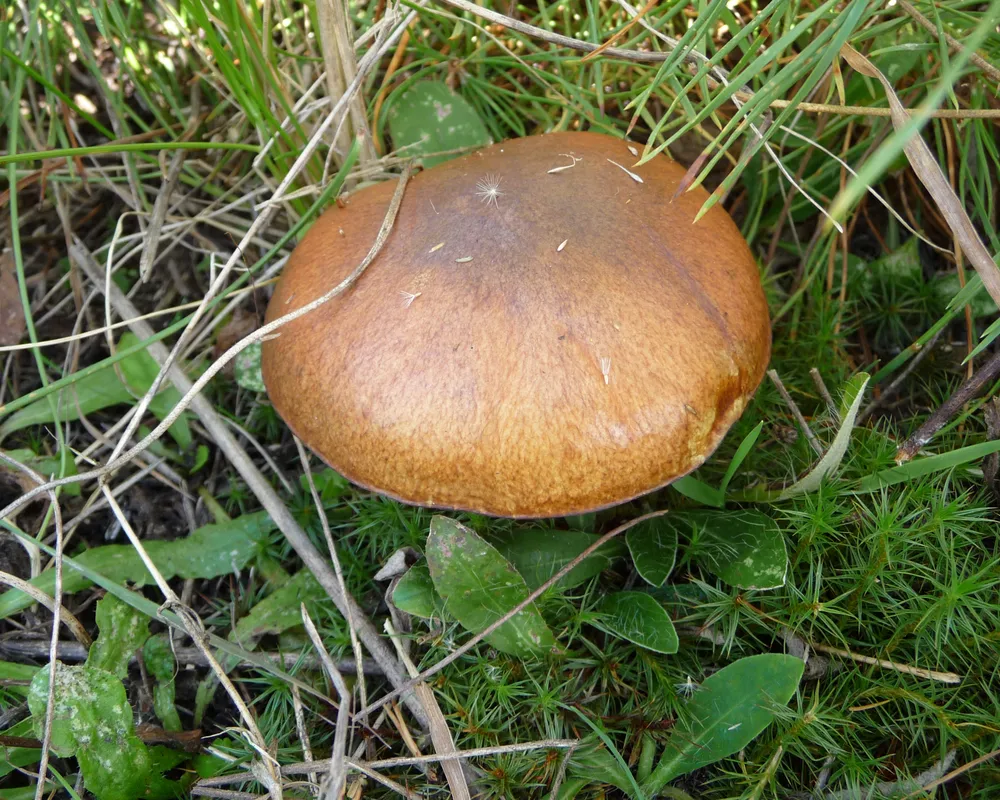
The copper spike (Chroogomphus rutilus, called Gomphidius rutilus in some literature) has the warmest color of all Ukraine's spikes: its cap is coppery reddish brown with a violet or wine tint, visible from afar in an autumn pine wood as a rusty patch in the moss. The mushroom itself is fleshy and fragrant, with a thick stem that tapers to a point. Its Latin name rutilus means "red, golden," a nod to the cap color.
Edible and decent in the kitchen. Unlike other spikes, the copper spike's skin is not overly slimy: almost dry in dry weather, only slightly sticky in wet weather. It's still best to peel it, but it's not as much of a chore as with the slimy spike. The flesh is meaty with a faint nutty taste, and when cooked it darkens to violet or wine-red: a normal reaction, not a sign of spoilage. Good for frying, pickling and freezing.
In Ukraine it grows in pine forests: Polissia, the Carpathians, the Carpathian foothills, and pine plantations in the forest-steppe and steppe. A mycorrhizal partner of Scots pine (Pinus sylvestris), although the exact biology of the relationship is complicated: some sources describe it as an epiparasite on the mycorrhiza of Suillus. The season runs August to November, peaking in September-October. It often grows in groups of 3-15 fruiting bodies in mossy pine woods.
Cap
Cap 4-10 cm across; hemispherical with an inrolled margin when young, later convex with a low central bump. Color coppery reddish brown, brick-colored, with a violet-wine tint, darker and richer when young, fading to brownish ochre with age. Surface slightly slimy in wet weather, dry in dry weather; the skin peels off.
Hymenophore
Gilled hymenophore; gills decurrent, distant, waxy, thick. In young mushrooms yellowish to ochre, later darkening to gray-violet-black because of the dark spore print. Spore print dark brown to black. Decurrent gills plus darkening are the diagnostic features of the genus Chroogomphus / Gomphidius.
Stem
Stem 5-10 cm tall, 1-2 cm thick, thick, fleshy, tapering to a point at the bottom (narrowed at the base). Color yellow-ochre in the upper part, coppery red lower down, matching the cap. Surface with fine lengthwise fibers. A ring zone from the veil in the upper part, faint; may disappear in old mushrooms.
Flesh
Flesh fleshy, yellow-ochre in the cap, coppery red in the lower stem. When cut it darkens to violet or wine-red: this is a normal reaction of the species, not a sign of poison. Smell faint, pleasantly mushroomy.
Smell
Faint, pleasantly mushroomy, with no distinctive notes.
›Scientific synonyms (5)
Agaricus rutilus Schaeff. (1774), Agaricus rufescens J.F.Gmel. (1792), Cortinarius rutilus (Schaeff.) Gray (1821), Gomphidius rutilus (Schaeff.) S.Lundell (1937), Gomphidius viscidus (L.:Fr.) Fr. (1838)
Lookalikes
Related species
Mushrooms of the same genus and habitat — to study side by side and never mix up.
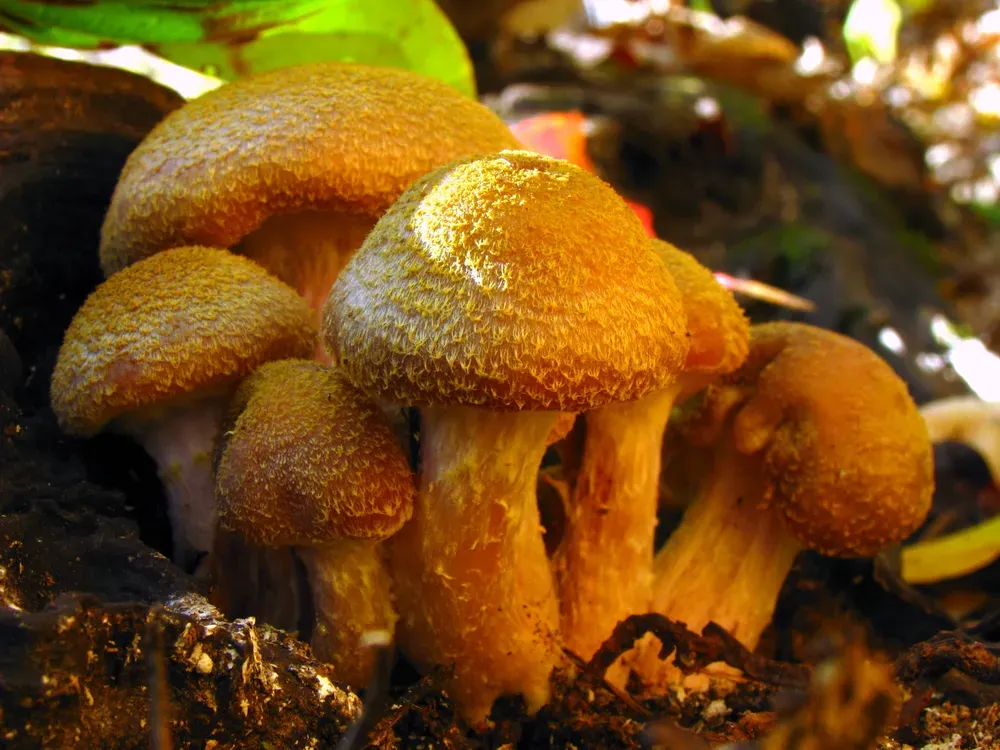
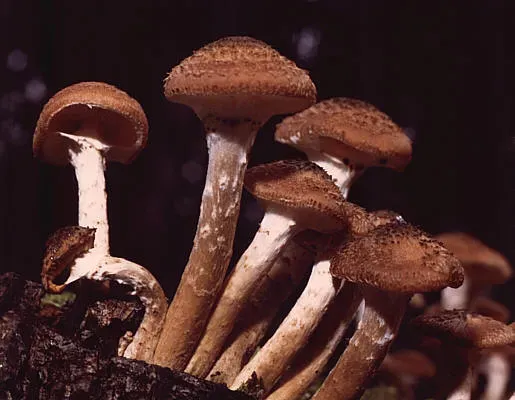
Bulbous honey fungus
Armillaria gallica
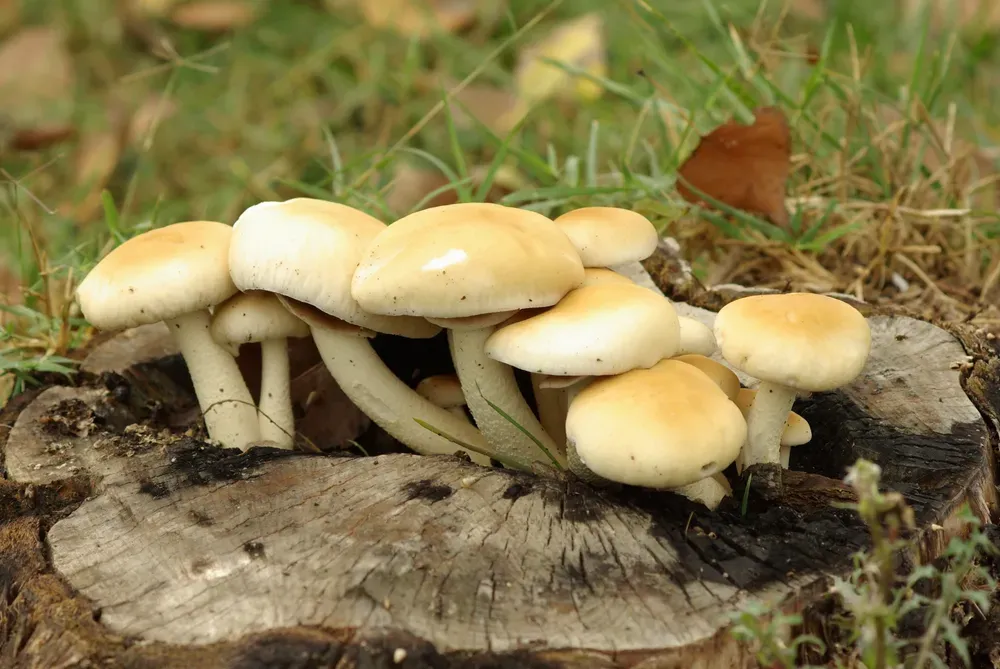
Dark honey fungus
Armillaria ostoyae
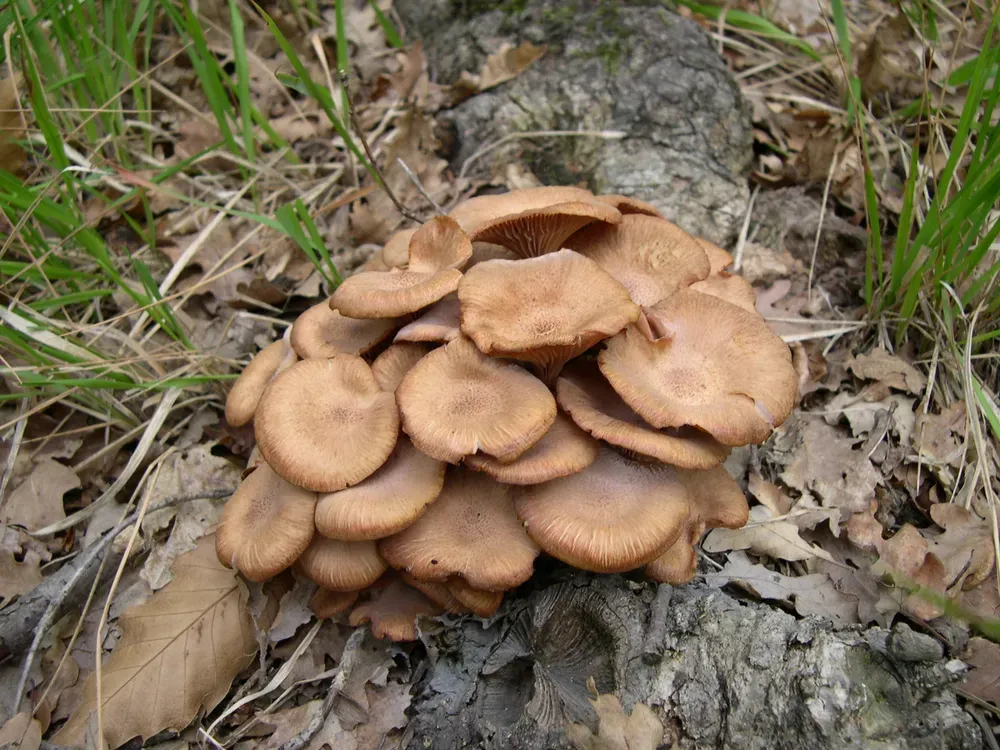
Poplar fieldcap
Cyclocybe aegerita
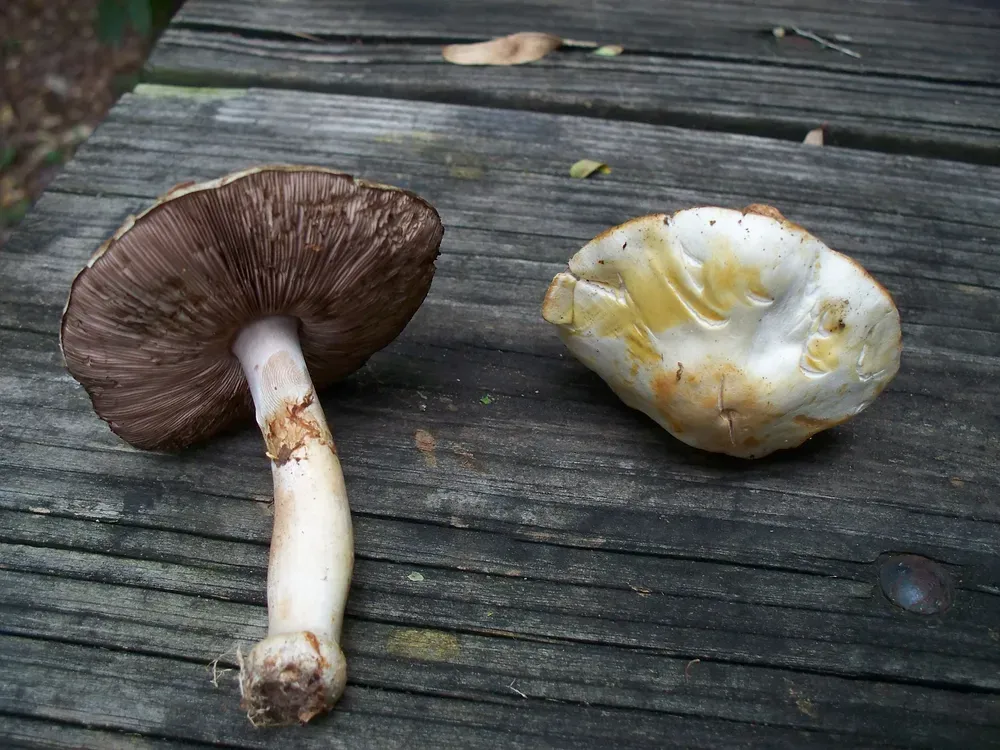
Ringless honey fungus
Desarmillaria tabescens
Agaricus abruptibulbus
Agaricus haemorrhoidarius
Agaricus haemorroidarius
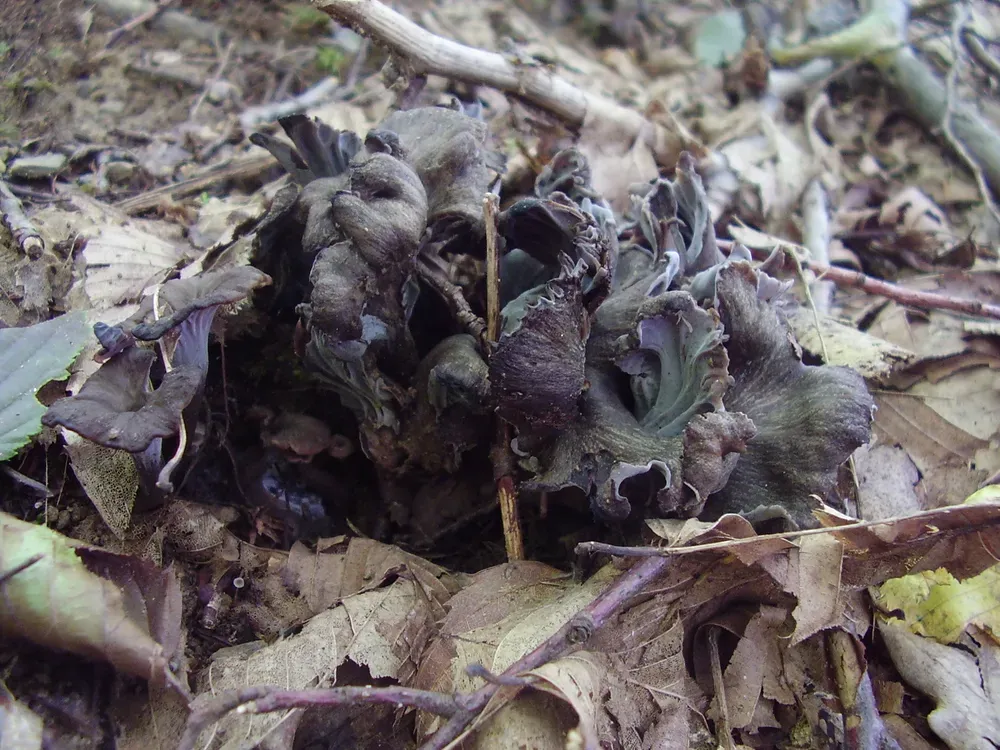
Ashen chanterelle
Cantharellus cinereus
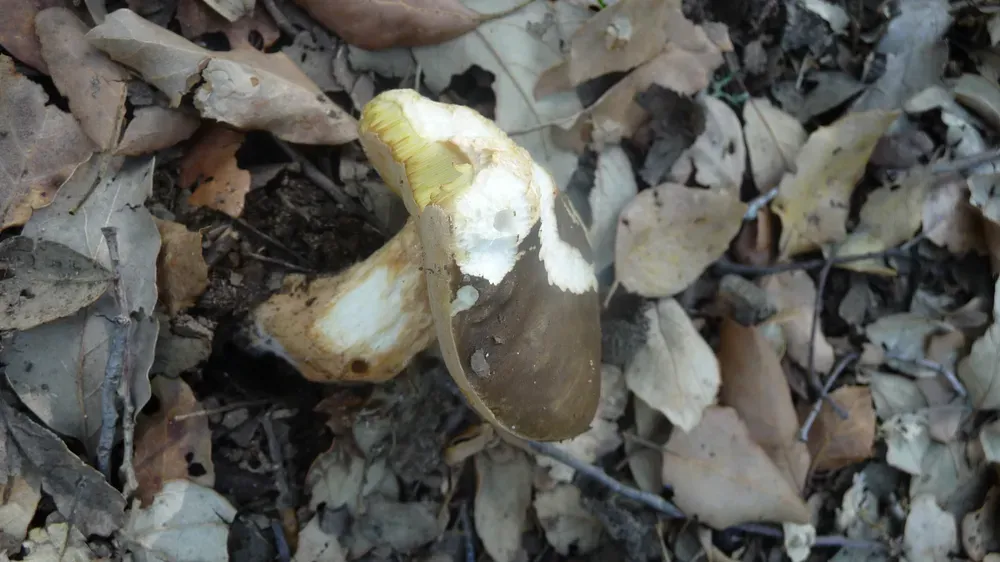
Blushing bolete
Leccinum roseofractum
Frequently asked questions
Is it safe to eat?
Yes, without restrictions. You can peel the skin or leave it on: in this species it isn't nearly as slimy as in the slimy spike. Young mushrooms are best; in old ones the flesh becomes stringy.
Why does the flesh turn violet?
It's a normal oxidation reaction of Chroogomphus pigments on contact with air. The darkening often worries beginners, but it is harmless: the flesh turns violet, it doesn't "blacken with signs of rot." The color may stay in the finished dish, which makes stewed spikes a slightly unusual violet. Not poisonous.
Does it have dangerous lookalikes?
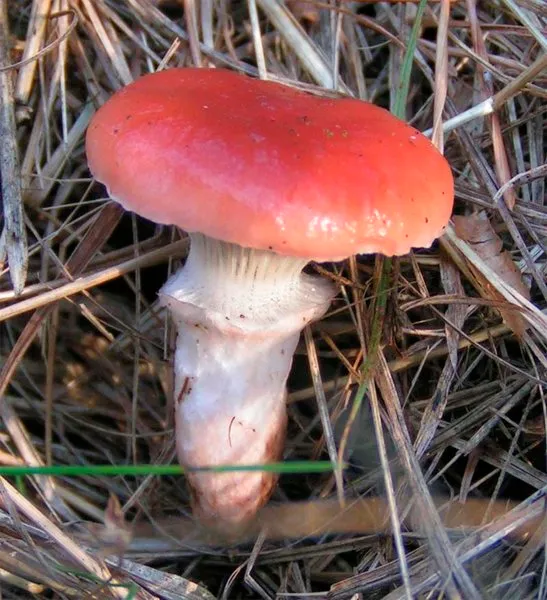
No serious ones. Its closest relatives (the other spikes) are all edible. In theory you could mistake it for young yellow knights (Tricholoma flavovirens, T. equestre), but they have yellowish gills and a light yellow cap, not a reddish one. Or for reddish milk caps (Lactarius rufus, L. deliciosus), which ooze milky latex when cut. The mistake is not critical.
Where should you look for it?
In pine woods and mixed woods with pine, mostly in mossy pine forests with sparse grass. It likes sandy or sandy-loam soil. It often grows near the slippery jack (Suillus luteus) and Xerocomus boletes, as an epiparasite on their mycorrhiza. If you've found a cluster of slippery jacks, look around for a copper spike.
Which regions of Ukraine is it found in?
Throughout the pine zone: Polissia (especially plentiful in the Rivne, Volyn, Zhytomyr and Chernihiv regions), the Carpathians and Carpathian foothills in pine stands, the forest-steppe in planted pine woods, and the northern steppe in pine shelterbelts.
When should you look for it?
August to November, peaking in September-October. It tolerates the first light frosts and often fruits when most summer mushrooms are already gone.
How do you tell it apart from other spikes?
The copper spike: coppery reddish cap, pine, skin barely slimy. The slimy spike (Gomphidius glutinosus): dark gray-brown cap, spruce, very slimy. The rosy spike (Gomphidius roseus): bright pink cap, larch. All are edible; they differ in their neighboring tree and in cap color and sliminess.
How do you cook it?
Peeling the skin is optional (not critical). Fry it with onion and sour cream: a favorite. Keep in mind that the flesh may tint the dish wine-violet; that's normal and doesn't affect the taste. Pickle it after boiling for 10 min. Drying works less well, as the flesh is soft. Freezing: always boil it first, or after thawing it turns into a stringy mush.
Is Copper spike edible or poisonous?
Does Copper spike have gills or pores?
What does the cap of Copper spike look like?
What does the stem of Copper spike look like?
Sources
- [1]Вікіпедія (українська)
- [2]Атлас грибів України, Зеров Д.К. (1979)
- [3]MycoBank Database
- [4]Index Fungorum
- [5]GBIF
- [6]iNaturalist Ukraine