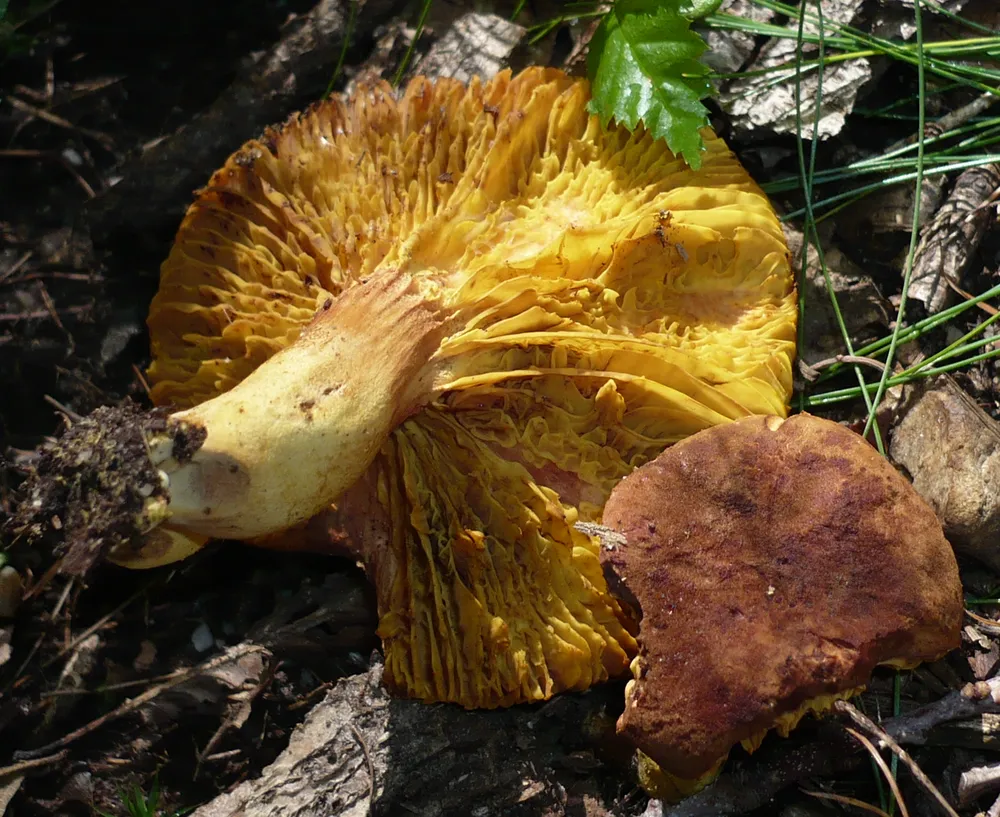
Golden gilled boletePhylloporus pelletieri
Expert-verifiedUpdated October 3, 2026
Passport
- Edibility
- Edible
- Season
- Jul — Oct
- Hymenophore
- Gilled
- Cap color
- Brown
- Size
- Medium (5–15 cm)
- Smell
- Pleasant
- Reviewed
- Yes ✓
Quick answers
Where to look?
Deciduous forest, Mixed forest
When does it appear?
Jul — Oct
Active months: July, August, September, October.
How to recognize it? Three signs
- Cap color: Brown, Red, Dark brown
- Cap shape: Convex
- Smell: Pleasant
Fruiting season
July – October
Description
The golden gilled bolete is a rare and very recognizable mushroom that “breaks” the usual logic: from the outside it is a true bolete with a velvety cap, but under the cap there are thick yellow-golden gills instead of tubes. Because of this quirk it was once placed in the bolete family (Boletaceae) as an exception, and modern molecular systematics has confirmed it — it really is a bolete with a secondarily gilled hymenophore.
The mushroom is edible and tasty, with a delicate nutty, mushroomy flavor. There is just one problem — it is very rare. In Europe it is on many regional red lists, and in Ukraine it is protected in a number of nature reserves. So picking it is generally discouraged: better to photograph it, note the coordinates and leave it to grow. If you come across a cluster, that’s a stroke of luck, but take no more than one or two specimens out of the forest.
In Ukraine, known finds come mainly from the Carpathians, Prykarpattia and western Polissia — in old beech, beech-spruce and oak forests. The season runs July–October; it appears singly or in small groups on soil, often near mossy patches under old trees.
Cap
Cap 3-8 (up to 10) cm, hemispherical at first, then convex-flattened, flat with a depressed center when mature. Chestnut brown, reddish brown to olive-brown, with a noticeable pink or wine-red tint. The surface is dry, velvety, cracking into small patches with age. The cap margin is even, often wavy.
Hymenophore
The most characteristic feature — thick, distant, golden-yellow gills running down the stem. Between the gills there are cross-veins (anastomoses) that make the hymenophore net-like and gilled, as if it were “a bolete’s attempt to grow gills.” The gills may bruise blue when pressed. Spore print yellow-olive.
Stem
Stem 3-7 cm tall, 0.5-1.5 cm thick, cylindrical or slightly thickened toward the base, solid. Same color as the cap or slightly paler — yellow-brown with a pink tint, bright yellow in the lower part. The surface is dry, finely fibrous, with no ring and no volva.
Flesh
Flesh yellowish, firm in the cap, fibrous in the stem. When cut, it gradually turns blue or blue-green, especially in the stem — a typical reaction for boletes. After a few minutes the blue fades and turns a dirty brown.
Smell
Smell faint, pleasant, mushroomy with a light fruity note. The raw flesh tastes mild, nutty and mushroomy, with no bitterness or heat.
›Scientific synonyms (4)
Agaricus pelletieri Lév. (1867), Clitocybe pelletieri (Lév.) Gillet (1874), Paxillus pelletieri (Lév.) Velenovsky (1920), Xerocomus pelletieri (Lév.) Manfr.Binder (1999)
Lookalikes
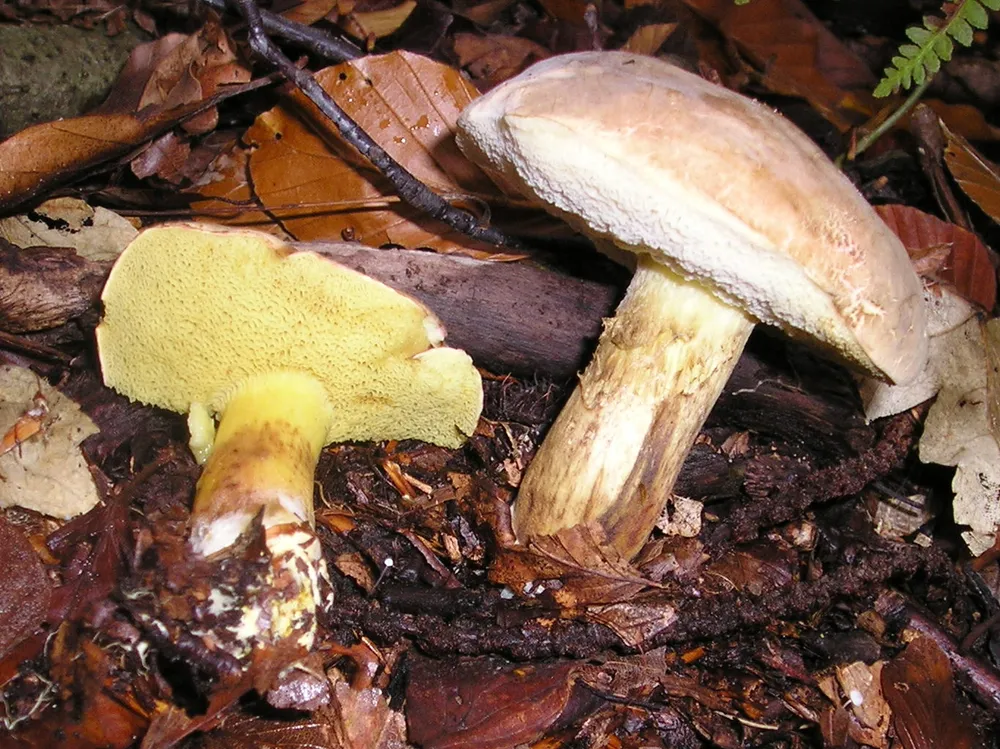
Related species
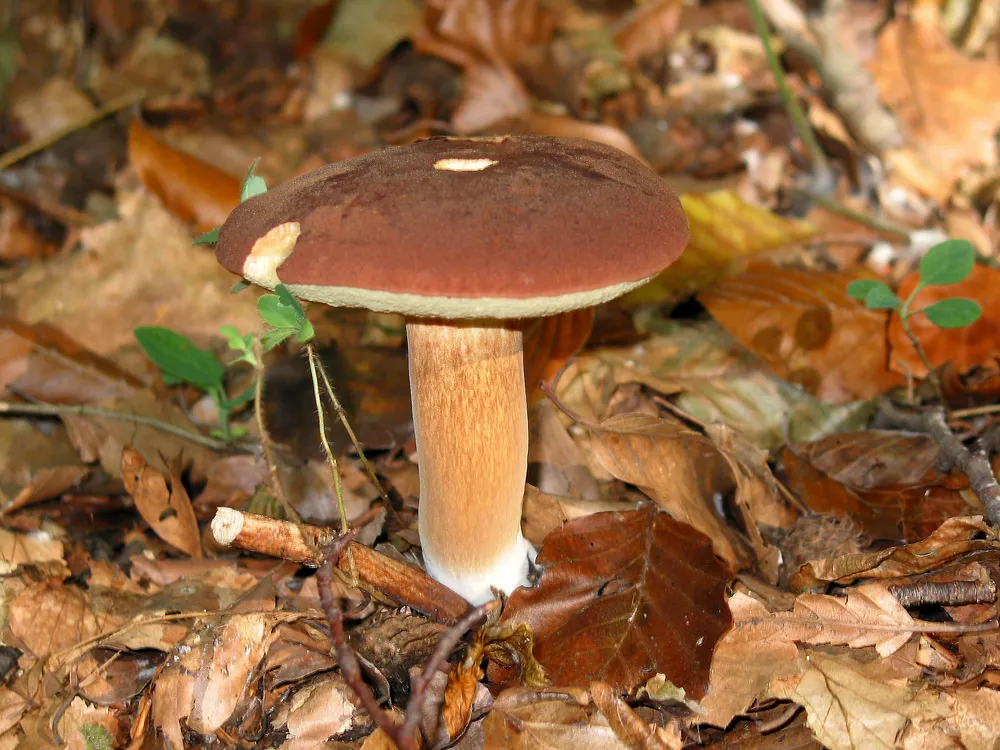
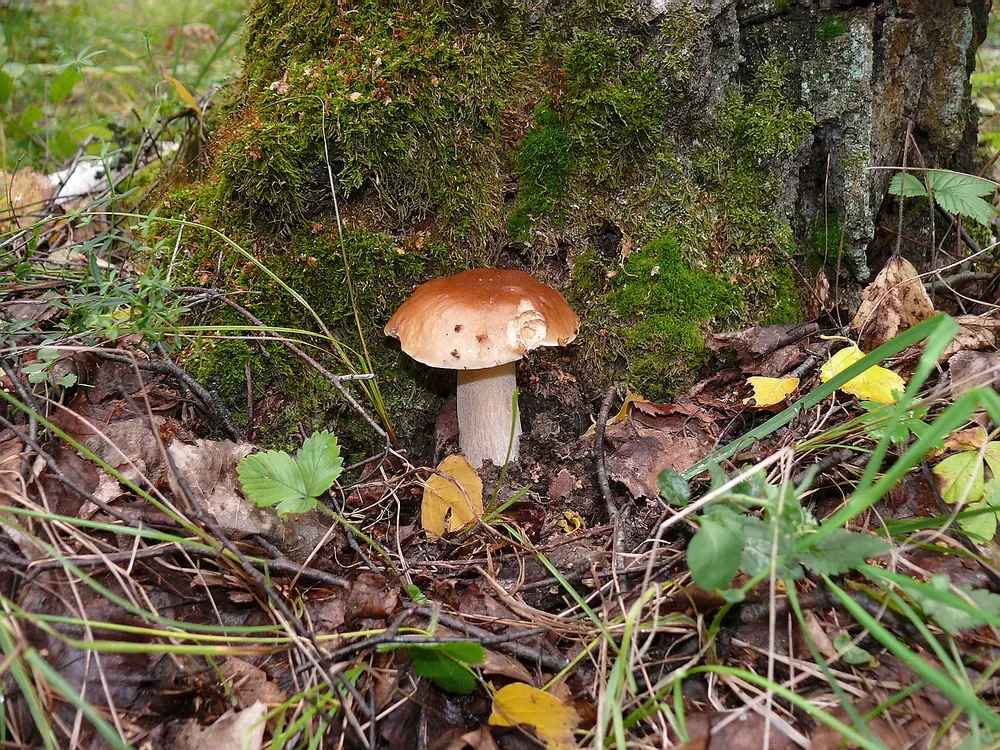
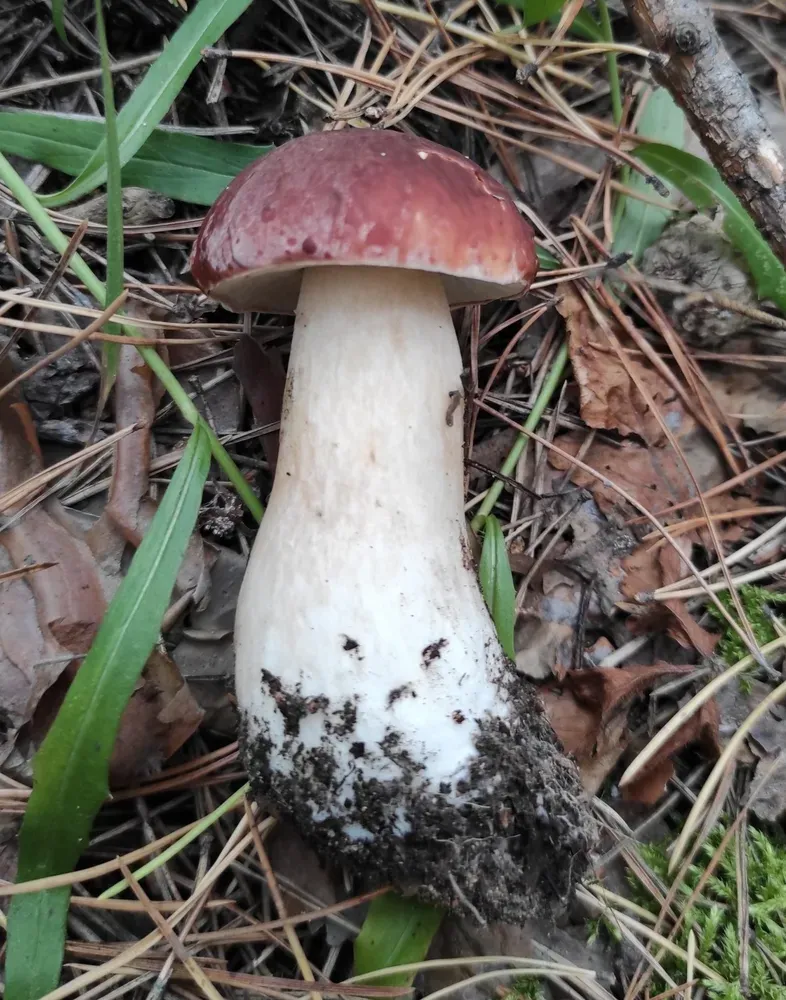
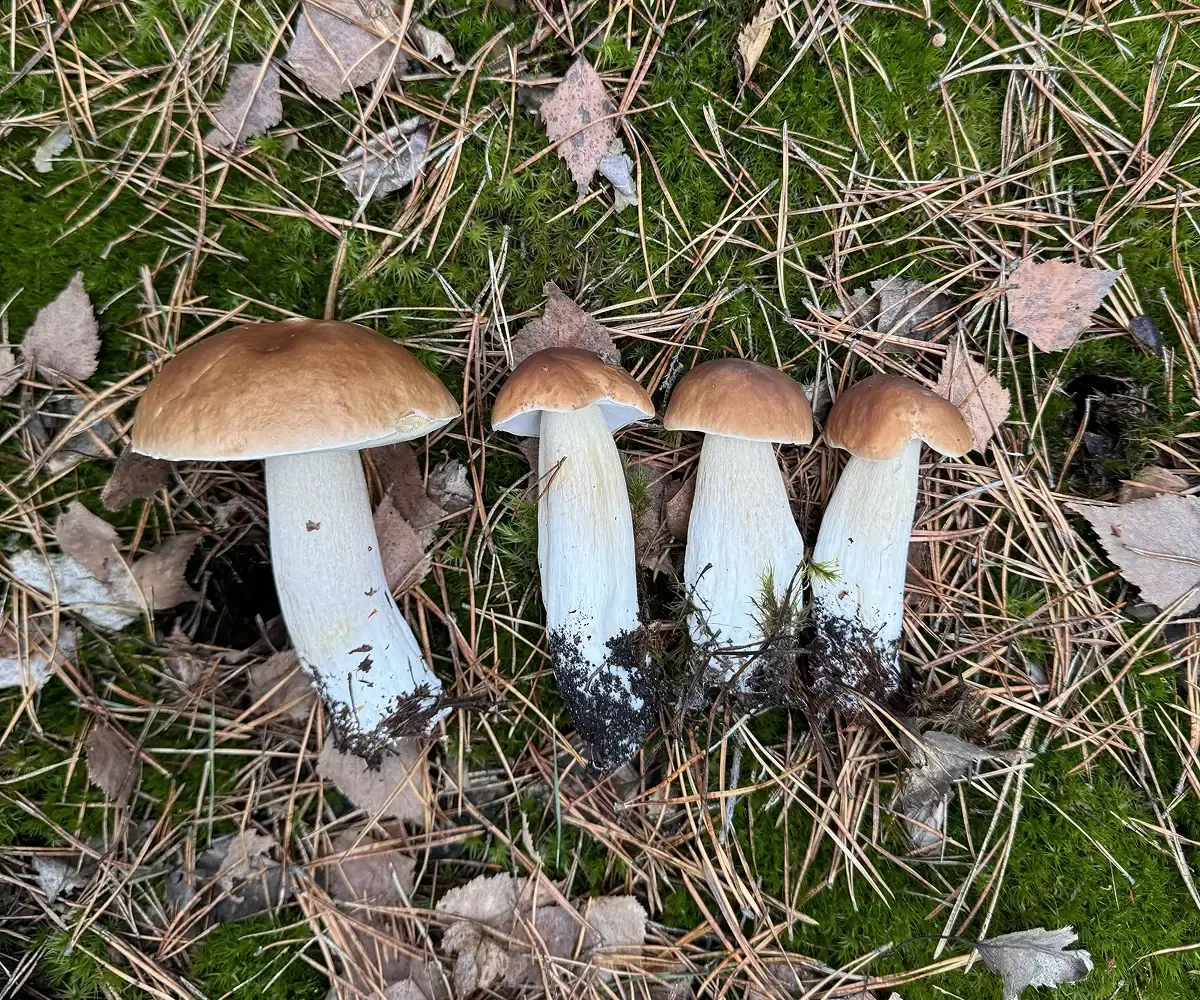
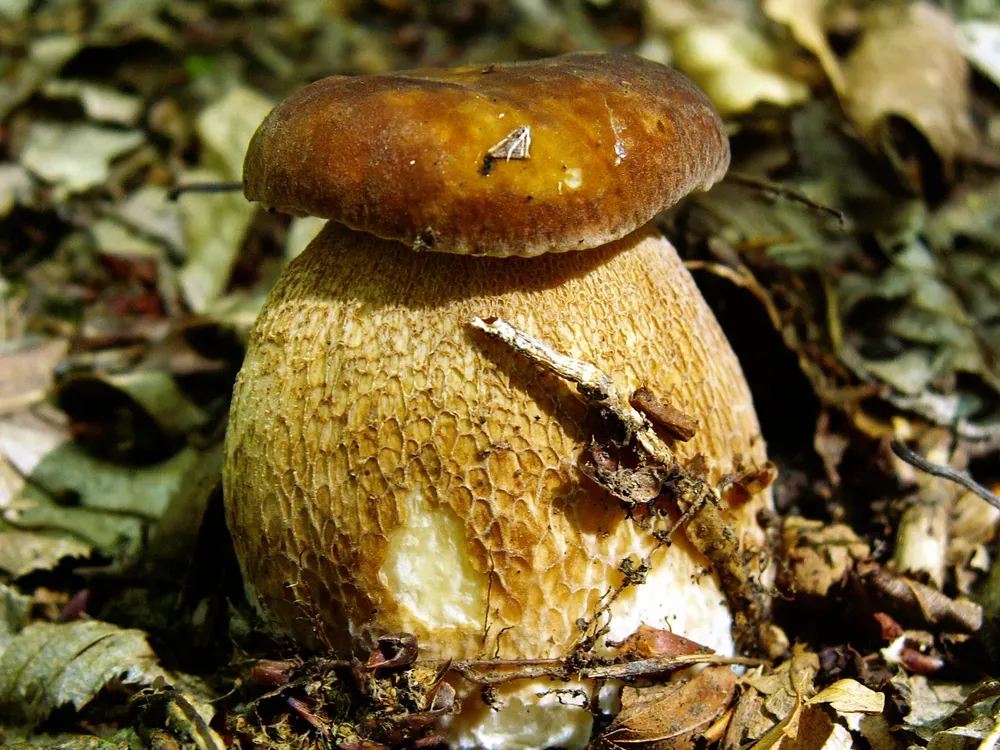
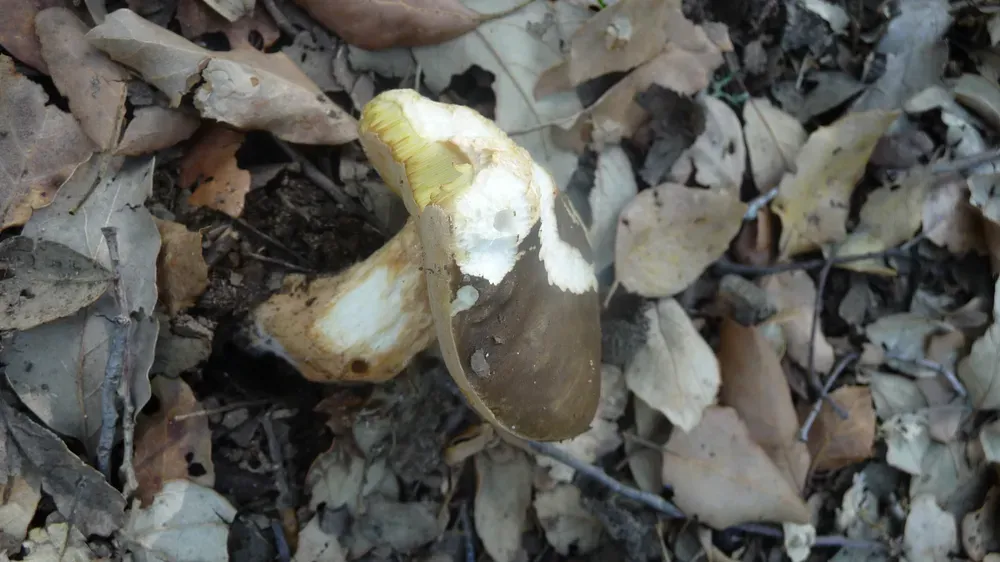
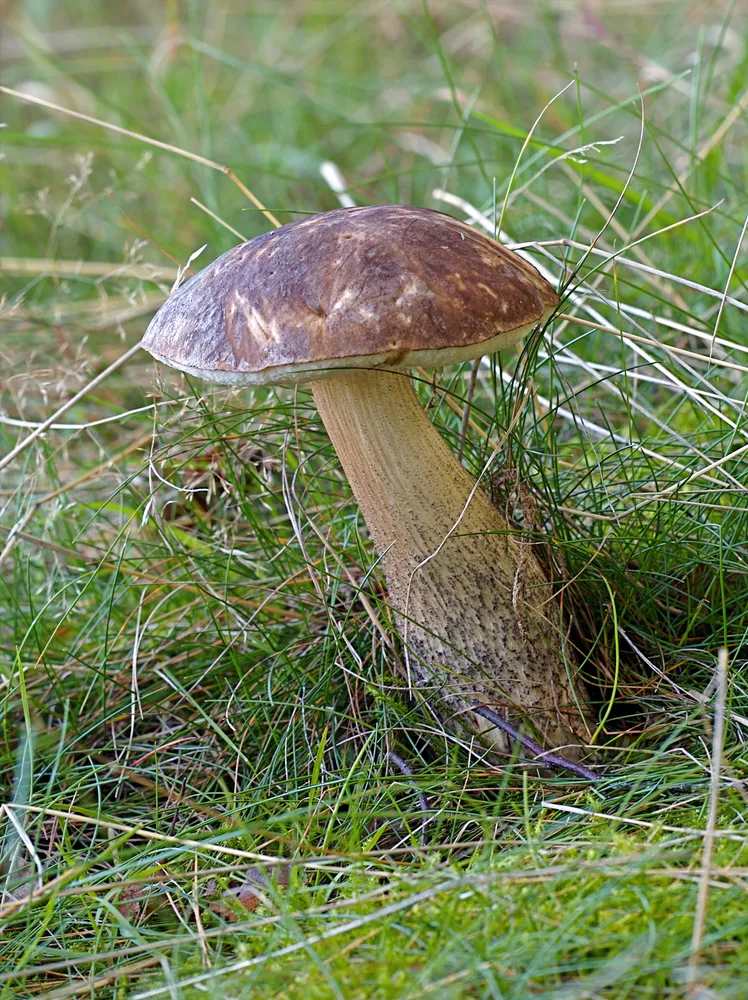
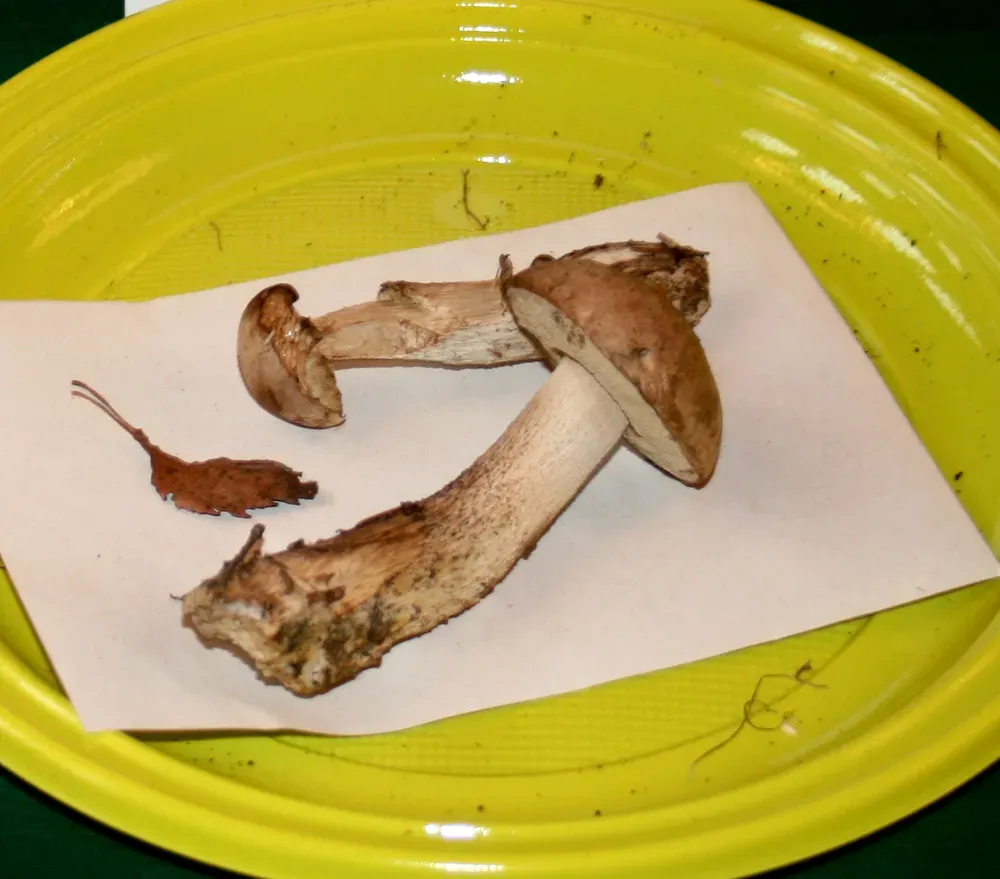
Mushrooms of the same genus and habitat — to study side by side and never mix up.
Frequently asked questions
Is it edible?
Yes, edible and tasty — with a delicate nutty flavor. But it is rare and protected. If you find it, it’s a wonderful find for your camera, not your basket. One or two specimens for a taste — that’s the maximum; leave the rest.
Is it listed in the Red Data Book of Ukraine?
It is not included in the national Red Data Book of Ukraine as of 2026, but it is on the regional red lists of several oblasts (notably Lviv and Zakarpattia) and is protected in the nature reserves of the Carpathians. In Europe — it appears on many national red lists.
Where does it grow in Ukraine?
Mainly in the Carpathians, Prykarpattia and Western Polissia — in old beech, beech-spruce and oak forests. It likes damp, mossy spots and acidic soils. It is not found in the steppe or the southern forest-steppe.
Which trees does it form mycorrhiza with?
It is an obligate mycorrhizal partner — mainly of beech (Fagus sylvatica), less often of oak, hornbeam and chestnut. It almost never occurs in conifer forests, only in mixed forests with beech.
When should you look for it?
July–October. Peak — August–September after long spells of rain. In a dry summer it may not appear at all, because it needs steady soil moisture.
Why does it have gills instead of tubes?
It’s an evolutionary quirk: the genus Phylloporus genetically belongs to the boletes (family Boletaceae), but has secondarily “returned” to a gilled hymenophore. Such reversals do happen in nature — this is not a gilled mushroom that came to resemble a bolete, but the other way around.
What is it confused with?
With yellow-gilled brittlegills (Russula) — but their flesh is brittle, doesn’t turn blue, and their gills aren’t net-like. With Xerocomus boletes — they have tubes, not gills. If you see a velvety brown cap, golden decurrent gills with anastomoses and bluing flesh — it is almost certainly the golden gilled bolete.
Does it have dangerous lookalikes?
It has no serious poisonous lookalikes in Ukraine. The biggest risk is mistaking it at a quick glance for bitter or bile mushrooms. So the key is: velvety cap + golden gills with cross-veins + bluing flesh. All three features together — that’s the golden gilled bolete.
Is Golden gilled bolete edible or poisonous?
Does Golden gilled bolete have gills or pores?
What does the cap of Golden gilled bolete look like?
What does the stem of Golden gilled bolete look like?
Sources
- [1]Вікіпедія (українська)
- [2]Атлас грибів України, Зеров Д.К. (1979)
- [3]MycoBank Database
- [4]Index Fungorum
- [5]GBIF
- [6]iNaturalist Ukraine