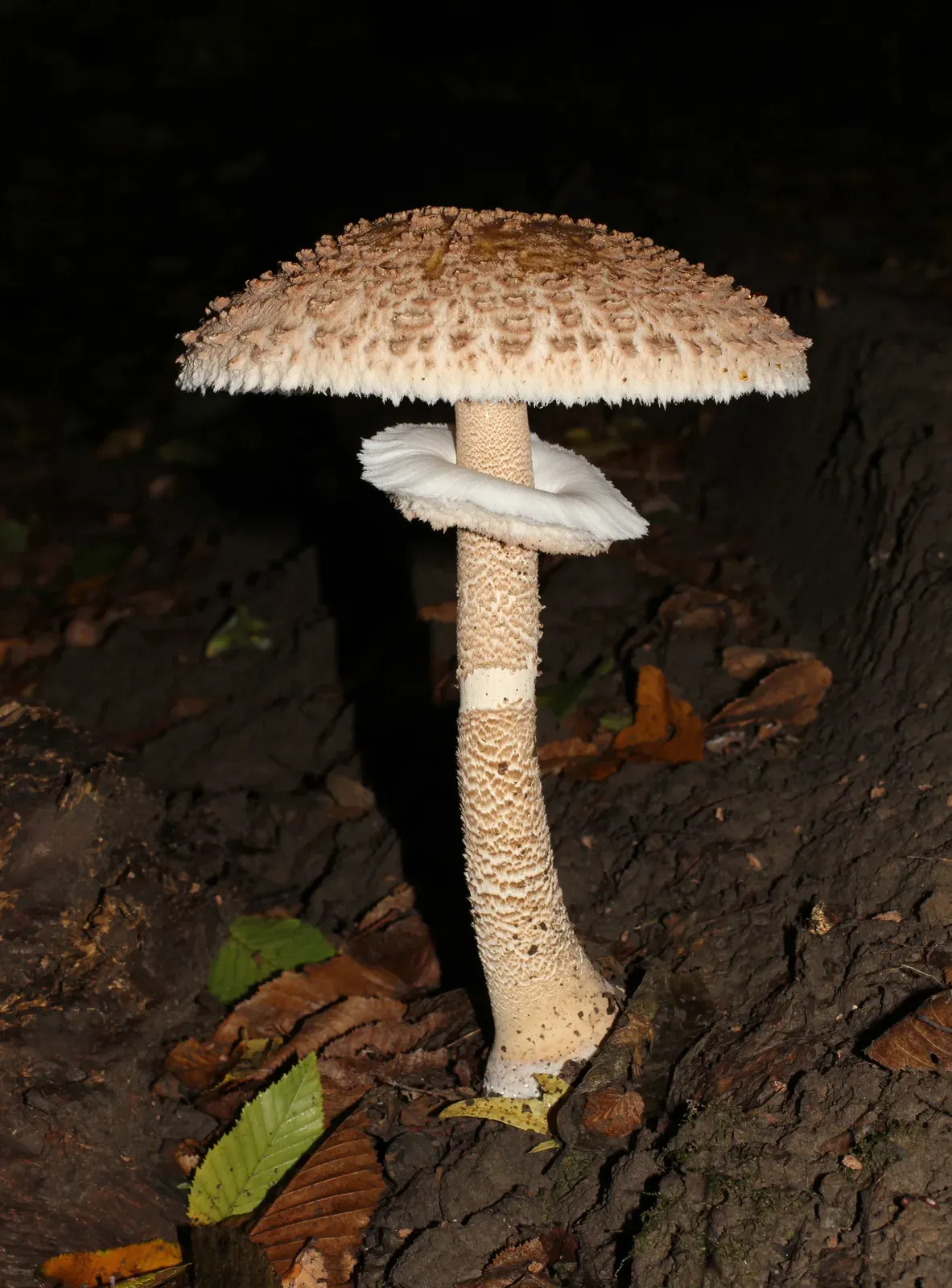
A beginner's biggest fear is getting poisoned. And it's entirely justified, because deadly mushrooms do grow in the forest. But there is a simple and reliable path: start with a few species that have no deadly lookalikes and are hard to confuse with anything. Once you've mastered them, you'll have a full basket and zero risk.
We've gathered seven safe mushrooms worth starting with. They're widespread, easy to recognize and safe even on your very first trip to the forest.
1. Chanterelle
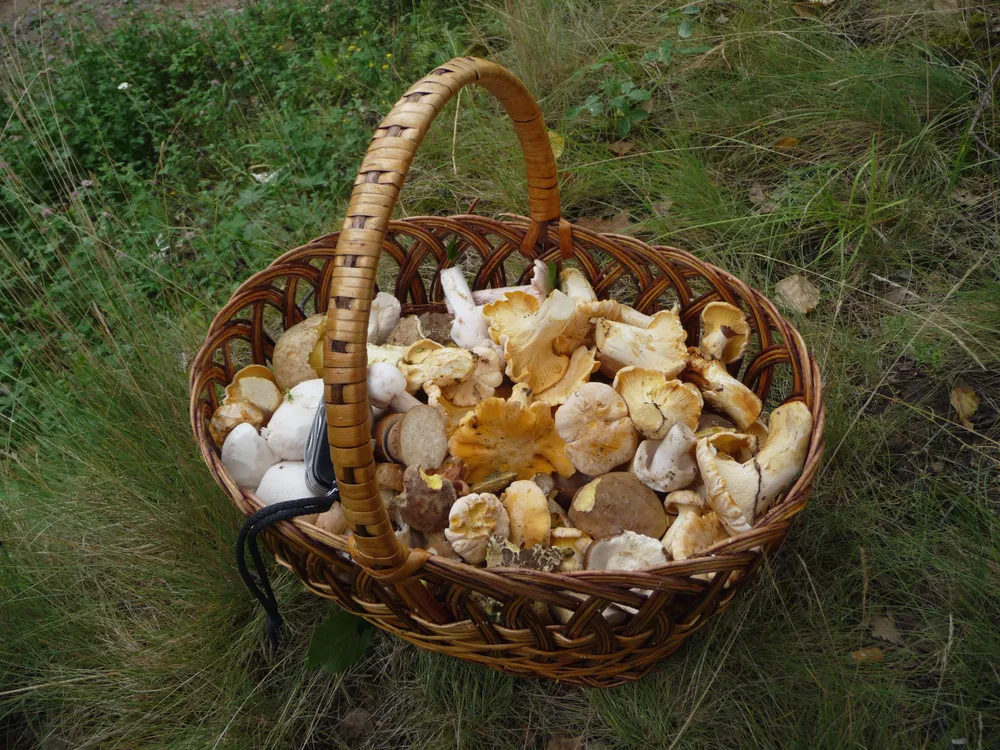
Chanterelle, perhaps the best mushroom for a beginner.
Bright yellow, with a funnel-shaped cap and thick ridges instead of gills, it looks like nothing else. It has no deadly lookalikes and is hardly ever wormy. The only similar mushroom, the false chanterelle, is not deadly. More in our chanterelle profile.
2. Porcini
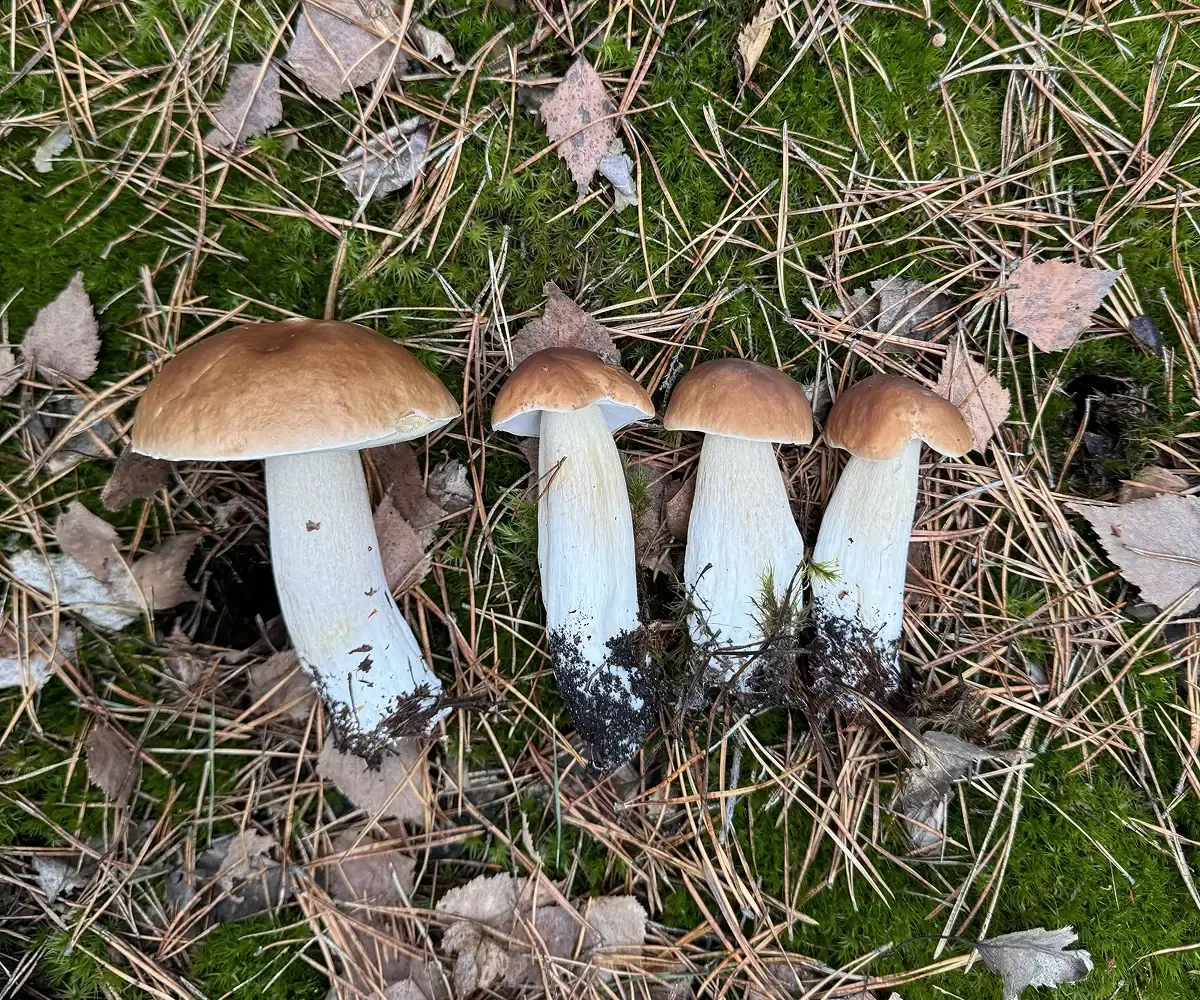
Porcini, the king of the forest and a great choice for a beginner.
It's a pored mushroom with a thick stem and a firm cap. There are no deadly species among the pored mushrooms, and porcini's only unpleasant lookalike, the bitter-tasting bitter bolete, is not poisonous. To tell them apart, see our porcini vs bitter bolete comparison.
3. Slippery jack
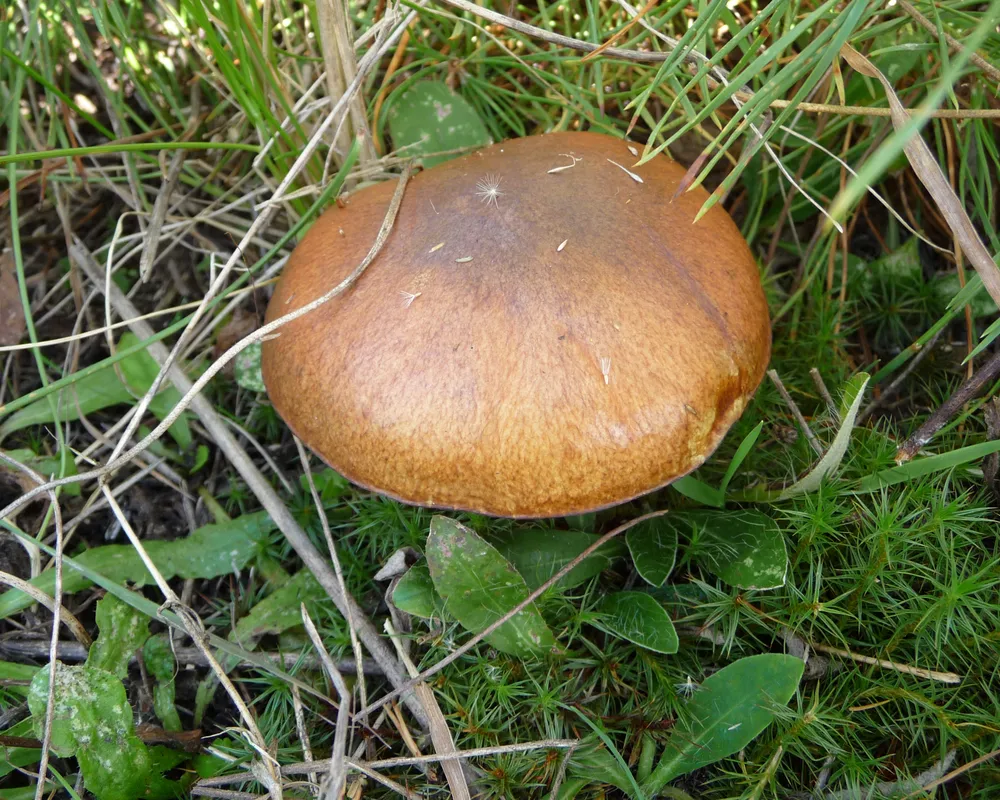
Slippery jack, the mushroom that comes in crowds in pine forests.
It's easy to recognize by its slimy, glossy cap, whose skin peels off, and the pores underneath. It grows in big groups, so your basket fills up fast. It has no dangerous lookalikes.
4. Brown birch bolete
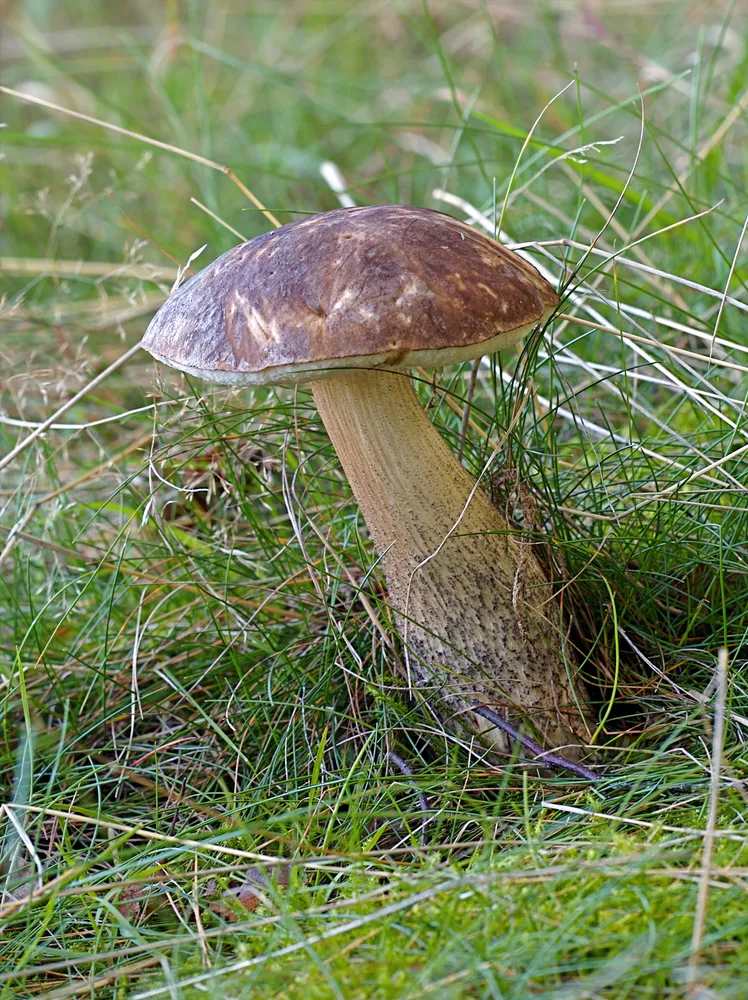
Brown birch bolete, also simply called the birch bolete, another safe pored mushroom.
A gray or brown cap, a slender stem with dark scales, and it grows under birches. Like all pored mushrooms, it has no deadly lookalikes, so it's a good fit for a beginner.
5. Xerocomus boletes
Xerocomus boletes are a group of small pored mushrooms that are easy to pick.
They grow in moss and grass, have a velvety cap and often turn blue when cut, which is normal. There are no deadly species among them, so Xerocomus boletes are a safe mushroom to start with.
6. Oyster mushroom
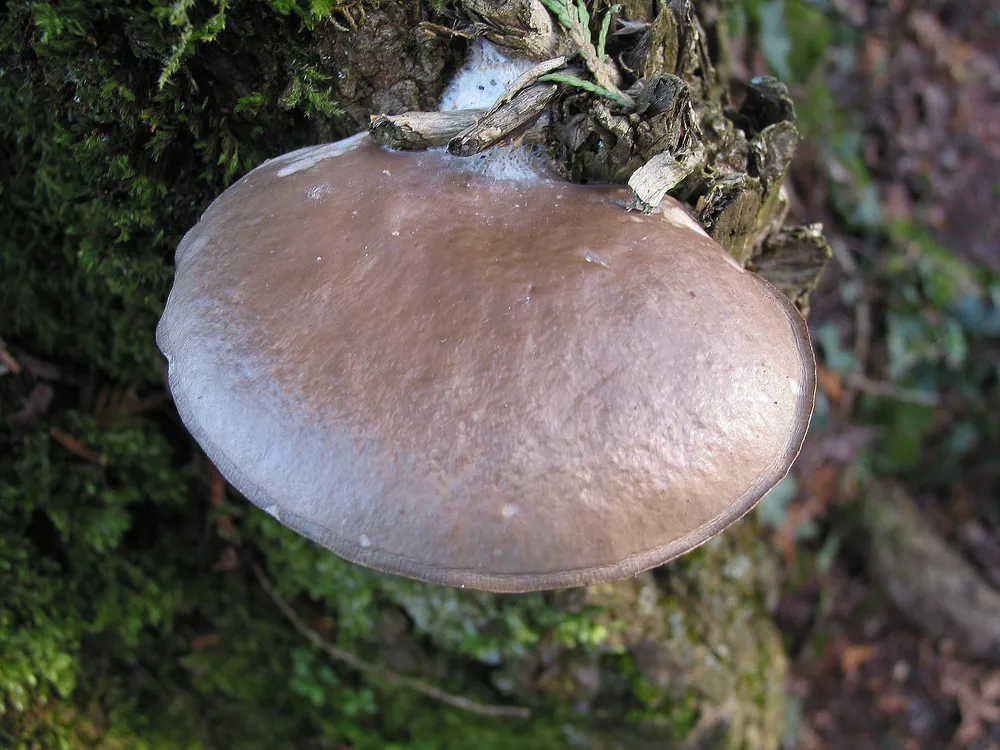
Oyster mushroom, a safe mushroom that grows even in winter.
It grows in clusters on trunks and stumps, with an ear-shaped cap and a stem off to the side. It has practically no dangerous lookalikes in our forests, so the oyster mushroom is hard to confuse with anything.
7. Puffball
A young puffball, a surprisingly easy mushroom for a beginner.
A white ball with no cap or stem, it's edible as long as the flesh inside is pure white. Just cut it open: a uniform white interior means you can take it; any other color means leave it.
Where to start in practice
A few tips for taking your first steps safely.
- Learn one species at a time. Once you've mastered one mushroom, add the next.
- Start with pored mushrooms. There are no deadly species among them.
- When in doubt, leave it out. The golden rule that always keeps you safe.
- Keep your references handy. Our guide to poisonous mushrooms and rules of safe foraging.
Once you've mastered these seven mushrooms, you'll have a solid foundation and can gradually expand your basket without risk.
Sources
- “Key to the Fungi of Ukraine” (Kyiv, Naukova Dumka publishing house).
- Boletus edulis on GBIF, a global biodiversity database.
- Fungi on MycoBank, the international fungal nomenclature database.
- Mushroom hunting on Wikipedia.
Frequently asked questions
Which mushrooms should a beginner start with?
With species that have no deadly lookalikes: , , , , Xerocomus boletes, and young puffballs. They're hard to confuse with anything.
Why are pored mushrooms safer for beginners?
Because there are no deadly poisonous species among the pored mushrooms (porcini, slippery jack, brown birch bolete, Xerocomus). All deadly mushrooms have gills, so starting with boletes is safer.
Which mushroom is easiest for a beginner to recognize?
: bright yellow, with ridges instead of gills, no deadly lookalikes and hardly ever wormy. It's hard to confuse with anything dangerous.
Does porcini have dangerous lookalikes?
No deadly ones. Its only unpleasant lookalike is the bitter-tasting , which isn't poisonous, it just ruins the flavor. To tell them apart, see the .
How many mushroom species do you need to know to start?
Just a few. It's better to know 5-7 safe species confidently than two dozen superficially. Expand the list gradually, learning one new mushroom at a time.
Can a beginner pick gilled mushrooms?
Yes, but carefully: it's among the gilled mushrooms that the deadly ones hide. Of the safe gilled mushrooms, about the only one suited to a beginner is the , which has no dangerous lookalikes.
How can you tell a puffball is edible?
Cut it open: a young edible puffball has pure white, uniform flesh. Any other color or pattern inside is a reason to pass on it. Details in our .
What should you do if you're not sure about a mushroom?
Leave it. That's the golden rule for beginners and experienced foragers alike. Guidance in our .
Mushrooms in this article
Related articles
 How to identify
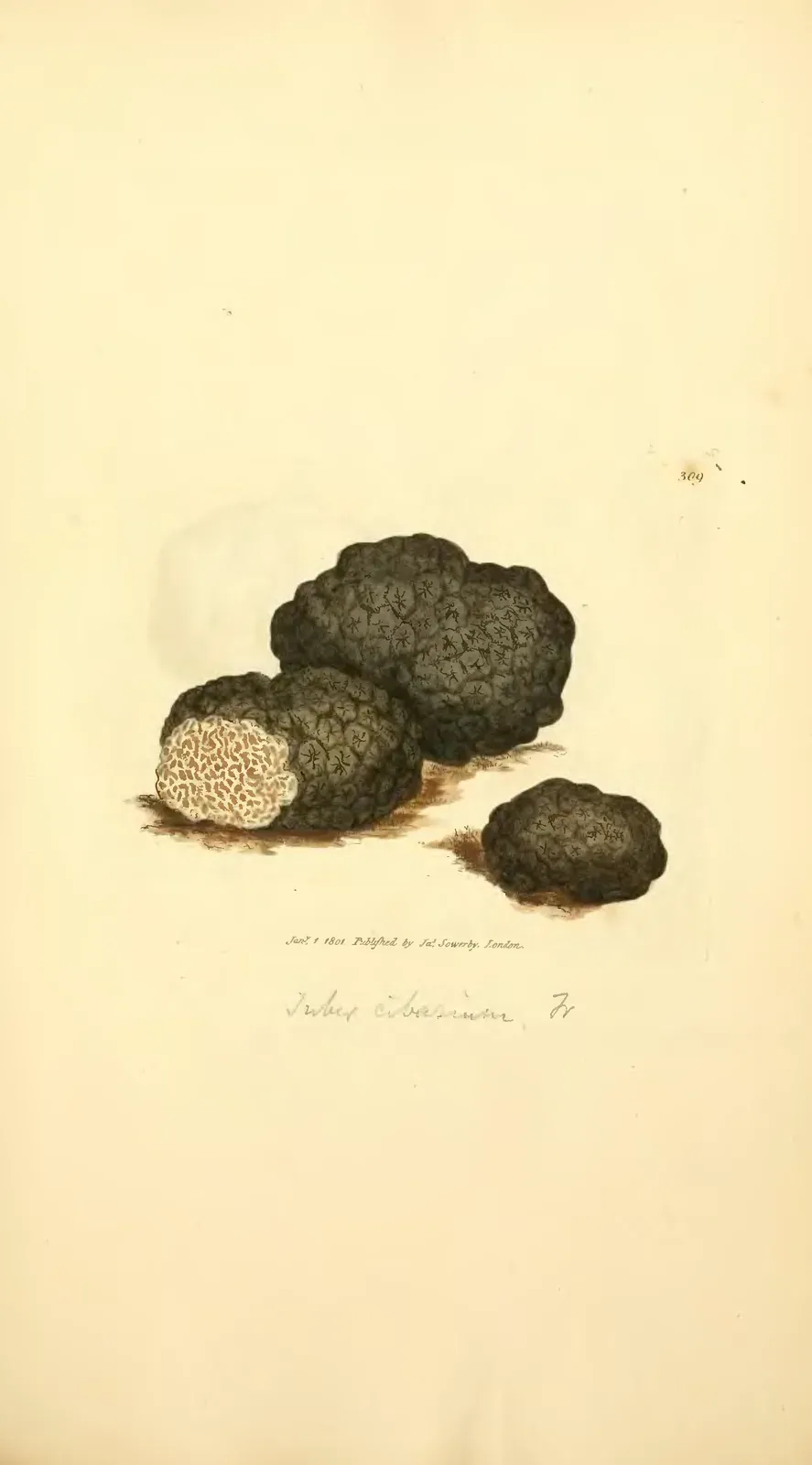
Truffles in Ukraine: do they grow here, and where to look
Truffles aren't just a French delicacy. Several species grow in Ukraine too. Here's which ones, where they occ…
August 24, 2026·2 min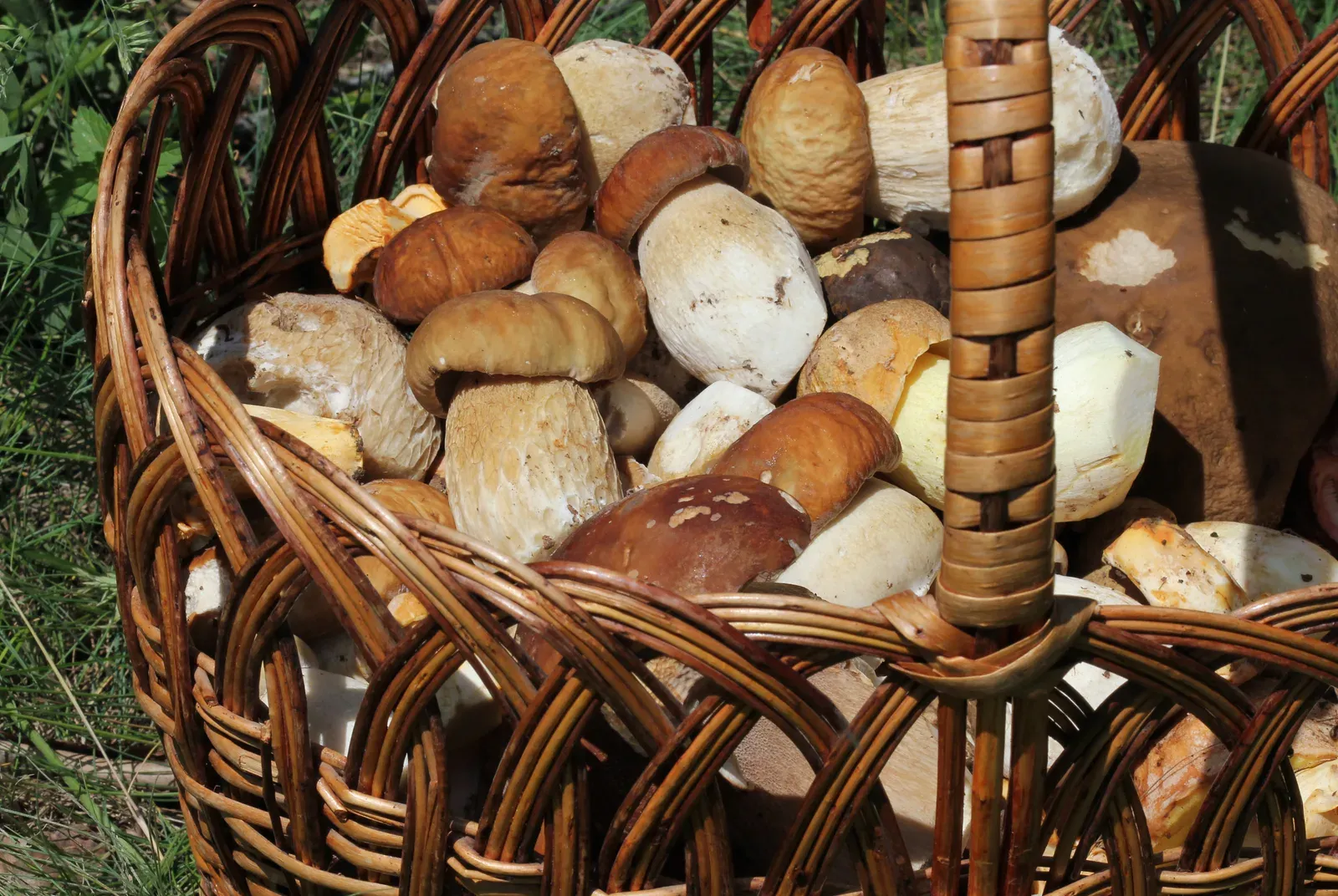 Recipes & cooking
How to store fresh mushrooms, and for how long
Fresh mushrooms spoil faster than you might think. Here's how long they keep in the fridge, how to store them…
August 21, 2026·4 min Recipes & cooking
How long to boil mushrooms
Boiling time depends on the type of mushroom and on what you're cooking next. Here's a clear cheat sheet: how…
August 22, 2026·4 min