Shaggy parasolChlorophyllum rhacodes
Expert-verifiedUpdated August 15, 2026
Passport
- Edibility
- Conditionally edible
- Season
- Jun — Nov
- Hymenophore
- Gilled
- Cap color
- Brown
- Size
- Large (over 15 cm)
- Smell
- Pleasant
- Reviewed
- Yes ✓
Quick answers
Where to look?
Deciduous forest, Mixed forest
When does it appear?
Jun — Nov
Active months: June, July, August, September, October, November.
How to recognize it? Three signs
- Cap color: Brown, Grey, Cream
- Cap shape: Flat
- Smell: Pleasant
Fruiting season
June – November
Description
The shaggy parasol is a close relative of the famous parasol mushroom. It looks very much like it: a large, flat, scaly cap and a tall stem with a ring. But there is a key difference — when cut or damaged, the flesh turns red, then brown. This is a characteristic feature of the genus Chlorophyllum (it used to be classified as Macrolepiota rhacodes). Another difference is that the stem has no snakeskin pattern: it is smooth and white, only browning slightly when touched.
Technically it's edible, and in Europe people eat it regularly, but conditionally. In some people it can cause stomach upsets — nausea, abdominal pain, sometimes vomiting or diarrhea. The reaction is individual — most people tolerate the mushroom fine, but sensitive people (especially children, people with chronic digestive conditions, or with weakened immunity) may react. be sure to boil it well (15-20 min, draining the water) before frying. The first time, try a small portion to test your reaction. If you get symptoms, don't eat it again. important: don't confuse it with its poisonous American relative Chlorophyllum molybdites (green spore print), which is very rare in Ukraine but theoretically possible.
In Ukraine it is common in forests, parks and gardens, and on compost heaps. It often grows in man-made landscapes — near houses, along roadsides, in gardens and vegetable plots. Season: June-November, in several flushes after rain.
Cap
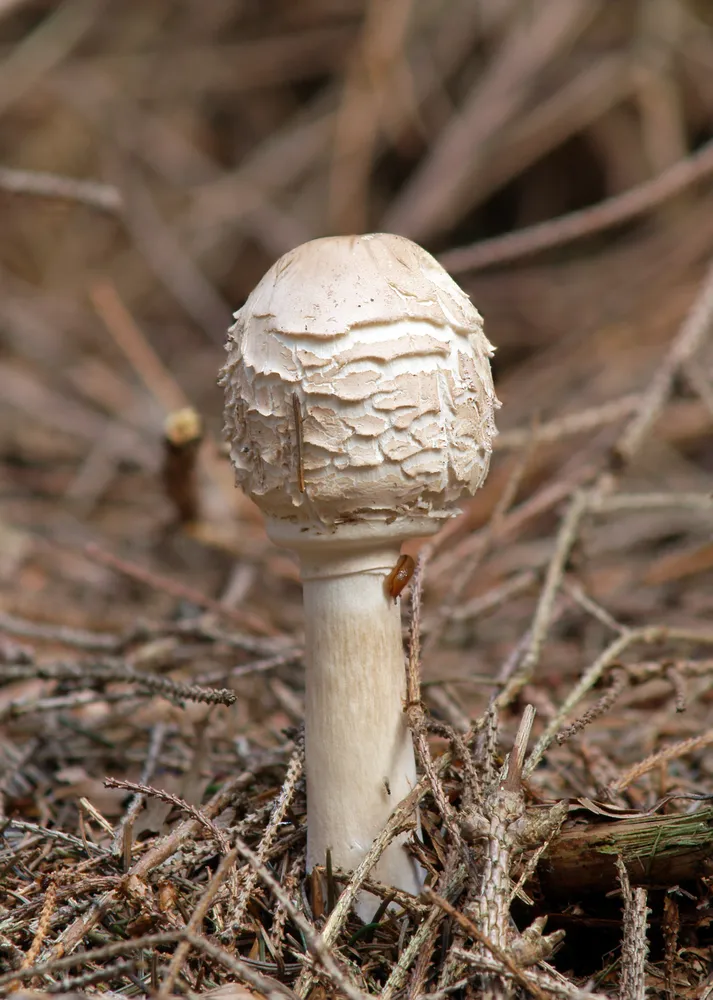
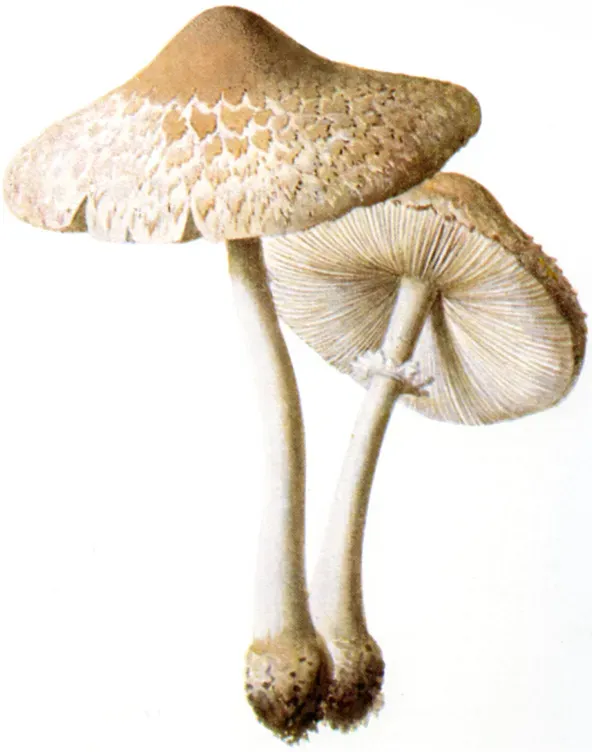
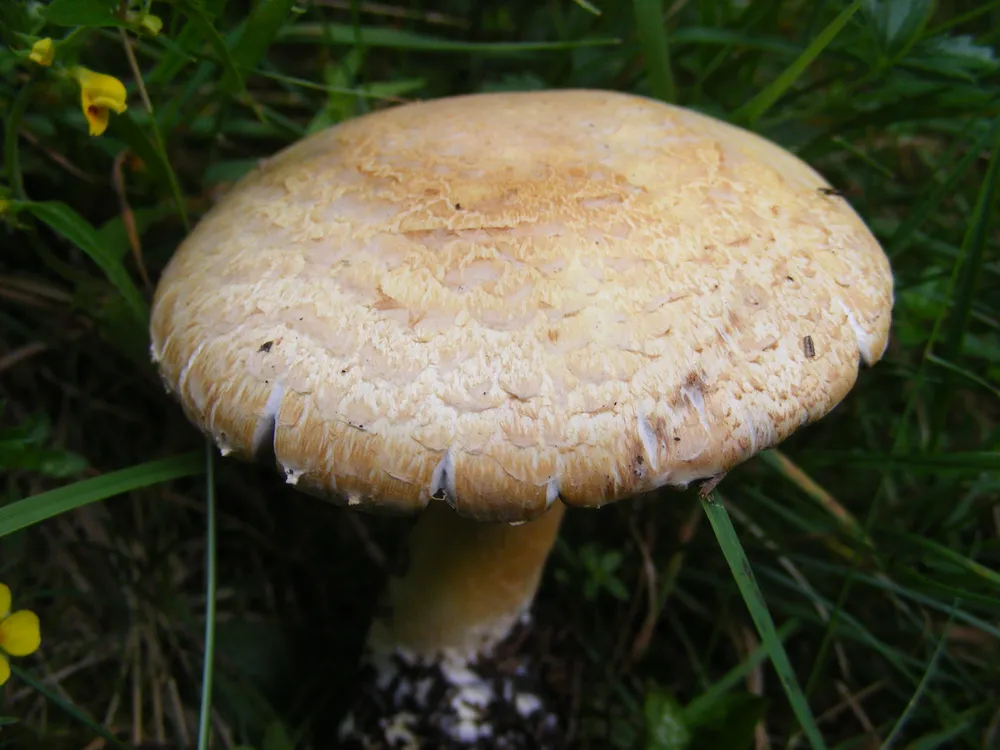
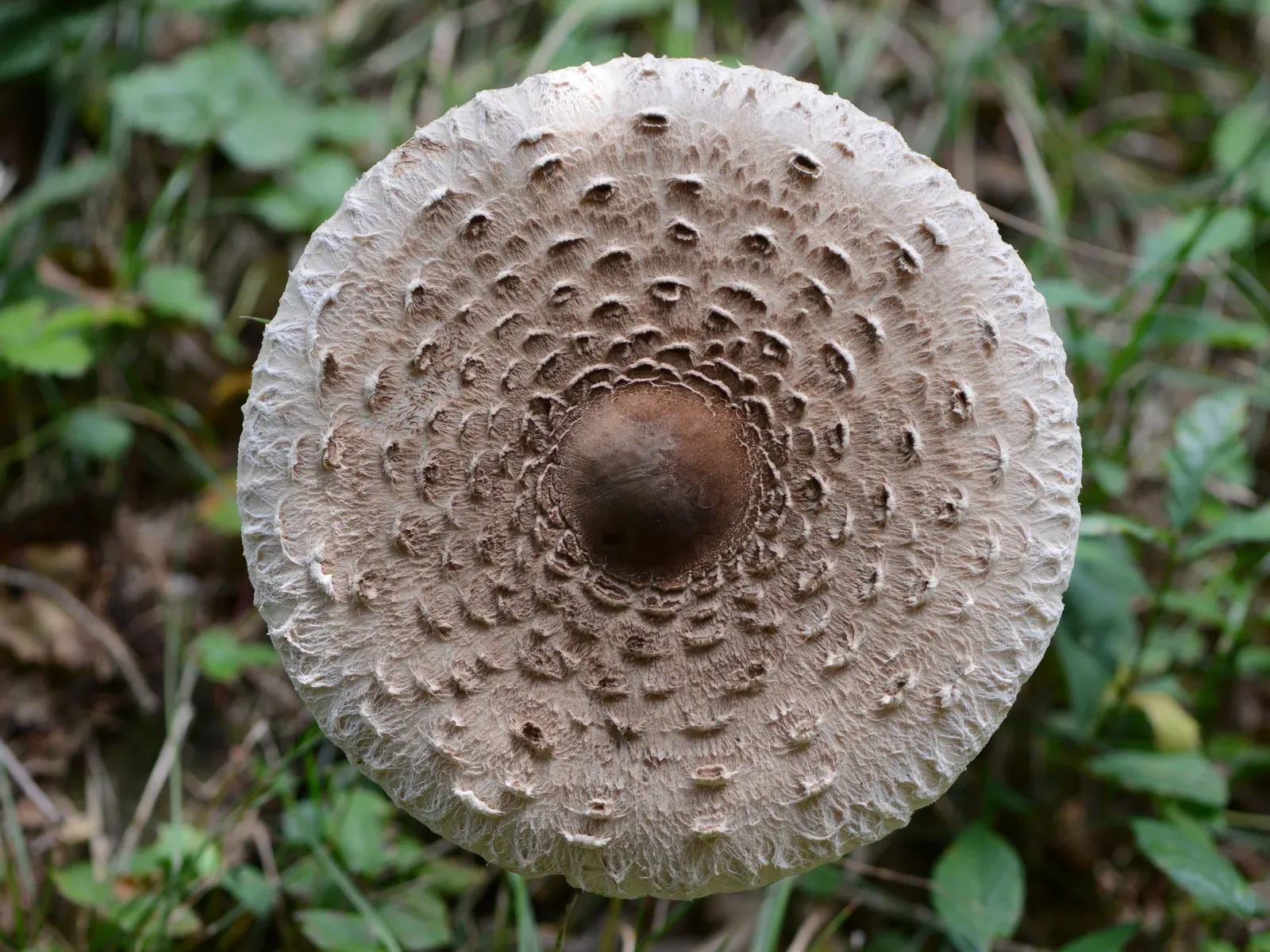
Cap large, 7-20 cm across. Hemispherical at first, then convex-spreading to flat with a small boss. The background color is light grayish-brown, and the surface is covered with coarse brown scales in concentric rings, darker at the center. It looks very much like the parasol mushroom, but the scales curl upward at the edges — a characteristic feature.
Hymenophore
Gilled hymenophore. Gills crowded, thin, free. Color white at first, cream with age, with a pinkish tinge in old specimens. Damaged gills turn red. Spore print white — this is important for telling it apart from the poisonous Chlorophyllum molybdites (green spore print).
Stem
Stem 7-20 cm tall, 1-2.5 cm thick, cylindrical, swollen at the base (a “bulb”). Color whitish to grayish — no snakeskin pattern (unlike the parasol mushroom). Turns brown where touched or damaged. In the upper part there is a fleshy, movable ring. there is no volva.
Flesh
flesh in the cap is white and soft. a characteristic feature — when cut or damaged it turns red (after 1-2 minutes), then turns brown. This is the fundamental difference from the parasol mushroom, whose flesh does not change color.
Smell
Faint, pleasant mushroomy smell. Mild taste — pleasant and mushroomy after boiling.
Lookalikes
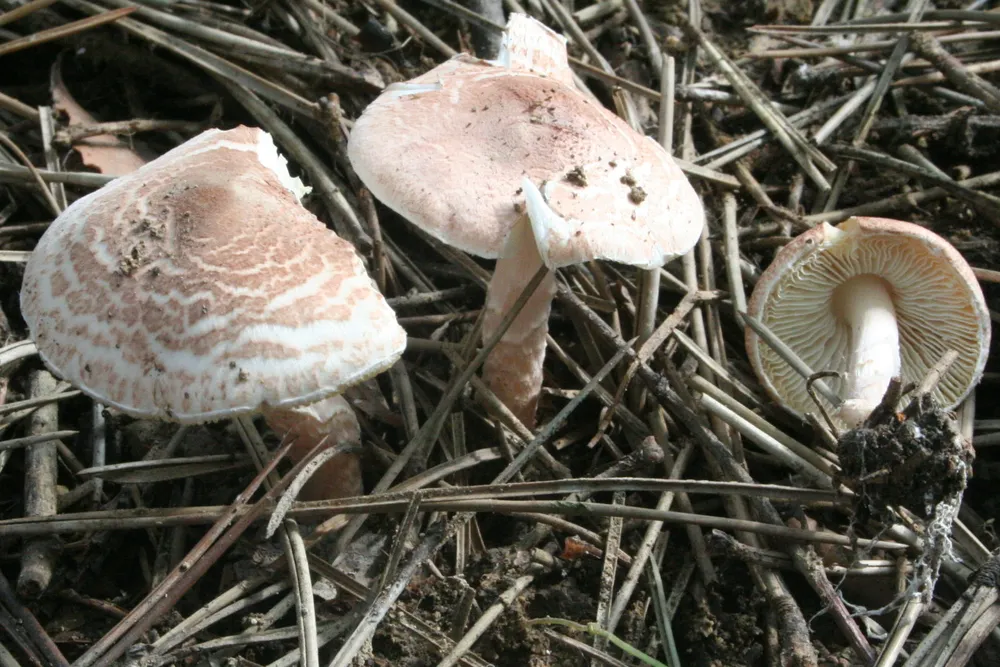
Related species
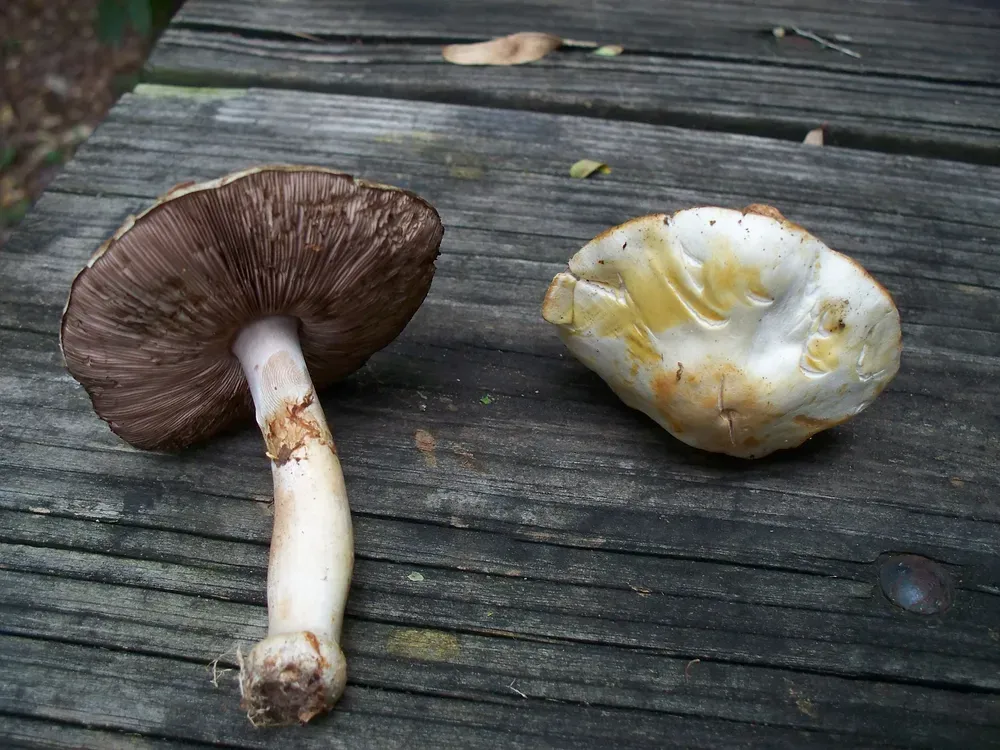
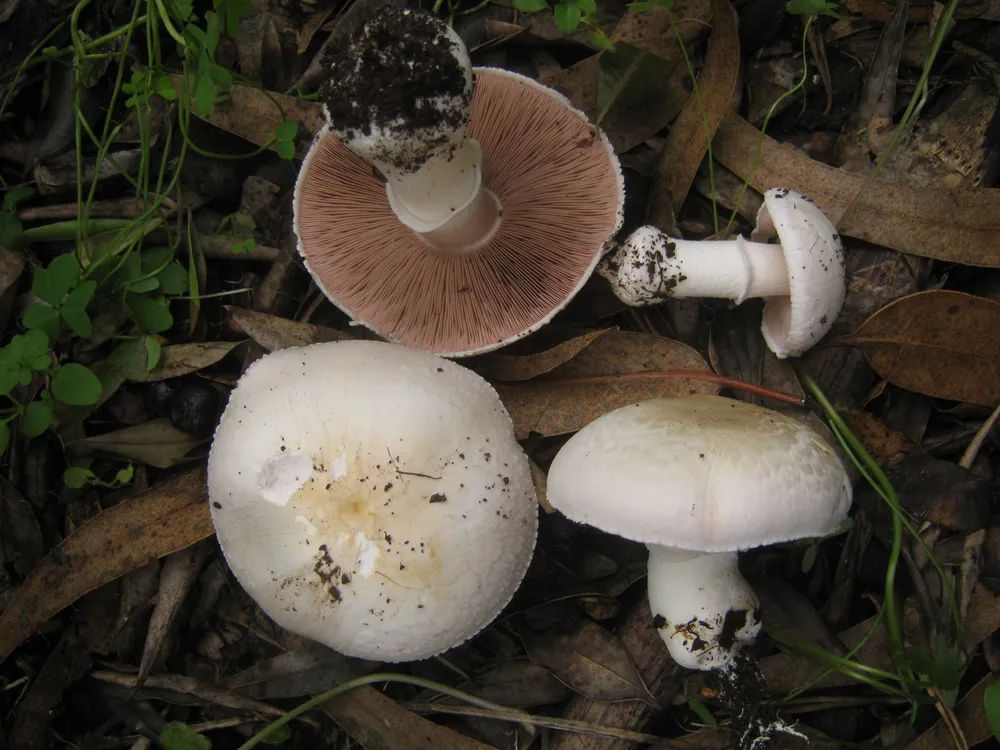
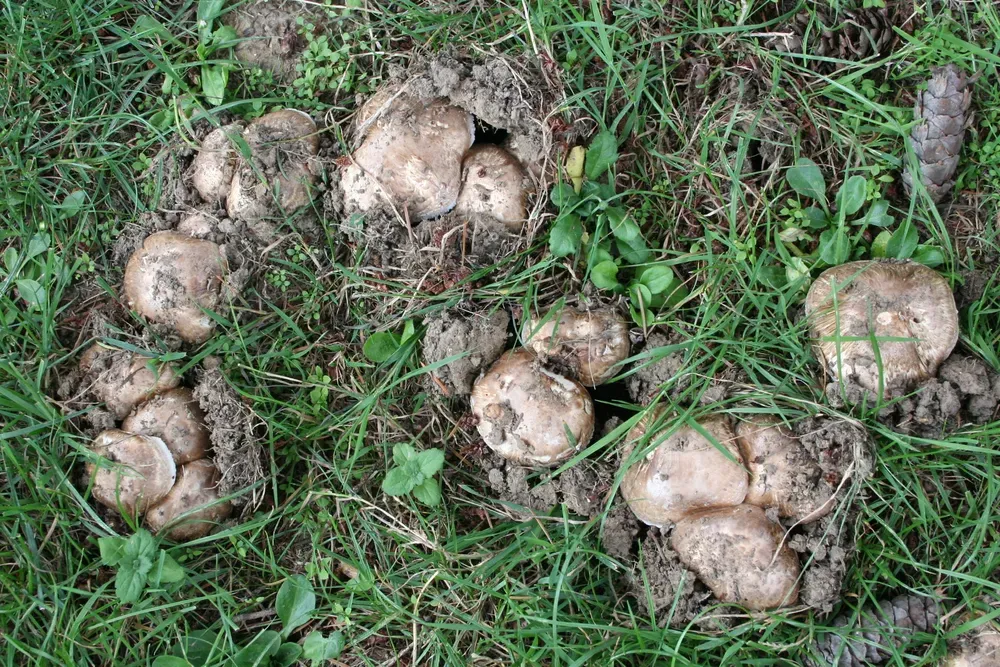
Mushrooms of the same genus and habitat — to study side by side and never mix up.
.webp)
_Fr._4948278370-2.webp)
Related reading
Frequently asked questions
Is it safe to eat?
Conditionally. The mushroom is technically edible, but in some people it causes stomach upsets. be sure to boil for 15-20 min, draining the water. The first time — a small portion (50-100 g), then wait 12 hours. If all is well, you can eat it in normal amounts. If you get symptoms (nausea, pain, diarrhea), don't eat it again. Do not give to children under 12.
How can you tell it's this one and not the parasol mushroom?
Two key checks: (1) cutting it open — the shaggy parasol's flesh turns red/pink within 1-2 min and then browns; the parasol mushroom's stays white. (2) the stem — smooth and white in the shaggy parasol, while the parasol mushroom has a characteristic snakeskin zigzag pattern. Both are edible, but the parasol mushroom is safer — no stomach risks.
Is Chlorophyllum molybdites the same thing?
No. It's a different species from the same genus, genuinely poisonous (it causes a severe gastrointestinal reaction). Outwardly it is almost indistinguishable from the shaggy parasol; the key is the spore print: the shaggy parasol's is white, molybdites' is green. In Ukraine molybdites is very rare (it's tropical), but if you have any doubt, take a spore print (place the cap on white paper for 2-4 hours).
Where should you look for it?
In forests (mostly broadleaf), at forest edges, in parks, gardens and on compost heaps. It often grows in man-made landscapes — near houses, in gardens, vegetable plots and urban plantings. A saprotroph of fertile soils — it likes rich humus and compost patches. Often grows in groups of 3-10 fruit bodies.
In which regions of Ukraine does it grow?
Throughout the forest and forest-steppe zones and in man-made landscapes — in practically every oblast. Especially common in city parks, homesteads and fertilized plots. In the steppe — in damp spots near settlements.
When should you look for it?
June-November. Several fruiting flushes after rain. The first in June-July, the second and third in August-October. In a warm autumn — into November.
What is it confused with?
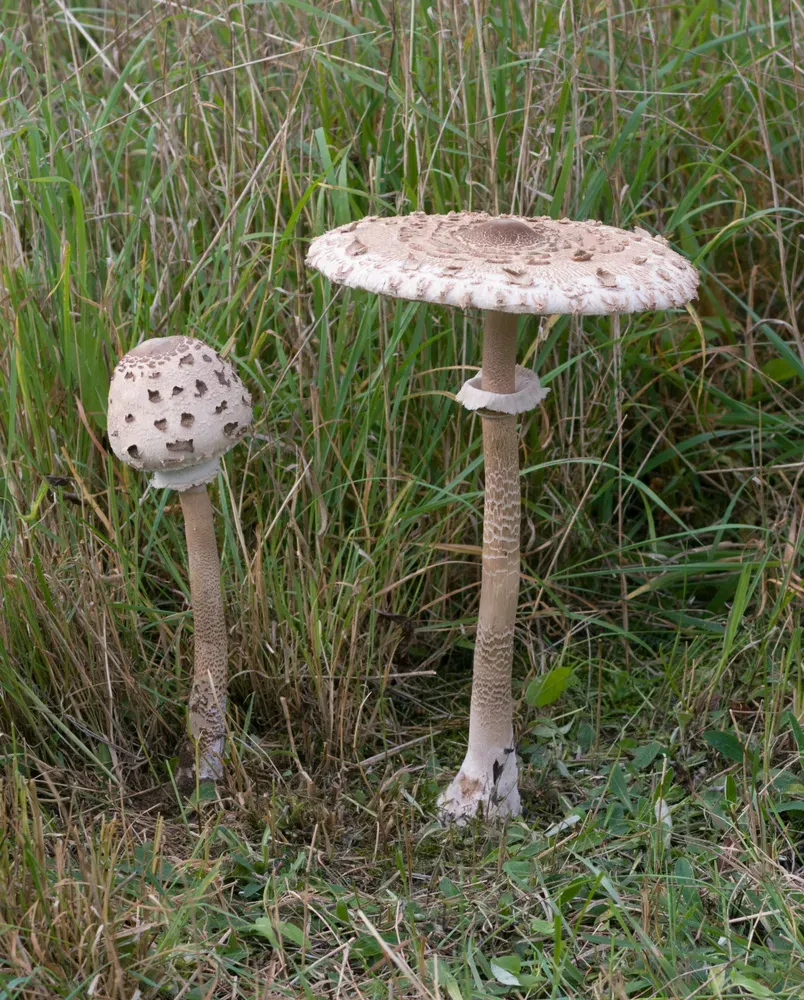
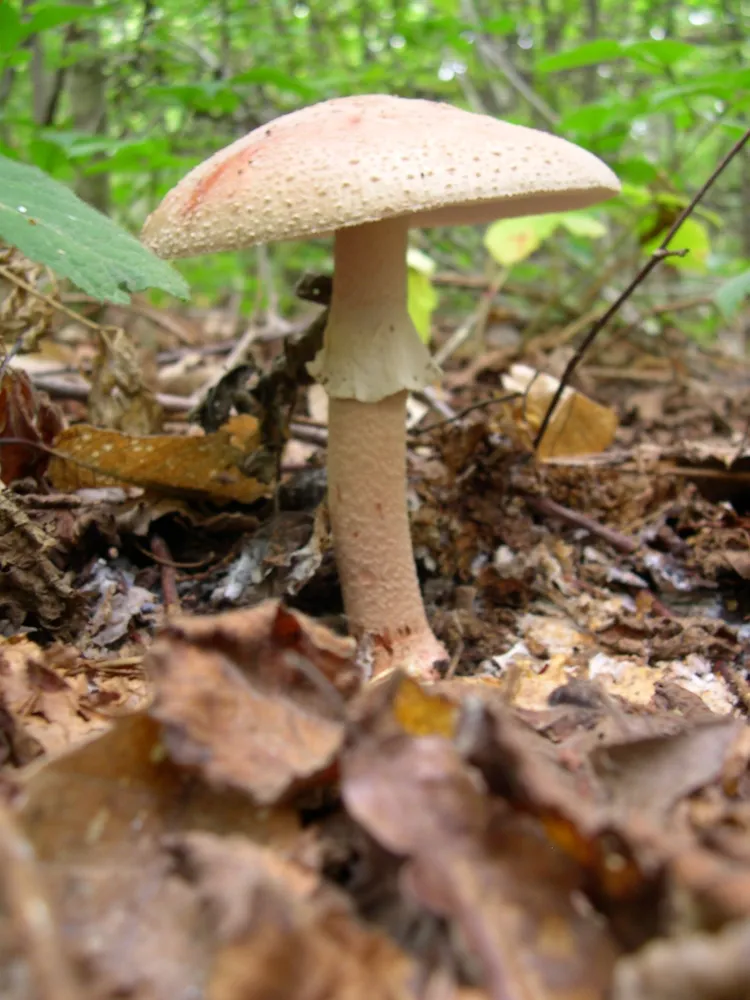
With the parasol mushroom (Macrolepiota procera) — they are closely similar. The differences: the shaggy parasol has a smooth white stem (the parasol mushroom has a snakeskin pattern) and flesh that turns red when cut (white in the parasol mushroom). Also with the blusher (Amanita rubescens), whose flesh also turns pink. The difference: the amanita has a volva at the base of the stem, the parasol does not.
Could it be mistaken for a white amanita?
Unlikely if you look carefully. White amanitas (Amanita virosa, A. phalloides var. alba) are white all over (no brown scales) and have a volva at the base of the stem. The shaggy parasol has coarse brown scales on the cap and no volva. The key check to do always — dig up the mushroom with its base and look for the volva sac. No volva — not an amanita.
Is Shaggy parasol edible or poisonous?
Does Shaggy parasol have gills or pores?
What does the cap of Shaggy parasol look like?
What does the stem of Shaggy parasol look like?
Sources
- [1]Вікіпедія (українська)
- [2]Атлас грибів України, Зеров Д.К. (1979)
- [3]MycoBank Database
- [4]Index Fungorum
- [5]GBIF
- [6]iNaturalist Ukraine