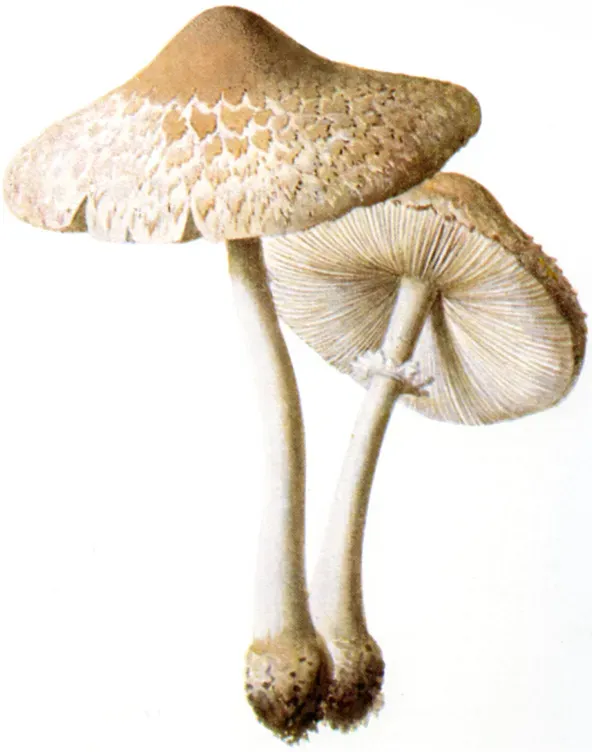
Frayed parasolMacrolepiota excoriata
Expert-verifiedUpdated October 3, 2026
Passport
- Edibility
- Edible
- Season
- Jun — Nov
- Hymenophore
- Gilled
- Cap color
- White
- Size
- Medium (5–15 cm)
- Smell
- Pleasant
- Reviewed
- Yes ✓
Quick answers
Where to look?
Deciduous forest
When does it appear?
Jun — Nov
Active months: June, July, August, September, October, November.
How to recognize it? Three signs
- Cap color: White, Cream, Brown
- Cap shape: Umbonate
- Smell: Pleasant
Fruiting season
June – November
Description
The frayed parasol (Macrolepiota excoriata) is the smaller, humbler cousin of the famous parasol mushroom. Instead of forest edges, it settles in open spaces: meadows, pastures, orchards, the margins of fields. Its whitish, scaly cap with an ochre center and the characteristic scaly, "peeled" look of its edge (hence the Latin "excoriata" — "flayed") make it easy to recognize for anyone who pays attention to field mushrooms.
In Ukraine it is widespread throughout the steppe and forest-steppe belt — in pastures, meadows, orchards and allotment gardens, and along field margins. It does not grow in forests — this is a purely open-field species. The best spots: commons with young grass after cattle have grazed, the verges of field tracks, abandoned village vegetable plots. A saprotroph, it needs organic matter in the soil.
Edibility: good, but with conditions. Young, firm specimens with unopened caps are wonderful fried, stewed or added to omelets. The flesh is sweetish, with a hint of hazelnut. However, you need to pick it carefully — in open fields it is easy to confuse with small toxic Lepiota species (Lepiota brunneoincarnata and others), which are deadly. The rule: take only specimens 10+ cm tall with a thick stem. Small Lepiota up to 6 cm — never. Before cooking, always peel the skin off the stem (it is tough and tasteless).
Cap
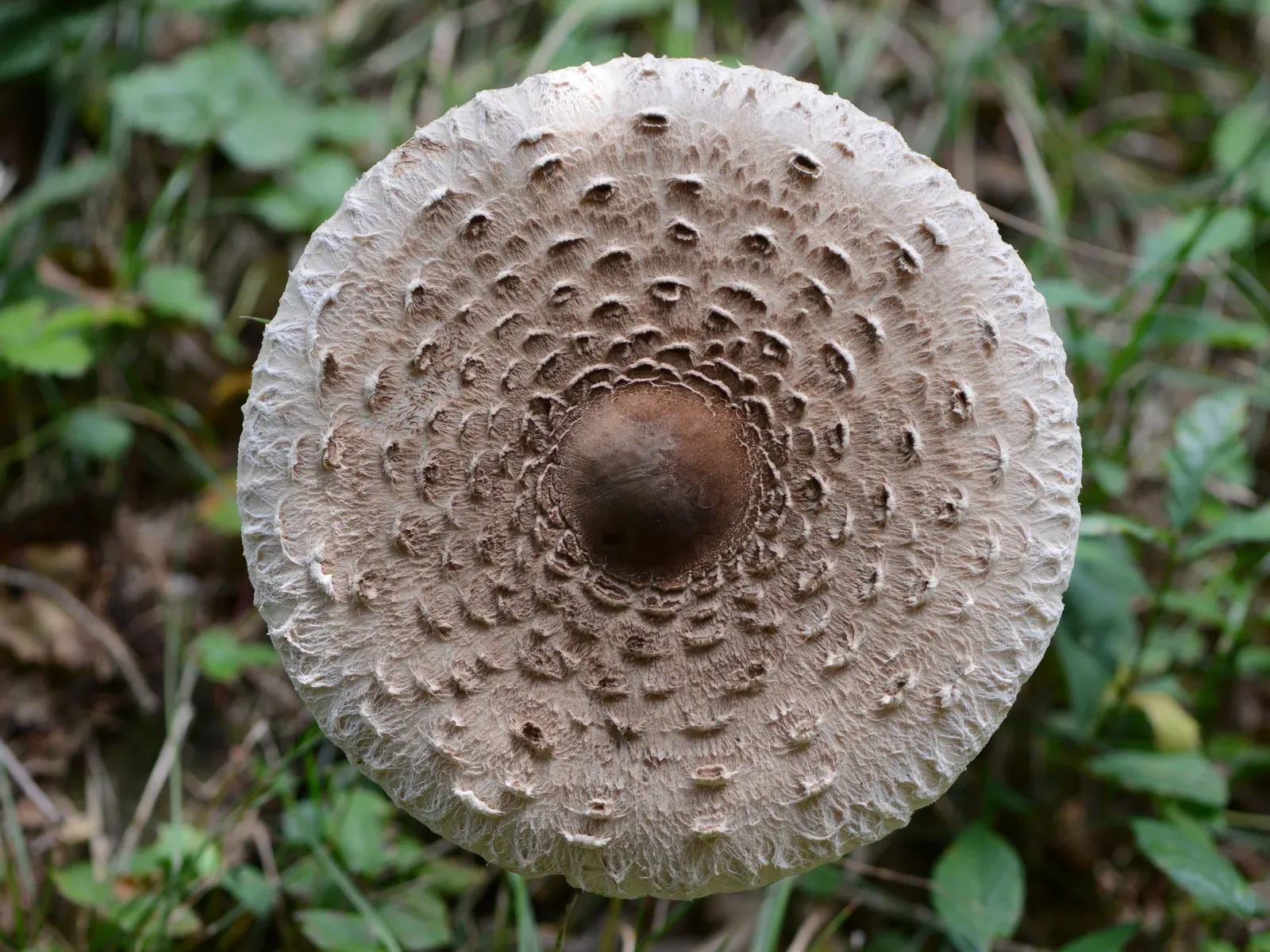
Cap 6–10 cm (sometimes up to 15), hemispherical in young mushrooms, then flattening to plano-convex with a small bump in the center. Creamy white with an ochre or yellowish-brown center. The surface is covered with small scale-like flakes — it looks like peeling varnish. The edges often have a thin "fringe" — remnants of the veil.
Hymenophore
Gills free, creamy white, crowded, turning slightly yellowish in mature mushrooms. Spore print white or pale cream.
Stem
Stem 8–15 cm tall, 0.8–1.5 cm thick, cylindrical, with a bulbous base. White with a creamy yellowish tint, smooth. In the upper part there is a white membranous ring, which often falls away in old mushrooms. The lower stem sometimes has a faint scaly pattern.
Flesh
Flesh white, firm in the cap, fibrous in the stem. Does NOT change color when cut. The texture is fibrous and uneven — softer in the cap, tougher in the stem.
Smell
Smell pleasant, faintly nutty, reminiscent of hazelnut or grain. Taste mild, sweetish.
›Scientific synonyms (1)
Agaricus excoriatus Schaeff. (1774)
Lookalikes
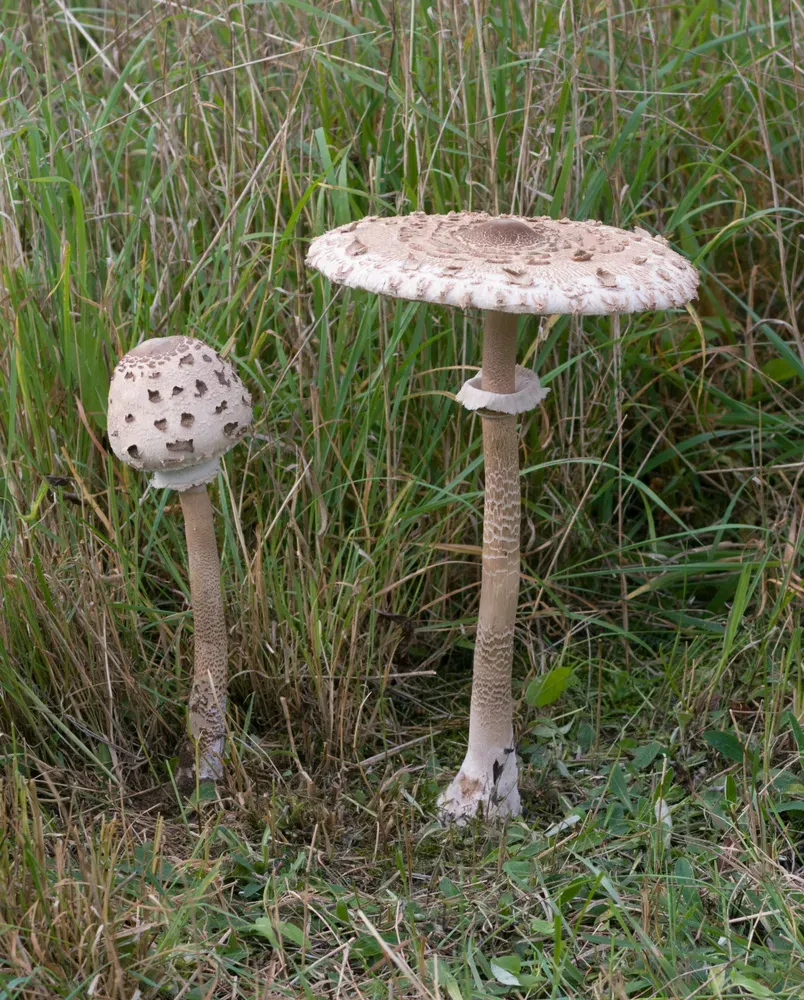
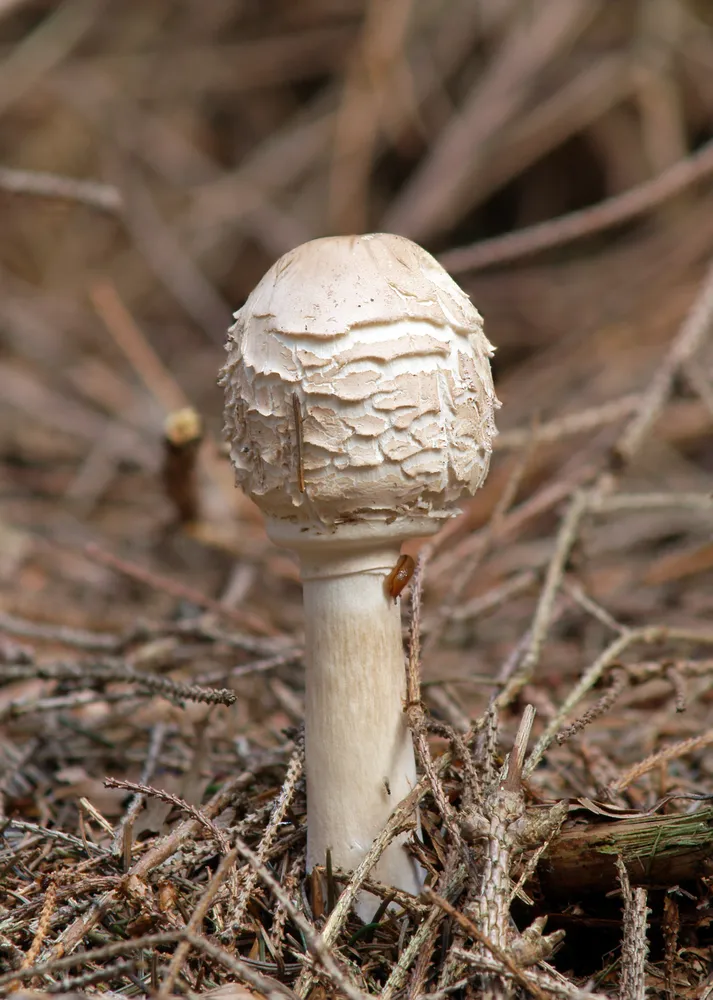
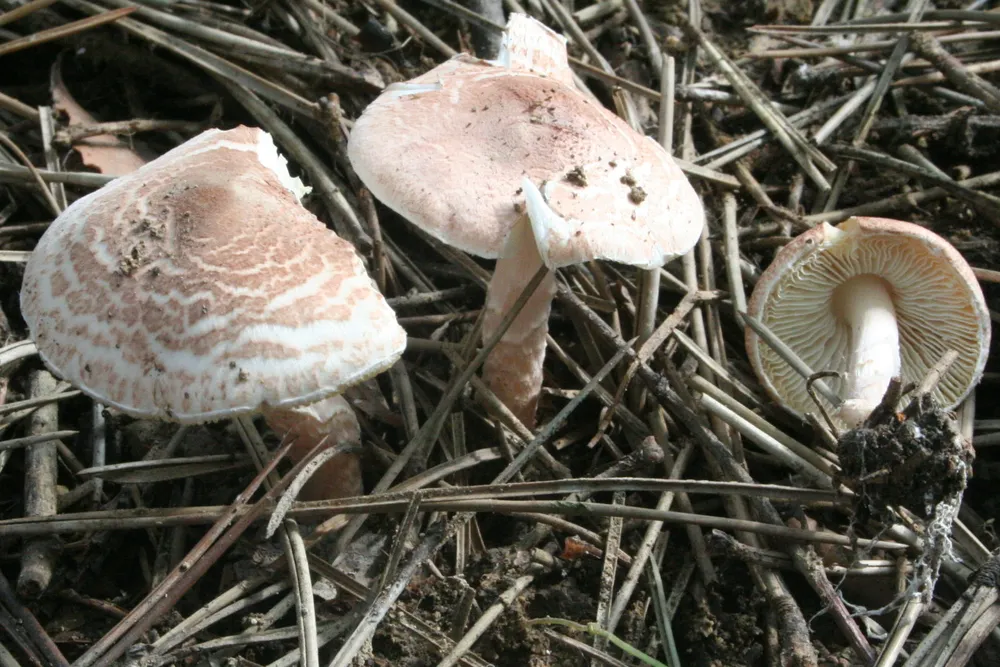
Related species
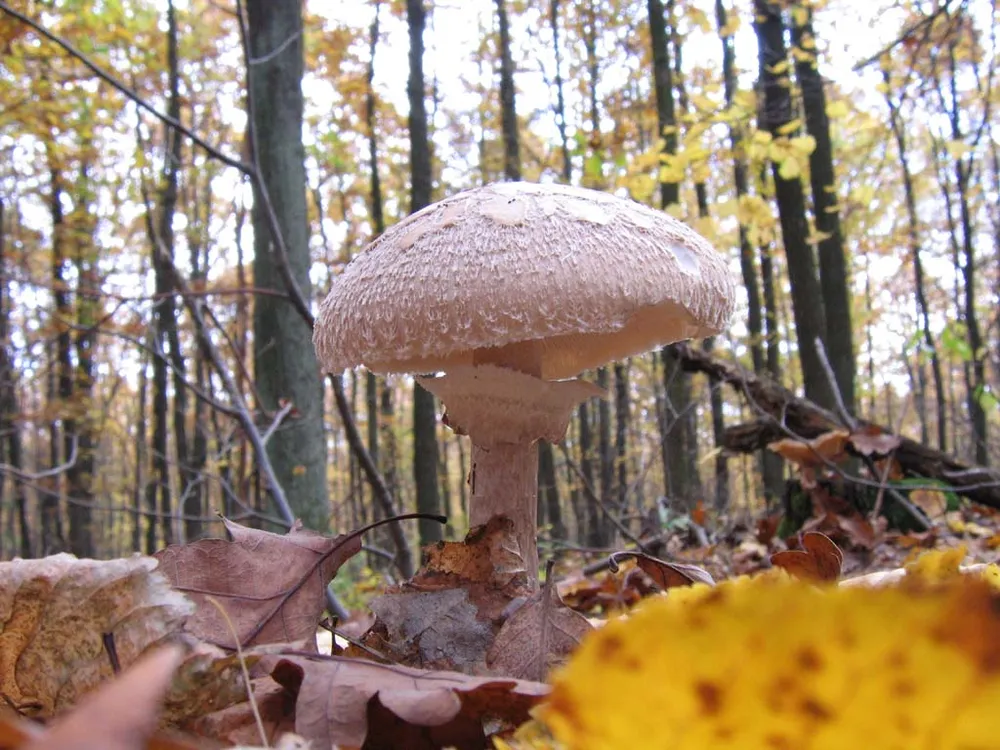
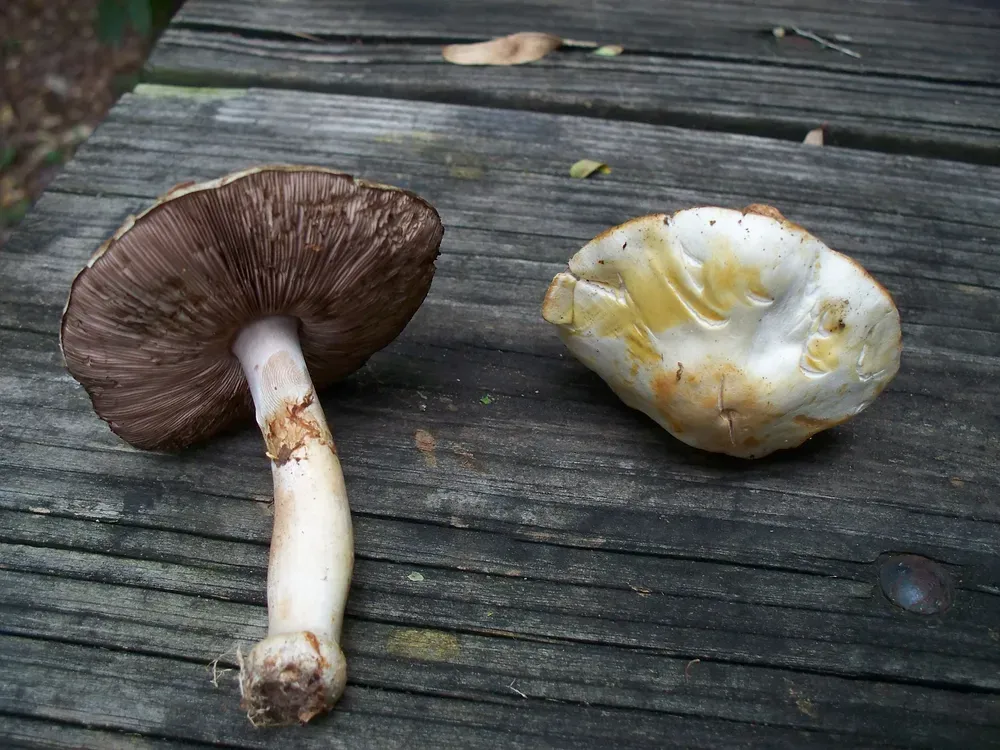
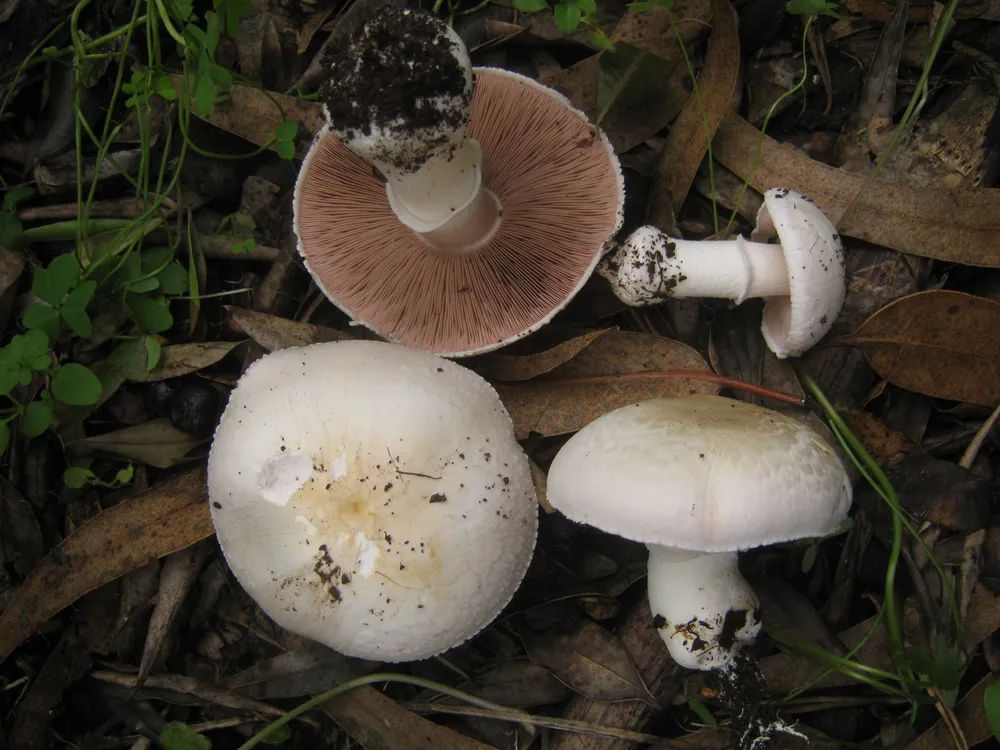
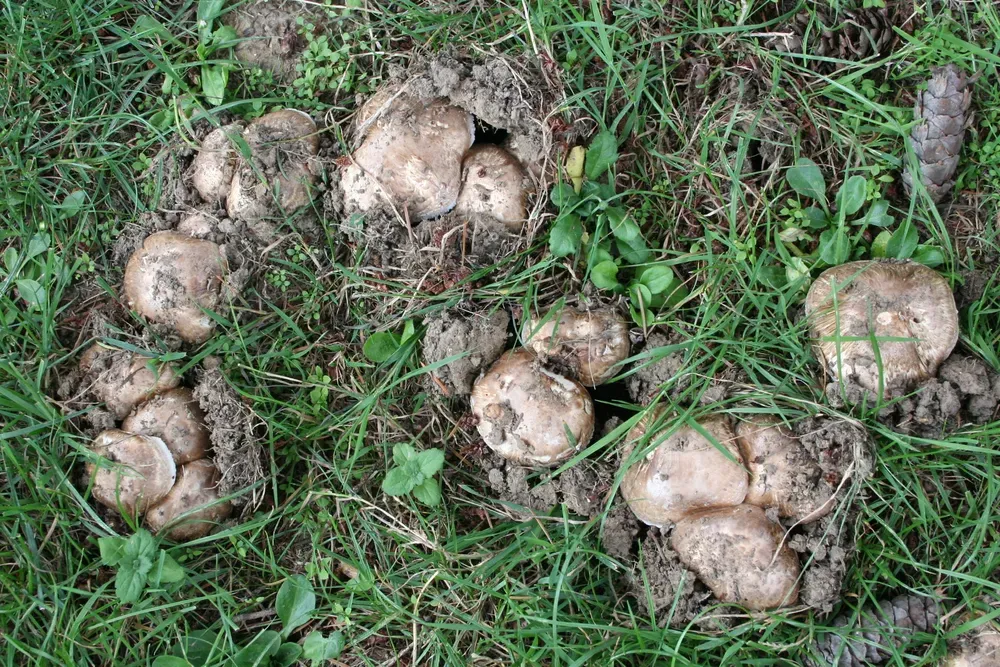
Mushrooms of the same genus and habitat — to study side by side and never mix up.
.webp)
_Fr._4948278370-2.webp)
Related reading
 Where & when to forage
Parasol mushroom: when and where to pick it
The parasol mushroom, also called the umbrella mushroom, is a big, tasty mushroom of forest edges and clearing…
July 19, 2026·2 min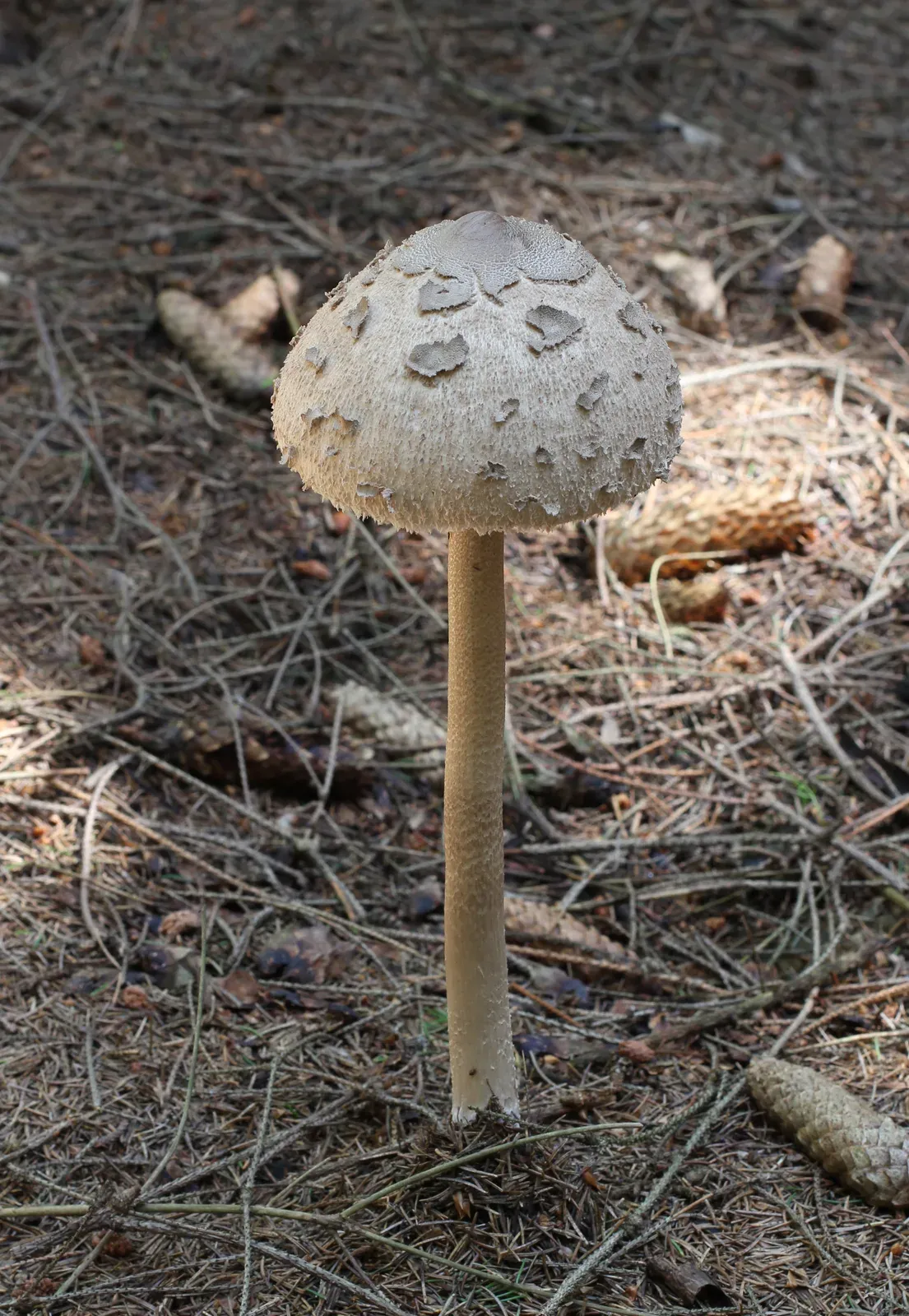 How to identify
Parasol mushroom, a giant worth knowing
A tall mushroom with an umbrella cap, the parasol is a tasty delicacy, but people confuse it with amanitas. He…
June 12, 2026·3 min
Frequently asked questions
Is it safe to pick?
Yes, but with caution. The frayed parasol is perfectly edible, but small, deadly poisonous Lepiota species (Lepiota brunneoincarnata, L. josserandii) also grow in fields and meadows. Take only specimens 10+ cm tall with a thick stem (at least 8 mm). Anything under 6 cm — never, no matter how similar it looks.
How is it different from the deadly poisonous Lepiota species?
Size is the main criterion. Macrolepiota excoriata is 10–15 cm tall, with a stem 8+ mm thick. Poisonous small Lepiota are at most 6 cm tall, with a 2–4 mm stem. In addition, the flesh of poisonous Lepiota often has pink or reddish tones, while the frayed parasol's flesh is consistently white.
Where to look in Ukraine?
Meadows, pastures, the verges of field tracks, parks, orchards, allotment gardens. It loves open grassy spaces with organic-rich soil. Throughout the steppe, forest-steppe and Polissia belts. It does not grow in forests — this is an open-field species.
When does it fruit?
From midsummer to late fall: June — November. Peak fruiting is August–September after heavy summer rains. In dry years it may not appear at all. It likes warm, humid weather.
How is it different from the parasol mushroom?
The parasol mushroom (Macrolepiota procera) is much bigger — up to 30 cm tall, with a 1–2 cm stem bearing a characteristic "snakeskin" pattern of dark scales. The frayed parasol is smaller, and its stem is smooth or has barely noticeable scales. Both are edible.
How to cook it?
A young cap (unopened or just opened) is best. Peel the skin off the stem (it is tough). Coat the cap in flour and fry it like a schnitzel — that's the classic way to serve it. Or stew it with vegetables, add it to omelets. You can dry it, but with limited results — the aroma is weak.
How long does it keep fresh?
1–2 days in the fridge, no more. The flesh quickly darkens and soaks up moisture. Best of all — cook it the day you pick it. Freezing it raw doesn't work very well (the tissue turns mushy); it's better to boil or sauté it first.
Is Frayed parasol edible or poisonous?
Does Frayed parasol have gills or pores?
What does the cap of Frayed parasol look like?
What does the stem of Frayed parasol look like?
What do Frayed parasol smell and taste like?
Sources
- [1]Вікіпедія (українська)
- [2]Атлас грибів України, Зеров Д.К. (1979)
- [3]MycoBank Database
- [4]Index Fungorum
- [5]GBIF
- [6]iNaturalist Ukraine