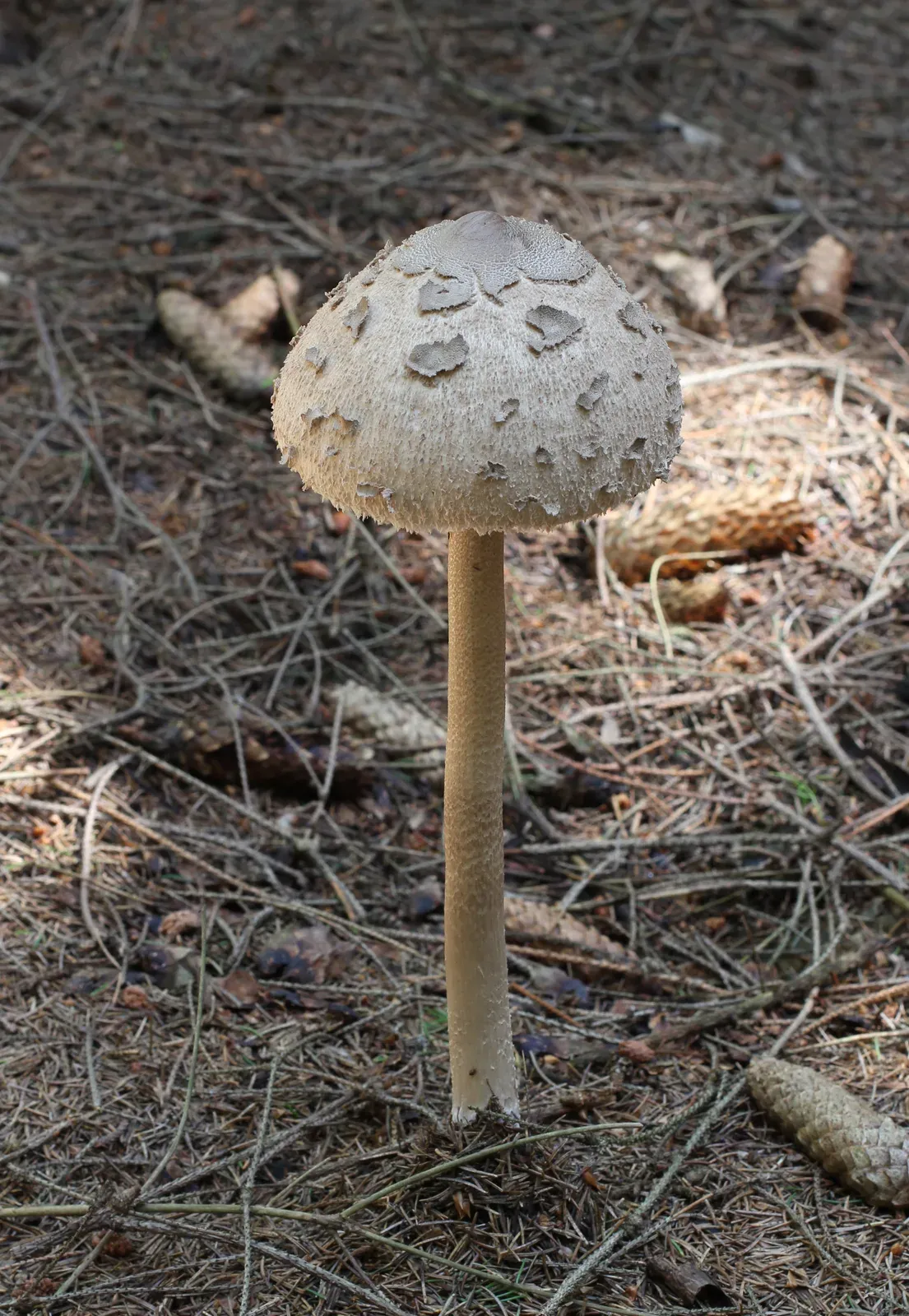
In forest clearings, along woodland edges and in meadows you'll come across a true giant among mushrooms: the parasol. Its tall stem and wide cap, like an open umbrella, stand out from far away. This mushroom is considered a delicacy, and its caps are fried like a schnitzel. But because of the tall stem and the ring, beginners sometimes confuse it with amanitas, so knowing the parasol's features matters.
Let's look at what the parasol looks like, where it grows, how it's cooked and how to confidently tell it apart from its dangerous lookalikes.
What the parasol looks like
Parasol mushroom has a very distinctive look that makes it easy to recognize.
- Size. One of our largest mushrooms: the stem is up to 30-40 cm tall, the cap up to 25-30 cm across.
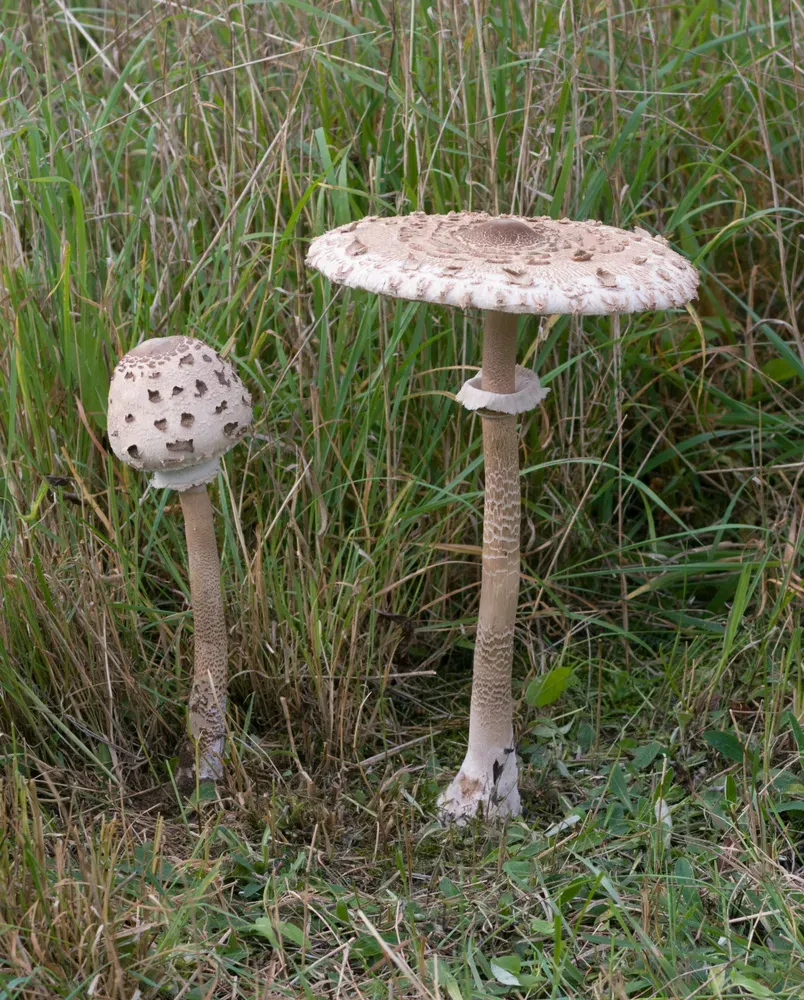
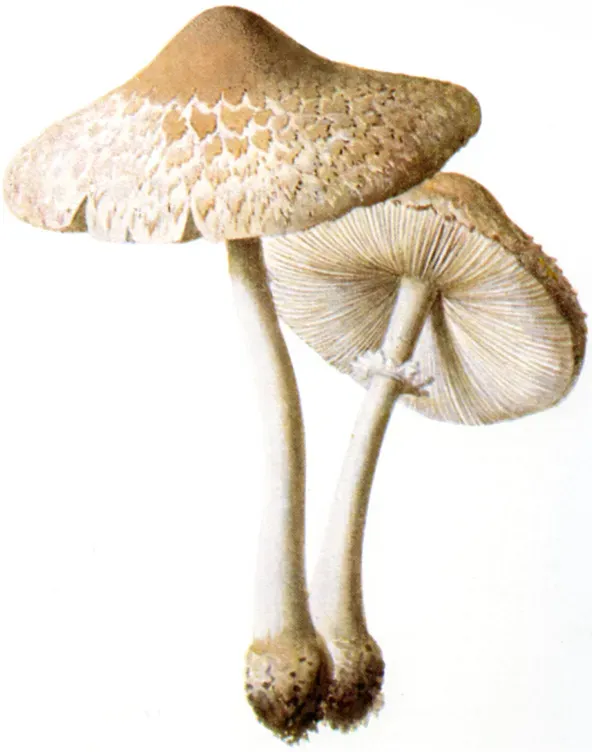
- Cap. Egg-shaped in a young mushroom, then it opens into a wide umbrella with a bump in the middle, gray-brown, covered with large, upturned scales.
- Stem. Tall, slender, hollow inside, with a distinctive pattern that looks like snakeskin.
- Ring. The stem has a wide ring that you can freely slide up and down. This is an important feature.
The combination of large size, a scaly umbrella cap, a tall patterned stem and a movable ring makes the parasol easy to recognize.
Where and when the parasol grows
The parasol loves open, sunny spots rather than deep forest.
Look for it in clearings, along woodland edges and forest roads, in meadows and even in pastures, among the grass. The parasol grows alone or in small groups, from summer to autumn.
Alongside the large parasol you may also find the smaller frayed parasol, which is edible too. All edible parasols share a large scaly cap and a movable ring on the stem.
How not to confuse the parasol with lookalikes
This is the most important part, because it's exactly the tall stem and ring that make people confuse the parasol with dangerous mushrooms.
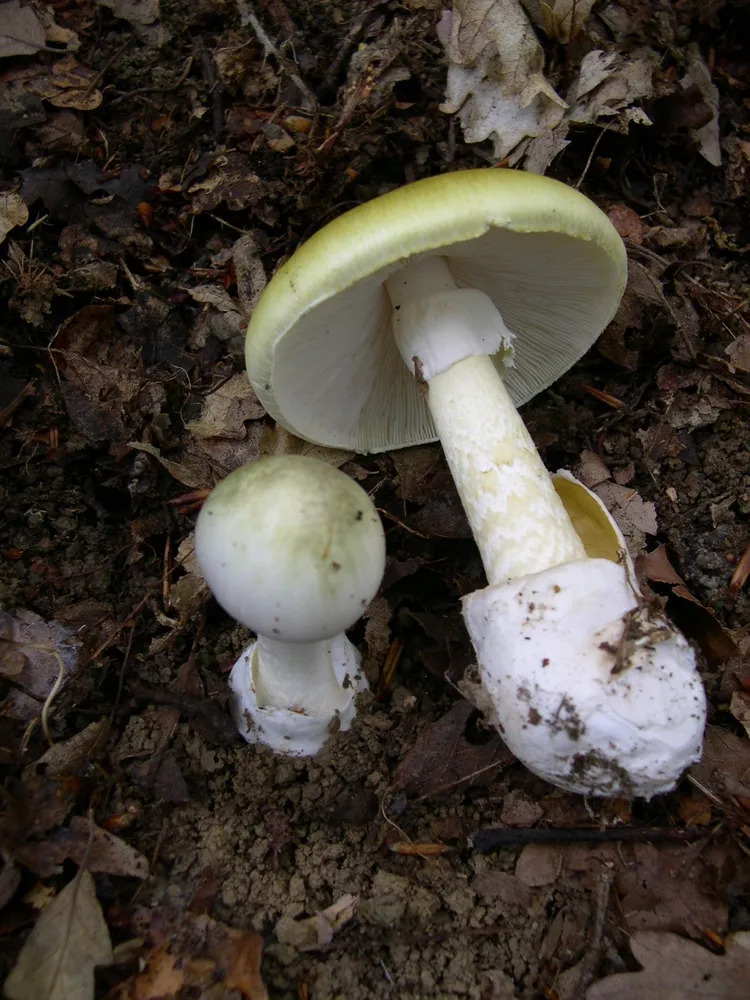
- Check the base of the stem. The parasol has no sac at the base. The death cap and amanitas have a sac, the volva. Dig the mushroom up whole.
- Look at the ring. On the parasol it's wide and slides freely along the stem. In amanitas the ring is attached.
- Judge the size and scales. A mature parasol is large, with big, upturned scales, something you won't find on the panther cap.
- Don't pick young ones still in the button stage. Until the cap has opened, the parasol is easiest to confuse with other mushrooms.
The main rule: a movable ring and no sac means a parasol; an attached ring or a sac at the base is a reason to be wary. When in doubt, check our safe foraging rules.
How to cook the parasol
With the parasol, you mostly eat the caps, because the stems are tough and fibrous.
The classic dish is a parasol cap fried in breadcrumbs, like a schnitzel or cutlet. A large cap is dipped in egg and breadcrumbs and pan-fried until golden. The result is a tender dish with a nutty flavor.
Parasols are also stewed, added to scrambled eggs and dried. Only young, clean caps are cooked, and the tough stems are set aside. For more on mushrooms that call for similar caution, read our piece on Agaricus mushrooms and how they differ from the death cap.
Sources
- "Key to the Fungi of Ukraine" (Kyiv, Naukova Dumka publishing house).
- Macrolepiota procera on GBIF, the global biodiversity database.
- Macrolepiota procera on MycoBank, the international fungal nomenclature database.
- Macrolepiota procera on Wikipedia.
Frequently asked questions
What does the parasol mushroom look like?
It's a large mushroom with a tall, slender stem and a wide umbrella cap with a bump, covered in large scales. The stem has a movable ring and a pattern that looks like snakeskin.
Is the parasol mushroom edible?
Yes, it's a tasty edible mushroom considered a delicacy. People mostly eat the young caps, frying them in breadcrumbs like a schnitzel. The tough stems aren't eaten.
How do you tell a parasol from an amanita?
By the ring and the base of the stem. The parasol's ring is wide and slides freely, and there's no sac at the base. Amanitas and the have an attached ring and a volva sac at the bottom.
Where does the parasol mushroom grow?
In open, sunny spots: clearings, woodland edges, forest roads, meadows and pastures, among the grass. It grows alone or in small groups from summer to autumn.
Why is the parasol confused with poisonous mushrooms?
Because of its tall stem with a ring, which resembles an amanita. A simple check saves you: a movable ring and no sac at the base mean a parasol, not a .
Which part of the parasol do you eat?
Mostly the caps, because the stems are tough and fibrous. Young, clean caps are fried in breadcrumbs, stewed, added to scrambled eggs or dried. The stems are usually set aside.
Can you pick young, unopened parasols?
Better not. Until the cap has opened into an umbrella, the parasol is hardest to tell apart from other mushrooms. It's safer to pick mature mushrooms with clearly visible scales and a movable ring.
How does the frayed parasol differ from the large parasol?
is smaller, but it's also edible and has the same key features: a scaly cap and a movable ring on a stem with no sac at the base.
Mushrooms in this article
Related articles
 How to identify
Truffles in Ukraine: do they grow here, and where to look
Truffles aren't just a French delicacy. Several species grow in Ukraine too. Here's which ones, where they occ…
August 24, 2026·2 min Recipes & cooking
How to store fresh mushrooms, and for how long
Fresh mushrooms spoil faster than you might think. Here's how long they keep in the fridge, how to store them…
August 21, 2026·4 min Recipes & cooking
How long to boil mushrooms
Boiling time depends on the type of mushroom and on what you're cooking next. Here's a clear cheat sheet: how…
August 22, 2026·4 min