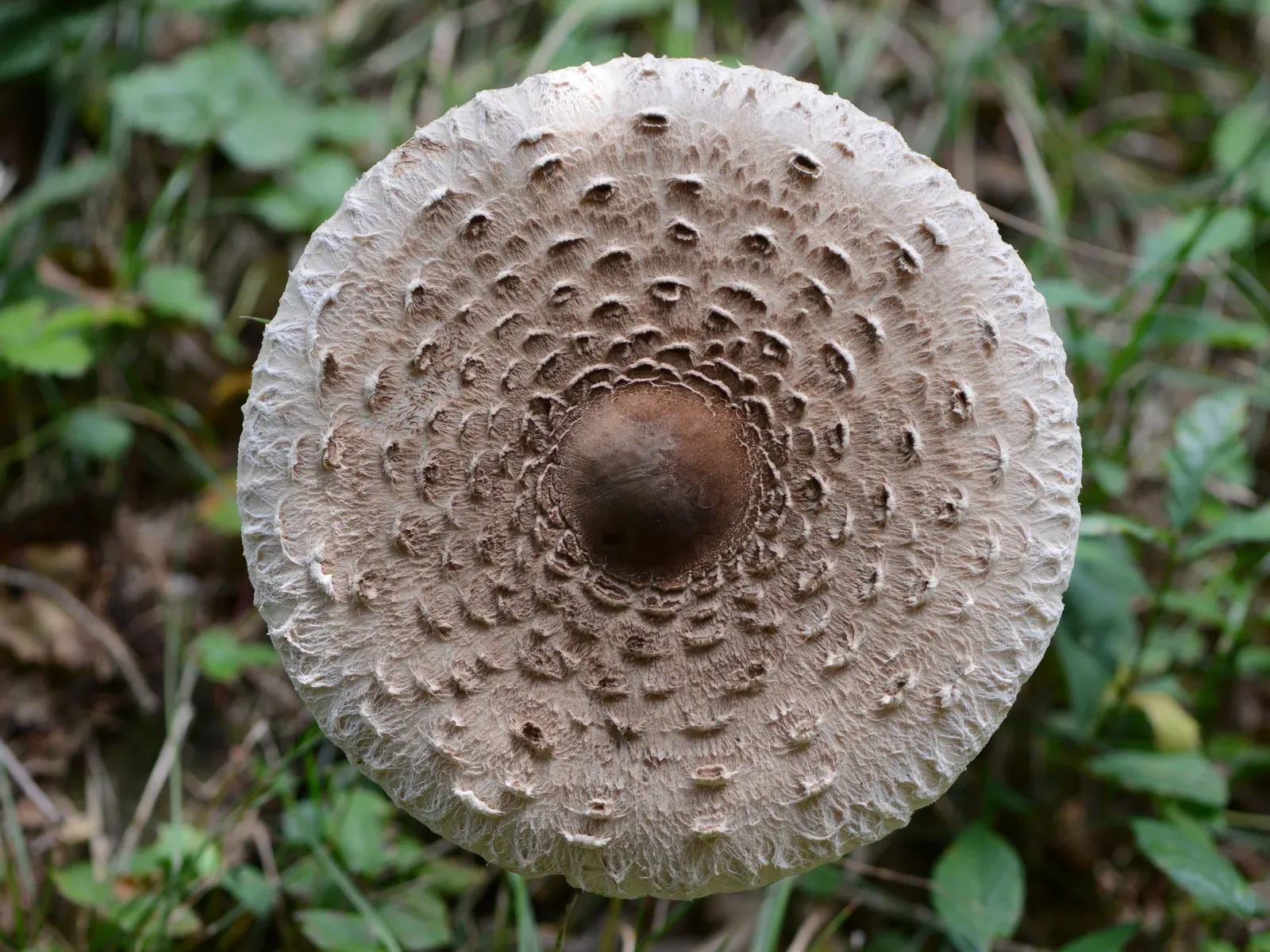
The parasol mushroom is one of the most striking edible mushrooms: its tall stem and wide scaly cap really do look like an open umbrella. Big and meaty, parasols are prized for their flavor, and a fried cap is a delicacy all on its own. But dangerous look-alikes grow right next to them, so you need to recognize a parasol with confidence.
Let's look at when and where to pick the parasol mushroom and how to tell it apart from poisonous mushrooms.
When the parasol mushroom grows
Parasols appear from July and last until October, peaking in late summer and early autumn. They love warmth and moisture after rain, and they grow fast — in a day or two the cap opens from a tight “drumstick” into a wide umbrella.
Where to look for parasols
The parasol mushroom loves open, sunny spots:
- forest edges, clearings, forest roads;
- meadows, pastures, old orchards;
- open broadleaf and mixed woods.
Parasols often grow in groups and even in “fairy rings” on grassy patches. We also write about other mushrooms of forest edges and meadows.
How to recognize a parasol mushroom
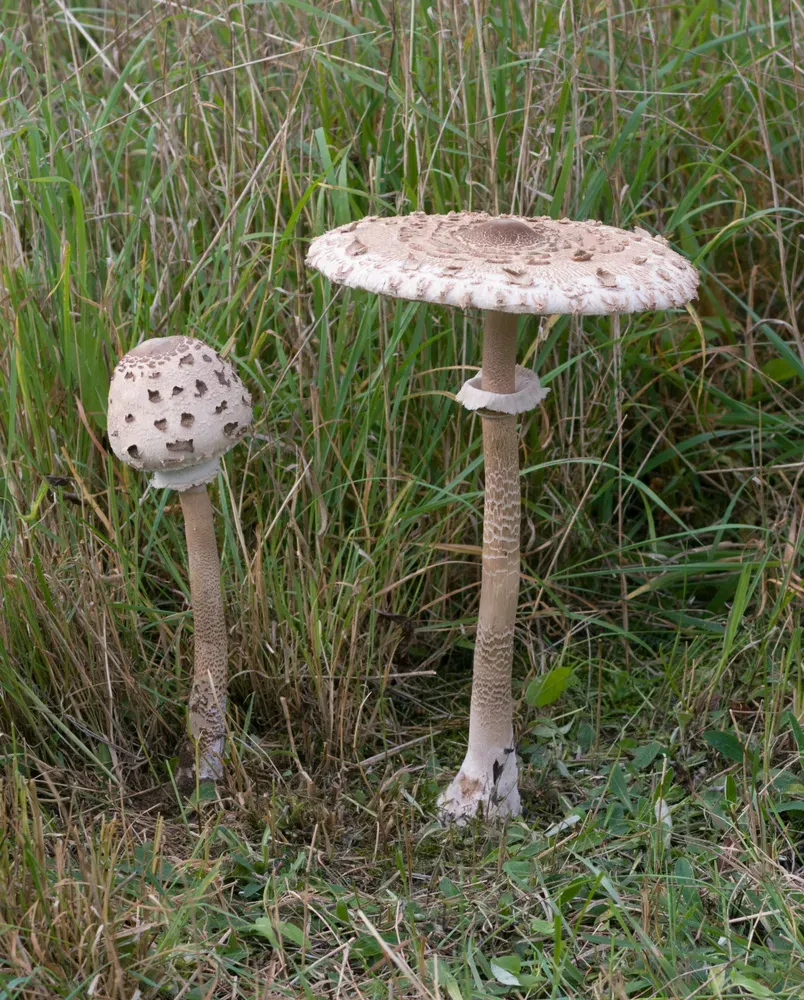
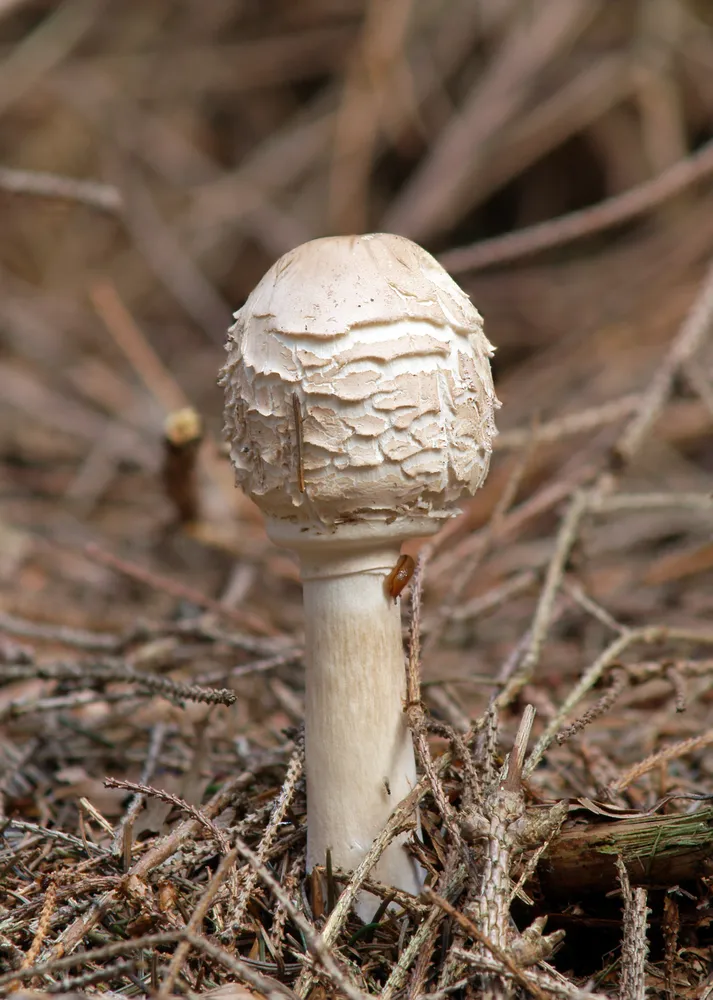
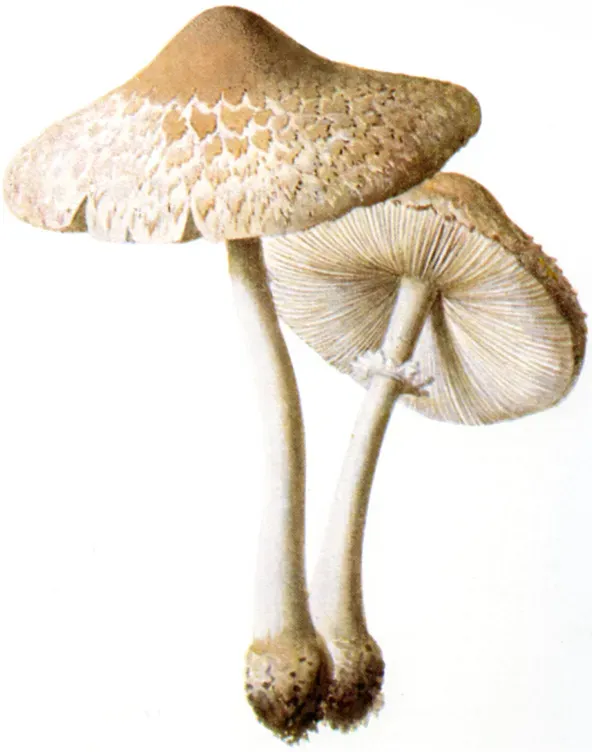
- Cap large (10–25 cm), grayish-brown, covered in loose scales, with a bump in the center; egg-shaped in young mushrooms.
- Stem tall, slender, with a snakeskin pattern and a movable ring that you can slide up and down.
- Flesh white, doesn't change color (in the shaggy parasol it reddens slightly when broken).
- Size — parasols are noticeably bigger than toadstools.
A movable ring on the stem and a big scaly cap are reliable signs.
Careful: look-alikes
The main danger is mistaking a young parasol for an amanita or small species for poisonous Chlorophyllum species. Precautions:
- Don't pick small “parasols” under 8–10 cm — that's exactly where the poisonous ones are.
- Avoid mushrooms with a bulb and a sac (volva) at the base of the stem (a sign of an amanita).
- Flesh that turns sharply yellow or brown when broken is a reason to pass.
Pick only large parasols with a movable ring that you're sure of.
Sources
- “Identification Guide to the Fungi of Ukraine” (Kyiv, Naukova Dumka publishing house).
- Macrolepiota procera in GBIF, the global biodiversity database.
- Macrolepiota procera in MycoBank, the international fungal nomenclature database.
- Macrolepiota procera on Wikipedia.
Frequently asked questions
When should you pick parasol mushrooms?
From July to October, peaking in late summer and early autumn, after warm rains.
Where does the parasol mushroom grow?
In open, sunny spots — forest edges, clearings, meadows, pastures, old orchards and open woods, often in groups.
How do you recognize a parasol mushroom?
By its big, scaly gray cap with a bump in the center, its tall patterned stem and a movable ring that slides along the stem.
Is the parasol mushroom edible?
Yes, big parasols are tasty and prized; a fried cap is considered a delicacy. But you need to tell them apart from look-alikes with confidence.
What are the parasol's look-alikes?
It's dangerous to mistake a young parasol for an amanita, and small species for poisonous Chlorophyllum species. That's why it's best not to pick small “parasols.”
How do you tell a parasol from an amanita?
A parasol has no sac (volva) and no bulb at the base of the stem, its ring is movable, and its flesh doesn't sharply change color. An amanita has a bulbous base with a sac.
Why is it advised to pick only large parasols?
Because some of the small species are poisonous. A big parasol with a movable ring and scales is much easier to identify reliably.
Can you eat the parasol's stem?
The stem is fibrous and tough, so usually only the meaty cap is eaten and the stem is thrown away.
Mushrooms in this article
Related articles
 Recipes & cooking
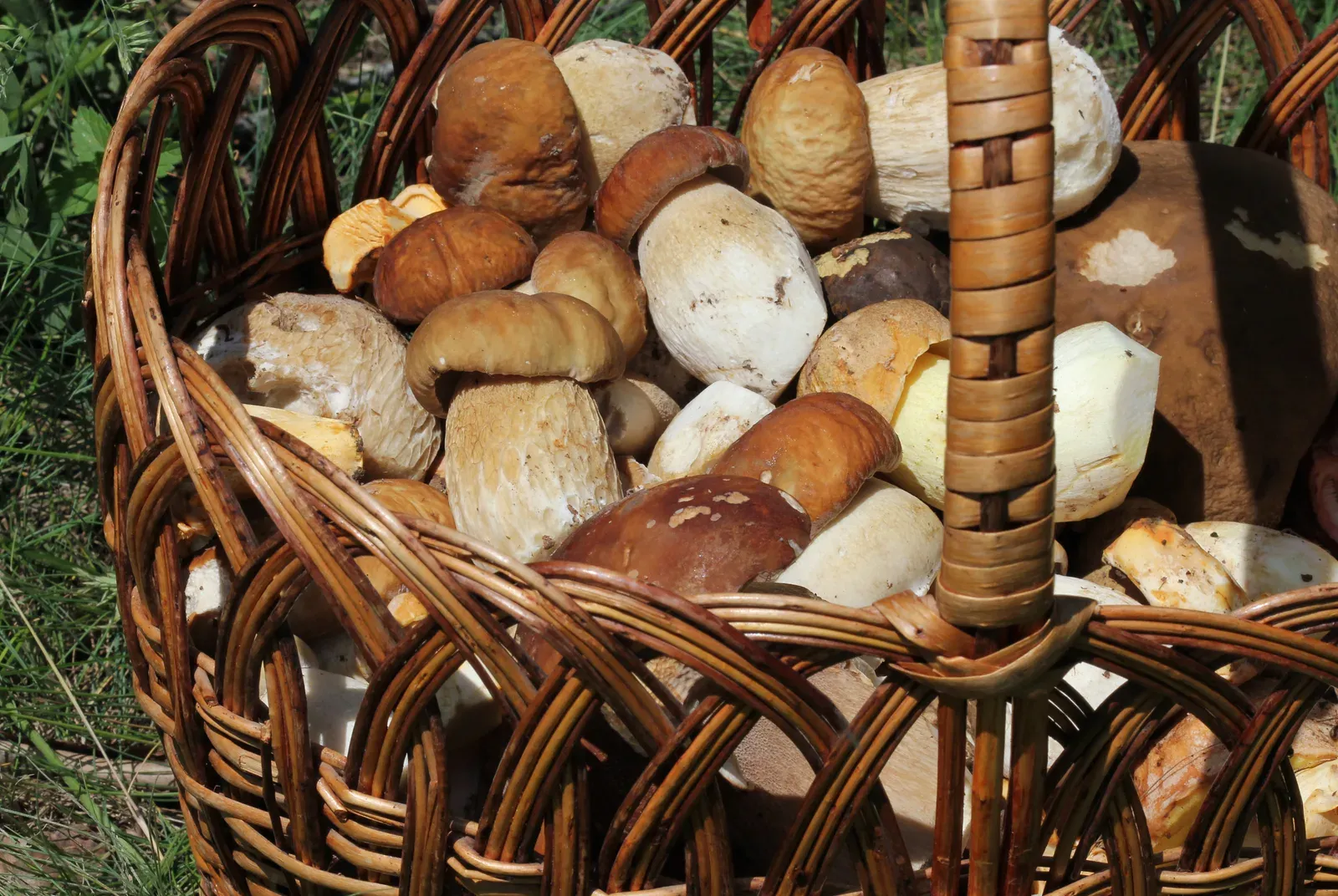
How to store fresh mushrooms, and for how long
Fresh mushrooms spoil faster than you might think. Here's how long they keep in the fridge, how to store them…
August 21, 2026·4 min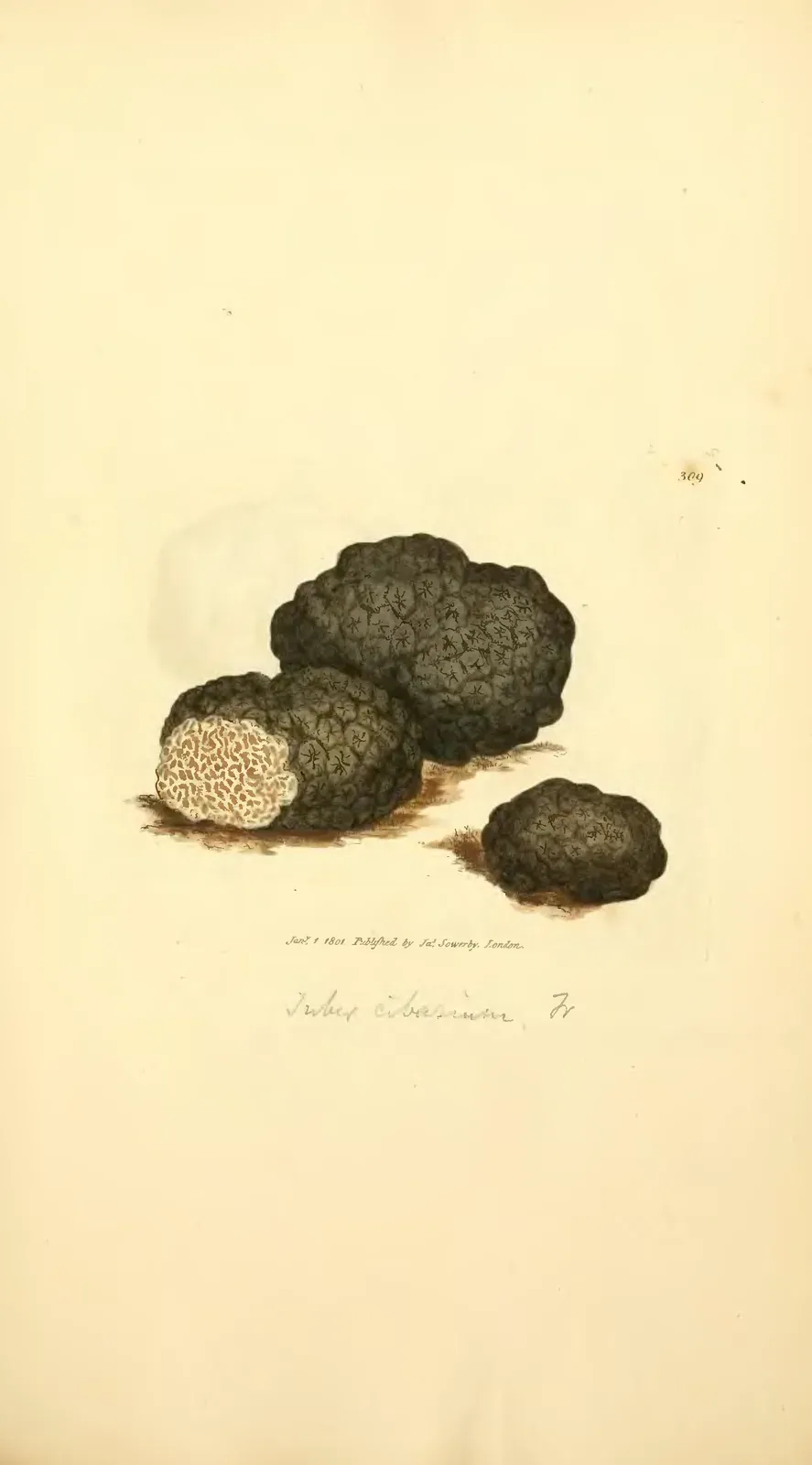 How to identify
Truffles in Ukraine: do they grow here, and where to look
Truffles aren't just a French delicacy. Several species grow in Ukraine too. Here's which ones, where they occ…
August 24, 2026·2 min Recipes & cooking
How long to boil mushrooms
Boiling time depends on the type of mushroom and on what you're cooking next. Here's a clear cheat sheet: how…
August 22, 2026·4 min