Verdigris agaricStropharia aeruginosa
Expert-verifiedUpdated October 3, 2026
Passport
- Edibility
- Inedible
- Season
- Aug — Nov
- Hymenophore
- Gilled
- Cap color
- Olive
- Size
- Small (up to 5 cm)
- Smell
- Radish-like
- Reviewed
- Yes ✓
Quick answers
Where to look?
Deciduous forest, Mixed forest
When does it appear?
Aug — Nov
Active months: August, September, October, November.
How to recognize it? Three signs
- Cap color: Olive, Yellow
- Cap shape: Convex
- Smell: Radish-like
Fruiting season
August – November
Description
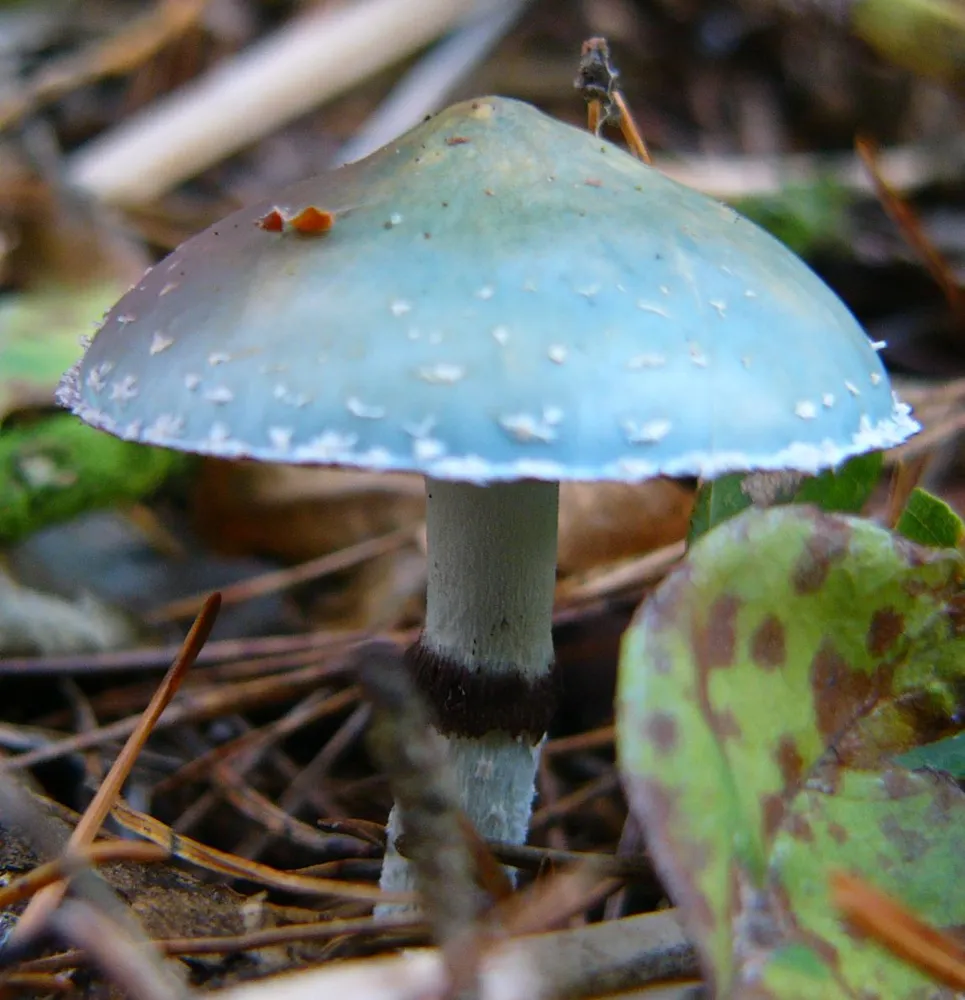
The verdigris agaric (Stropharia aeruginosa) is a distinctive bright green-blue mushroom with a prominent ring on the stem, one of the most recognizable species in the family Strophariaceae. The Latin epithet aeruginosa (as in Russula aeruginea) means "copper-green, verdigris-green" — a perfect description of its unique color. The cap is 3-8 cm across, convex-bell-shaped when young, flattening with age with a low hump, strikingly blue-green to bluish green, with a characteristic metallic sheen in wet weather, and as it fades it turns yellowish with a greenish tint.
Inedible — in Ukrainian and European tradition it is listed as inedible or conditionally edible after boiling, and some sources mention risks of gastrointestinal upset and mildly psychoactive effects (the species is closely related to psychoactive Stropharia and Psilocybe, contains trace amounts of psilocybin in some populations — not enough for a pronounced effect, but enough for an unpredictable reaction in some people).
Current recommendation — DO NOT EAT: (1) unpredictable psychoactivity in some fruiting bodies; (2) possible gastrointestinal upset; (3) its legal status is unclear in various European countries because of its kinship with controlled species; (4) little culinary value; (5) there are plenty of unquestionably safe mushrooms.
Key features of Stropharia aeruginosa: A strikingly blue-green cap with a metallic sheen in wet weather Slimy, sticky cap skin in wet weather A membranous ring on the stem (often with purple-black spore deposits) Dark violet gills in mature specimens Spore print dark violet-black — typical of the genus Flesh pale greenish white Smell faint, mushroomy, with a hint of radish Grows in broadleaf and mixed forests on rotting leaves and forest litter, sometimes on decaying wood
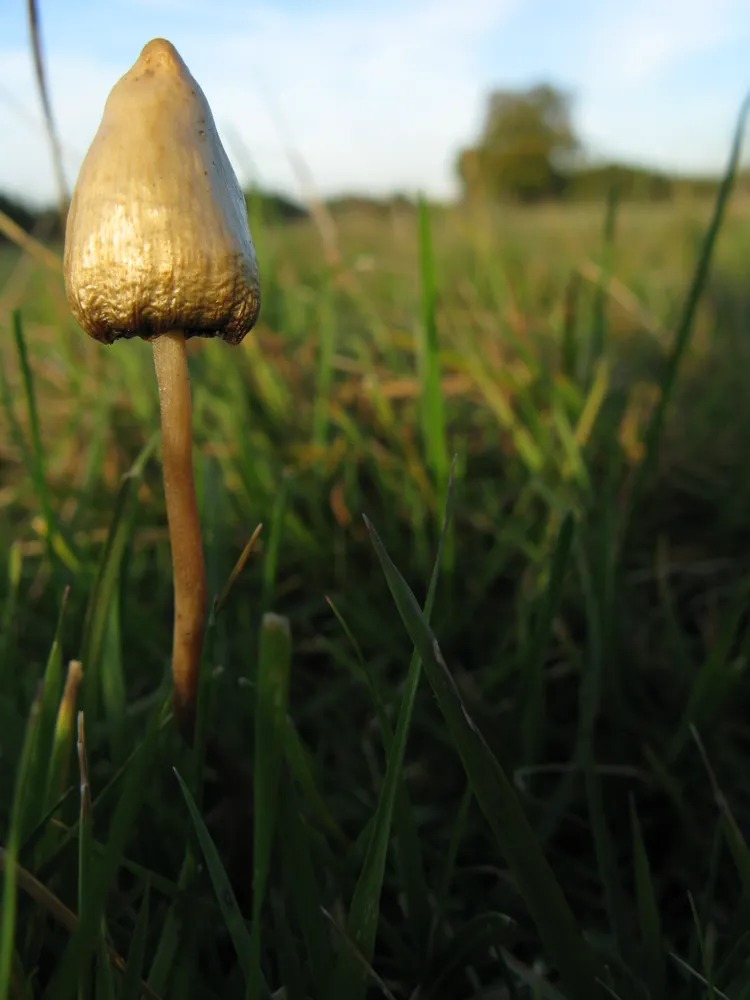
The main risk is confusing it with Stropharia caerulea (rarer, also blue-green, with no ring or only a rudimentary one) and with young toxic psychoactive Psilocybe semilanceata (much smaller, with a pointed knob). The key check — the spore print is dark violet-black in Stropharia.
In Ukraine, Stropharia aeruginosa is common in broadleaf and mixed forests: the Carpathians, the Carpathian foothills, Polissia, the forest-steppe. Season: August — November.
Cap
Cap 3-8 cm across, when young convex-bell-shaped with an inrolled margin, with age becoming flat and spread out with a low hump. Cap skin slimy and sticky in wet weather, dry and matte when dry, with a characteristic metallic sheen. Color strikingly blue-green to bluish green, deeper in the center, paler toward the margin, in mature specimens fading to yellowish green. Often with white scales — remnants of the veil — at the margin.
Hymenophore
Gilled hymenophore — gills attached or slightly decurrent, crowded. Color when young — grayish white, with age becoming violet-blackish from the ripe spores. Spore print dark violet-black — diagnostic for the genus Stropharia.
Stem
Stem 3-8 cm tall, 0.5-1 cm thick, cylindrical, hollow in old specimens. Color blue-green in the upper part, paler and whitish lower down. Surface slimy and sticky, with white cottony veil remnants. With a prominent membranous RING in the upper third of the stem, often with purple-black spore deposits on the ring.
Flesh
Flesh thin, brittle, pale greenish white, doesn't change color when cut. Smell faint, mushroomy, with a hint of radish or damp soil, taste mild, bitterish in some populations.
Smell
Faint, mushroomy, with a hint of radish or damp soil, neutral.
Lookalikes
Related species
Mushrooms of the same genus and habitat — to study side by side and never mix up.
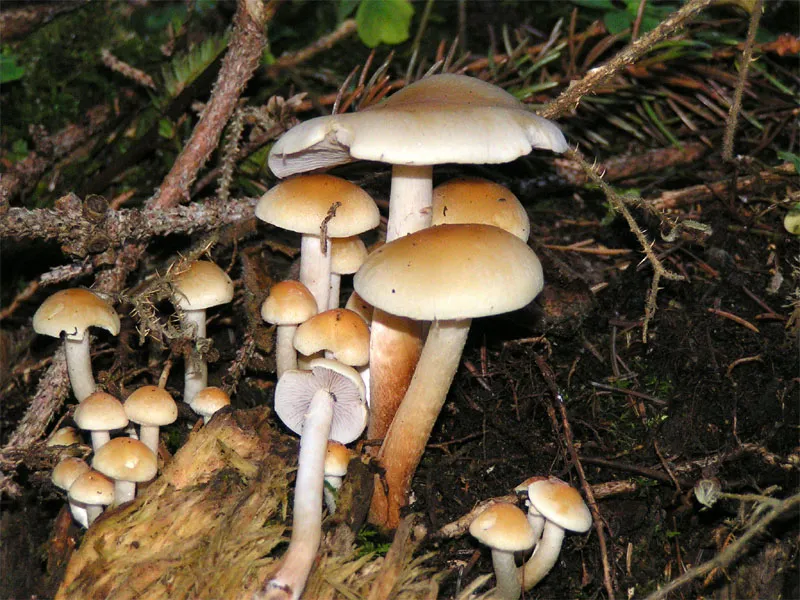
Brick tuft
Hypholoma lateritium
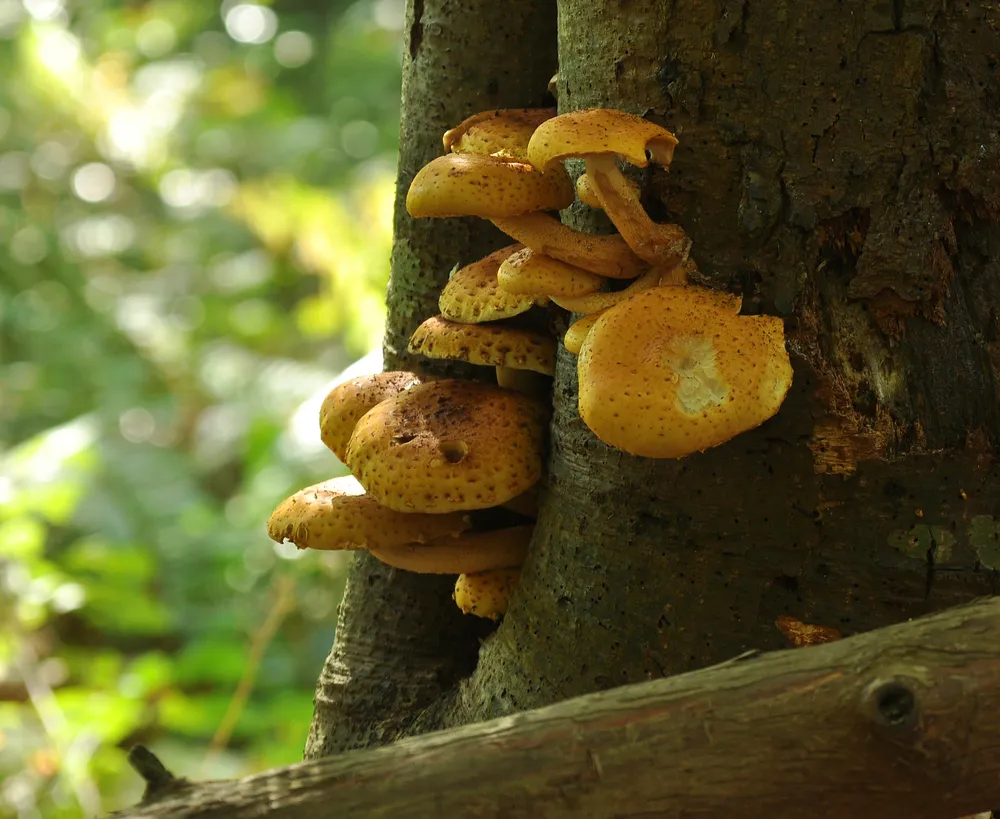
Conifer tuft
Hypholoma capnoides
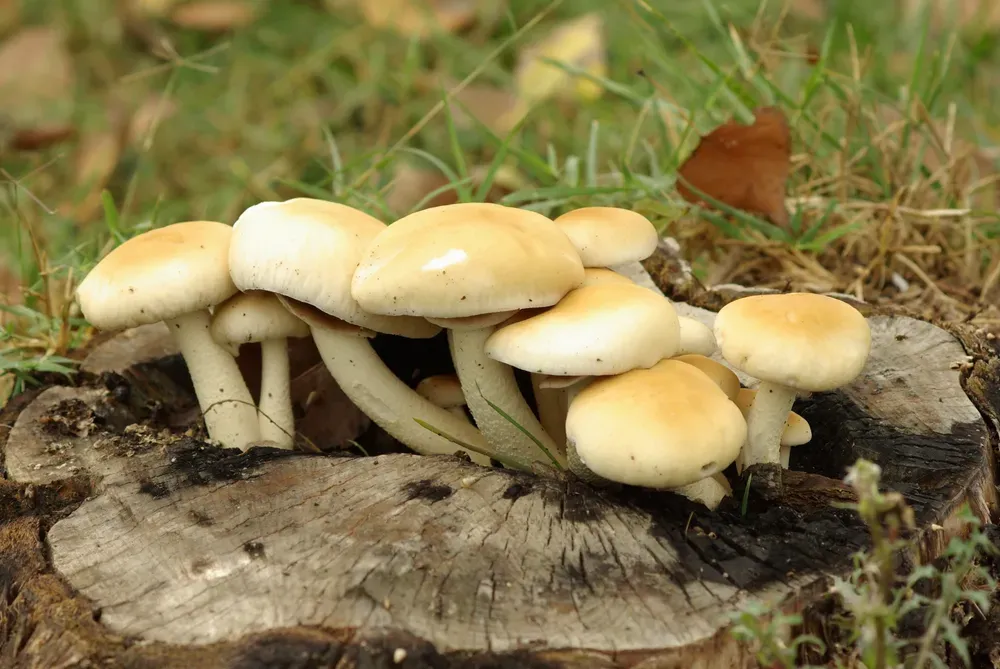
Golden scalycap
Pholiota aurivella
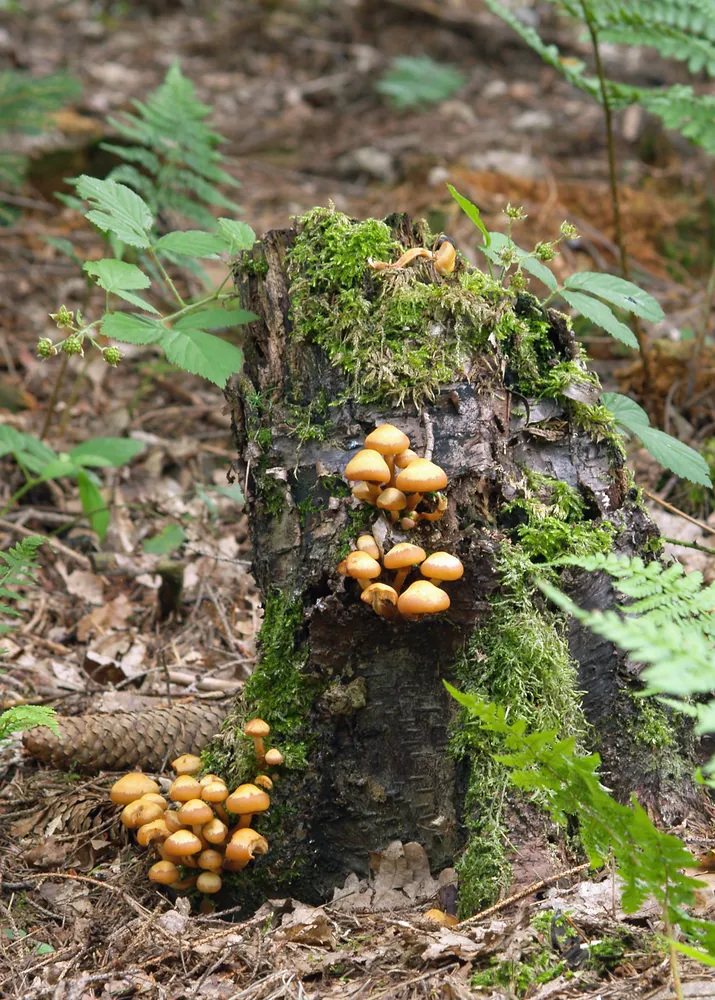
Poplar fieldcap
Cyclocybe aegerita
Sheathed woodtuft
Kuehneromyces mutabilis
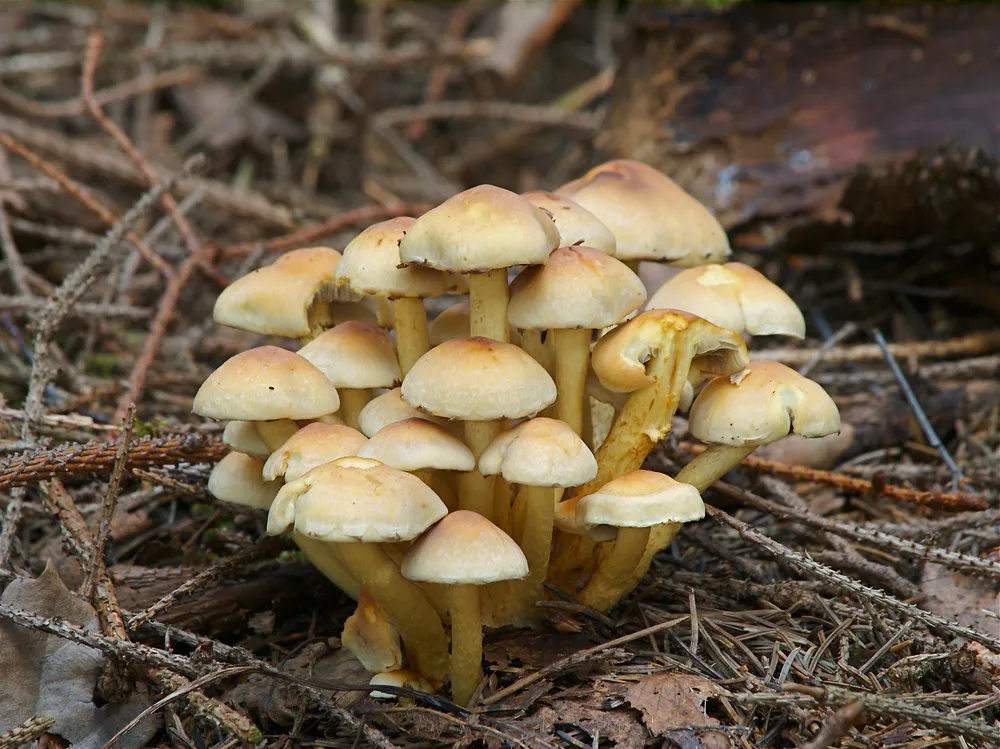
Sulphur tuft
Hypholoma fasciculare

Agrocybe arvalis
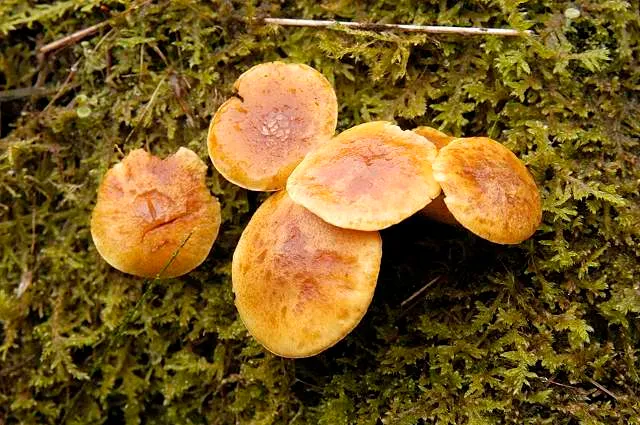
Slender pholiota
Pholiota spumosa
Frequently asked questions
Can you eat it?
Better not. Current recommendation — DO NOT EAT because of: (1) unpredictable psychoactivity in some fruiting bodies (close kinship with Psilocybe, possible traces of psilocybin); (2) possible gastrointestinal upset; (3) mediocre culinary value. There are plenty of unquestionably safe mushrooms — why take chances with a green one?
Is it a psychoactive mushroom?
Not really — psilocybin concentrations (if any) are much lower than in Psilocybe semilanceata. But some people have reported a mild psychoactive reaction (dizziness, slight visual changes) after eating a significant amount. It's not a deliberate psychedelic, but a "random" reaction that makes the species unpredictable and dangerous.
How do you identify it for sure?
Four features. (1) A strikingly blue-green cap with a metallic sheen (a unique color). (2) Slimy, sticky cap skin in wet weather. (3) A ring on the stem with dark violet spore deposits. (4) A dark violet-black spore print. You won't mistake it for anything else.
Where should you look for it, so you'll recognize it?
In broadleaf and mixed forests on forest litter, rotting leaves, decaying wood. It likes damp, shady spots. Often grows in groups of 3-10 fruiting bodies.
Which regions of Ukraine is it found in?
Common throughout the forest zone: the Carpathians, the Carpathian foothills, Polissia, the forest-steppe.
When can you find it?
August — November, peaking in September–October.
Which mushrooms is it confused with?
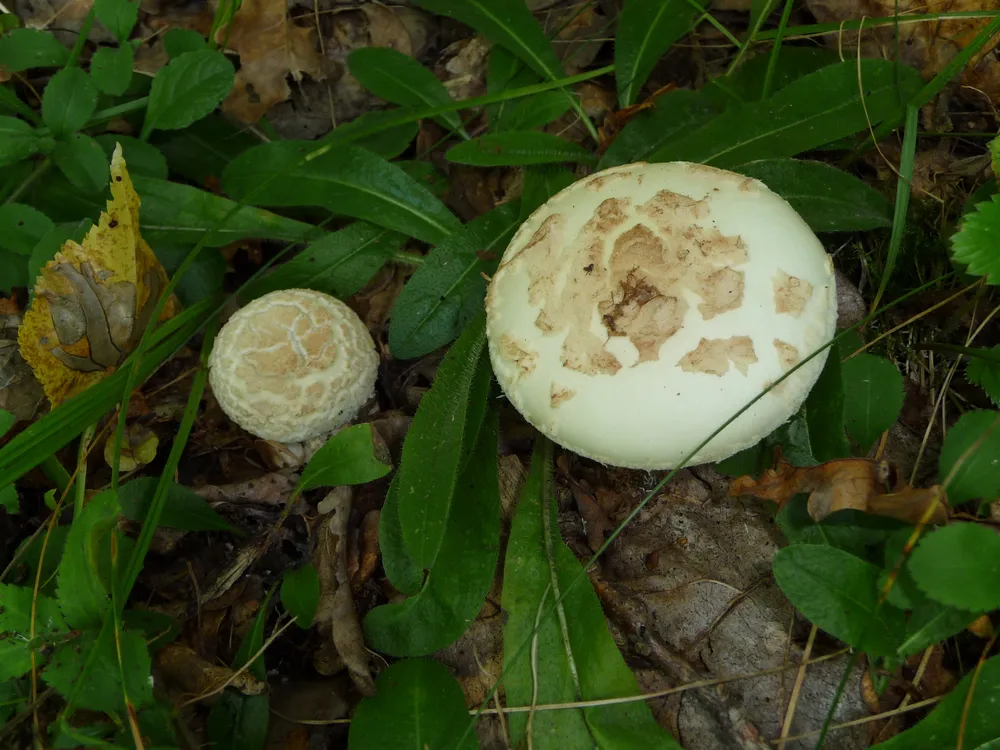
With Stropharia caerulea — also blue-green, but without a prominent ring (only a rudimentary one). With Psilocybe semilanceata — much smaller (1-2 cm), without the shiny green cap, with a pointed knob — this is a true psychoactive mushroom (banned). With young poisonous Amanita citrina — with a ring and a volva, yellowish in tone.
Is Verdigris agaric edible or poisonous?
Does Verdigris agaric have gills or pores?
What does the cap of Verdigris agaric look like?
What does the stem of Verdigris agaric look like?
What do Verdigris agaric smell and taste like?
Sources
- [1]Вікіпедія (українська)
- [2]Атлас грибів України, Зеров Д.К. (1979)
- [3]MycoBank Database
- [4]Index Fungorum
- [5]GBIF
- [6]iNaturalist Ukraine