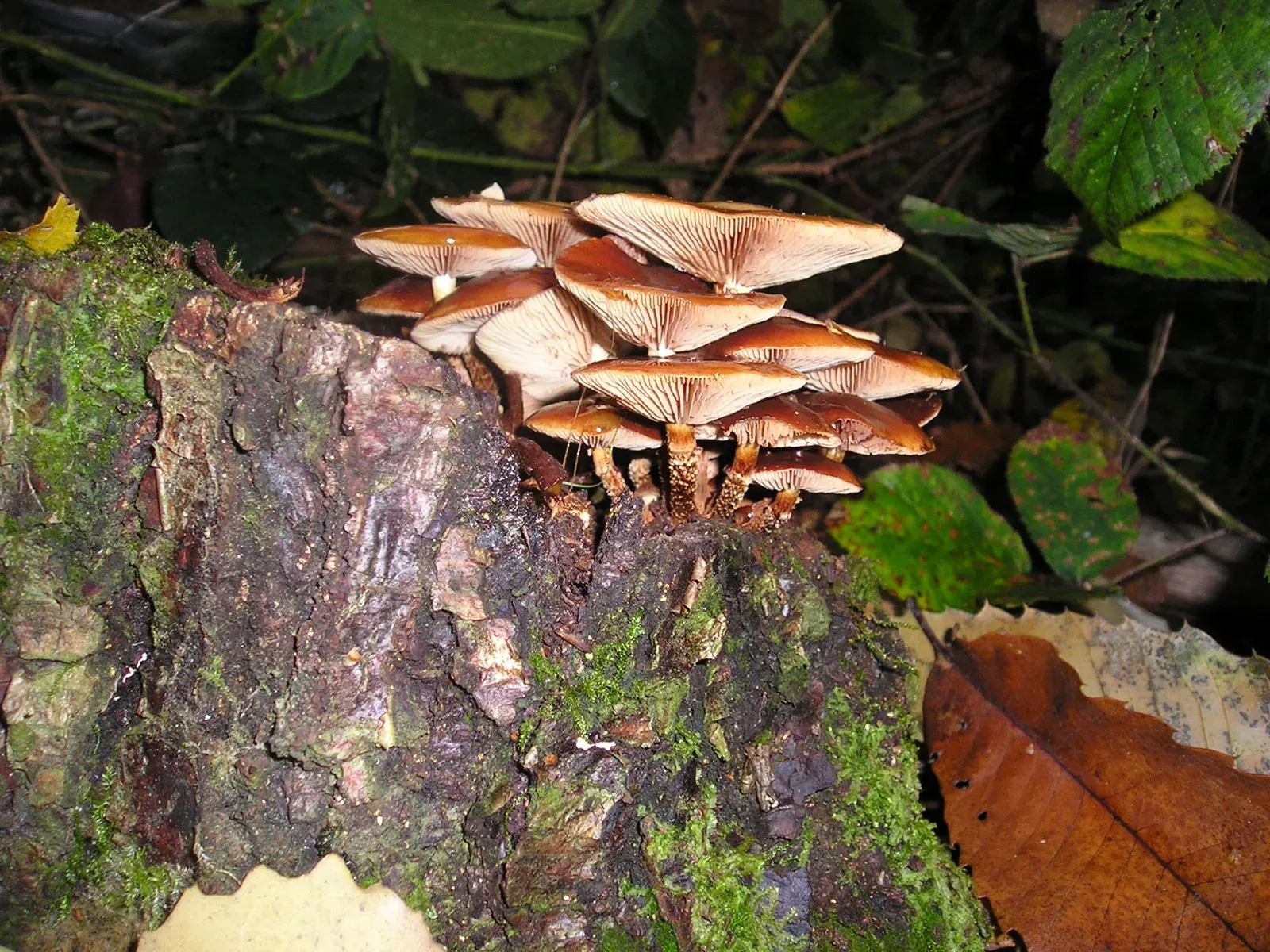
The word "opeňky" covers several different mushrooms that grow in clusters on wood. The two most often confused are the sheathed woodtuft and honey fungus. Both are tasty and edible, but they grow at different times and look a little different — and, most importantly, the sheathed woodtuft has a lookalike you need to know by sight.
Let's look at how the sheathed woodtuft differs from honey fungus and how to tell them apart with confidence.
When they grow
The most obvious difference is the season.
- Sheathed woodtuft appears as early as June and keeps going all summer into autumn, as long as it's warm and damp. It's one of the few summer mushrooms that grow in clusters on wood.
- Honey fungus starts in late August and comes up in large numbers in September–October. We have a separate article on when the honey fungus season starts.
So in August you can come across both: the sheathed woodtuft is still growing, and the first honey fungus is already appearing.
What they look like
The two look alike at first glance, but take a closer look and you'll see the difference.
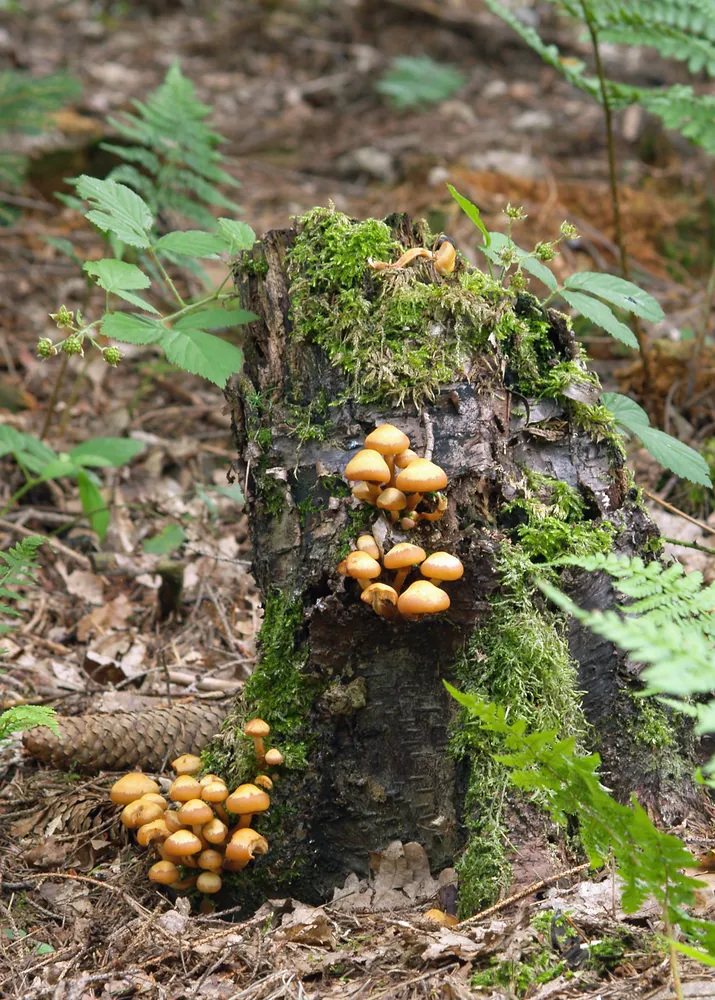
- Sheathed woodtuft. Cap honey-brown, paler in the center, with characteristic water-soaked zones toward the margin (translucent). The ring on the stem is thin; below it the stem is dark with fine scales. The gills turn brown with age.
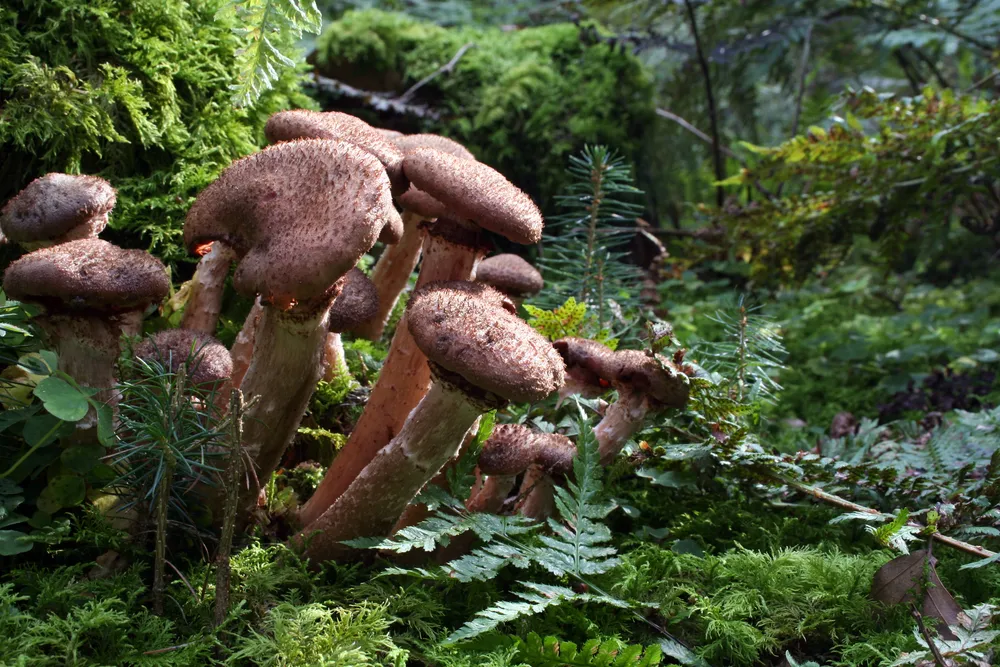
- Honey fungus. Cap honey-yellow or brown, covered in small dark scales, especially in the center. The ring on the stem is prominent and membranous, like a «skirt». Gills creamy white.
Both grow in dense clusters, fused at the base of the stems.
Are they edible
Both are good edible mushrooms that must always be boiled before cooking. Their flavor and uses are similar: frying, pickling, freezing.
But there's an important caveat about the sheathed woodtuft: it has a dangerous lookalike.
The sheathed woodtuft's dangerous lookalike
The sheathed woodtuft is easy to confuse with poisonous species that grow on wood at the same time — above all, the funeral bell (Galerina marginata). It is a deadly poisonous mushroom with a similar honey-brown cap that also grows on rotting stumps.
Key precautions:
- Don't pick sheathed woodtufts unless you're 100% sure.
- Avoid small «honey mushrooms» on conifer wood with a smooth, scaleless stem.
- Look closely at the gills and the ring — and check them against the identification features.
We've gathered the general rules for identifying honey mushrooms and their lookalikes separately: how to tell true honey mushrooms from false ones. And for a full overview of the species, see our guide to honey mushrooms of Ukraine.
In short: a comparison table
- Season: sheathed woodtuft — from June all summer; honey fungus — from late August, peaking in September–October.
- Cap: sheathed woodtuft — honey-brown with a water-soaked margin; honey fungus — with dark scales.
- Stem: sheathed woodtuft — dark with fine scales; honey fungus — with a membranous ring.
- Risk: sheathed woodtuft has a deadly lookalike (Galerina); honey fungus is harder to confuse, but check the ring too.
Sources
- «Key to the Fungi of Ukraine» (Kyiv, Naukova Dumka publishing house).
- Kuehneromyces mutabilis in GBIF, the Global Biodiversity Information Facility.
- Armillaria mellea in MycoBank, the international fungal nomenclature database.
- Sheathed woodtuft on Wikipedia.
Frequently asked questions
How does the sheathed woodtuft differ from honey fungus?
Mainly by season: the sheathed woodtuft grows all summer from June, honey fungus from late August. The sheathed woodtuft has a water-soaked cap margin and a dark scaly stem; honey fungus has dark scales on the cap and a membranous ring.
Are the sheathed woodtuft and honey fungus the same mushroom?
No, they're different species that simply grow in clusters on wood at different times. Their flavor and uses are similar, but they look and fruit differently.
Is the sheathed woodtuft edible?
Yes, the sheathed woodtuft is edible and tasty; it must always be boiled before cooking. But because of its dangerous lookalike, pick it only when you're completely sure.
What is the sheathed woodtuft's lookalike?
The deadly poisonous funeral bell (Galerina marginata) — a mushroom with a similar honey-brown cap that grows on rotting wood at the same time. It's the main reason to be careful.
Can you find both at the same time?
Yes, in August the sheathed woodtuft is still growing and the first honey fungus is already appearing, so you can come across both in the forest.
How do you tell a true honey mushroom from a false one?
The true one has a ring on the stem and creamy white gills; false honey mushrooms have no ring, and their gills are greenish or yellow. Always check against the identification features.
When is the best time to pick honey mushrooms?
Sheathed woodtuft — throughout a warm, damp summer; honey fungus — in September–October, at the peak of the season. Both come up in flushes after rain.
Where does the sheathed woodtuft grow?
On rotting hardwood — stumps, fallen trunks, around roots — in damp deciduous and mixed forests.
Mushrooms in this article
Related articles
 How to identify
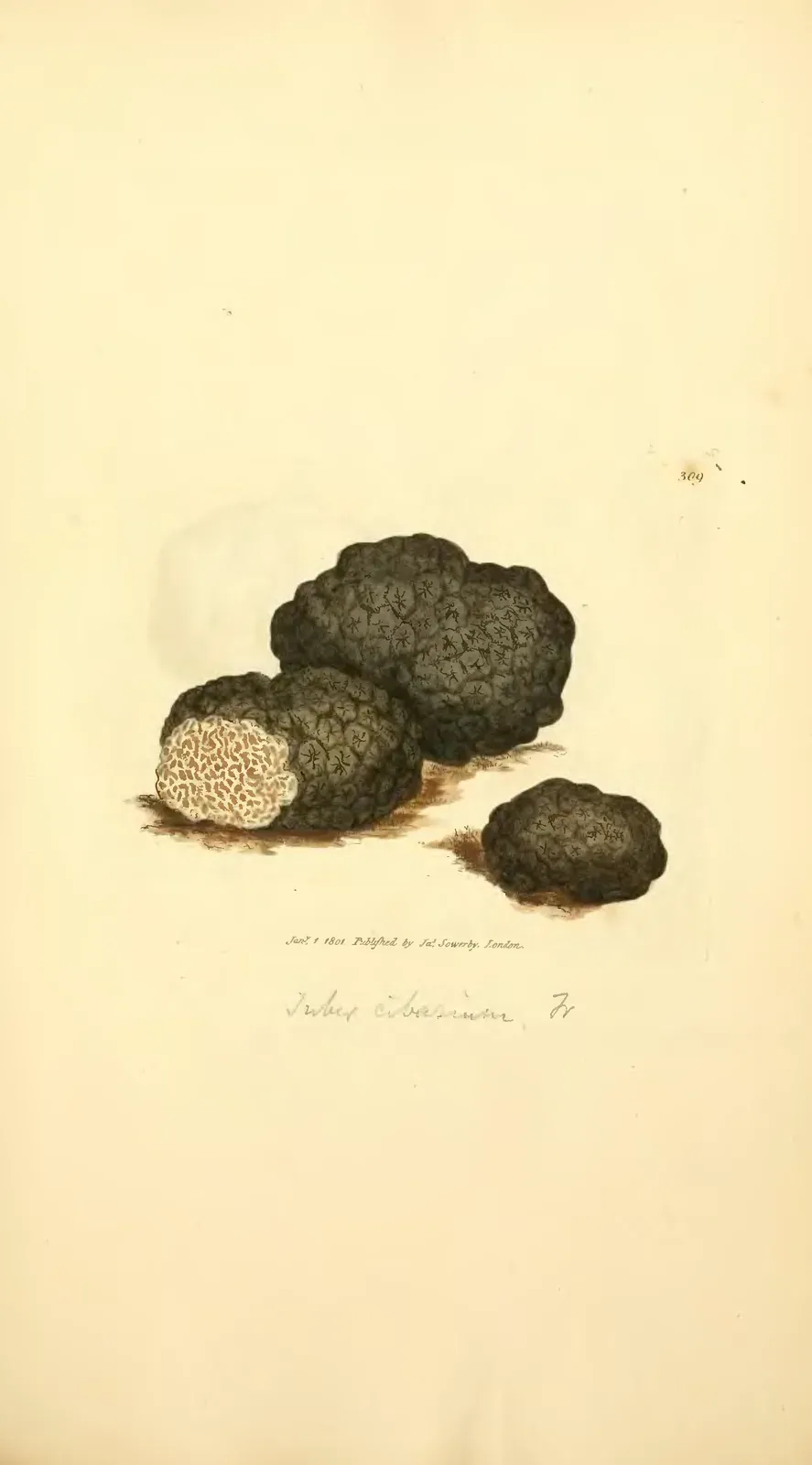
Truffles in Ukraine: do they grow here, and where to look
Truffles aren't just a French delicacy. Several species grow in Ukraine too. Here's which ones, where they occ…
August 24, 2026·2 min Recipes & cooking
How to store fresh mushrooms, and for how long
Fresh mushrooms spoil faster than you might think. Here's how long they keep in the fridge, how to store them…
August 21, 2026·4 min Recipes & cooking
How long to boil mushrooms
Boiling time depends on the type of mushroom and on what you're cooking next. Here's a clear cheat sheet: how…
August 22, 2026·4 min