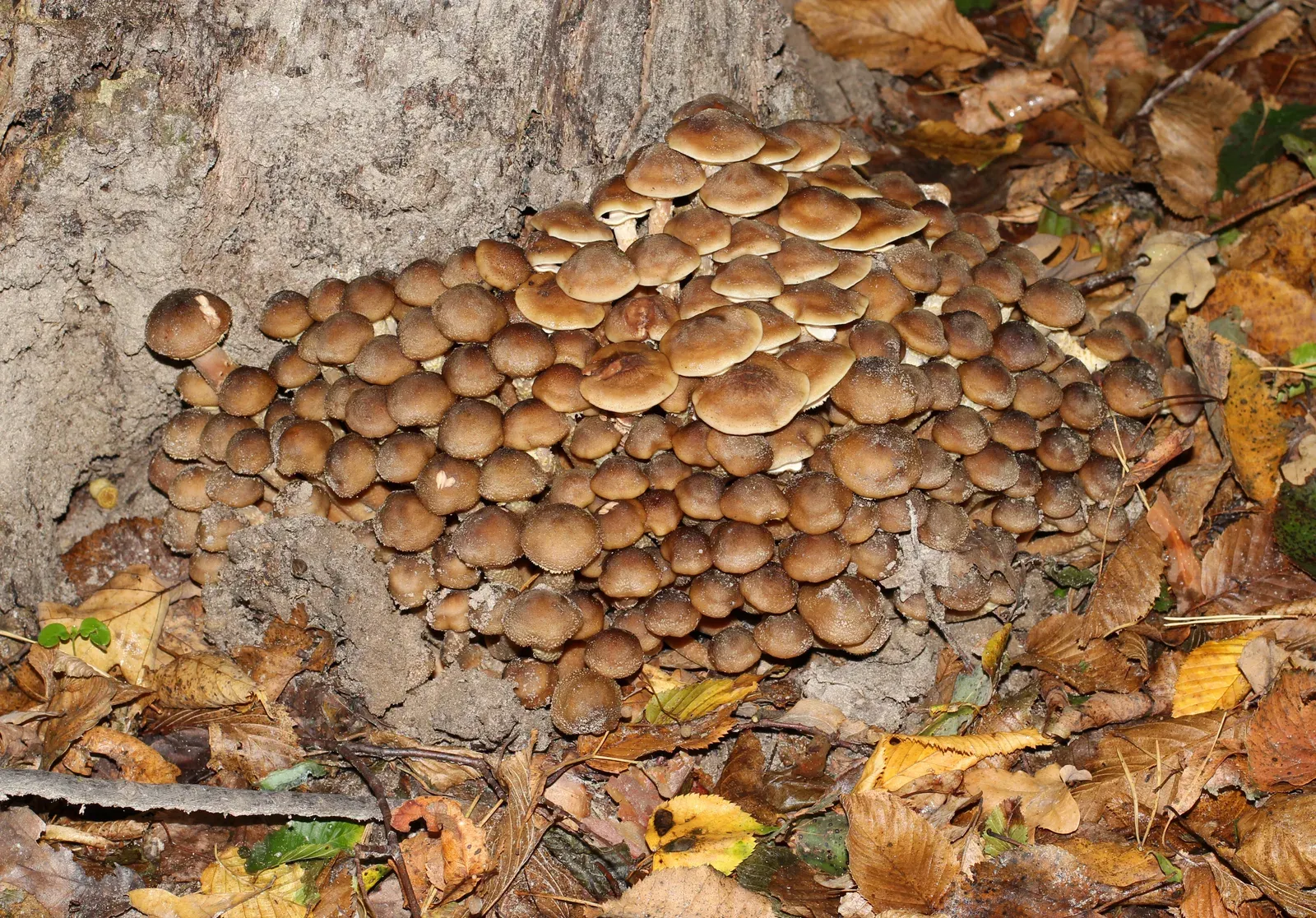
Honey fungus is a special mushroom. It grows in clusters of several dozen, so one lucky find fills your basket in no time. That's why “when will the honey fungus come up?” is the question foragers ask most every autumn.
Let's look at when honey fungus season starts in Ukraine, what triggers the first flush, and where to find these sociable clusters.
When the first honey fungus appears
Honey fungus (Armillaria mellea and related species) gets going once the summer heat breaks and the nights turn cool. In most regions of Ukraine that's late August — at first just the odd cluster on old stumps and around roots.
The main trigger isn't the calendar but the weather: honey fungus needs moisture from rain combined with cool nights and morning fog. After the first proper cold snap with rain, it can appear within just a few days.
Rather than guessing, check the mushroom radar: it shows when moisture and temperature line up for mushrooms in your region.
September–October: the main flush
Honey fungus season peaks in September and the first half of October. That's when clusters come up en masse: on stumps, fallen trunks and at the base of living trees — birch, oak and alder are particular favorites.
Honey fungus often comes in “flushes”: one cluster fades, and a few days after the next rain another appears. In a good autumn you can harvest the same spot several times. The season winds down in the second half of October, when night frosts begin, and ends for good with the first lasting freeze.
Sheathed woodtuft and velvet shank: in brief
Autumn honey fungus isn't the only one.
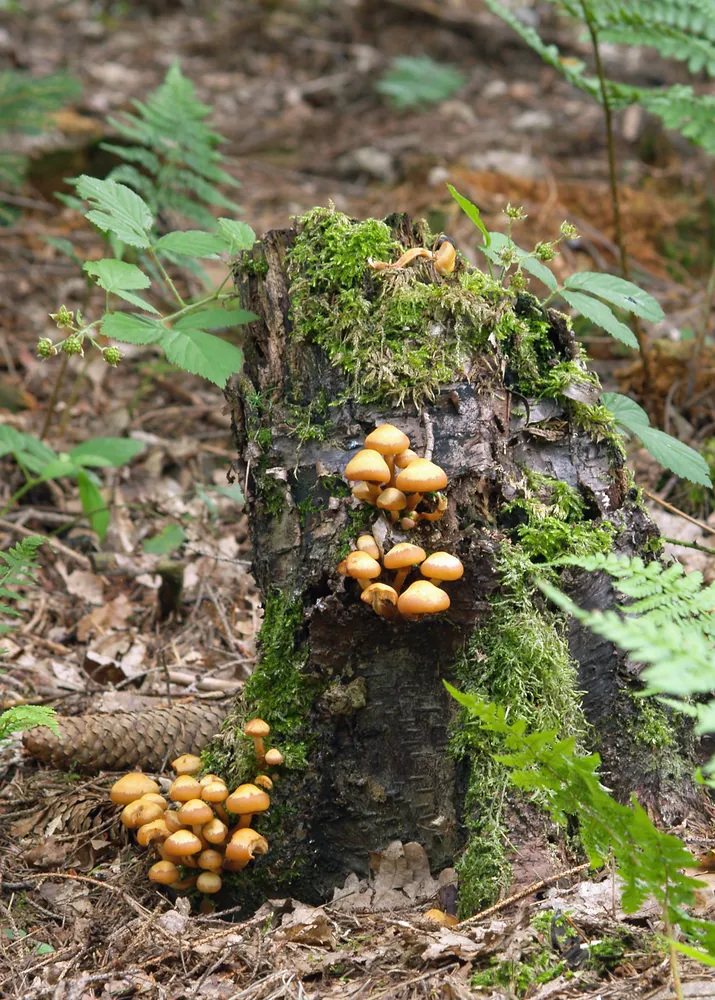
- Sheathed woodtuft appears as early as June and keeps going all summer on rotting wood. For more on how sheathed woodtuft differs from autumn honey fungus, see our separate article.
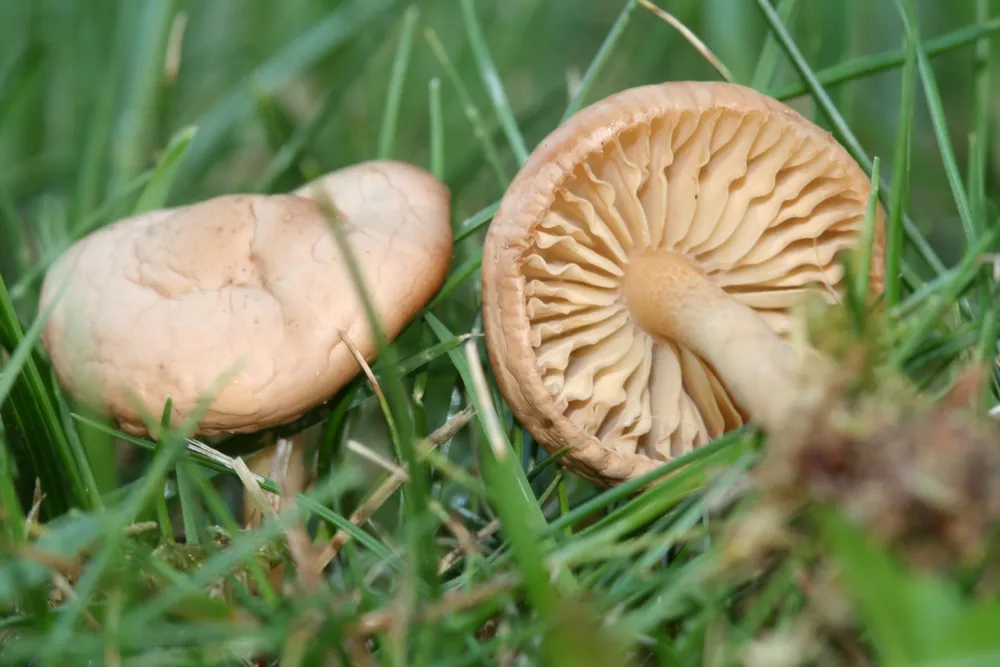
- Velvet shank (Flammulina) grows in late autumn and even in winter during thaws — this remarkable winter mushroom has its own article too.
So in one form or another, these wood-loving mushrooms keep the forager company almost all year round, but the autumn flush is by far the most generous.
Where to look for honey fungus
Honey fungus is tied not to a type of forest but to wood.
- Stumps and fallen trunks. The most reliable spot. An old stump that had honey fungus last year will almost certainly produce again this year.
- The base of living trees. Honey fungus often parasitizes living trees — look for clusters around the roots of birch, oak and alder.
- Damp deciduous and mixed forests. Honey fungus loves moisture, so you'll find more of it in wet hollows and near water.
- The same spots every year. The mycelium lives in the wood for years. Remember your lucky stumps — they'll keep producing for more than one season.
Careful: false honey fungus
The main danger of the autumn season is mistaking true honey fungus for its poisonous lookalikes. False honey fungus also grows in clusters on stumps, but differs in the color of its gills and has no ring on the stem.
The key feature of true honey fungus is a ring (a “skirt”) on the stem and creamy-white gills. Before anything goes in your basket, always check the features: how to tell true honey fungus from false. Once you've picked them, it's worth rereading how to clean and cook honey fungus properly, since it must always be boiled thoroughly.
Sources
- “Key to the Fungi of Ukraine” (Kyiv, Naukova Dumka publishing house).
- Armillaria mellea in GBIF, the Global Biodiversity Information Facility.
- Armillaria mellea in MycoBank, the international fungal nomenclature database.
- Honey fungus on Wikipedia.
Frequently asked questions
When does honey fungus season start?
The first honey fungus appears in late August, and the big flush comes in September and October. The exact start depends on the weather — it needs a cool spell with rain.
When does honey fungus season peak?
The peak falls in September and the first half of October. That's when the clusters are most abundant.
When does honey fungus season end?
Honey fungus winds down in the second half of October with the night frosts and ends with the first lasting freeze. After that, velvet shank takes over.
What makes honey fungus appear?
The weather, not the calendar. Honey fungus needs moisture from rain combined with cool nights and morning fog. After the first cold snap with rain, it appears within a few days.
Where does honey fungus grow?
On stumps, fallen trunks and at the base of living trees — especially birch, oak and alder — in damp deciduous and mixed forests.
Does honey fungus grow in the same spot every year?
Yes. The mycelium lives in the wood for years, so a good stump produces for more than one season. Remember those spots.
Can honey fungus be confused with poisonous mushrooms?
Yes, false honey fungus also grows in clusters on stumps. Tell them apart by the ring on the stem and the creamy gills — and always check against the features of true honey fungus.
Does honey fungus grow in flushes?
Yes, one cluster fades, and a few days after the next rain another appears. In a good autumn one spot can give several harvests.
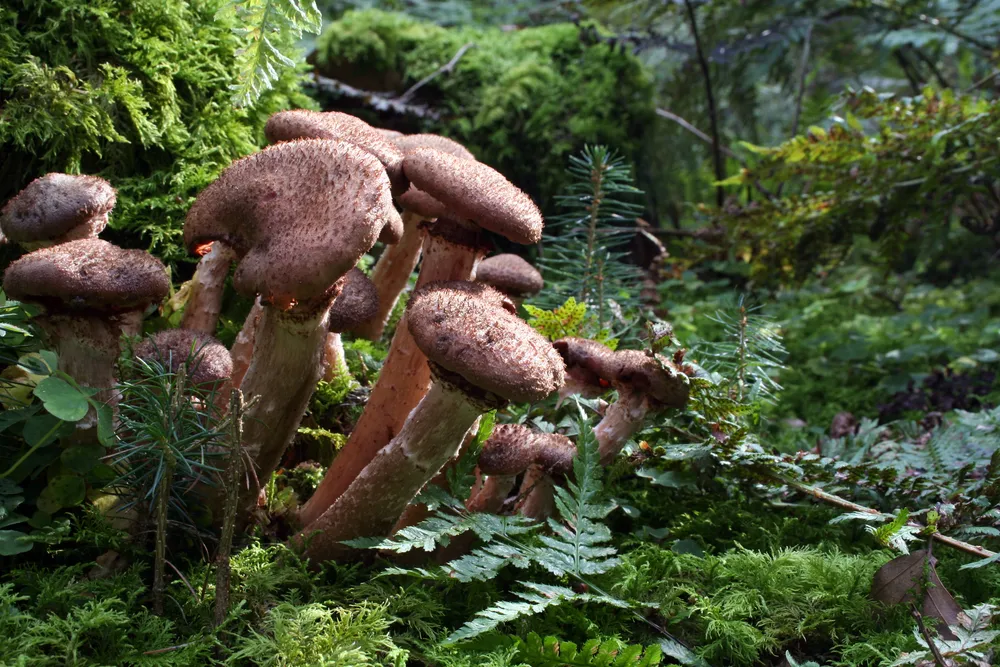
Mushrooms in this article
Related articles
 Recipes & cooking
How to store fresh mushrooms, and for how long
Fresh mushrooms spoil faster than you might think. Here's how long they keep in the fridge, how to store them…
August 21, 2026·4 min How to identify
Truffles in Ukraine: do they grow here, and where to look
Truffles aren't just a French delicacy. Several species grow in Ukraine too. Here's which ones, where they occ…
August 24, 2026·2 min Recipes & cooking
How long to boil mushrooms
Boiling time depends on the type of mushroom and on what you're cooking next. Here's a clear cheat sheet: how…
August 22, 2026·4 min