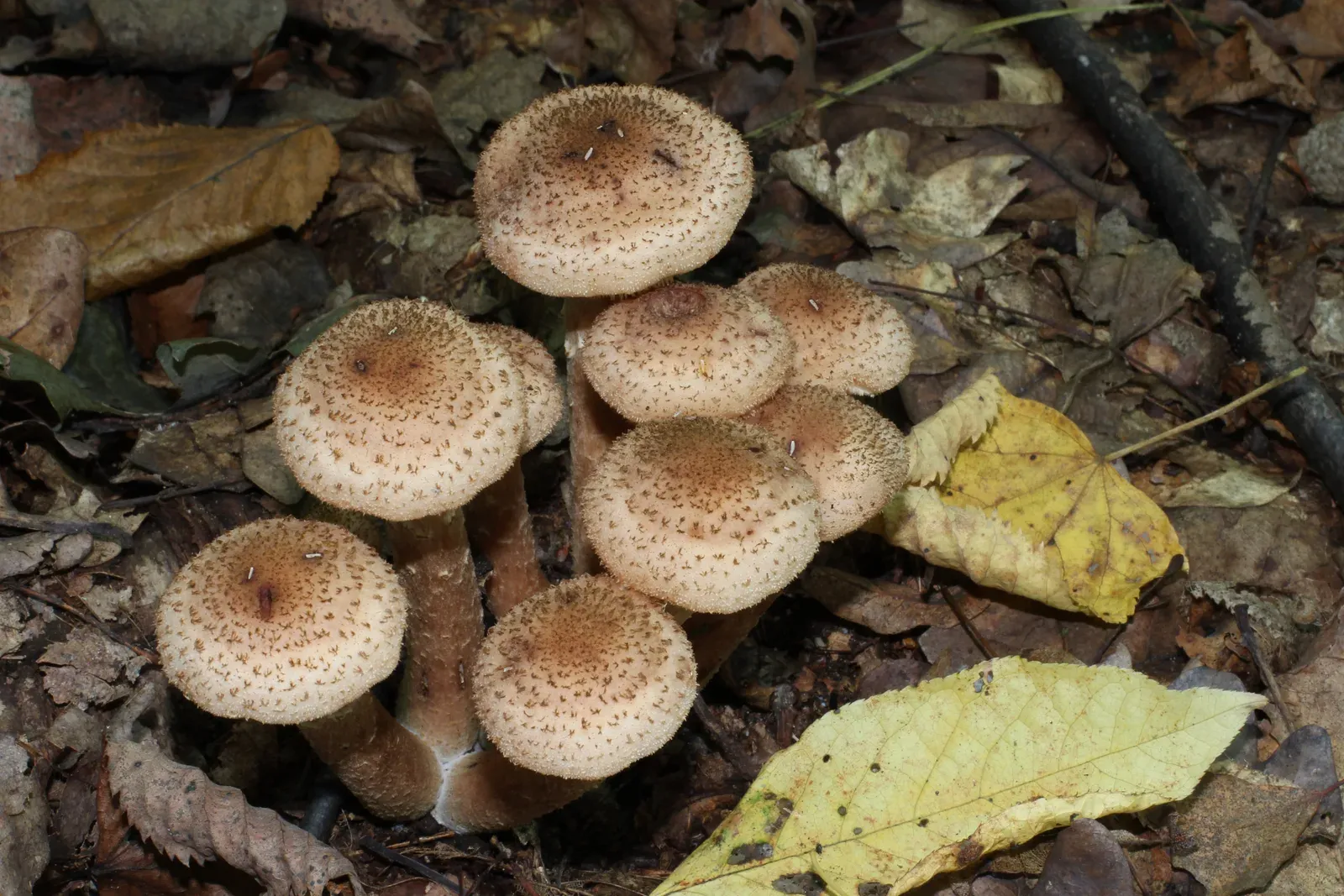
Foragers love honey fungus because you pick it by the basketful, and in the kitchen it's versatile: fried, pickled or frozen, it always hits the spot. But this mushroom has a few quirks in preparation that are important to know. The main one is mandatory boiling, without which honey fungus can ruin both the dish and how you feel.
Let's follow honey fungus all the way through the kitchen: from quick cleaning to boiling, frying and preserving for winter.
How to clean honey fungus quickly
Honey fungus is small and grows in clusters, so cleaning each mushroom separately would take ages. Luckily, there's a simpler way.
- Trim the stems in the forest. It's best to leave the coarse, tough stem bases behind right away, taking the caps with the upper part of the stem.
- Shake off the debris. Most of the leaves and needles fall off if you give the mushrooms a shake.
- Cover with water for a few minutes. The debris floats up and is easy to pour off. No need for a long soak.
- Rinse in a colander. That way the whole batch gets washed at once, not each mushroom.
There's no need to remove the membranous ring on the stem; it doesn't get in the way. Young honey fungus hardly needs any cleaning at all.
Why honey fungus must be boiled
Unlike chanterelles or porcini, honey fungus must be boiled before any kind of cooking.
Raw or undercooked honey fungus can cause digestive upset even when it's unquestionably the true species. Boiling removes this problem and makes the mushrooms safe.
Honey fungus is boiled for 15-20 minutes in salted water, skimming off the foam, and then the first water is poured off. Only after that are the mushrooms fried, pickled or frozen. And of course, boiling doesn't fix a mistake with the species: first make sure it isn't a poisonous lookalike by checking our article on false honey fungus.
How to fry and pickle honey fungus
Once boiled, honey fungus can be cooked in all sorts of ways.
- Fried. Boiled honey fungus is fried with onion until golden. Add sour cream and herbs at the end and you have a classic fall dish.
- Pickled. Small, firm honey fungus is ideal for pickling: it holds its shape and looks lovely in the jar. It's cooked in a spiced brine with vinegar, bay leaves and pepper.
- In soups or fillings. Boiled honey fungus goes into soups, pies and varenyky (dumplings).
Pickled honey fungus is one of the most popular mushroom preserves, because the small caps turn out springy and appetizing.
How to freeze honey fungus
Freezing is an easy way to keep honey fungus for the winter.
The mushrooms are boiled first, cooled, drained, and only then frozen in portions. You can also freeze fried honey fungus; then in winter you just need to reheat it. Honey fungus isn't frozen raw precisely because it needs to be boiled first.
Honey fungus keeps its flavor and shape well after freezing, so this is a great way to stretch the fall harvest over the whole year. And if you'd like to learn more about the mushrooms themselves, take a look at our guide to honey fungus species.
Sources
- “Key to the Fungi of Ukraine” (Kyiv, Naukova Dumka publishing house).
- Armillaria mellea in GBIF, the global biodiversity database.
- Armillaria mellea in MycoBank, the international fungal nomenclature database.
- Armillaria mellea on Wikipedia.
Frequently asked questions
Does honey fungus need to be boiled before frying?
Yes, always. Raw or undercooked honey fungus can cause digestive upset even when it's the true species. Boil it for 15-20 minutes in salted water, pour off the first water, and only then cook it.
How long should honey fungus be boiled?
Usually 15-20 minutes in salted water, skimming off the foam. After that the first water is poured off, and the mushrooms go on to be fried, pickled or frozen.
How do you quickly clean a lot of honey fungus?
Trim the coarse stem bases while still in the forest, shake off the debris, cover the mushrooms with water for a few minutes so the debris floats up, and rinse the whole batch in a colander. Young honey fungus hardly needs cleaning.
Should you remove the ring on a honey fungus stem?
No. The membranous ring on the stem does no harm and doesn't spoil the taste, so there's no need to remove it. It even helps you recognize true honey fungus.
How do you pickle honey fungus?
Small, firm honey fungus is boiled first, then cooked in a spiced brine with vinegar, bay leaves and pepper. It holds its shape well, so it turns out springy and appetizing.
Can you freeze honey fungus raw?
Better not. Because it needs to be boiled first, honey fungus is frozen already boiled or fried. Then in winter you just need to reheat it or add it to a dish.
Which honey fungus is best for pickling?
Small young mushrooms with firm caps. They don't go mushy, look lovely in the jar and stay springy. Large specimens are better for frying or soups.
Does honey fungus keep its flavor after freezing?
Yes, honey fungus holds its flavor and shape well after freezing. It's a handy way to stretch the fall harvest over the whole year; the key is to boil it first.
Mushrooms in this article
Related articles
 Recipes & cooking
How to store fresh mushrooms, and for how long
Fresh mushrooms spoil faster than you might think. Here's how long they keep in the fridge, how to store them…
August 21, 2026·4 min Recipes & cooking
How long to boil mushrooms
Boiling time depends on the type of mushroom and on what you're cooking next. Here's a clear cheat sheet: how…
August 22, 2026·4 min How to identify
Truffles in Ukraine: do they grow here, and where to look
Truffles aren't just a French delicacy. Several species grow in Ukraine too. Here's which ones, where they occ…
August 24, 2026·2 min