.webp)
When there's snow in the forest and every other mushroom is long gone, bright orange-brown caps appear on tree trunks — this is the velvet shank, or Flammulina. A unique mushroom that isn't afraid of frost and keeps growing where others die. Let's look at how to recognize it, where to find it and why you need to be careful with it.
What the velvet shank looks like
The velvet shank's features are simple and easy to spot:
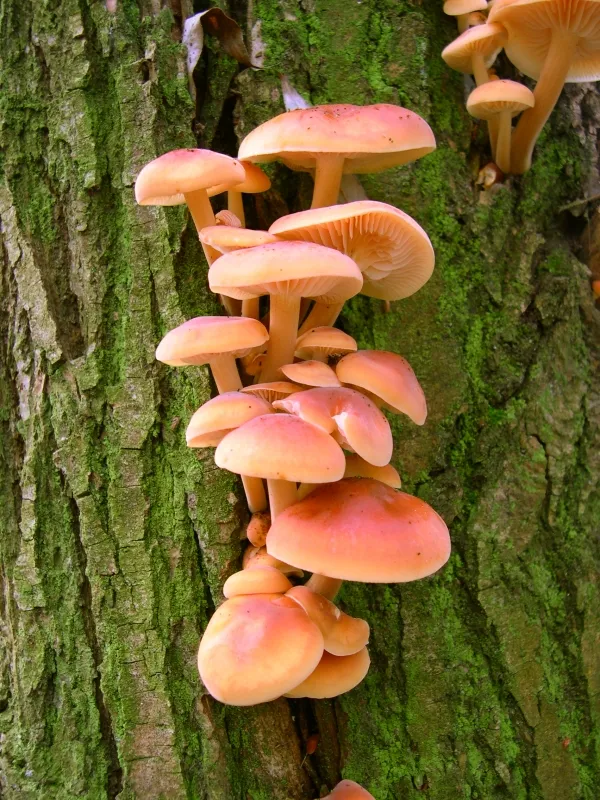
- Cap bright orange-brown, honey-colored or orange, smooth and slightly slimy, up to 8 cm.
- Stem thin, springy, velvety, dark brown toward the base, as if dressed in brown “velour.”
- Gills pale, cream, fairly widely spaced.
- There is no ring on the stem — this is an important detail.
It grows in families, in tight clusters, right on the bark.
Where and when to look for the velvet shank
The velvet shank fruits from late autumn to March, most actively during thaws. It withstands real frosts: a frozen mushroom thaws out and keeps growing.
Look for it not on the ground but on the trunks and stumps of broadleaf trees — willow, poplar, maple, aspen. For other mushrooms that grow on trees, see the article edible mushrooms that grow on trees, and for the winter season in general — winter mushrooms of Ukraine.
Dangerous lookalikes
The main caution: a thin-stemmed velvet shank on a stump looks similar to the poisonous funeral bell and other small brown mushrooms. The key difference — the velvet shank has no ring on the stem, and its stem is dark and velvety. If there is a membranous ring on the stem, do not take the mushroom.
Because of this resemblance, the velvet shank is recommended only for experienced foragers. General rules are in the article false honey fungus: how to tell it from the real thing.
Is the velvet shank edible?
Yes, the velvet shank is edible and tasty, and it must be boiled. It must not be eaten raw: like many honey fungus–type mushrooms, it is poisonous raw and safe when cooked. More on that in the article which mushrooms you can eat raw.
Sources
- “Key to the Fungi of Ukraine” (Kyiv, Naukova Dumka publishing house).
- Flammulina velutipes in GBIF, the global biodiversity database.
- Velvet shank on Wikipedia.
Frequently asked questions
How do you recognize the velvet shank (Flammulina)?
By its bright orange-brown, honey-colored, slimy cap, its thin springy stem in dark velvet and its pale gills. An important detail: there is no ring on the stem. It grows in clusters on trunks.
When does the velvet shank grow?
The velvet shank fruits from late autumn to March, most actively during thaws. It withstands frost: a frozen mushroom thaws out and keeps growing.
Where should you look for the velvet shank?
Not on the ground but on the trunks and stumps of broadleaf trees — willow, poplar, maple, aspen. It grows in tight families right on the bark.
Does the velvet shank have poisonous lookalikes?
Yes, it resembles the poisonous funeral bell (Galerina) and other small brown mushrooms. The main difference — the velvet shank has no ring on the stem. Do not take a mushroom with a ring.
Is the velvet shank edible?
Yes, the velvet shank is edible and tasty, but it must be boiled. It must not be eaten raw — like many honey fungus–type mushrooms, it is poisonous raw and safe when cooked.
Why isn't the velvet shank afraid of frost?
It has adapted to fruit in the cold: its growth only slows down, it doesn't stop. The wood protects the mycelium, so the velvet shank comes back to life even from under the snow during thaws.
How does the velvet shank differ from honey fungus?
Honey fungus has a ring on its stem and grows in autumn, while the velvet shank has no ring, a dark velvety stem and an orange-brown slimy cap, and it fruits in winter. They are different species.
Mushrooms in this article
Related articles
 How to identify
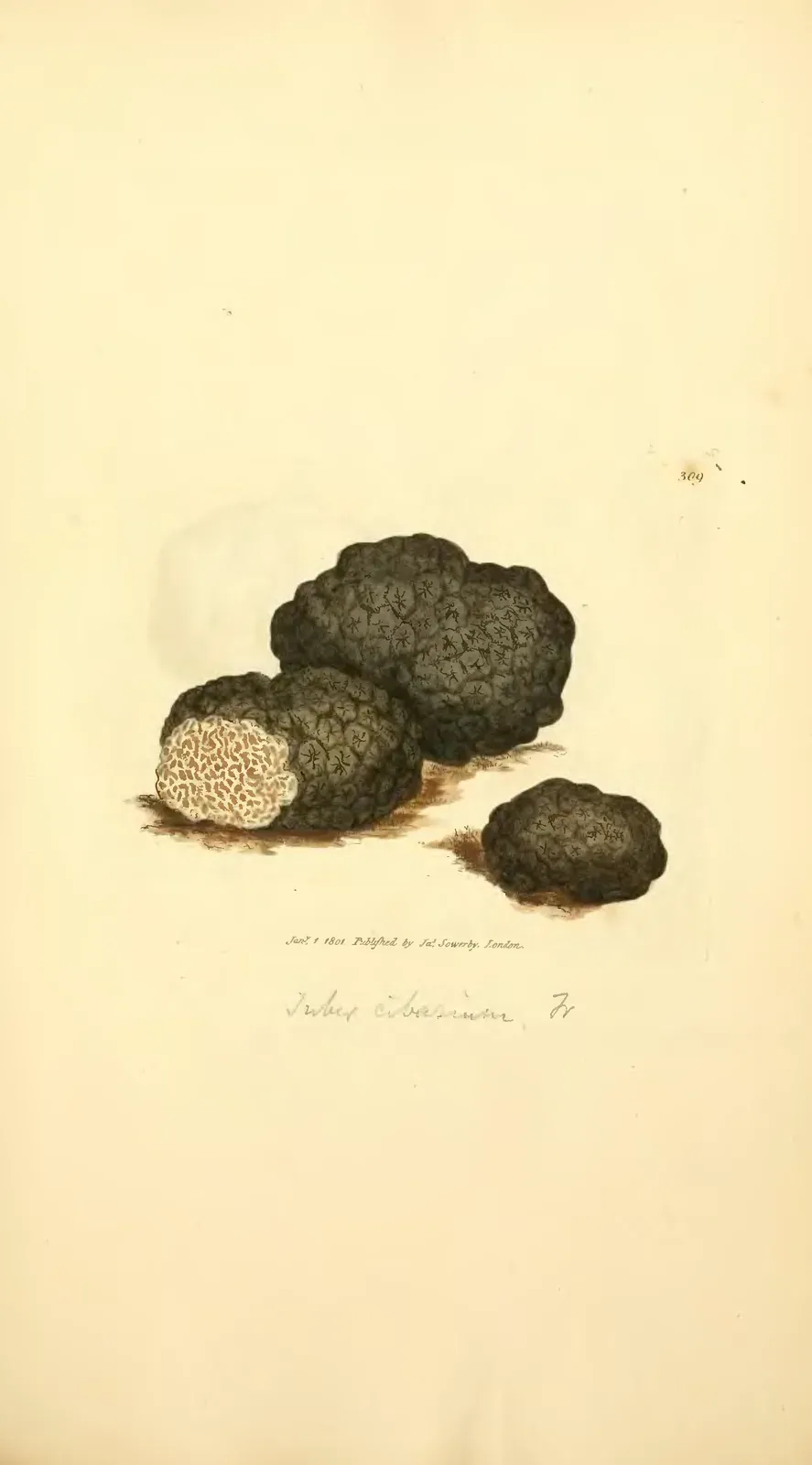
Truffles in Ukraine: do they grow here, and where to look
Truffles aren't just a French delicacy. Several species grow in Ukraine too. Here's which ones, where they occ…
August 24, 2026·2 min Science & taxonomy
Bay bolete: health benefits and nutritional value
The bay bolete is a match for porcini in both flavor and nutrition. Here's why the bay bolete is good for you,…
August 20, 2026·2 min Science & taxonomy
Honey fungus: health benefits and risks
Honey fungus is a nourishing autumn mushroom, rich in protein and minerals. Here's why honey fungus is good fo…
August 20, 2026·2 min