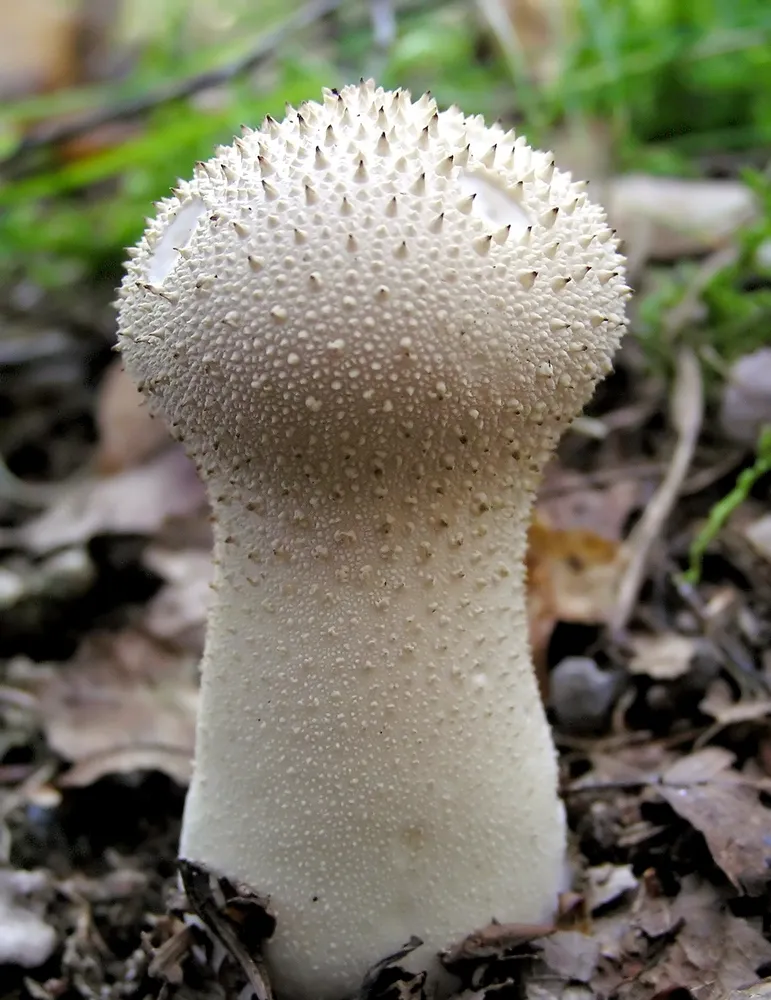
Common puffballLycoperdon perlatum
Expert-verifiedUpdated August 15, 2026
Passport
- Edibility
- Edible
- Season
- Jun — Nov
- Hymenophore
- Chambered
- Cap color
- White
- Size
- Small (up to 5 cm)
- Smell
- Pleasant
- Reviewed
- Yes ✓
Quick answers
Where to look?
Deciduous forest, Mixed forest, Conifer forest
When does it appear?
Jun — Nov
Active months: June, July, August, September, October, November.
How to recognize it? Three signs
- Cap color: White, Cream, Brown
- Cap shape: Irregular
- Smell: Pleasant
Fruiting season
June – November
Description
The common puffball, also called the warted puffball, is the most widespread and recognizable puffball in Ukrainian forests. The fruiting bodies are shaped like an upside-down pear or a club: a rounded “head” on top, a narrowed “stalk” below. Young ones have a white or cream surface covered in distinctive coarse spiny warts that gradually fall off, leaving a net-like pattern of whitish spots on the skin. Size 2-6 cm tall, 1.5-4 cm wide — a small mushroom, but it often grows in groups and colonies.
A good edible mushroom when young, while the flesh is pure white. Young puffballs have a delicate, mild flavor reminiscent of chicken or tofu — they take on the taste of whatever they're cooked with (garlic, onion, spices). Classic recipes: fried in breadcrumbs like a cutlet, added to soups (for body and a light mushroomy flavor), pickled. The key rule for all puffballs: cut every fruiting body in half before cooking and check that the flesh is a uniform white color. A yellowish, greenish or purplish tinge = the mushroom has already matured and is no good. This simple test weeds out old fruiting bodies and the potentially dangerous earthball (Scleroderma).
In Ukraine it is found throughout the country — a truly everyday species. It grows in forests of every type — coniferous, deciduous, mixed — on forest edges, in mossy spots and in grassy clearings. The season is very long: June-November, with several flushes.
Cap
The fruiting body is inverted pear-shaped or club-shaped, 2-6 cm tall, 1.5-4 cm wide at the top. The upper (fertile) part is a rounded head; the lower (sterile) part is a narrowed “stalk” 1-3 cm long. Color: young ones are white or cream; with age yellowish grey to brown. A telltale feature — the surface is covered in coarse spiny warts (1-2 mm) that gradually fall off, leaving a net-like trace.
Hymenophore
Internal hymenophore (gleba). The young gleba is white, dense and uniform. With age it turns yellow, then green, and becomes a dark olive-grey powdery spore mass. At the top of a mature fruiting body an opening forms, through which the spores puff out when a raindrop hits (hence the Ukrainian name, “rain mushroom”). Spore print dark olive-brown.
Stem
There is no separate stem — the fruiting body is all one piece. The lower sterile part is a “stalk-base” 1-3 cm tall, somewhat narrower than the top, white and scaly, passing into whitish rhizomorphs (mycelial cords) in the soil.
Flesh
The flesh of young ones is pure white, uniform, dense, with a delicate pleasant flavor. With age it turns yellow, then green, and becomes a spore mass. The test: cut it open: uniform white = good to eat; any other color = throw it out.
Smell
Faint, pleasant mushroomy smell with no sharp notes. Taste mild and neutral — it takes on the flavors of the dish.
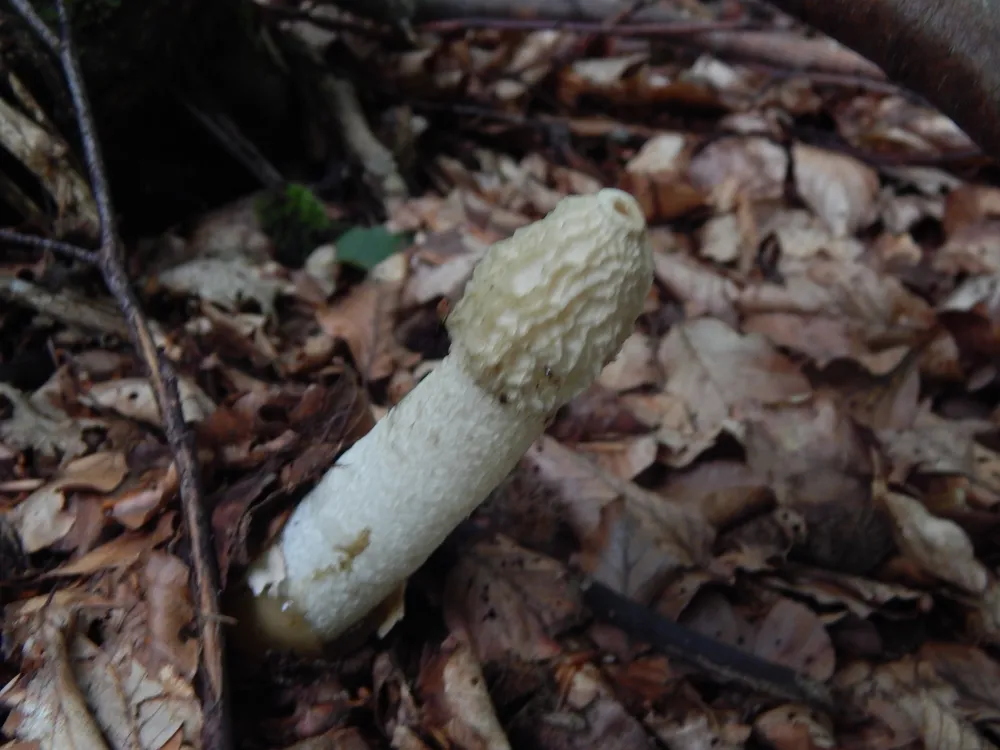
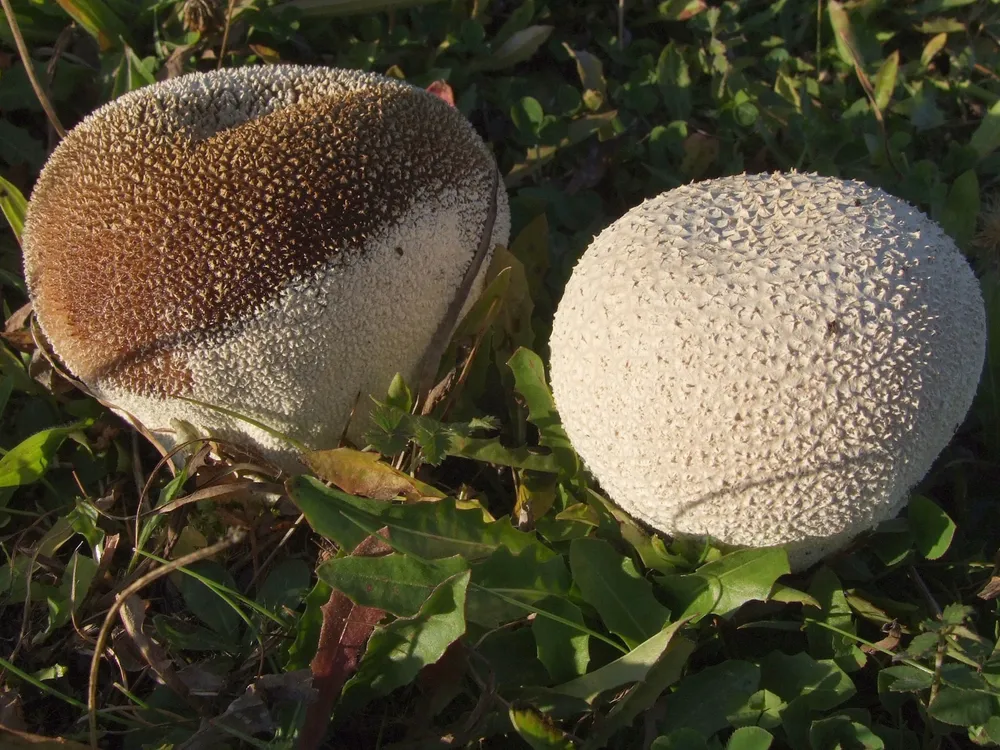
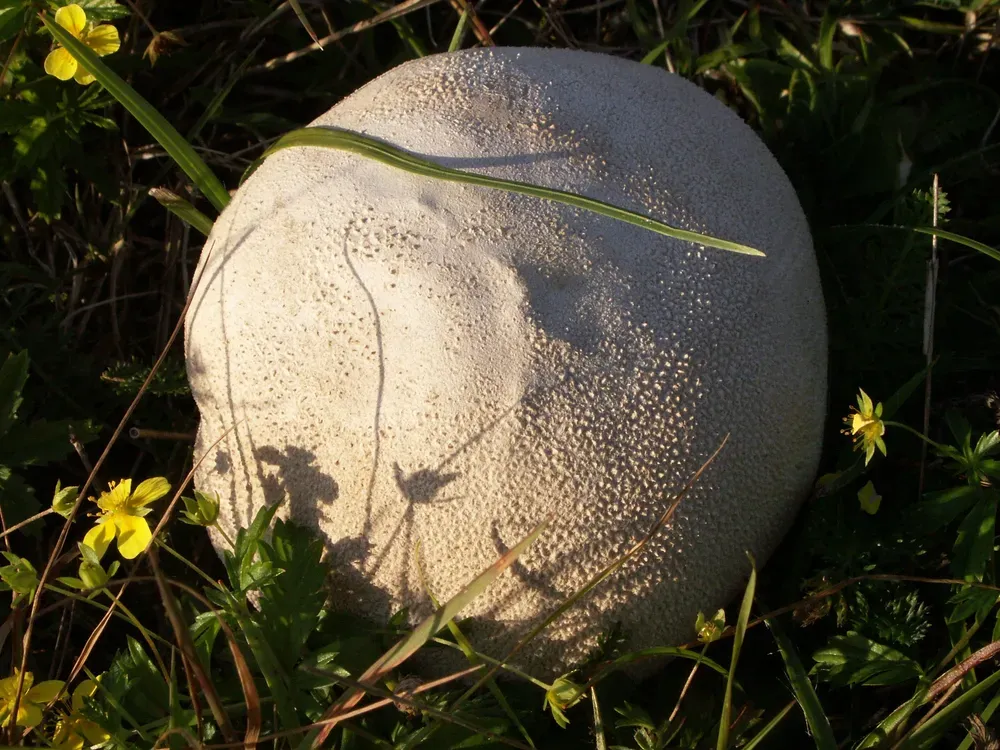
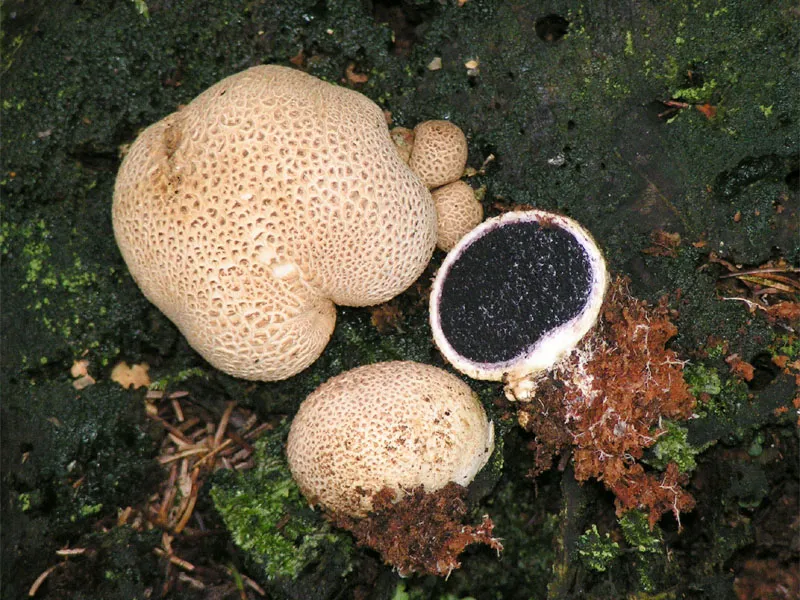
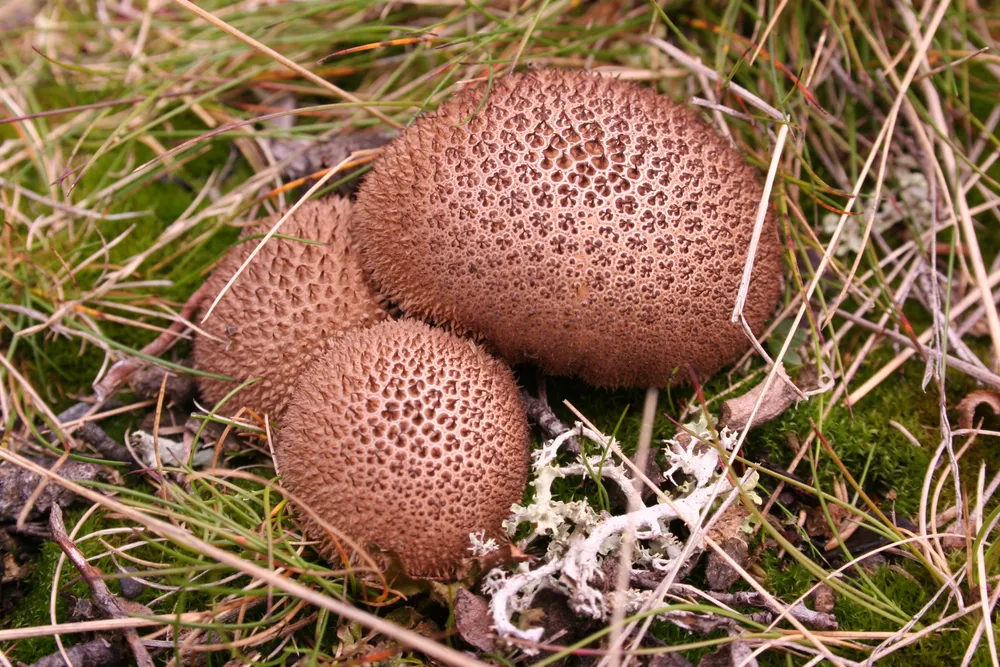
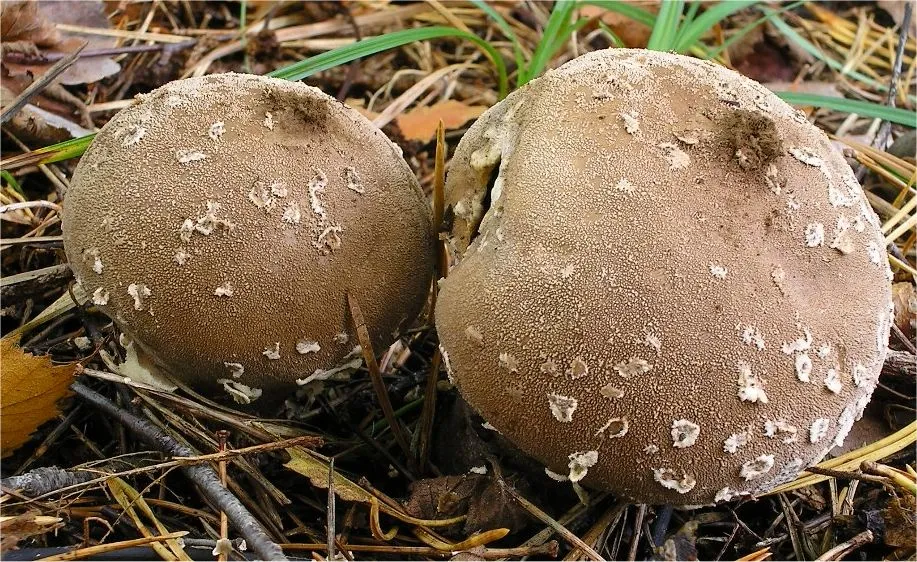
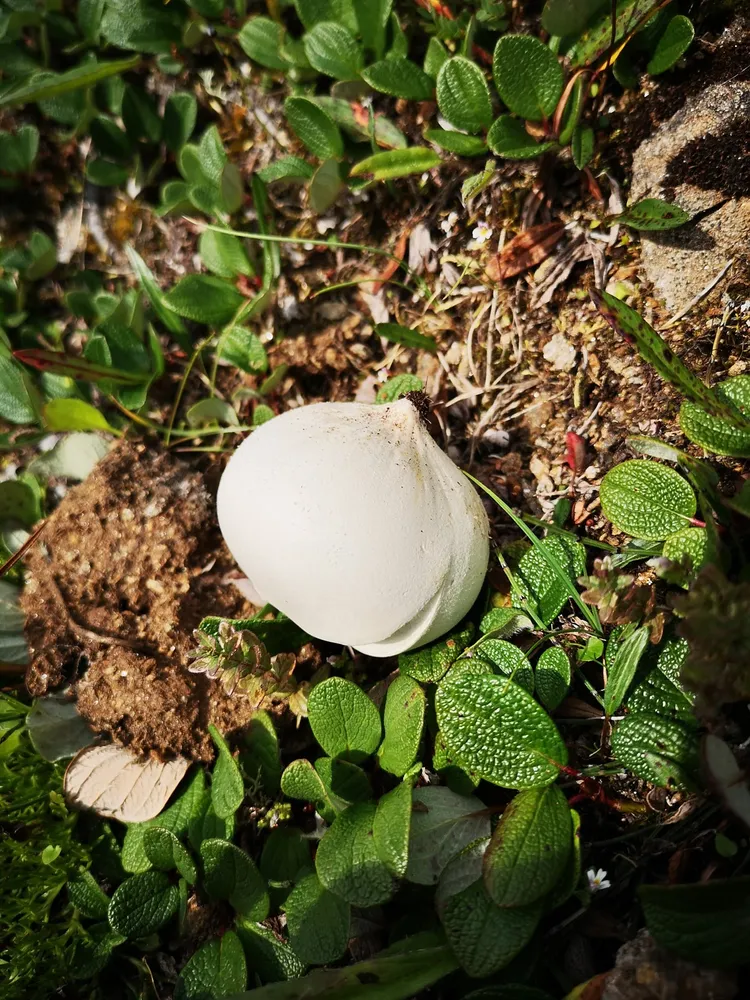
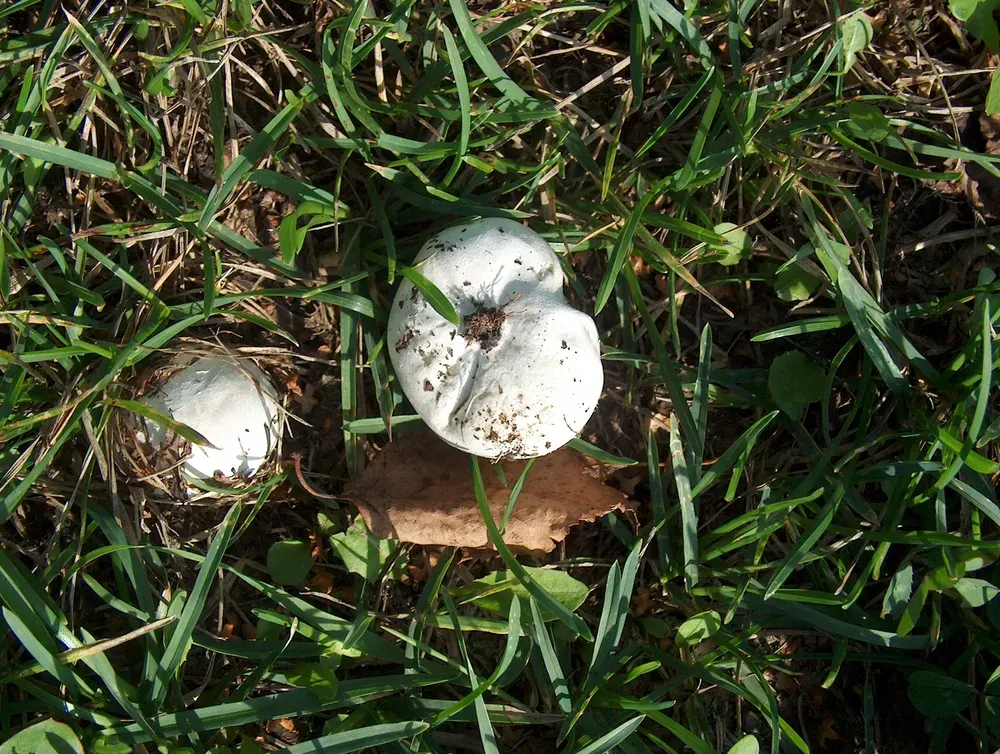
Lookalikes
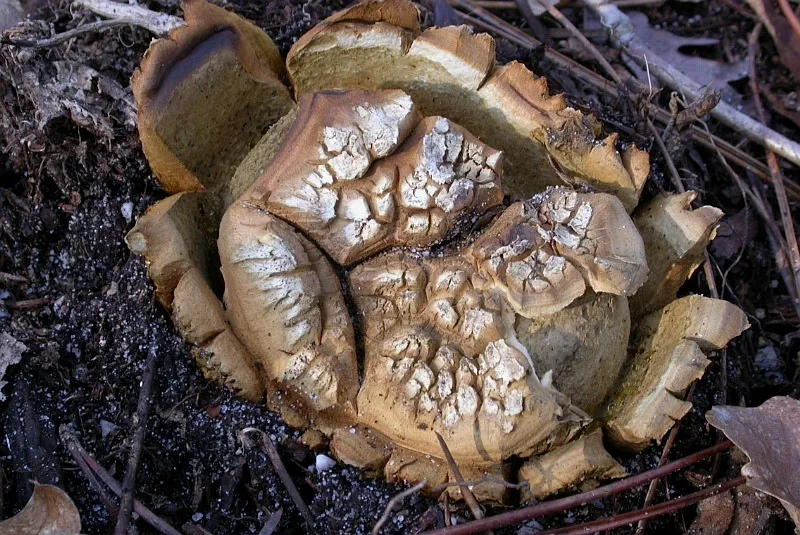
Related species
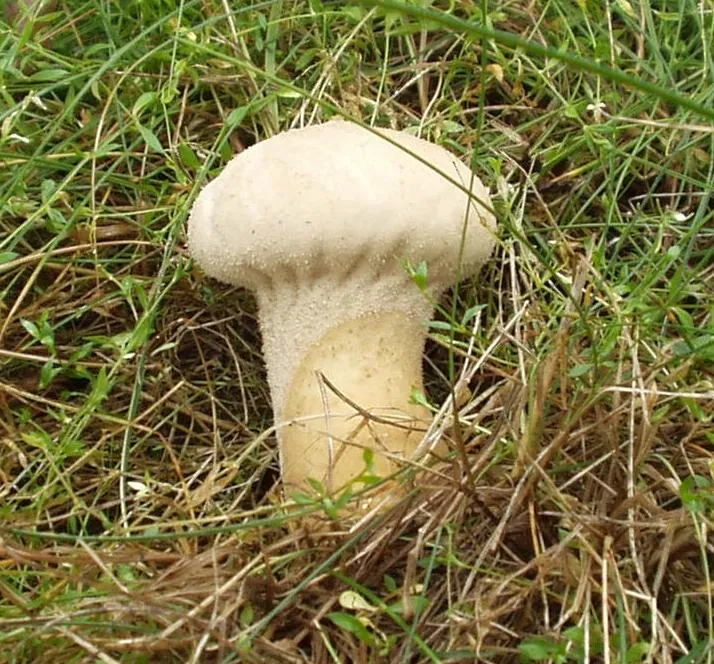
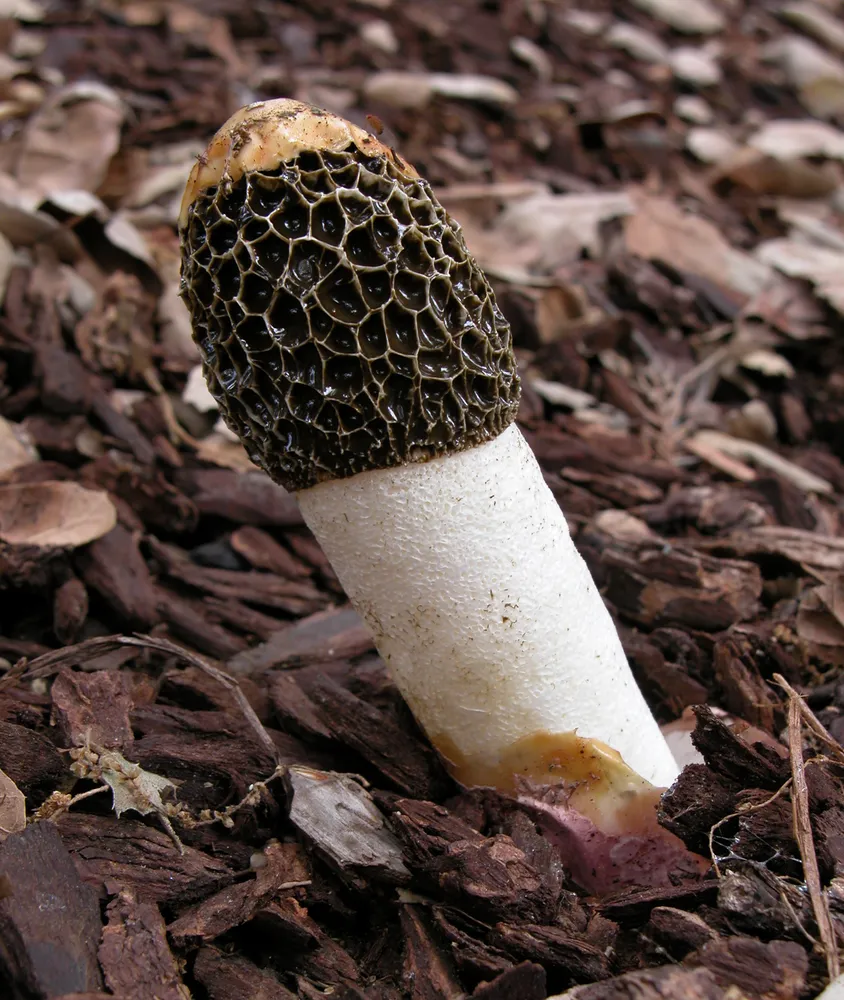
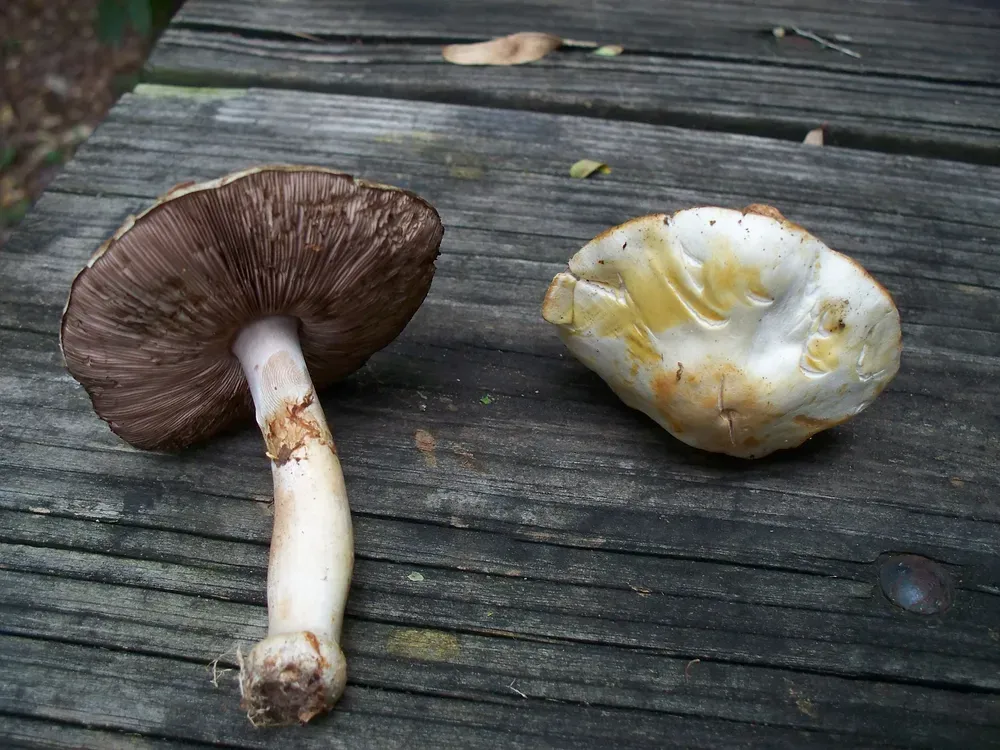
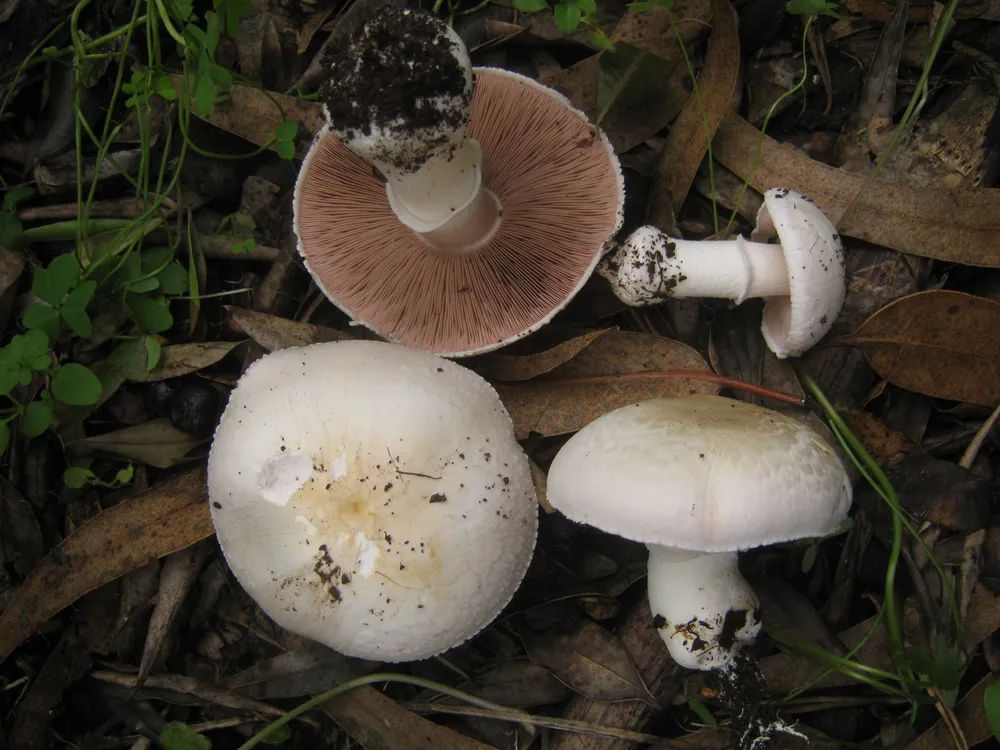
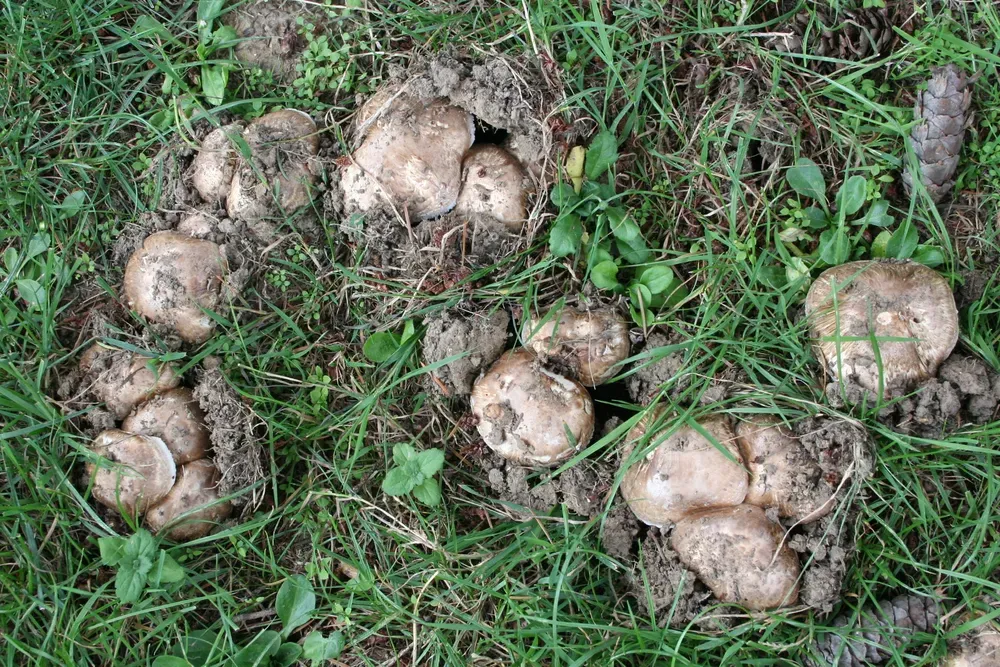
Mushrooms of the same genus and habitat — to study side by side and never mix up.
.webp)
_Fr._4948278370-2.webp)
Frequently asked questions
Is it safe to eat?
Yes, when young it's a good edible mushroom. One of the safest for beginners: its distinctive shape and coarse, warty surface are easy to recognize. The main rule is to cut every fruiting body open before cooking; the flesh must be uniformly white. A yellowish, greenish or purplish tinge = throw it out.
How should you cook it?
Peel off the warty skin (optional — in young ones it is thin and can stay on). Cut into slices 1-1.5 cm thick. Fry in breadcrumbs like a cutlet (3-5 min per side), add to soups, stew or pickle. No pre-boiling needed. The mushroom soaks up the flavor of spices and sauces well.
Where should you look for it?
In forests of every type — coniferous, deciduous, mixed. On forest edges, in mossy spots, in grassy clearings and mixed meadows. It's a soil saprotroph — it grows on the forest litter and doesn't need trees. It often grows in groups of 5-30 fruiting bodies, sometimes in “fairy rings.”
In which regions of Ukraine does it grow?
Throughout Ukraine — a truly everyday species. In every region, in Crimea, in the Carpathians, in the steppe (in shelterbelts and plantings). One of the most common mushrooms in the country. Regularly found in city parks and squares.
When should you look for it?
June-November. Several flushes after rain. The first in June-July, the second in August, the third and most abundant in September-October. In a warm autumn, until November. It tolerates the first light frosts. Young ones (white and springy) last 5-7 days.
How can you tell the mushroom is still young?
On the outside: pure white or cream color with coarse warts. If the surface is yellowish or grey and the warts have fallen off, the mushroom is mature. The reliable test: cut it open: a young one has uniform white flesh like cottage cheese; a mature one is yellowish or greenish inside (the spore powder is already forming).
What is it confused with?
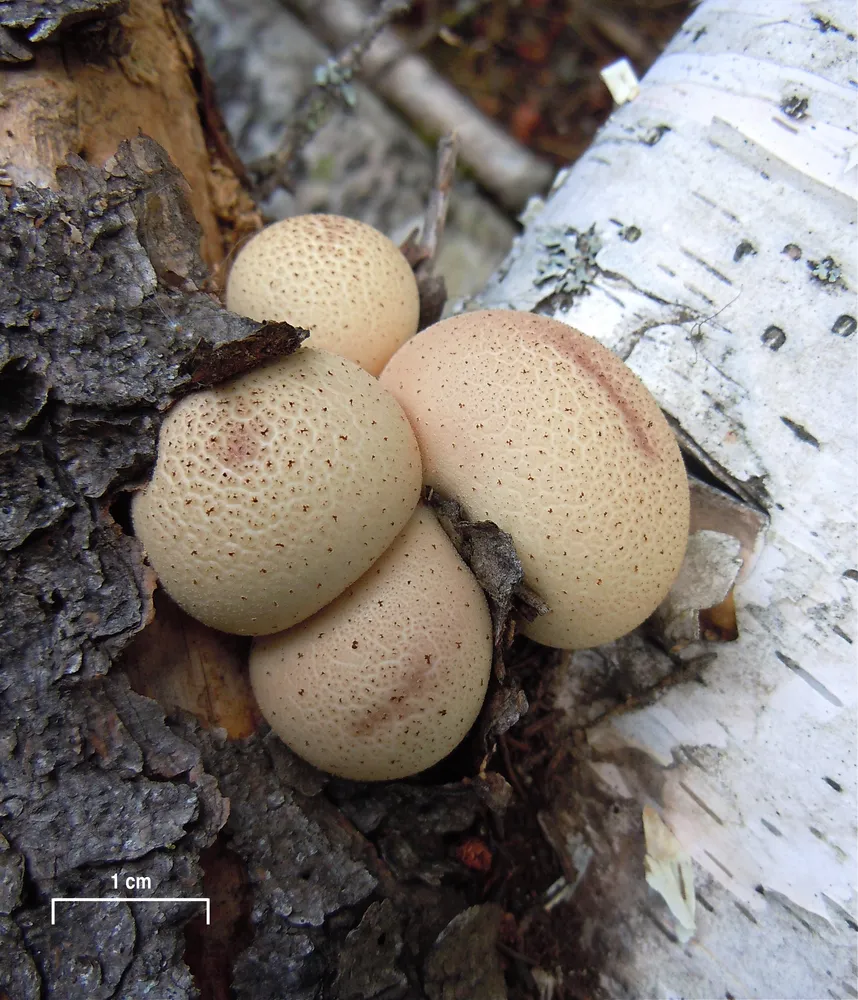
The most dangerous mix-up is with earthballs (Scleroderma citrinum, S. verrucosum). An earthball has a hard yellow shell instead of a thin white skin, its flesh is already dark purple-black even when young (not white), and it has a distinct unpleasant chemical smell. Earthballs cause stomach upsets.
Can it be confused with a young amanita?
If you cut it open — no. Inside a young amanita you can see the outline of the future mushroom (cap, gills, stem). The common puffball has uniform white flesh with no structure. Always cut puffballs open before cooking — it's the simplest and most reliable protection against a mistake.
Is Common puffball edible or poisonous?
What kind of spore-bearing surface does Common puffball have?
What does the cap of Common puffball look like?
What does the stem of Common puffball look like?
Sources
- [1]Вікіпедія (українська)
- [2]Атлас грибів України, Зеров Д.К. (1979)
- [3]MycoBank Database
- [4]Index Fungorum
- [5]GBIF
- [6]iNaturalist Ukraine