THIS DATA HAS NOT BEEN VERIFIED BY AN EXPERT. Use at your own risk.
Rhizopogon obtectus
Under reviewUpdated October 3, 2026
Passport
- Edibility
- Edible
- Season
- Jul — Oct
- Hymenophore
- Chambered
- Cap color
- Yellow
- Size
- Small (up to 5 cm)
- Smell
- Pleasant
- Reviewed
- Under review
Quick answers
Where to look?
Conifer forest, Mixed forest
When does it appear?
Jul — Oct
Active months: July, August, September, October.
How to recognize it? Three signs
- Cap color: Yellow, Brown, Cream
- Cap shape: Irregular
- Smell: Pleasant
Fruiting season
July – October
Description
Rhizopogon obtectus is an unusual underground false truffle from the Rhizopogonaceae family, a relative of slippery jacks and boletes. Unlike the familiar cap-and-stem mushrooms, it never opens a cap or raises a stem; instead it grows as rounded yellowish-brown tubers just below the soil surface or in fallen needles. It is a mycorrhizal mushroom that partners with pine, so you'll find it in pine and mixed forests on sandy soils.
In Ukraine, Rhizopogon obtectus grows in pine forests and plantations across the country, hiding in sandy soil or under a layer of needles, where all that gives it away are little bumps and tubers laid bare by rain. Its fruiting season is long — from summer to autumn, July through October. Because of its hidden lifestyle, it is not often noticed.
In terms of edibility, Rhizopogon obtectus counts as an edible mushroom — but only while young, as long as the inner flesh is white and firm. Young tubers are edible and are used much like puffballs: fried or added to dishes. As it matures, the inner tissue turns brown, becomes jelly-like and unfit to eat. Its culinary value is modest, so people pick it more out of curiosity; just as with puffballs, always cut the tuber in half before eating to make sure the flesh is white and uniform.
Cap
There is no true cap. The fruiting body is tuber-shaped, round or irregularly round, 1 to 4 centimeters across, resembling a small potato or a truffle. The surface is smooth or covered with fine pressed-down fibers (rhizomorphs), whitish or yellowish at first, turning reddish-brown or olive-yellow with age and where handled. The entire fruiting body is closed, with no openings.
Hymenophore
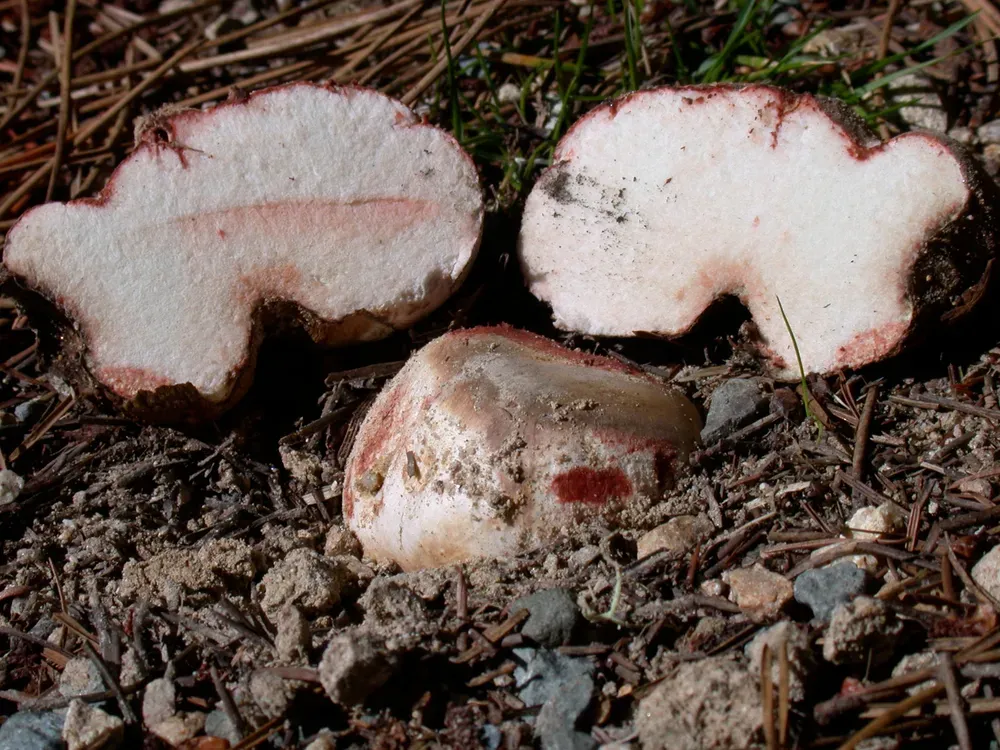
There is no hymenophore in the usual sense. The spores ripen inside the closed fruiting body, in a maze-like chambered tissue (the gleba). In young mushrooms it is white and firm; as it matures it turns yellow, then brown and jelly-like, and later powdery. The spore print is olive-brown. A chambered inner tissue with no true pores or gills is a hallmark of the underground rhizopogons.
Stem
There is no distinct stem; the fruiting body is attached to the soil by thin whitish cords (rhizomorphs), especially noticeable at the base. The whole structure is a single solid tuber with no division into cap and stem, which is exactly what sets Rhizopogon apart from the familiar cap-and-stem mushrooms.
Flesh
The flesh (gleba) of young mushrooms is white, firm and uniform, with tiny maze-like chambers. This is the only stage at which the mushroom is edible. As it matures, it turns yellow, then brown, becomes jelly-like and unfit to eat. White young flesh in cross-section is your guarantee of edibility; any darkening means the mushroom is overripe.
Smell
The smell is faint, pleasant and mushroomy, becoming stronger and not always pleasant in mature specimens. The aroma is not a defining feature; you recognize this mushroom by its underground lifestyle, its closed tuber-like fruiting body with no cap or stem, and its link to pine.
›Scientific synonyms (2)
Rhizopogon luteolus Fr. & Nordholm, Rhizopogon obtextus (Spreng.) R. Rauschert
Lookalikes
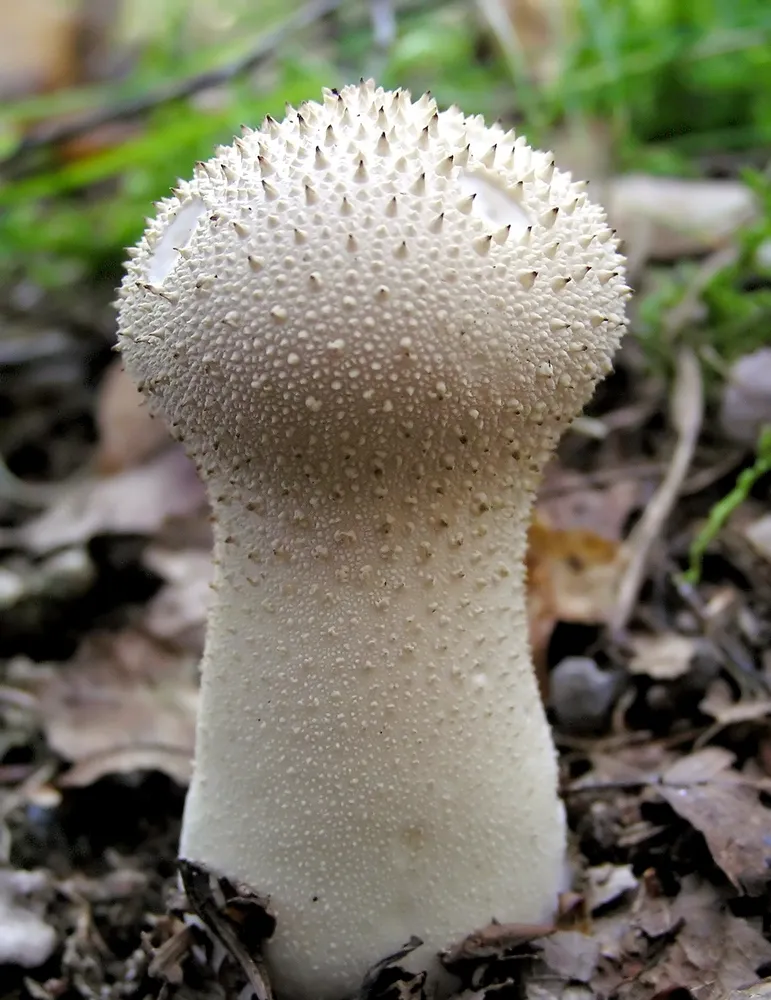
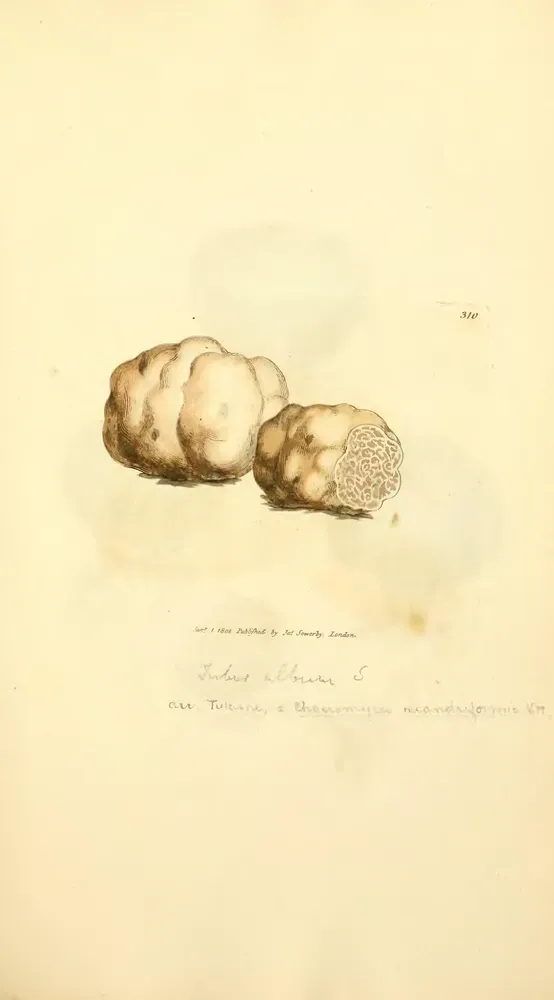
Related species
Mushrooms of the same genus and habitat — to study side by side and never mix up.
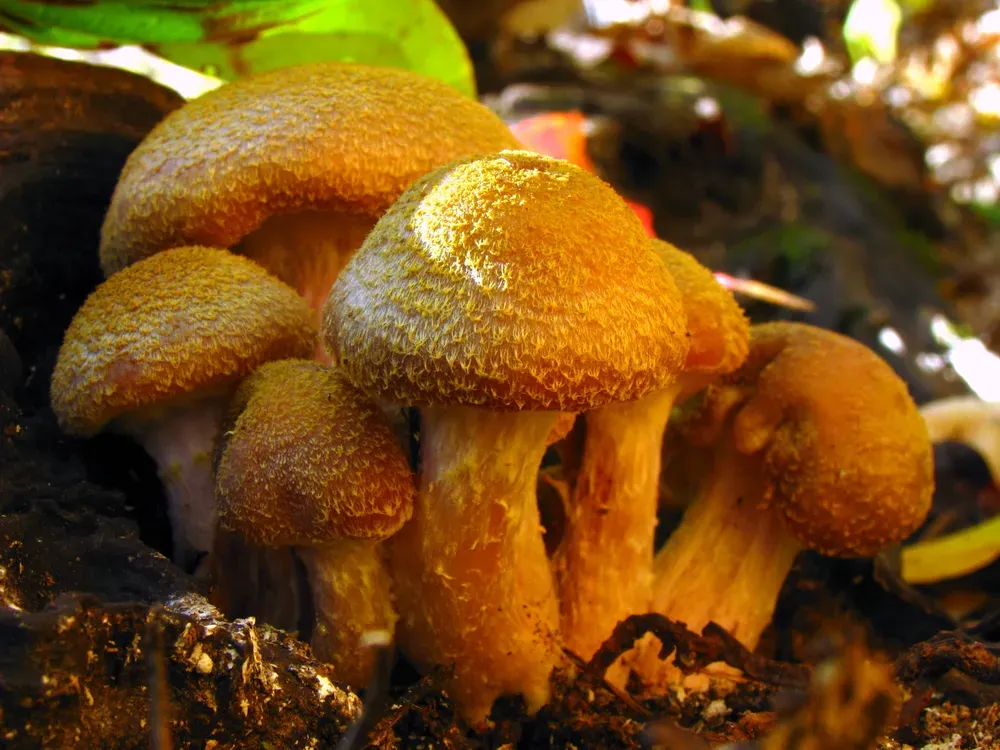
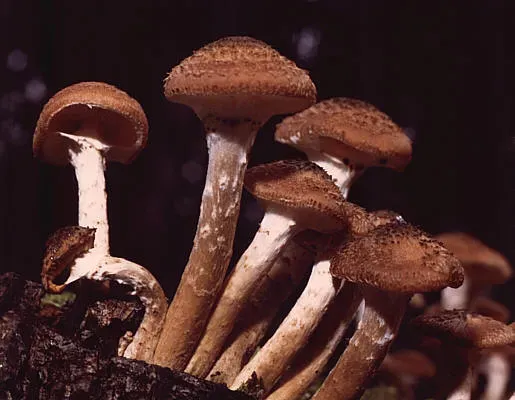
Bulbous honey fungus
Armillaria gallica
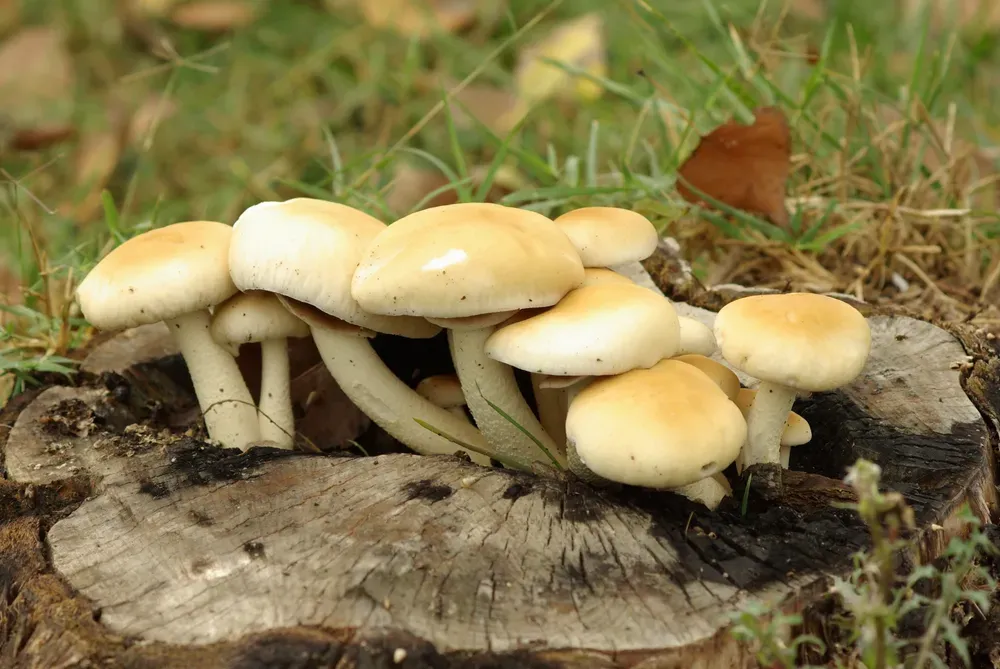
Dark honey fungus
Armillaria ostoyae
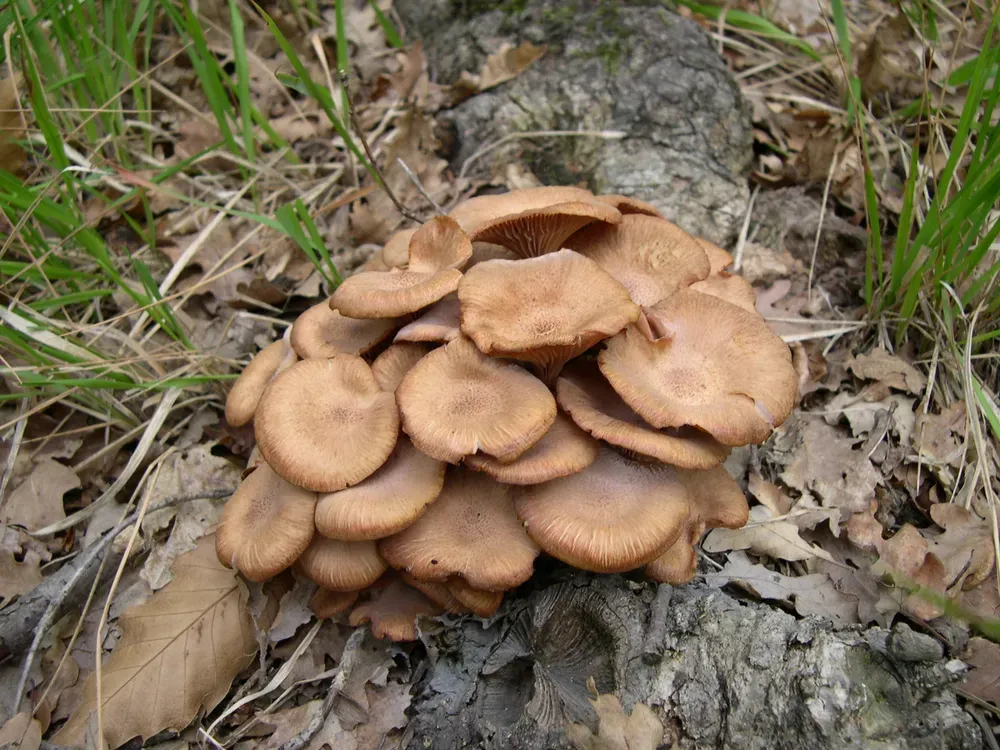
Poplar fieldcap
Cyclocybe aegerita
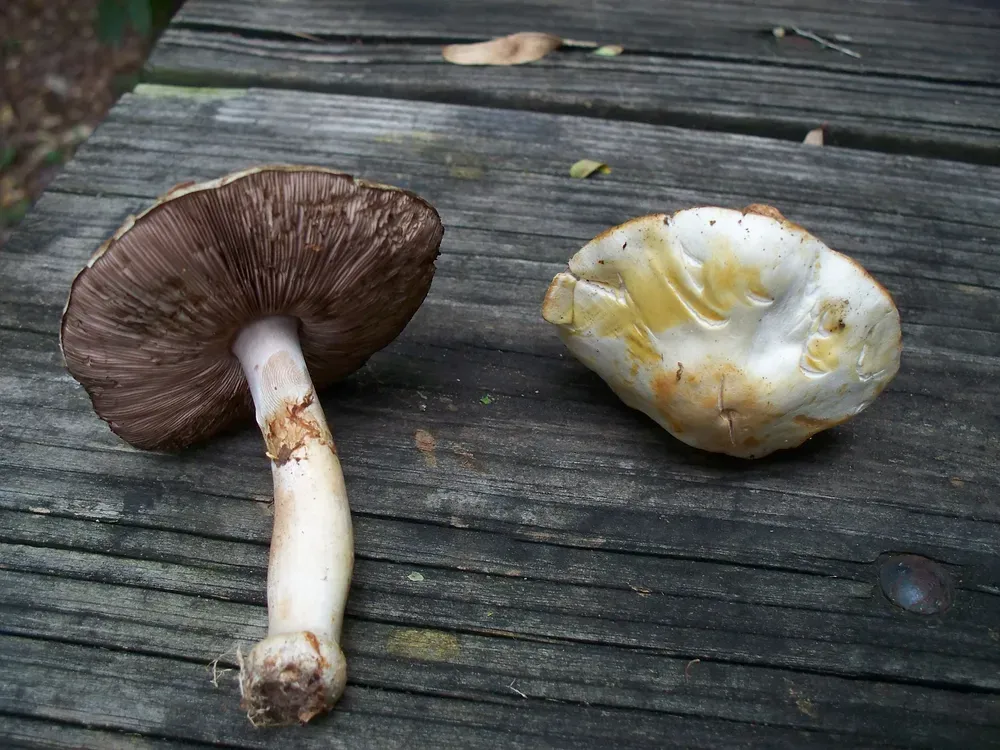
Ringless honey fungus
Desarmillaria tabescens
Agaricus abruptibulbus
Agaricus haemorrhoidarius
Agaricus haemorroidarius
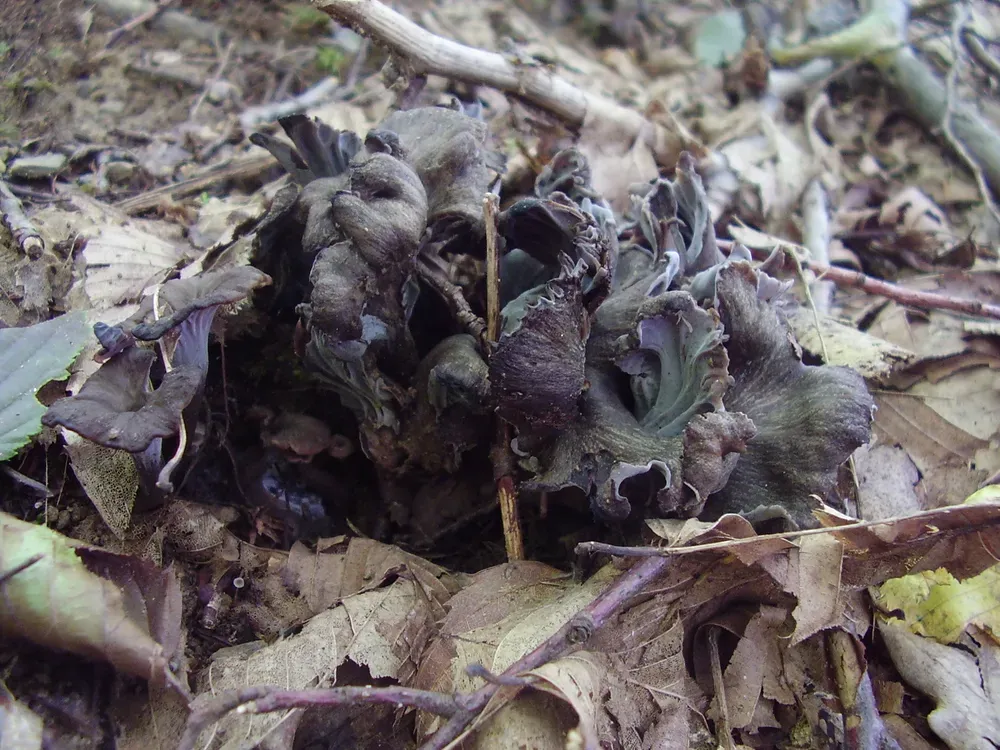
Ashen chanterelle
Cantharellus cinereus
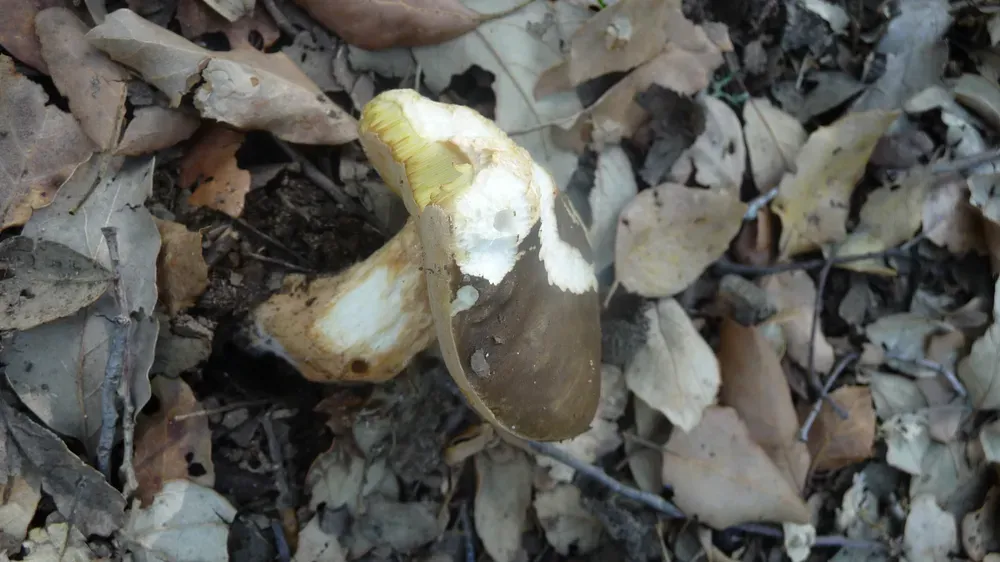
Blushing bolete
Leccinum roseofractum
Frequently asked questions
Is Rhizopogon obtectus edible or poisonous?
What kind of spore-bearing surface does Rhizopogon obtectus have?
What does the cap of Rhizopogon obtectus look like?
What does the stem of Rhizopogon obtectus look like?
What do Rhizopogon obtectus smell and taste like?
Where does Rhizopogon obtectus grow?
Which trees does Rhizopogon obtectus grow under?
When should you pick Rhizopogon obtectus?
What can Rhizopogon obtectus be confused with?
How do you cook Rhizopogon obtectus?
Can you dry Rhizopogon obtectus?
What is the scientific name of Rhizopogon obtectus?
Sources
- [1]Вікіпедія (українська)
- [2]Атлас грибів України, Зеров Д.К. (1979)
- [3]MycoBank Database
- [4]Index Fungorum
- [5]GBIF
- [6]iNaturalist Ukraine