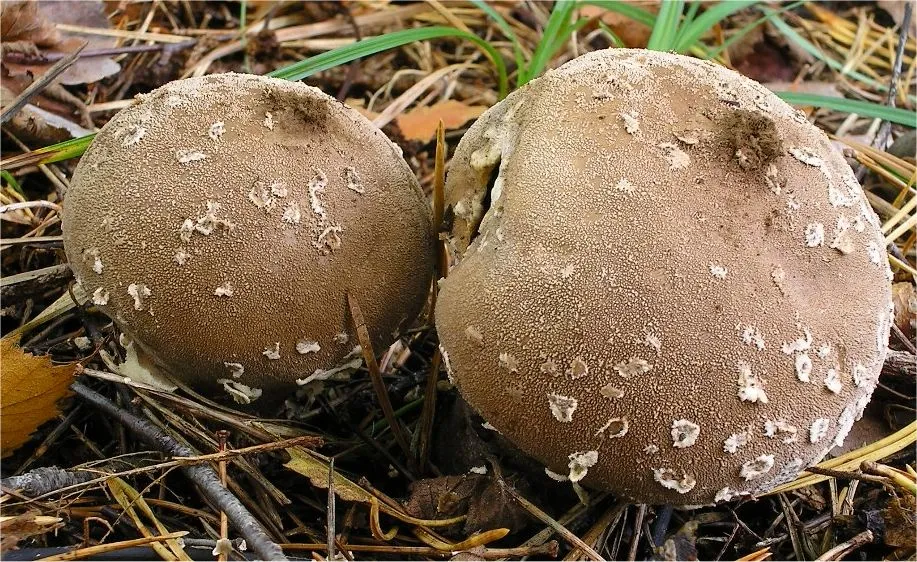
Lycoperdon mammiformeLycoperdon mammaeforme
Expert-verifiedUpdated October 3, 2026
Passport
- Edibility
- Edible
- Season
- Aug — Oct
- Hymenophore
- Chambered
- Cap color
- White
- Size
- Small (up to 5 cm)
- Smell
- Pleasant
- Reviewed
- Yes ✓
Quick answers
Where to look?
Deciduous forest, Mixed forest
When does it appear?
Aug — Oct
Active months: August, September, October.
How to recognize it? Three signs
- Cap color: White, Cream
- Cap shape: Convex
- Smell: Pleasant
Fruiting season
August – October
Description
Lycoperdon mammiforme is an uncommon and beautiful puffball with a distinctive pear- or egg-shaped fruiting body. The name "mammiforme" ("nipple-shaped") reflects its typical shape: a rounded upper part 3-6 cm across with a small raised nipple on top, where a pore opens at maturity to release the spores. The young mushroom is white, densely covered with fine white scales that rub off with age, leaving a lacy pattern of paler patches on the surface. One of the most photogenic forest puffballs.
This mushroom is edible when young, while the flesh is PURE WHITE and uniform. Its culinary value is moderate, like all puffballs — the flesh is tender, with a delicate taste and no pronounced aroma. Good for frying, stewing and adding to soups. Mature mushrooms (the flesh turns yellow, then green, and turns into a spore mass) — DO NOT pick. The key rule for all puffballs: cut a young mushroom in half — if the inside is pure white, uniform flesh, it's fit to eat; any yellow, green or brown tint means the mushroom is already maturing and is not edible.
In Ukraine it is an uncommon species. It occurs in broadleaf and mixed forests: under oak, beech, hornbeam and hazel. It is a saprotroph on forest litter. It loves shady, damp spots with a thick layer of leaves, forest edges and the slopes of forest ravines. Season: August–October, peaking in September. Finds are usually single or in groups of 2-5 fruiting bodies. The best finds are in the Carpathian beech old-growth forests and the oak woods of Polissia.
Cap
Fruiting body pear-shaped to egg-shaped, 3-6 cm across and 4-8 cm tall, with a distinct narrowed stem-like base. The upper part is rounded, with a characteristic small raised nipple on top (where the spore-release pore will form). The young mushroom is white to cream, densely covered with fine white or cream scales, which rub off with age and leave a lacy pattern on the surface. The mature mushroom is a light grayish brown.
Hymenophore
The hymenophore is enclosed inside the fruiting body (a gasteromycete — the spores ripen inside). In young mushrooms the flesh is pure white, soft and uniform. With age it becomes pale cream, then yellowish, then olive green and turns into a dark olive powdery spore mass. The spores escape through the apical pore on the nipple, which opens at maturity.
Stem
The pseudostem (false stem) is well developed — a cone-shaped narrowing toward the base, 1.5-3 cm thick, with no clear border with the "cap". The flesh of the stem stays sterile (spore-free) and spongy, and shrinks with age.
Flesh
In young mushrooms — pure white, soft, spongy, with no yellowish or greenish tints. It does not change color quickly when cut. As it matures it gradually turns yellow, then green, and becomes a powdery spore mass.
Smell
Faint, pleasant and mushroomy in young specimens, neutral. In mature ones — no pronounced smell. Mature mushrooms are not tasted.
›Scientific synonyms (1)
Lycoperdon mammiforme Pers.
Lookalikes
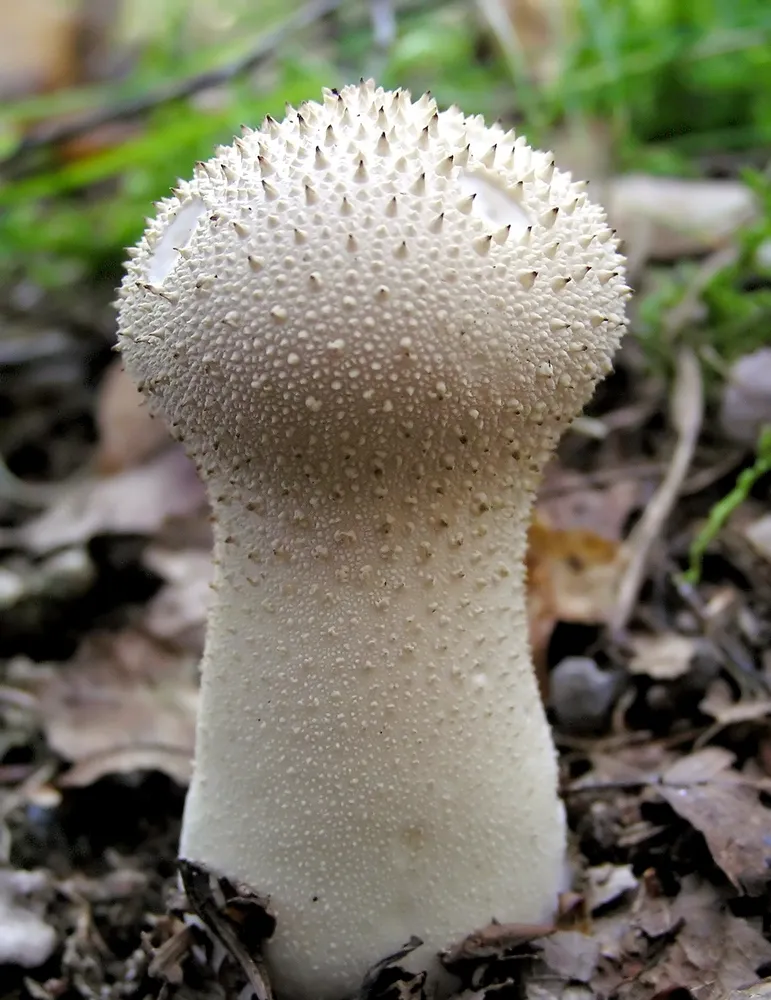
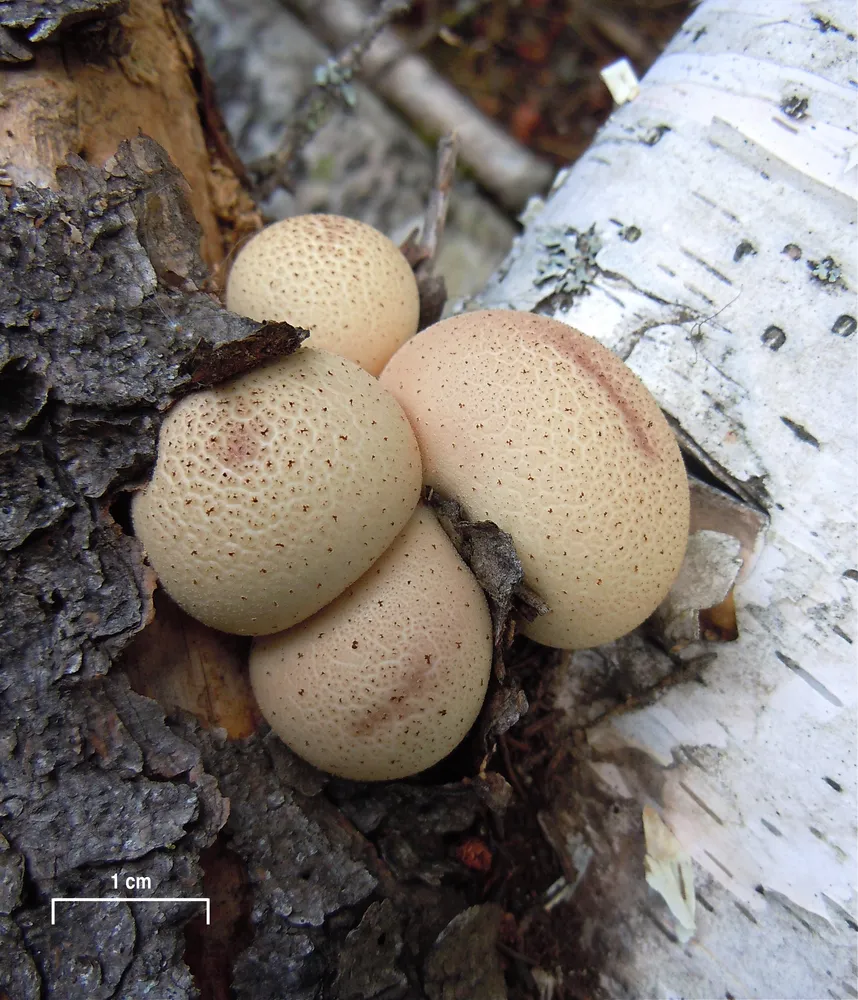
Related species
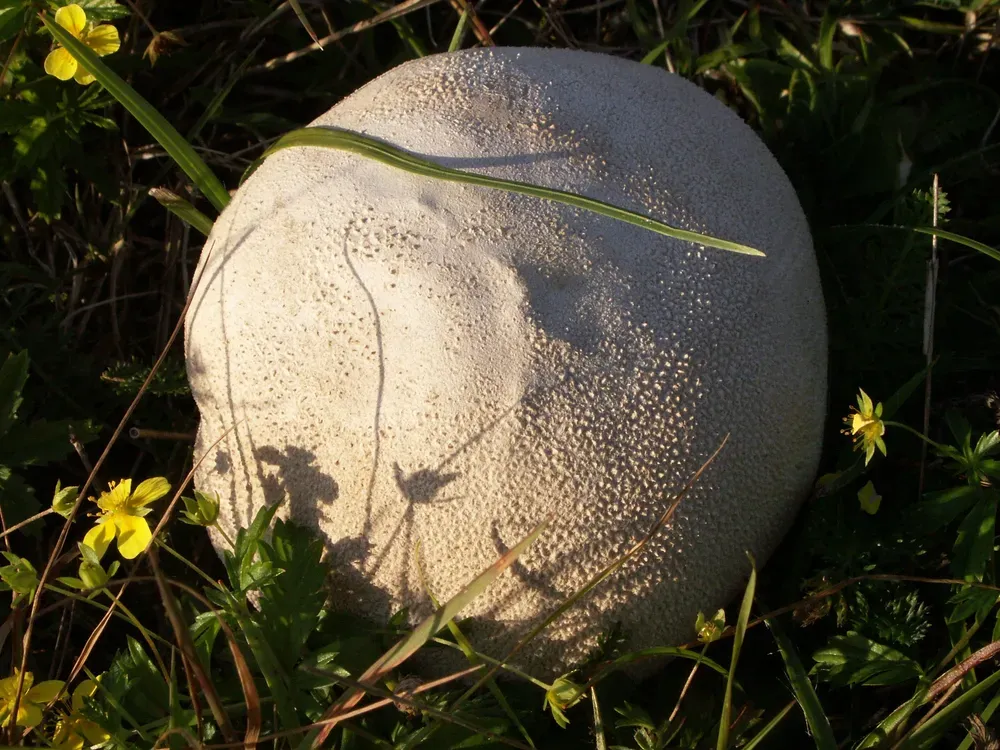
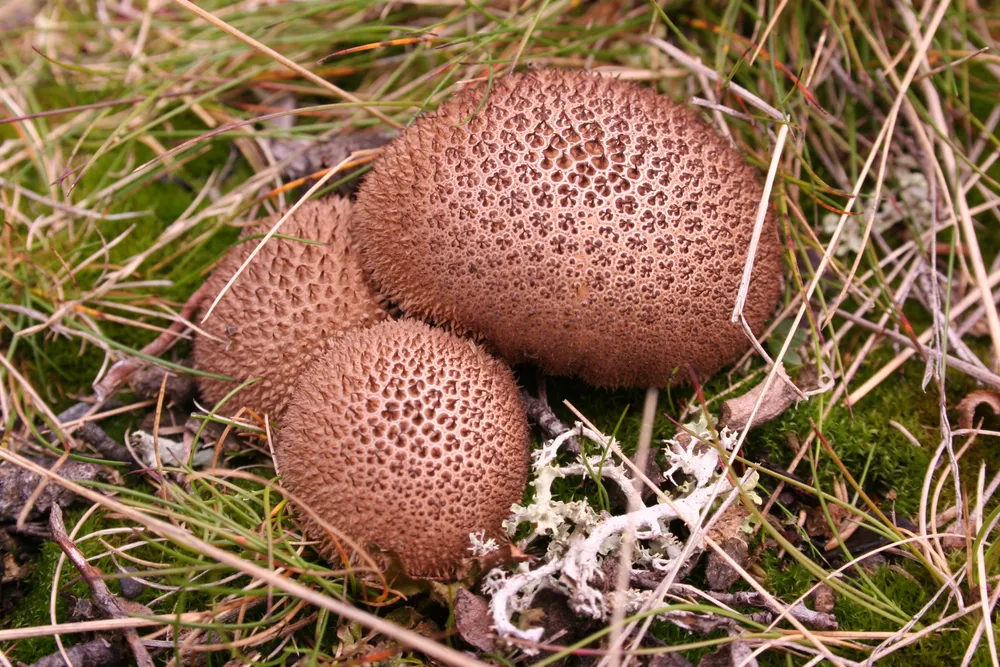
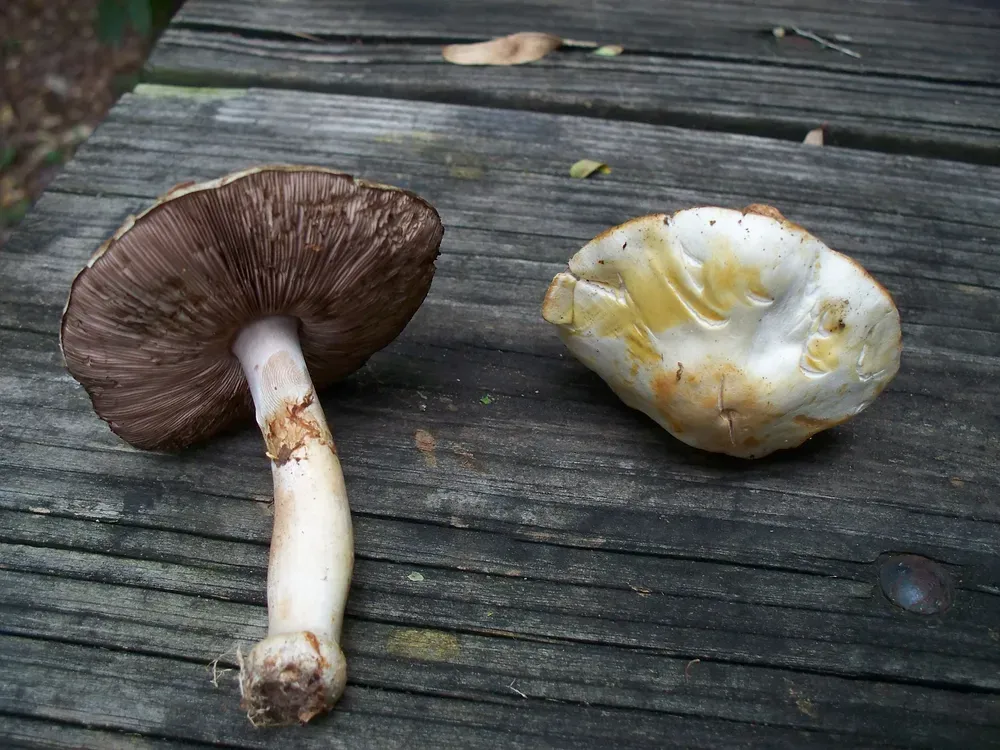
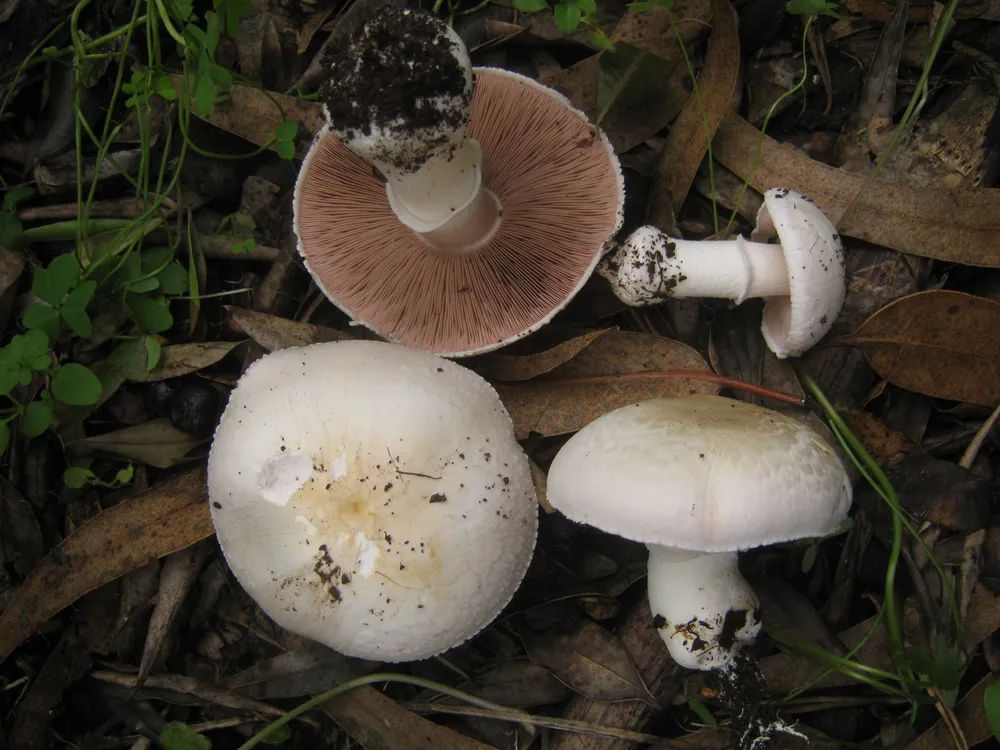
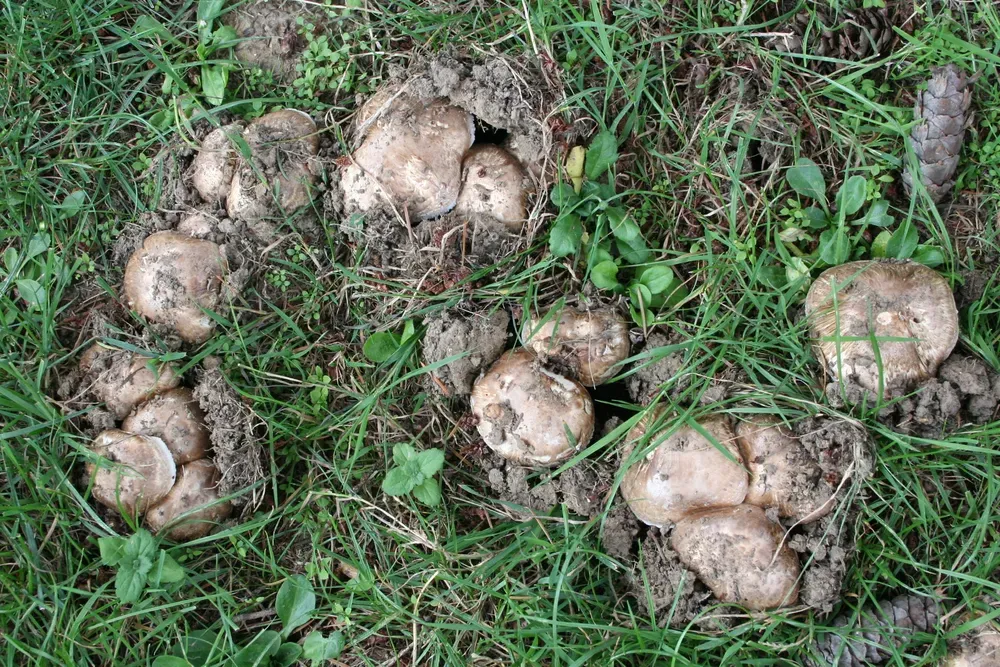
Mushrooms of the same genus and habitat — to study side by side and never mix up.
.webp)
Frequently asked questions
Is it safe to eat?
Yes, when young — as long as the flesh is pure white. Cut it open before cooking: if the inside is uniformly white, it's fine; if there is a yellow, olive or brown tint, the mushroom is already maturing and is not edible. This rule applies to all puffballs — a universal check.
How should you cook it?
Clean it, remove the scaly outer layer (optional, but better to remove it — it's a bit tough) and cut into thick slices. Fry for 10-15 min with onion and cream — the classic way to serve puffballs. Or stew with potatoes. For soups, add toward the end of cooking. Young ones with white flesh pickle well.
Can you give it to children?
From 4-5 years old in small portions, after checking that the flesh is pure white. Puffballs are traditionally considered "gentle" mushrooms and are easy to digest. Cook them thoroughly. Children under 3 should not be given any mushrooms at all.
Where should you look for it?
In broadleaf and mixed forests — mostly under oak, beech, hornbeam and hazel. It loves shady, damp spots with a thick layer of leaf litter, forest edges and the slopes of forest ravines. The best finds are in old beech and oak forests. It does not occur in young plantations or pine forests.
Which regions of Ukraine is it found in?
Mostly the Carpathians (especially in Zakarpattia and the Lviv region), Prykarpattia, and the Western and Right-Bank forest-steppe. Rarer in Polissia and the Left-Bank forest-steppe. Overall an uncommon species — every find is a pleasant surprise.
When should you look for it?
August — October, peaking in September. It loves a damp autumn with moderate temperatures. It tolerates the first light frosts.
What is it confused with?
With the common puffball (Lycoperdon perlatum) — that one has the typical white spines on its surface; also edible. With the stump puffball (L. pyriforme) — that one grows on rotting wood and has a smooth surface. Among potentially dangerous ones: the common earthball (Scleroderma citrinum) — poisonous, with a hard, yellow-ocher, scaly skin (not white with scales). Telling them apart is easy: cut it in half — in Scleroderma the flesh quickly turns dark gray or purple, while in Lycoperdon mammiforme it is pure white.
How can you identify it for sure?
Four features together: (1) a pear shape with a distinct nipple on top; (2) a dense covering of white scales when young; (3) pure white flesh when cut; (4) growing in leaf litter under oak/beech. If all four match, it's Lycoperdon mammiforme.
Is Lycoperdon mammiforme edible or poisonous?
What kind of spore-bearing surface does Lycoperdon mammiforme have?
What does the cap of Lycoperdon mammiforme look like?
What does the stem of Lycoperdon mammiforme look like?
Sources
- [1]Вікіпедія (українська)
- [2]Атлас грибів України, Зеров Д.К. (1979)
- [3]MycoBank Database
- [4]Index Fungorum
- [5]GBIF
- [6]iNaturalist Ukraine