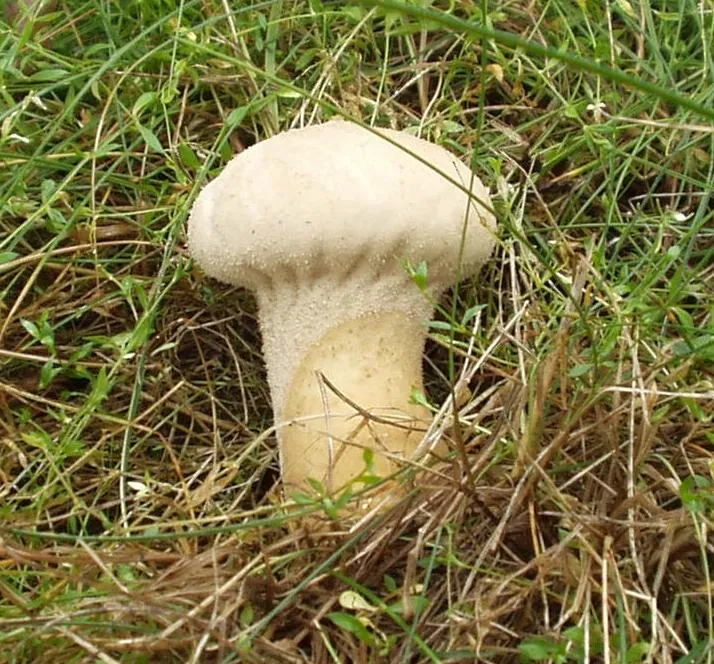
Pestle puffballCalvatia excipuliformis
Expert-verifiedUpdated October 3, 2026
Passport
- Edibility
- Edible
- Season
- Aug — Nov
- Hymenophore
- Chambered
- Cap color
- White
- Size
- Large (over 15 cm)
- Smell
- Pleasant
- Reviewed
- Yes ✓
Quick answers
Where to look?
Deciduous forest, Mixed forest, Conifer forest
When does it appear?
Aug — Nov
Active months: August, September, October, November.
How to recognize it? Three signs
- Cap color: White, Cream, Brown
- Cap shape: Cylindrical
- Smell: Pleasant
Fruiting season
August – November
Description
The pestle puffball is a large, striking puffball with a very distinctive skittle-like shape. It looks like a white bottle-shaped club or a big mustard seed on a stalk: the top is a round or egg-shaped head, the bottom a cylindrical “stalk”. It reaches 10-20 cm in height, sometimes even 30 cm. When young the surface is white, smooth or finely downy; over time it darkens and cracks into scales, and the top dies, exposing a brownish-olive spore mass.
A good edible when young, as long as the flesh inside is pure white and firm. At this stage it tastes like chicken breast — mild and tender, with no sharp notes. It's good breaded and fried (like a schnitzel), in soups, omelets, or pickled. As soon as the flesh starts turning yellow or green inside, the mushroom is no longer fit to eat (those are already spores). The check is simple: cut it in half — if it's white and uniform, you can cook it; if it's yellowish or has a greenish tint — throw it out.
In Ukraine it is widespread throughout the forest and forest-steppe zones. It is found in the Carpathians, Polissia, the Forest-Steppe, and oak plantings in the steppe. It grows on forest litter, on forest edges, in moss, in floodplain forests. Season: August–November, peaking in September–October. It often grows singly or in small groups of 2-5 fruiting bodies.
Cap
Fruiting body skittle-shaped, 10-20 (up to 30) cm tall, 4-10 cm wide at the top. The upper (fertile) part is a round or egg-shaped head with a rounded tip; the lower (sterile) part is a cylindrical, elongated “stalk”. Color: young ones are white, later cream, then yellowish brown. The surface is smooth or finely warty at first, later cracking into coarser scales, and the top opens to expose the spore mass.
Hymenophore
The hymenophore is internal (gleba), as in all puffballs. The young gleba is white, dense and uniform. With age it turns yellow, then green, then becomes a dark olive-brown powdery mass of spores. Spore print dark olive-brown.
Stem
Not a separate part — the fruiting body is one piece, skittle-shaped. The “stalk” is the lower sterile part of the same fruiting body, cylindrical, white, scaly in old ones. There is no ring.
Flesh
The flesh in young ones is white, uniform and firm, with a delicate taste reminiscent of chicken breast. With age it turns yellow, then green, and becomes a spore mass. Check before cooking: if the cut shows uniform white — it's good; any yellowish or greenish tint — throw it out.
Smell
A faint, pleasant mushroomy smell. The taste is mild and delicate.
›Scientific synonyms (8)
Lycoperdon saccatum (Bull.)Lycoperdon polymorphum var. excipuliforme, Handkea excipuliformis (Bull.) Kreisel, Calvatia saccata, Lycoperdon cervinum sensu Bolton (1789), Lycoperdon elatum, Lycoperdon excipuliforme, Lycoperdon excipuliforme forma flavescens, Lycoperdon excipuliforme var. flavescens
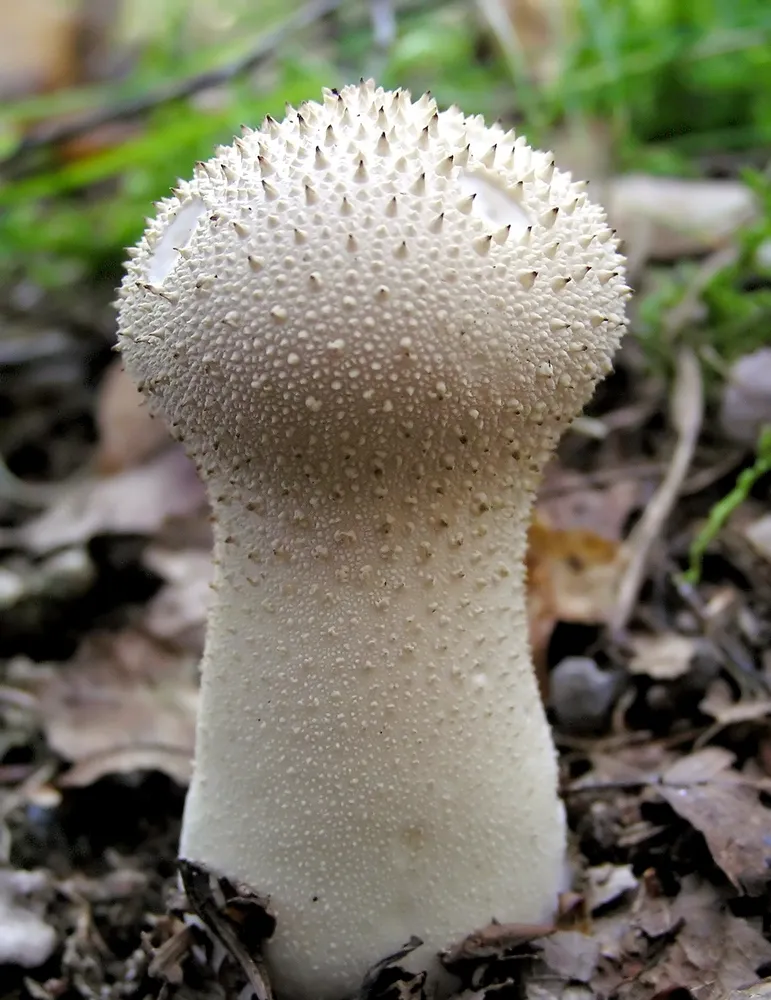
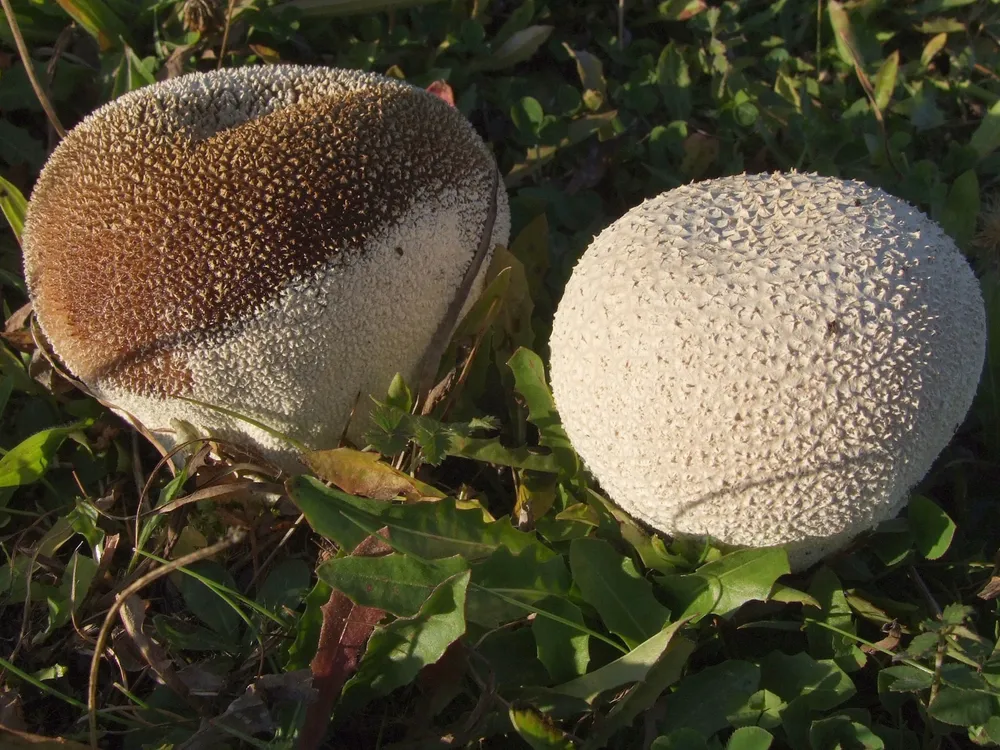
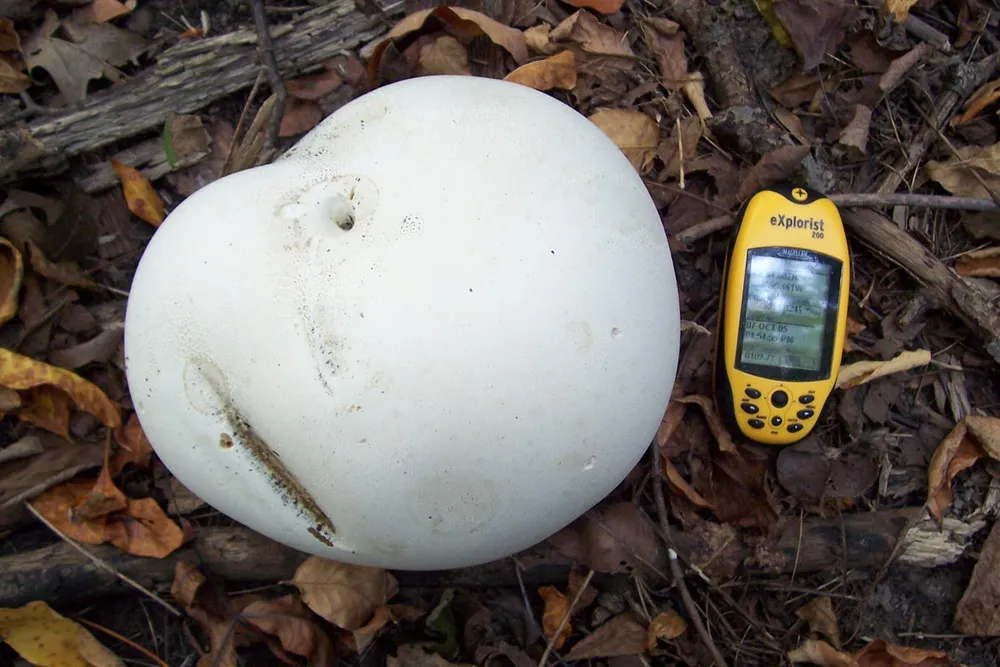
Lookalikes
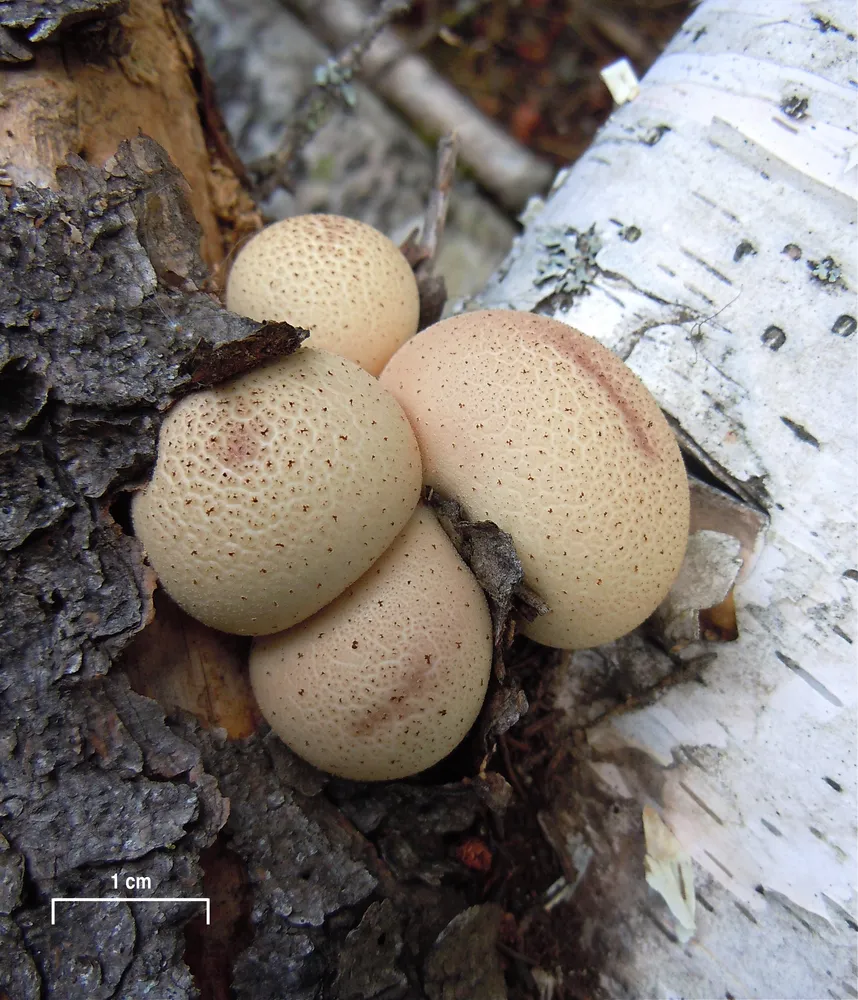
Related species
Mushrooms of the same genus and habitat — to study side by side and never mix up.
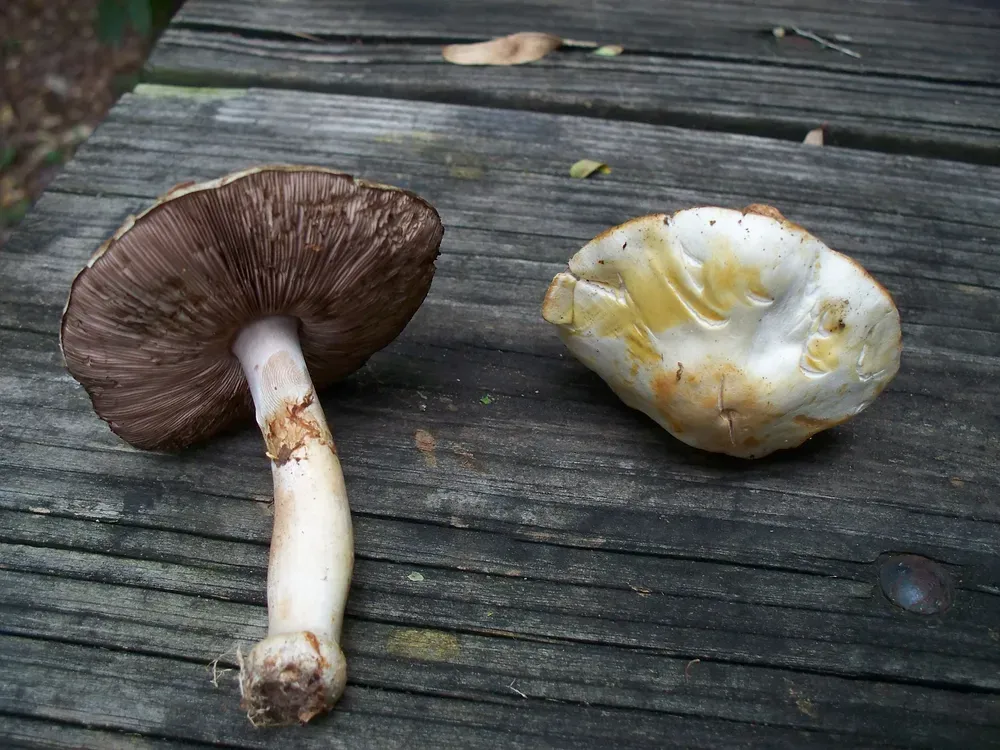
.webp)
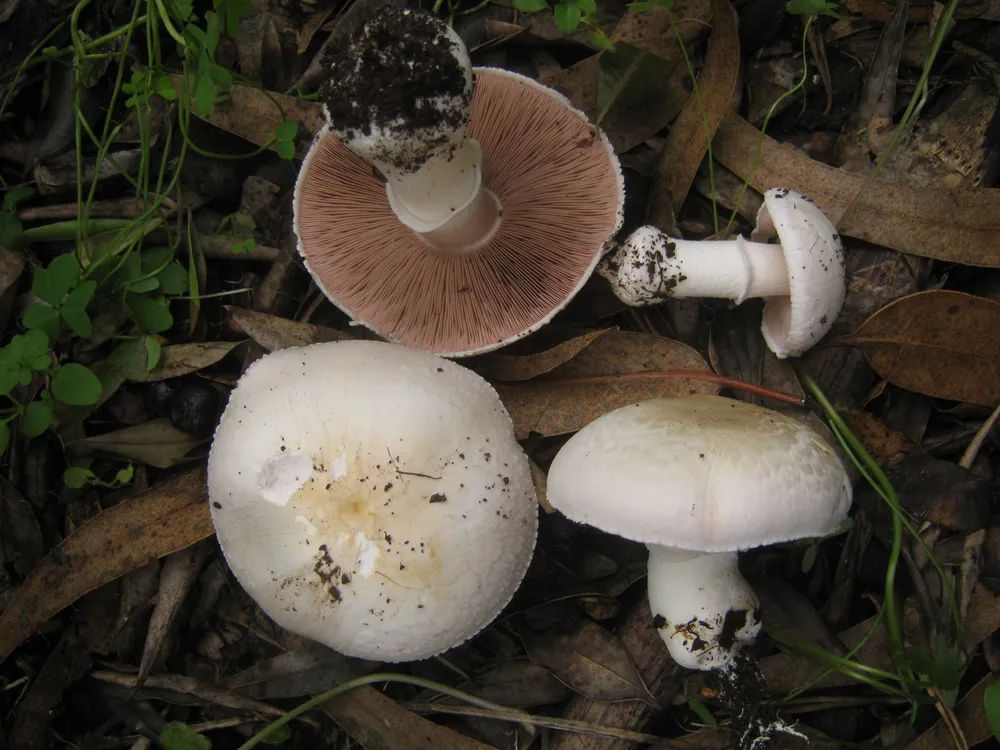
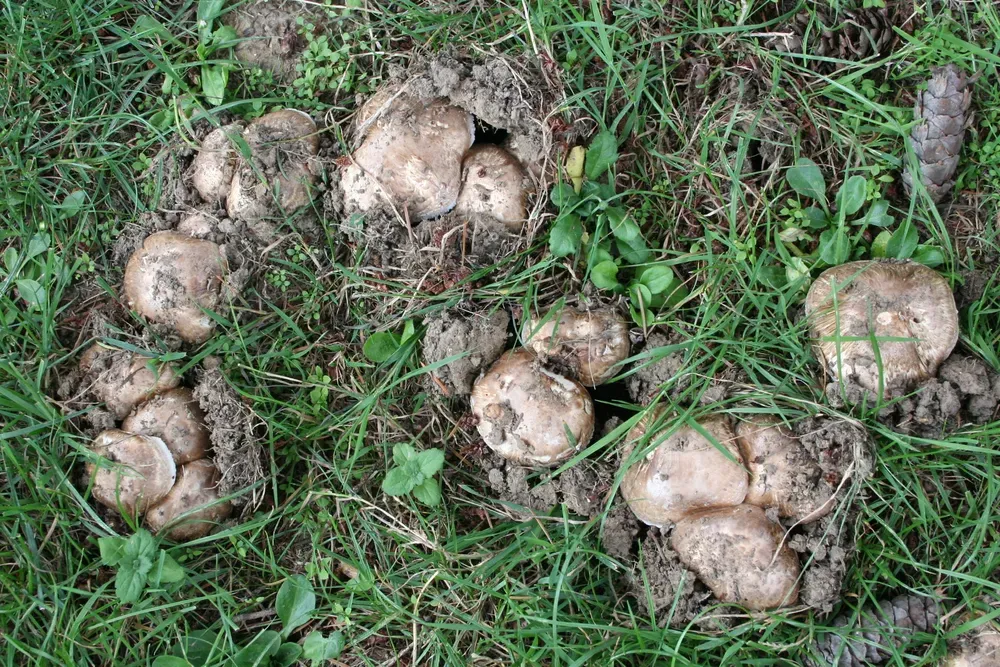
_Fr._4948278370-2.webp)
Frequently asked questions
Is it safe to eat?
Yes, when young it's a good edible mushroom, a delicacy. It's safe to collect — the skittle shape is unique, and there are no dangerous lookalikes in Ukraine. The key rule: take only young fruiting bodies with pure white flesh inside. Cut every one you collect — if there's a yellowish or greenish tint, the mushroom has already matured and isn't fit to eat.
How should you cook it?
Clean it, peel off the skin, and cut into slices 1-1.5 cm thick. You can fry them breaded straight away (like a schnitzel), add them to soups, stew or pickle them. No pre-boiling needed. The flesh is firm and holds its shape. Young heads can be stuffed — they hold a filling nicely.
Where should you look for it?
On forest litter in mixed and deciduous woods, on forest edges, in moss, in floodplain forests, in old parks. It likes bright spots, clearings and forest edges. Sometimes in meadows and pastures near the forest. It's a soil saprotroph and doesn't need trees.
Which regions of Ukraine does it grow in?
Throughout the forest and forest-steppe zones: the Carpathians, Prykarpattia, Polissia, the Western/Right-Bank/Left-Bank Forest-Steppe, and the Crimean Mountains. In the steppe zone — in shelterbelts and plantations.
When should you look for it?
August–November. Fruiting peaks in September–October. It tolerates the first light frosts. In a warm autumn it lasts into November.
How can you tell the mushroom is still young?
From the outside: pure white color, a smooth or finely warty surface, a firm head. If the surface is cream-colored, cracked, with brown spots, the mushroom is already mature. The sure test is cutting it: a young one has uniform white flesh; a mature one is yellowish or greenish inside (spore dust has already begun to form).
What is it confused with?
With other puffballs — especially Lycoperdon perlatum (common puffball) and Calvatia utriformis. The difference: the pestle puffball has a clear skittle-like shape with a long sterile stalk; the common puffball is roundish, with no obvious “stalk”; Calvatia utriformis is pear-shaped with a short stalk. All these puffballs are edible when young — a mix-up is not dangerous.
Can it be confused with a young amanita?
Unlikely, if you cut open the fruiting body. Inside a young amanita you can already see the outline of the future mushroom — cap, gills, stem. The pestle puffball has uniform white flesh with no outlines at all. All puffballs must be cut in half before cooking — that's a safe rule.
Is Pestle puffball edible or poisonous?
What kind of spore-bearing surface does Pestle puffball have?
What does the cap of Pestle puffball look like?
What does the stem of Pestle puffball look like?
Sources
- [1]Вікіпедія (українська)
- [2]Атлас грибів України, Зеров Д.К. (1979)
- [3]MycoBank Database
- [4]Index Fungorum
- [5]GBIF
- [6]iNaturalist Ukraine