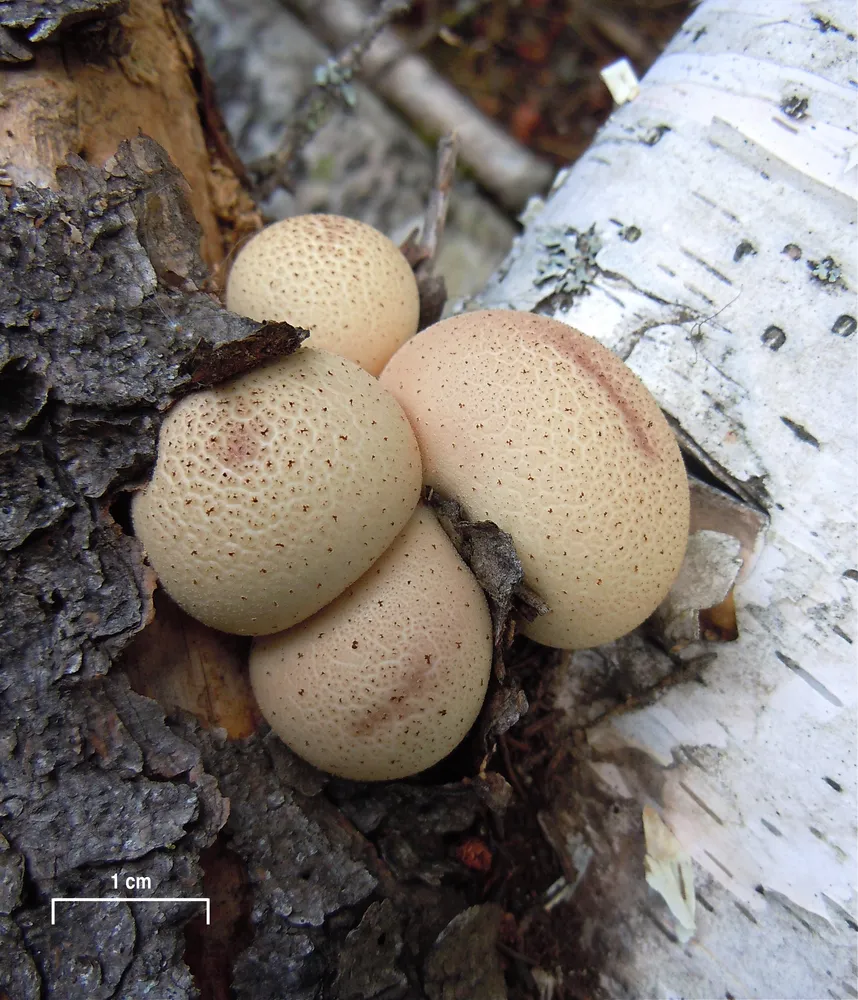
Stump puffballLycoperdon pyriforme
Expert-verifiedUpdated October 3, 2026
Passport
- Edibility
- Edible
- Season
- Jun — Nov
- Hymenophore
- Chambered
- Cap color
- White
- Size
- Small (up to 5 cm)
- Smell
- Pleasant
- Reviewed
- Yes ✓
Quick answers
Where to look?
Deciduous forest, Mixed forest, Conifer forest
When does it appear?
Jun — Nov
Active months: June, July, August, September, October, November.
How to recognize it? Three signs
- Cap color: White, Cream, Brown
- Cap shape: Irregular
- Smell: Pleasant
Fruiting season
June – November
Description
The stump puffball is a small but very photogenic mushroom. Its fruit bodies have a distinctive pear-like or inverted-egg shape: a thick, rounded “head” on top and a narrowed “stem” below, white or cream, with a finely scaly surface. Size: 2-5 cm tall. It is the only puffball in Ukraine that grows in large clusters right on wood — on stumps, fallen trunks and roots of broadleaf and conifer trees. Other puffballs grow on soil.
a good edible when young, while the flesh is pure white. It has a delicate, mild flavor, reminiscent of chicken with a subtle nutty note. Good breaded and fried (like an escalope), stewed, or added to soups. the golden rule of puffballs: cut every fruit body you pick in half before cooking — the flesh must be uniformly white. Any yellowish, greenish or purple tinge means the mushroom has already matured (the spore mass is forming) — throw it away. Safe for foragers: its typical habitat (stumps) and small size are not shared by any dangerous species.
In Ukraine it is common throughout the forest and forest-steppe zones. It occurs in the Carpathians, Polissia, the Forest-Steppe and mountainous Crimea. The season is very long: June-November, in several flushes after rain. It often grows in huge colonies of 30-100 fruit bodies on a single stump.
Cap
Fruit body pear-shaped or inverted-egg-shaped, 2-5 cm tall, 1.5-3.5 cm wide at the top. The upper (fertile) part is a rounded head; the lower (sterile) part is a narrowed “stem” 1-2 cm long. Color: young ones are white, cream, turning yellowish-brown to dark brown with age. The surface is covered with small warts and scales that rub off over time. In mature specimens the top dies back, exposing the olive spore mass.
Hymenophore
The hymenophore is internal (gleba). The young gleba is white, firm and uniform. With age it turns yellow, then green, and becomes a dark olive powdery spore mass. Spore print dark olive-brown.
Stem
There is no separate stem — the fruit body is all one piece. The lower sterile part is a “stem” 1-2 cm tall, white and scaly, passing into whitish rhizomorphs (mycelial cords) that anchor the mushroom to the wood.
Flesh
flesh in young ones is white, uniform, soft, with a delicate flavor. With age it turns yellow, then green, and becomes a spore mass. Check before cooking: if the cut shows uniform white — it's good; any other color — throw it away.
Smell
Faint, pleasant mushroomy smell. Mild taste with a subtle nutty note.
›Scientific synonyms (2)
Lycoperdon pyriforme β tessellatum Pers. (1801), Morganella pyriformis (Schaeff.) Kreisel & D.Krüger (2003)
Lookalikes
Related species
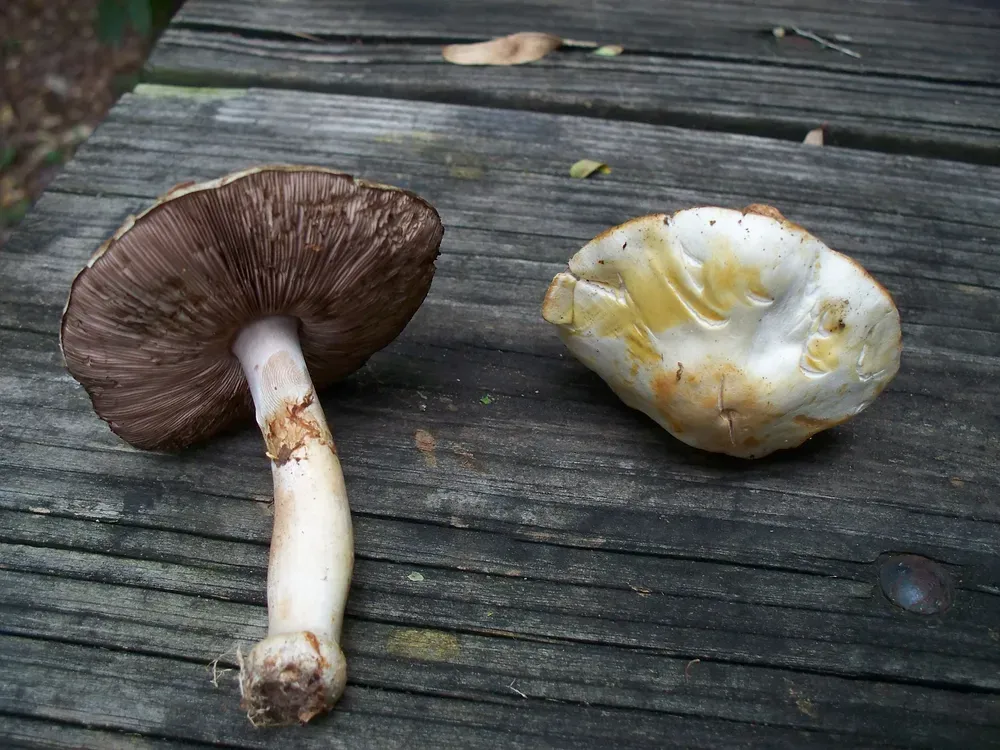
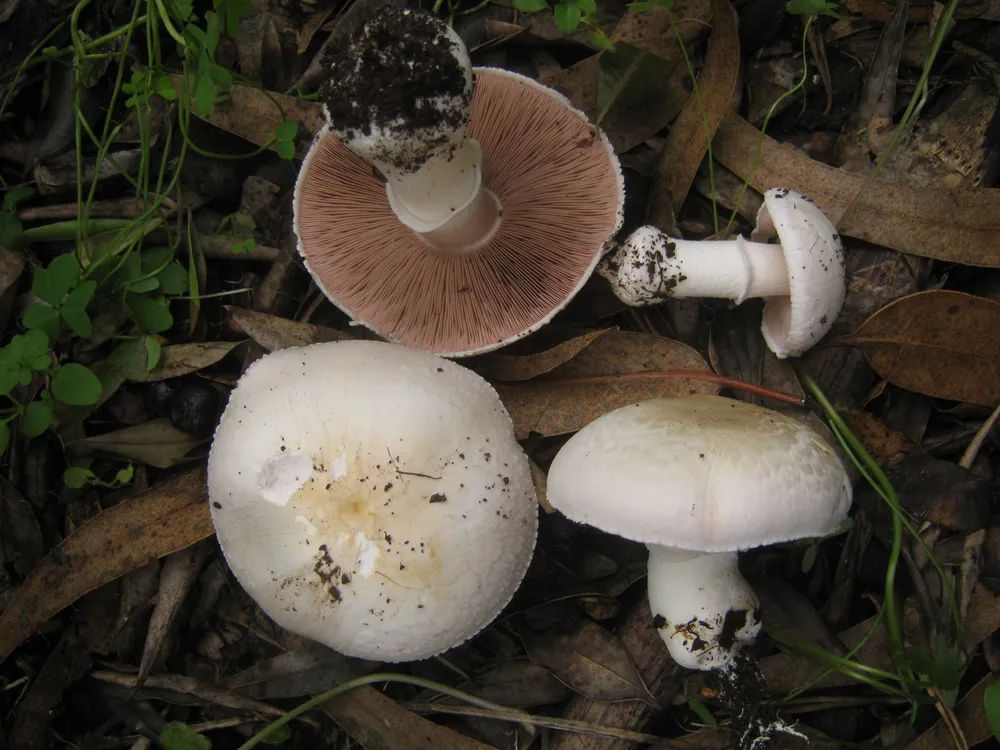
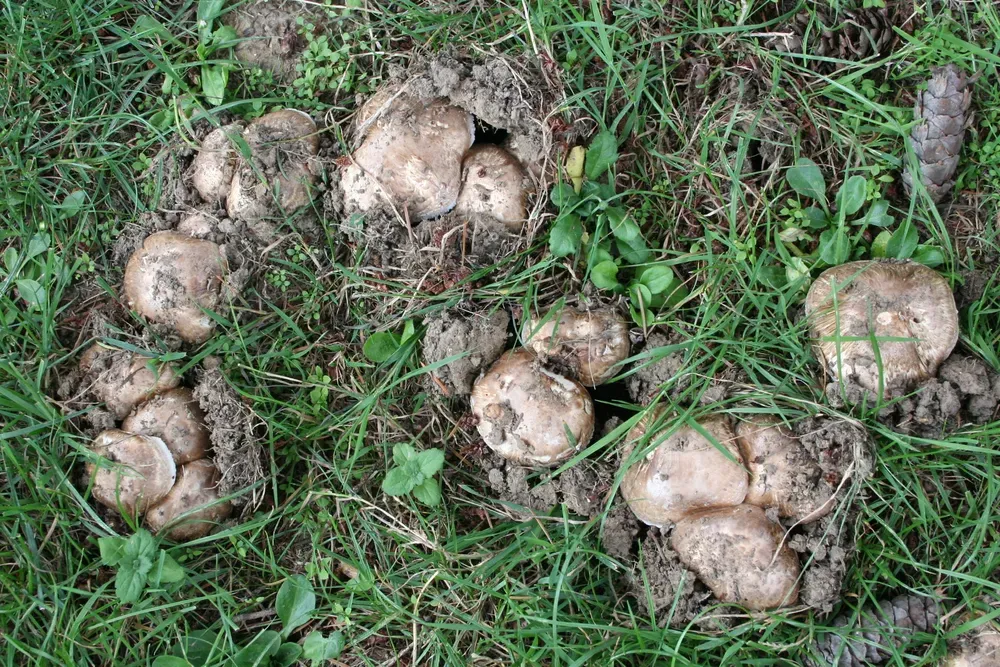
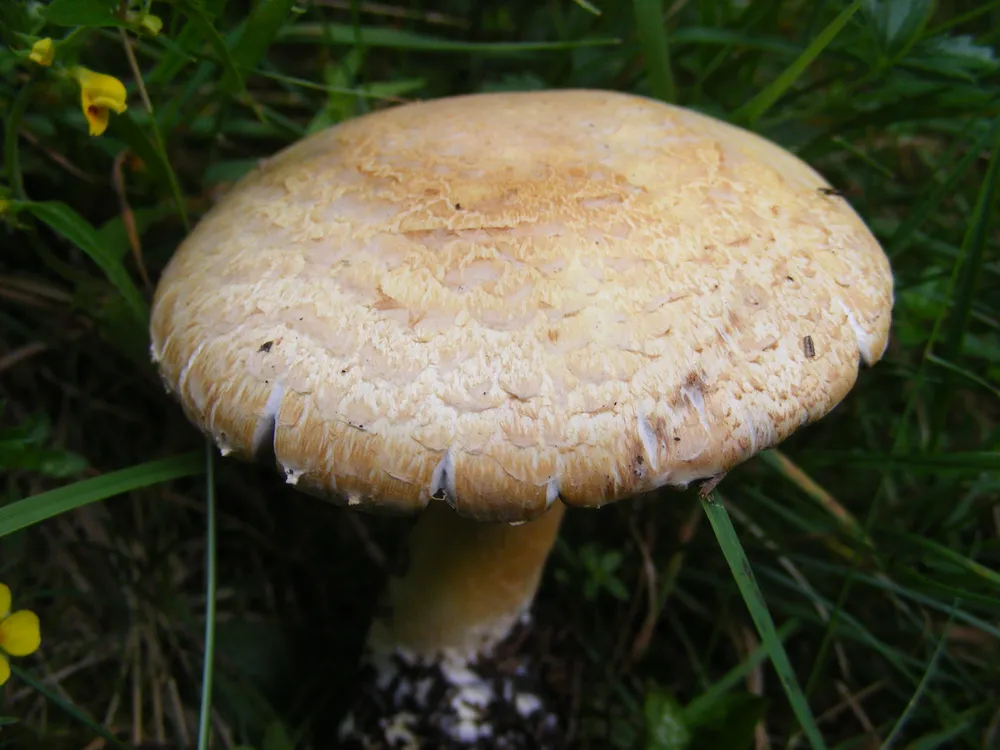
Mushrooms of the same genus and habitat — to study side by side and never mix up.
.webp)
_Fr._4948278370-2.webp)
Frequently asked questions
Is it safe to eat?
Yes, when young it is a good edible mushroom. It is safe for foragers as long as you follow the rule: cut every fruit body in half before cooking and check that the flesh is uniformly white in color. If it's yellowish or greenish inside, the mushroom has already matured and is no good.
How is it different from the earthball?
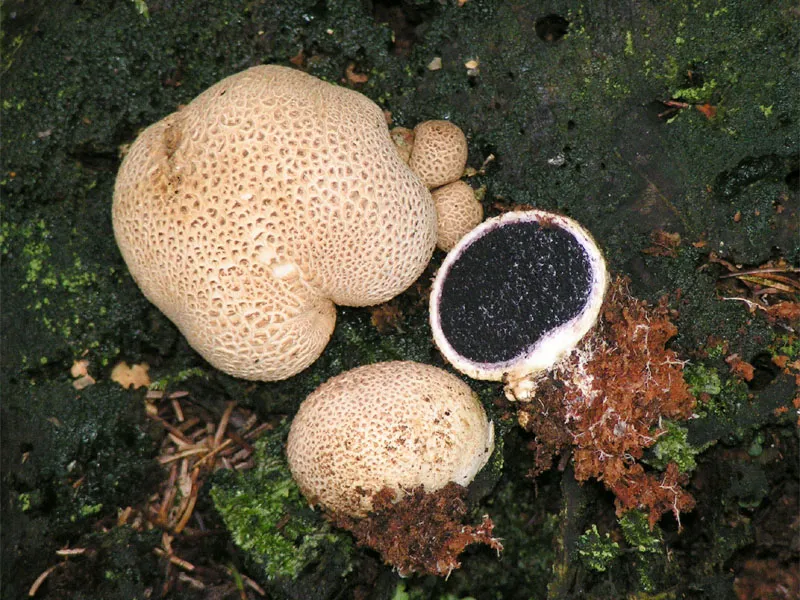
the critical difference: a young stump puffball has pure white flesh when cut. The earthball (Scleroderma) has dark purple-black flesh even when young. always cut puffballs open before cooking. The earthball is poisonous and causes stomach upsets.
Where should you look for it?
On stumps, fallen trunks and roots of broadleaf (alder, birch, aspen, oak) and conifer (pine, spruce) trees. it's the only puffball in Ukraine that grows on wood. Often in huge colonies of 30-100 fruit bodies on a single stump. In old woods with plenty of deadwood it's a common find.
In which regions of Ukraine does it grow?
Throughout the forest and forest-steppe zones: the Carpathians, Prykarpattia, Polissia, the Western/Right-Bank/Left-Bank Forest-Steppe, mountainous Crimea. In the steppe, only in floodplain woods and parks with old deadwood.
When should you look for it?
June-November. Several fruiting flushes after rain. The first in June-July, the second in August, the third in September-October. It tolerates the first light frosts. Young fruit bodies (white and firm) last 5-10 days.
How can you tell it's still edible?
Outside: a pure white or cream color and a fruit body that feels firm. If the surface is yellowish or brown and the fruit body is soft, the mushroom is mature. The reliable check is cutting it open: a young one has uniform white flesh; a mature one is yellowish, greenish or purple inside.
What is it confused with?
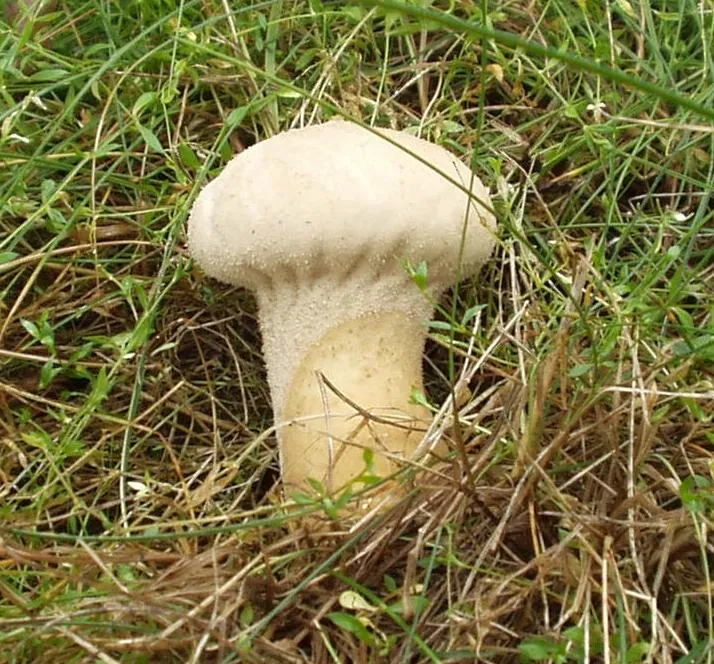
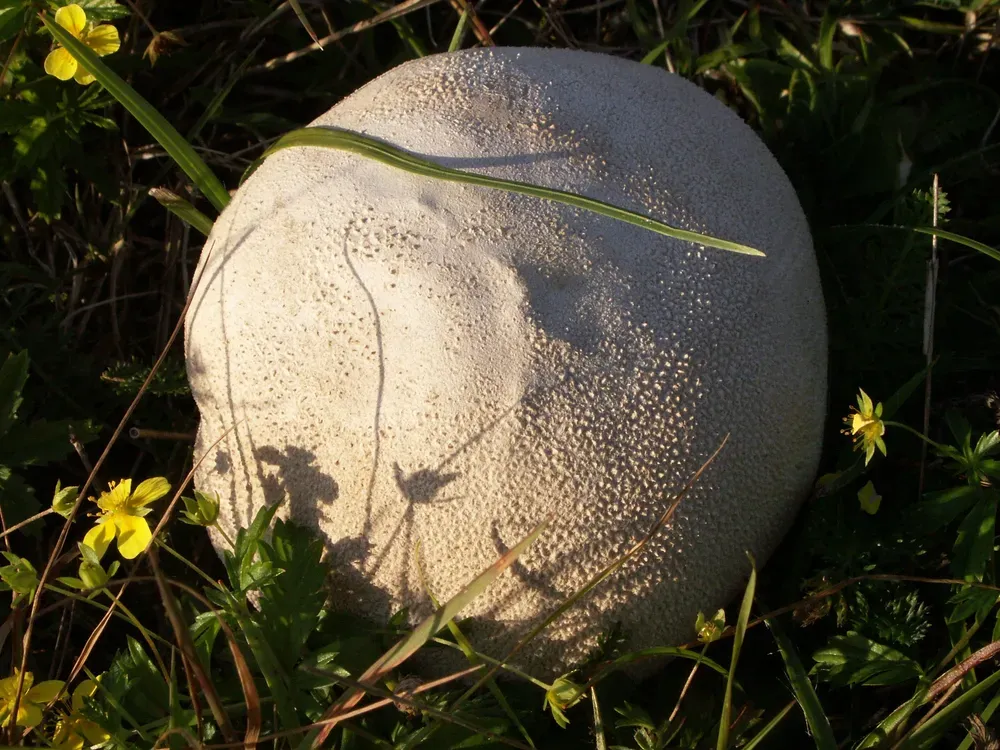
Most dangerously, with the common earthball (Scleroderma citrinum, S. verrucosum). Earthballs are poisonous and cause stomach upsets. The differences: the stump puffball grows on wood, earthballs on soil. The stump puffball has white flesh when young; earthballs are dark purple-black even when young. The stump puffball's skin is thin, an earthball's is hard like a shell.
What about other puffballs?
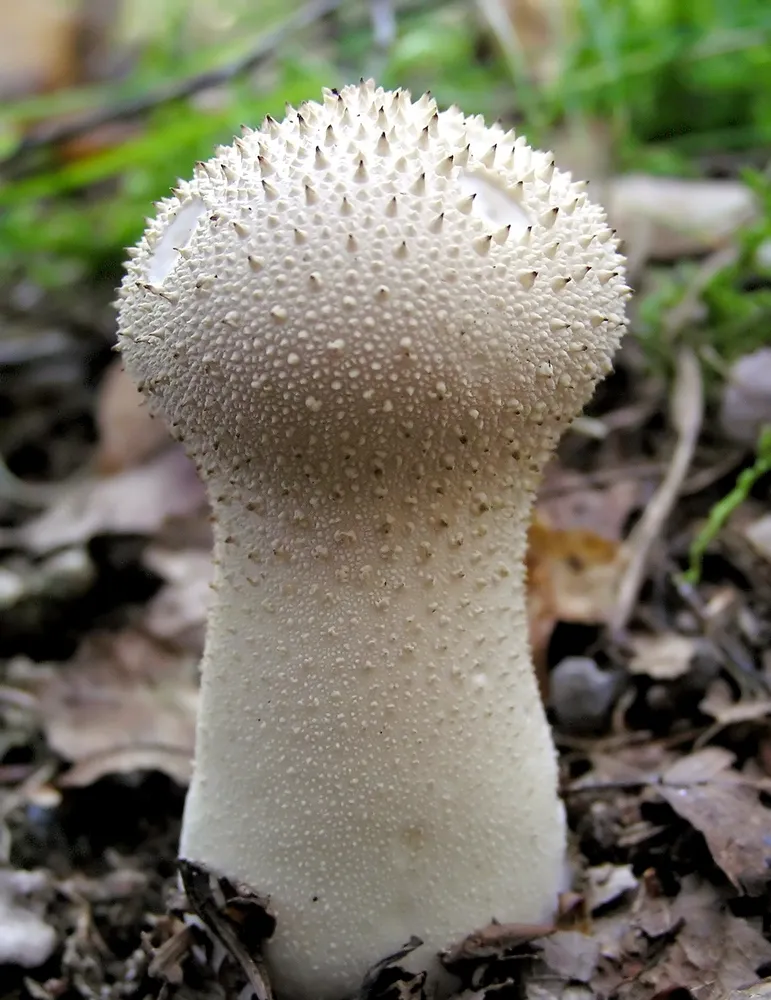
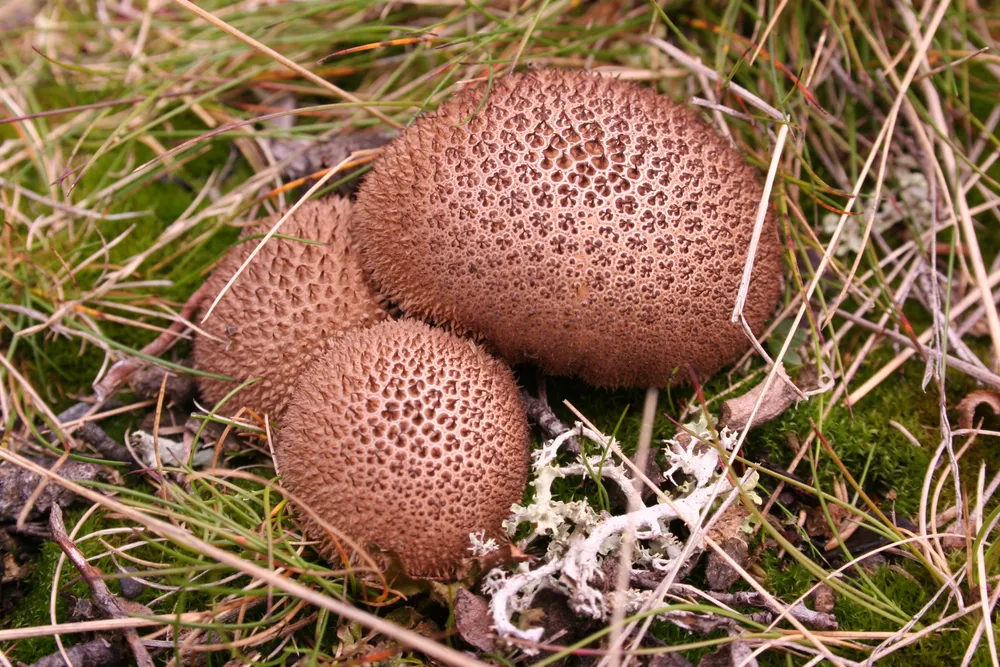
The common puffball (Lycoperdon perlatum) is edible too, but it grows on soil, not on wood, and has a rounder head without a distinct “pear-shaped” stem. All true puffballs are edible when young — the main thing is to make sure the flesh is pure white and that you have cut open the fruit body before cooking.
Is Stump puffball edible or poisonous?
What kind of spore-bearing surface does Stump puffball have?
What does the cap of Stump puffball look like?
What does the stem of Stump puffball look like?
Sources
- [1]Вікіпедія (українська)
- [2]Атлас грибів України, Зеров Д.К. (1979)
- [3]MycoBank Database
- [4]Index Fungorum
- [5]GBIF
- [6]iNaturalist Ukraine