Rhizopogon roseolus
Expert-verifiedUpdated October 3, 2026
Passport
- Edibility
- Edible
- Season
- Aug — Nov
- Hymenophore
- Chambered
- Cap color
- White
- Size
- Small (up to 5 cm)
- Smell
- Pleasant
- Reviewed
- Yes ✓
Quick answers
Where to look?
Conifer forest, Mixed forest
When does it appear?
Aug — Nov
Active months: August, September, October, November.
How to recognize it? Three signs
- Cap color: White, Cream, Pink, Yellow
- Cap shape: Irregular
- Smell: Pleasant, Almond
Fruiting season
August – November
Description
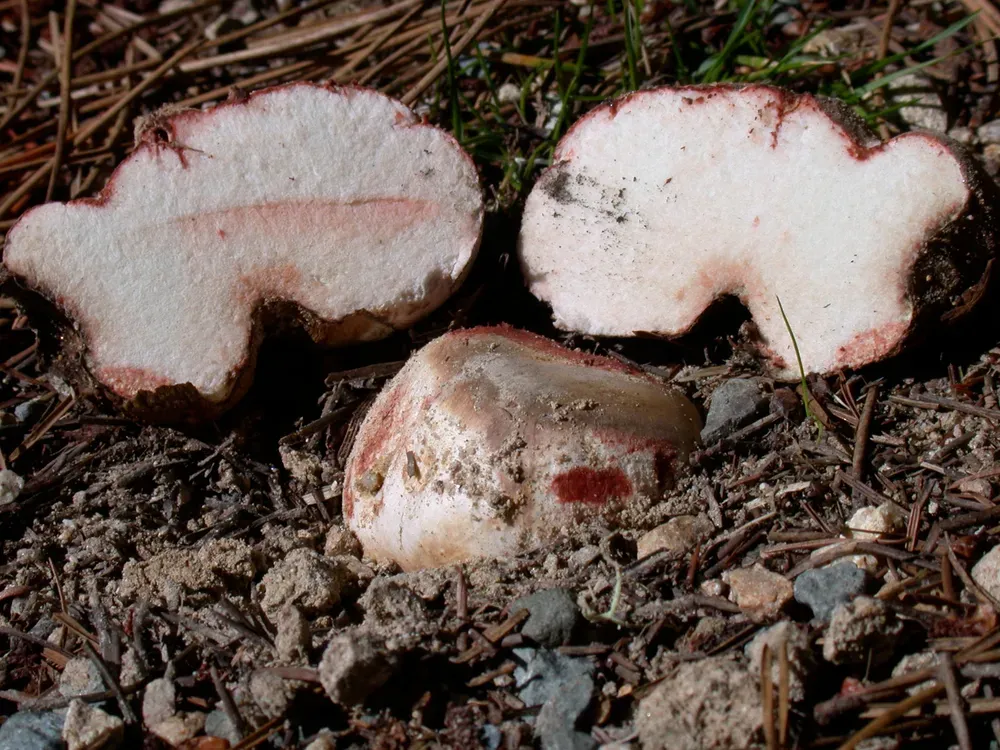
Rhizopogon roseolus (synonym: Rhizopogon obtectus) is a hypogeous (underground) mushroom that lives much like a truffle. It forms small round or potato-shaped fruiting bodies up to 3 cm across, buried 1–10 cm deep in the soil. Young ones are white with a distinctive pinkish tint; with age they turn yellowish brown.
This is a mycorrhizal species that partners exclusively with pines. In Ukraine it grows in pine and mixed woods with pine on sandy and limestone soils: Polissia, the Carpathians, the Carpathian foothills, and pine plantations in the south. In Japan and Korea, related species (called “shoro”, 松露) are a local delicacy, especially the immature white specimens (komeshōro), which are served in soup, grilled over charcoal, or added to chawanmushi.
Edibility is good, but it is rarely found. In young white specimens the flesh is tender, with a distinctive almond-and-nut aroma. Mature ones turn watery and bland and are of no interest in the kitchen. Harvest carefully: the mushroom is underground, so you look for little bumps on the soil surface or use trained dogs. It is lovely braised, added to soups, or cooked “Japanese-style” — grilled with salt and lemon juice.
Cap
The fruiting body is round or egg-shaped and elongated, 1–3 cm across. The surface of a young mushroom is white with a distinctive pinkish or violet-pink tint. With age it darkens to yellowish brown or ocher, more rarely to reddish brown. The surface is smooth or has fine fibrous mycelial strands at the base.
Hymenophore
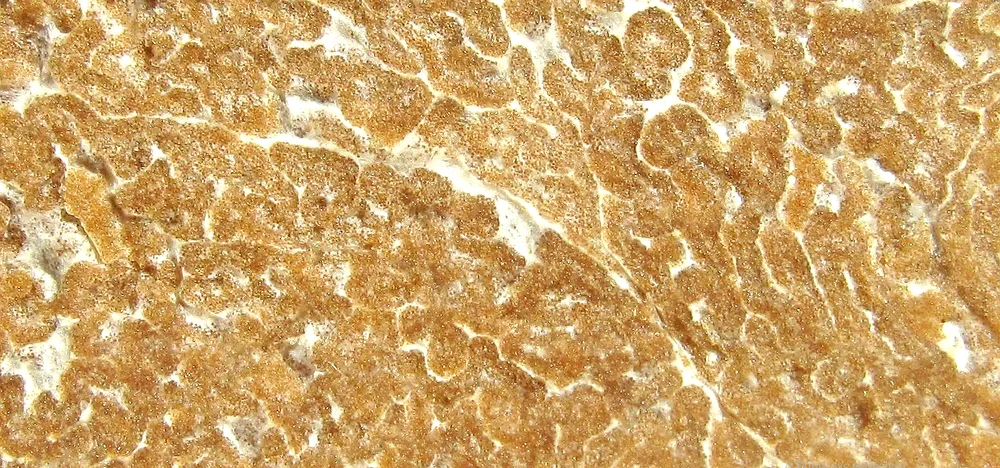
The spore-bearing layer is inside. In young ones the gleba is white and firm; as it matures it develops a distinctive labyrinth-like structure with cavities. Spore print ocher-brown. Spores smooth, oblong, 7–16 × 3–5 µm.
Stem
There is no stem. The fruiting body is hypogeous (underground), fully buried in the soil or with just the very top poking through the surface. At the base there are distinctive mycelial strands.
Flesh
The flesh (gleba) is white, firm and meaty in young specimens. As it matures it turns yellowish or ocher and becomes spongy with cavities. In old ones it is watery and dark brown.
Smell
The smell is faint; in young ones it recalls raw nuts or fresh almonds. In mature ones it grows stronger, with a note of raw root vegetables. The taste is mild and bland.
Lookalikes
Related species
Mushrooms of the same genus and habitat — to study side by side and never mix up.
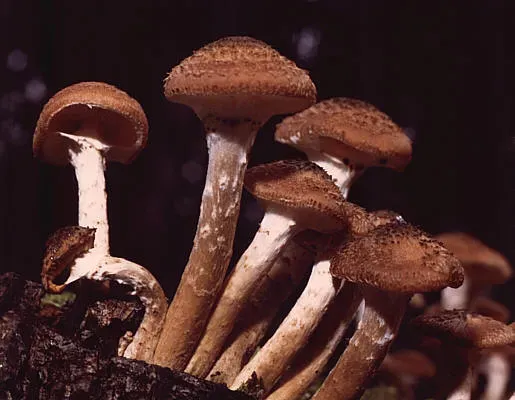
Bulbous honey fungus
Armillaria gallica
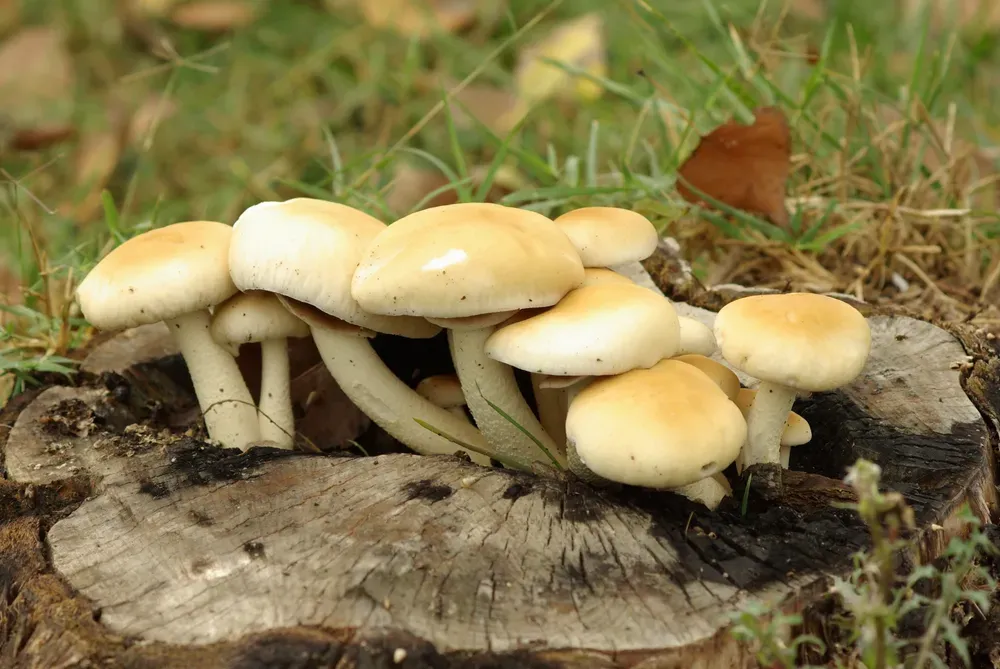
Dark honey fungus
Armillaria ostoyae
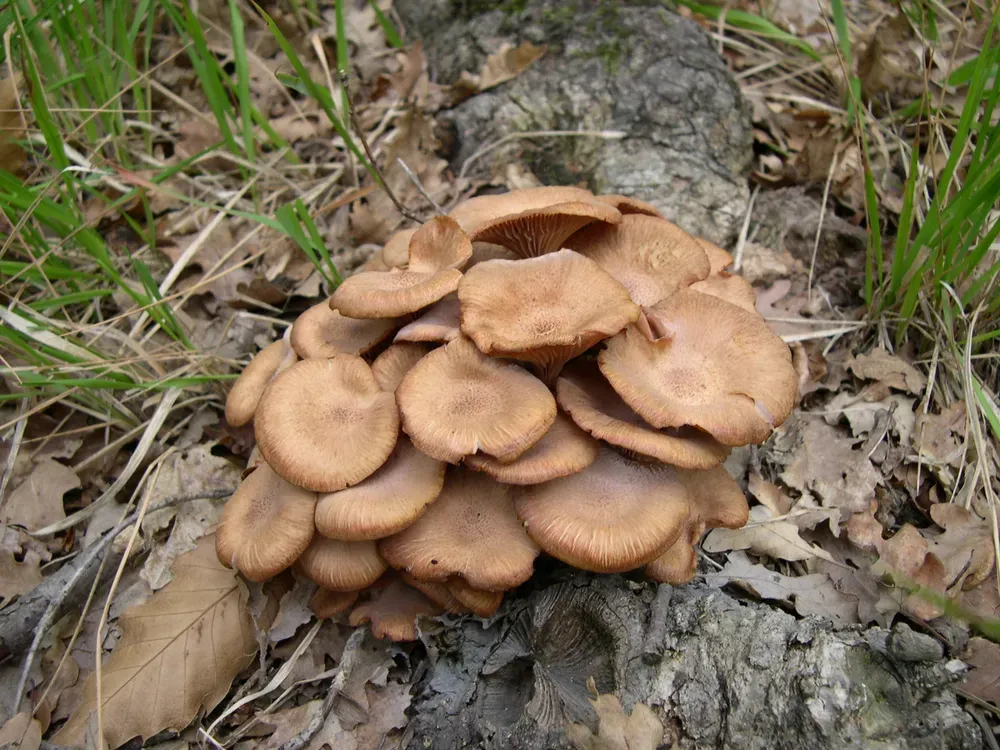
Poplar fieldcap
Cyclocybe aegerita
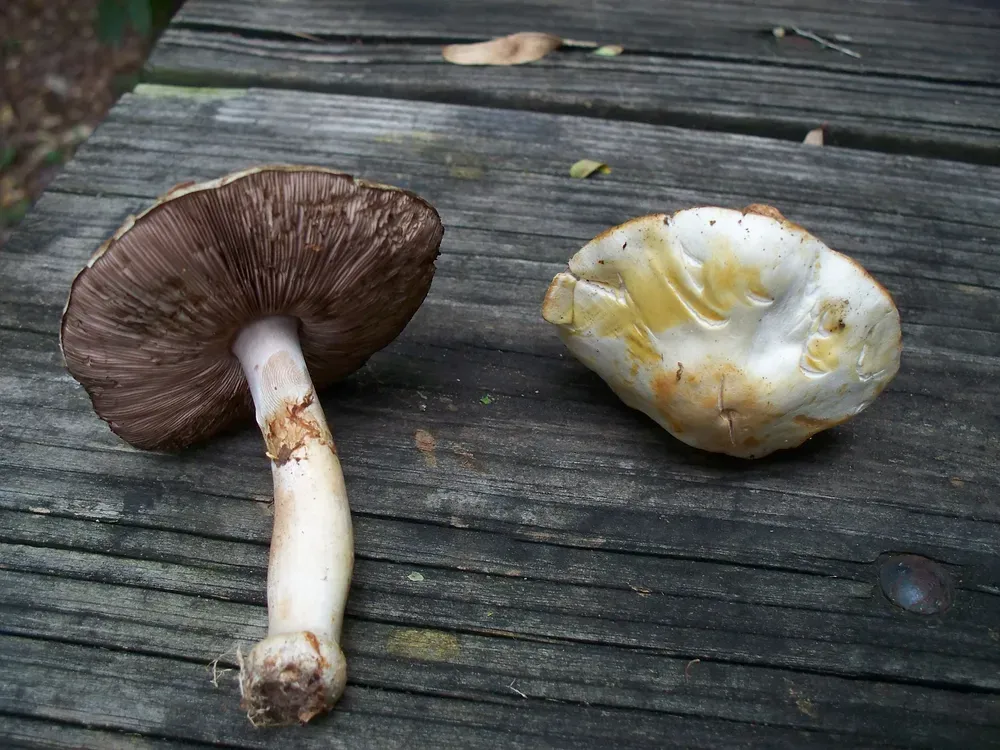
Ringless honey fungus
Desarmillaria tabescens
Agaricus abruptibulbus
Agaricus haemorrhoidarius
Agaricus haemorroidarius
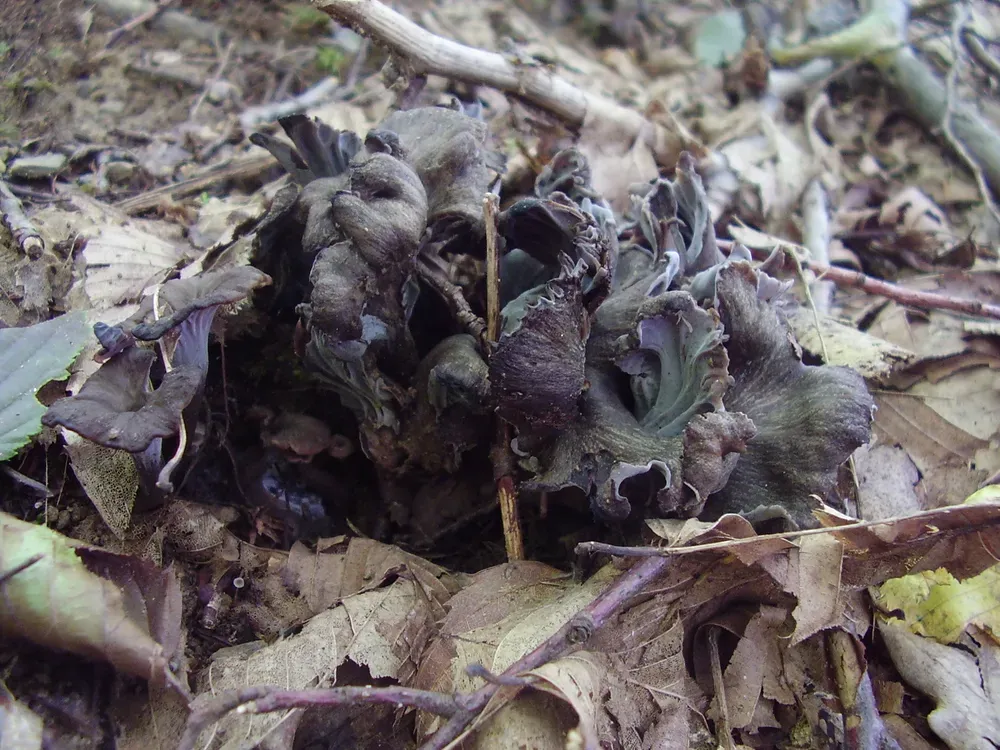
Ashen chanterelle
Cantharellus cinereus
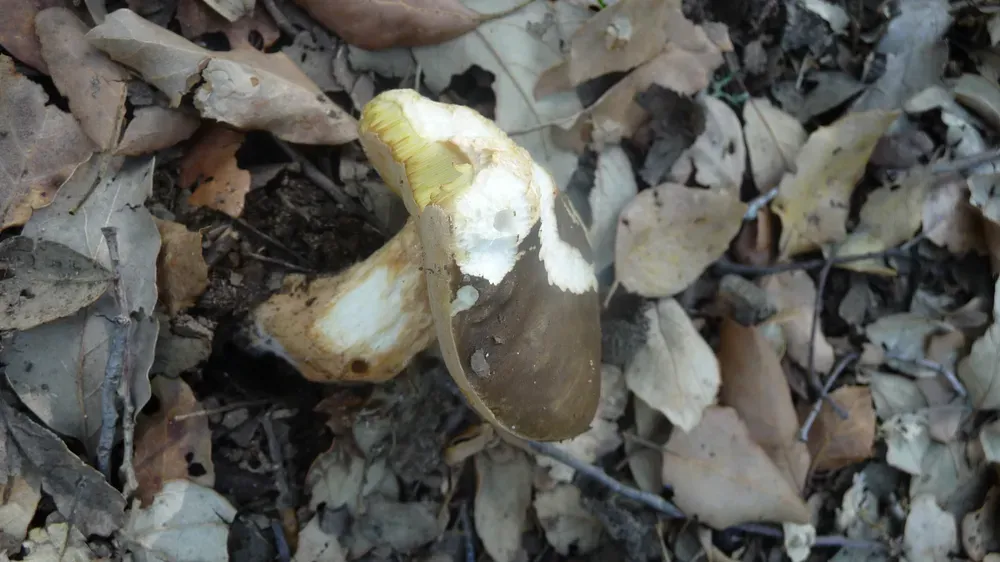
Blushing bolete
Leccinum roseofractum
Frequently asked questions
How do you find an underground mushroom?
There are a few ways: 1) Look for small bumps and cracks in the soil surface in pine woods, especially on sandy and limestone patches. 2) Trained dogs (like truffle dogs). 3) Smell — with mature fruiting bodies, you can catch the aroma at the surface. They sit 1–10 cm deep, so dig carefully so you don’t damage other fruiting bodies.
Are there dangerous look-alikes?
Among underground fungi, a few genera look similar — Elaphomyces (deer truffle, inedible) and Scleroderma (earthball, inedible/toxic). Rhizopogon differs in its internal structure: a fresh pinkish surface + white gleba that turns labyrinth-like. Scleroderma has a black spore mass inside — toxic.
Where to look in Ukraine?
Only in pine and mixed woods with pine (Pinus sylvestris): Polissia, the Carpathians, the Carpathian foothills, pine plantations in the south. It likes sandy and limestone soils. It does not grow in broadleaf woods.
When does it fruit?
From August to November, peaking in September–October. Because it lives underground, the fruiting bodies can last longer than those of above-ground mushrooms — the soil temperature is more stable.
How is it different from truffles?
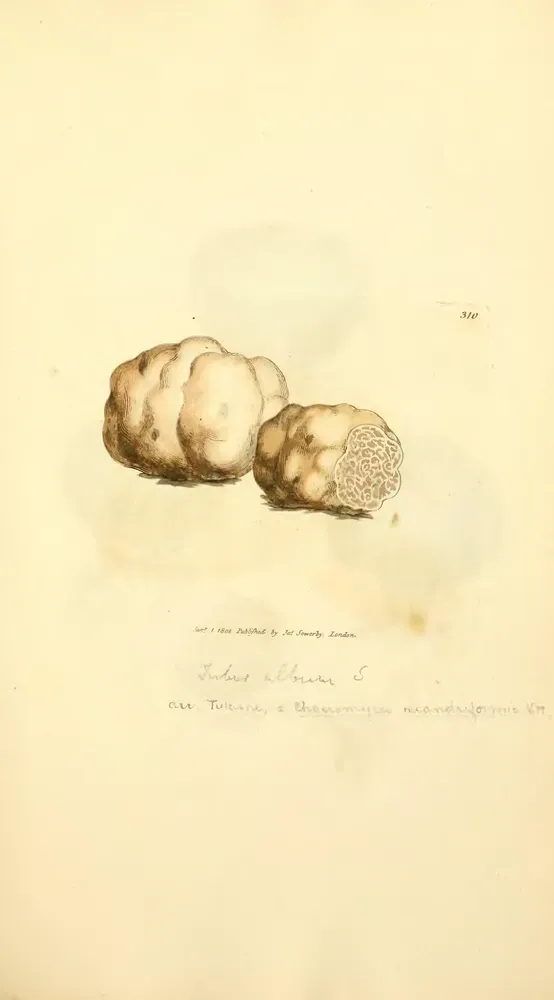
True truffles (genus Tuber) have a distinctive wrinkled surface and a marbled interior with dark veins. Rhizopogon is smooth outside, with a white labyrinth-like gleba inside. Truffles are more aromatic; Rhizopogon has a more modest smell.
How does it grow with pine?
It forms ectomycorrhiza — it wraps around the fine rootlets of the pine and trades nutrients with it. The fungus gives the pine phosphorus and water; the pine gives it carbohydrates. This partnership is essential for both species. That’s why Rhizopogon never grows away from pines.
How to cook it?
Only young white specimens with an undeveloped gleba. Rinse and slice thinly. Japanese-style: grilled with salt and lemon juice. European-style: braise in cream, add to soups and risotto. Cooking time is shorter than for above-ground mushrooms — the flesh is tender.
Is Rhizopogon valued in Japan?
Yes. Under the name “shoro” (松露) it is a local delicacy. Young white specimens (komeshōro) are gathered in pine woods and cooked in special dishes. The market price is tens of dollars per kilogram. Ukraine has no tradition of gathering it, but it could potentially be cultivated in pine plantations.
Is Rhizopogon roseolus edible or poisonous?
What kind of spore-bearing surface does Rhizopogon roseolus have?
What does the cap of Rhizopogon roseolus look like?
What does the stem of Rhizopogon roseolus look like?
Sources
- [1]Вікіпедія (українська)
- [2]Атлас грибів України, Зеров Д.К. (1979)
- [3]MycoBank Database
- [4]Index Fungorum
- [5]GBIF
- [6]iNaturalist Ukraine