Many-rooted earthballScleroderma geaster
Expert-verifiedUpdated October 3, 2026
Passport
- Edibility
- Inedible
- Season
- Jul — Oct
- Hymenophore
- Chambered
- Cap color
- Yellow
- Size
- Medium (5–15 cm)
- Smell
- Odorless
- Reviewed
- Yes ✓
Quick answers
Where to look?
Deciduous forest, Mixed forest
When does it appear?
Jul — Oct
Active months: July, August, September, October.
How to recognize it? Three signs
- Cap color: Yellow, Brown
- Cap shape: Irregular
- Smell: Odorless
Fruiting season
July – October
Description
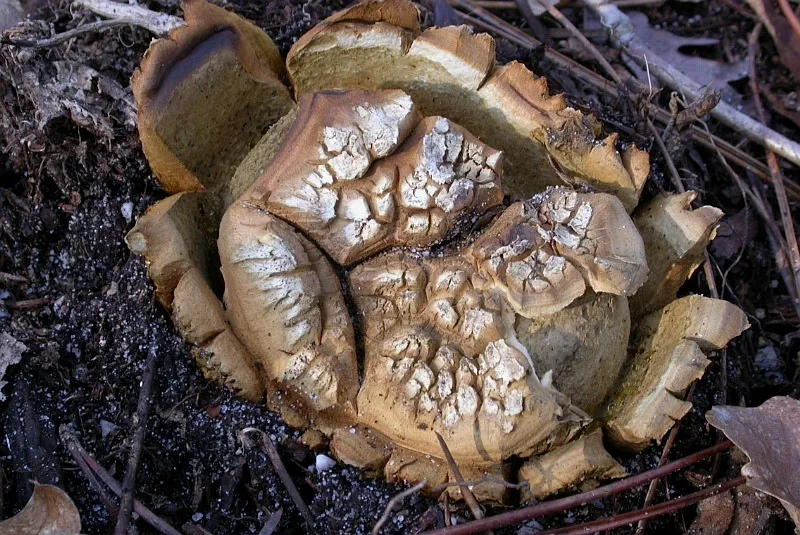
The many-rooted earthball (Scleroderma geaster, synonym Scleroderma polyrhizum) is a distinctive false puffball with a thick, leathery outer skin that splits open into radiating lobes like a star as it matures (hence geaster, meaning "earth star"). The Latin epithet hints at a resemblance to the true earthstars (Geastrum), but they are not close relatives: Scleroderma and Geastrum belong to different families of gasteromycetes. The fruiting body is 3-10 cm across, round to flattened-round, with no distinct stem, attached to the substrate by short, threadlike rhizomorphs.
INEDIBLE: toxic. All members of the genus Scleroderma (earthballs, or false puffballs) contain hepatotoxins and gastrointestinal irritants that cause gastroenteritis with nausea, vomiting and diarrhea 30 min to 2 h after eating. Symptoms last 4-12 hours, without serious systemic effects in adults, but with a risk of dehydration in children and older people. Most poisonings happen to beginners who mistake young earthballs (with white flesh) for true puffballs (Lycoperdon).
The key difference between an earthball and a true edible puffball: Earthball: thick, leathery skin (3-5 mm); when you cut it, it resists the knife like leather Puffball: thin, fragile skin (1-2 mm), cuts easily Earthball: the flesh inside is BLUISH-BLACK-PURPLE even in young specimens (it starts darkening right away in young ones; in mature ones it is completely purplish-black) Puffball: flesh pure white in young specimens, turning brownish with age Earthball: smell neutral or with a rubbery/rotten note Puffball: faint, pleasant mushroomy smell
Diagnostic features of Scleroderma geaster: (1) a round fruiting body 3-10 cm; (2) a thick, leathery, yellow-brown skin with fine scales and fibers; (3) splits open into radiating lobes like a star as it matures; (4) the flesh inside is whitish at first, quickly turns bluish-gray-purple, purplish-black in mature ones, then powdery; (5) grows on soil in broadleaf forests, parks and along forest edges.
In Ukraine, Scleroderma geaster and related species (S. citrinum, the common earthball; S. verrucosum, the scaly earthball) are common in broadleaf and mixed forests: the Carpathians, Prykarpattia, Polissia and the forest-steppe. Season: August to October.
Cap
Fruiting body 3-10 cm across, round to flattened-round, with no distinct stem. The skin is thick (3-5 mm), leathery and tough, colored yellow-brown, ocher-brown, with a fine felty-fibrous surface. As it matures it splits open into 4-6 radiating lobes like a star, revealing the dark spore mass inside. Once open, the star shape stays on the ground.
Hymenophore
The spores form inside the fruiting body, in the gleba. In young specimens the gleba is whitish at first, very quickly (within a day or two) turning bluish-gray-purple, and in mature ones completely purplish-black and powdery. The spore print is dark purplish-black.
Stem
No stem. The fruiting body is attached to the substrate by short, threadlike rhizomorphs (coarse whitish strands of mycelium).
Flesh
Flesh (gleba) whitish in young specimens, but very quickly turns bluish to gray-purple; purplish-black and powdery in mature ones. The dark bluish color of the young flesh is a diagnostic feature of earthballs. The outer skin is dense and leathery, and noticeably resists the knife.
Smell
Faint, neutral, or with a rubbery/rotten note in mature specimens. Not pleasantly mushroomy.
›Scientific synonyms (9)
Lycoperdon polyrhizon Batsch, Lycoperdon polyrhizum Batsch, Lycoperdon polyrhizum J.F. Gmel., Lycoperdon polyrhizon J.F. Gmel., Scleroderma polyrhizon (J.F. Gmel.) Pers. (1801), Sclerangium polyrhizon (J.F. Gmel.) Lév., Sclerangium polyrrhizon (J.F. Gmel.) Lév. (1848), Sclerangium polyrhiza (J.F. Gmel.) Lév., Stella americana Massee
Lookalikes
Related species
Mushrooms of the same genus and habitat — to study side by side and never mix up.
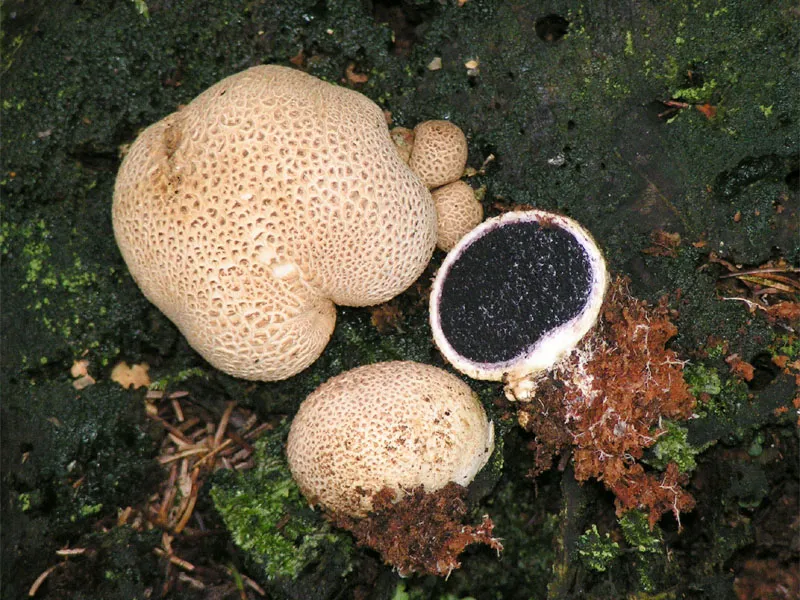
Common earthball
Дощовик несправжній
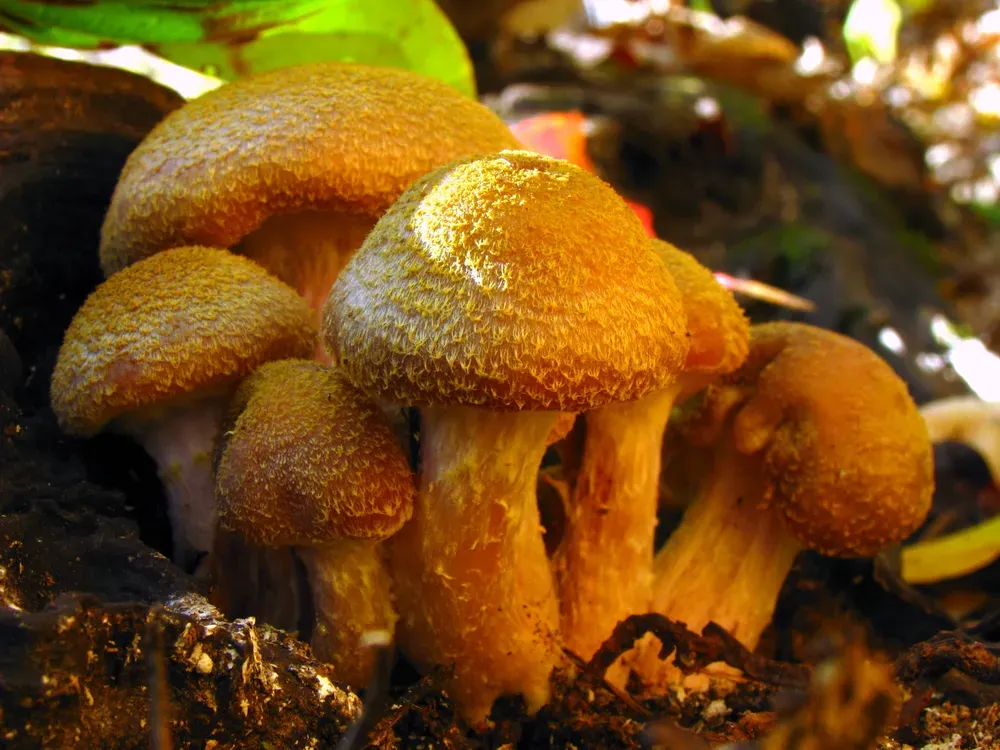
Bulbous honey fungus
Armillaria gallica
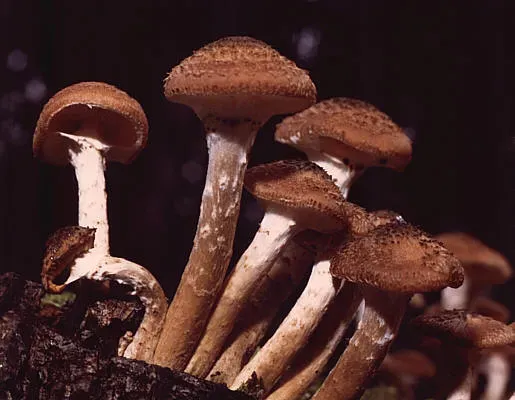
Dark honey fungus
Armillaria ostoyae
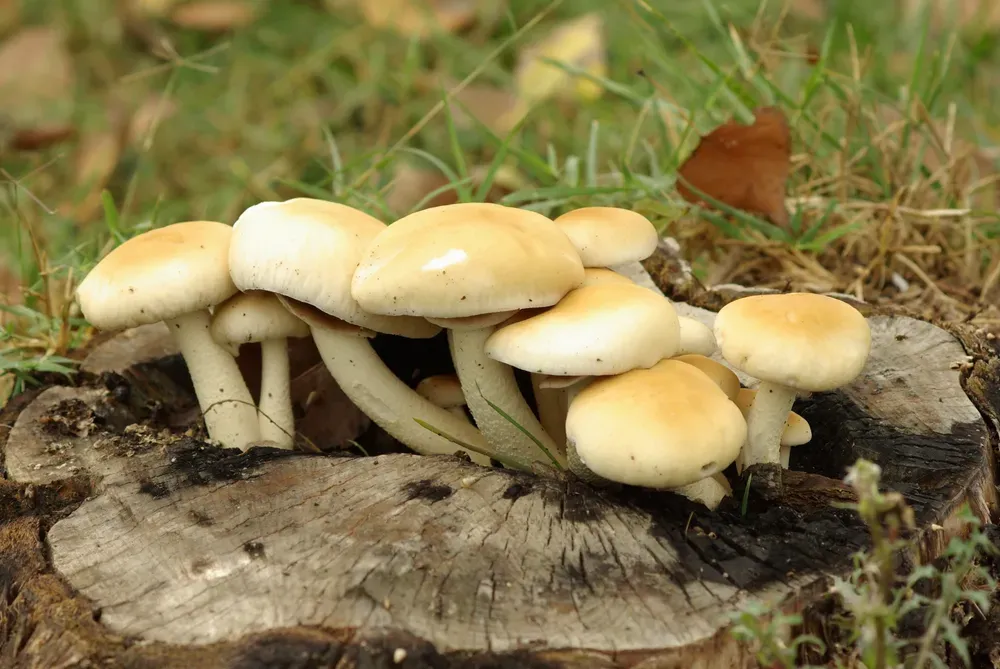
Poplar fieldcap
Cyclocybe aegerita
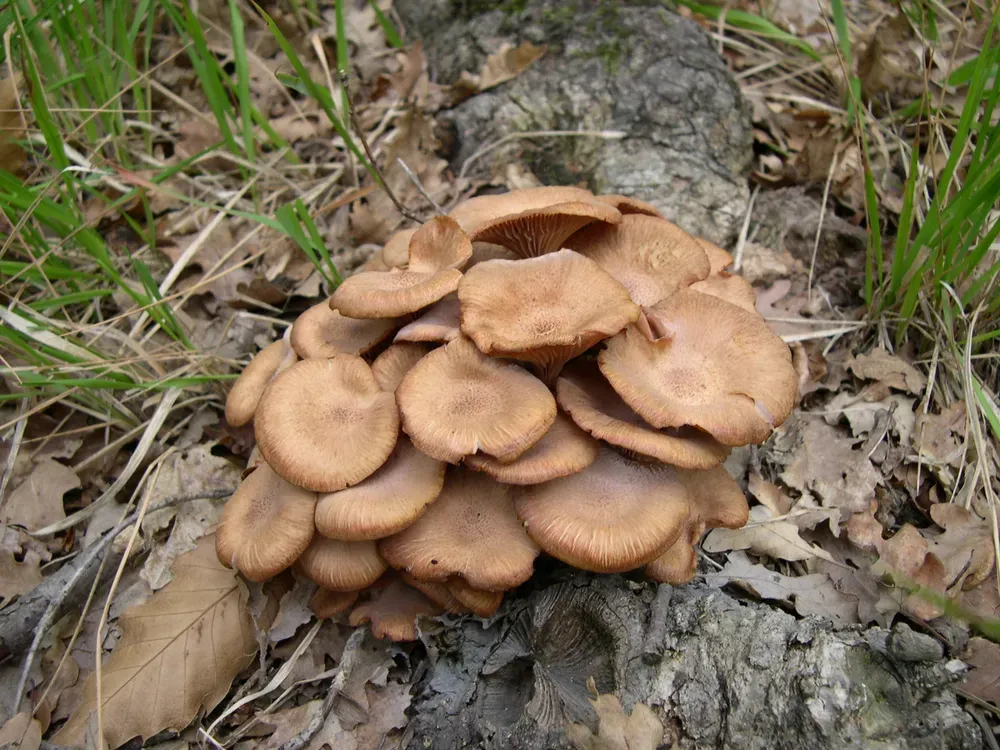
Ringless honey fungus
Desarmillaria tabescens
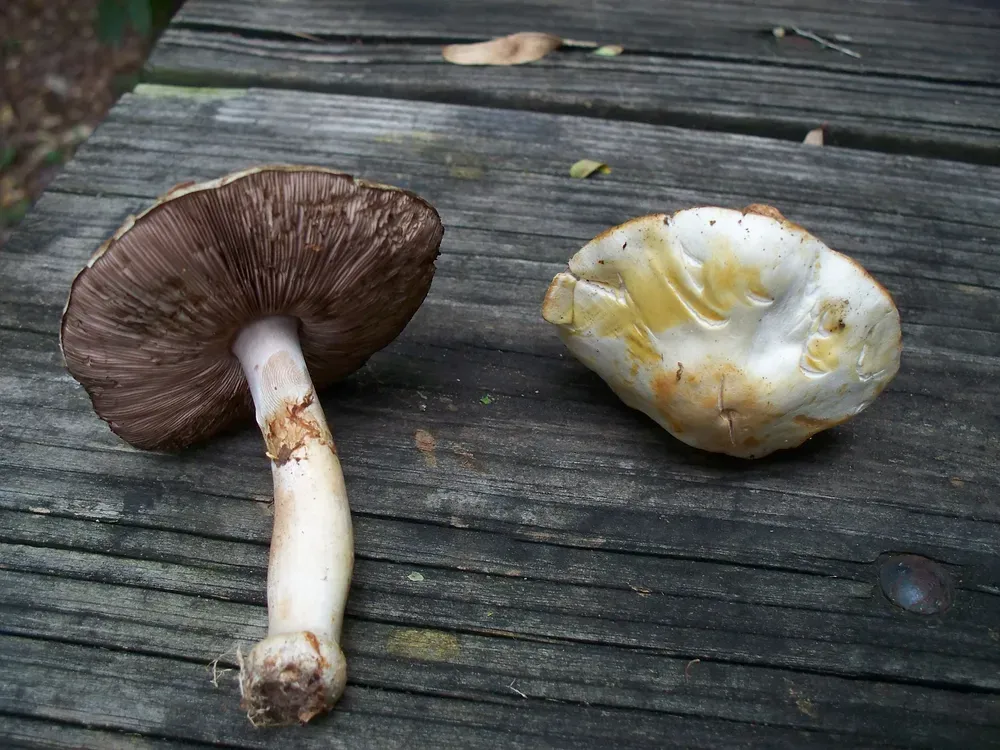
Agaricus abruptibulbus
Agaricus haemorrhoidarius
Agaricus haemorroidarius
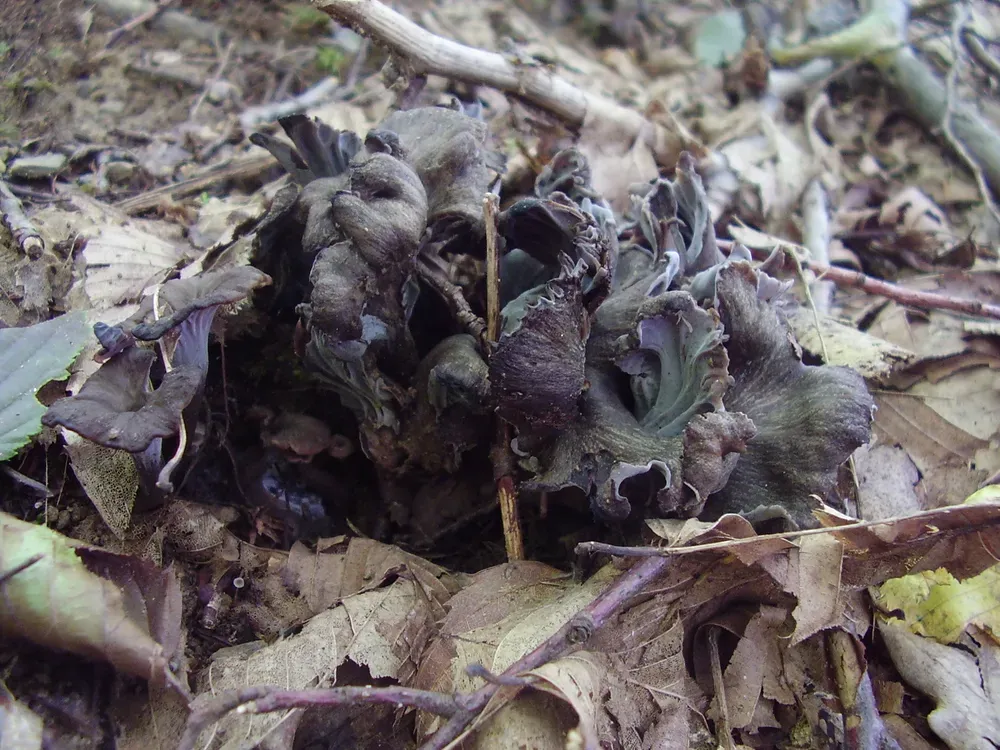
Ashen chanterelle
Cantharellus cinereus
Related reading
Frequently asked questions
Is it poisonous?
Yes, it causes gastroenteritis with nausea, vomiting and diarrhea 30 min-2 h after eating. Not seriously poisonous, but not edible either: it has no culinary value, but it does carry risk. Don't confuse it with the edible true puffballs (Lycoperdon, Calvatia).
How do you tell it apart from a true puffball?
The key check is CUTTING IT OPEN. (1) Earthball: flesh bluish-gray-purple right away, even in young ones (white for only a few hours after it appears); true puffball (Lycoperdon, Calvatia): flesh pure white in young ones. (2) Earthball: thick, leathery skin (3-5 mm), hard to cut; puffball: thin, fragile skin (1-2 mm), cuts easily. (3) Earthball: rubbery or neutral smell; puffball: pleasant mushroomy smell. The most important rule: young false puffballs have bluish flesh when cut open, so don't eat them!
What should you do if you ate it by accident?
Call an ambulance (112 or your local emergency number) if there is severe vomiting and diarrhea; otherwise, contact a doctor. Drink oral rehydration salts (such as Regidron) in small sips. Keep a sample of the mushroom for identification. Don't induce vomiting at home, and take activated charcoal only on a doctor's advice. DO NOT take loperamide: it slows the elimination of toxins. The outlook is good: symptoms clear up within 4-12 hours.
Where should you look for it, so you learn to recognize it?
On soil in broadleaf and mixed forests, parks, forest edges and gardens. It likes sandy or clay soils. It often grows singly or in groups of 2-5 fruiting bodies.
Which regions of Ukraine is it found in?
Common throughout the forest and forest-steppe zones: the Carpathians, Prykarpattia, Polissia, the forest-steppe, and partly the steppe (in planted woodlands).
When can you find it?
August to October, peaking in September. Dried-out fruiting bodies (already opened into "stars") can be found even in winter, as they keep well.
What does it look like?
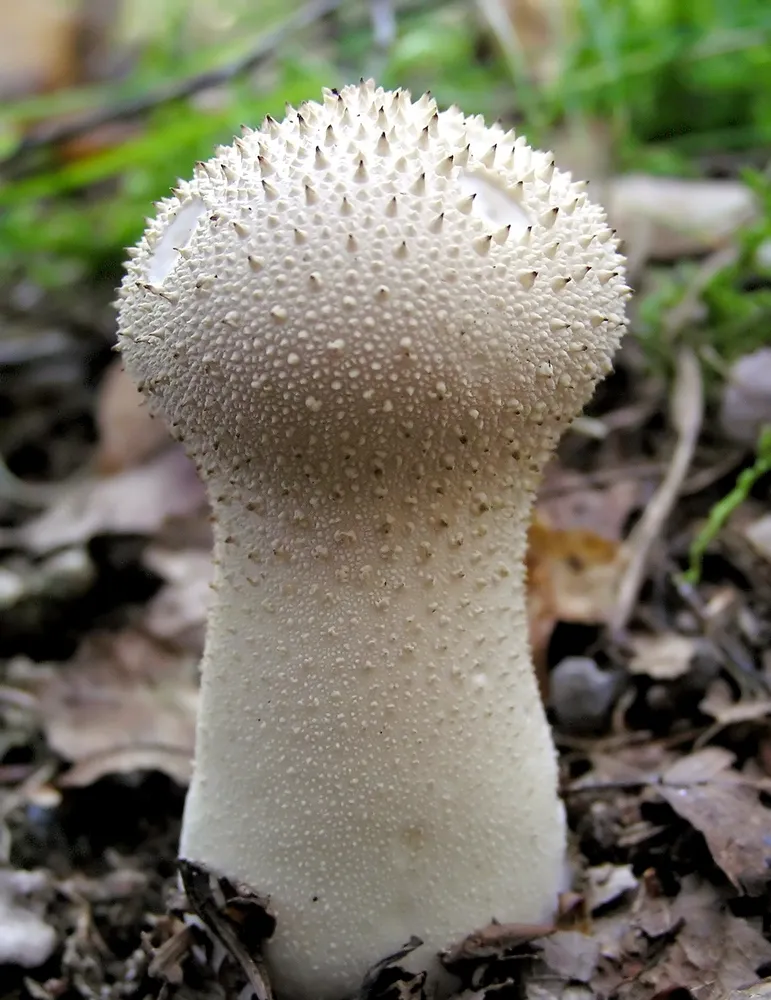
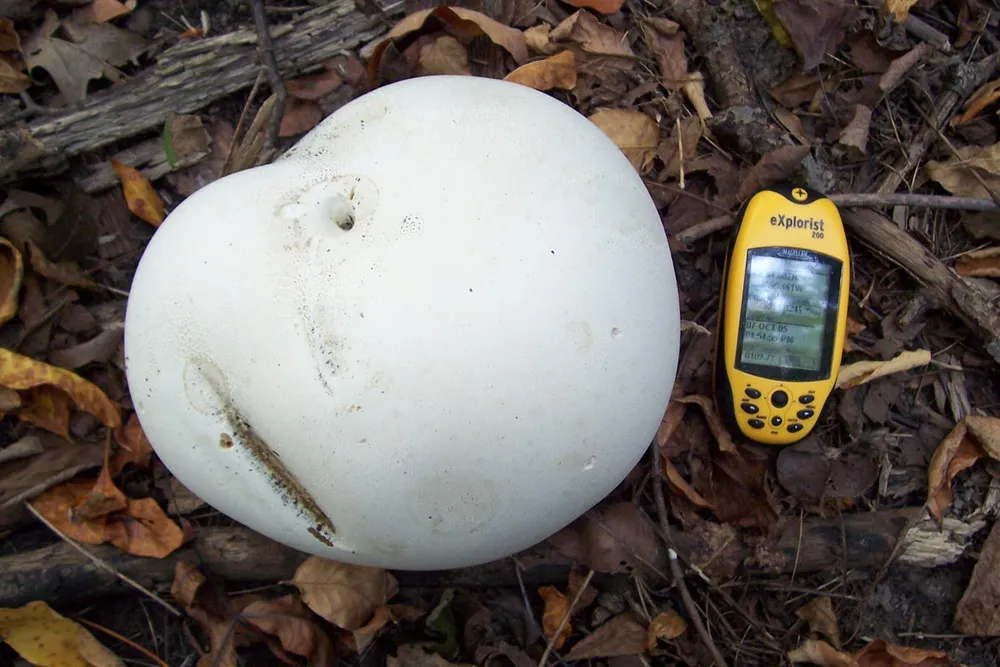
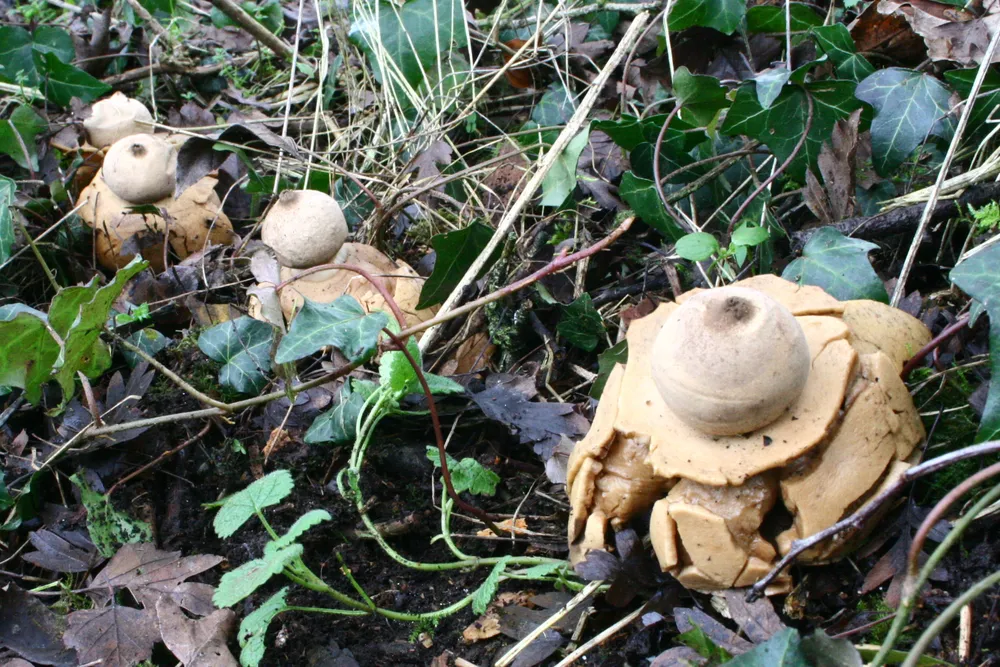
On Lycoperdon spp. (true puffballs, edible when young): thin-skinned, with white flesh. Calvatia (giant puffball, edible): larger (10-30 cm), white flesh. Geastrum (true earthstars): splits open into a star, but thin-skinned. The key check is the flesh when cut: bluish = earthball (don't eat!).
Is Many-rooted earthball edible or poisonous?
What kind of spore-bearing surface does Many-rooted earthball have?
What does the cap of Many-rooted earthball look like?
What does the stem of Many-rooted earthball look like?
What do Many-rooted earthball smell and taste like?
Sources
- [1]Вікіпедія (українська)
- [2]Атлас грибів України, Зеров Д.К. (1979)
- [3]MycoBank Database
- [4]Index Fungorum
- [5]GBIF
- [6]iNaturalist Ukraine