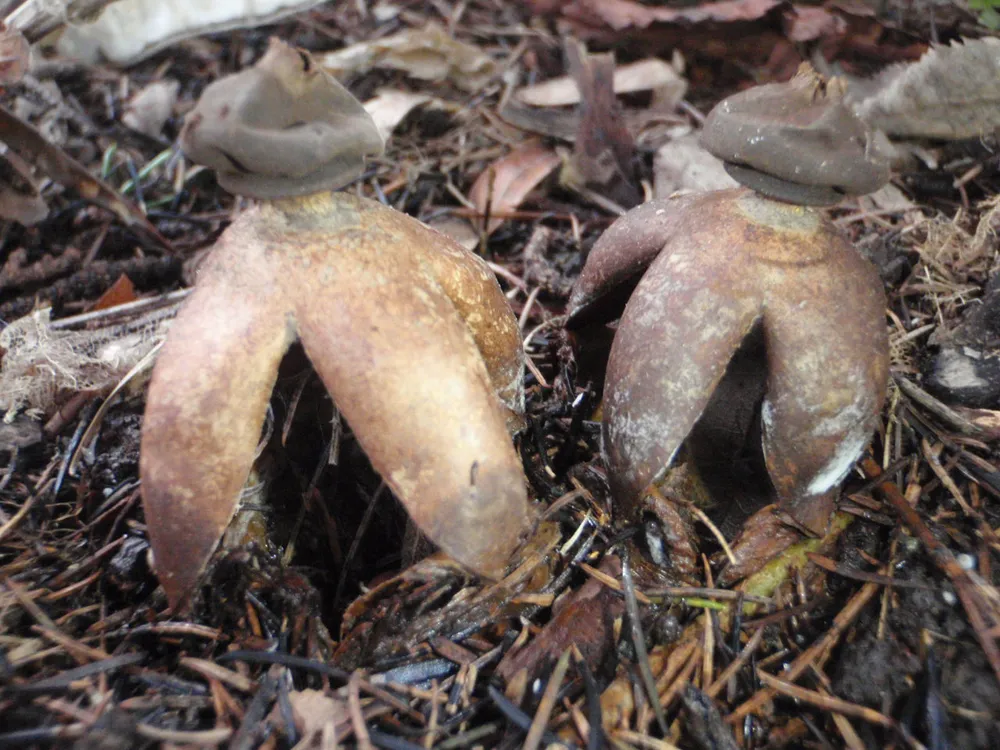
Arched earthstarGeastrum fornicatum
Expert-verifiedUpdated June 13, 2026
Passport
- Edibility
- Inedible
- Season
- Aug — Nov
- Hymenophore
- Chambered
- Cap color
- Brown
- Size
- Medium (5–15 cm)
- Smell
- Odorless
- Reviewed
- Yes ✓
Quick answers
Where to look?
Deciduous forest, Mixed forest
When does it appear?
Aug — Nov
Active months: August, September, October, November.
How to recognize it? Three signs
- Cap color: Brown, Dark brown, Grey
- Cap shape: Irregular
- Smell: Odorless
Fruiting season
August – November
Description
Arched earthstar (Geastrum fornicatum) is the tallest and most dramatic earthstar of our forests. While most earthstars lie flat on the ground like a star, this one is a true forest acrobat: it rises up on its own "stilts," like a sculpture on four legs. The outer skin first splits into 4 (rarely 5) large rays, and then bends downward, pushing the spore sac upward to a height of 5-10 cm above the ground. It looks like something out of a fairy tale — as if a tiny alien spaceship had landed in the moss.
This is an inedible mushroom — like all earthstars, it isn't toxic, but it's a dead end in the kitchen: tough, with no real flavor, and when mature it's just a powdery mass of spores. Its value is purely decorative and scientific. Dried fruiting bodies keep their "mushroom on stilts" shape for years — a striking specimen for a natural history collection. The spore sac is dark gray, with a single pore that releases spores, which scatter when raindrops hit it.
In Ukraine it is a rare species. It grows in deciduous and mixed forests under oak, hornbeam and beech, and sometimes in old parks. Saprotroph. Season — August–November. Found singly or in groups of 2-4 fruiting bodies. It is one of the indicator species of old, little-disturbed forests. In young plantations and pine forests you will practically never see it.
Cap
The mature fruiting body has a distinctive shape "mushroom on stilts": the spore sac is raised 5-10 cm above the ground on the arched rays of the outer skin. The outer skin splits into 4 (rarely 5) large rays, which then bend downward and press into the ground, lifting the inner part up. The rays are leathery, dark brown or grayish brown, spread out in damp weather and tucked under in dry weather. Total height of the opened mushroom is 5-15 cm, width at the base 4-8 cm.
Hymenophore
The hymenophore is enclosed inside the spore sac (a gasteromycete). In a young mushroom the flesh is white, soft. With age it turns grayish brown and becomes a chocolate-brown powdery mass of spores. The spores escape through a small apical pore — as in all earthstars.
Stem
The spore sac has a distinct short "stalk" (pseudostem) about 1 cm tall, sitting on top of the arched rays. The sac itself is round or egg-shaped, 1-3 cm across, smooth, dark gray to chocolate brown.
Flesh
In a young, still-closed fruiting body the flesh is white, soft, with a layered structure. With age it darkens to grayish brown and turns into a powdery mass of spores. It doesn't change color quickly when cut.
Smell
Faintly earthy, neutral. Not pronounced. The taste isn't tested — the mushroom is not edible.
Lookalikes
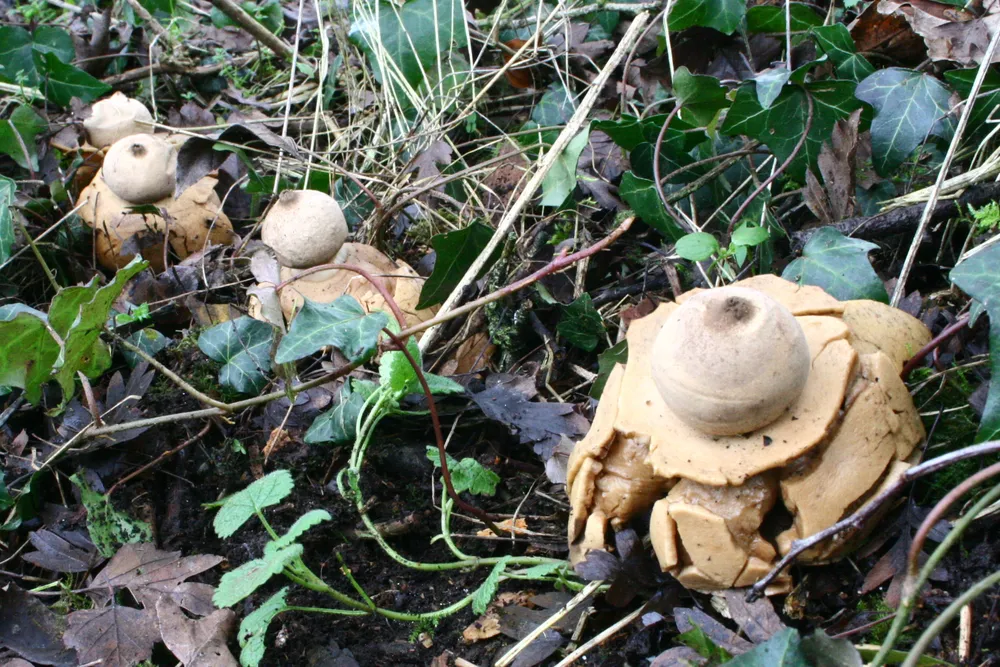
Related species
Mushrooms of the same genus and habitat — to study side by side and never mix up.
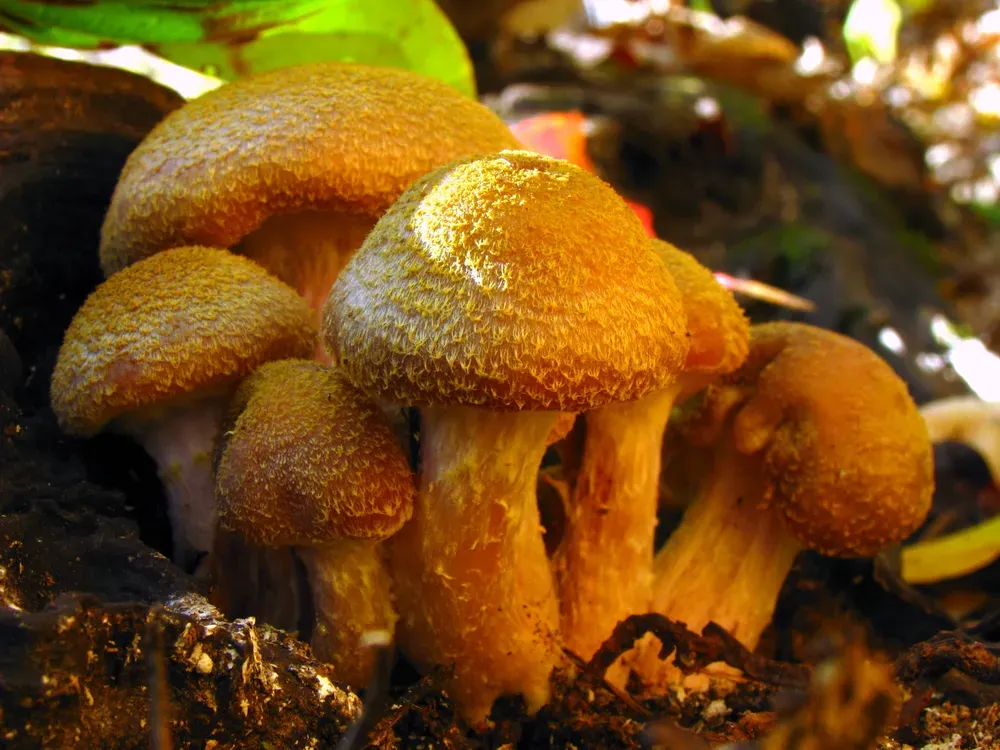
Bulbous honey fungus
Armillaria gallica
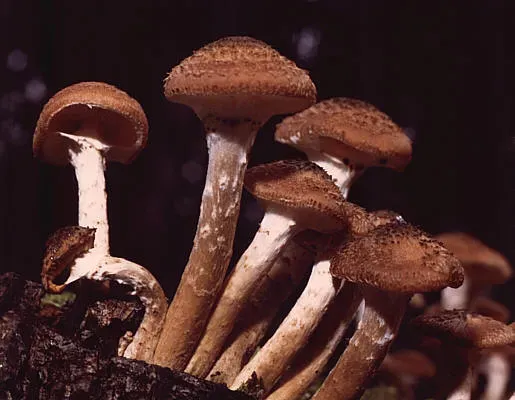
Dark honey fungus
Armillaria ostoyae
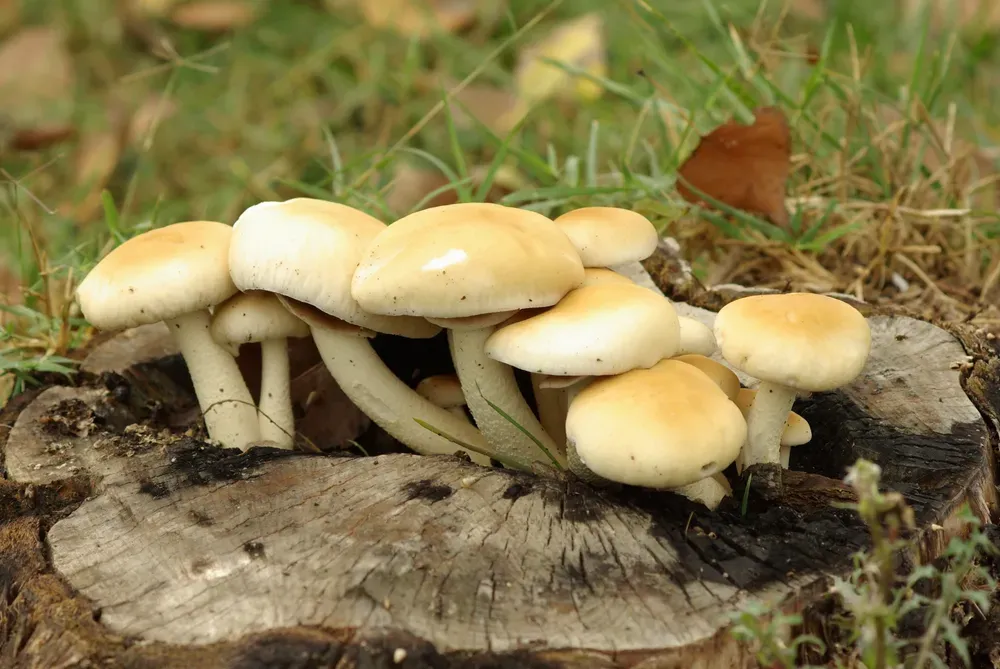
Poplar fieldcap
Cyclocybe aegerita
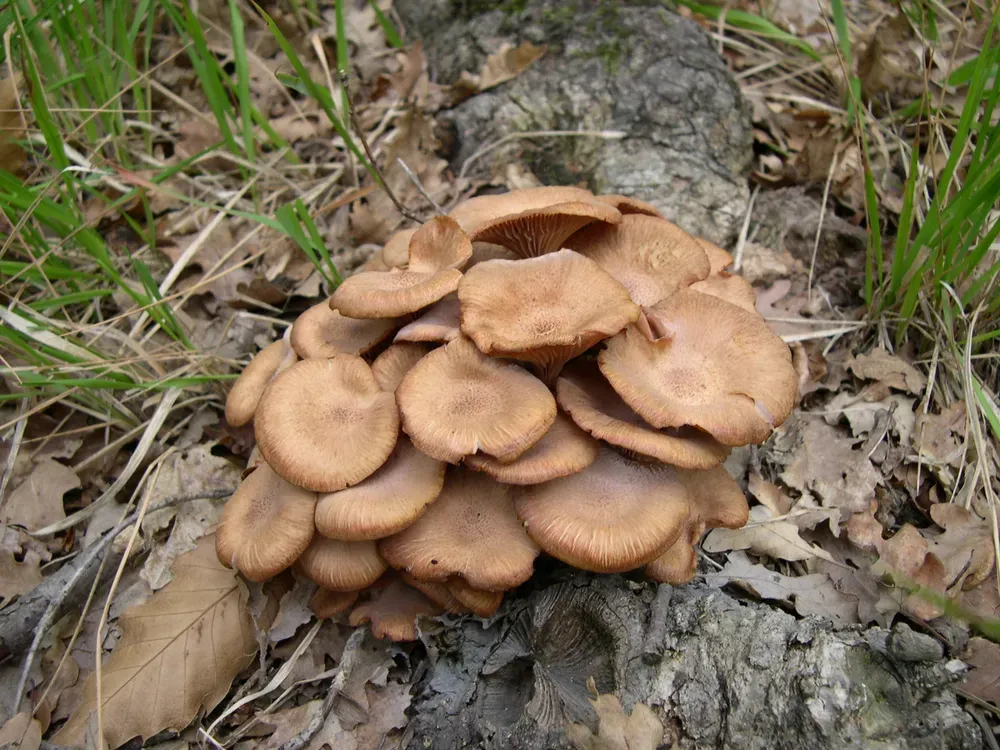
Ringless honey fungus
Desarmillaria tabescens
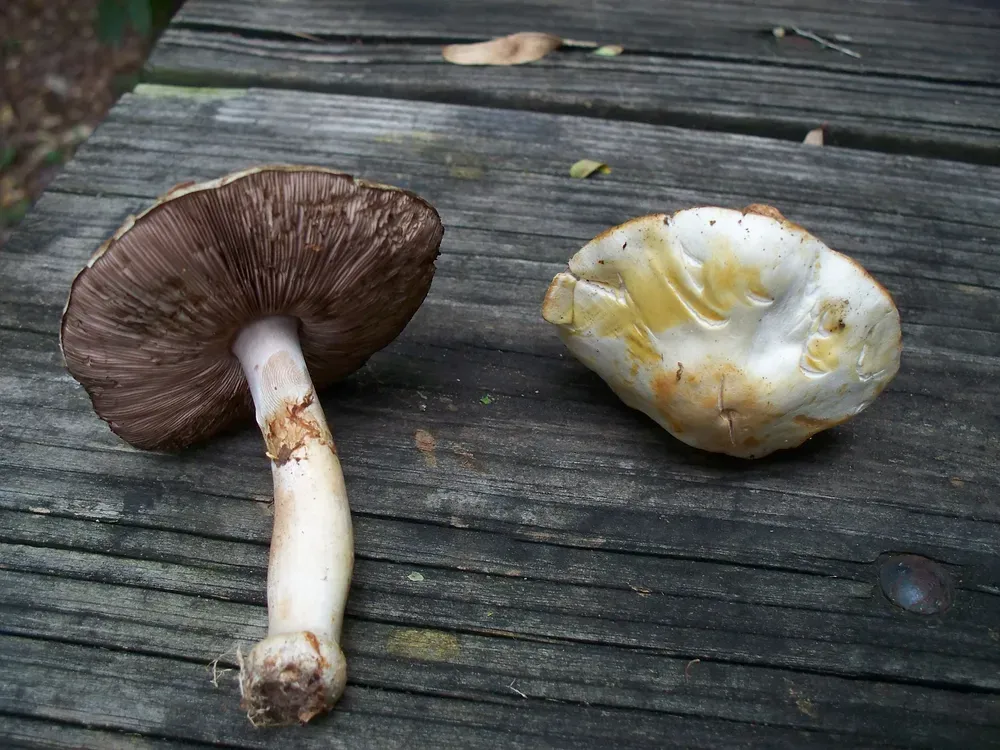
Agaricus abruptibulbus
Agaricus haemorrhoidarius
Agaricus haemorroidarius
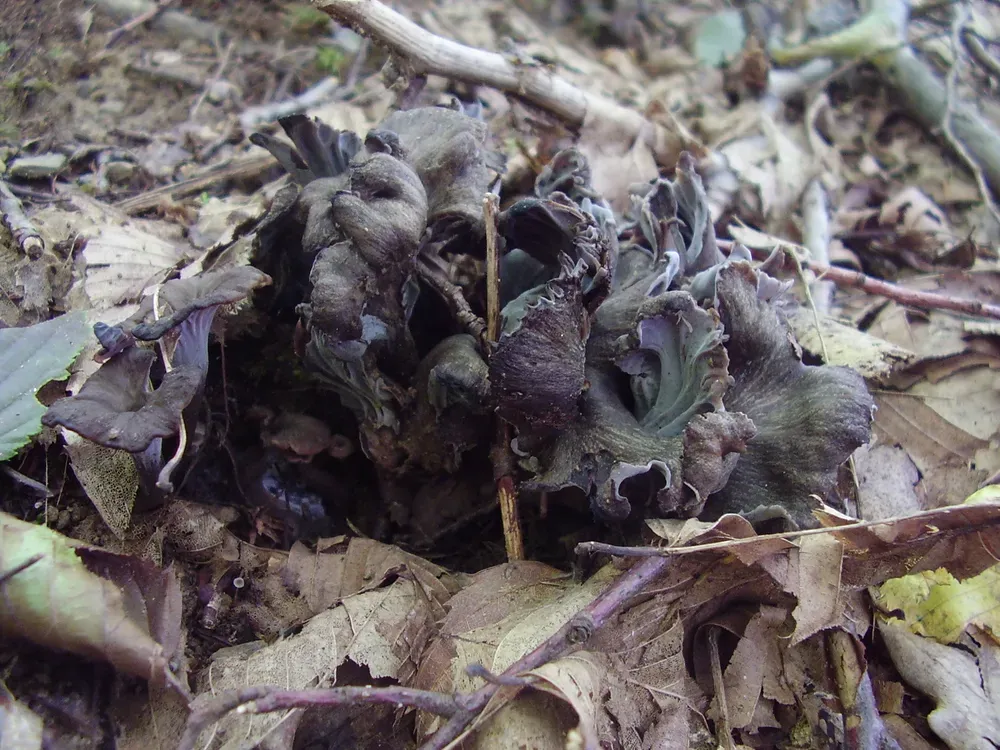
Ashen chanterelle
Cantharellus cinereus
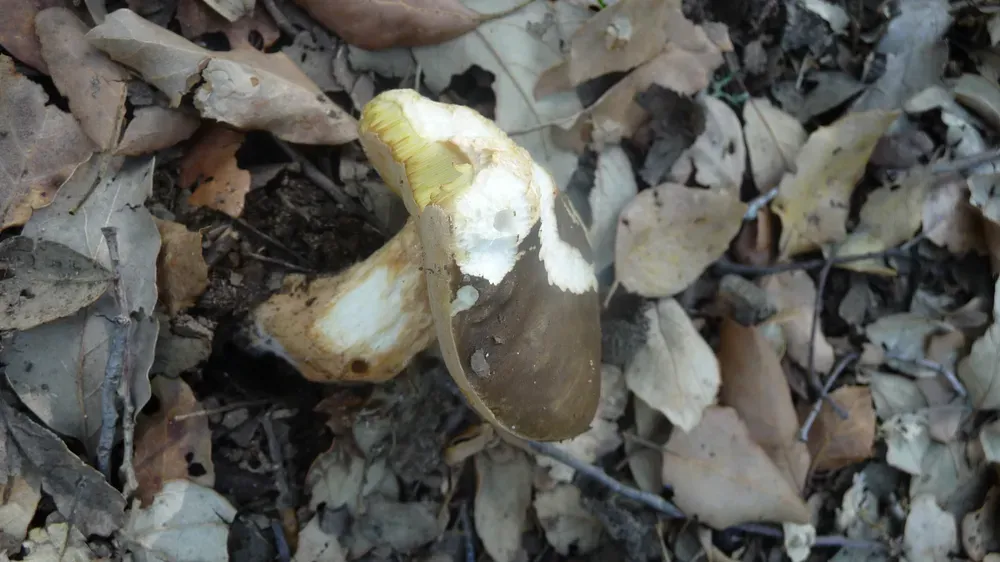
Blushing bolete
Leccinum roseofractum
Frequently asked questions
Can you eat it?
It isn't used as food. Not poisonous, but not edible either: too tough, tasteless, and when mature it's a powdery mass of spores. No cuisine has a tradition of eating it.
Is it safe to breathe in the spores?
In normal amounts — yes. If you press on a mature spore sac, it will puff out a noticeable cloud of spores. A healthy person won't come to any harm. If you have chronic asthma or a mushroom allergy, it's best not to breathe them in up close and not to touch your face with your fingers after contact.
Can you collect it for a herbarium?
Yes — it's one of the most beautiful mushrooms for a natural history collection. A dried fruiting body keeps its shape for years. Cut it together with the litter (so you don't break the "stilts"), dry it in the shade and store it in a box. Note: G. fornicatum is a rare species, so take no more than 1-2 specimens from a population and leave the rest in place.
Where should you look for it?
In deciduous and mixed forests under oak, beech, hornbeam. It loves old forests with a thick layer of leaf litter, forest edges, north-facing slopes and shady floodplain woods. It also turns up in old parks with ancient oaks. In pine forests and young plantations — practically never.
Which regions of Ukraine is it found in?
The Carpathians and Prykarpattia (especially in the virgin beech forests of Zakarpattia), the Western and Right-Bank Forest-Steppe, less often Polissia. Overall a rare species — finding one is a pleasant surprise.
When should you look for it?
August — November, peaking in September–October. Opened "mushrooms on stilts" last in the forest almost all winter — the dry fruiting bodies stay visible even under snow.
Can it be confused with other mushrooms?
An opened G. fornicatum is unique — thanks to its "mushroom on stilts" shape it's impossible to mistake for anything else. A young, closed one is a round ball in the litter, similar to a young puffball or another earthstar, but identifying it at this stage is pointless, since you shouldn't eat it anyway.
How is it different from the Collared earthstar (Geastrum triplex)?
Two key differences. (1) G. triplex opens into a flat star and lies on the ground. G. fornicatum rises up on stilts — its rays bend downward and lift the spore sac up. (2) G. triplex has a distinctive "collar" around the sac; G. fornicatum has a short, distinct stalk with no collar. Overall, G. fornicatum is more dramatic and easier to spot in the forest.
Is Arched earthstar edible or poisonous?
What kind of spore-bearing surface does Arched earthstar have?
What does the cap of Arched earthstar look like?
What does the stem of Arched earthstar look like?
Sources
- [1]Вікіпедія (українська)
- [2]Атлас грибів України, Зеров Д.К. (1979)
- [3]MycoBank Database
- [4]Index Fungorum
- [5]GBIF
- [6]iNaturalist Ukraine