Dune stinkhornPhallus hadriani
Expert-verifiedUpdated October 3, 2026
Passport
- Edibility
- Edible
- Season
- May — Oct
- Hymenophore
- Smooth
- Cap color
- White
- Size
- Large (over 15 cm)
- Smell
- Chemical
- Reviewed
- Yes ✓
Quick answers
Where to look?
Mixed forest
When does it appear?
May — Oct
Active months: May, June, July, August, September, October.
How to recognize it? Three signs
- Cap color: White, Olive, Brown
- Cap shape: Conical
- Smell: Chemical
Fruiting season
May – October
Description
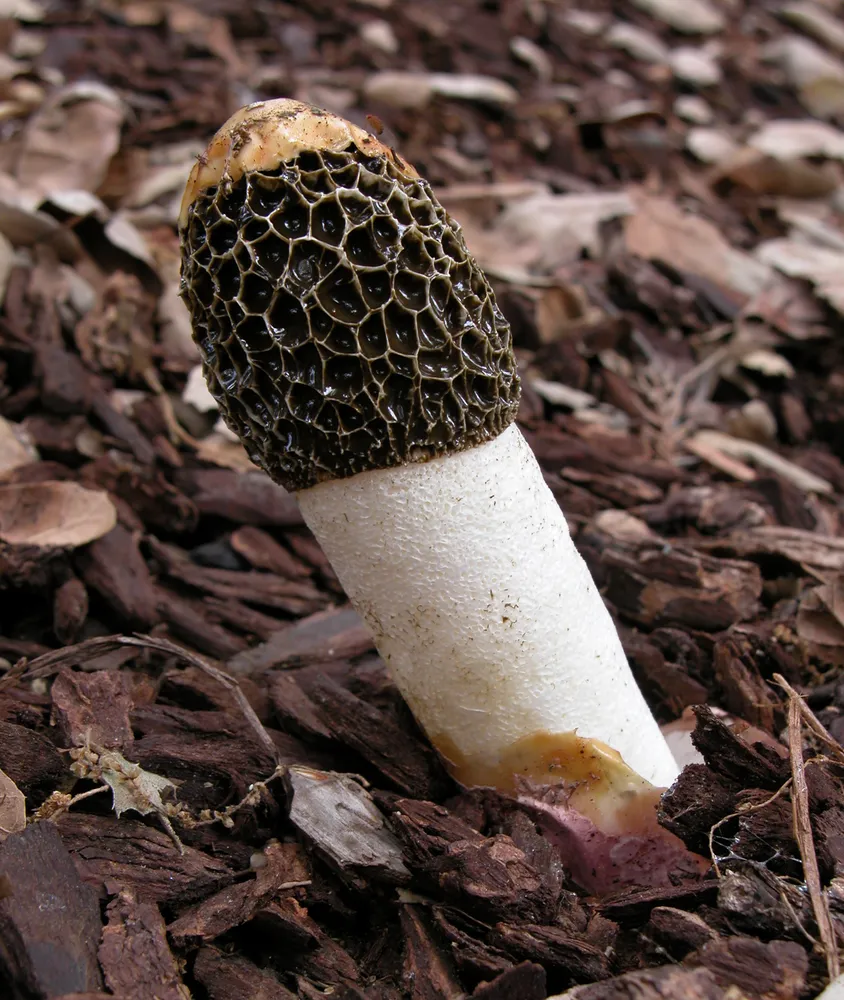
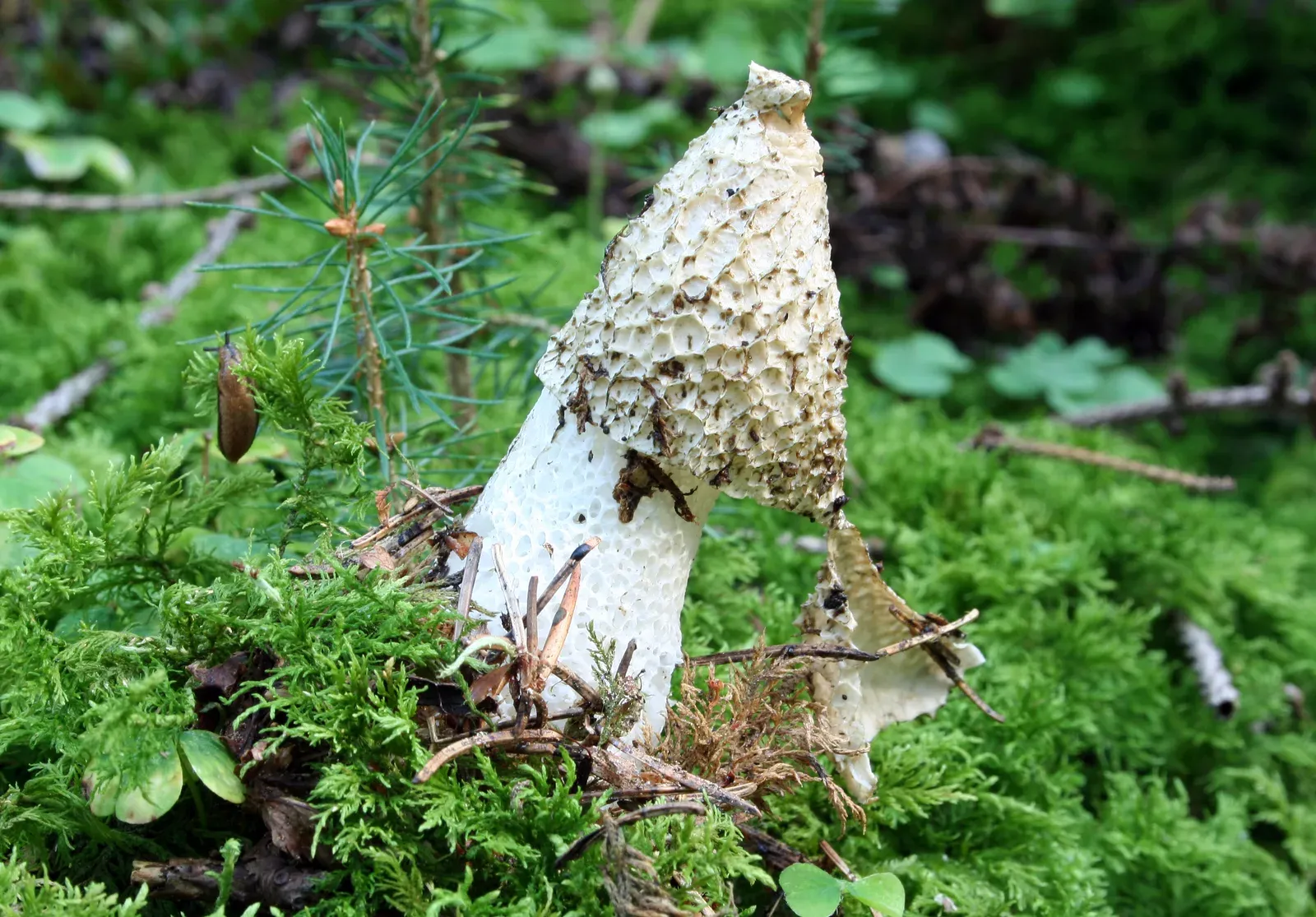
The dune stinkhorn is the steppe and sand-loving relative of the famous common stinkhorn. It looks very similar: first a white or cream "egg" the size of a hen's egg, from which, within a few hours, a cylindrical white stem shoots up with an olive-brown cap. What makes it unique is that it lives where the common stinkhorn does not grow — on sand dunes, in the steppe, in dry southern parks and gardens.
The mushroom is edible at the egg stage: once the slimy skin is removed, the flesh is white with a delicate radish-like taste. At the mature stage, with a stem and cap — only after boiling. In some Eastern cuisines the stinkhorn egg is considered a delicacy, but here it is more of a curiosity than a regular dish.
In Ukraine, the dune stinkhorn turns up occasionally in the steppe zone — Zaporizhzhia, Kherson and Odesa regions, the steppe Crimea, and sandy areas of the lower Dnipro. The season is long — from May to October, but fruiting is irregular and depends on wet spells.
Cap
At the egg stage — a white-cream sphere 4-6 cm across with a thick, slimy skin. At the mature stage — a bell-shaped cap 4-5 cm, covered in olive-brown slimy gleba (this is the spore layer). The gleba has a honeycomb structure and feels sticky.
Hymenophore
The hymenophor is a slimy olive-brown gleba on the cap surface. The spores are carried not by wind but by flies attracted by the sharp smell — a typical dispersal mechanism for the stinkhorn family.
Stem
Stem 10-20 cm tall, 2-4 cm thick, cylindrical, white or cream, hollow inside. The surface is finely honeycombed and brittle. In a young "egg" the stem is not yet formed — it stretches out rapidly within 2-4 hours after the skin bursts.
Flesh
At the egg stage — white, firm, with a gelatinous greenish layer under the skin. When mature — spongy, brittle, white. Does not change color when cut.
Smell
In the egg — faint, barely noticeable. When mature — a strong, unpleasant yeasty, carrion-like smell that attracts flies. The flesh of the egg tastes mild, reminiscent of radish.
›Scientific synonyms (5)
1817 Hymenophallus hadriani (Vent.) Nees, 1836 Phallus iosmus Berk., 1873 Phallus imperialis Schulzer, Ithyphallus impudicus var. imperialis (Schulzer) De Toni, Ithyphallus impudicus var. iosmos (Berk.) De Toni
Lookalikes
Related species
Mushrooms of the same genus and habitat — to study side by side and never mix up.
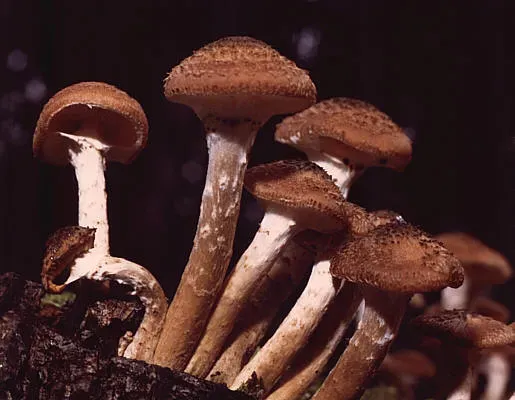
Bulbous honey fungus
Armillaria gallica
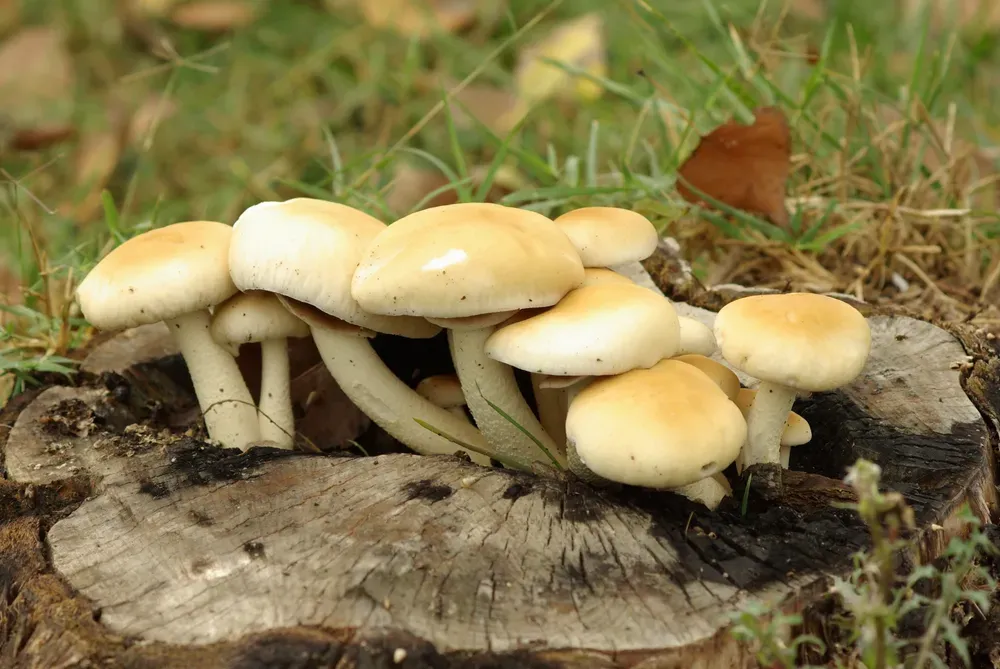
Dark honey fungus
Armillaria ostoyae
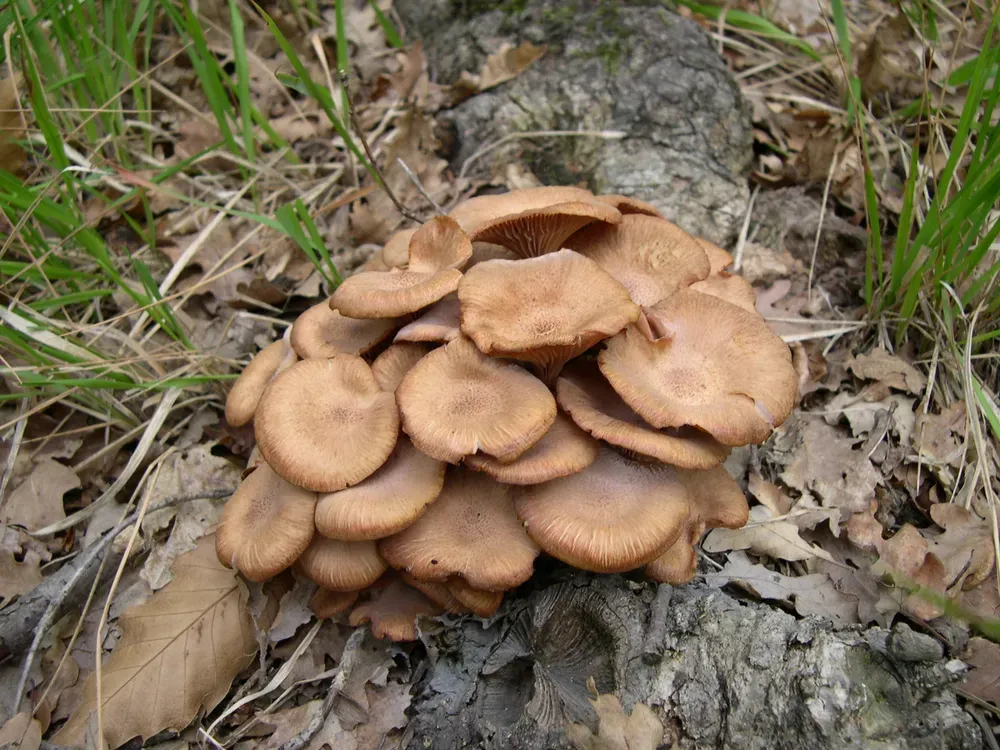
Poplar fieldcap
Cyclocybe aegerita
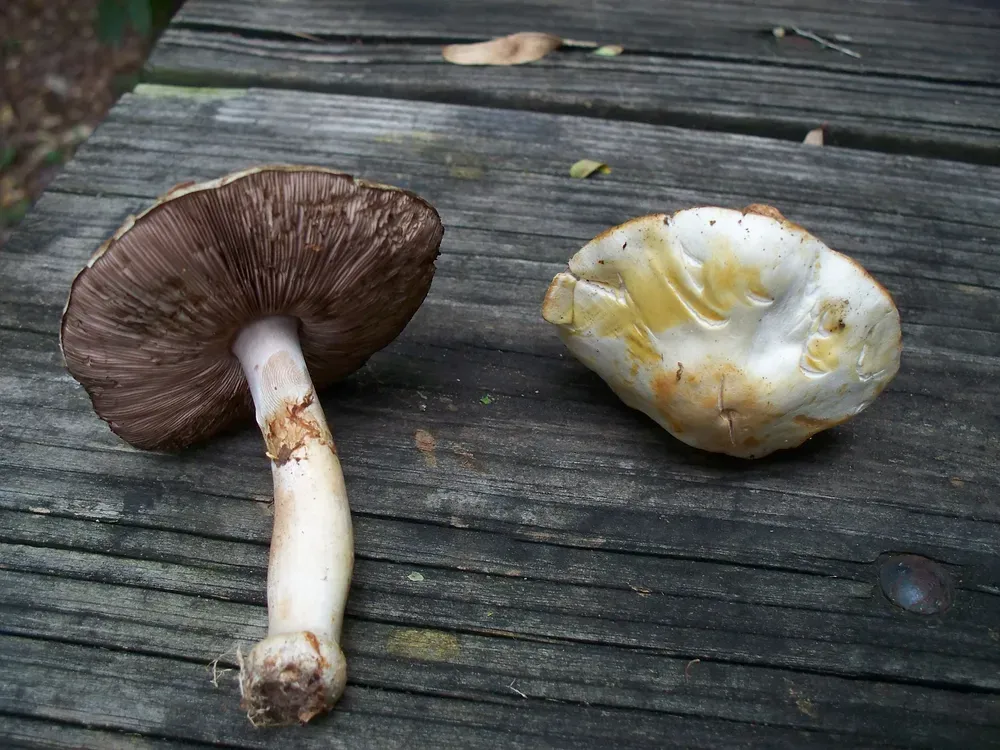
Ringless honey fungus
Desarmillaria tabescens
Agaricus abruptibulbus
Agaricus haemorrhoidarius
Agaricus haemorroidarius
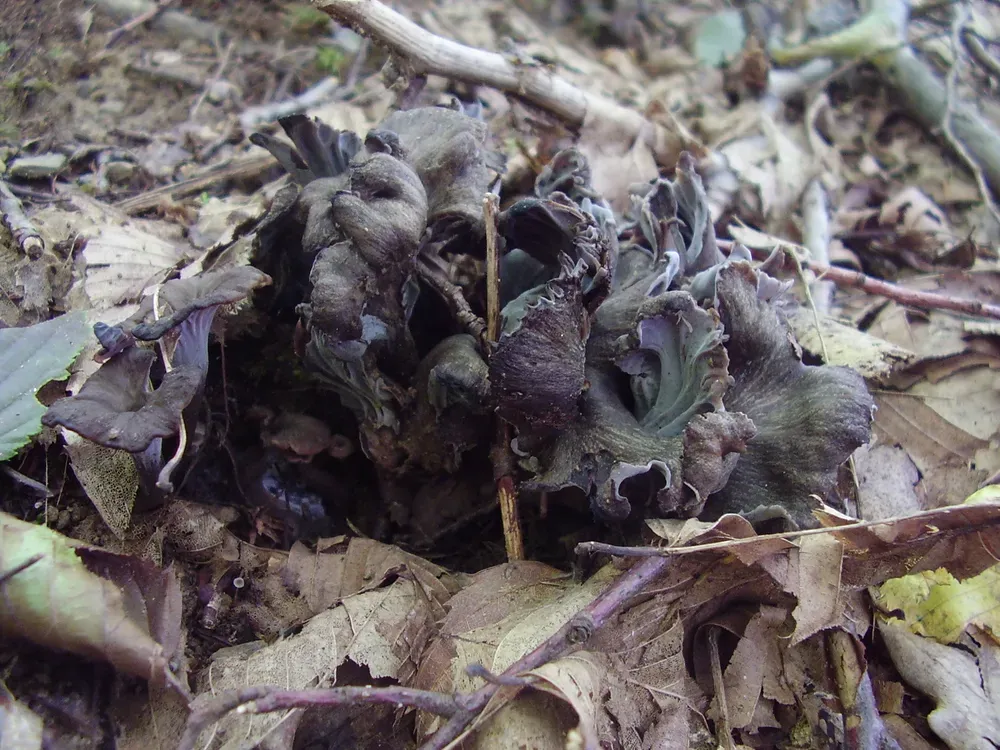
Ashen chanterelle
Cantharellus cinereus
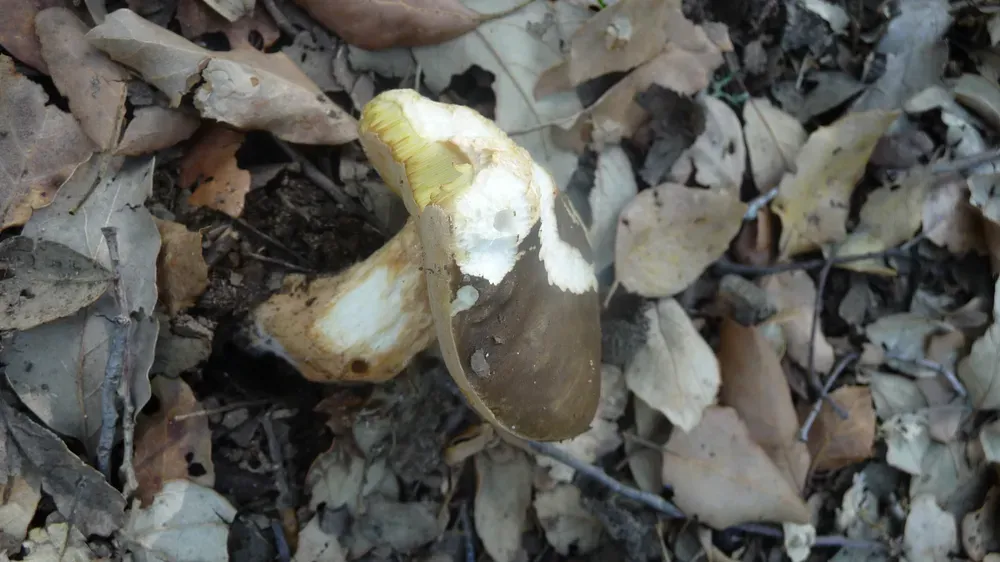
Blushing bolete
Leccinum roseofractum
Related reading
Frequently asked questions
Is it safe to eat?
At the egg stage — yes, once the slimy outer skin is removed, the flesh is safe. At the mature stage, with a stem and cap — only after thorough boiling. The mature fruiting body is not eaten raw because of the slimy gleba and the smell.
Can it be confused with a poisonous mushroom?
At an early stage, a stinkhorn egg is sometimes confused with unopened amanita fruiting bodies. Cut your find lengthwise: a stinkhorn shows greenish gelatinous layers and the embryo of the future stem; an amanita shows dense white flesh with the beginnings of gills. If in doubt, leave it.
Where should you look for it?
On sandy soils in the steppe, in dunes, parks and gardens, along the edges of shelterbelts. It loves a warm, dry climate and well-warmed soil — which is why it is found specifically in the southern regions.
Which regions of Ukraine is it found in?
The steppe zone of southern Ukraine — Zaporizhzhia, Kherson, Odesa and Mykolaiv regions, the steppe Crimea, and the sands of the lower Dnipro. It is almost never found in the forest zone — its ecological niche is the opposite of the common stinkhorn's.
When should you look for it?
From May to the end of October. It is a long season, but fruiting is irregular — the mushroom appears in "flushes" after good rains. In dry weeks there simply aren't any.
How fast does the fruiting body grow?
Very fast. From the moment the egg skin bursts to the cap fully opening on its stem takes 2-4 hours. It is one of the fastest-growing mushrooms in nature. If you want to see the process, watch an egg you have found at dawn.
What is it confused with?
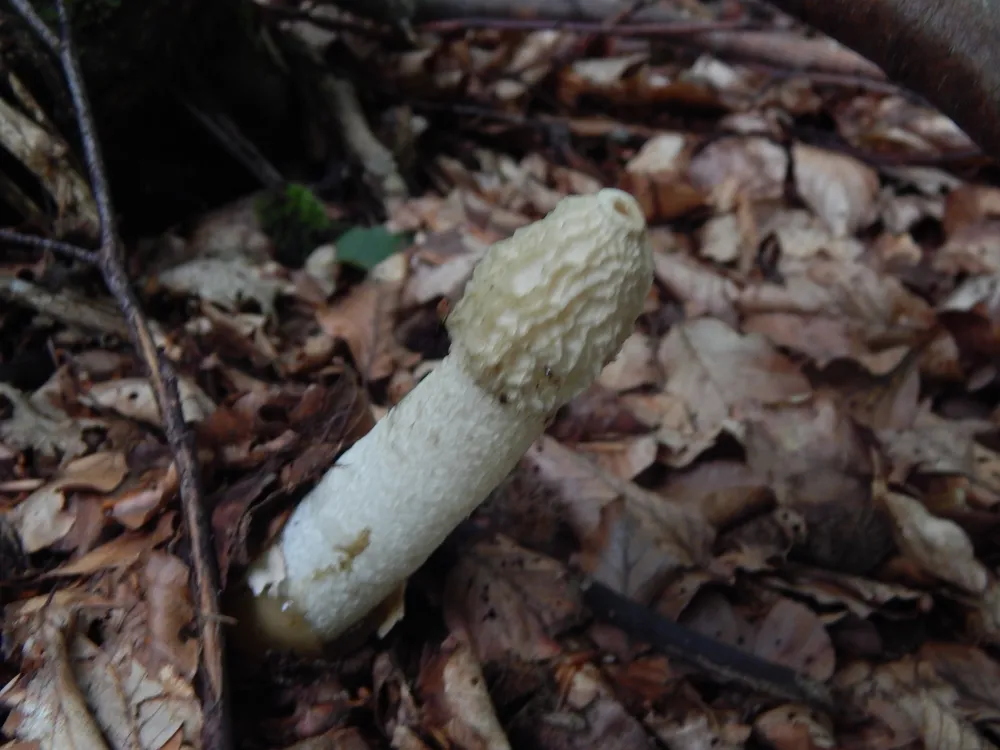
With the common stinkhorn (Phallus impudicus). The differences: the dune stinkhorn has a larger egg with a distinct pinkish or purplish tint to the skin and grows on sands and in the steppe. The common stinkhorn grows in forests, with a white egg skin and no pink tint.
Isn't it a puffball?
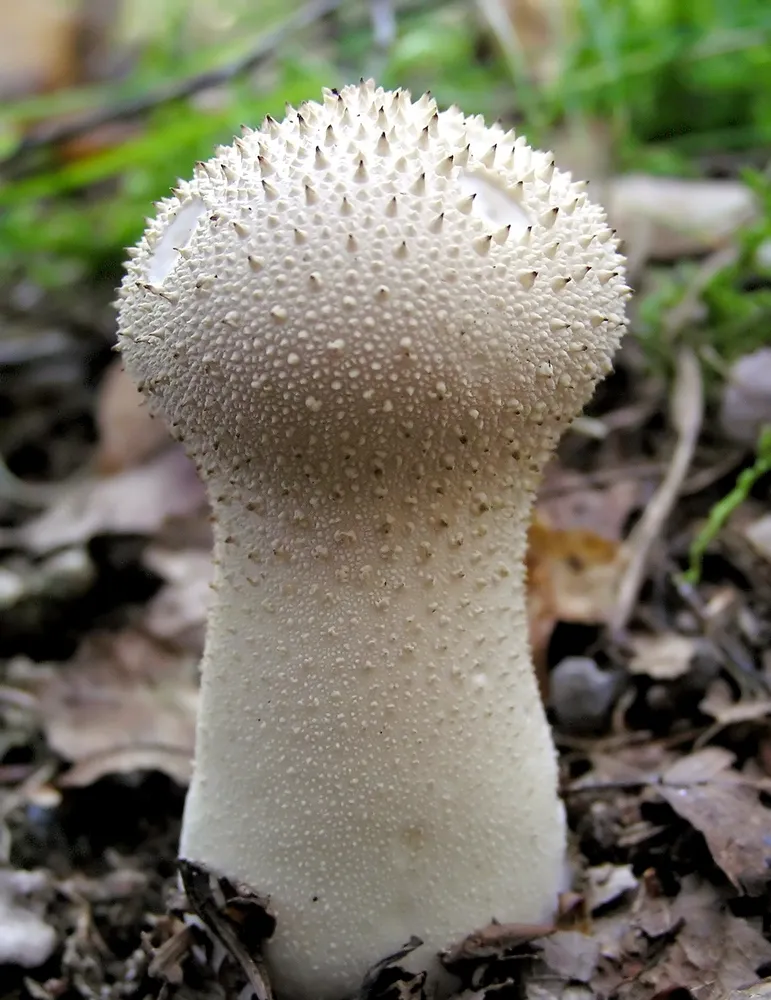
From the outside, a young egg looks a lot like a puffball. Cut it lengthwise: a puffball is uniform white flesh with no layers. A stinkhorn has a layered structure: skin, a gelatinous layer, and the embryo of the stem and cap inside. This is an unmistakable sign.
Is Dune stinkhorn edible or poisonous?
What kind of spore-bearing surface does Dune stinkhorn have?
What does the cap of Dune stinkhorn look like?
What does the stem of Dune stinkhorn look like?
Sources
- [1]Вікіпедія (українська)
- [2]Атлас грибів України, Зеров Д.К. (1979)
- [3]MycoBank Database
- [4]Index Fungorum
- [5]GBIF
- [6]iNaturalist Ukraine