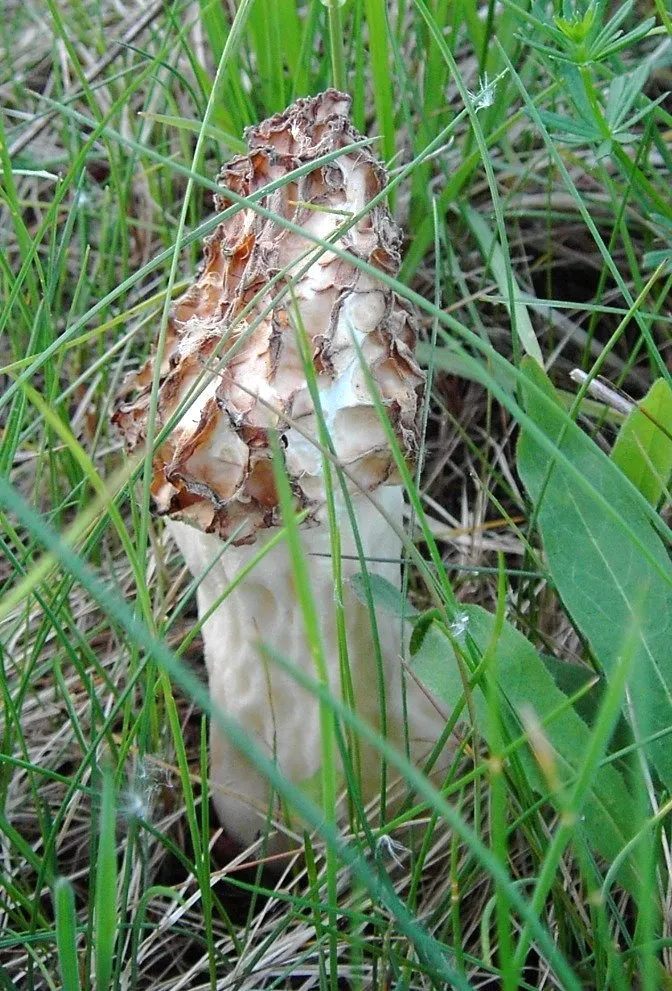
Morchella crassipes
Expert-verifiedUpdated October 3, 2026
Passport
- Edibility
- Conditionally edible
- Season
- Apr — May
- Hymenophore
- Chambered
- Cap color
- Yellow
- Size
- Large (over 15 cm)
- Smell
- Pleasant
- Reviewed
- Yes ✓
Quick answers
Where to look?
Deciduous forest, Mixed forest
When does it appear?
Apr — May
Active months: April, May.
How to recognize it? Three signs
- Cap color: Yellow, Brown, Orange
- Cap shape: Conical
- Smell: Pleasant
Fruiting season
April – May
Description
Morchella crassipes is the biggest and fleshiest of Ukraine's morels. If the common morel is a neat mushroom of 5-10 cm, the thick-footed morel often reaches 15-20 cm, and in a wet spring even 25 cm tall. fleshy broad honeycombed cap, honey-yellow or ochre-brown, sits on a thick (hence the name) ribbed, ivory-colored stem. In mature specimens the stem widens disproportionately toward the base, turning into a real "barrel" — a hallmark of the species. Finding giants like these in a floodplain ash wood is a real treat for any forager.
This is an edible and highly prized mushroom, known for its rich, meaty flavor — one of the finest spring delicacies. Like all true morels, it is conditionally edible: it needs 15-20 minutes of boiling, with the water drained, before frying, stewing or drying. Never eat it raw or dried without heat treatment: the flesh contains trace amounts of hydrazine-like compounds that break down when heated and wash out into the water. Great fried with sour cream (the classic way), stewed with chicken, added to sauces, or dried (a dried morel keeps its aroma for years and is considered a fine-dining delicacy).
In Ukraine it is an uncommon mushroom, known mainly from floodplain and ravine forests. A saprotroph, it likes rich alkaline soils with broadleaf litter. It grows in damp ash, elm, poplar and alder woods, on riverbanks and in floodplains. Season — April-May, peaking in mid-April. Found singly or in groups of 2-5 fruit bodies. Especially rich flushes come after spring floods.
Cap
The cap large: 5-15 cm across, 8-20 cm tall, egg-shaped to elongated-conical. The surface has clear honeycomb pits separated by yellowish ridges. Color honey-yellow, ochre-brown, dark brown in old mushrooms. The cap is fused to the stem along its whole length (a key trait of a true morel — unlike Verpa, whose cap hangs freely). There is a single inner cavity, with no partitions.
Hymenophore
The hymenophore covers the inner surface of the pits (as in all Pezizales/Morchellaceae). Asci with spores mature in the pits. Spore print yellowish to light ochre.
Stem
Stem thick and fleshy: 5-15 cm tall, 2-5 cm thick at the top, and at the bottom widening to 4-8 cm, like a "barrel". Surface lengthwise ribbed and furrowed, whitish-cream, light ochre with age. Hollow inside, the cavity joined to the cap's cavity. In old mushrooms the stem may be wrinkled.
Flesh
Flesh thin (about 3-5 mm), waxy, white to yellowish, brittle. Does not change color when cut. Pleasant mushroomy aroma and taste.
Smell
Pleasant, mild, mushroomy, faintly nutty. One of the most delicate aromas among spring mushrooms. The taste is refined and meaty.
›Scientific synonyms (5)
Phallus crassipes Vent., Phalloboletus crassipes (Ventenat) Kuntze, Mitrophora hybrida var. crassipes (Vent.) Boud.: 152 (1897), Morchella esculenta var. crassipes (Vent.) Bresinsky & Stangl, Morchella esculenta var. crassipes (Vent.) Kreisel
Lookalikes
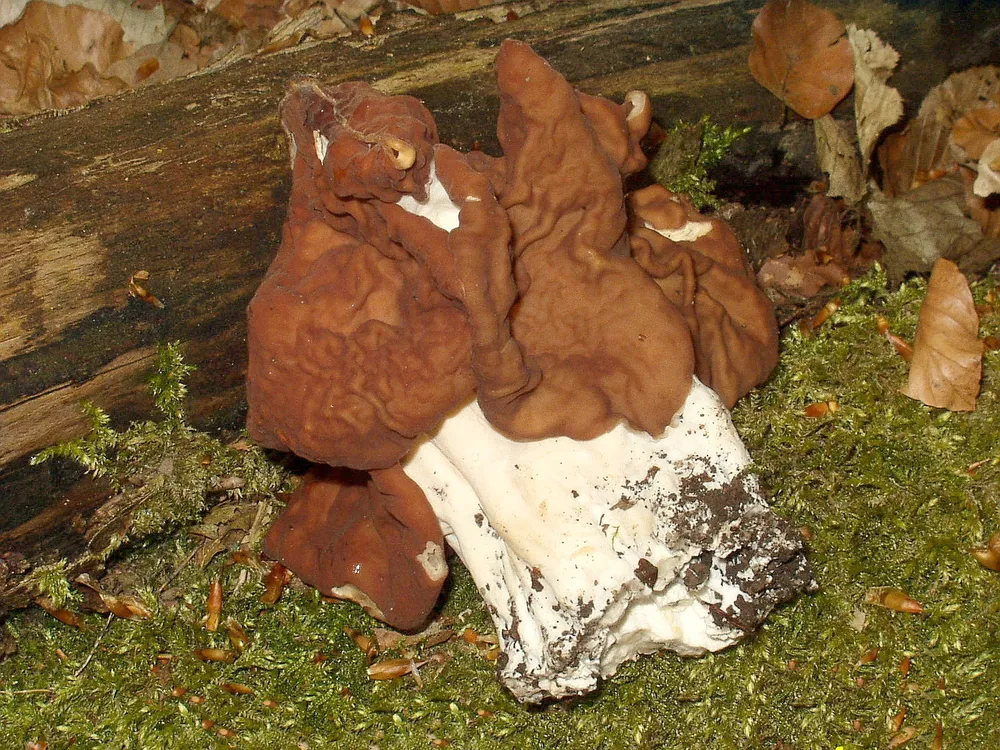
Related species
Mushrooms of the same genus and habitat — to study side by side and never mix up.
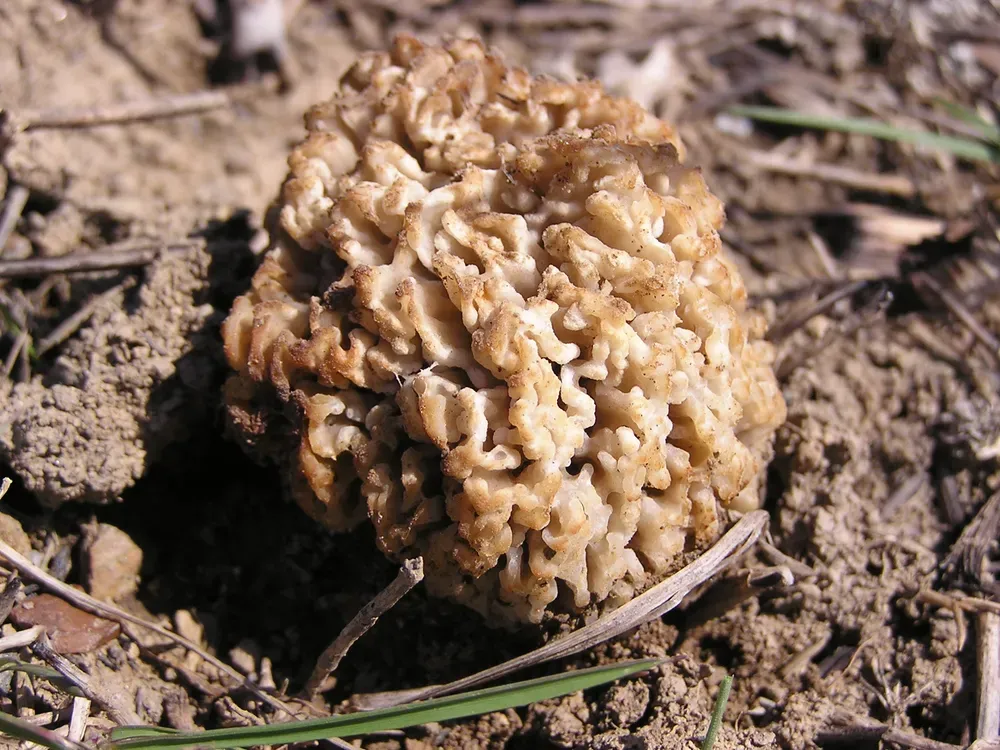
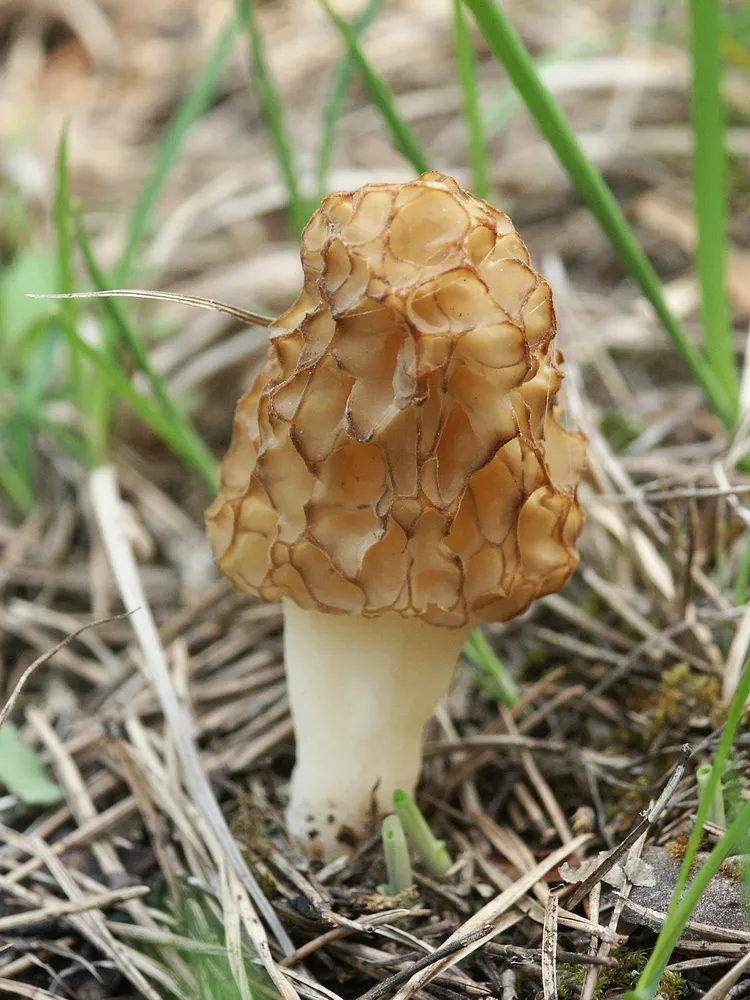
Morchella steppicola
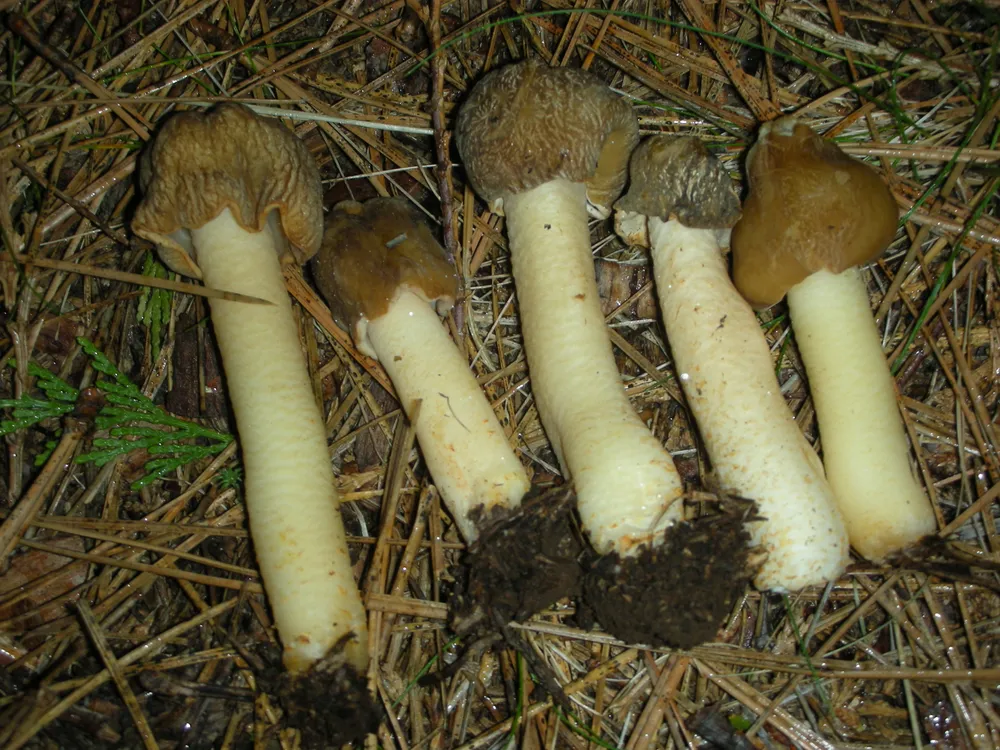
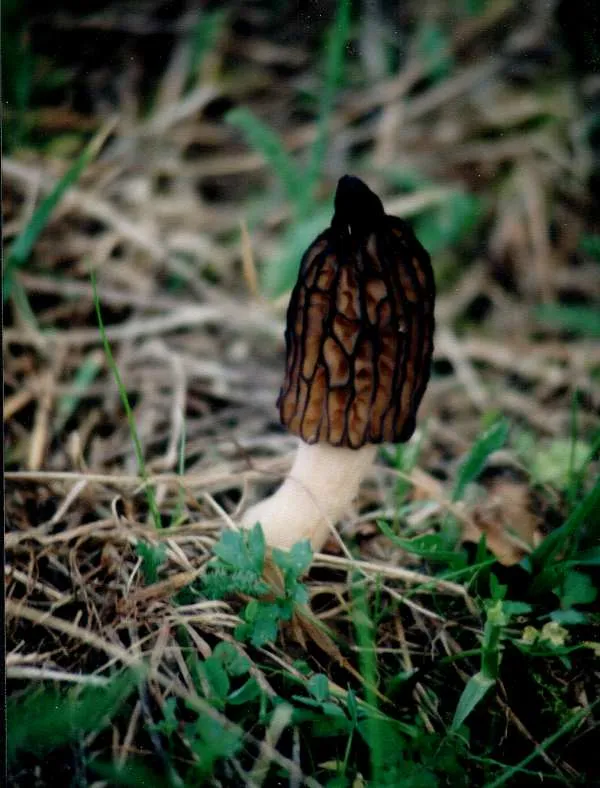
Thimble morel
Verpa conica
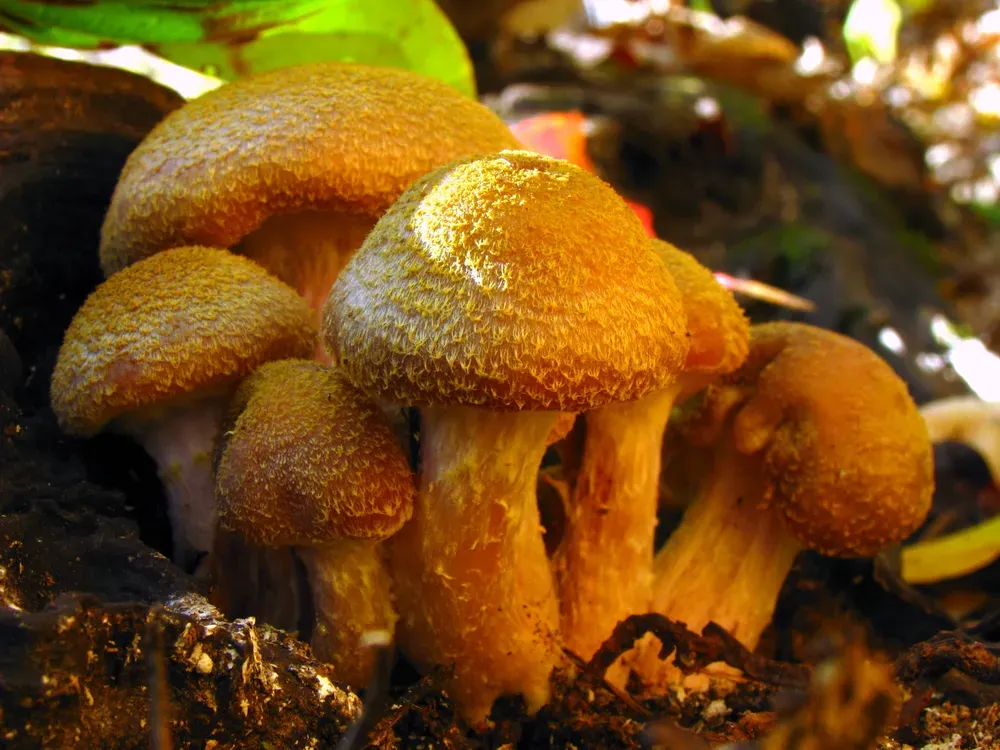
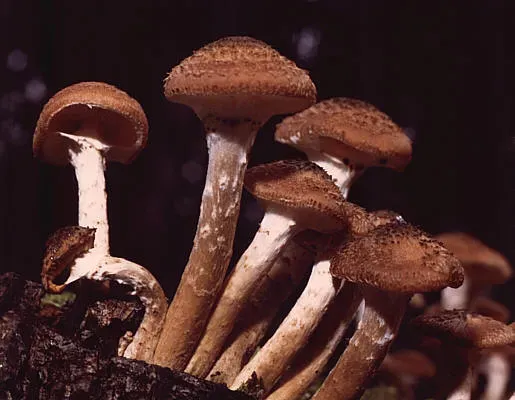
Bulbous honey fungus
Armillaria gallica
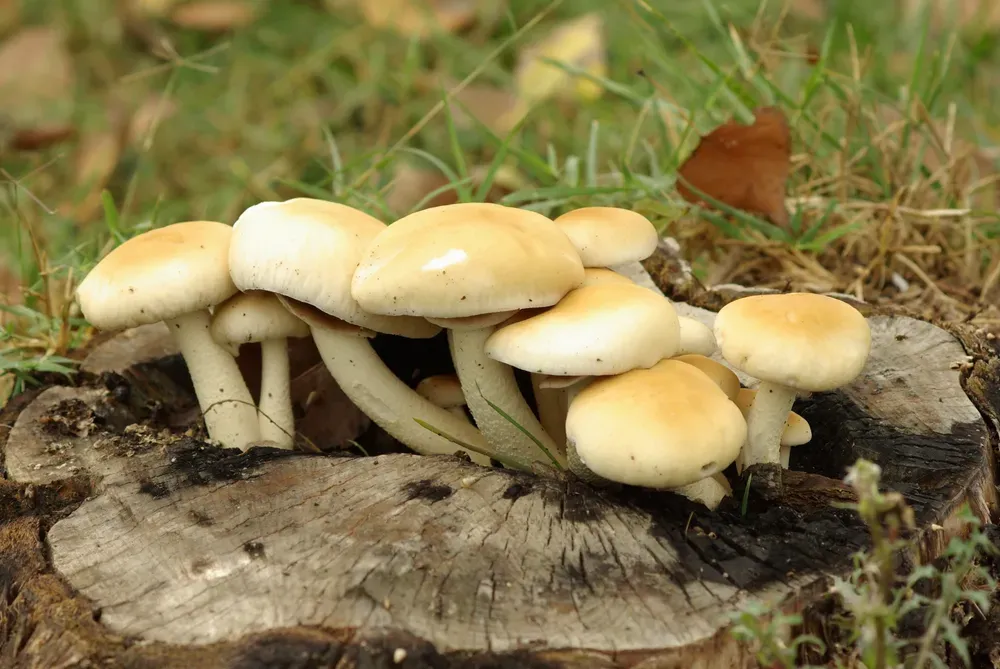
Dark honey fungus
Armillaria ostoyae
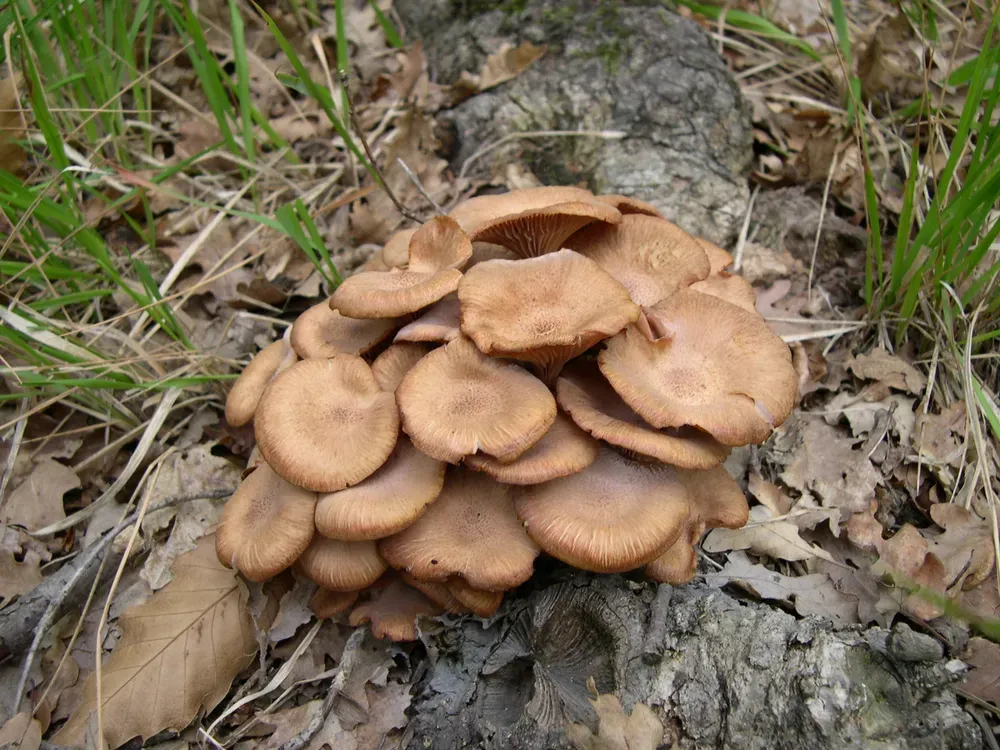
Poplar fieldcap
Cyclocybe aegerita
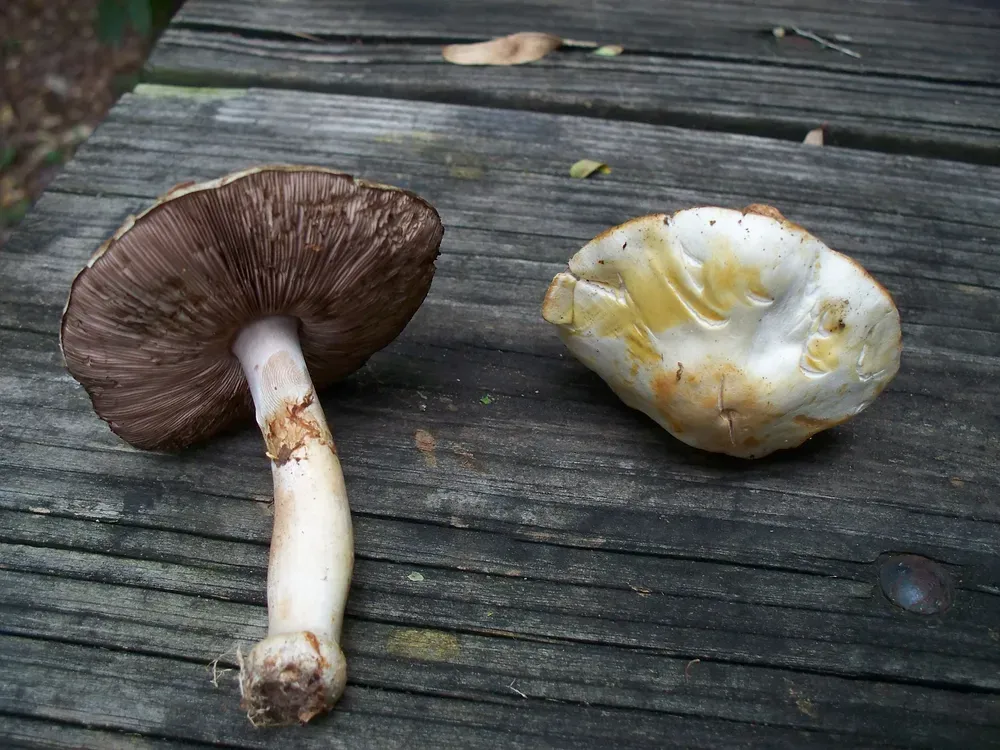
Ringless honey fungus
Desarmillaria tabescens
Agaricus abruptibulbus
Agaricus haemorrhoidarius
Agaricus haemorroidarius
Frequently asked questions
How do you cook it properly?
The classic method: (1) clean and rinse thoroughly (the pits often hold sand and tiny insects); (2) boil for 15-20 min in plenty of water; (3) drain the water; (4) rinse the mushrooms. Then fry with onion and sour cream (the classic way), stew in cream or add to sauces. Dried morels: first soak for an hour, then boil and cook as usual.
Can you eat it raw in a salad?
NO. Never eat any true morel raw — even if it pops up on some Western cooking blogs. Raw flesh contains trace amounts of hydrazine-like toxins that break down only with prolonged heating. The classic way to serve it — boiled and then fried morels with sour cream.
Can you dry it for winter?
Yes — it's a great way to keep them. Cut in half, dry over an air vent or in a dehydrator at 40-50°C, and store in glass jars. Before use, always soak for 30-60 min, then boil for 10-15 min, drain the water — and only then cook. Dried morels keep their aroma for up to 2 years.
Where should you look for it?
In floodplain and ravine deciduous forests with ash, elm, poplar, alder; on rich alkaline soils. Especially abundant after spring floods, on alluvial deposits. It also turns up in old parks with ancient ash and elm trees. It doesn't grow in dry pine woods or on acidic soils. Look along forest edges, on riverbanks and in damp hollows.
Which regions of Ukraine is it found in?
Prykarpattia, the Western and Right-Bank Forest-Steppe (especially the floodplains of the Dniester, Southern Bug and Prypiat), Polissia (less often), the Carpathians (in the lower belts). In the steppe — in ravine forests. Finds are scattered, and each one is a pleasant surprise.
When should you look for it?
April to May, peaking from mid-April to late April. It coincides with ash blossom and the first unfurling leaves. In a wet spring the season lasts until mid-May. By June it no longer fruits.
How do you tell it from other morels?
Two signs: (1) size — the thick-footed morel is much bigger (10-20+ cm vs 5-10 cm in the others); (2) the stem — it has a distinctive downward-widening "barrel" 4-8 cm thick; in the common and conical morels the stem is cylindrical or moderately thickened. The cap's color and structure are similar — honey-yellow with a honeycombed surface.
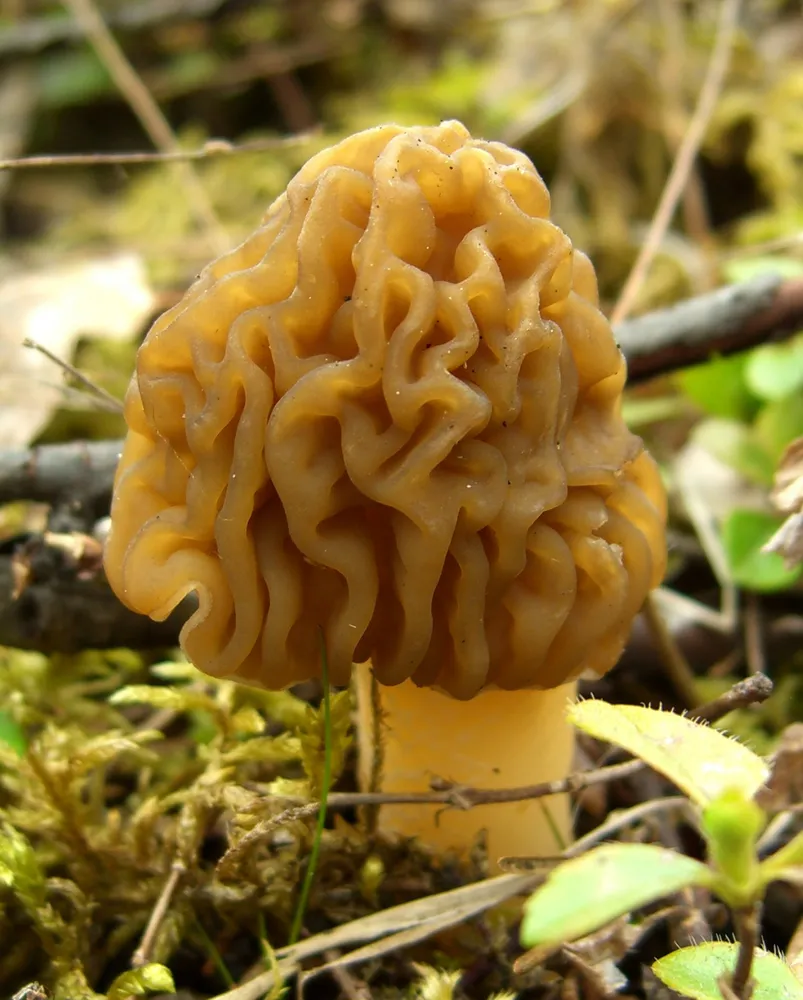
How do you tell it from the poisonous false morel?
The false morel (Gyromitra esculenta) has a cap shaped like a brain — irregular, convoluted folds WITHOUT clear honeycomb pits. A morel has clear pits. Also, the false morel's cap is solid (filled with flesh), while a morel's is hollow (air inside). The false morel is highly poisonous even after boiling — selectively, in some people. In the EU it is officially banned from sale. The golden rule: cut it in half — if it's hollow inside, it's a morel; if it's filled with flesh, it's a false morel.
Is Morchella crassipes edible or poisonous?
What kind of spore-bearing surface does Morchella crassipes have?
What does the cap of Morchella crassipes look like?
What does the stem of Morchella crassipes look like?
Sources
- [1]Вікіпедія (українська)
- [2]Атлас грибів України, Зеров Д.К. (1979)
- [3]MycoBank Database
- [4]Index Fungorum
- [5]GBIF
- [6]iNaturalist Ukraine