While most foragers are still waiting for summer, the most impatient are already heading into the woods. Because as soon as the snow melts and the ground warms up, morels appear — the first mushrooms of the year. They're a true delicacy with a short season. But a dangerous relative grows right next to them, the false morel, so spring foraging takes know-how.
Let's look at when and where to search for morels, how they differ from false morels, and why spring mushrooms deserve caution.
When spring mushrooms appear
Morel season, short and early, is the very first of the whole mushroom year.
Morels appear as soon as the soil warms up for good, usually in April, sometimes as early as late March in warm regions, and they stay through all of May. They're the very first mushrooms of the mushroom calendar.
The season lasts only a few weeks, so it's important not to miss the moment. Go by warmth and moisture: once the ground has warmed and spring rains have soaked the leaf litter, it's time to go. A handy helper is the mushroom radar.
What morels look like
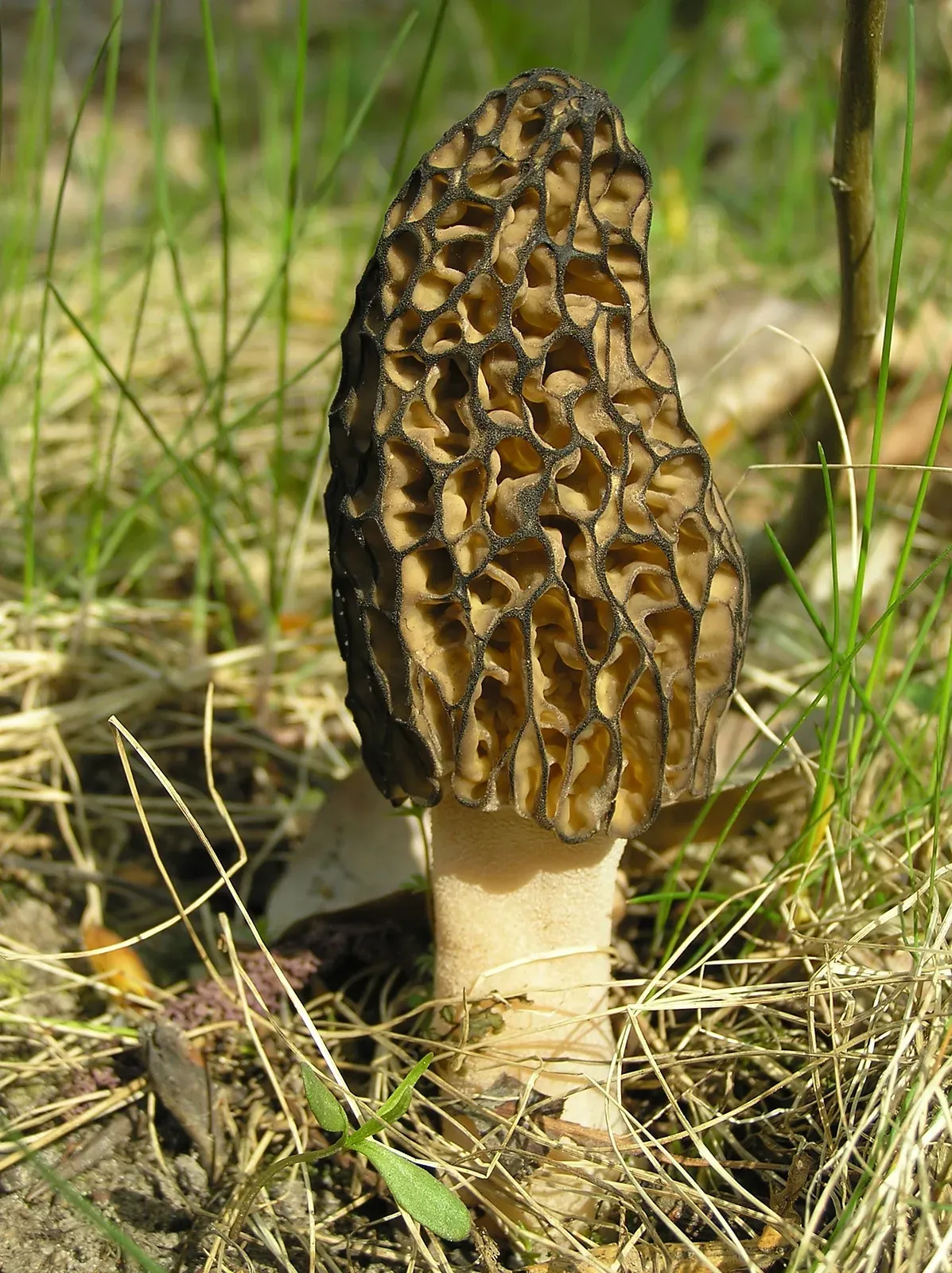
The common morel is hard to mistake for anything else thanks to its unusual cap.
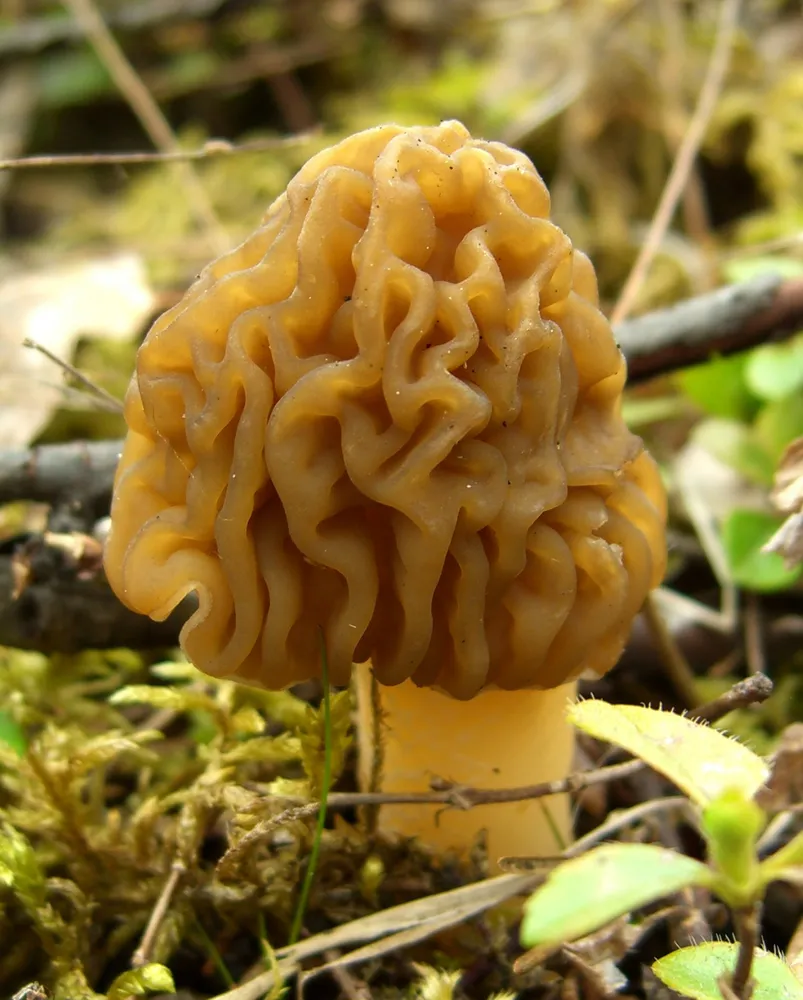
- Cap. Egg-shaped or conical, covered in pits like a honeycomb or a sponge. Color ranges from ochre to brown.
- Hollow. The mushroom is hollow inside, with cap and stem forming one continuous piece.
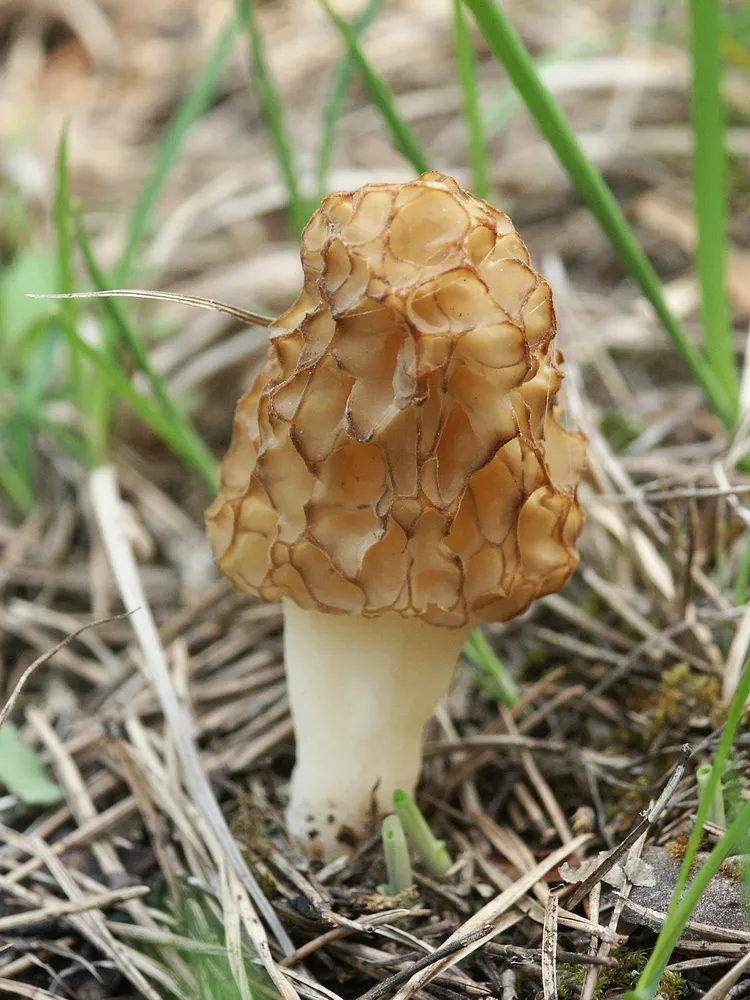
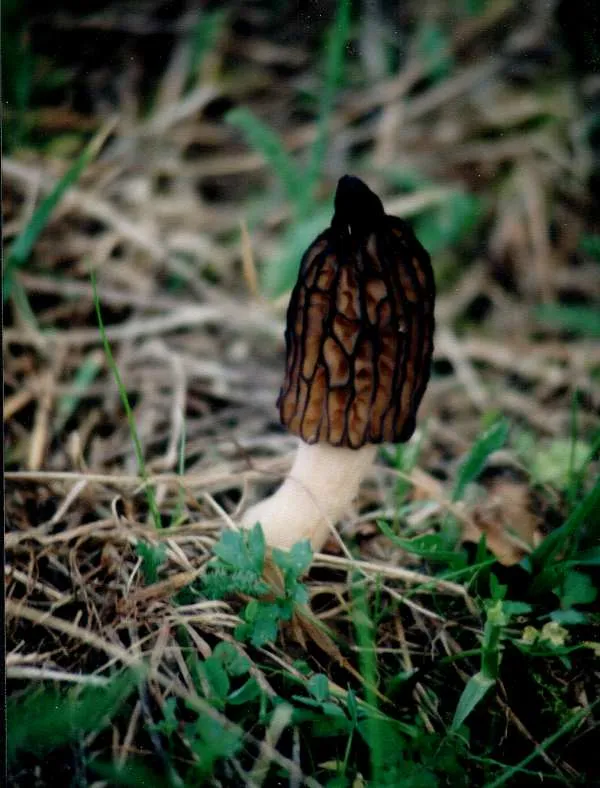
- Relatives. Growing alongside are the black morel, thimble morel and early false morel, all with a pitted or wrinkled cap.
Look for morels in deciduous and mixed forests, along forest edges, in clearings and orchards — often where there's plenty of light and the soil is warm.
Why false morels are dangerous
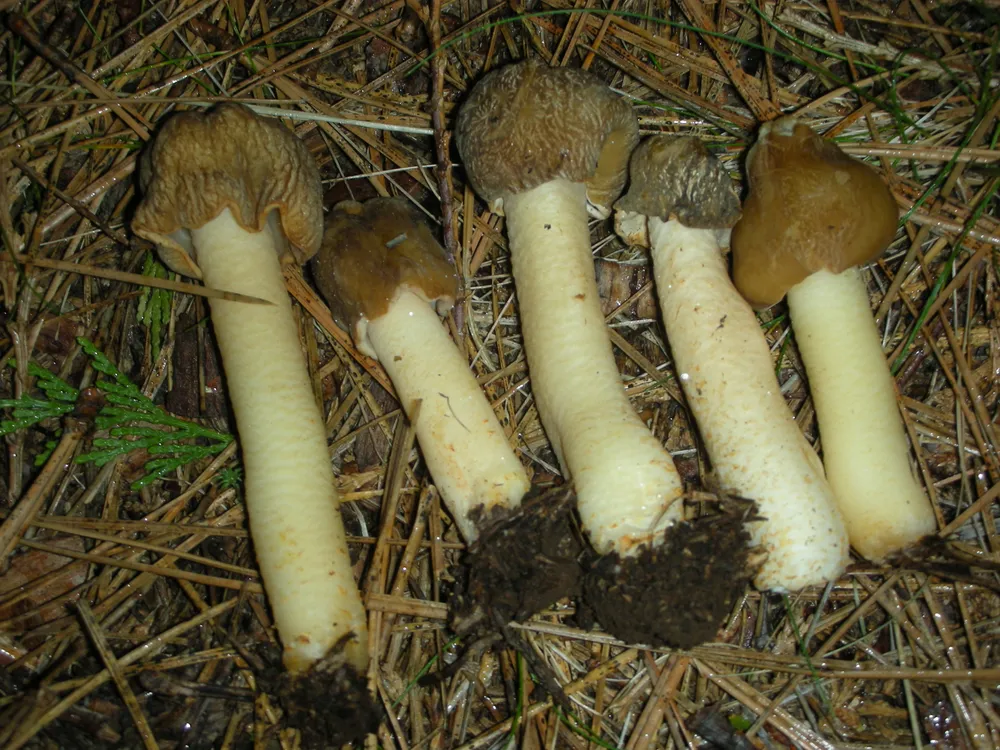
The main spring danger is the false morel, which is easy to mistake for a morel.
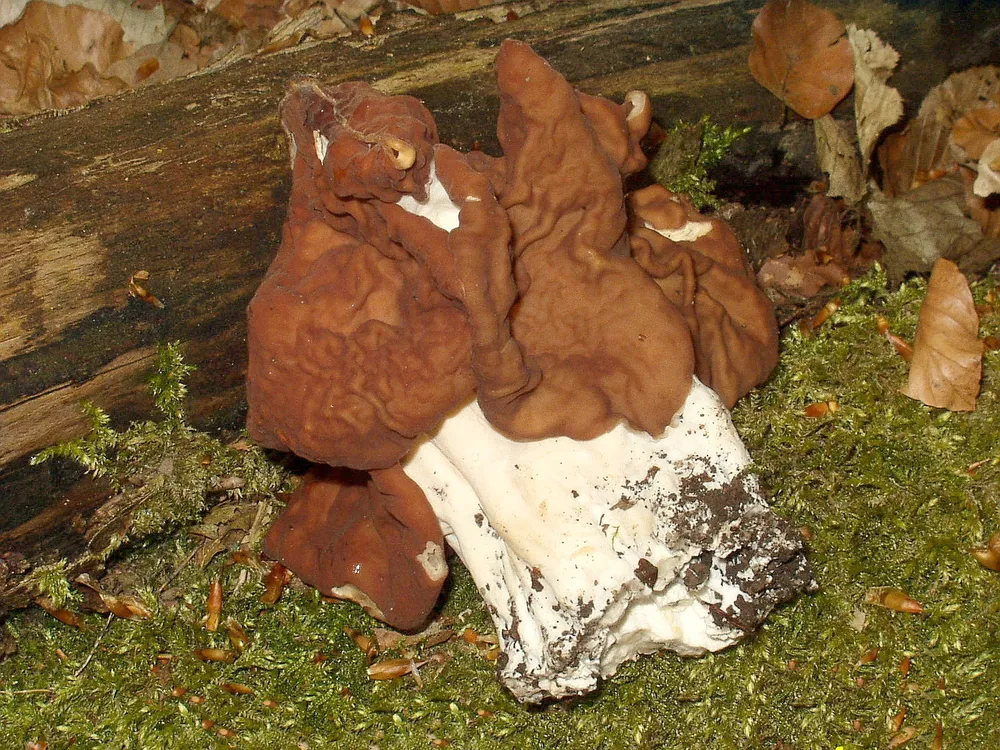
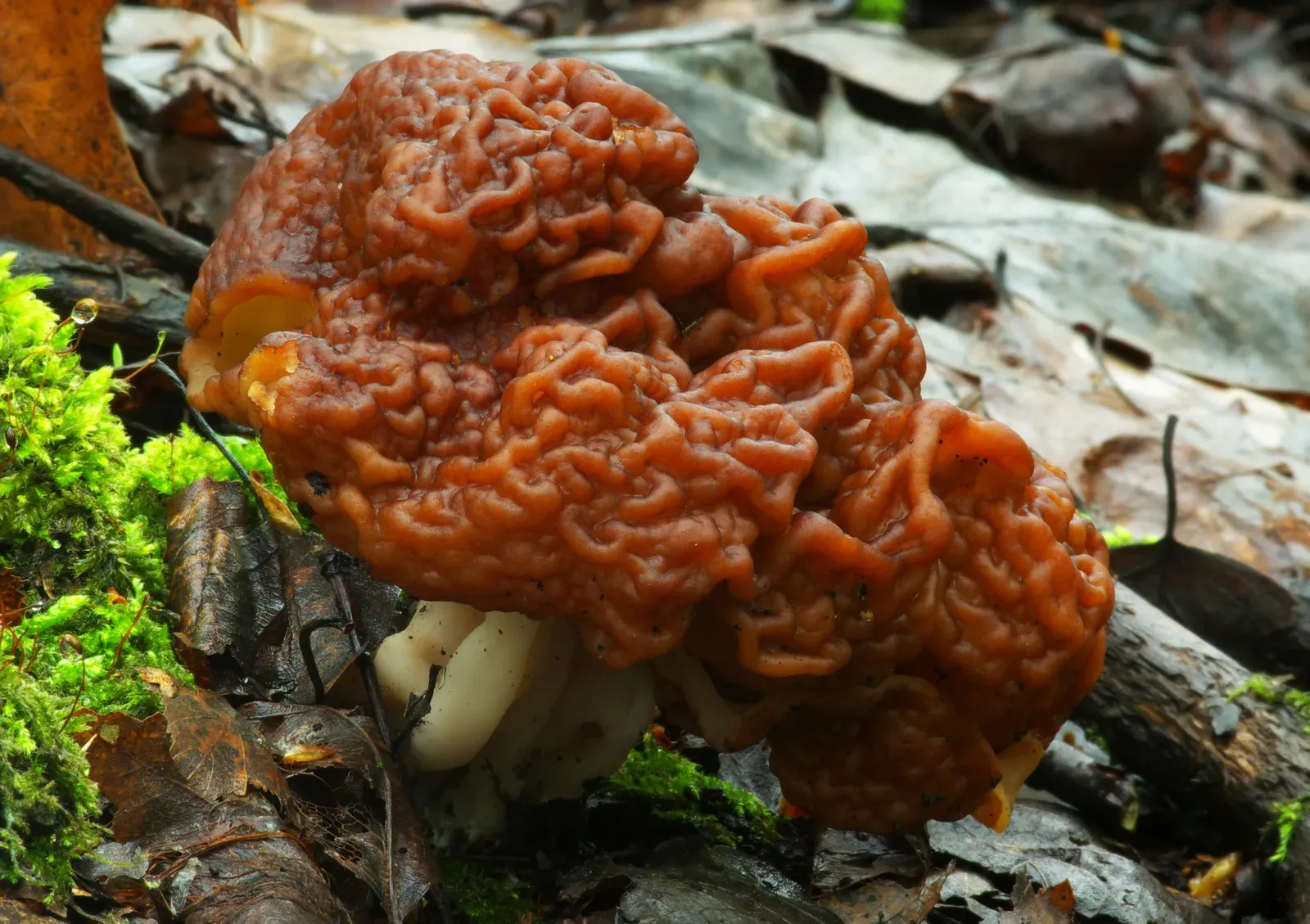
The difference is in the shape of the cap: a morel's is pitted, with regular cells, while a false morel's is shapeless and convoluted, like a brain or a walnut. The false morel contains a toxin that builds up and damages the liver, and the amount is unpredictable. That's why modern sources advise not picking false morels at all.
Here's an easy rule: honeycomb pits — morel; brain-like folds — false morel, leave it. More on dangerous spring mushrooms in our piece on deadly poisonous mushrooms.
How to pick and cook morels
A few tips will make your spring foraging both successful and safe.
- Pick only pitted mushrooms. Any brain-like, convoluted cap is a reason to pass.
- Always boil them first. Morels are considered conditionally edible: they're boiled, the water is poured off, and only then are they fried.
- Don't taste them raw. Raw spring mushrooms must not be eaten.
- Head out on time. The season is short, so keep an eye on soil warmth and spring rains.
Morels are a wonderful reward for those who don't want to wait for summer. The key is to tell them apart clearly from false morels and to follow the rules of safe foraging.
Sources
- “Vyznachnyk hrybiv Ukrainy” (Guide to the Fungi of Ukraine; Kyiv, Naukova Dumka publishing house).
- Morchella esculenta in the GBIF database, the global biodiversity database.
- Morchella in the MycoBank database, the international fungal nomenclature database.
- Morchella on Wikipedia.
Frequently asked questions
When do morels appear?
In spring, as soon as the soil warms up for good — usually in April, sometimes in late March in warm regions — and they stay through all of May. They're the very first mushrooms of the year.
Where should you look for morels?
In deciduous and mixed forests, along forest edges, in clearings, orchards and parks — often in bright spots with warm soil. They frequently grow where the ground has been disturbed.
How does a morel differ from a false morel?
By the shape of the cap. On a it's pitted like a honeycomb. On a it's shapeless and convoluted, like a brain. The false morel is dangerous.
Why are false morels considered dangerous?
Because the contains a toxin that builds up and damages the liver, and the amount in any given mushroom is unpredictable. That's why modern sources advise not picking them at all.
Can you eat morels?
Yes, but they're conditionally edible mushrooms. They must be boiled, the water poured off, and then fried. Morels must not be eaten raw.
Do morels need to be boiled?
Yes, always. Before frying, morels are boiled and the cooking water is discarded. This makes the conditionally edible mushroom safe to eat.
How long does morel season last?
Not long — usually a few weeks in spring. So it's important not to miss the moment: once the soil has warmed and the spring rains have come, it's time to go. To keep track, use the .
Does the morel have other spring relatives?
Yes. Growing alongside are the , and , all with a pitted or wrinkled cap, unlike the brain-like false morel.
Mushrooms in this article
Related articles
 Safety
False morel: why this spring mushroom is dangerous
The false morel looks like a morel, but it contains a poison. Here's how to recognize it, why it's dangerous a…
August 24, 2026·2 min Recipes & cooking
How to store fresh mushrooms, and for how long
Fresh mushrooms spoil faster than you might think. Here's how long they keep in the fridge, how to store them…
August 21, 2026·4 min How to identify
Truffles in Ukraine: do they grow here, and where to look
Truffles aren't just a French delicacy. Several species grow in Ukraine too. Here's which ones, where they occ…
August 24, 2026·2 min