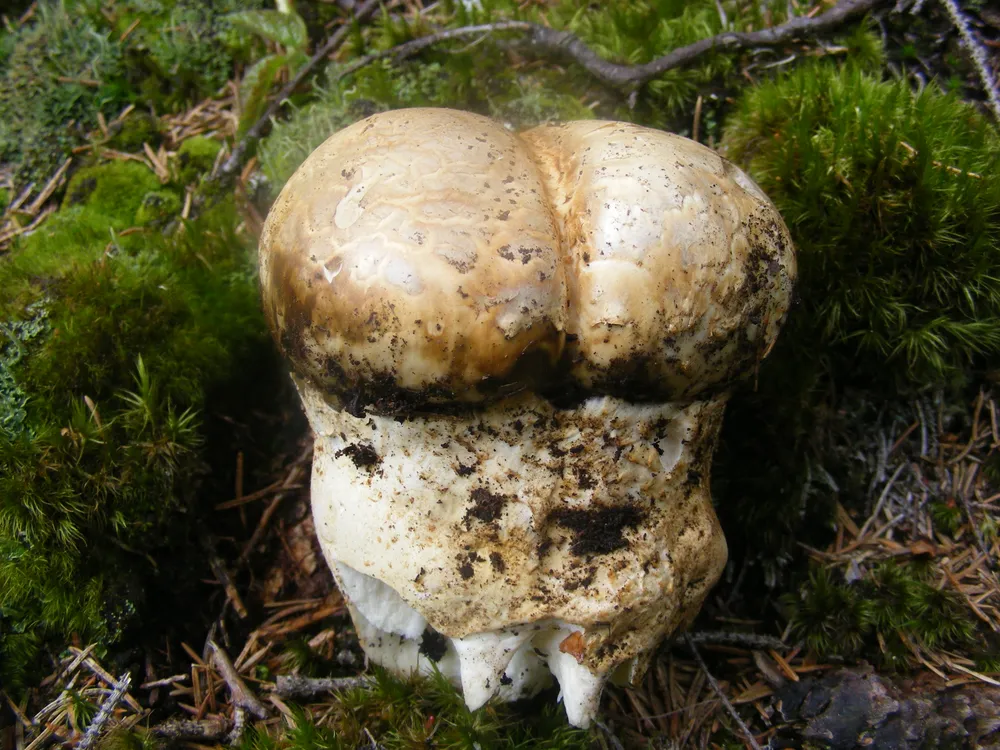
Imperial mushroomCatathelasma imperiale
Expert-verifiedUpdated October 3, 2026
Passport
- Edibility
- Edible
- Season
- Aug — Oct
- Hymenophore
- Gilled
- Cap color
- Brown
- Size
- Giant (>25 cm)
- Smell
- Floury
- Reviewed
- Yes ✓
Quick answers
Where to look?
Conifer forest, Mixed forest
When does it appear?
Aug — Oct
Active months: August, September, October.
How to recognize it? Three signs
- Cap color: Brown, Grey, Dark brown
- Cap shape: Convex
- Smell: Floury
Fruiting season
August – October
Description
Catathelasma imperiale is a truly imperial mushroom among forest dwellers: large, heavy, with a broad gray-brown cap on a massive stem with a double ring. It is found infrequently, mostly in the mountain fir and spruce forests of the Carpathians. A mature specimen can reach a cap diameter of 25-30 cm and weigh 1-2 kg — a single find usually provides a forager with dinner. Folk mycology long underrated it: its stern appearance scared off foragers, who suspected it was related to amanitas (because of the double ring). In fact, it is a good edible mushroom, valued in the regional cuisines of the Alps and the Carpathians.
This is a good edible mushroom with firm, meaty flesh and a pronounced mealy-cucumber aroma. Some foragers find the aroma peculiar and not very pleasant — a matter of taste. Young mushrooms with pale, firm flesh are the best for cooking: frying, stewing, pickling. Old ones sometimes take on a sourish aftertaste and toughen. An important detail: despite being safe, this mushroom is NOT for beginners because of the risk of confusing it with amanitas. A double ring on the stem is a feature it shares with the genus Amanita, and careless identification can cost dearly.
In Ukraine it is found mainly in the Carpathians and Prykarpattia — in mountain fir, spruce and mixed forests at altitudes of 700-1500 m. It forms mycorrhiza with conifers. Season August–October, peaking in September. Finds are single or in groups of 2-5 fruiting bodies. In the steppe, Polissia and the Forest-Steppe it is practically absent. It is one of the species that indicate a well-preserved mountain forest.
Cap
Cap very large: 10-30 cm across, hemispherical in young mushrooms, later convex-spreading, with a broad low hump in the center. Color gray-brown, mouse-brown, chocolate-gray, darker in wet weather and paler in dry weather. Surface smooth, with adpressed grayish scales in young mushrooms, bare in mature ones. Cap skin tough, does not peel. Cap margin thin, inrolled in young mushrooms.
Hymenophore
Gilled hymenophore. Gills crowded, adnate or slightly decurrent down the stem. Color whitish to cream, with an ochre tint in old mushrooms. Spore print white — an important feature.
Stem
Stem sturdy and fleshy: 8-15 cm tall, 3-6 cm thick, cylindrical or thickened toward the base, often with a rooting extension (pseudorhiza) deep into the soil. Color white to grayish-cream. A characteristic feature — the double ring: a broad membranous ring of two layers, whitish-gray above and darker below. This is the source of the confusion with amanitas, whose ring is usually single.
Flesh
Flesh thick, white, very firm and meaty. Does not change color when cut. Raw, it has a pronounced mealy-cucumber smell; after cooking the aroma softens.
Smell
Strongly mealy-cucumber, peculiar — some like it, some don't. In amateur retellings it is sometimes described as "fresh flour" or "old sawdust". Mild taste; after boiling — pleasantly mushroomy.
›Scientific synonyms (6)
1845 Agaricus imperialis Fr., 1872 Armillaria imperialis Quél., 1886 Omphalia imperialis (Quél.) Quél., 1914 Armillaria nobilis Murrill, 1914 Clitocybe imperialis (Quél.) Ricken, 1922 Biannularia imperialis (Quél.) Beck
Lookalikes
Related species
Mushrooms of the same genus and habitat — to study side by side and never mix up.
_Ricken_185798.webp)
Booted knight
Tricholoma focale
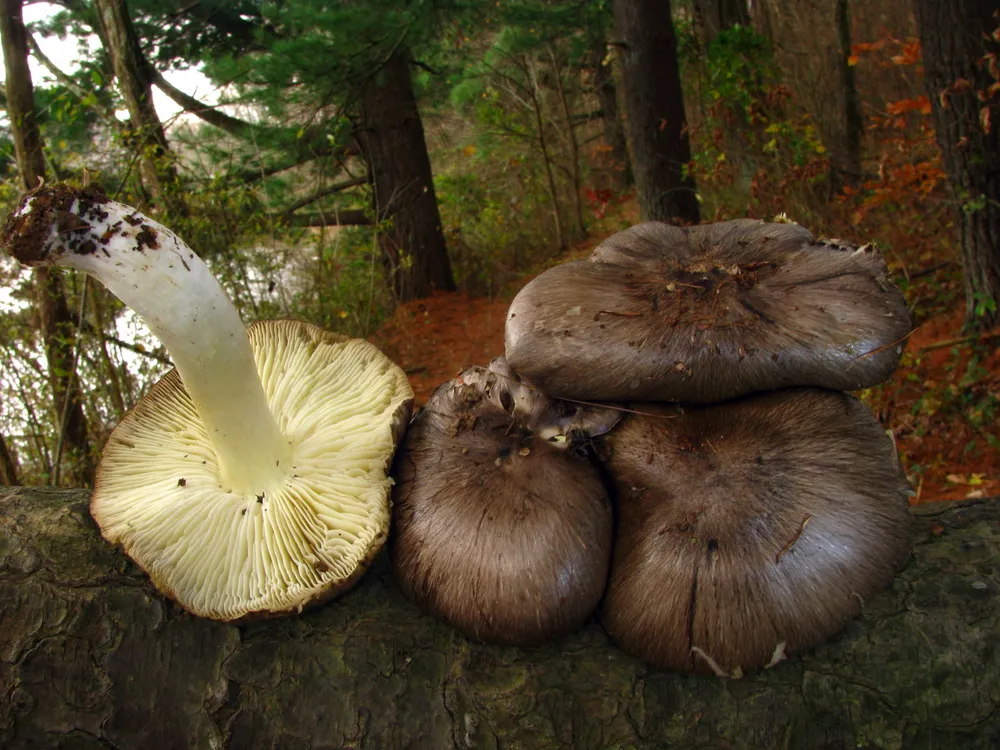
Charbonnier
Tricholoma portentosum
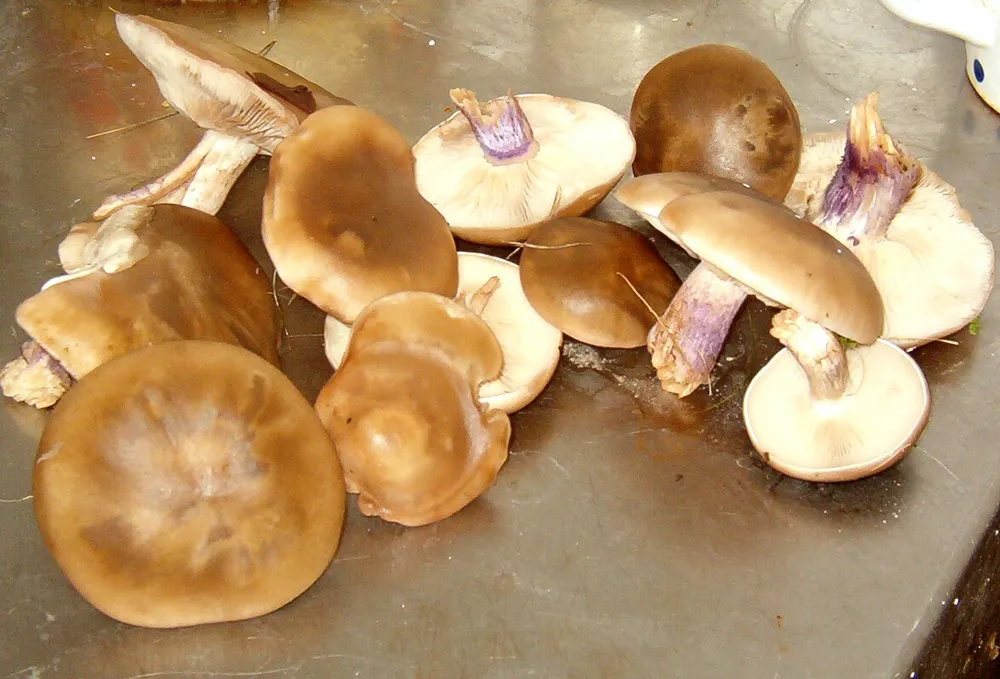
Field blewit
Collybia personata
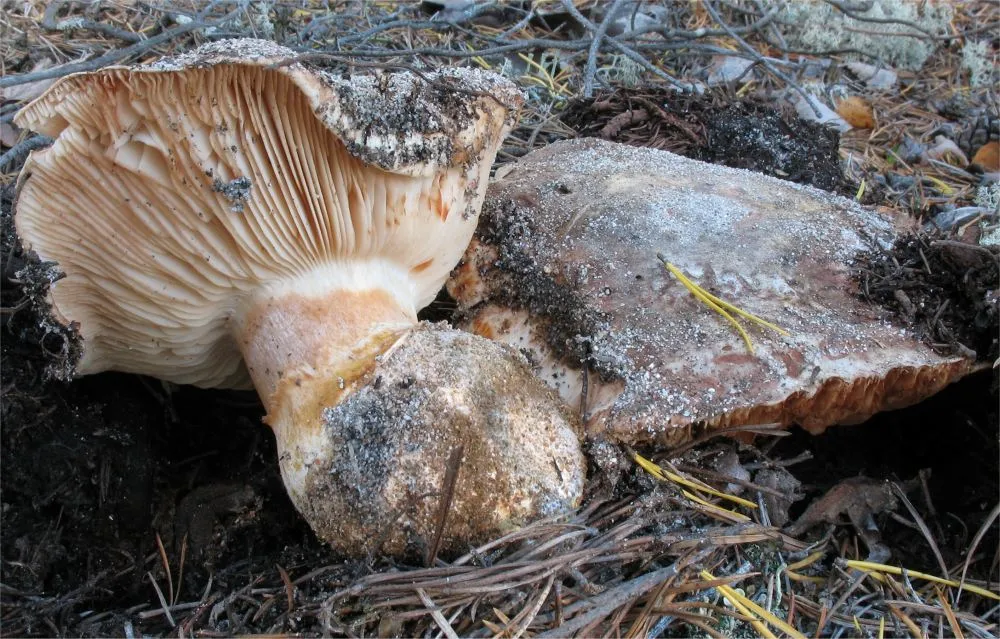
Giant knight
Tricholoma colossus
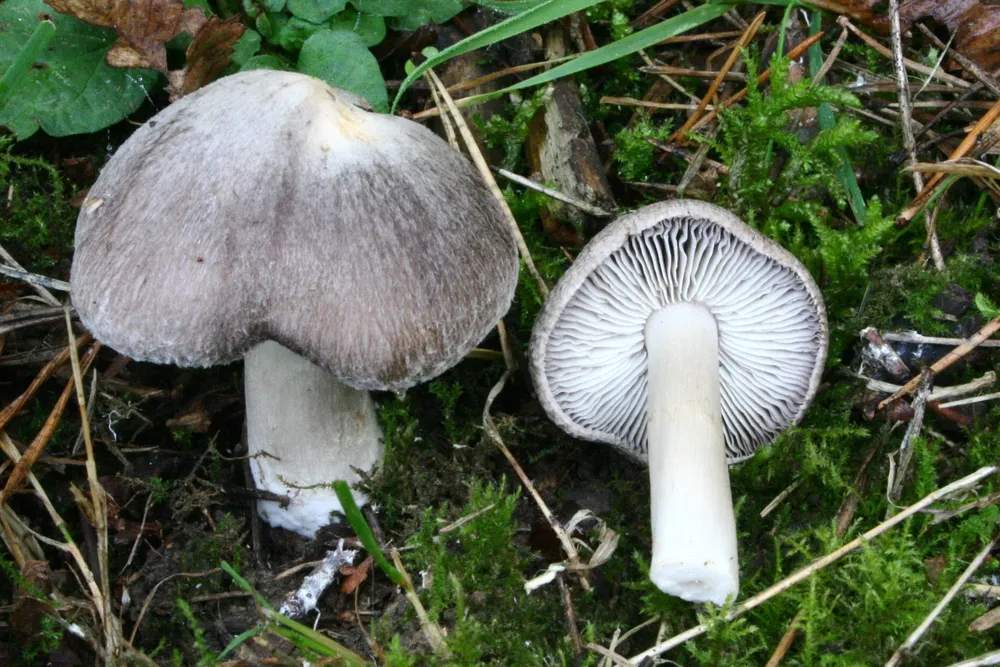
Grey knight
Рядовка наземна
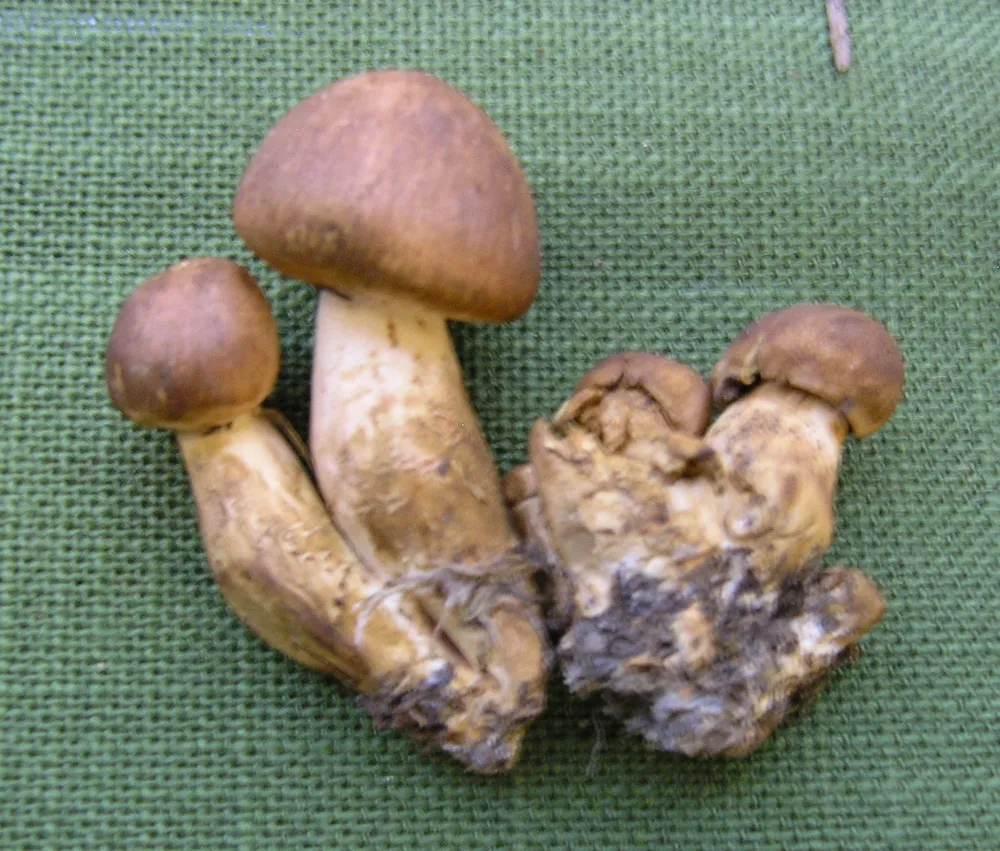
Matt knight
Tricholoma imbricatum
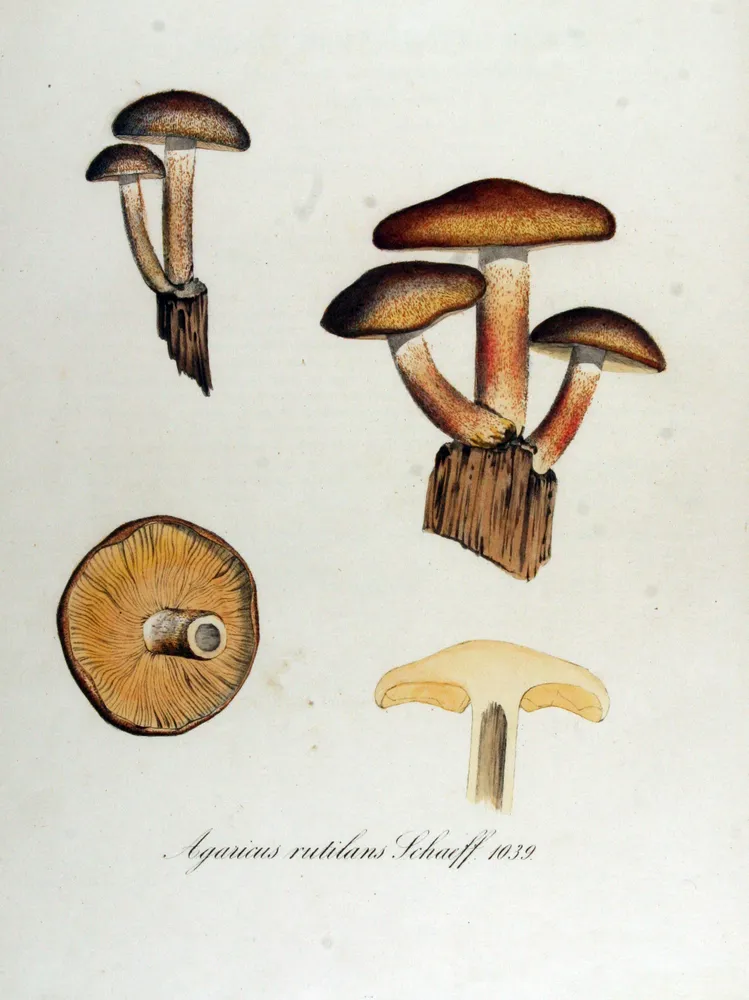
Plums and custard
Рядовка червона
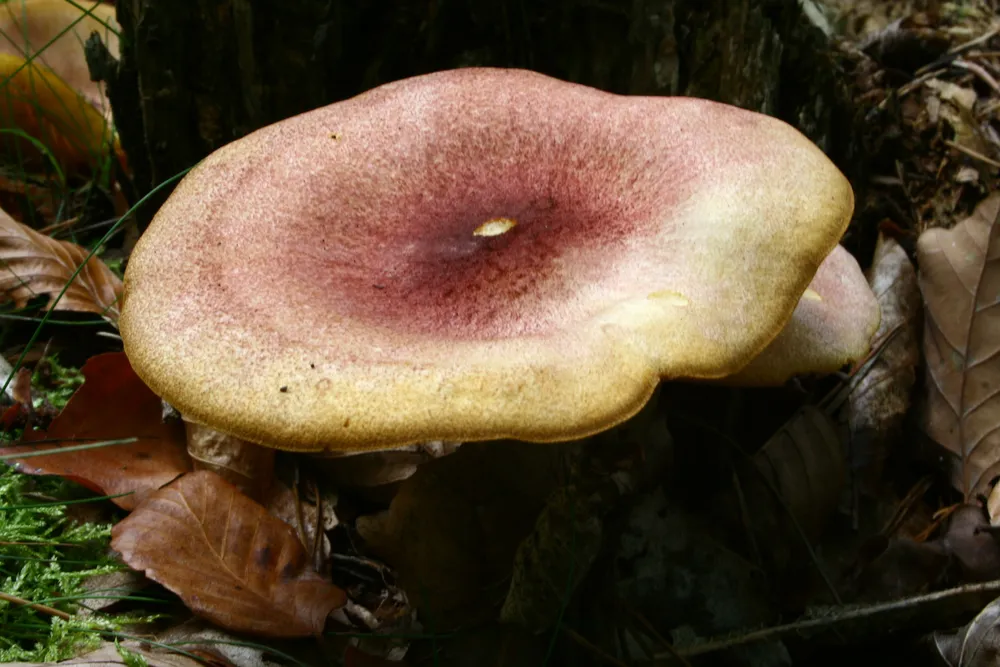
Plums and custard
Tricholomopsis rutilans
Frequently asked questions
Is it safe to eat?
Yes, it is an edible mushroom. But it is not a mushroom for beginners because of the risk of confusing it with amanitas — both genera have a ring on the stem. Put it in your basket only after confident identification: double ring, whitish-gray tone, massive rooting stem, mycorrhiza with conifers. If you find a similar mushroom in a deciduous forest — it is definitely not Catathelasma.
How should you cook it?
Clean and slice. Young mushrooms can be fried straight away for 15-20 min or stewed. Mature ones — first boil for 10-15 min in salted water, drain the broth (this removes the sharp mealy smell), then fry or stew with onion and cream. Pickles well. Suitable for drying — dried, it keeps its aroma for up to a year.
How NOT to confuse it with an amanita?
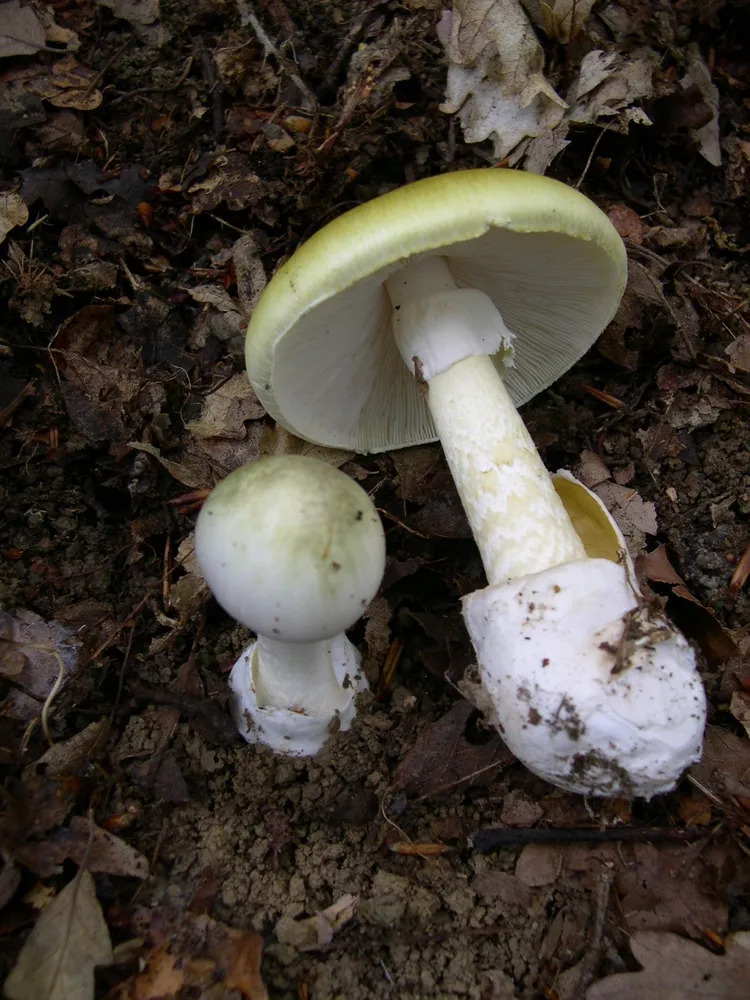
Two fundamental differences. (1) Volva at the base: an amanita (especially the death cap) always has a sac-like sheath (volva) at the base of the stem. Catathelasma has no volva, only a rooting bulbous stem. (2) Spore print: in Catathelasma it is white to cream; in amanitas it is also white, so this is not diagnostic. A better marker is the gills: in an amanita they are free (not touching the stem), in Catathelasma they are adnate or decurrent. And mycorrhiza: Catathelasma grows only with conifers, the death cap mostly with oak and beech.
Where should you look for it?
In mountain coniferous forests — fir, spruce, fir-beech. Best of all in the Carpathians at altitudes of 700-1500 m, on north-facing slopes, in damp coniferous woodland with moss and thick litter. It likes acidic soils and mossy spots. It often grows on the roots of old firs — forming mycorrhiza with them.
Which regions of Ukraine is it found in?
Mainly the Carpathians (Zakarpattia, Ivano-Frankivsk, Lviv and Chernivtsi regions) and Prykarpattia. Very rarely in Polissia (in old spruce stands of Volyn and the Rivne region). It is not found in the steppe, the Forest-Steppe or Crimea. This is a mushroom of mountain landscapes.
When should you look for it?
August to October, peaking in September. It likes a wet, cool autumn in the mountains. It tolerates the first frosts. It does not fruit in summer heat or in winter.
Which mushrooms is it most often confused with?
Most dangerous — with the death cap (Amanita phalloides), which also has a ring on the stem. How to tell them apart: the death cap has a volva at the base (a sac-like sheath), an olive-green tint to the cap, and mycorrhiza with oak/beech — not with conifers. Catathelasma has no volva, a gray-brown tone, and mycorrhiza with spruce/fir. It can also be confused with St George's mushroom (Calocybe gambosa) — but that one is much smaller and grows in spring.
Should you pick it if you have even the slightest doubt?
Absolutely not. The death cap is the deadliest mushroom in Europe, and its toxins are not neutralized by any cooking. If you find a large, heavy mushroom with a ring on the stem and you lack experience — walk past it. Better to miss a good dinner than to make a fatal mistake. It is best to show your first 2-3 Catathelasma finds to an experienced forager for confirmation.
Is Imperial mushroom edible or poisonous?
Does Imperial mushroom have gills or pores?
What does the cap of Imperial mushroom look like?
What does the stem of Imperial mushroom look like?
Sources
- [1]Вікіпедія (українська)
- [2]Атлас грибів України, Зеров Д.К. (1979)
- [3]MycoBank Database
- [4]Index Fungorum
- [5]GBIF
- [6]iNaturalist Ukraine