The vast majority of mushroom poisonings happen not because of “new” unknown mushrooms, but because of lookalikes — poisonous species that resemble familiar edible ones. Knowing these pairs by sight is your best protection. We've gathered the seven most dangerous ones and the key features that save lives.
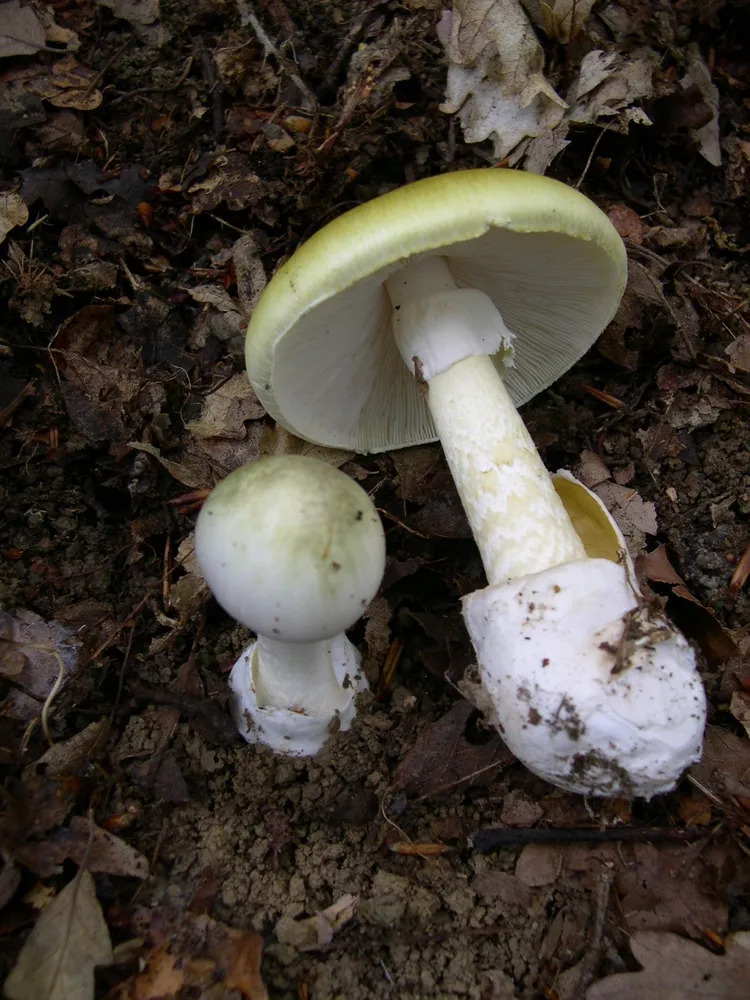
1. Brittlegill ↔ death cap
A green or whitish brittlegill is mistaken for the deadly death cap.
Key: the death cap has a ring and a volva with a bulb at the base; a brittlegill has neither.
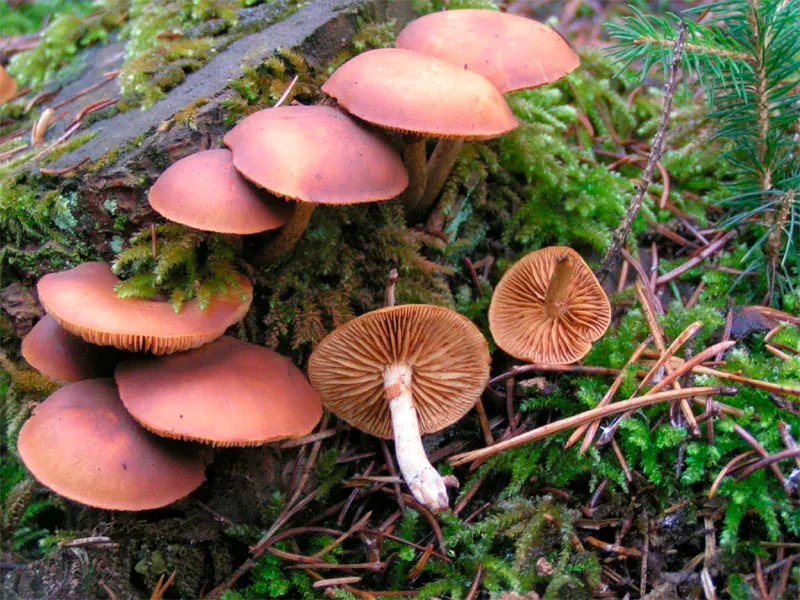
2. Sheathed woodtuft ↔ Galerina
Sheathed woodtuft on a stump looks like the deadly Galerina.
Key: pick these only from dense clusters on broadleaf wood, checking for the ring; small solitary “woodtufts” on conifer wood are not for picking.
3. Honey fungus ↔ false honey fungus
Real honey fungus gets confused with false honey fungus.
Key: real honey fungus has a ring on the stem and cream gills; false honey fungus has no ring, and its gills are greenish.
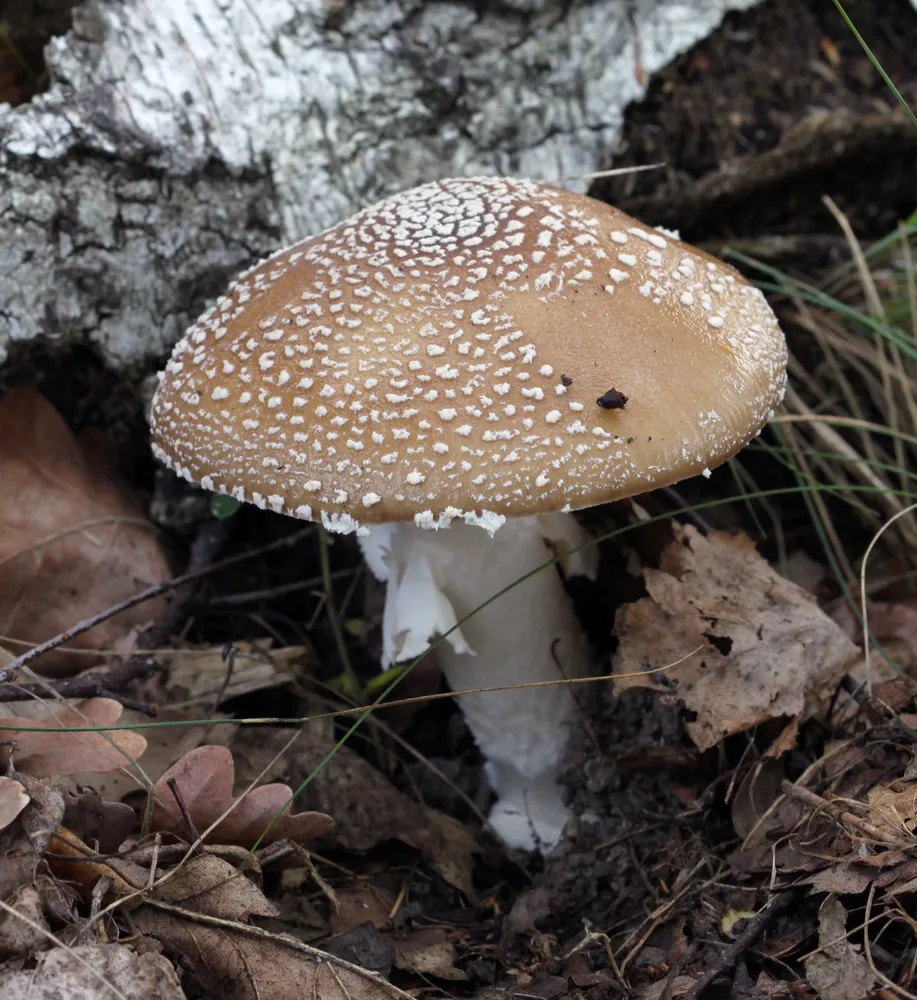
4. Parasol mushroom ↔ amanita
A young parasol is mistaken for the panther cap.
Key: a parasol has a movable ring and no volva; small “parasols” under 10 cm are better left alone.
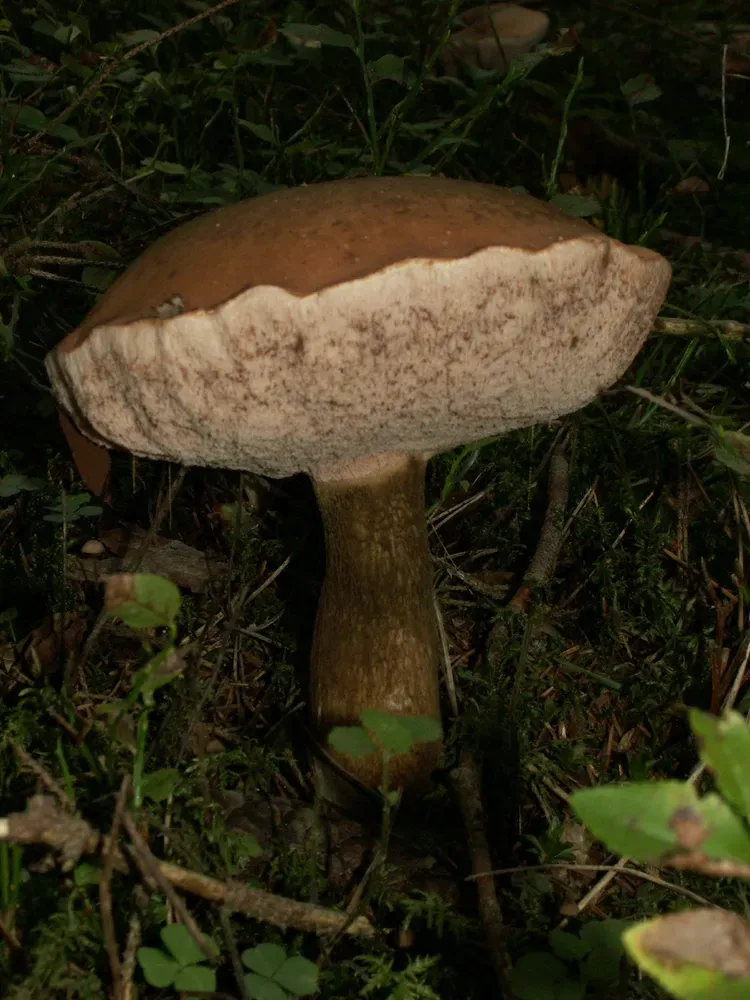
5. Porcini ↔ bitter bolete and devil's bolete
Porcini get confused with the bitter-tasting bitter bolete and the poisonous devil's bolete.
Key: in porcini the tube layer is white or yellowish and the flesh doesn't change color; a pink tube layer means bitter bolete, red pores mean devil's bolete.
6. Field mushroom ↔ death cap
A young field mushroom is mistaken for the death cap.
Key: field mushroom gills turn pink, then brown, and there's no volva at the base; death cap gills are always white and it has a volva.
7. Chanterelle ↔ false chanterelle
A real chanterelle is mistaken for the false one.
Key: the real one has false gills — fold-like “ridges” that run down the stem; the false one has true gills and an even orange color.
Key rules against lookalikes
- Check the base of the stem — a volva and bulb give away amanitas and the death cap.
- Look at the gills or tube layer — their color gives away the fake.
- Don't pick unfamiliar or doubtful mushrooms — no mushroom is worth the risk.
Sources
- “Key to the Fungi of Ukraine” (Kyiv, Naukova Dumka publishing house).
- Amanita phalloides, Galerina marginata in GBIF, the global biodiversity database.
- Amanita phalloides in MycoBank, the international fungal nomenclature database.
- Mushroom poisoning on Wikipedia.
Frequently asked questions
Why are most poisonings caused by lookalikes?
Because people pick a poisonous mushroom thinking it's a familiar edible one. Not knowing the “edible — poisonous” pairs, and haste, are the main causes.
Which lookalike is the most dangerous?
The death cap: it resembles brittlegills and field mushrooms, its toxin is deadly even in a small dose, and on top of that the symptoms are delayed.
How do you tell honey fungus from a poisonous lookalike?
Pick only dense clusters on broadleaf wood with a real ring on the stem and cream gills; avoid small solitary “honey fungus” on conifer wood.
How do you avoid confusing a parasol with an amanita?
A parasol has a movable ring and no volva at the base. Small “parasols” under 10 cm are better left alone — that's exactly where poisonous ones turn up.
What should you look at to spot a porcini lookalike?
The tube layer: pink means bitter bolete, red pores mean devil's bolete, white or yellowish means a true porcino.
Why check the base of the stem?
Because a volva and bulb at the base are the main sign of deadly amanitas and the death cap. If you cut the mushroom at ground level, it's easy to miss.
What should you do if you suspect poisoning by a lookalike?
Seek medical help immediately and keep the mushroom leftovers. With death cap poisoning, time is critical.
Can you learn to tell all the pairs apart?
Yes, the main pairs are quick to learn. But the rule still stands: an unfamiliar or doubtful mushroom stays in the forest.
Mushrooms in this article
Related articles
 Recipes & cooking
How to store fresh mushrooms, and for how long
Fresh mushrooms spoil faster than you might think. Here's how long they keep in the fridge, how to store them…
August 21, 2026·4 min How to identify
Truffles in Ukraine: do they grow here, and where to look
Truffles aren't just a French delicacy. Several species grow in Ukraine too. Here's which ones, where they occ…
August 24, 2026·2 min Safety
False morel: why this spring mushroom is dangerous
The false morel looks like a morel, but it contains a poison. Here's how to recognize it, why it's dangerous a…
August 24, 2026·2 min