Porcini is every forager’s dream, which is exactly why its impostors are so frustrating. Several boletes resemble porcini in shape and color, but one will ruin a dish with unbearable bitterness, and another can cause poisoning. Luckily, telling porcini from its lookalikes is easy once you know where to look.
Let’s go over the main poisonous and inedible porcini lookalikes and the reliable signs of a true porcini.
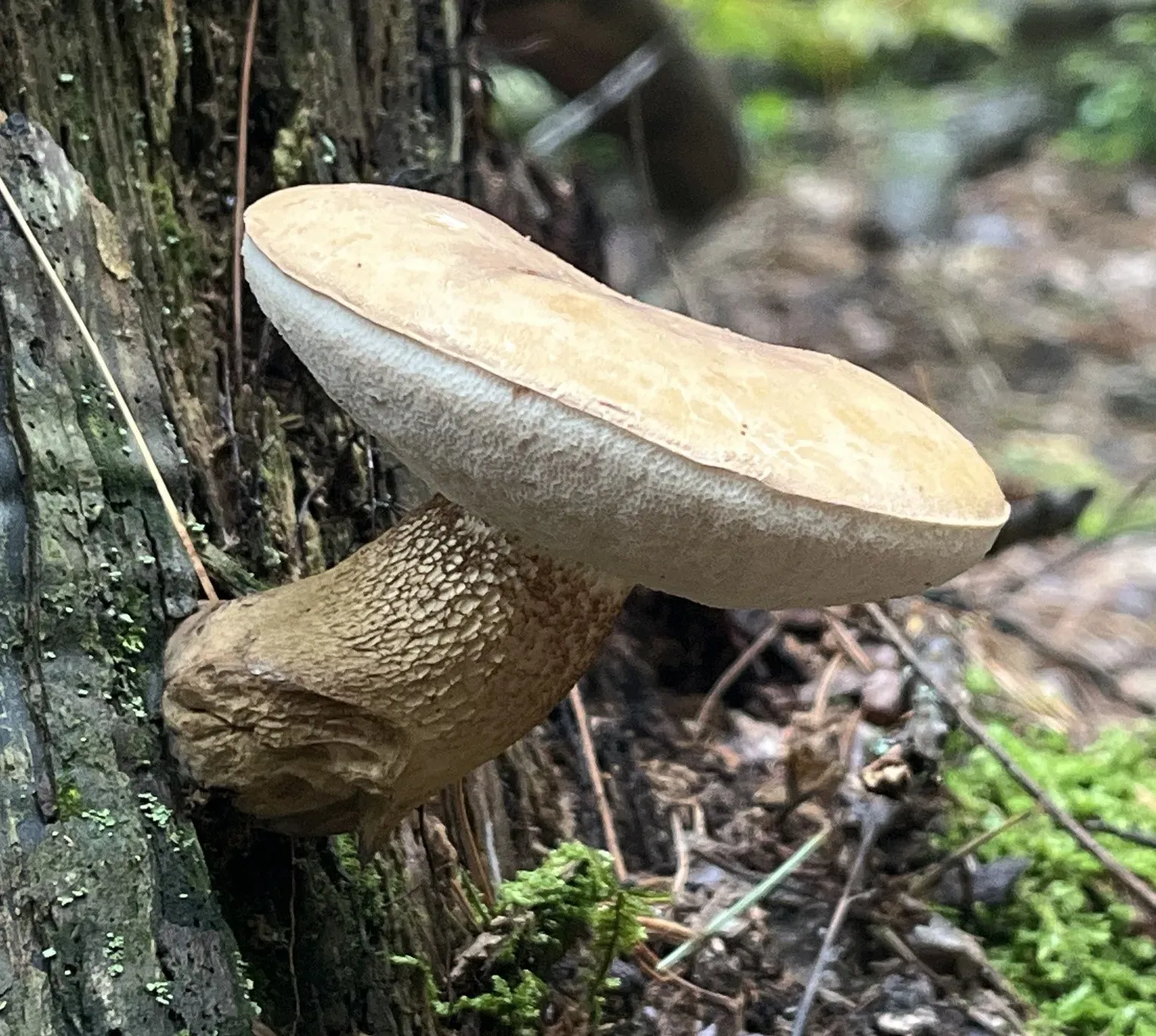
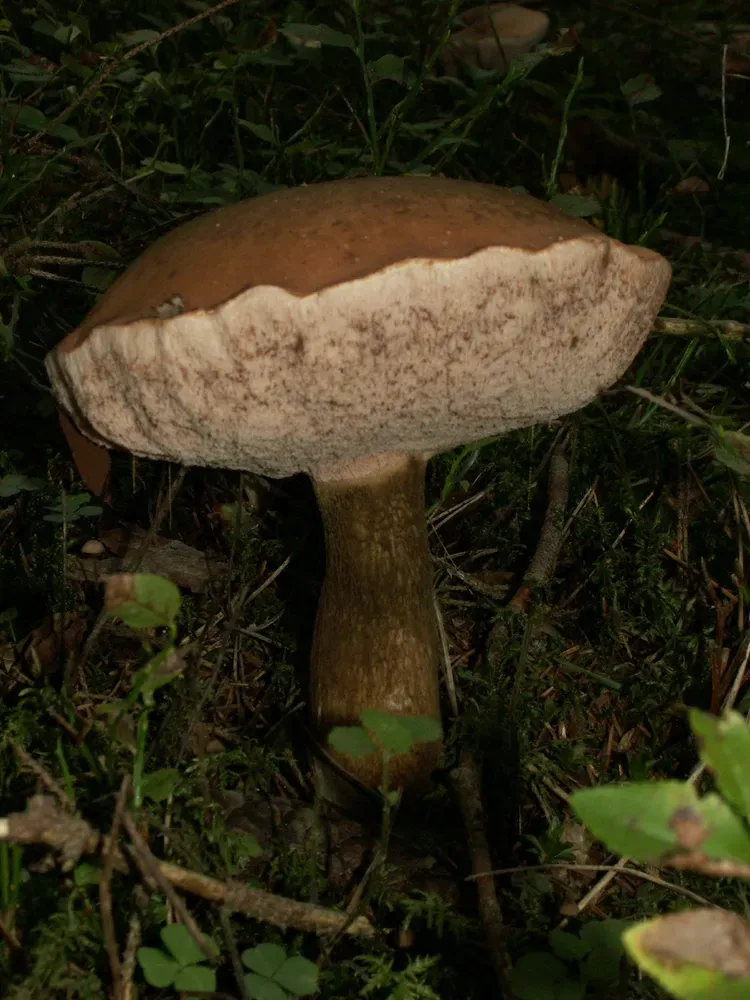
The bitter bolete — the most common lookalike
The bitter bolete isn’t poisonous, but it’s so bitter that even one mushroom spoils a whole pan.
- The tube layer gradually turns pink with age (in porcini it is white, then yellowish-greenish).
- The net on the stem is dark and coarse (in porcini it is pale and fine).
- The flesh often turns slightly pink when cut, and the taste is bitter.
Read about the bitter bolete in our separate article.
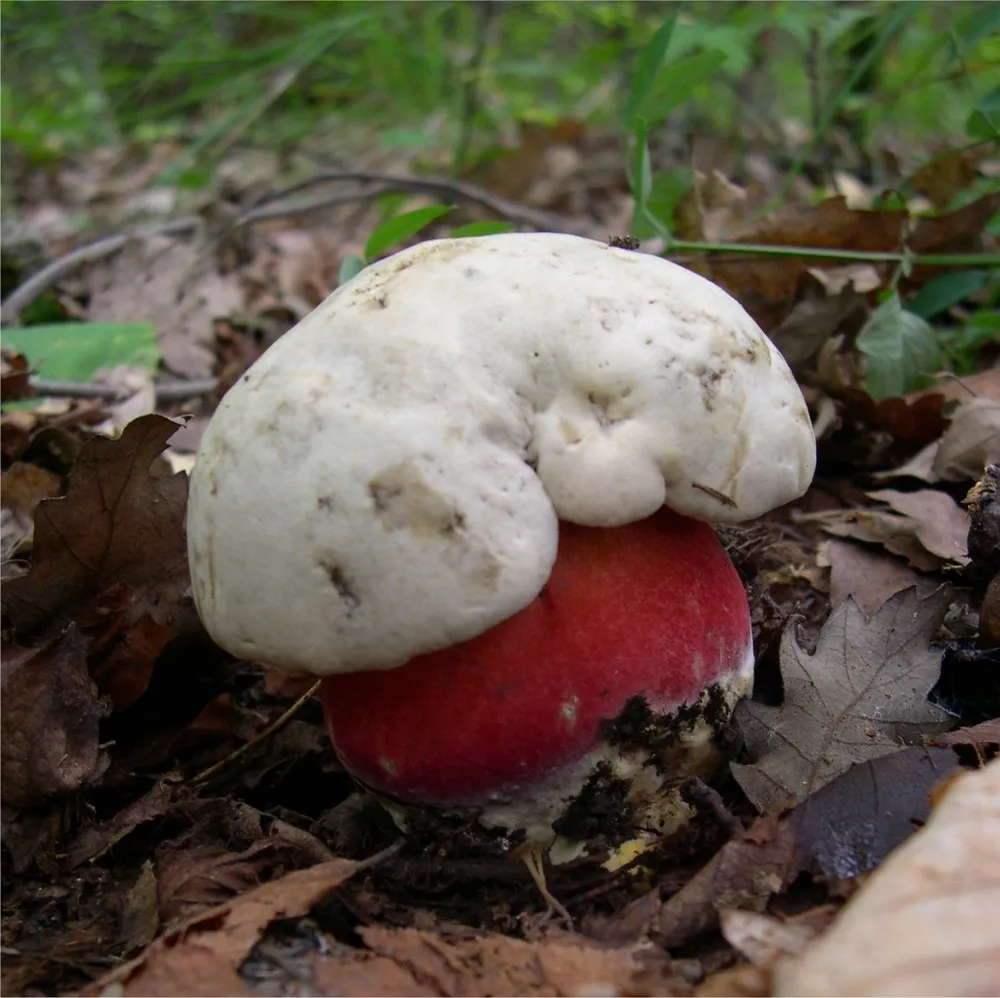
The devil’s bolete — a poisonous lookalike
A rare but dangerous guest of warm oak woods.
- The cap is whitish-gray.
- The tube layer and pores are reddish.
- The stem is thick, with a red net pattern.
- The flesh bruises blue when cut.
The devil’s bolete causes severe digestive upset, so it’s best not to take a bolete with red pores and a red stem.
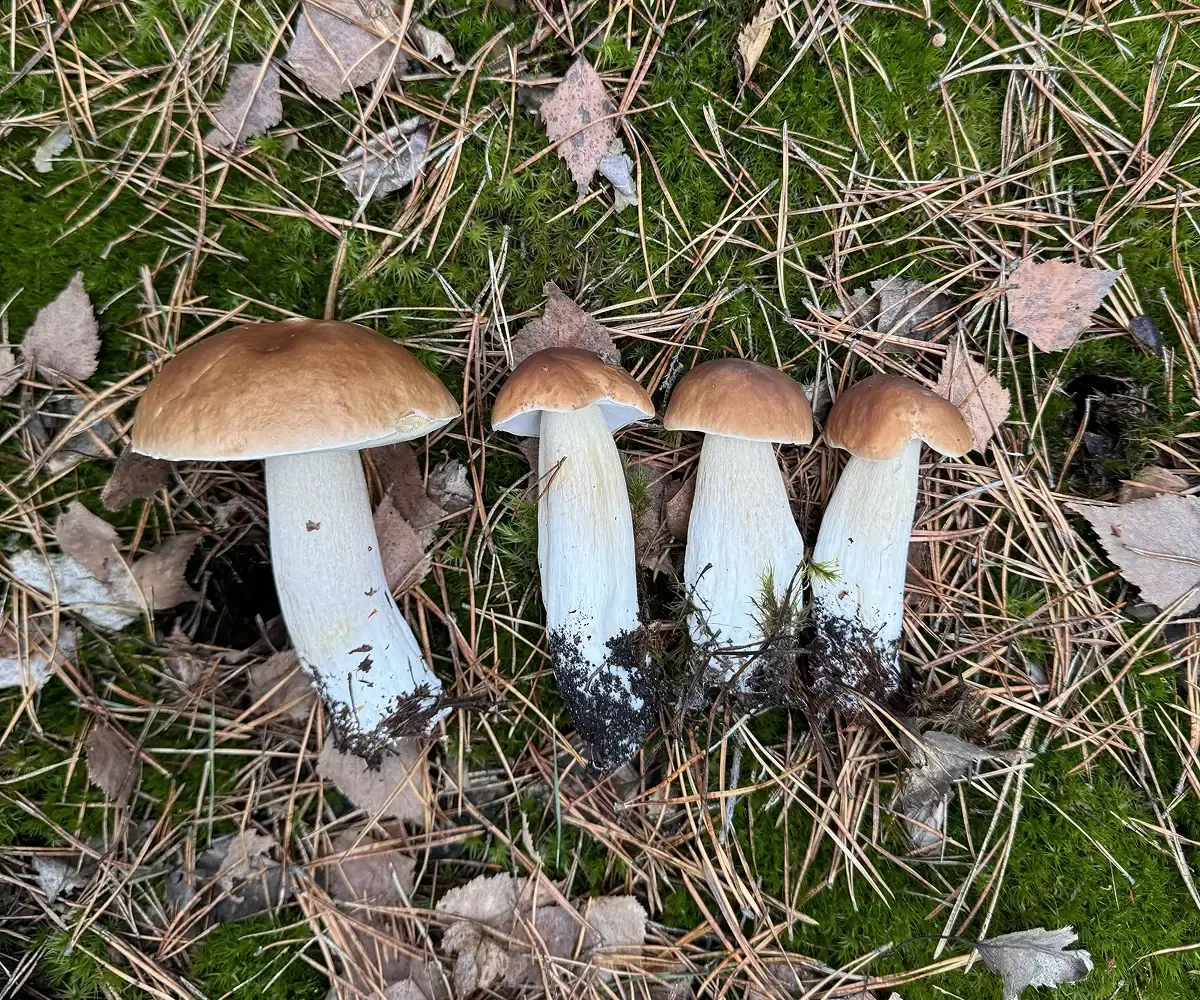
How to recognize a true porcini
- The tube layer is white, later yellowish-greenish — never pink or red.
- The flesh is white and, when cut, doesn’t change color (it doesn’t turn blue or pink).
- The taste is sweetish and pleasant, with no bitterness.
- The net on the stem is pale and fine.
Read about how a true porcini differs from its lookalikes in another article as well.
The main rule
- Look at the tube layer: pink means bitter bolete, red means devil’s bolete, white/yellowish means porcini.
- Check the cut: white flesh that doesn’t change is a sign of porcini.
- If in doubt, leave it — better to leave a mushroom behind than to ruin a dish or get poisoned.
Sources
- “Key to the Fungi of Ukraine” (Kyiv, Naukova Dumka publishing house).
- Tylopilus felleus, Rubroboletus satanas in GBIF, the Global Biodiversity Information Facility.
- Boletus edulis in MycoBank, the international fungal nomenclature database.
- Tylopilus felleus on Wikipedia.
Frequently asked questions
Which poisonous mushrooms look like porcini?
The most common lookalike is the bitter bolete (Tylopilus felleus): very bitter, but not poisonous. More dangerous is the rare devil’s bolete, which causes poisoning.
How do you tell porcini from the bitter bolete?
Porcini has a white or yellowish tube layer and sweet flesh, while the bitter bolete’s tube layer turns pink, the net on its stem is dark, and it tastes bitter.
How do you tell porcini from the devil’s bolete?
The devil’s bolete has reddish pores and a red net on the stem, and its flesh bruises blue when cut. Porcini has pale pores, and its flesh doesn’t change color.
Why does the bitter bolete ruin a dish?
It’s so bitter that even one mushroom makes a whole pan inedible. The bitterness doesn’t go away with cooking.
Can you get poisoned by the devil’s bolete?
Yes, it causes severe digestive upset. It’s best never to take a bolete with red pores and a red stem.
What should you look at first to recognize porcini?
The tube layer: in porcini it is white or yellowish-greenish, never pink or red. That’s your main guide.
Does porcini turn blue when cut?
No, the flesh of a true porcini doesn’t change color. Blue bruising is typical of the bay bolete or the lurid bolete, and red pores of the devil’s bolete.
What should you do if you’re not sure about a bolete?
Don’t take it. A bitter or poisonous lookalike isn’t worth the risk of ruining a dish or your health.
Mushrooms in this article
Related articles
 Recipes & cooking
How to store fresh mushrooms, and for how long
Fresh mushrooms spoil faster than you might think. Here's how long they keep in the fridge, how to store them…
August 21, 2026·4 min How to identify
Truffles in Ukraine: do they grow here, and where to look
Truffles aren't just a French delicacy. Several species grow in Ukraine too. Here's which ones, where they occ…
August 24, 2026·2 min Safety
False morel: why this spring mushroom is dangerous
The false morel looks like a morel, but it contains a poison. Here's how to recognize it, why it's dangerous a…
August 24, 2026·2 min