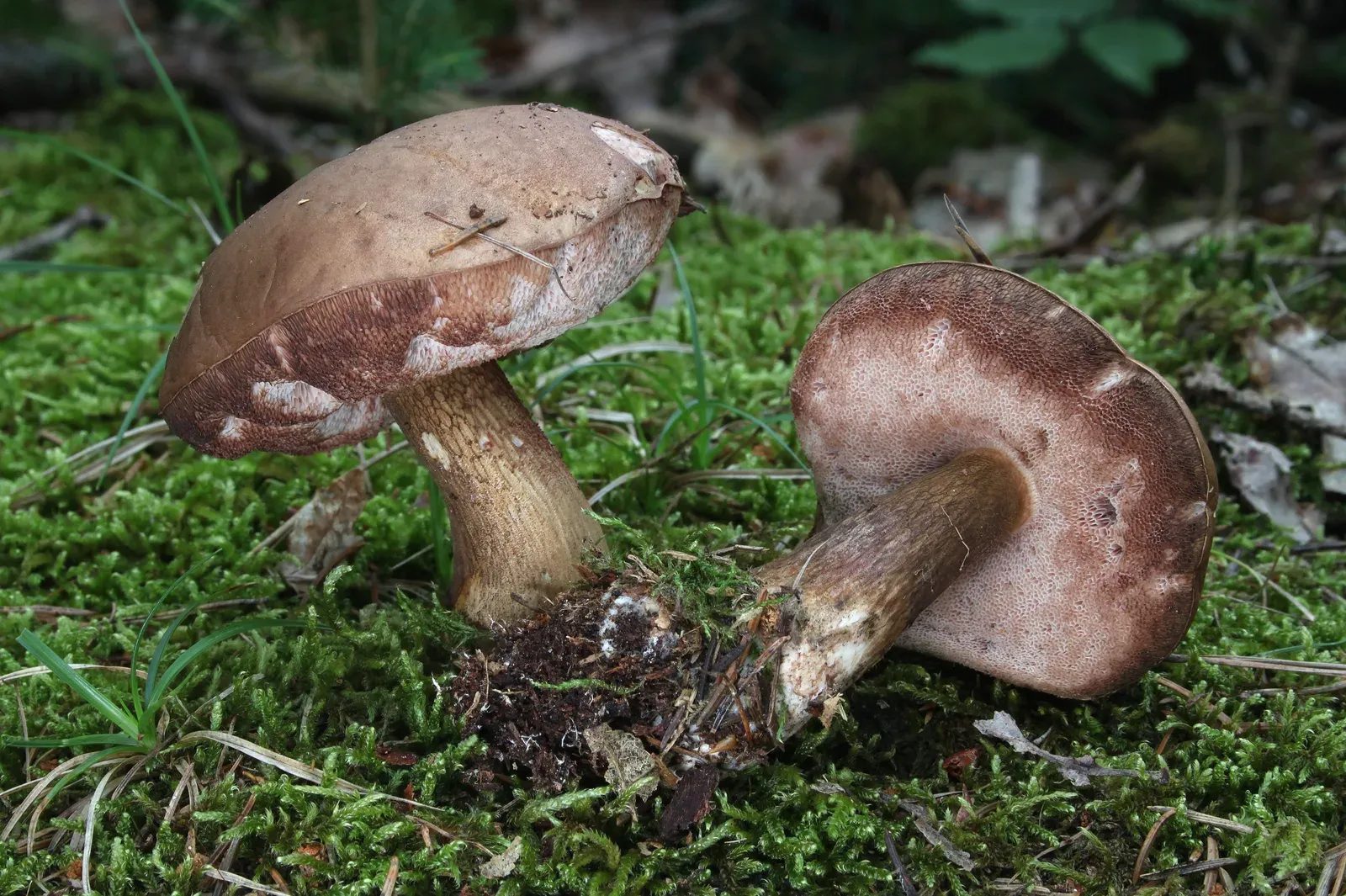
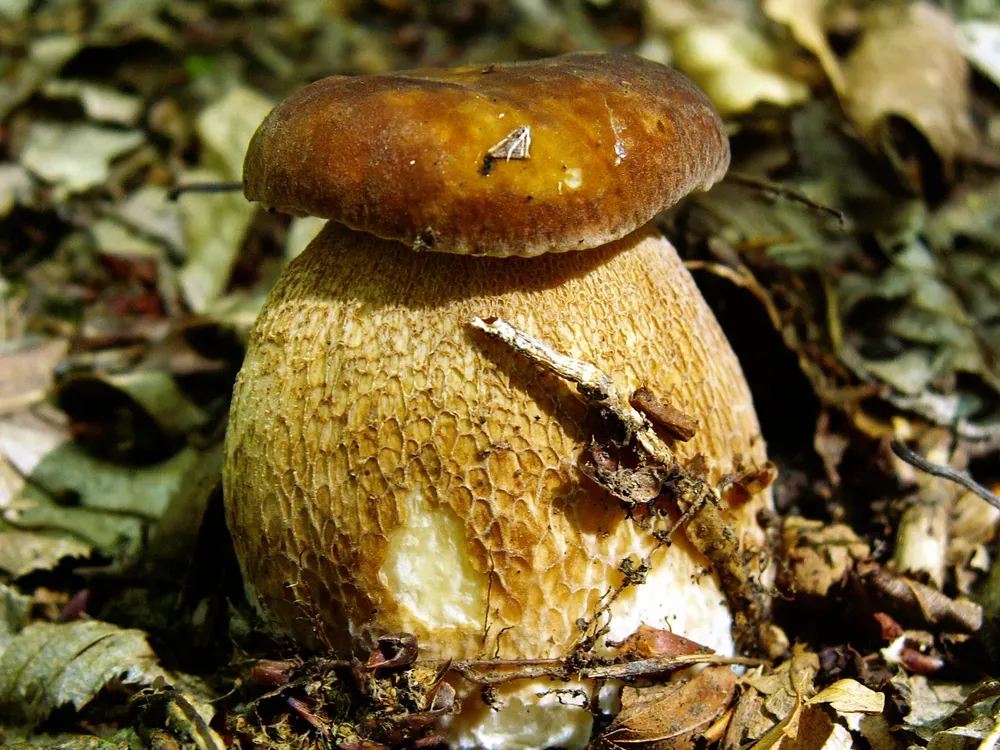
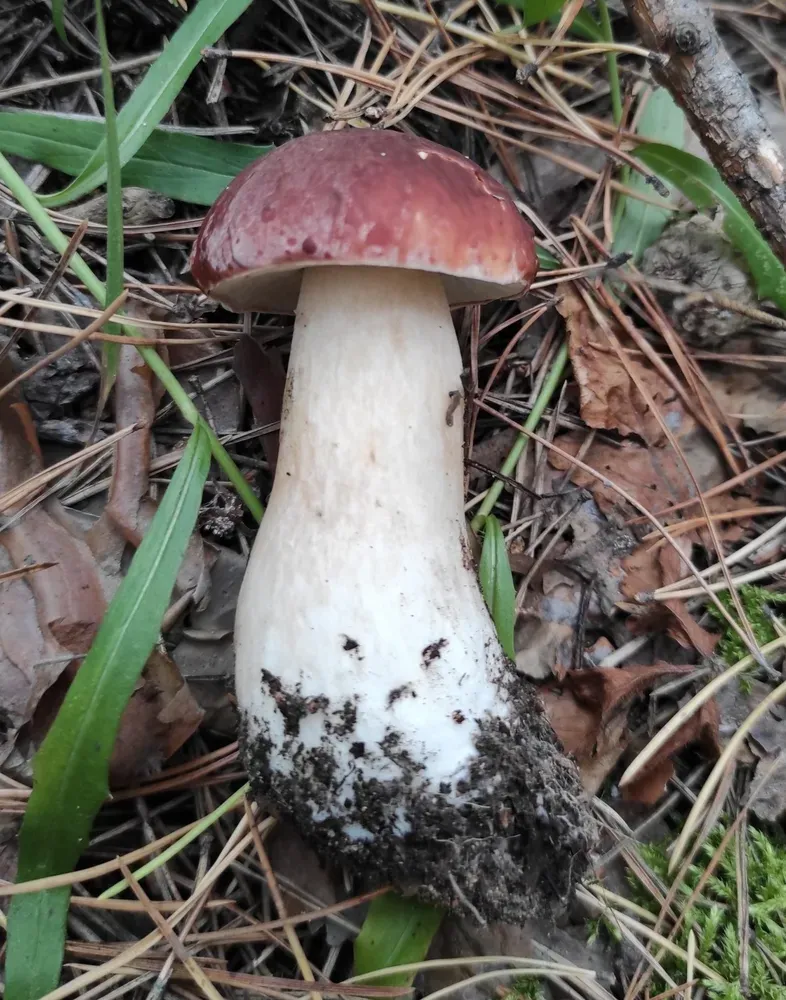
The summer bolete (Boletus reticulatus, in our catalog it's the summer bolete) comes up first, and it's beginners who most often confuse it with its neighbors. Most lookalikes give themselves away with one or two details; you just need to know where to look.
The good news is that there are almost no deadly poisonous ones among them in Ukrainian forests. The bad news: a single bitter mushroom can ruin a whole pot, and a few species are still best avoided. Let's go through them one by one.
The bitter bolete, the most common mistake
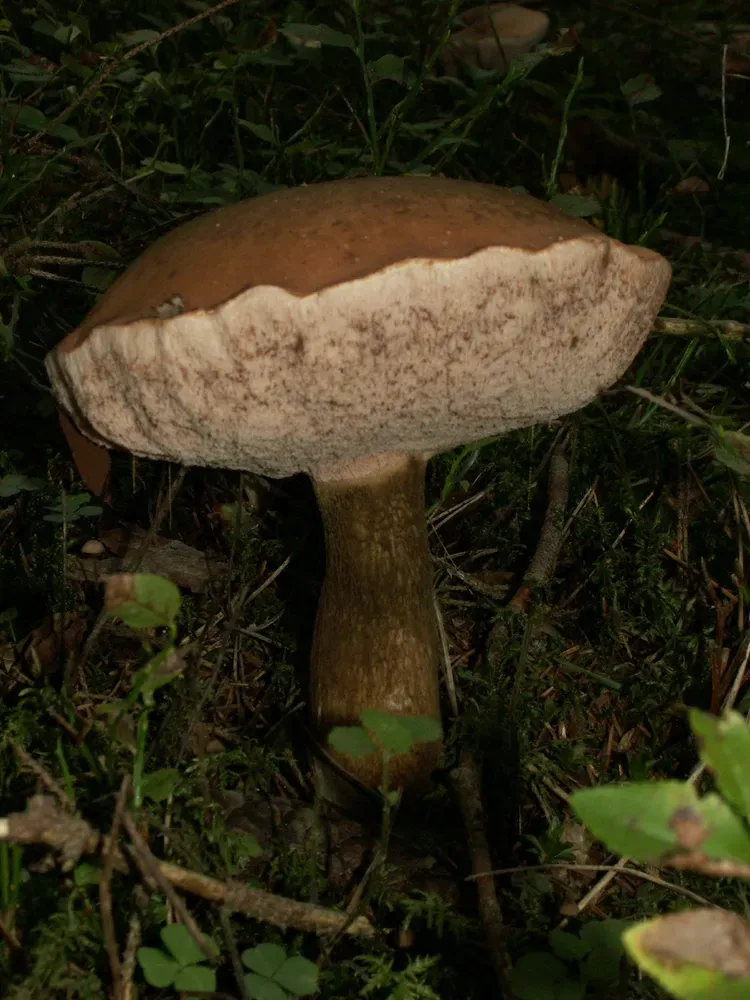
The first and sneakiest lookalike is the bitter bolete. From a distance it's almost a copy of the bolete: the same brown cap, sturdy stem and similar stance under a tree.
The underside of the cap gives it away. In a young bitter bolete the tube layer is white, but it quickly takes on a dirty pink tint. A true bolete is never pink, only white, yellow or olive with age.
The second clue is on the stem. The bitter bolete's net is dark, brown and sharply defined, while on the summer bolete it's pale. And the most reliable test: a tiny piece of bitter bolete on your tongue gives a sharp bitterness that doesn't go away. The bolete tastes mild and nutty.
The bitter bolete isn't poisonous, but even a single specimen makes a dish inedible. To remember the difference for good, take a look at our summer bolete vs. bitter bolete comparison right here.
The lurid bolete, the one that turns blue
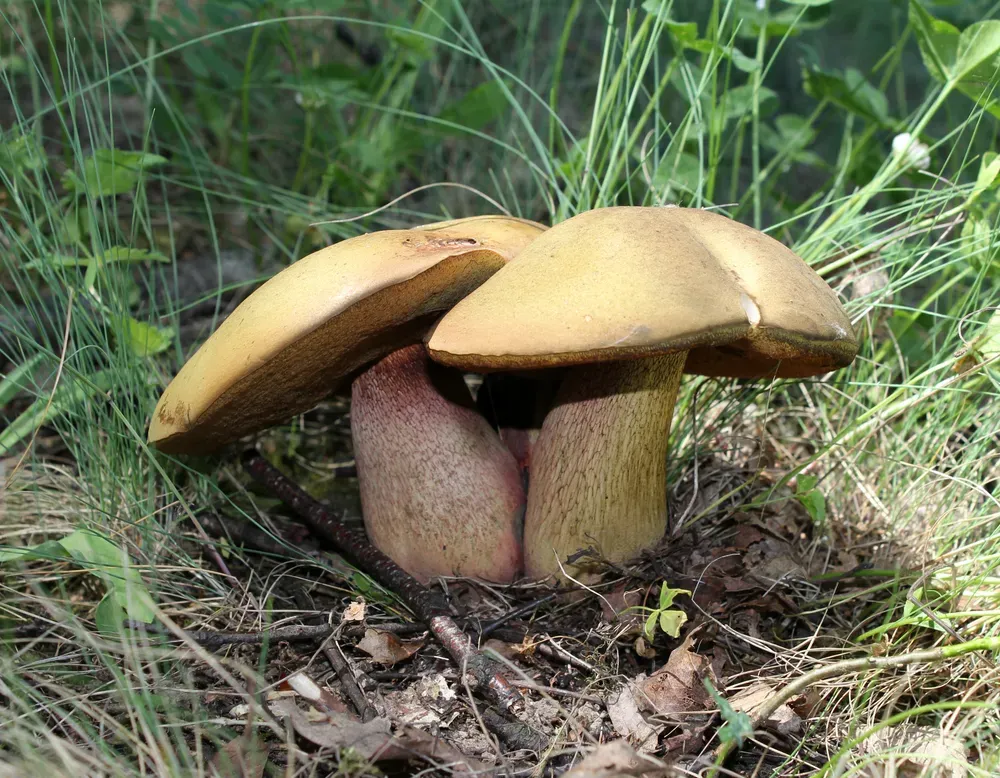
The second neighbor is the lurid bolete. It's also sturdy and dark-capped and also likes deciduous forests, so it turns up next to the summer bolete.
It's easy to tell apart by three signs. First, the underside of the cap isn't white but yellow or orange-reddish, with small reddish pores. Second, the stem often has a reddish tint. Third, and most important: the cut flesh of the lurid bolete quickly turns blue, sometimes almost black.
Remember a simple rule. The summer bolete stays white when cut; it doesn't turn blue or red. If the flesh changes color, what you're holding is no longer a porcini. The lurid bolete is edible after boiling, but a beginner is better off not taking it, so as not to confuse it with something worse. Details in the summer bolete vs. lurid bolete comparison.
The devil's bolete, the one to walk around
The most dangerous lookalike is the devil's bolete. Raw, it is poisonous and causes serious stomach upset, so it simply isn't picked.
You can recognize it by a combination of features:
- the cap is pale, grayish-white or with a dirty olive tone, not warm brown;
- the pores underneath are bright red or carmine-pink;
- the stem is thick and barrel-shaped, with a red net in the middle part;
- the cut flesh slowly turns blue, and an old mushroom gives off an unpleasant smell.
The bolete next to it looks completely different: a warm nut-brown cap, a white or yellow sponge, a pale net and a clean nutty smell. If you see red pores and a red net, don't guess; just leave the mushroom in the forest. Right alongside, we have put together a summer bolete vs. devil's bolete comparison.
Three checks that save you every time
You don't need to keep a dozen species in your head; three moves over every doubtful mushroom are enough:
- look at the underside of the cap: pink or bright red means it's not a summer bolete;
- cut the stem: bluing or reddening means a different species;
- check the net and the smell: the summer bolete has a pale net, a nutty smell and a taste that isn't bitter.
If all three checks point to the summer bolete, you can take it with confidence. If even one makes you wary, it's better to walk on by. The golden rule in the forest: if you're not sure, don't take it.
One more thing from experience. Most mistakes happen in a hurry, when the basket is already full and the eye “fills in” what it wants to see. So look at a doubtful mushroom separately rather than tossing it onto the pile before checking.
An easy way to track when boletes are really coming up is our mushroom radar: on good days there are plenty of mushrooms, and no temptation to grab everything in sight.
Sources
- “Identification Guide to the Fungi of Ukraine” (Kyiv, Naukova Dumka publishing house).
- Boletus reticulatus on GBIF, the global biodiversity database.
- Tylopilus felleus on MycoBank, the international fungal nomenclature database.
- Boletus reticulatus on Wikipedia.
Frequently asked questions
Which mushroom looks most like a porcini?
The bolete is most often confused with the bitter bolete. It has the same brown cap and sturdy stem, but its underside turns pink with age, its net is dark and its taste is sharply bitter. The summer bolete, by contrast, has a pale net and a mild, nutty taste.
Why is my porcini bitter?
Most likely it wasn't a summer bolete but a . It isn't poisonous, but the bitterness doesn't go away with cooking and ruins the whole dish. Next time, lick a tiny piece of the cut surface: a sharp bitterness gives away the bitter bolete right away.
Which porcini lookalike turns blue when cut?
The lurid bolete turns blue, and so does the devil's bolete, more slowly. A true summer bolete stays white when cut. So flesh turning blue is a signal that you're looking at a different species.
Does the porcini have poisonous lookalikes?
Yes, the devil's bolete. Raw, it is poisonous and causes severe digestive upset. You can recognize it by its bright red pores, red net on the stem and pale cap.
What does a yellow or red cap underside mean?
A yellow or reddish underside with red pores is found on the lurid bolete and the devil's bolete. In the summer bolete the sponge is white, then yellowish and olive, but never red or pink.
How can you tell a summer bolete from a bitter bolete for sure?
Look at three things: the underside of the cap (on the summer bolete it doesn't turn pink), the net (pale on the summer bolete, dark on the bitter bolete) and the taste (the summer bolete is sweetish and nutty, the bitter bolete sharply bitter). Details are on the .
Can you eat the lurid bolete?
The lurid bolete is edible after thorough boiling, but a beginner shouldn't pick it, because it's easy to confuse with more dangerous species. If you're not one hundred percent sure, it's better to leave it in the forest.
Where do lookalikes turn up most often?
In the same places as the summer bolete: in open , under oak and beech, on forest edges and in clearings. So check every mushroom you pick separately rather than relying on the spot.
What should I do if I'm not sure about a mushroom?
Don't take it. No mushroom is worth the risk. Look at a doubtful specimen separately, compare it with the description and photos, and at the slightest doubt leave it in the forest.
Mushrooms in this article
Related articles
 How to identify
Truffles in Ukraine: do they grow here, and where to look
Truffles aren't just a French delicacy. Several species grow in Ukraine too. Here's which ones, where they occ…
August 24, 2026·2 min Recipes & cooking
How to store fresh mushrooms, and for how long
Fresh mushrooms spoil faster than you might think. Here's how long they keep in the fridge, how to store them…
August 21, 2026·4 min Safety
False morel: why this spring mushroom is dangerous
The false morel looks like a morel, but it contains a poison. Here's how to recognize it, why it's dangerous a…
August 24, 2026·2 min