THIS DATA HAS NOT BEEN VERIFIED BY AN EXPERT. Use at your own risk.
Lurid boleteSuillellus luridus
Under reviewUpdated October 3, 2026
Passport
- Edibility
- Conditionally edible
- Season
- Jun — Oct
- Hymenophore
- Pored
- Cap color
- Brown
- Size
- Large (over 15 cm)
- Smell
- Pleasant
- Reviewed
- Under review
Quick answers
Where to look?
Deciduous forest, Mixed forest
When does it appear?
Jun — Oct
Active months: June, July, August, September, October.
How to recognize it? Three signs
- Cap color: Brown, Olive
- Cap shape: Convex
- Smell: Pleasant
Fruiting season
June – October
Description
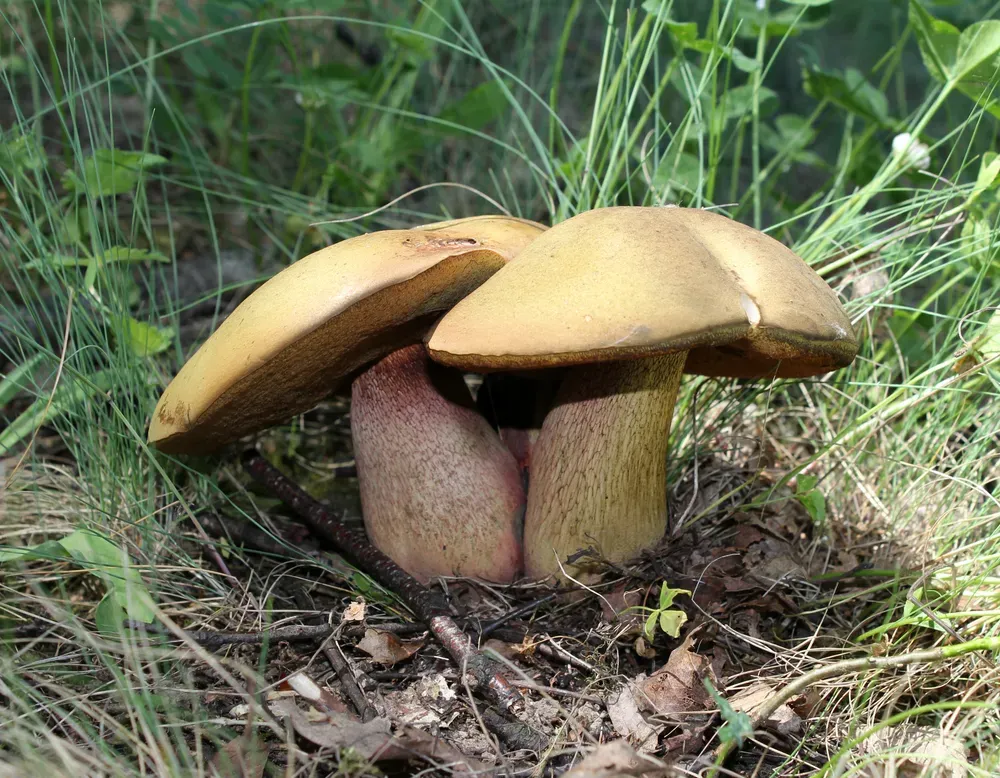
The lurid bolete, known to science as Suillellus luridus, is a noble yet treacherous relative of porcini, easy to recognize by its warm olive-brown cap and bright red pores. Its Ukrainian name, "dubovyk", comes from its close bond with oaks ("dub"), since it most often forms mycorrhiza with these trees, as well as with beech and linden. The lurid bolete prefers warm broadleaf forests on soils rich in lime, so its presence often signals fertile alkaline ground warmed by the summer sun.
In Ukraine, the lurid bolete occurs mainly in the southern and western regions, in the oak groves of the Forest-Steppe, in Podillia and in the Carpathian foothills. It fruits from early summer to mid-autumn, appearing most abundantly in June–August after warm rains. Thanks to its sturdy, fleshy build and pleasant flavor, this mushroom has long been valued by experienced foragers who know how to cook it properly.
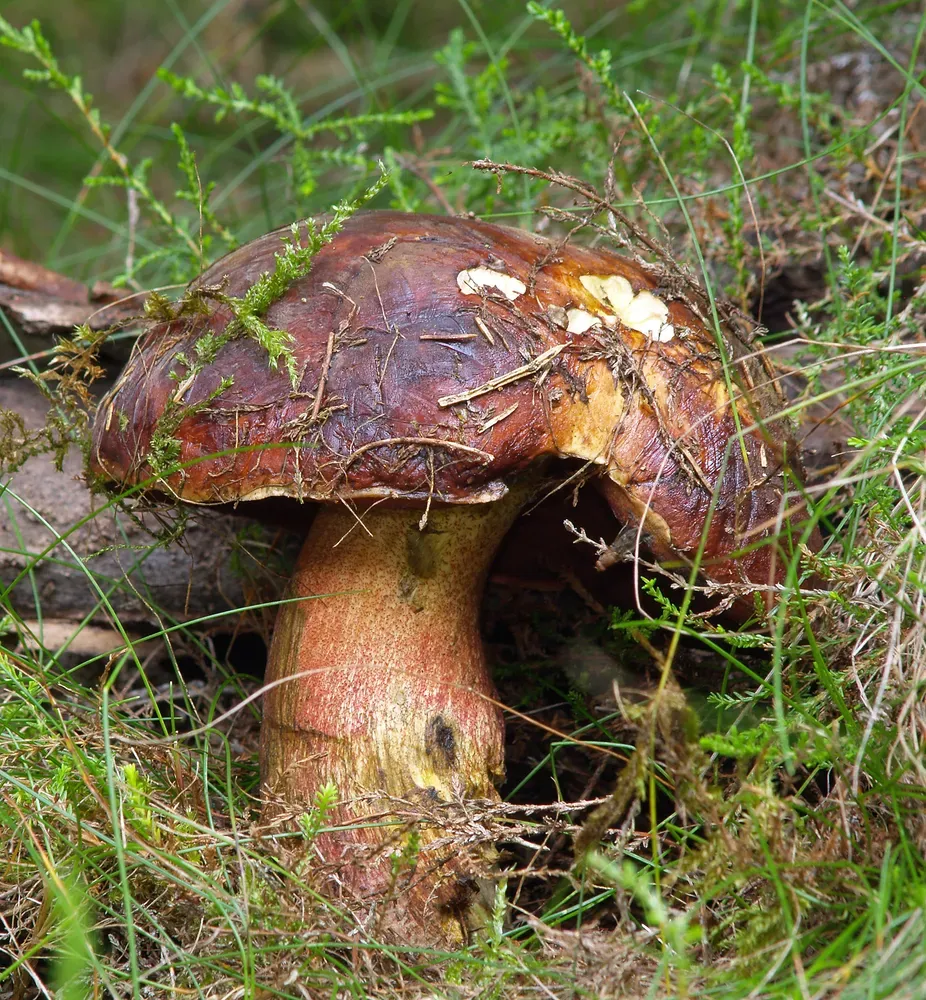
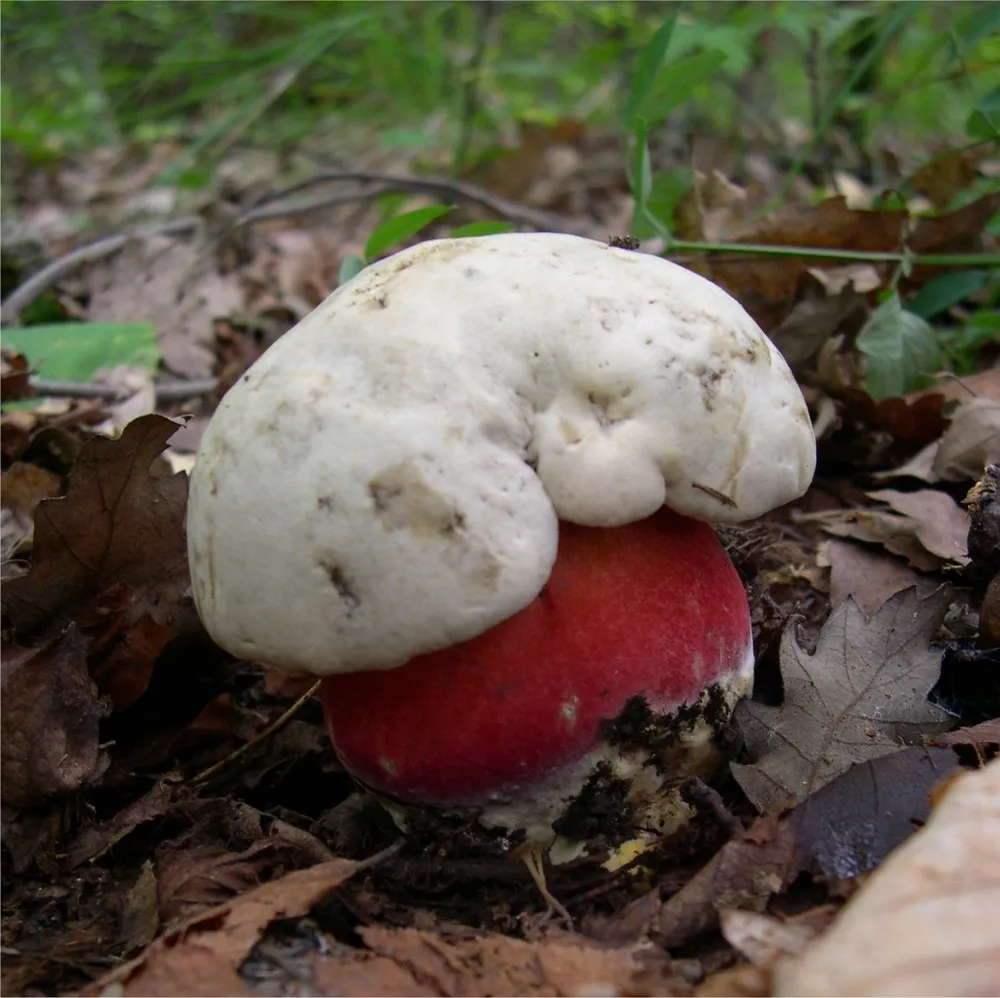
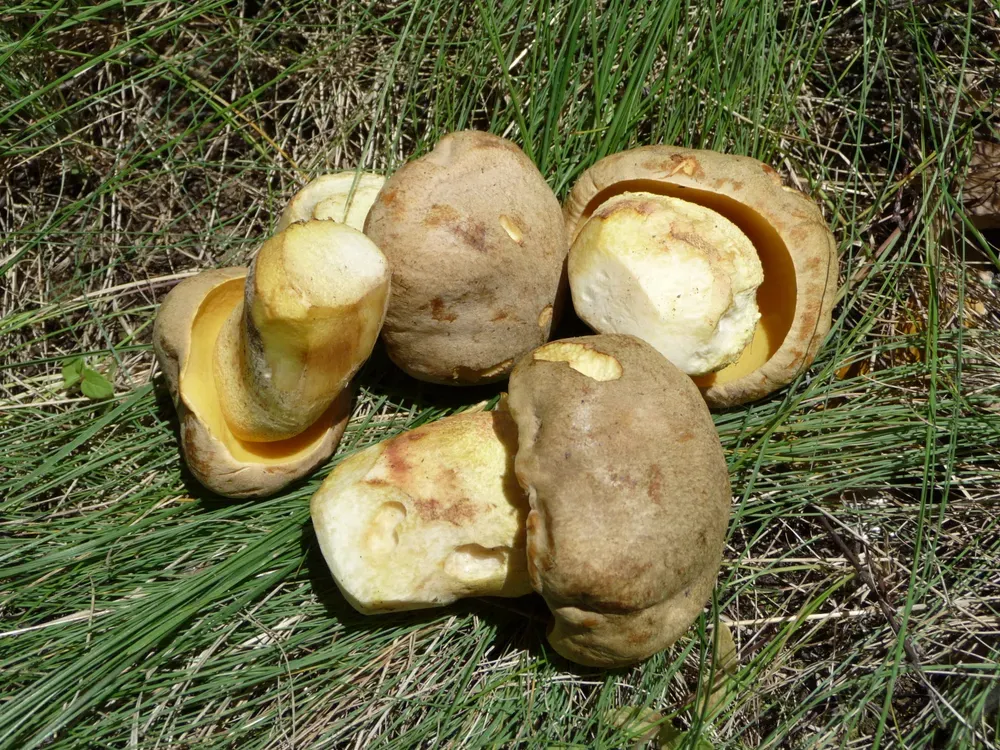
In terms of edibility, the lurid bolete is conditionally edible and must always be cooked. Raw, it is poisonous and causes digestive upset, and combining it with alcohol is considered especially dangerous — that pairing can trigger an unpleasant reaction in the body. However, after thorough boiling for 15–20 minutes with the water poured off, the lurid bolete becomes tasty and safe. As with other red-pored boletes, the main caution is to confidently tell it apart from the poisonous devil's bolete.
Cap
The cap of the lurid bolete is large and fleshy, reaching 8 to 20 centimeters across. When young it is hemispherical, becoming convex and cushion-shaped with age. The cap surface is dry, finely velvety or felty to the touch, and slightly greasy-shiny in wet weather. The color is warm and variable — from olive-yellowish and gray-brown to ochre-brown and clay-colored, often with a pinkish sheen. When pressed, the cap surface darkens and develops blue-green spots, which instantly gives away the nature of this mushroom.
Hymenophore
Under the cap lies a tubular hymenophore with bright, rich orange-red or blood-red pores that contrast sharply with the yellowish-olive tubes. It's these red pores that put the lurid bolete in the group of "dangerous-looking" boletes. At the slightest touch the pores instantly turn blue, flooding with a dark blue color. A characteristic microscopic feature of the species is a thin reddish layer between the tubes and the cap flesh, visible in a lengthwise cut.
Stem
The stem of the lurid bolete is sturdy and massive, 8 to 15 centimeters tall, noticeably thickened or club-shaped and swollen at the base. Its main diagnostic feature is a distinct net pattern: a raised reddish net stands out clearly against a yellow-orange background, covering almost the entire surface of the stem. It's this red net that reliably distinguishes the lurid bolete from the scarletina bolete, whose stem is covered in separate dots rather than a net. When touched, the stem quickly turns blue. There is no ring and no volva.
Flesh
The flesh of the lurid bolete is thick, dense and fleshy, lemon yellow in a fresh cut, and often wine-reddish near the base of the stem. Its most striking trait is rapid, vivid bluing on exposure to air: as soon as the mushroom is cut, the flesh floods with a thick dark blue color within seconds. This dramatic reaction is typical of the species and helps with identification. Raw flesh tastes mild, with no bitterness, but you absolutely should not taste it raw, because the uncooked mushroom is toxic.
Smell
The smell of the lurid bolete is faint, pleasant and gently mushroomy, sometimes with a barely noticeable fruity note. The aroma carries no warning and may even seem appealing, so don't rely on it for identification — the main guides remain the red pores, the red net on the stem and the rapid bluing of the flesh.
›Scientific synonyms (3)
Boletus luridus, Tubiporus luridus, Dictyopus luridus
Lookalikes
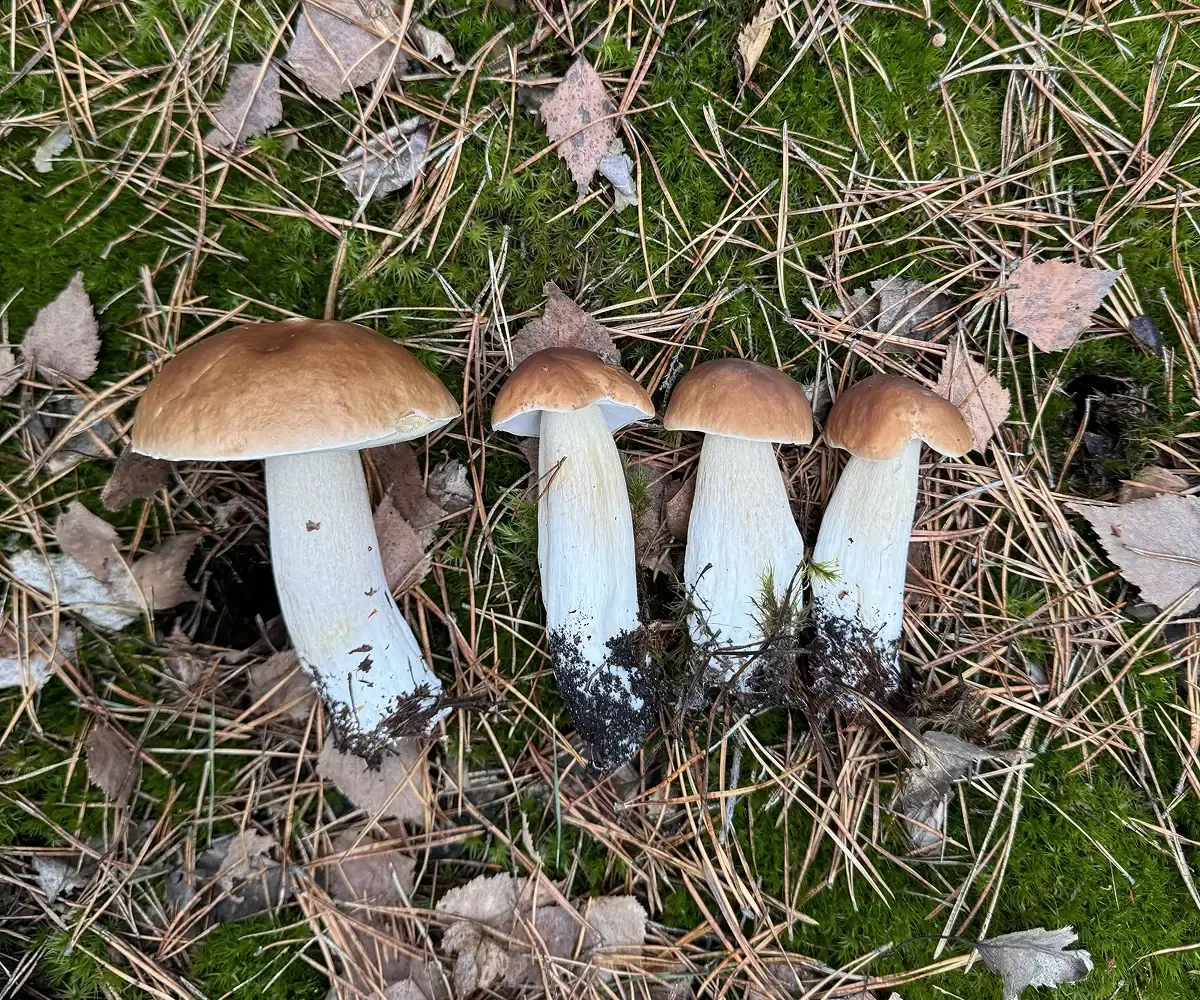
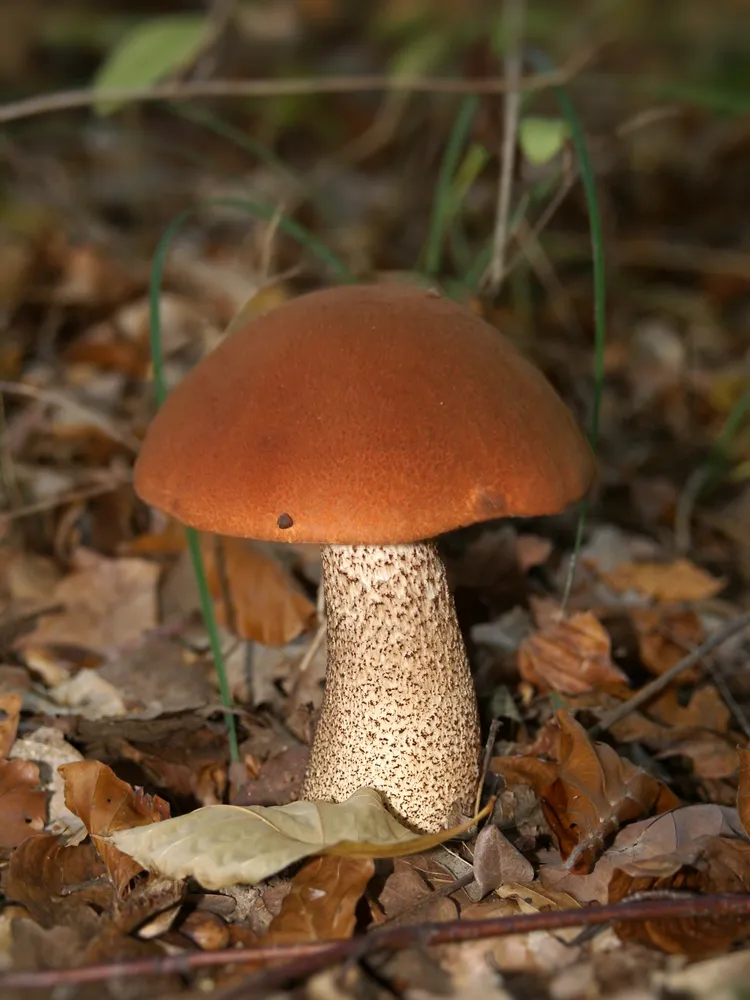
Related species
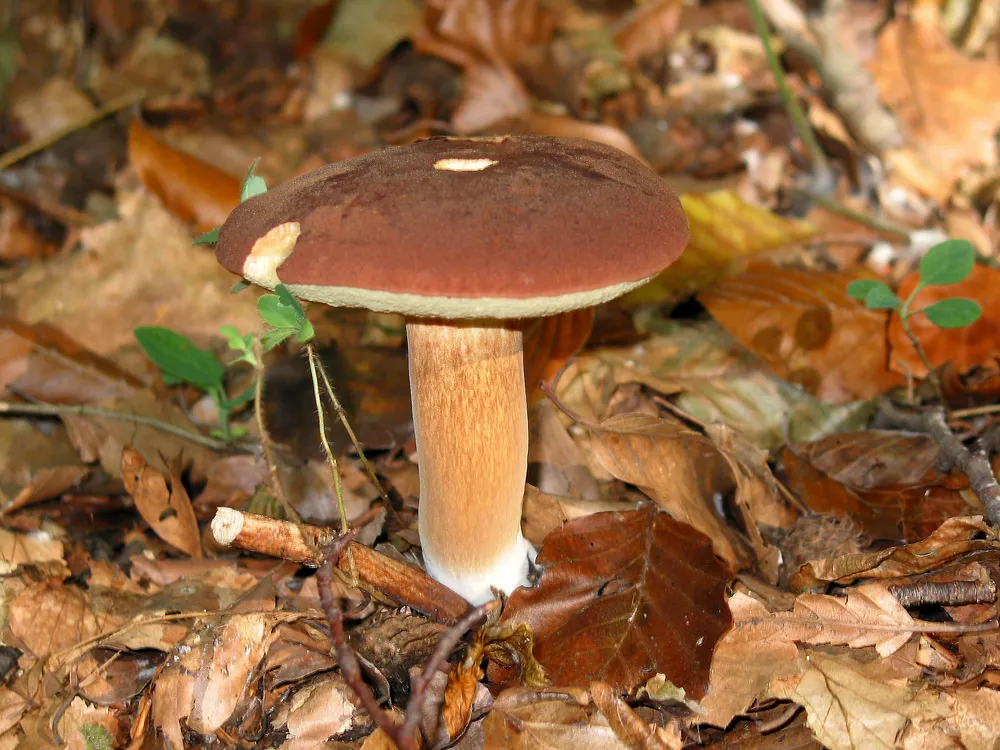
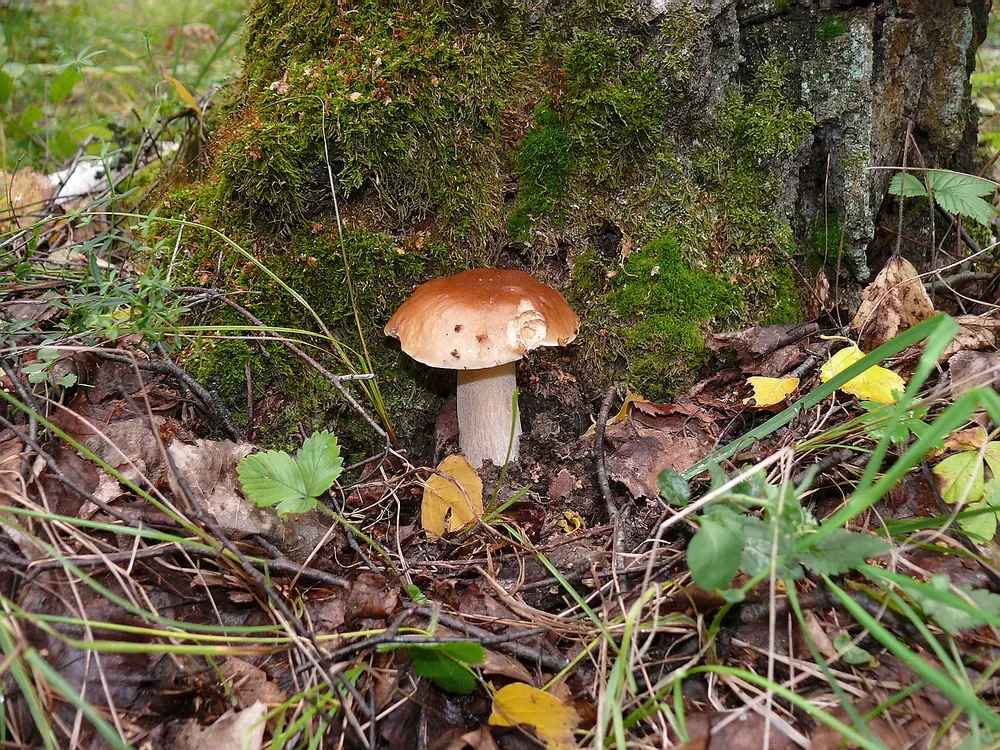
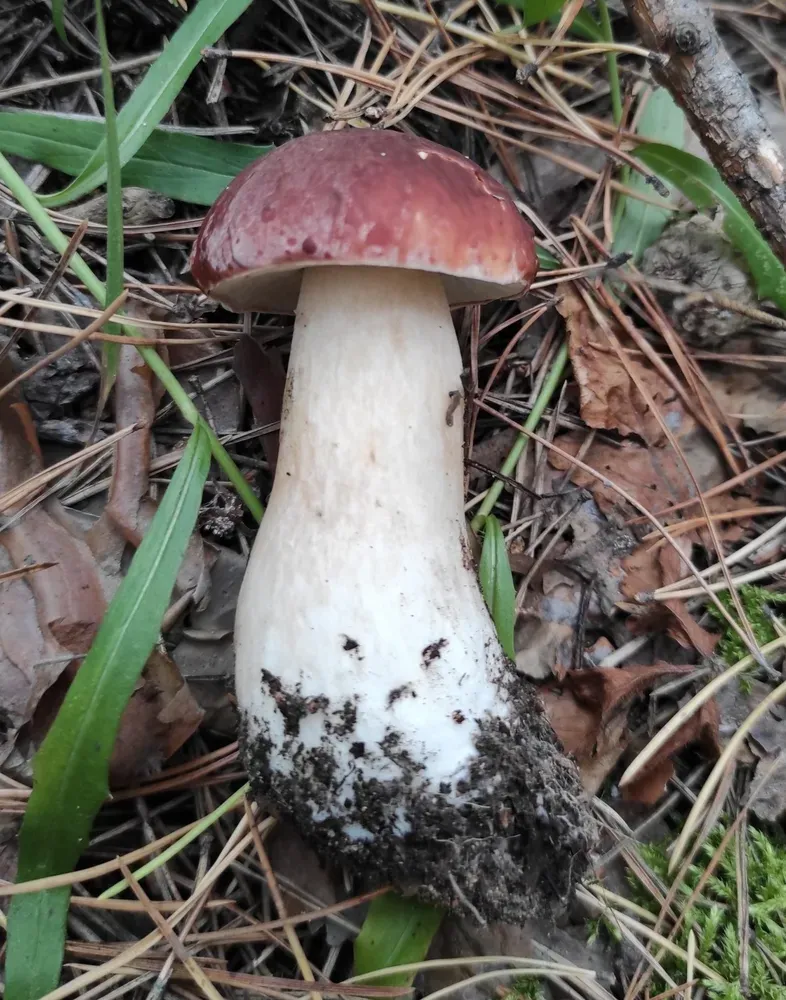
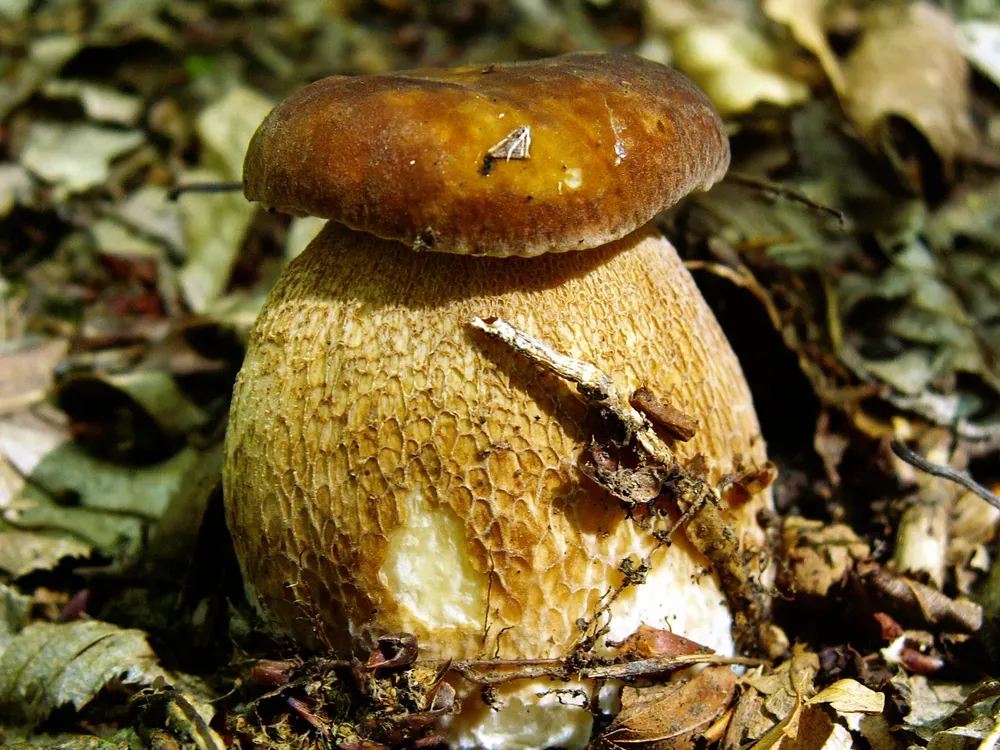
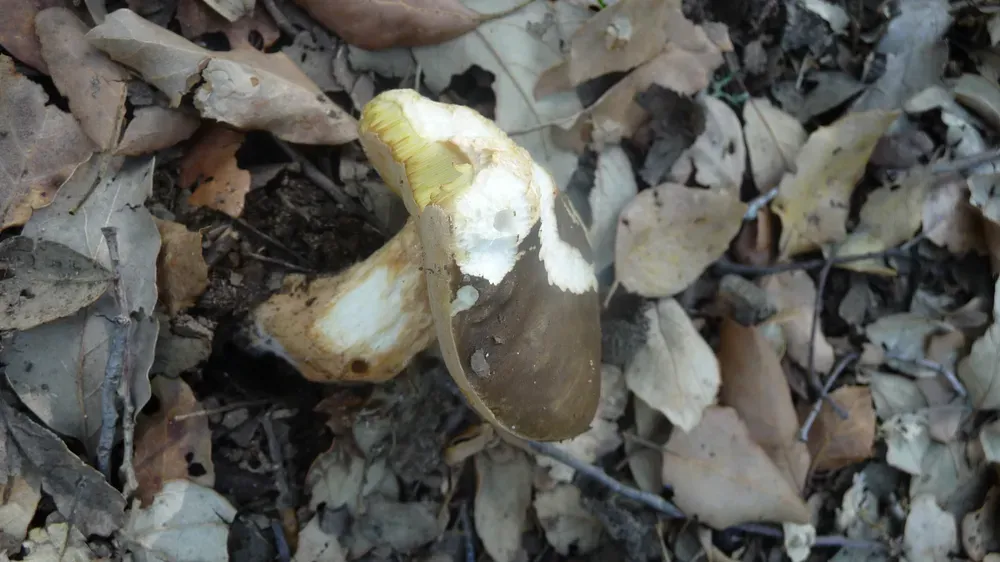
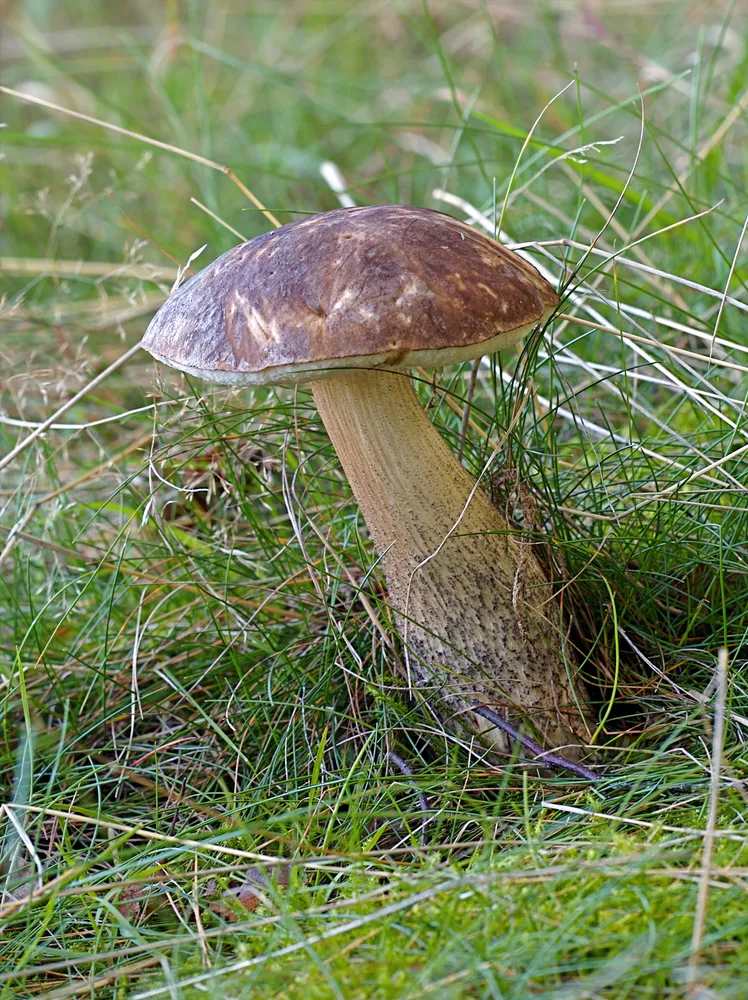
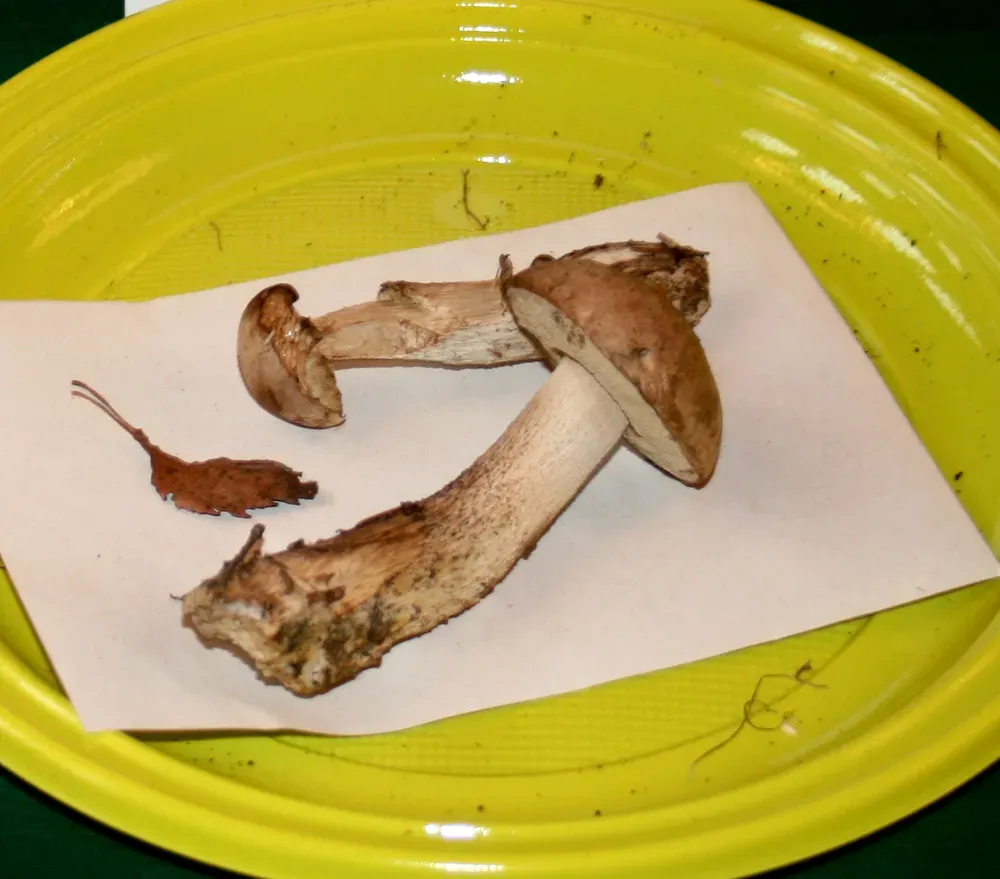
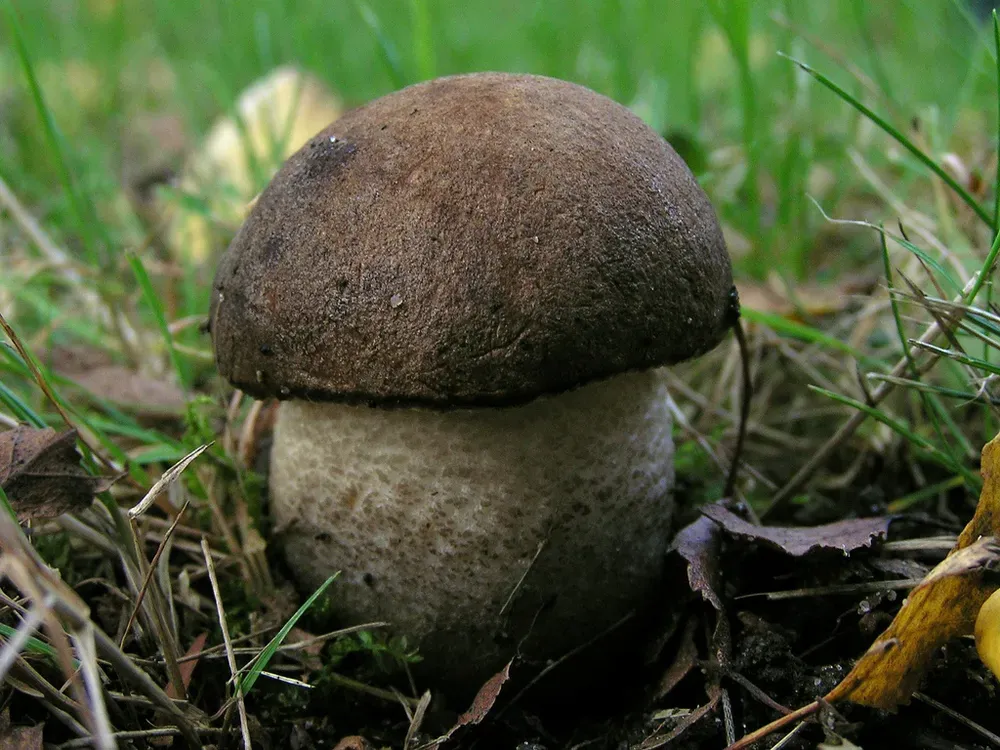
Mushrooms of the same genus and habitat — to study side by side and never mix up.
Related reading
 Where & when to forage
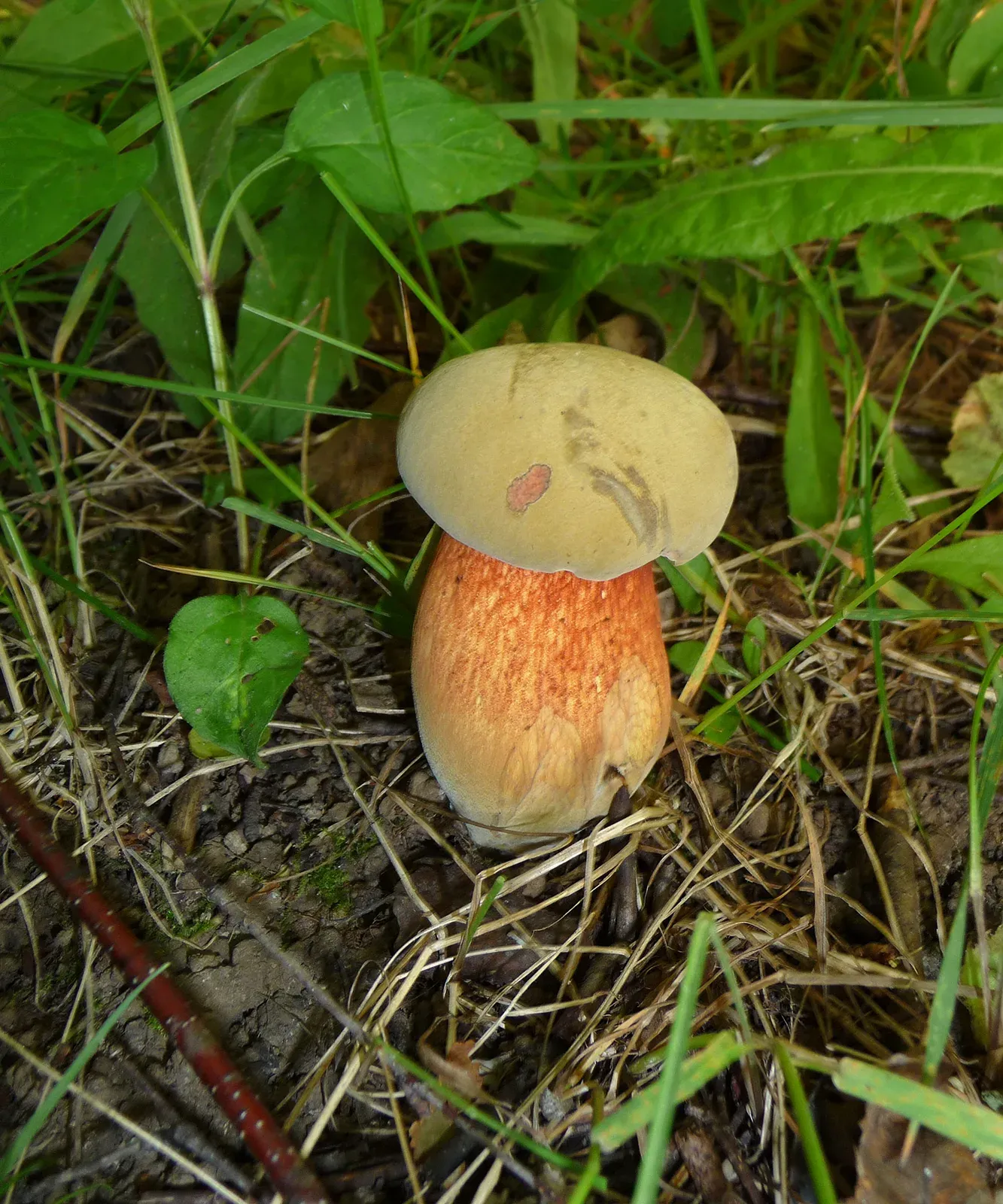
Oak boletes: when they grow, where to look, and are they edible?
The lurid bolete is a sturdy bolete of oak woods that turns blue when cut and scares beginners. In fact it's t…
July 15, 2026·2 min.webp) Where & when to forage
Where & when to foragePorcini in June: where to find the first summer boletes
June brings the first porcini of the season. Here's which bolete shows up this early, where to look for it, an…
June 2, 2026·4 min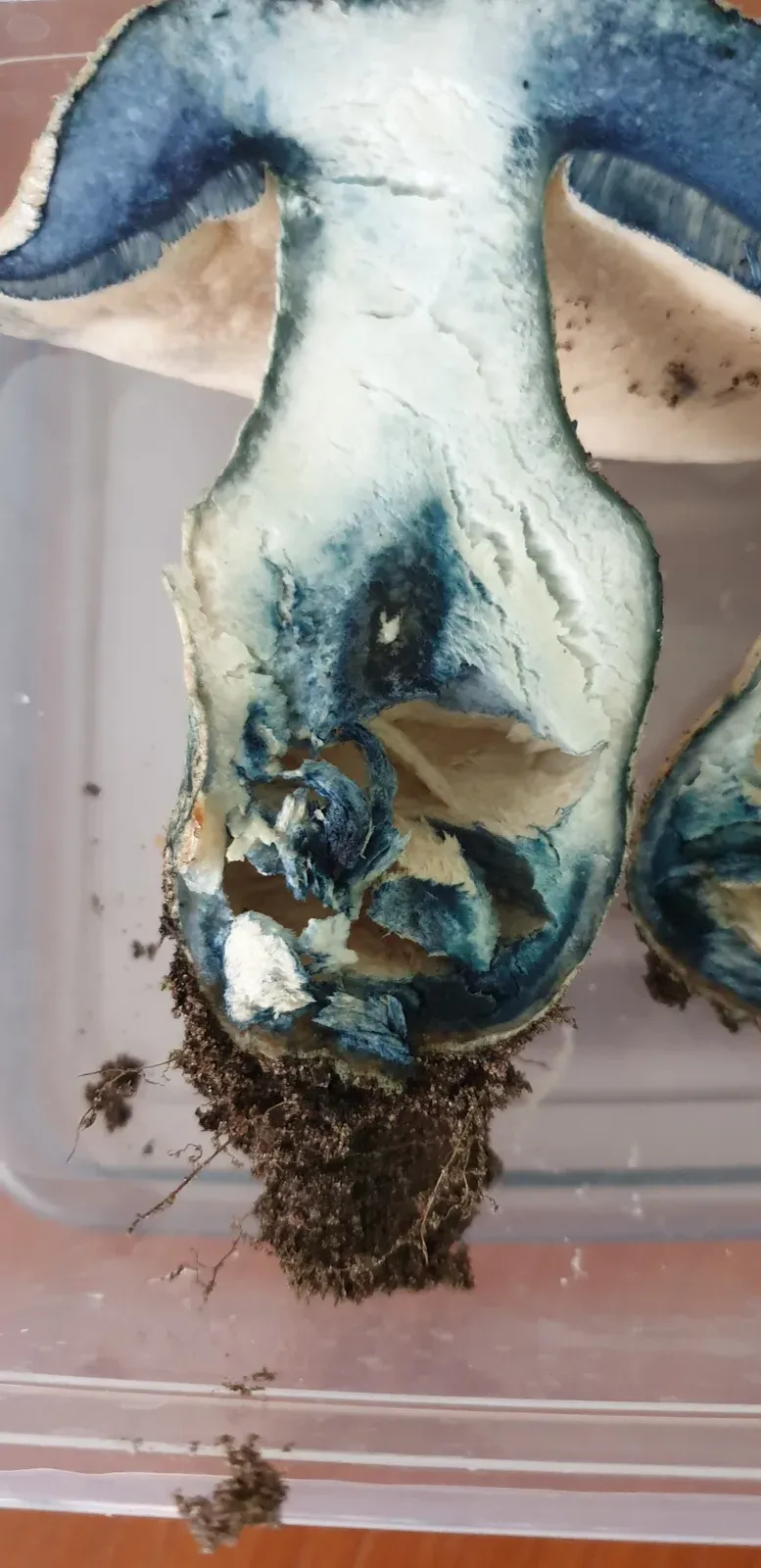 How to identify
Blue-bruising boletes: which ones turn deep blue when cut
The folk name “syniak” (“bruise”) is given to several boletes that instantly turn blue when cut. We explain wh…
May 31, 2026·6 min
Frequently asked questions
Is Lurid bolete edible or poisonous?
Does Lurid bolete have gills or pores?
What does the cap of Lurid bolete look like?
What does the stem of Lurid bolete look like?
What do Lurid bolete smell and taste like?
Where does Lurid bolete grow?
Which trees does Lurid bolete grow under?
When should you pick Lurid bolete?
What can Lurid bolete be confused with?
How do you cook Lurid bolete?
Can you dry Lurid bolete?
What is the scientific name of Lurid bolete?
Sources
- [1]Вікіпедія (українська)
- [2]Атлас грибів України, Зеров Д.К. (1979)
- [3]MycoBank Database
- [4]Index Fungorum
- [5]GBIF
- [6]iNaturalist Ukraine