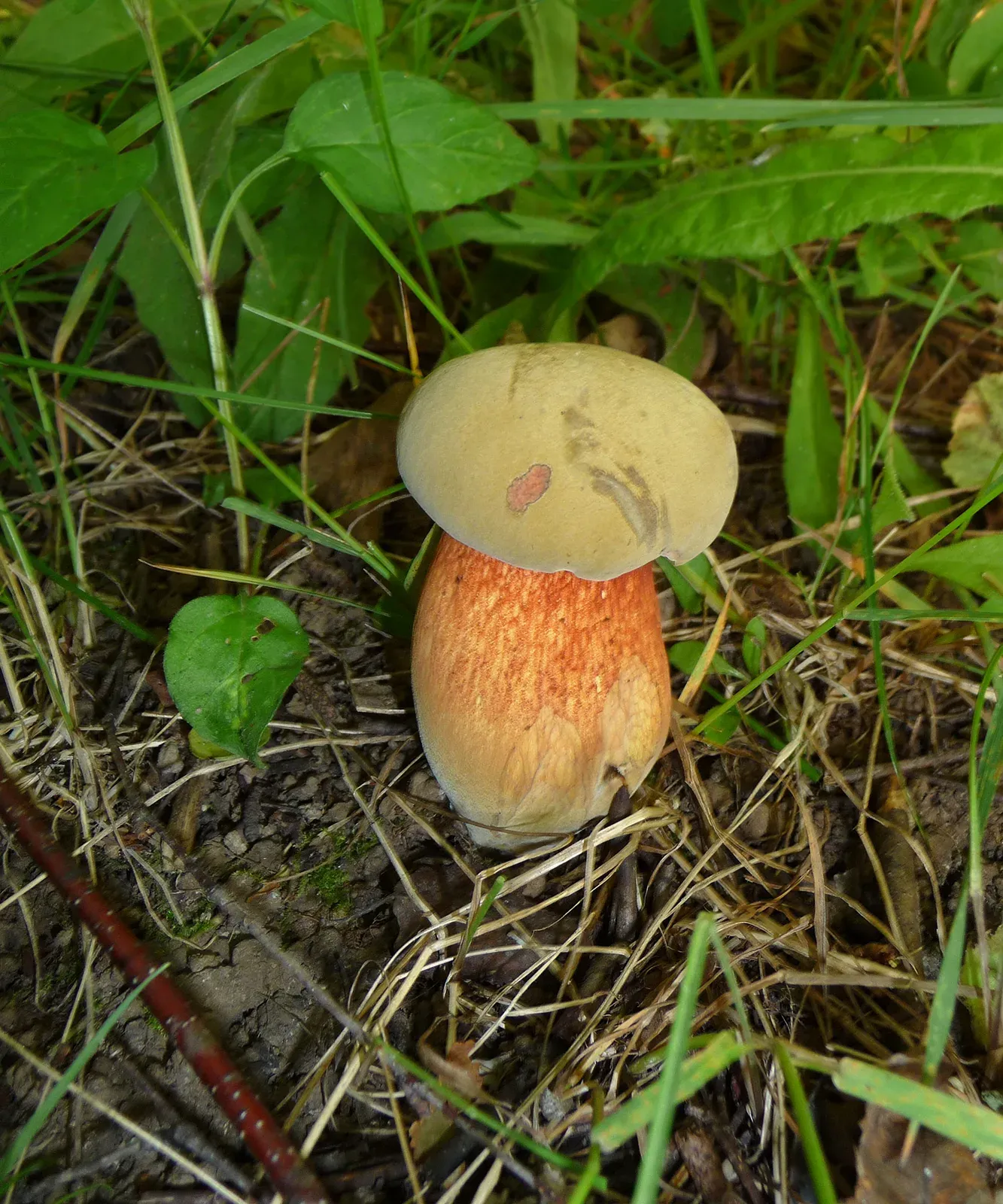
The lurid bolete is a mushroom beginners often pass up for no good reason. The vivid bluing when cut and the reddish tube layer look alarming, reminding people of poisonous boletes. In fact the lurid bolete is edible and tasty, but with an important condition: it has to be prepared properly.
Let's look at when the lurid bolete grows, which forests to search and how to cook it safely.
When the lurid bolete grows
The lurid bolete appears in June and keeps going until September, peaking in the warm, damp summer months. It's a bolete closely tied to oaks, so its season matches the time when oak woods fruit most actively.
Like all boletes, it loves warm soil and moisture after rain. In hot, dry spells there are few lurid boletes; after warm rains there are noticeably more.
Where to look for the lurid bolete
- Oak woods and broadleaf forests — its main habitat, under the oaks it forms mycorrhiza with.
- Mixed forests — it also turns up under beeches and lindens.
- Warmer regions — the lurid bolete loves sun-warmed, open woods, forest edges and clearings.
In oak woods, the lurid bolete often keeps company with the summer bolete, so the trip pays off.
How to recognize the lurid bolete
- Cap olive-brown or yellowish-brown, velvety, fleshy.
- Tube layer orange-reddish — a telltale feature.
- Stem yellowish with a reddish net pattern or dots.
- Flesh yellow; when cut it quickly and vividly turns blue, almost black.
Bluing is a normal feature here, as in many boletes that turn blue when cut.
Is it edible, and how to cook it
The lurid bolete is edible, but conditionally: raw or undercooked, it can cause an upset stomach. So it must be boiled well (at least 15–20 minutes), draining the water, and only then fried or pickled.
The main thing is not to confuse the lurid bolete with the rare poisonous devil's bolete: the devil's bolete has a whiter cap and a redder stem, and it grows in warm oak woods. When in doubt, leave the mushroom.
Sources
- “Key to the Fungi of Ukraine” (Kyiv, Naukova Dumka publishing house).
- Suillellus luridus in GBIF, the Global Biodiversity Information Facility.
- Suillellus luridus in MycoBank, the international fungal nomenclature database.
- Suillellus luridus on Wikipedia.
Frequently asked questions
When does the lurid bolete grow?
From June to September, peaking in the warm, damp summer months. Its season matches the time when oak woods fruit most actively.
Where should you look for the lurid bolete?
In oak woods and broadleaf forests under oaks, and in mixed forests under beeches and lindens, mostly in warm regions.
Why does the lurid bolete turn blue when cut?
It's a natural reaction of the yellow flesh to air. For the lurid bolete, vivid bluing is a normal feature, not a sign of toxicity.
Is the lurid bolete edible?
Yes, but conditionally: it must be boiled well, with the water drained. Raw or undercooked, it can cause an upset stomach.
How do you cook the lurid bolete safely?
Boil it for at least 15–20 minutes, drain the water, and then fry or pickle it. The lurid bolete is never cooked without boiling first.
How do you avoid confusing the lurid bolete with the devil's bolete?
The devil's bolete has a whiter cap and a redder stem. If you have any doubt about a bolete with red pores that turns blue, it's better to leave it.
Can you dry the lurid bolete?
Because of its vivid bluing and the need for boiling, the lurid bolete is rarely dried; more often it's boiled and pickled or fried.
How is the lurid bolete different from porcini?
Porcini has a white or yellowish tube layer and flesh that doesn't turn blue, while the lurid bolete has reddish pores and flesh that turns vividly blue when cut.
Mushrooms in this article
Related articles
 Recipes & cooking
How to store fresh mushrooms, and for how long
Fresh mushrooms spoil faster than you might think. Here's how long they keep in the fridge, how to store them…
August 21, 2026·4 min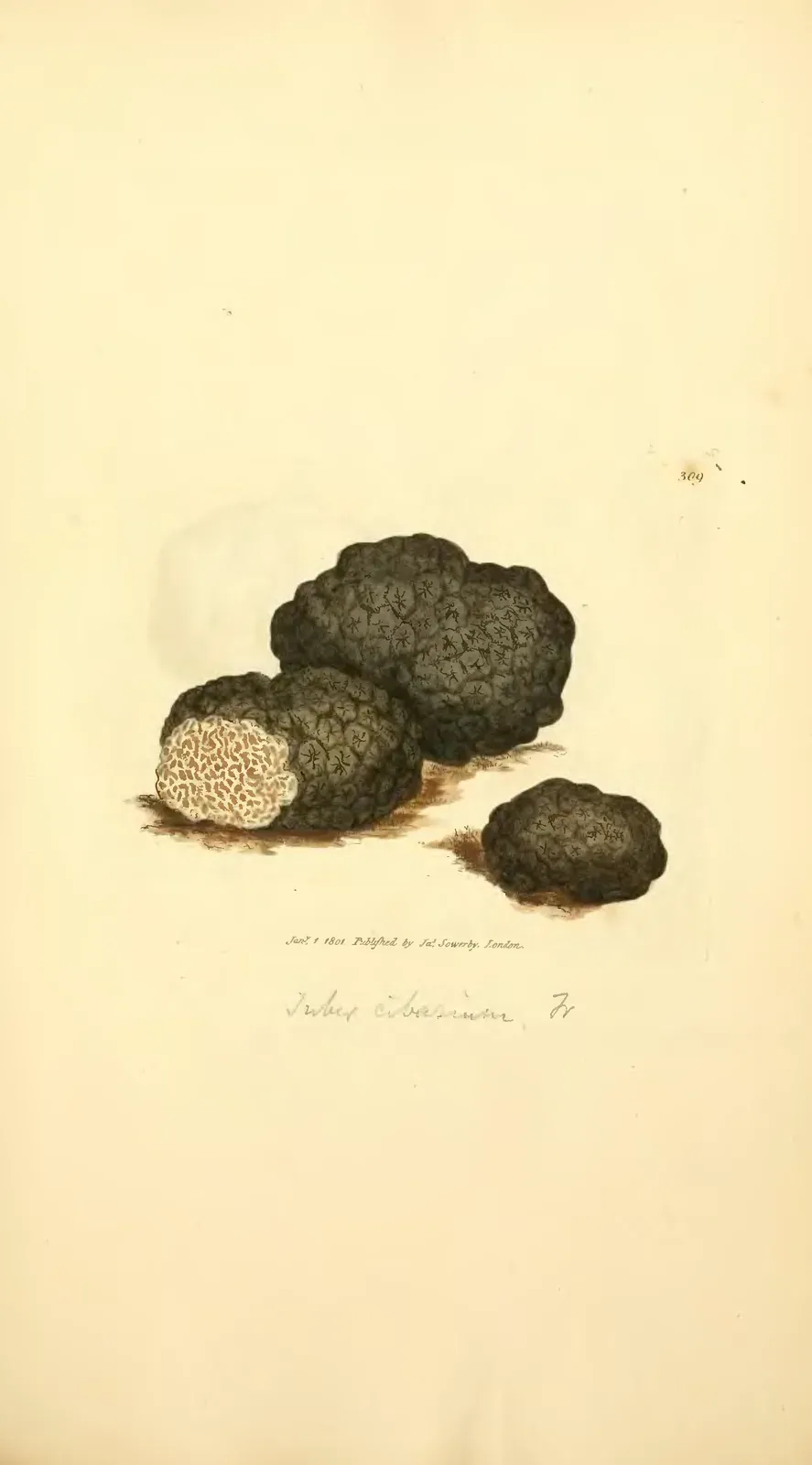 How to identify
Truffles in Ukraine: do they grow here, and where to look
Truffles aren't just a French delicacy. Several species grow in Ukraine too. Here's which ones, where they occ…
August 24, 2026·2 min Recipes & cooking
How long to boil mushrooms
Boiling time depends on the type of mushroom and on what you're cooking next. Here's a clear cheat sheet: how…
August 22, 2026·4 min