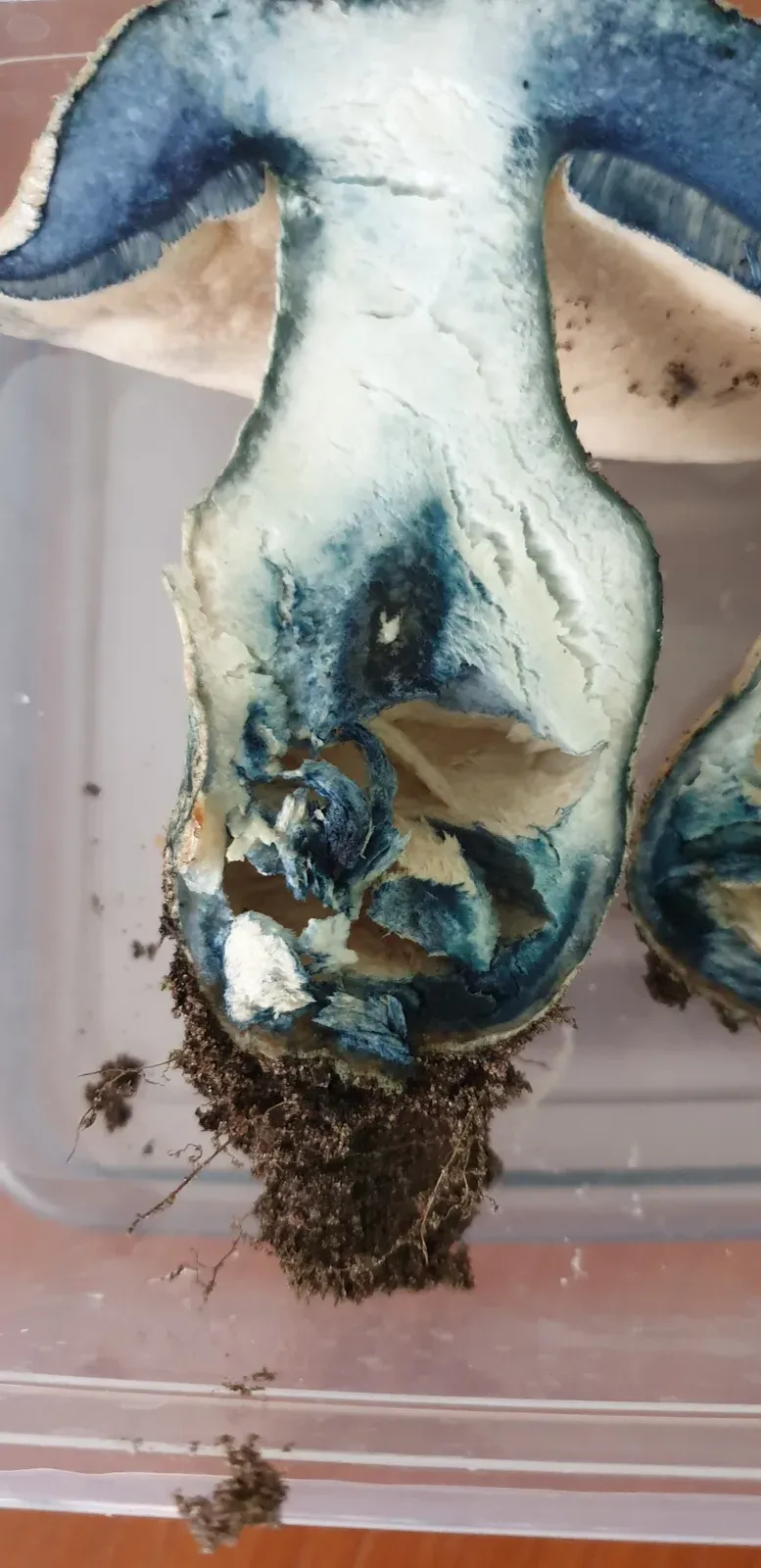
Ever cut a bolete open and watched the flesh flood with deep blue in a few seconds? In many regions people instantly call a mushroom like that a “syniak”. The catch is that this folk name hides not one species but at least three, and they're easy to mix up.
Let's sort out what the word “syniak” really means, which three mushrooms most often go by it and how they differ. Most importantly, we'll find out whether they're all edible and which features keep you from confusing a syniak with a genuinely dangerous bolete.
What a “syniak” is and where the name comes from
“Syniak” (literally “bruise”) isn't a scientific name but a folk one, given to mushrooms for one striking trait: they turn strongly and quickly blue when cut or touched. The color can range from light blue to dark blue, almost ink-like.
The bluing itself is completely harmless. It's ordinary oxidation of substances in the flesh when exposed to air, the same chemistry that makes a cut apple go brown. We covered the mechanism in more detail in a separate piece on why Xerocomus boletes turn blue when cut.
The problem lies elsewhere. Because the name “syniak” is tied only to the color of the cut, it easily gets attached to different species. So it's worth knowing the three main “contenders” for the name and being able to tell them apart.
Cornflower bolete, the truest syniak
If any mushroom deserves the name “syniak” most, it's the Cornflower bolete. It bruises instantly, dramatically and more intensely than any of the others: just press the cap or stem lightly, and within seconds the pale flesh turns a rich blue.
These features will help you recognize it:
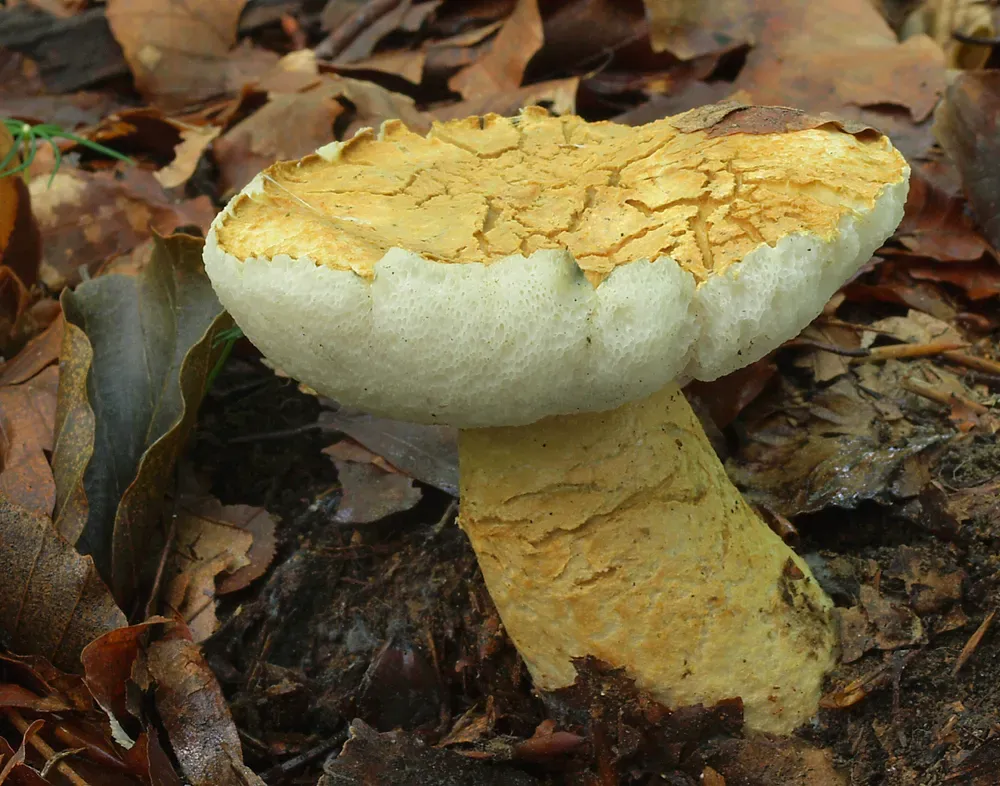
- Cap. Dry, felty-granular, in straw-yellow or pale brown shades.
- Pores. Pale, whitish or pale yellow, with no hint of red.
- Stem. This is its calling card. Inside it's hollow and very brittle, snapping easily like a cookie.
- Cut flesh. White, but within a few seconds it turns intensely blue.
The Cornflower bolete is an edible and tasty mushroom. It grows on sandy soils in mixed and coniferous forests, often under birches and oaks. It's not very common, so finding one counts as a stroke of luck.
Inkstain bolete, the one that bruises in an instant
The second mushroom often called a syniak is the Inkstain bolete. Of all the Xerocomus boletes, it turns blue perhaps the fastest and most intensely, which is how it earned this folk name.
It's easy to tell it apart from the Cornflower bolete by a few details:
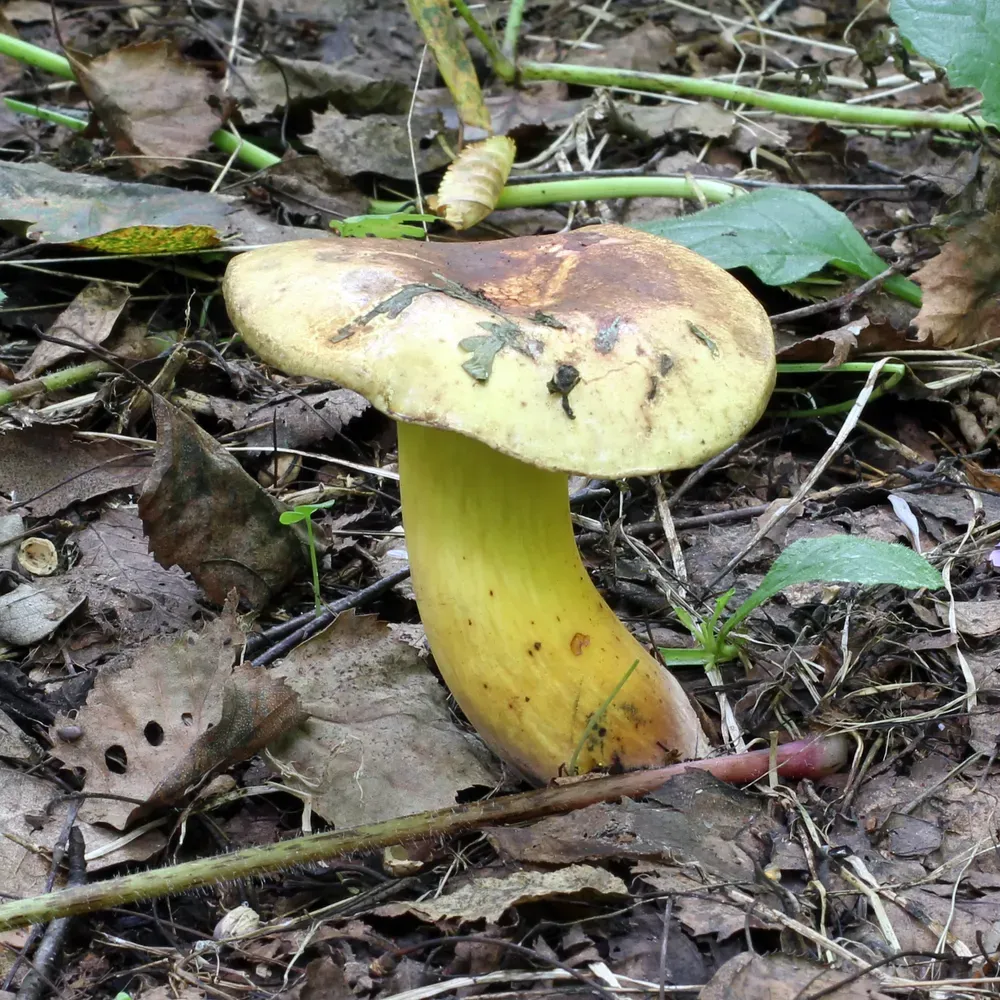
- Pores. Yellow or greenish yellow, unlike the whitish pores of the Cornflower bolete. They also turn blue instantly when pressed.
- Cap. Brown, olive-brown, often finely cracked, with a thin bloom as if dusted with powder. Hence the species name (pulverulentus, “powdered”).
- Stem. Solid, yellowish with brownish tints, not hollow.
- Cut flesh. Yellow, darkening to deep blue almost before your eyes.
This is an edible mushroom too. Like other Xerocomus boletes, it loves deciduous and mixed forests. If you want to get to know the Xerocomus group as a whole, start with our overview of what Xerocomus boletes are, then move on to individual species.
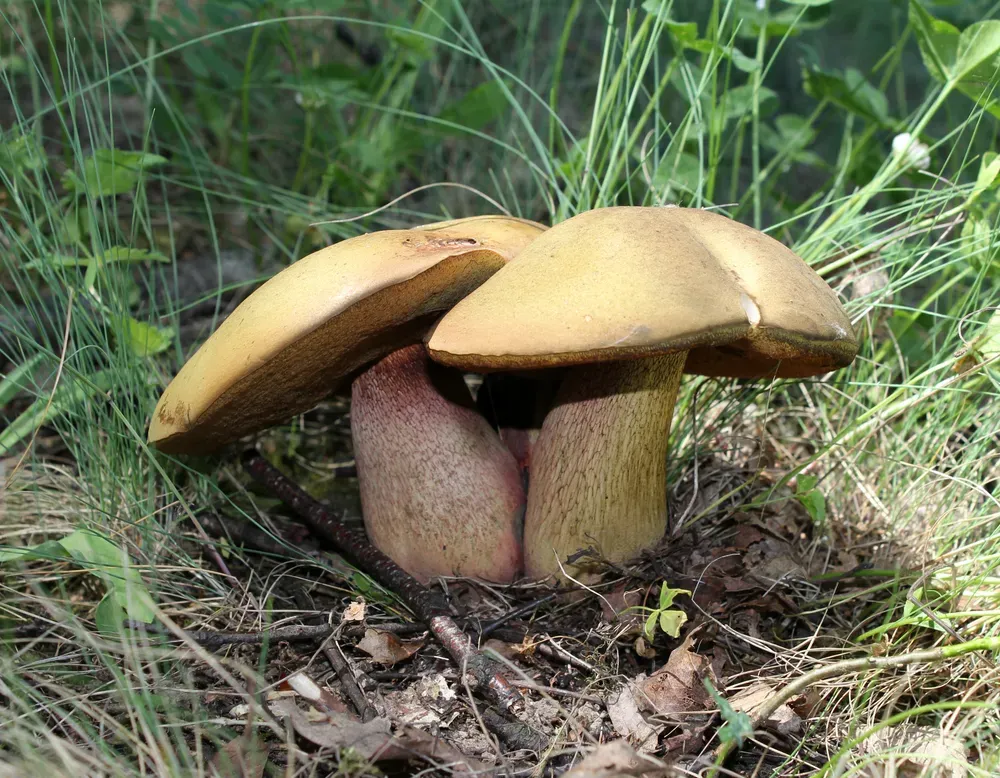
Scarletina bolete, the syniak with red pores
The third contender for the name “syniak” looks more alarming, because it combines intense bluing with red pores. This is the Scarletina bolete. Mushrooms like this are exactly the ones that scare beginners the most.
Its features:
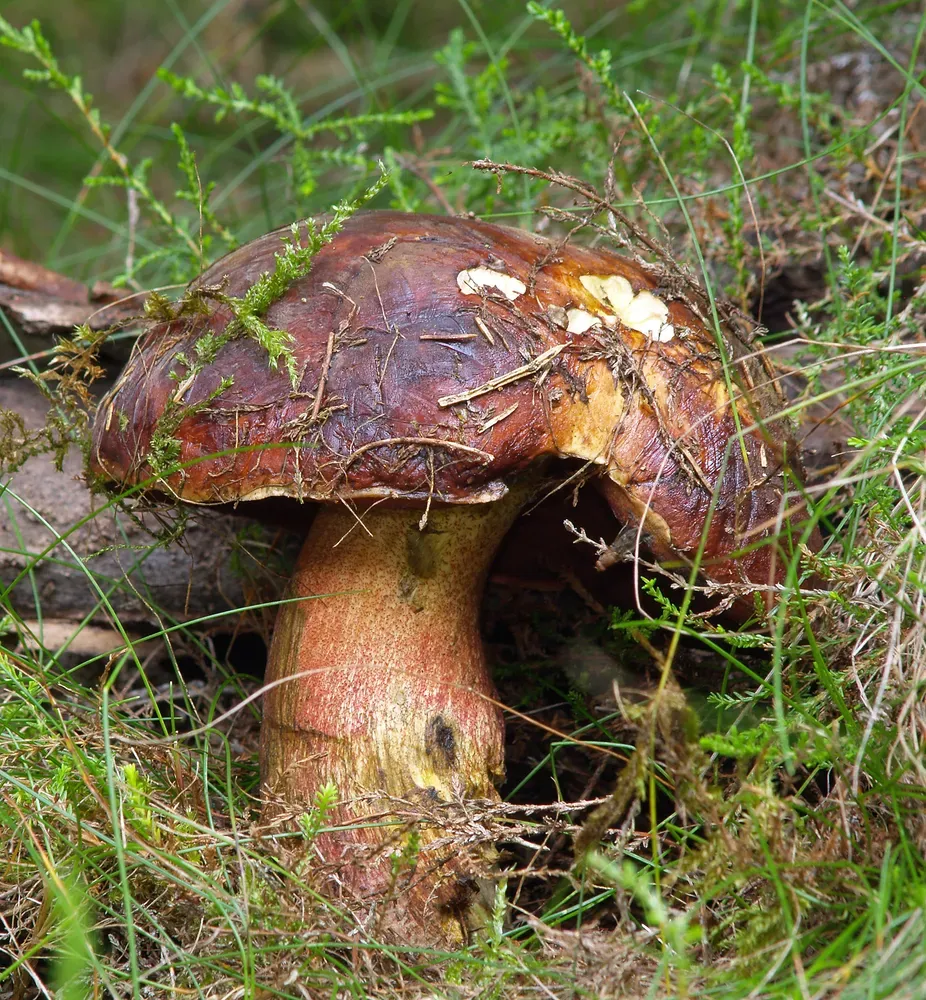
- Cap. Large, velvety, dark brown or chestnut.
- Pores. Bright red or orange-red, turning blue instantly when touched.
- Stem. Yellow, densely covered with tiny reddish dots or grains, with no distinct net. Hence its Ukrainian name, meaning “grainy-stemmed”.
- Cut flesh. Yellow, rapidly bluing to a dark shade.
Here's an important, honest safety note. The Scarletina bolete is considered conditionally edible: you must not eat it raw; it needs thorough boiling for at least 15 minutes, discarding the water. Only after that is the mushroom fit for the table. If you're not sure of your identification, it's better to leave a red-pored bolete like this in the forest.
How not to confuse a syniak with a dangerous bolete
The main thing to remember: bluing by itself poisons no one. Excellent edible mushrooms turn blue too, such as the Bay bolete or Xerocomus boletes. Danger is given away not by the blue color but by entirely different features.
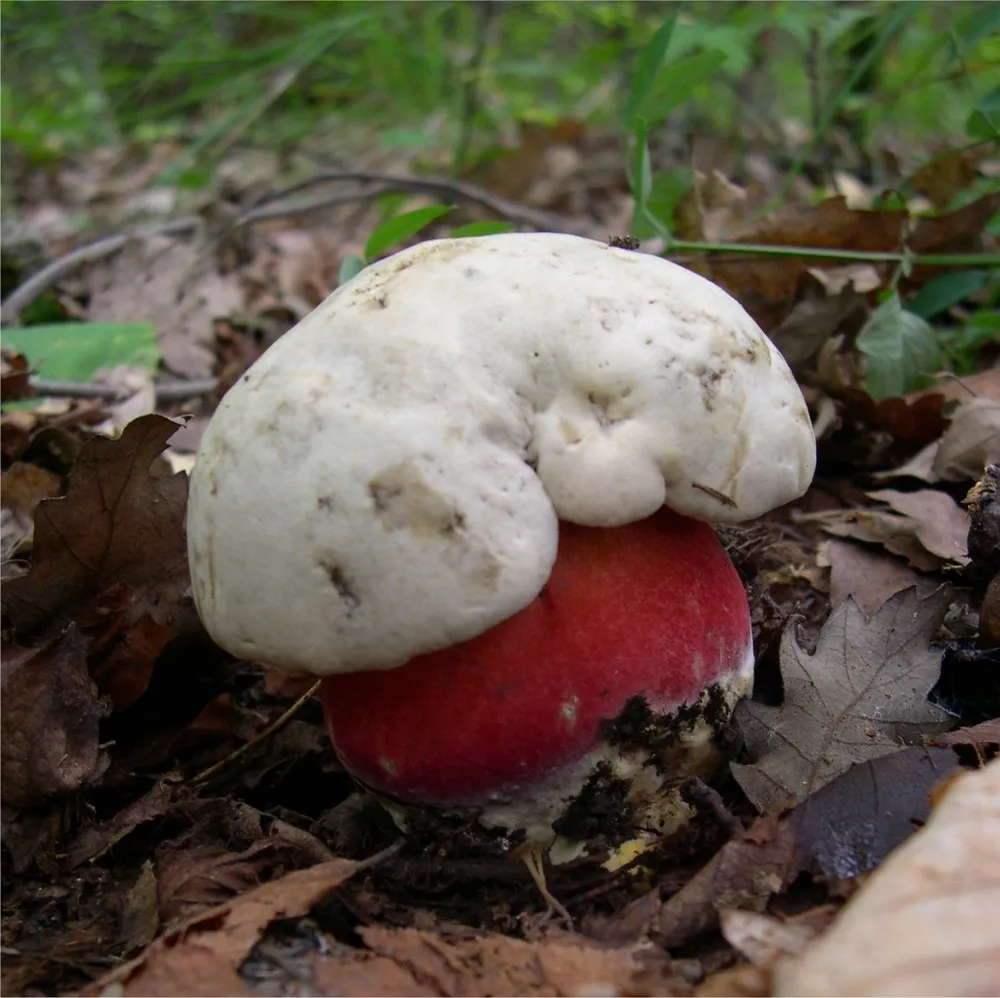
Pay special attention to boletes with red pores, because some truly dangerous species are among them. The best known is the Devil's bolete, a poisonous bolete with a whitish-gray cap, red pores and a red net on the stem. It turns blue too, so relying on the color of the cut alone is deadly unreliable here.
Here's what to look at instead of the bluing itself:
- Net on the stem. A red net pattern on the stem is a reason to be wary. The edible Scarletina bolete has a grainy, dotted stem, not a netted one. A red net is found on both the conditionally edible Lurid bolete and the poisonous Devil's bolete.
- Taste. Bitter or burning flesh is a bad sign. A sharp peppery taste, for example, gives away inedible species.
- Smell. A pleasant mushroomy smell is good; an unpleasant, chemical or rotten one is bad. The Devil's bolete starts to smell unpleasant as it ages.
- Cap color. A whitish-gray, dirty-looking cap combined with red pores is a reason not to pick the mushroom at all.
If you'd like to compare an edible red-pored bolete with its poisonous lookalike side by side, check out our comparison of the Scarletina bolete and the Devil's bolete. And to figure out when to head into the forest for boletes at all, use the mushroom radar: it shows when moisture and warmth line up well for mushrooms to appear.
To sum it up simply: “syniak” isn't one mushroom but a folk nickname for several boletes that bruise strongly blue. The Cornflower bolete and the Inkstain bolete are edible and safe, the Scarletina bolete is edible only after boiling, while the similar red-pored Devil's bolete is poisonous. So identify a mushroom by the whole set of features, not by the color of the cut alone.
Sources
- “Key to the Fungi of Ukraine” (Kyiv, Naukova Dumka publishing house).
- Gyroporus cyanescens on GBIF, a global biodiversity database.
- Neoboletus on MycoBank, an international fungal nomenclature database.
- Gyroporus cyanescens on Wikipedia.
Frequently asked questions
What is the “syniak” mushroom?
“Syniak” is a folk name for several boletes that turn strongly and quickly blue when cut or touched. Most often it refers to the , and .
Is the “syniak” mushroom edible?
It depends on the species. The Cornflower bolete and the Inkstain bolete are edible and tasty. The Scarletina bolete is conditionally edible and must be boiled. And the similar red-pored Devil's bolete is poisonous.
Is it dangerous if a mushroom turns blue when cut?
The bluing itself is harmless; it's ordinary oxidation of the flesh in the air. Excellent edible mushrooms turn blue too. Danger is given away not by the blue color but by red pores combined with bitterness, an unpleasant smell or a red net on the stem.
Which syniak turns blue most intensely?
The most dramatic bluing belongs to the : its pale flesh floods with deep blue literally seconds after being touched. That's why it deserves the name “syniak” most of all.
How does the Cornflower bolete differ from the Inkstain bolete?
The Cornflower bolete has pale, whitish pores and a hollow, brittle stem. The Inkstain bolete has yellow pores and a solid stem. Both bruise strongly blue, but stem structure and pore color reliably tell them apart.
Can you eat a syniak with red pores?
Red pores call for special care. The red-pored Scarletina bolete is edible only after thorough boiling. But the red-pored boletes also include the poisonous Devil's bolete, so without a confident identification it's better not to pick such a mushroom.
How do you tell a syniak from the poisonous Devil's bolete?
has a whitish-gray cap, red pores and a red net on the stem. The edible Scarletina bolete has a dark brown cap and a stem covered with dots or grains, with no net. A red net is always a reason to be wary.
Does the blue color disappear during cooking?
Yes, the bluing disappears during cooking, and the dish takes on its normal color. The blue color doesn't affect the taste or safety of a properly cooked edible mushroom.
Mushrooms in this article
Related articles
 How to identify
Truffles in Ukraine: do they grow here, and where to look
Truffles aren't just a French delicacy. Several species grow in Ukraine too. Here's which ones, where they occ…
August 24, 2026·2 min Recipes & cooking
How to store fresh mushrooms, and for how long
Fresh mushrooms spoil faster than you might think. Here's how long they keep in the fridge, how to store them…
August 21, 2026·4 min Recipes & cooking
How long to boil mushrooms
Boiling time depends on the type of mushroom and on what you're cooking next. Here's a clear cheat sheet: how…
August 22, 2026·4 min