THIS DATA HAS NOT BEEN VERIFIED BY AN EXPERT. Use at your own risk.
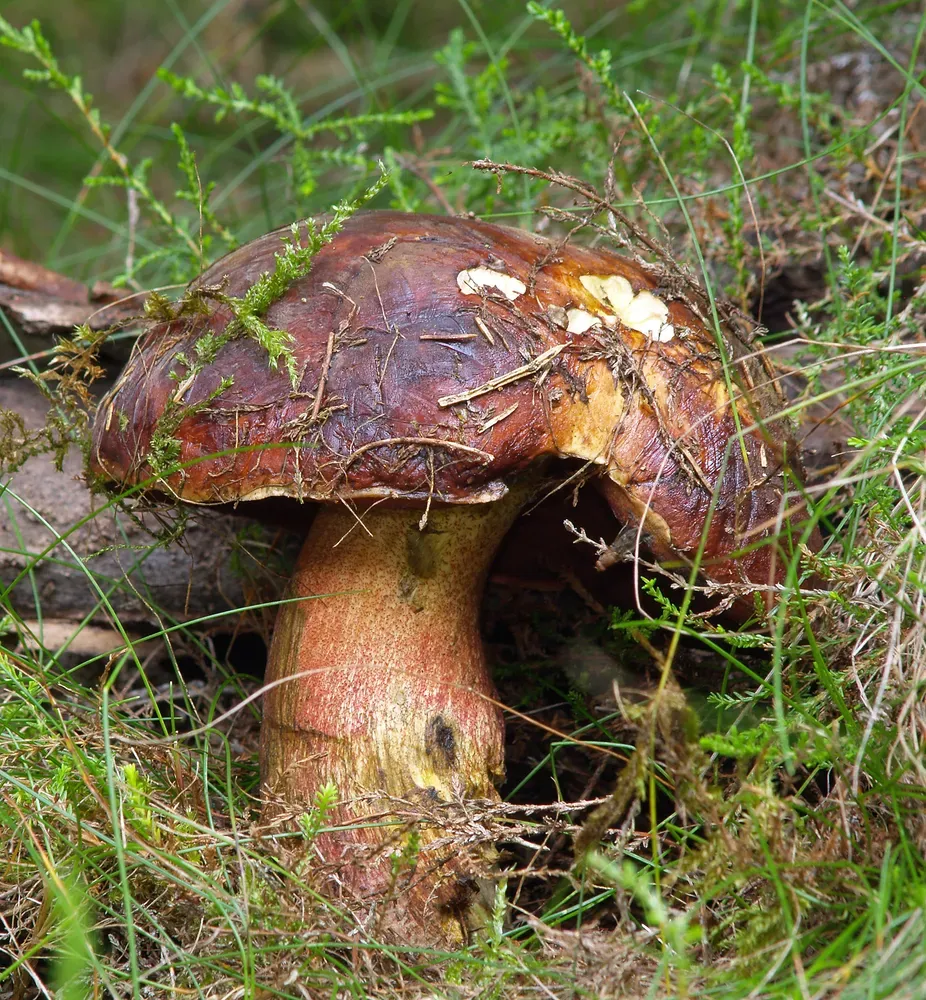
Scarletina boleteNeoboletus luridiformis
Under reviewUpdated October 3, 2026
Passport
- Edibility
- Conditionally edible
- Season
- Jun — Oct
- Hymenophore
- Pored
- Cap color
- Brown
- Size
- Large (over 15 cm)
- Smell
- Pleasant
- Reviewed
- Under review
Quick answers
Where to look?
Deciduous forest, Conifer forest, Mixed forest
When does it appear?
Jun — Oct
Active months: June, July, August, September, October.
How to recognize it? Three signs
- Cap color: Brown, Dark brown
- Cap shape: Convex
- Smell: Pleasant
Fruiting season
June – October
Description
The scarletina bolete, which Ukrainians more often call "syniak" ("the bruise"), is one of the most spectacular pored mushrooms in our forests, known to science as Neoboletus luridiformis. It earned its folk name for its amazing ability to turn blue instantly: just touch its pores or cut the flesh, and right before your eyes it floods with a deep ink-blue color. It's a sturdy, stocky mushroom with a velvety chestnut-brown cap that forms mycorrhiza with both broadleaf trees and conifers, preferring somewhat acidic soils in oak, beech and spruce forests.
In Ukraine, the scarletina bolete is quite widespread — from the pine forests of Polissia to the beech forests of the Carpathians and the Forest-Steppe. It fruits from early summer right up to the first autumn frosts, appearing especially abundantly in the warm, wet spells of July and August. Despite its bright, somewhat "dangerous" look with red pores, it has long enjoyed a good reputation among foragers as a tasty and worthwhile species.
In terms of edibility, the scarletina bolete is conditionally edible, and this is very important to remember. Raw, it is poisonous and can cause digestive upset, but after thorough boiling for 15–20 minutes it completely loses its harmful properties. Properly cooked, it becomes an excellent mushroom with firm flesh and a pleasant flavor. The main caution is not to confuse it with its dangerous red-pored lookalikes, above all the devil's bolete, so only pick the scarletina bolete when you're sure of your identification.
Cap
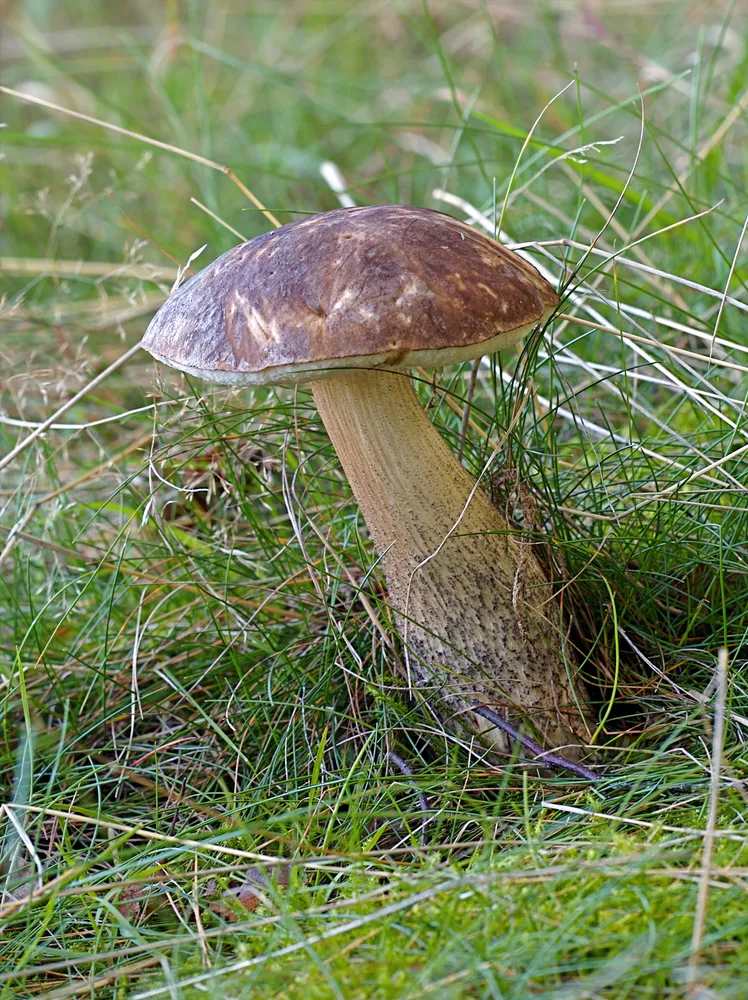
The cap of the scarletina bolete is large and fleshy, reaching 5 to 20 centimeters across. When young it is neatly hemispherical, opening with maturity to convex and cushion-shaped. The cap surface is dry and velvety-felty to the touch, and may become slightly sticky in wet weather. The color ranges from warm chestnut and dark brown to yellowish brown, often with a faint reddish or olive tint. When pressed, the cap surface darkens, developing bluish spots.
Hymenophore
Under the cap lies a tubular hymenophore with a very characteristic, warning feature — the pores here are a rich orange-red, sometimes even blood-red, while the tubes themselves stay yellow or olive-yellow. It's these red pores that make the mushroom look like poisonous species, so it calls for special care. The most important diagnostic trait is the instant, dramatic reaction to touch: just run a finger over the pores, and they immediately flood with a deep dark blue, almost inky color.
Stem
The stem of the scarletina bolete is sturdy, dense and massive, 5 to 15 centimeters tall, often thickened toward the base. It's the stem that gave the mushroom its Ukrainian scientific and folk names: against a yellow-orange background, it is densely covered in tiny reddish and brown scale-like dots that feel like a grainy surface. Unlike its close relative the lurid bolete, the scarletina bolete has no net pattern — just this characteristic grainy "dusting". When touched, the stem turns blue just as quickly. There is no ring and no volva.
Flesh
The flesh of the scarletina bolete is thick, dense and springy, lemon yellow in a fresh cut. Its main feature is a lightning-fast reaction to air: as soon as you cut the mushroom, the flesh floods before your eyes with an intense dark blue, almost inky color, spreading from the edges to the center. This reaction is so fast and vivid that it's one of the most reliable features of the species. Near the base of the stem the flesh may have a reddish tint. Raw flesh tastes mild, with no bitterness, but you shouldn't taste it raw.
Smell
The smell of the scarletina bolete is faint, pleasant and typically mushroomy, with no sharp or unpleasant notes. It carries no warning at all and may well seem appealing, so when identifying this species, rely first and foremost on the pore color and the bluing reaction, not on the aroma.
›Scientific synonyms (4)
Boletus luridiformis, Boletus erythropus, Suillus luridiformis, Sutorius luridiformis
Lookalikes
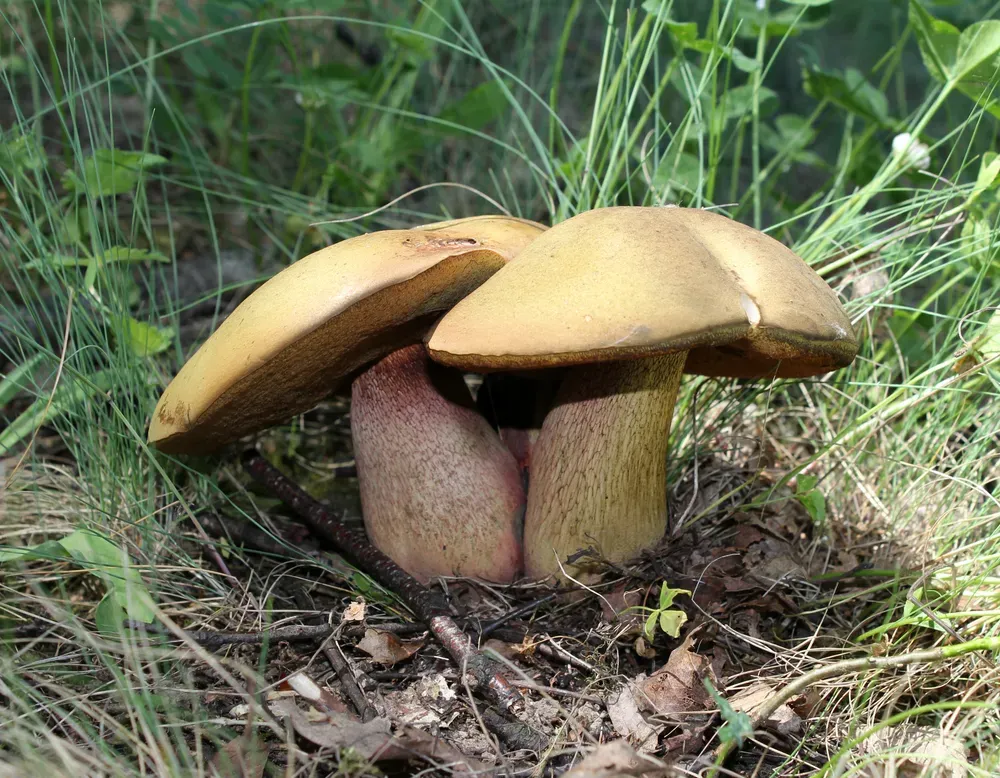
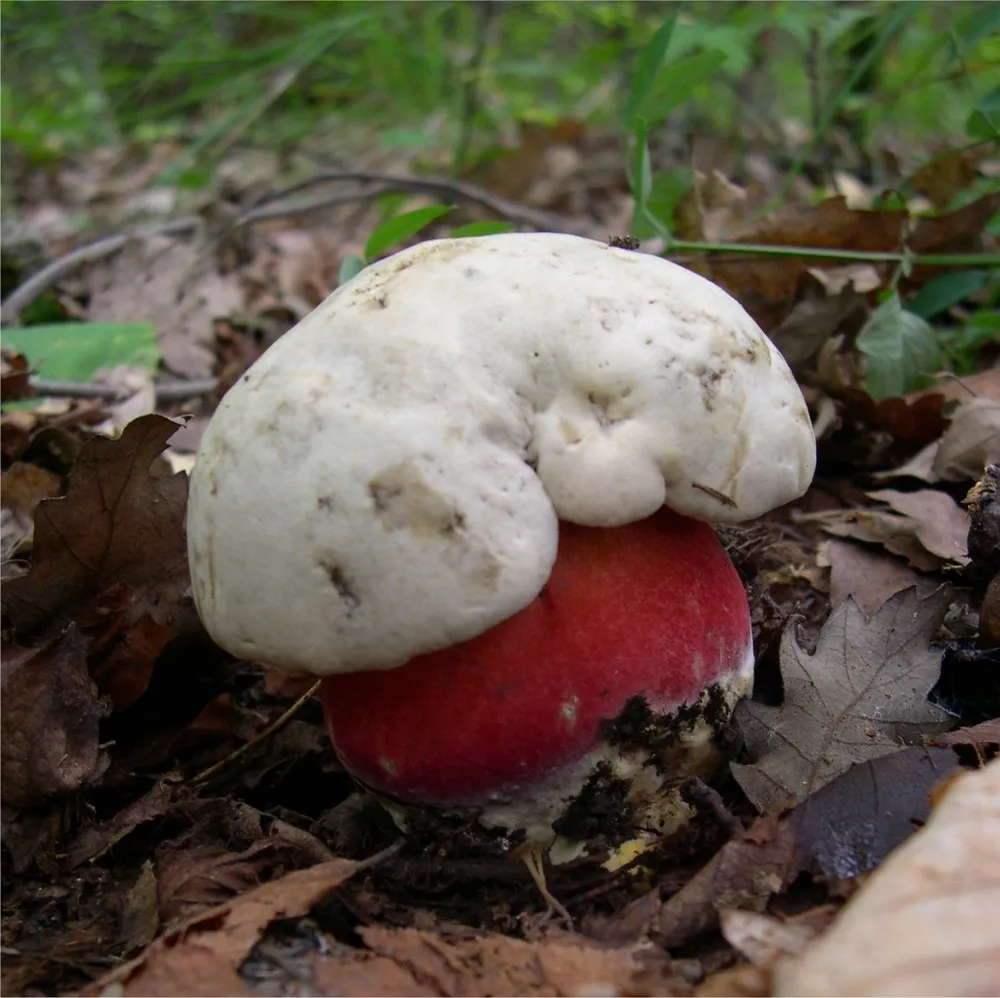
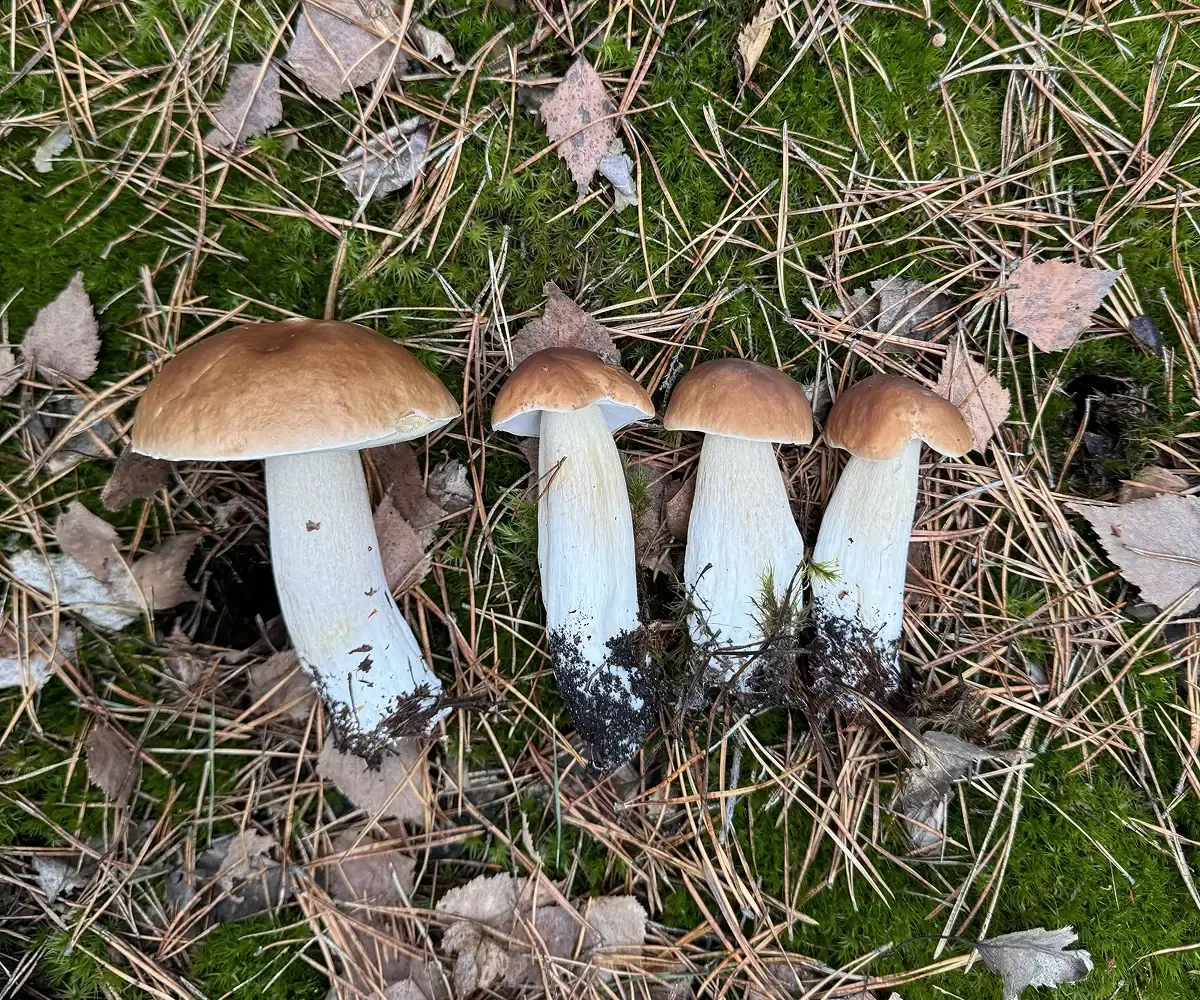
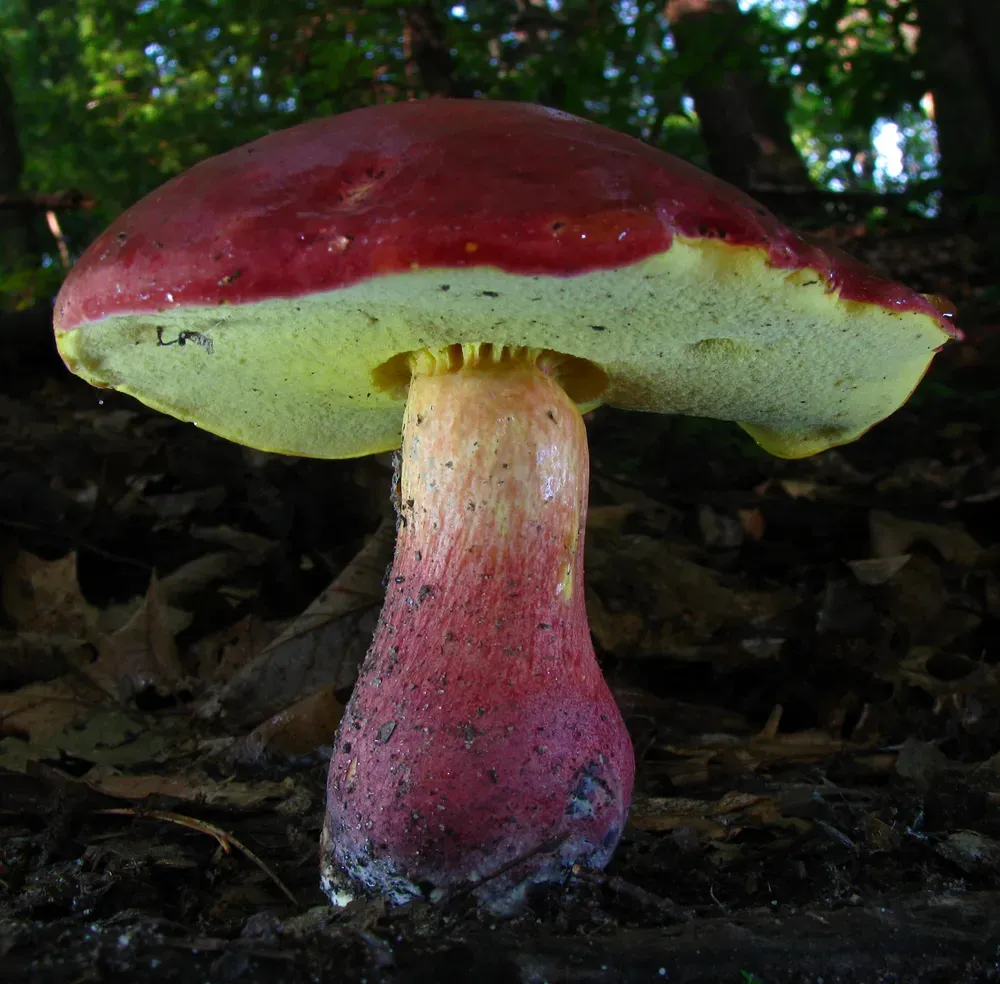
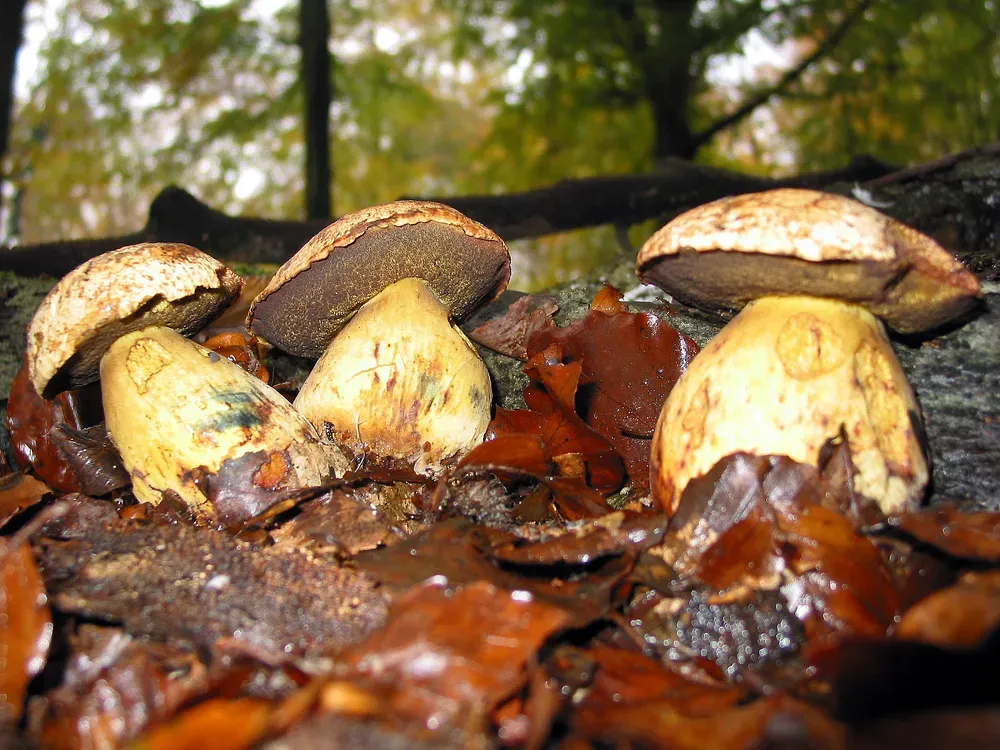
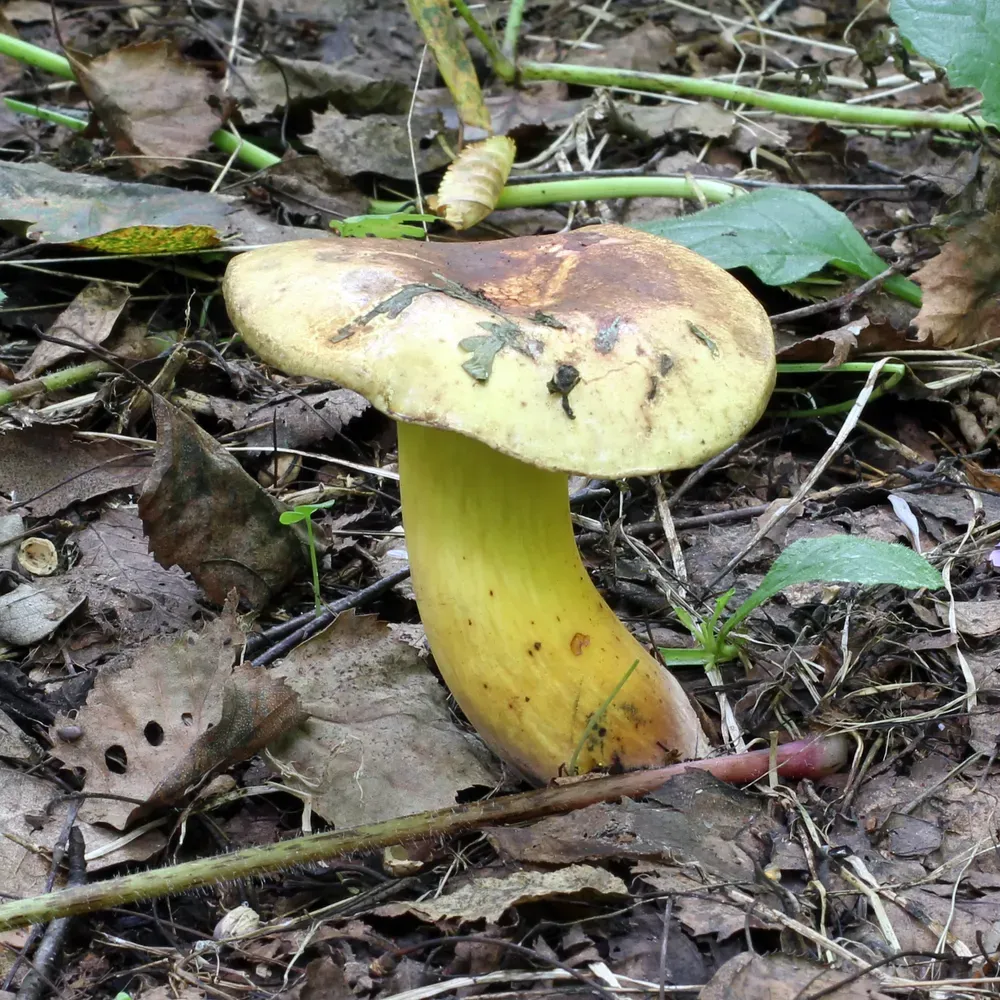
Related species
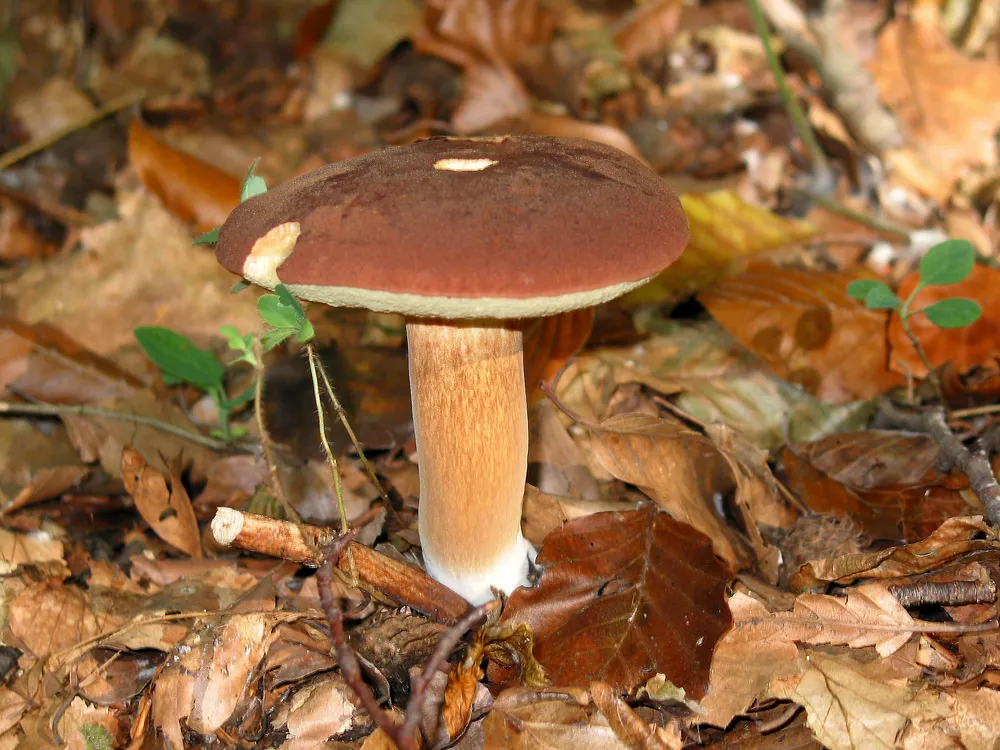
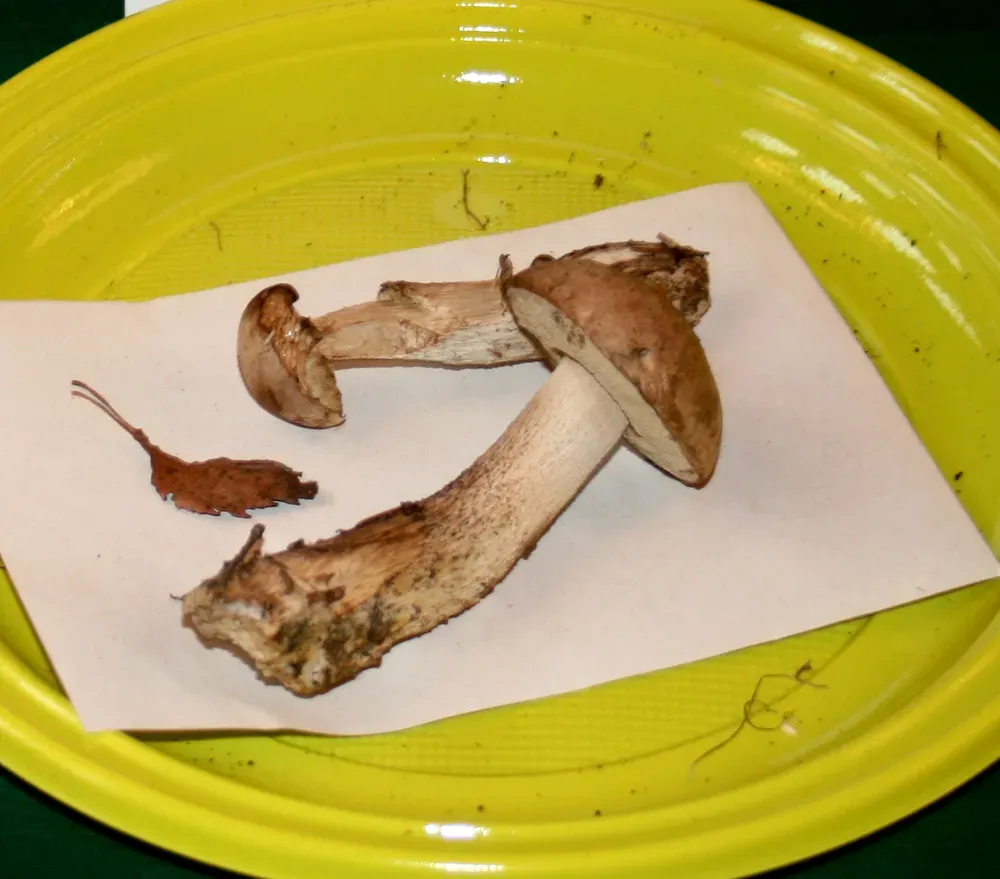
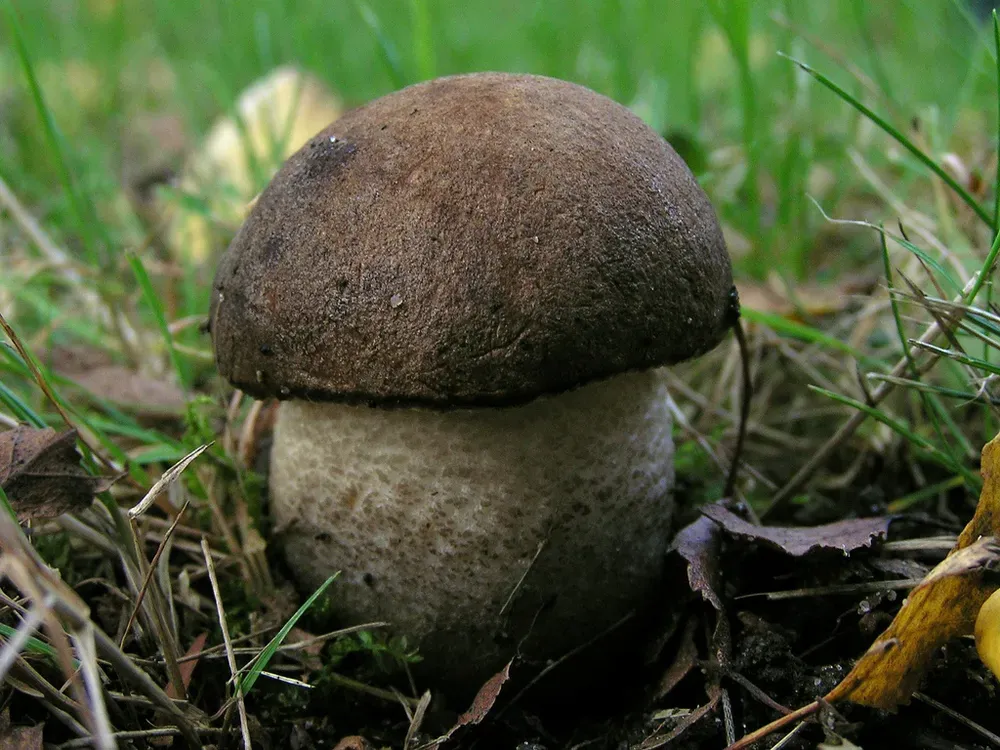
Mushrooms of the same genus and habitat — to study side by side and never mix up.
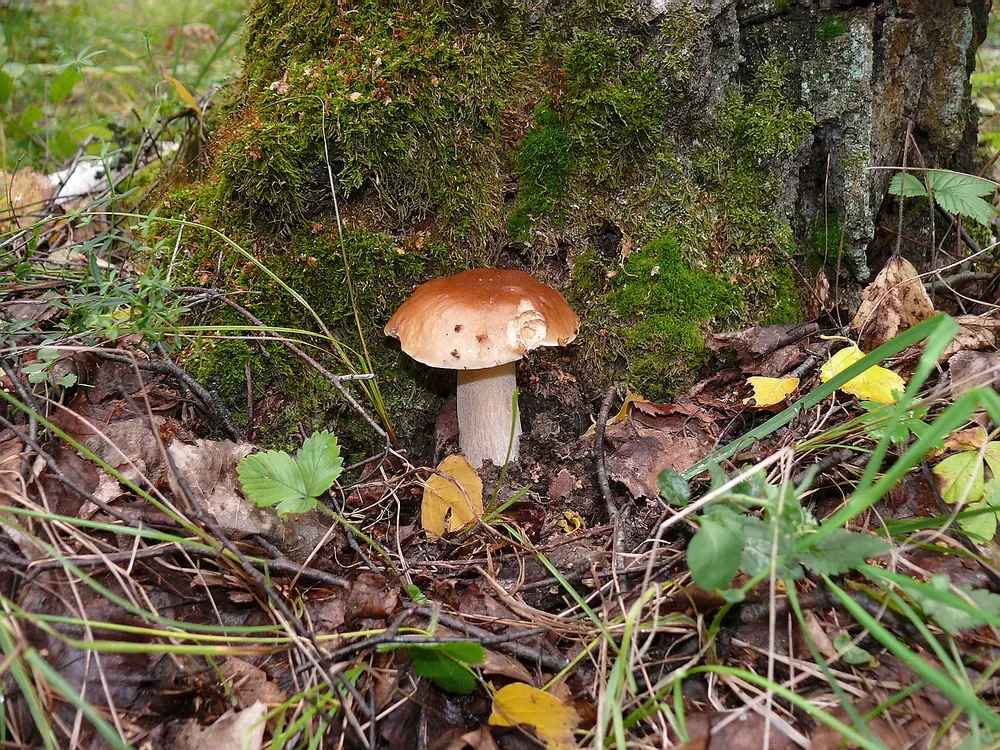
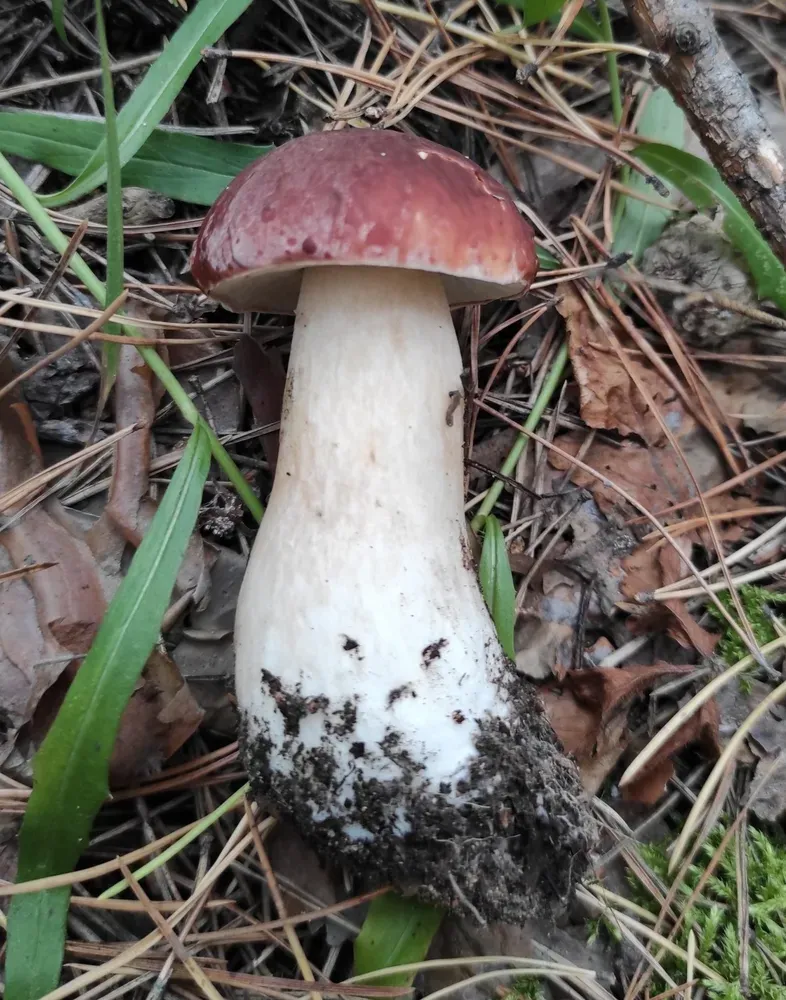
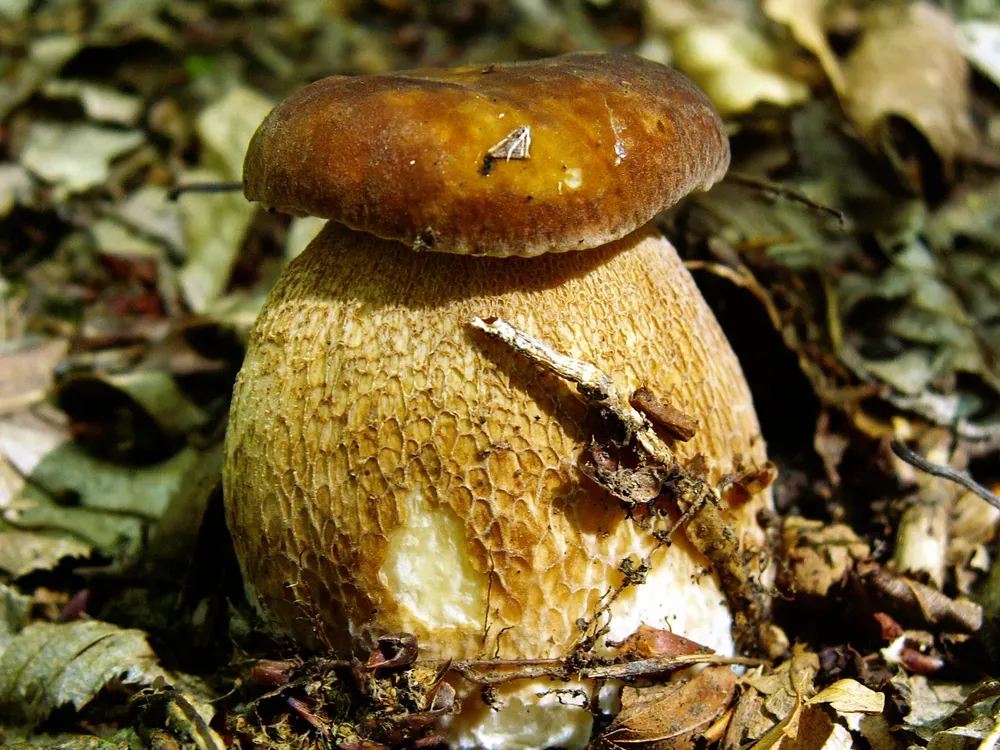
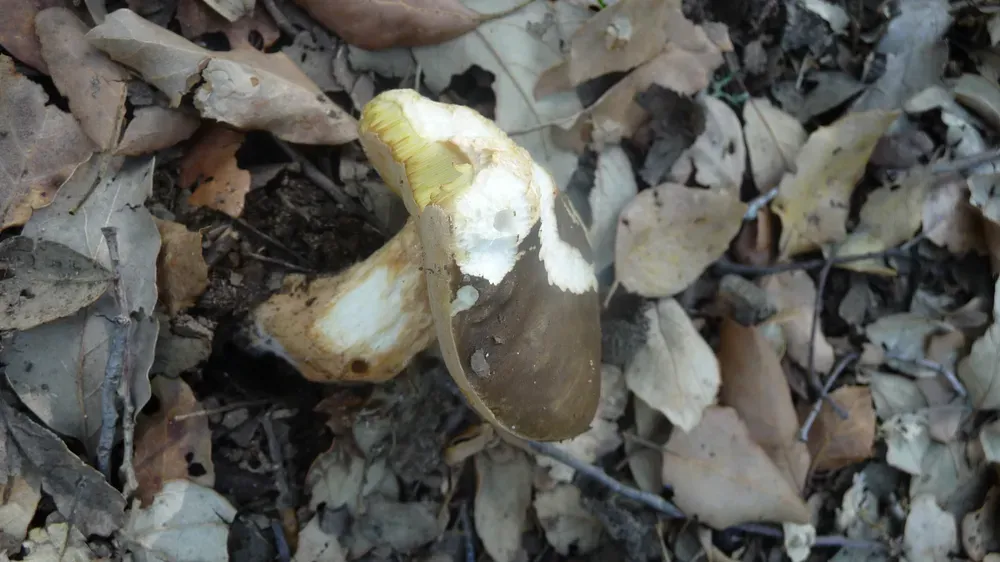
Related reading
 How to identify
June's first lookalikes: the cornflower bolete and the bitter bolete
The first summer boletes have tricky look-alikes. Here's how not to confuse porcini with the bitter bolete, wh…
June 2, 2026·4 min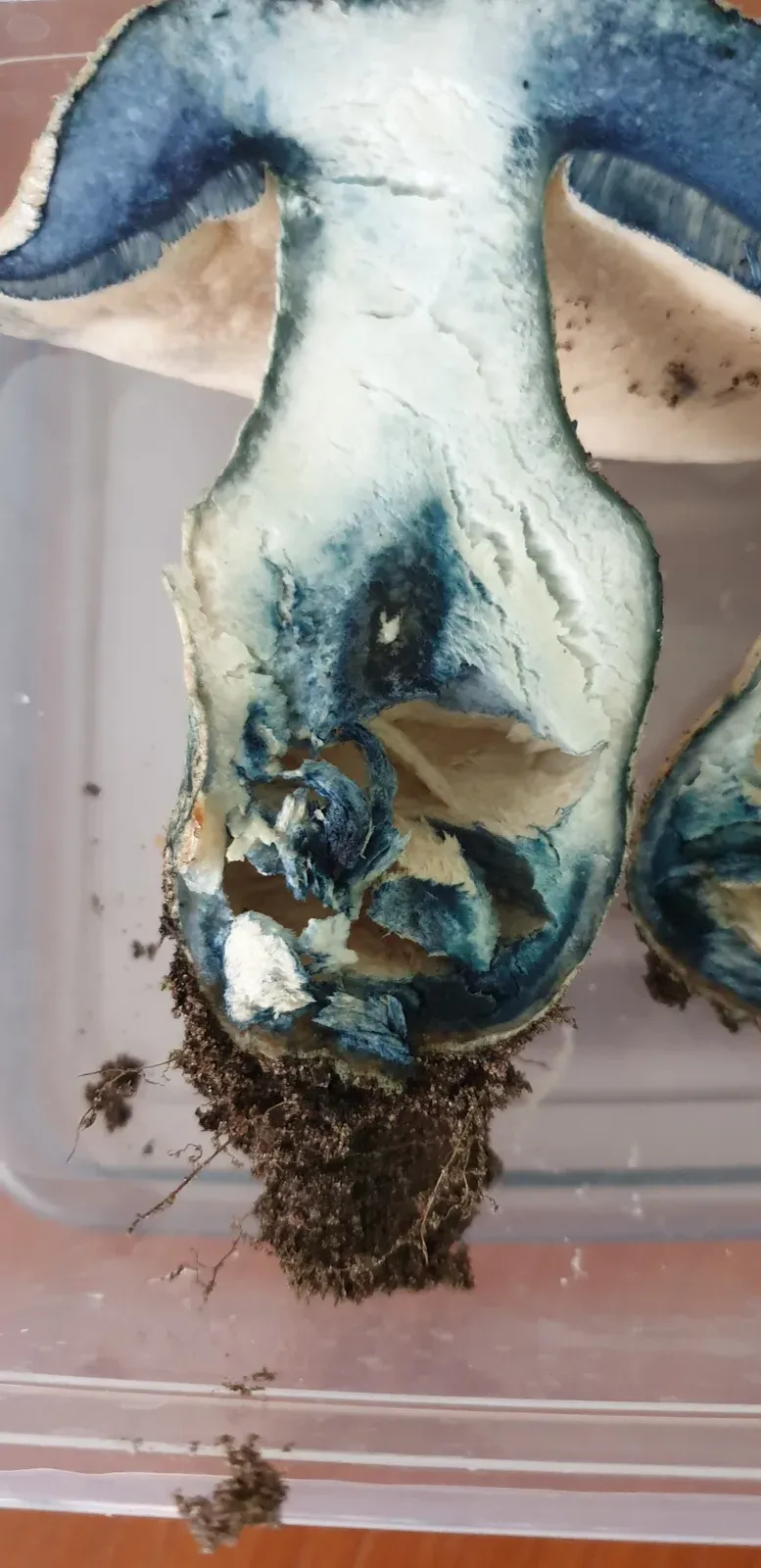 How to identify
Blue-bruising boletes: which ones turn deep blue when cut
The folk name “syniak” (“bruise”) is given to several boletes that instantly turn blue when cut. We explain wh…
May 31, 2026·6 min
Frequently asked questions
Is Scarletina bolete edible or poisonous?
Does Scarletina bolete have gills or pores?
What does the cap of Scarletina bolete look like?
What does the stem of Scarletina bolete look like?
What do Scarletina bolete smell and taste like?
Where does Scarletina bolete grow?
Which trees does Scarletina bolete grow under?
When should you pick Scarletina bolete?
What can Scarletina bolete be confused with?
How do you cook Scarletina bolete?
Can you dry Scarletina bolete?
What is the scientific name of Scarletina bolete?
Sources
- [1]Вікіпедія (українська)
- [2]Атлас грибів України, Зеров Д.К. (1979)
- [3]MycoBank Database
- [4]Index Fungorum
- [5]GBIF
- [6]iNaturalist Ukraine