Two-colored boleteBaorangia bicolor
Expert-verifiedUpdated June 13, 2026
Passport
- Edibility
- Edible
- Season
- Jun — Oct
- Hymenophore
- Pored
- Cap color
- Red
- Size
- Large (over 15 cm)
- Smell
- Odorless
- Reviewed
- Yes ✓
Quick answers
Where to look?
Deciduous forest
When does it appear?
Jun — Oct
Active months: June, July, August, September, October.
How to recognize it? Three signs
- Cap color: Red, Yellow
- Cap shape: Convex
- Smell: Odorless
Fruiting season
June – October
Description
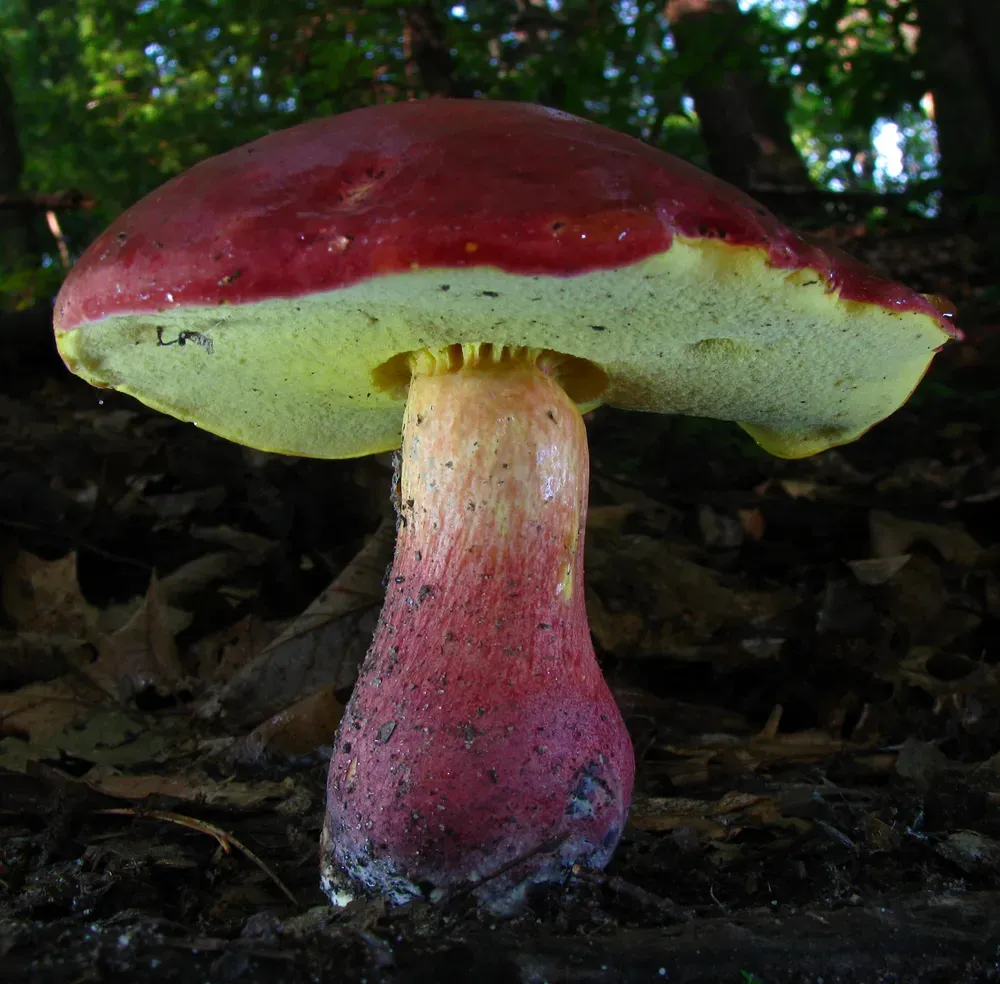
The two-colored bolete (Baorangia bicolor, Boletus bicolor until 2015) is a bolete with a striking two-tone look. It owes its name to a sharp color contrast: a crimson-red cap and a bright yellow hymenophore with a pinkish-yellow stem. When cut, the flesh slowly turns blue — quite weakly, not as dramatically as in some other Neoboletus.
It is a warmth-loving species with a southern European range. In Ukraine it occurs in Zakarpattia, the Carpathian foothills, the southern parts of the Forest-Steppe and mountainous Crimea. It forms mycorrhiza mainly with oak and beech on limestone or neutral soils. It does not grow in the northern regions or the steppe.
Edibility is disputed. Most sources consider the mushroom edible, but in some people it can cause allergic gastrointestinal symptoms. The taste is mild or almost absent. In North America it is picked regularly; in Ukraine rarely, because populations are small. Be sure to boil it for 10–15 min before cooking. The biggest risk is confusing it with the toxic Boletus sensibilis, whose bluing reaction is instant.
Cap
Cap 4–15 cm, hemispherical in young mushrooms, then cushion-shaped. The color is bright red in young ones, darkening with age to brick-red or wine-red. The surface is matte, slightly sticky in wet weather, dry and faintly rough in dry weather.
Hymenophore
The hymenophore is tubular, slightly notched at the stem. The color is bright yellow, olive-yellow in mature ones. The pores are small and angular. When pressed they slowly turn (after 1–2 minutes) dark blue or indigo — more weakly than in many bluing boletes.
Stem
Stem 5–10 cm tall, 1–3 cm thick, cylindrical or slightly narrowing upward. Color: yellow in the upper part, red or pinkish red in the lower part. When pressed it may turn very faintly blue or not change at all.
Flesh
The flesh is yellowish, firm in young ones. When cut it SLOWLY (within 1–3 minutes) turns dark blue, but more weakly than in classic bluing boletes. Then it settles to a dull gray-blue.
Smell
The smell is faint and neutral. The taste is mild, sometimes quite bland — without a distinct mushroom note.
Lookalikes
Related species
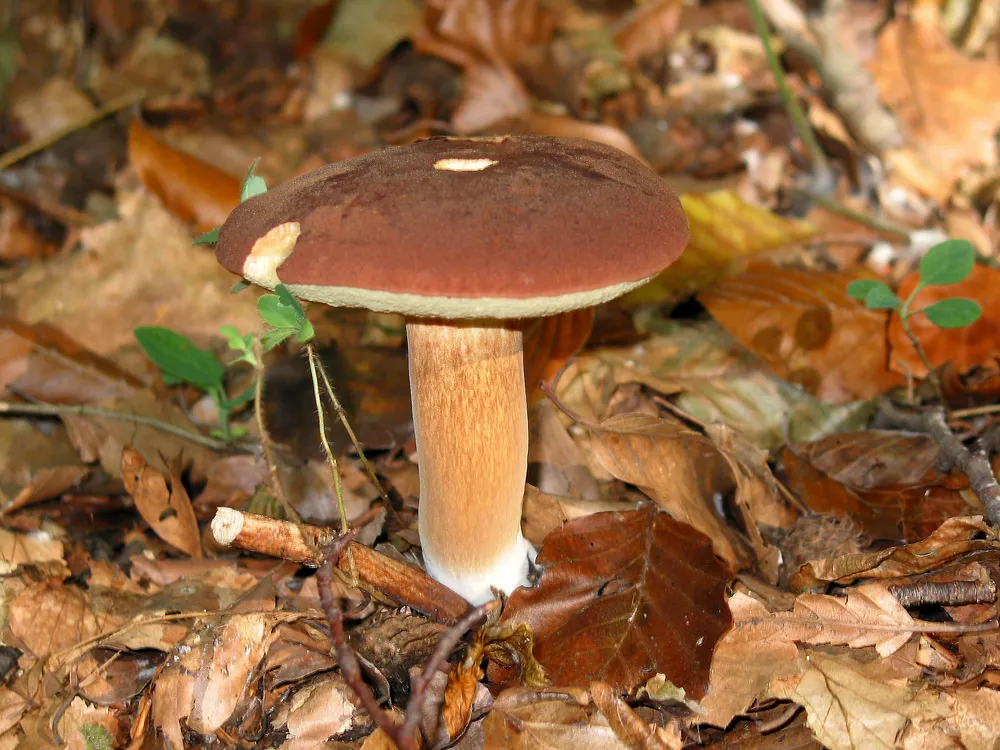
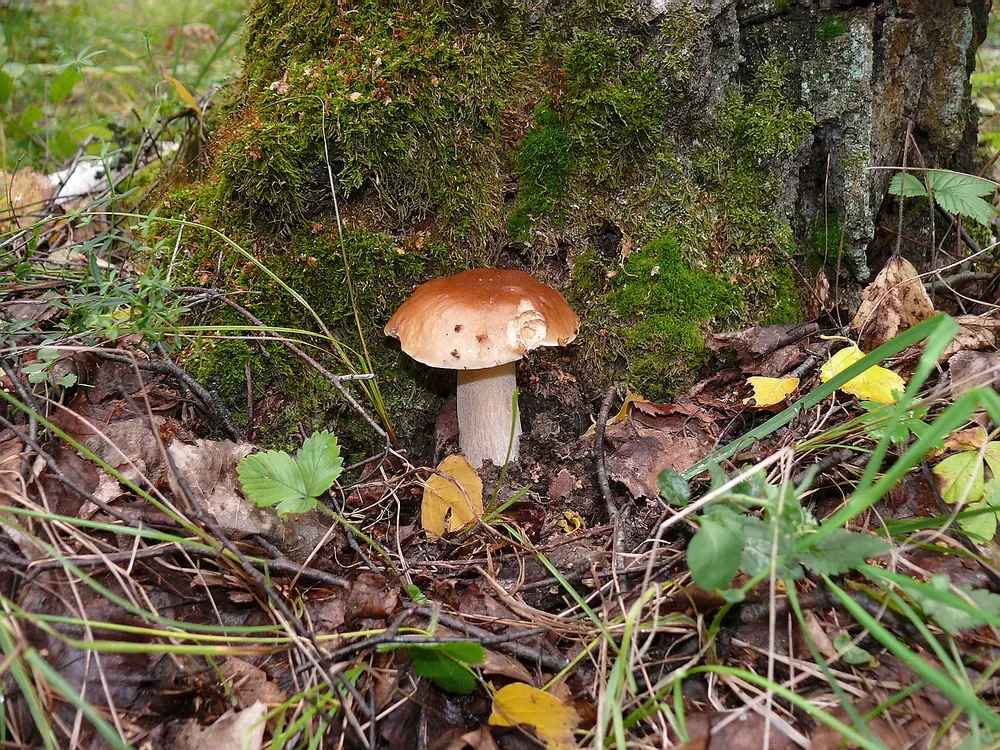
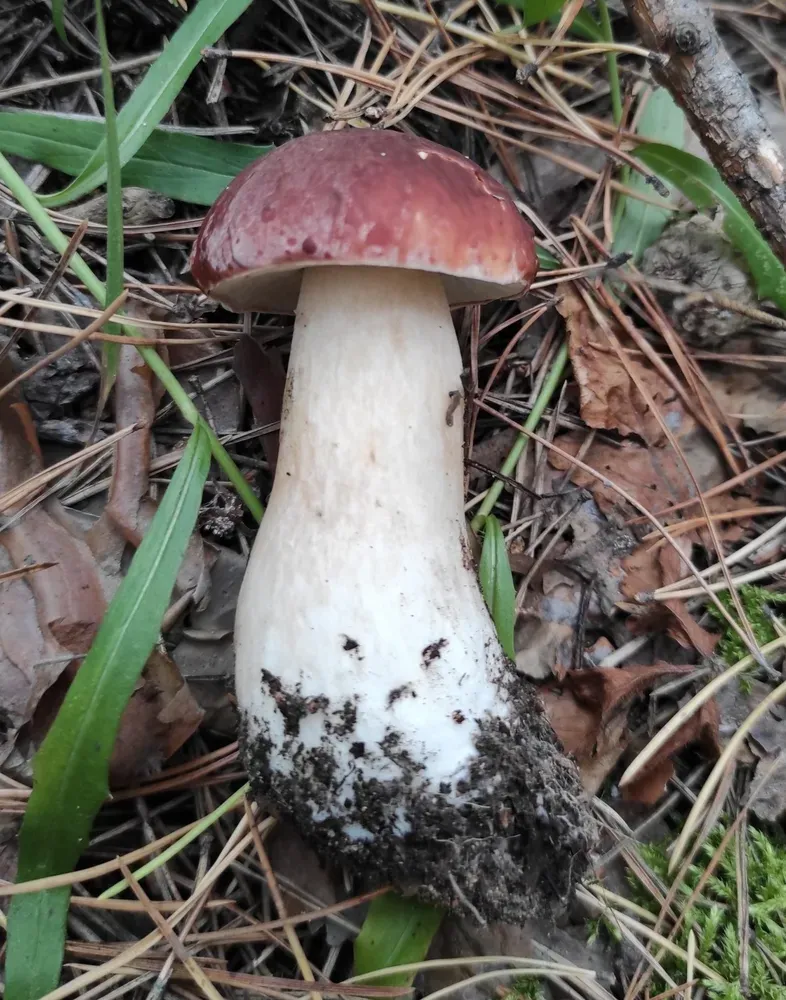
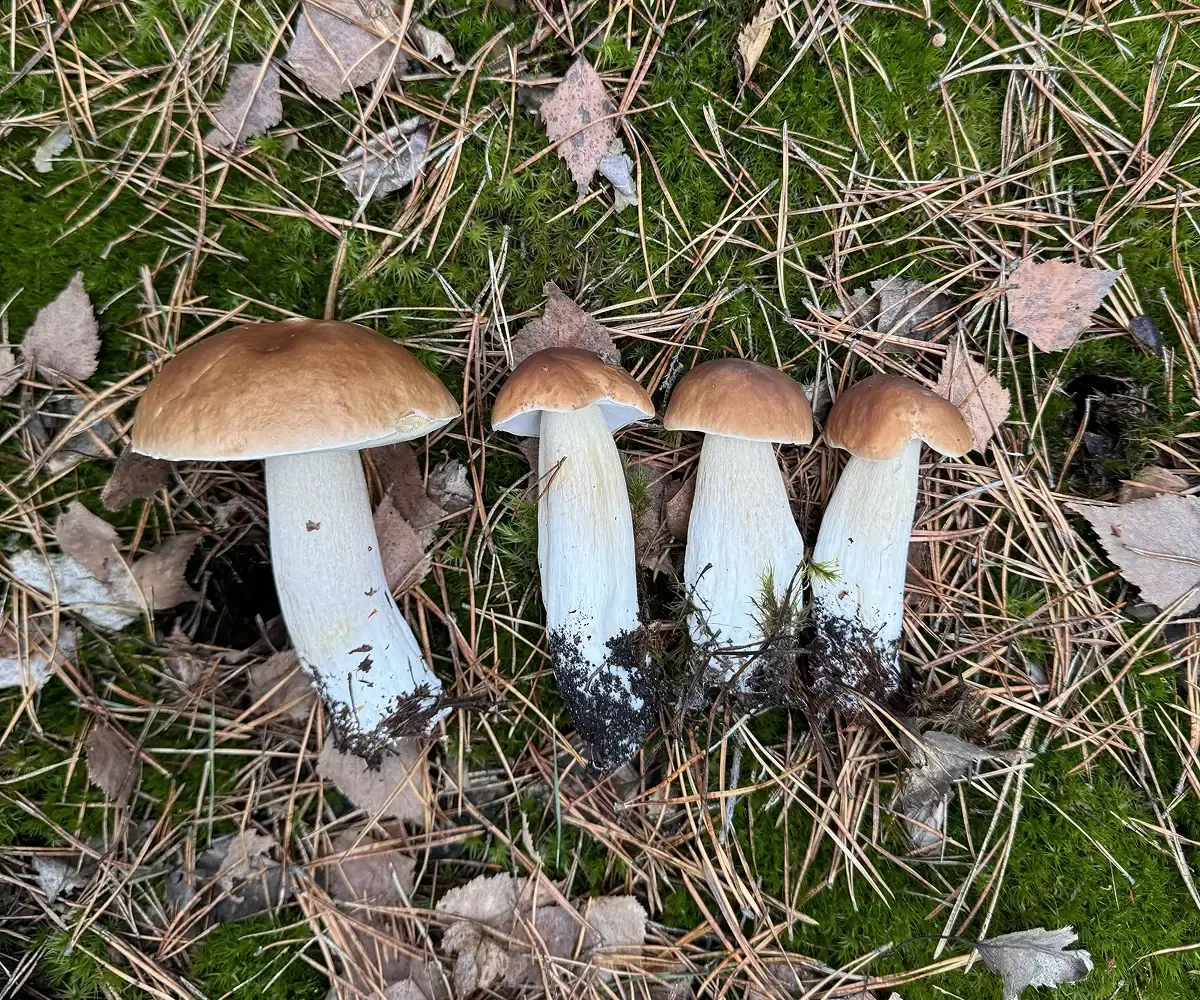
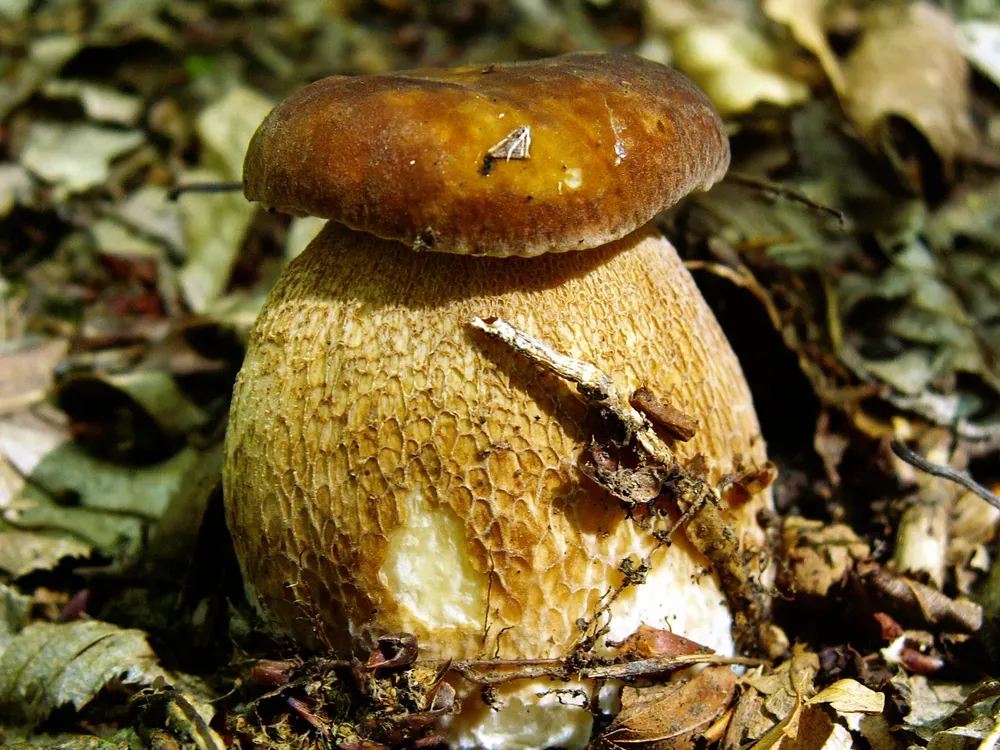
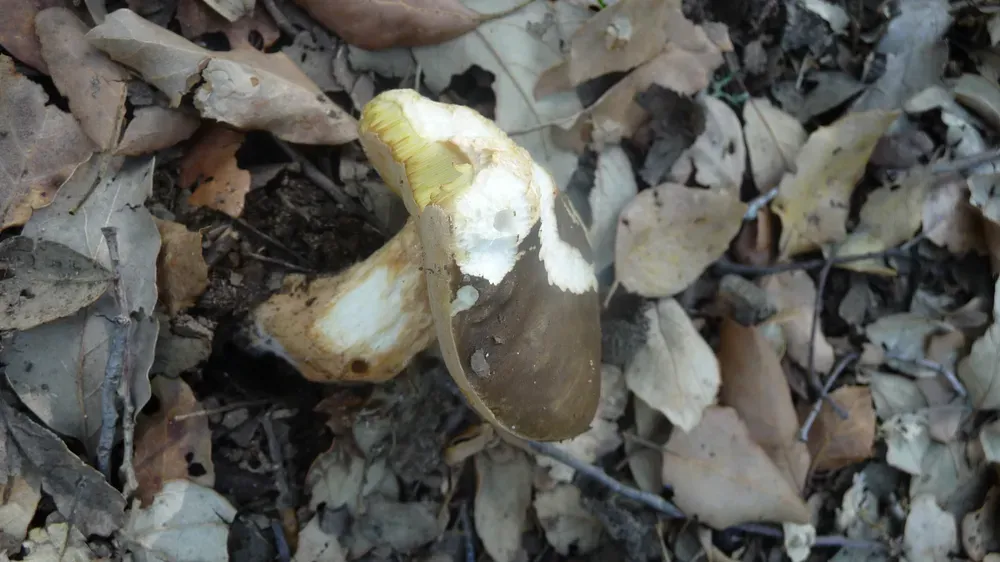
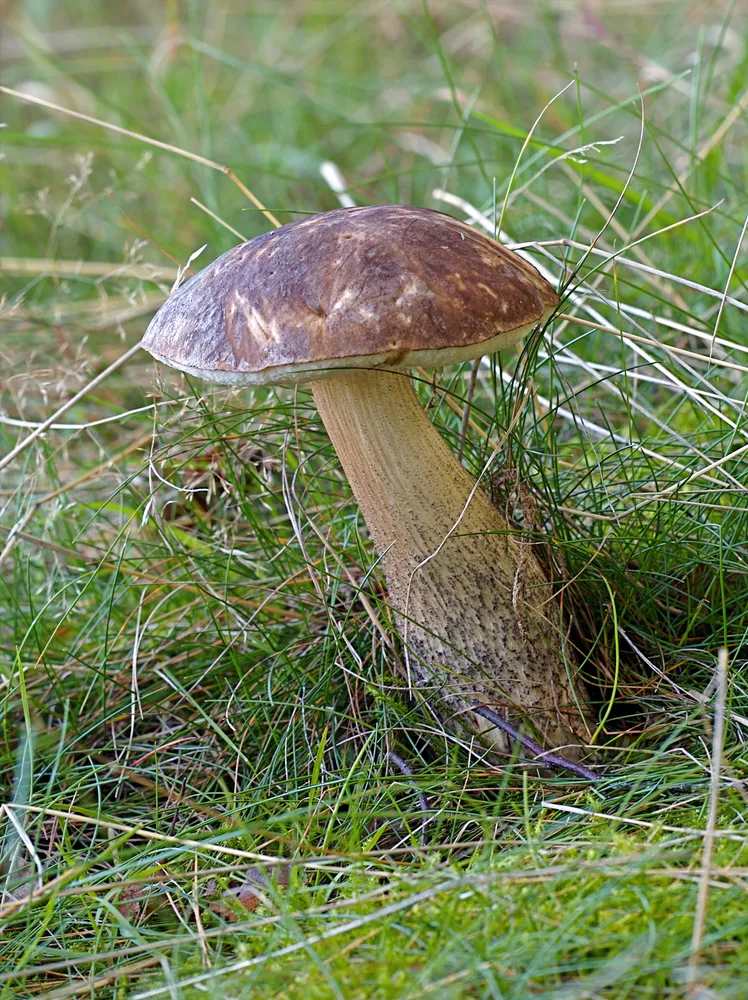
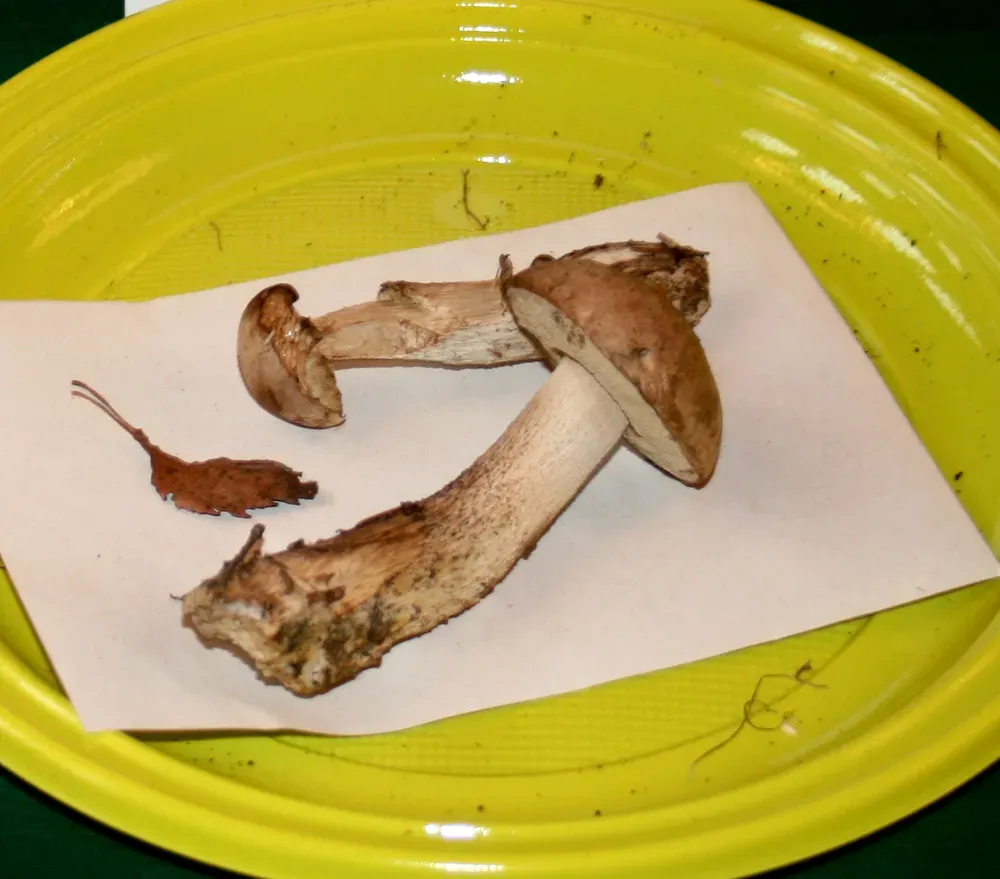
Mushrooms of the same genus and habitat — to study side by side and never mix up.
Frequently asked questions
Is it safe to eat?
Most sources state that it is edible after cooking. However, some people have an allergic or individual reaction (stomach upset). The first time, try a small portion after boiling it for 10–15 min and wait 24 hours.
Can it be confused with a poisonous mushroom?
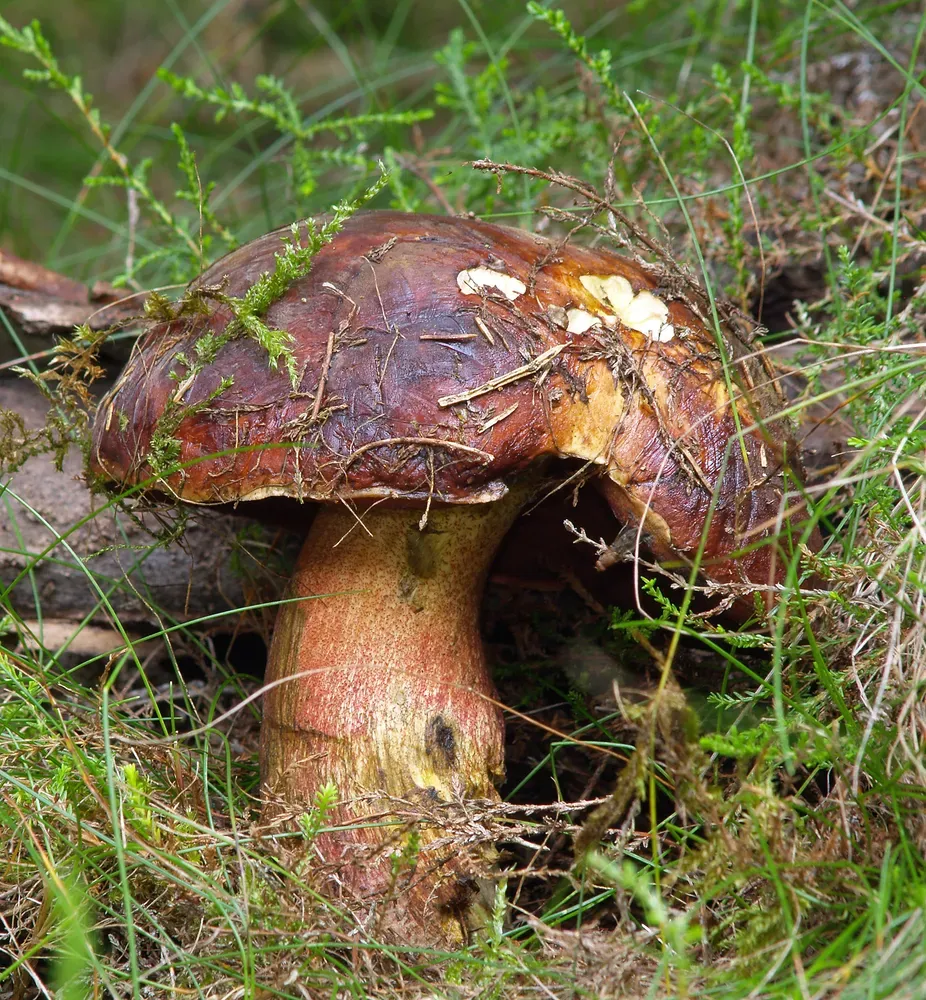
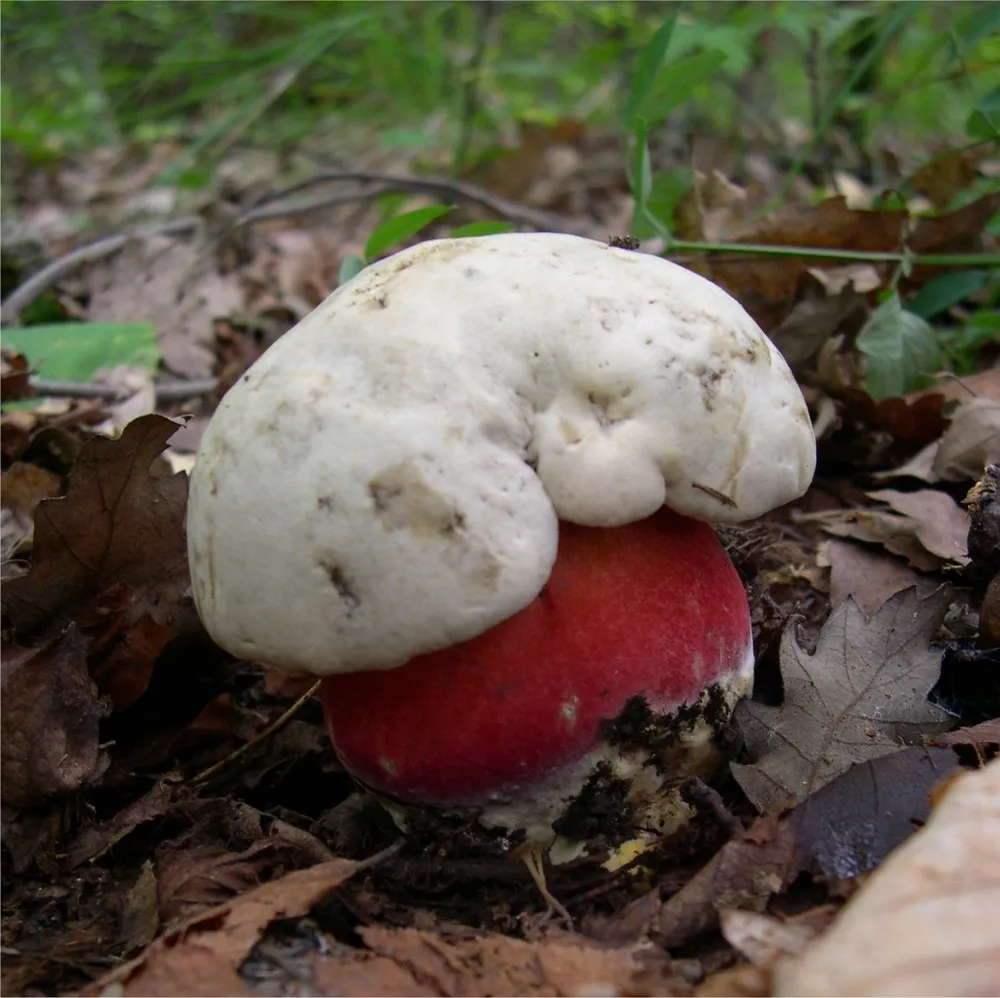
The most dangerous look-alike is Boletus sensibilis (poisonous, but not deadly). The key difference: B. sensibilis turns blue instantly and strongly when cut. The two-colored bolete turns blue SLOWLY and weakly. If your red-and-yellow bolete turns blue sharply within 5–10 seconds — it is not the two-colored bolete.
Where to look in Ukraine?
Zakarpattia, the Carpathian foothills, the southern parts of the Forest-Steppe, mountainous Crimea. Oak and beech forests on limestone or neutral soils. It is not found in conifer forests. Overall a rare species in Ukraine.
When does it fruit?
June — October, peaking in July-September. It loves warm, moderately humid summer days. In very dry or cold years it is rare.
How does it differ from Hortiboletus rubellus?
Hortiboletus rubellus is also a red bolete with yellow pores, but it is smaller (3–7 cm), blues more weakly, and the flesh at the stem base has a characteristic red-dotted pattern. They are very hard to tell apart in the field — you need a microscope or chemical reactions.
Which trees does it form mycorrhiza with?
Mainly with oak (Quercus robur, Q. petraea) and beech (Fagus sylvatica). Sometimes with hornbeam and sweet chestnut. It is not found in conifer forests.
How to cook it?
Clean it and slice it. Boil for 10–15 min in salted water and BE SURE to discard the first water. Then fry with onions or stew in cream. You can dry it, but the aroma is weak. It pickles only moderately well.
Is it worth picking?
That's debatable. The mushroom is technically edible, but its culinary value is low, and there is a risk of individual intolerance. Because it is rare in Ukraine, we recommend leaving it in nature — photograph it for iNaturalist, but leave the fruiting bodies to spread their spores.
Is Two-colored bolete edible or poisonous?
Does Two-colored bolete have gills or pores?
What does the cap of Two-colored bolete look like?
What does the stem of Two-colored bolete look like?
Sources
- [1]Вікіпедія (українська)
- [2]Mushrooms Demystified, David Arora
- [3]Mushrooms (Roger Phillips), Roger Phillips
- [4]Визначник грибів України, Зерова М.Я. та ін. (1979)
- [5]iNaturalist Ukraine
- [6]Species Fungorum
- [7]Index Fungorum
- [8]GBIF
- [9]MycoBank Database
- [10]Атлас грибів України, Зеров Д.К. (1979)