Royal boleteButyriboletus regius
Expert-verifiedUpdated October 3, 2026
Passport
- Edibility
- Edible
- Season
- Jun — Sep
- Hymenophore
- Pored
- Cap color
- Pink
- Size
- Large (over 15 cm)
- Smell
- Pleasant
- Reviewed
- Yes ✓
Quick answers
Where to look?
Deciduous forest
When does it appear?
Jun — Sep
Active months: June, July, August, September.
How to recognize it? Three signs
- Cap color: Pink, Red
- Cap shape: Convex
- Smell: Pleasant
Fruiting season
June – September
Description
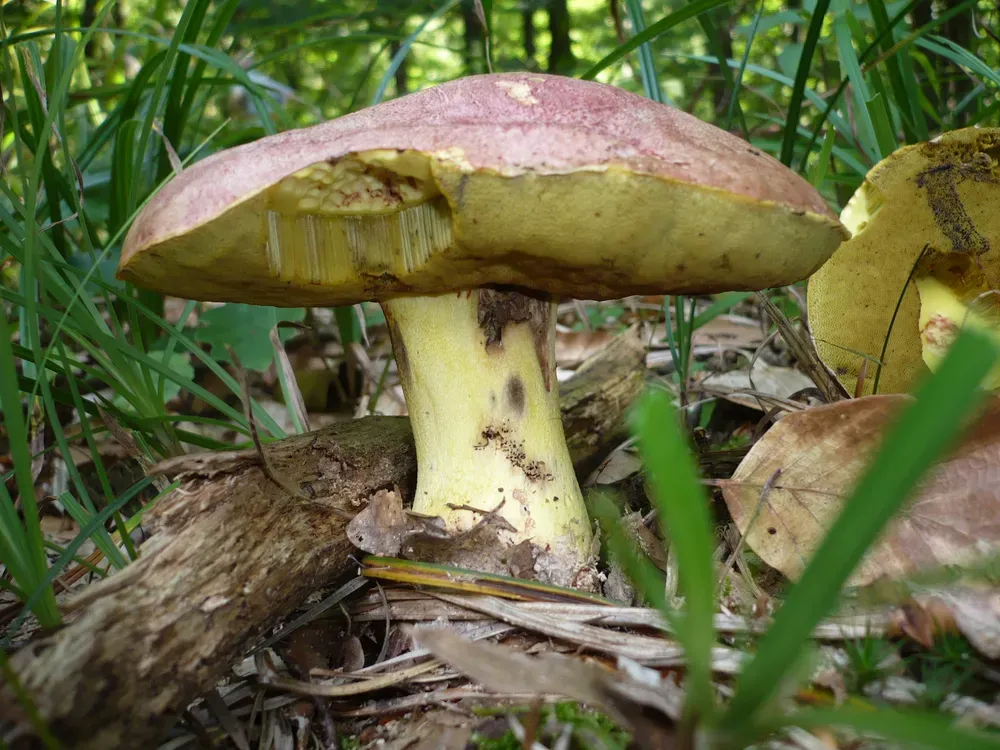
The royal bolete (Butyriboletus regius) is one of the most beautiful and rarest boletes in Ukraine's fungal flora. Its pinkish-raspberry cap on a lemon-yellow stem looks as if an artist had painted it. Mycologists value this species both for its flavor and its looks: finding a royal bolete in the wild is a real stroke of luck.
This is a warmth-loving, southern species. In Ukraine it grows mainly in Zakarpattia and Prykarpattia, in beech and oak-beech woods on carbonate (limestone) soils. It does not occur in the northern regions or the steppe. Its mycorrhizal partner is beech, less often oak and hornbeam. Because it is rare, it is listed in the Red Data Book of Ukraine, so picking wild specimens is prohibited.
When this mushroom does make it to the table (for example, from cultivated sites in Southern Europe), it is prized on a par with porcini: the firm yellow flesh with a sweetish, nutty flavor does not darken when cut and is perfect for frying and drying. If you spot a royal bolete in Zakarpattia, take a photo and walk on by — let it release its spores and carry on its line.
Cap
Cap 5–15 cm, hemispherical in young mushrooms, then cushion-shaped and flattened-convex. Color pinkish raspberry, pinkish red, darkening with age to brownish red. Surface matte, slightly fibrous in dry weather, a little slimy in wet weather. The cap skin does not peel. The cap margin is rolled inward at first, then straightens out.
Hymenophore
Hymenophore tubular, free or slightly notched at the stem. Lemon yellow, turning ochre-yellow with age, olive in old mushrooms. Pores small and round. When pressed it may turn faintly blue or not change color at all — unusual for a bolete.
Stem
Stem 5–14 cm tall, 2–6 cm thick, bulbous at the base, then cylindrical. Color lemon yellow to ochre-yellow, with a clearly visible fine net on the upper part (a hallmark of the genus Butyriboletus). Sometimes with a pinkish tinge at the base.
Flesh
Flesh lemon yellow, reddish under the cap skin, very firm and heavy. When cut, the color does not change or turns slightly blue in spots. This is another important diagnostic feature — most pink-capped boletes turn blue instantly and strongly.
Smell
Smell faint, pleasantly mushroomy, with notes of fresh hazelnut. Taste mild, sweetish, with no bitterness and no peppery notes.
›Scientific synonyms (1)
Boletus regius Krombh.
Lookalikes
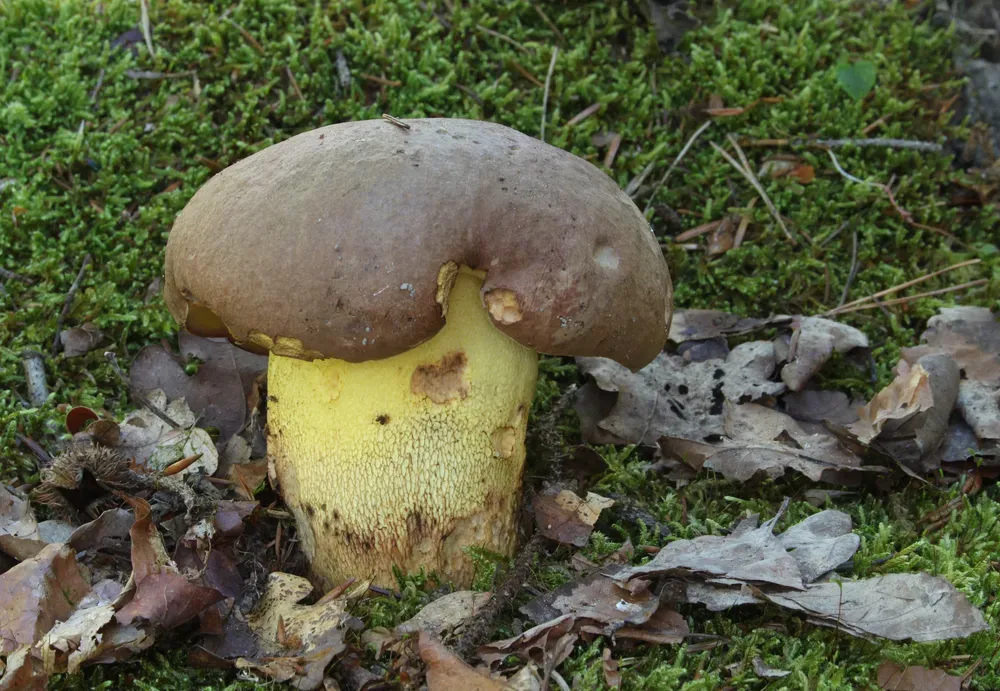
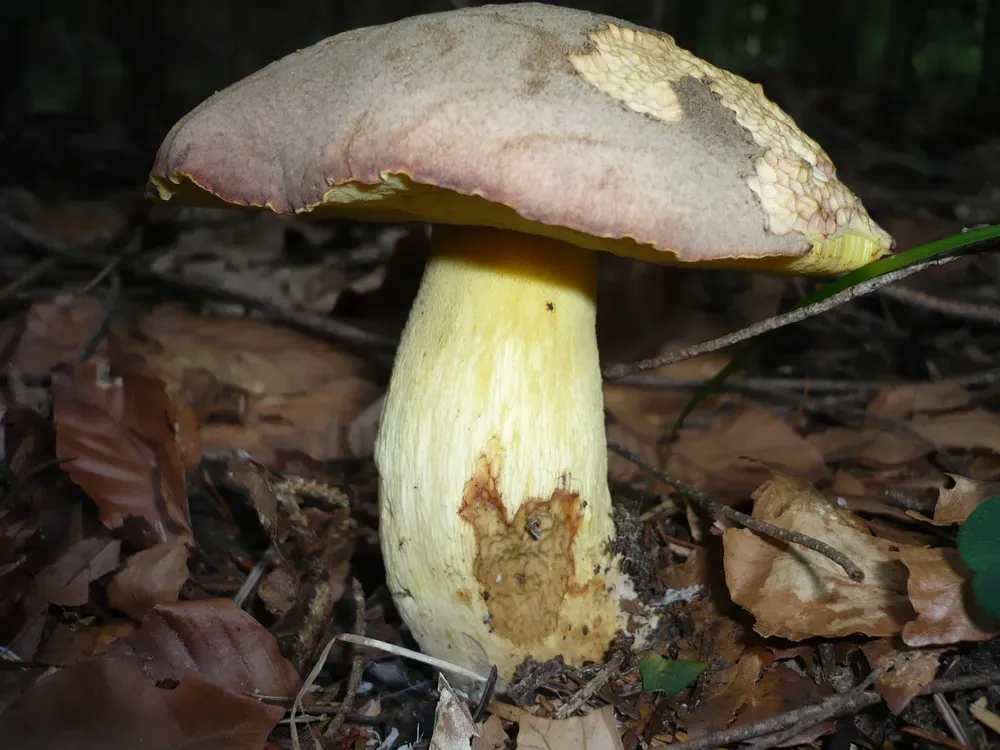
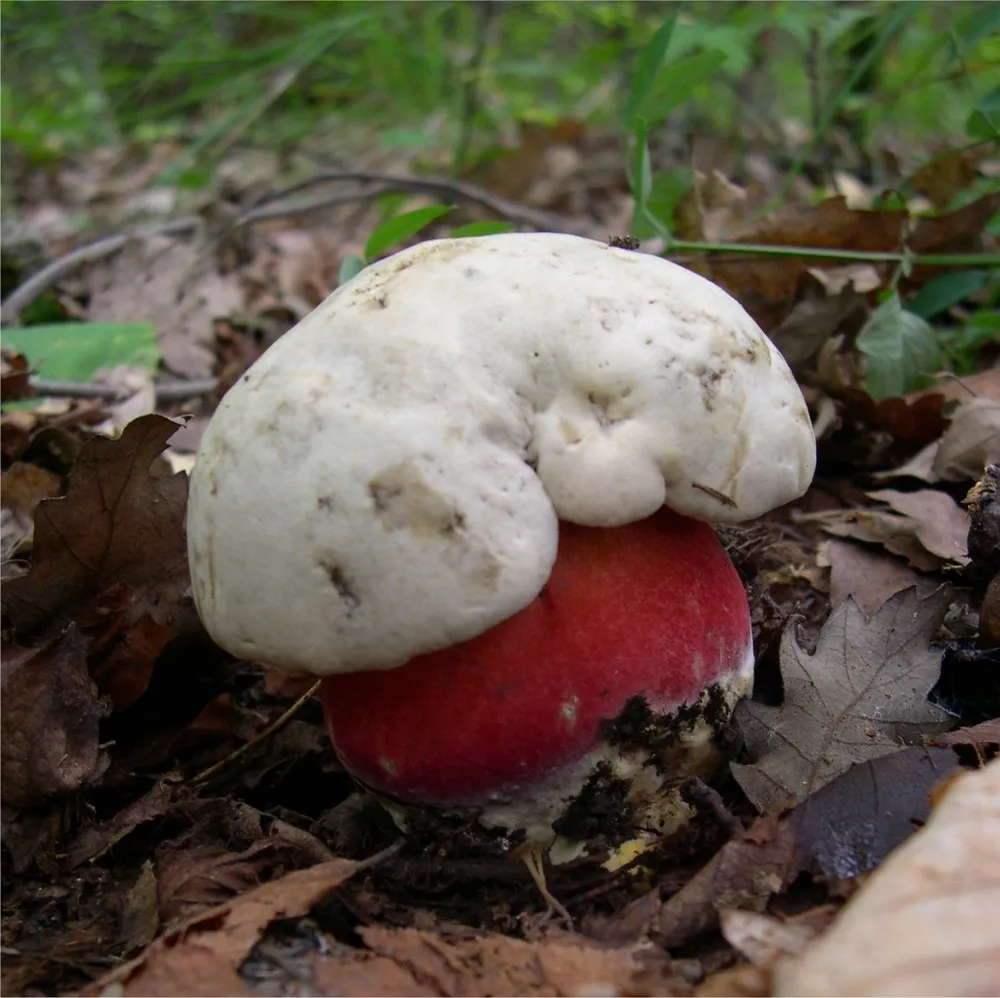
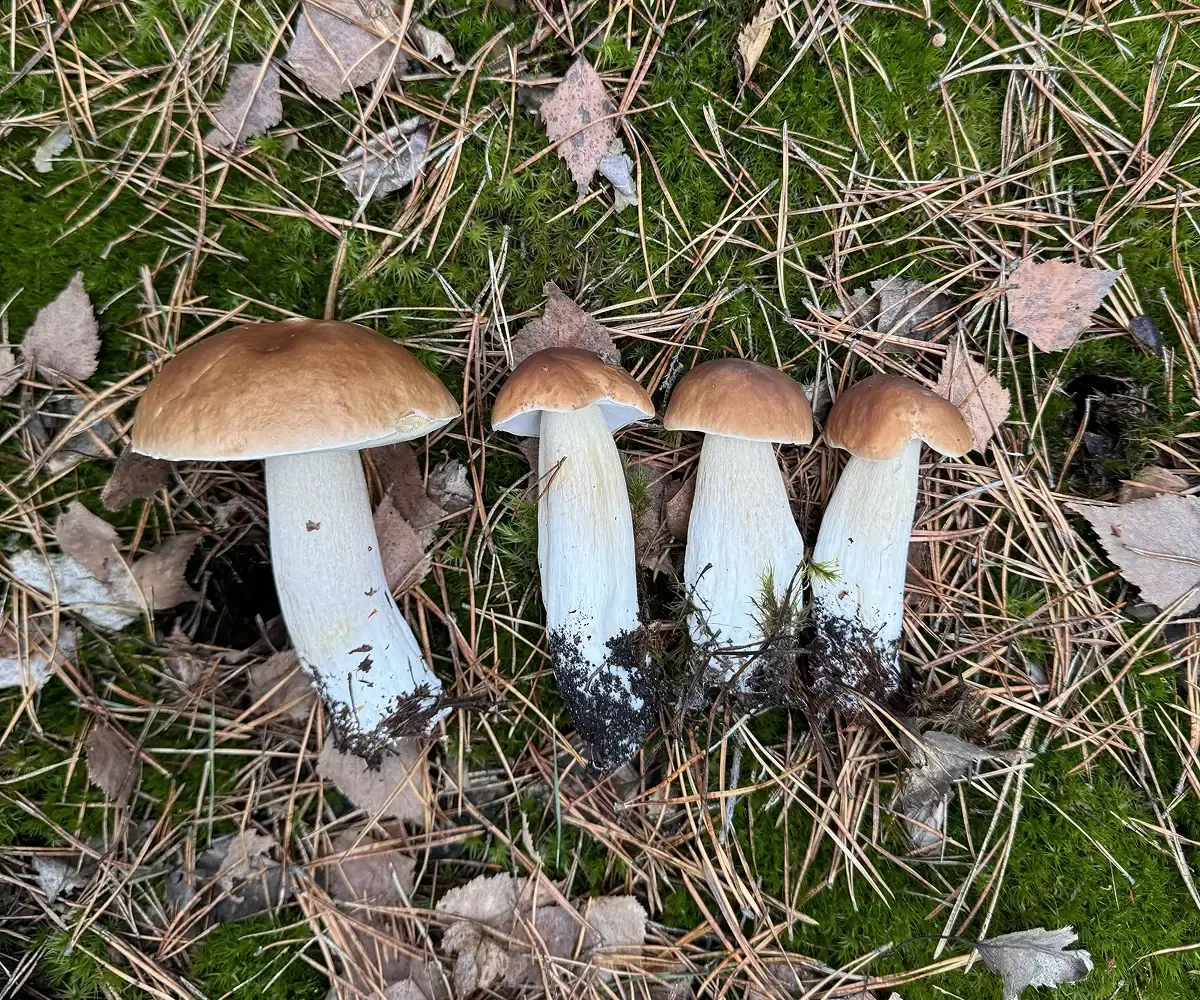
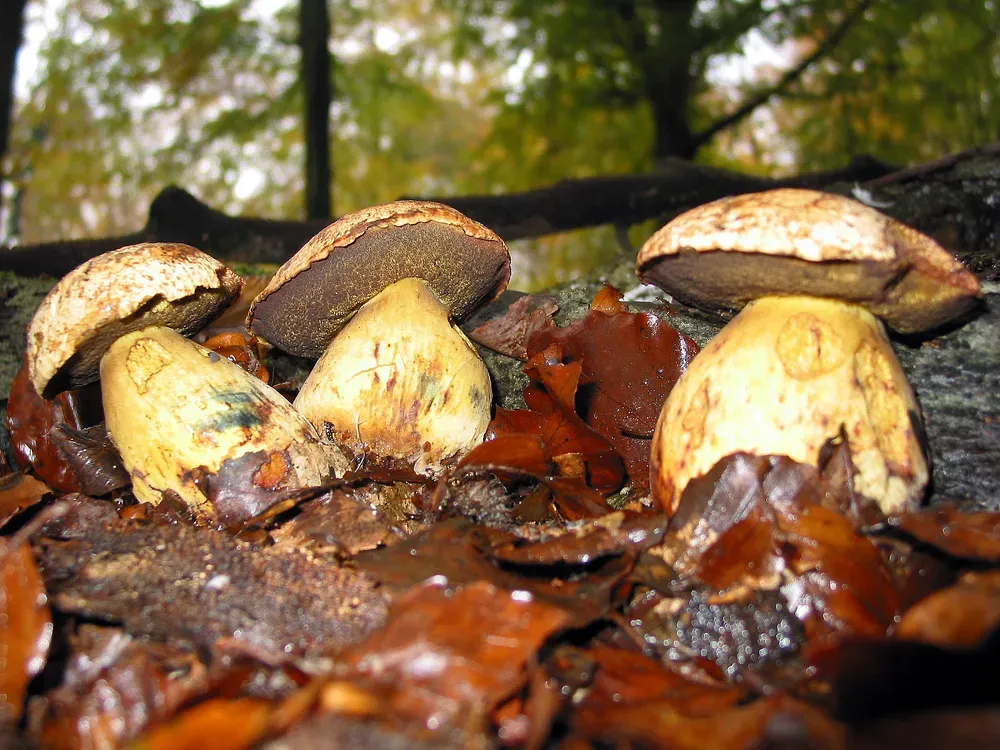
Related species
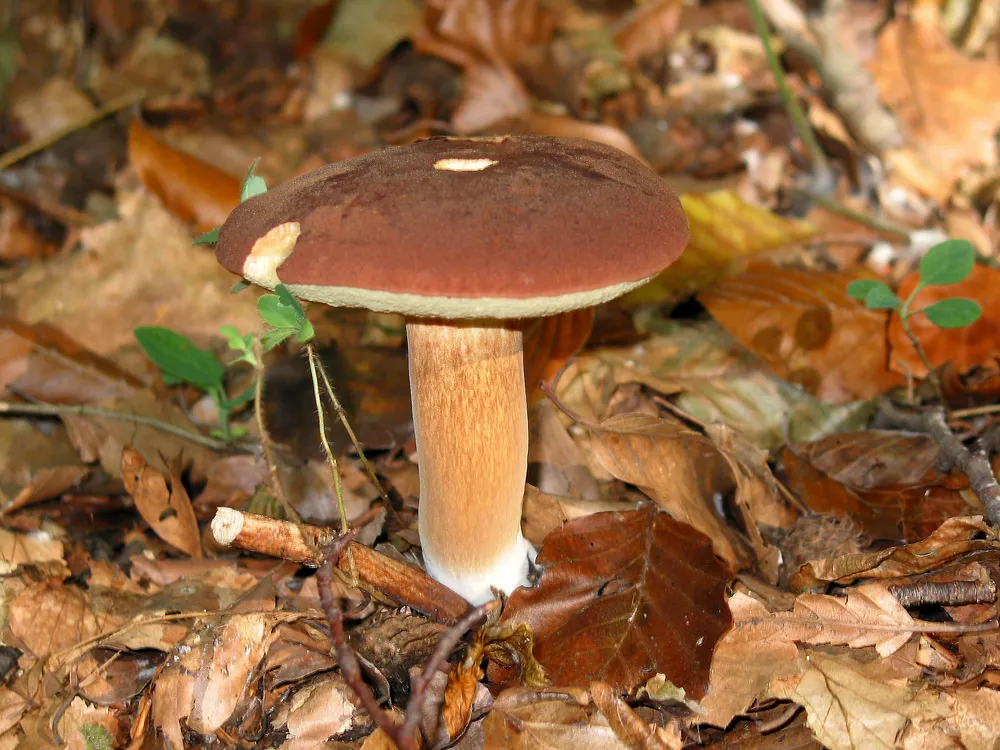
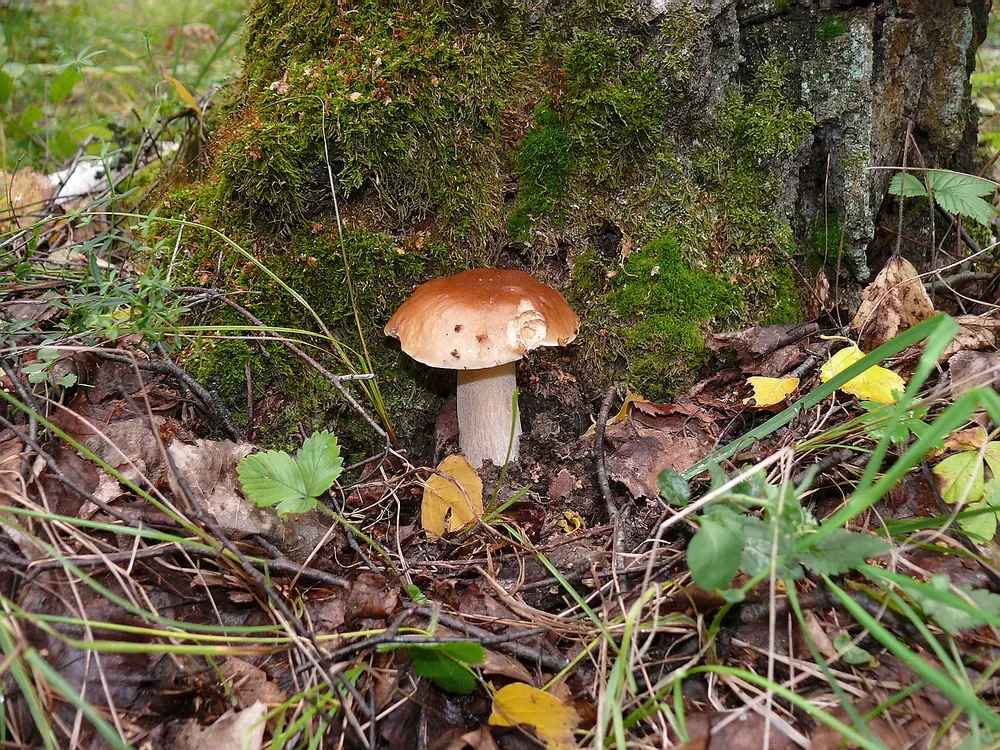
Mushrooms of the same genus and habitat — to study side by side and never mix up.
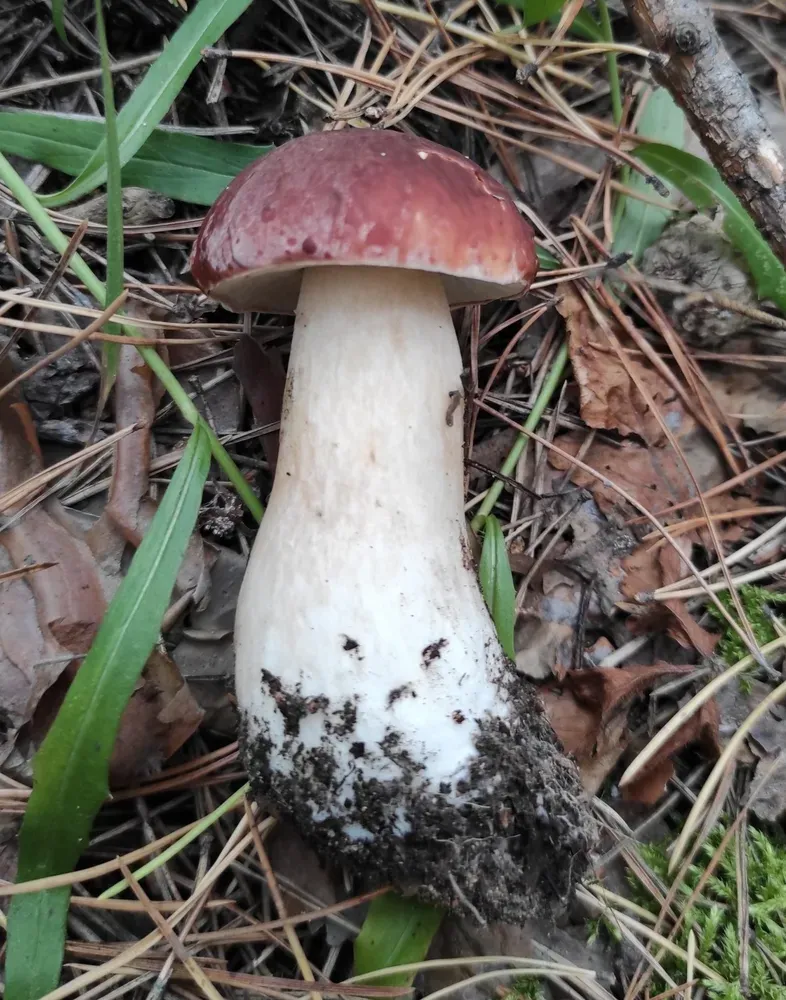
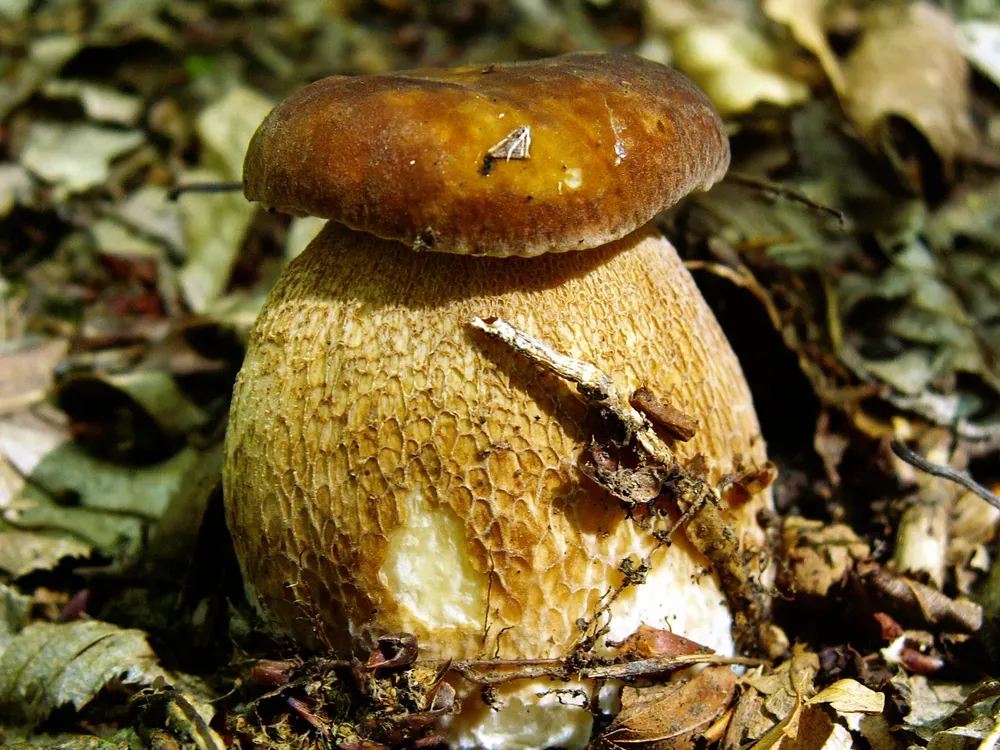
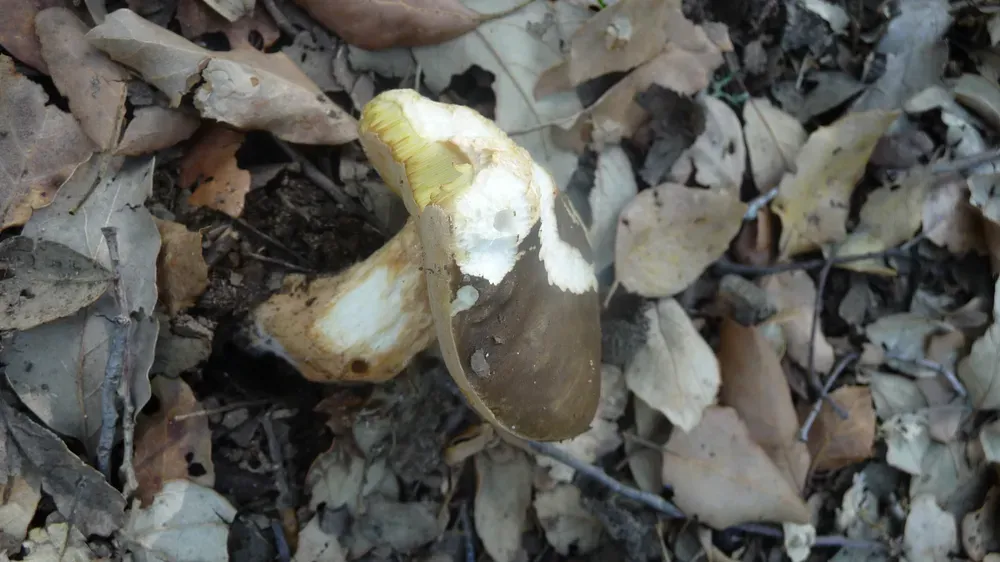
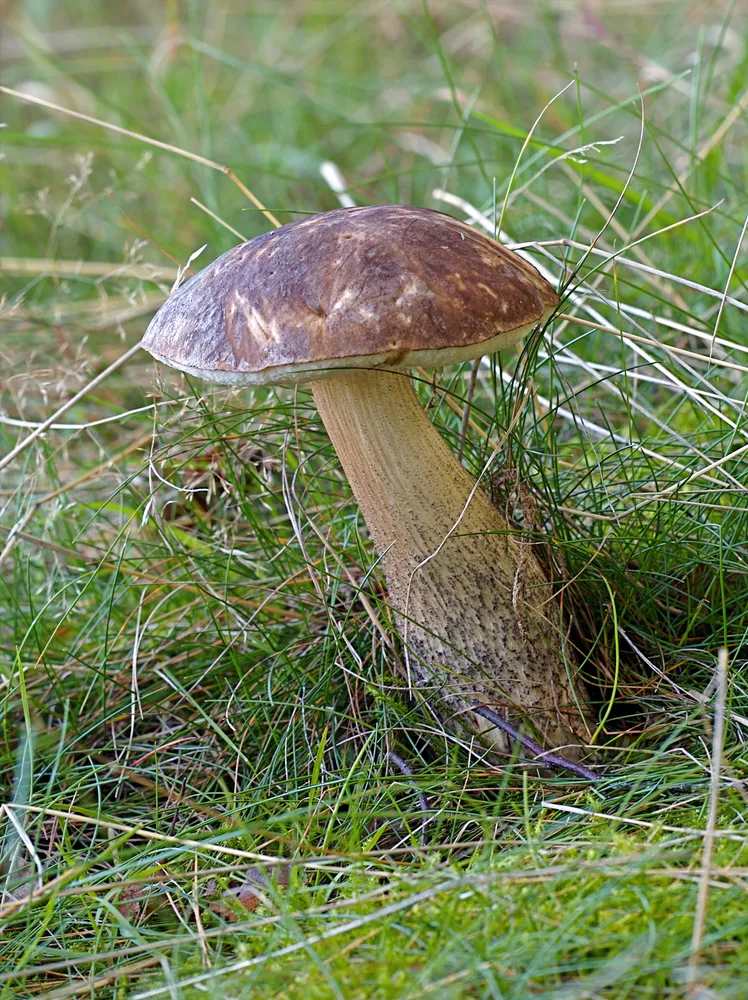
Related reading
Frequently asked questions
Can the royal bolete be confused with a poisonous mushroom?
The biggest risk is confusing it with the devil's bolete (Rubroboletus satanas), which also has a pinkish-red cap and grows in deciduous woods. The key difference: the devil's bolete has red-orange pores, and its flesh turns blue instantly and strongly. The royal bolete has yellow pores, and its flesh either does not change or turns only faintly blue. If in doubt, leave it.
Can you pick the royal bolete in Ukraine?
No. The species is listed in the Red Data Book of Ukraine, and picking it is prohibited. If you find one, leave the mushroom in nature, take a photo and report it to local mycologists via iNaturalist or specialist groups.
Where does the royal bolete grow in Ukraine?
Mainly in Zakarpattia and Prykarpattia, in beech and oak-beech woods on limestone soils. It likes warm, sun-baked slopes. It does not grow in the northern regions or the steppe.
When does the royal bolete appear?
June to early September, peaking in July–August. It loves warm, moderately moist weather. After cold downpours it may vanish for weeks.
How is it different from other Butyriboletus species?
Two more similar species of the genus Butyriboletus occur in Ukraine — the oak bolete (B. appendiculatus, yellowish cap) and the pale bolete (B. fechtneri, grayish white). The royal bolete stands out with its pinkish-raspberry cap — the most colorful of the whole genus.
Does the flesh turn blue when cut?
In the royal bolete the flesh either does not change or turns blue very faintly and slowly. If the flesh turns sharply blue right away, it is a different species (possibly the devil's bolete or another dangerous bolete). This is an important warning sign.
Which trees does it form mycorrhiza with?
Mainly with European beech (Fagus sylvatica); in Southern Europe, with chestnut and oak. In Ukraine it is found almost exclusively in beech and mixed oak-beech stands.
How can I tell that the mushroom I found is really a royal bolete?
Check four features together: a pinkish-raspberry cap (with no red or orange tones in the pores), a yellow hymenophore, a lemon-yellow stem with a net, and flesh that does not turn blue or turns blue only very slightly. If all four match, it really is a royal bolete. But to repeat: in Ukraine we do not pick it.
Is Royal bolete edible or poisonous?
Does Royal bolete have gills or pores?
What does the cap of Royal bolete look like?
What does the stem of Royal bolete look like?
Sources
- [1]Вікіпедія (українська)
- [2]Атлас грибів України, Зеров Д.К. (1979)
- [3]MycoBank Database
- [4]Index Fungorum
- [5]GBIF
- [6]iNaturalist Ukraine