Pale boleteButyriboletus fechtneri
Expert-verifiedUpdated October 3, 2026
Passport
- Edibility
- Edible
- Season
- Jun — Sep
- Hymenophore
- Pored
- Cap color
- White
- Size
- Large (over 15 cm)
- Smell
- Pleasant
- Reviewed
- Yes ✓
Quick answers
Where to look?
Deciduous forest
When does it appear?
Jun — Sep
Active months: June, July, August, September.
How to recognize it? Three signs
- Cap color: White, Cream, Grey
- Cap shape: Convex
- Smell: Pleasant
Fruiting season
June – September
Description
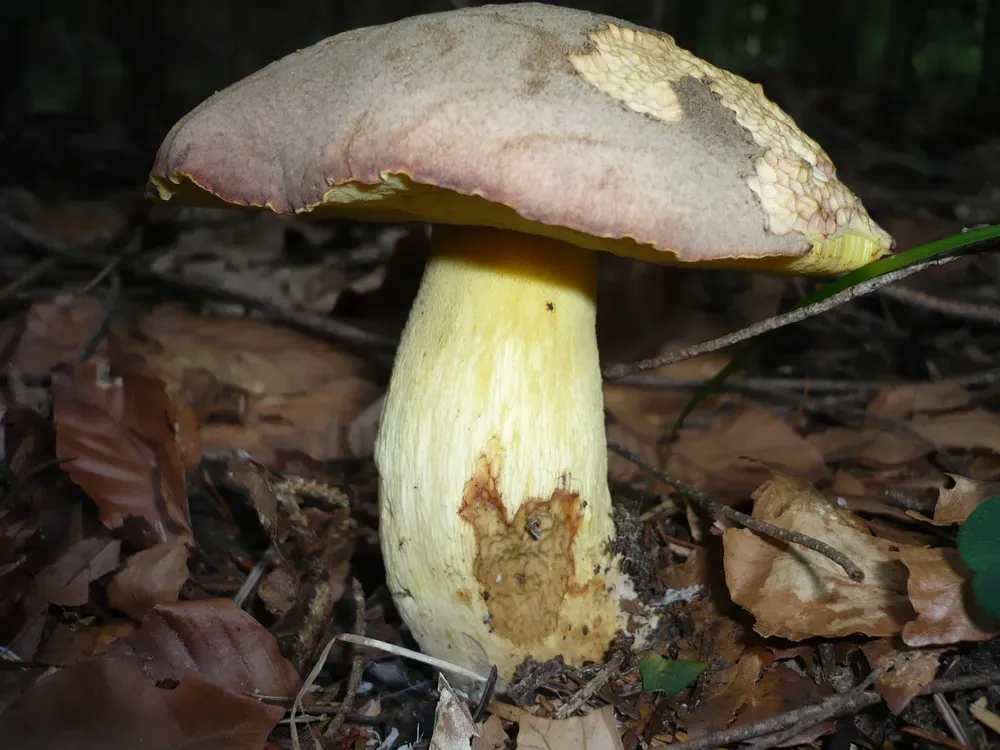
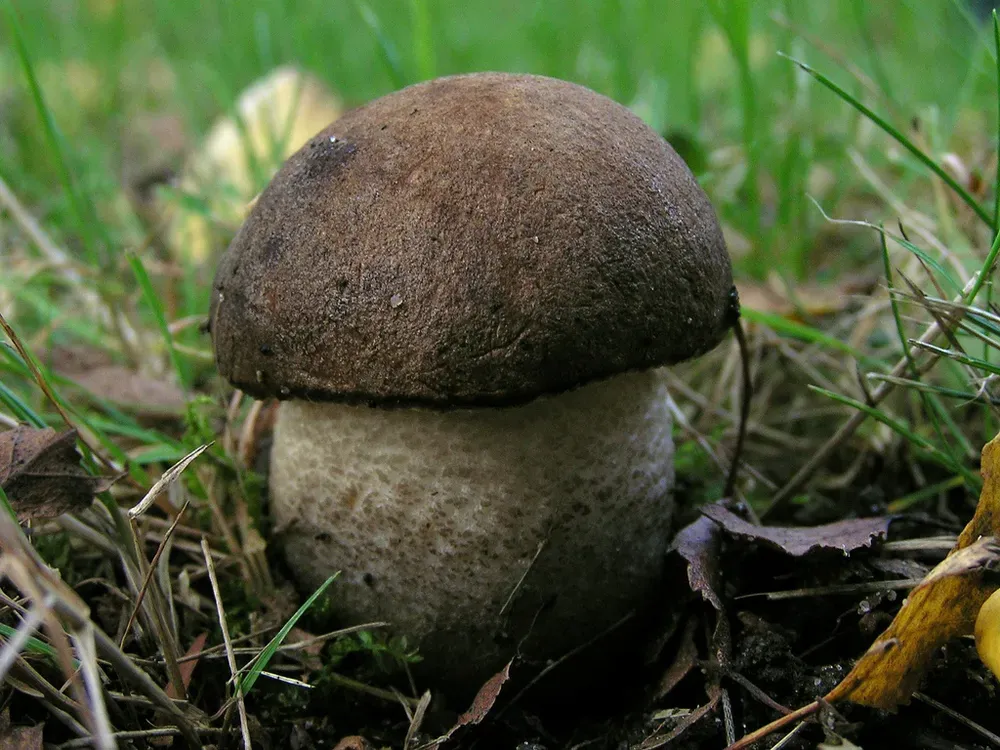
The pale bolete (Butyriboletus fechtneri) is the lightest-colored of the three Ukrainian representatives of the genus Butyriboletus (alongside the royal bolete and the oak bolete). Unlike the bright pink royal bolete and the brown oak bolete, it has a pale gray, creamy white or silvery gray cap. It is sometimes even called the “silver bolete” — for the silvery sheen of the young cap, rare among boletes.
A warmth-loving species, it forms mycorrhiza with oak and beech on limestone soils. In Ukraine it is rare and listed in the Red Data Book. Reliable finds are known from Zakarpattia, the Ternopil and Khmelnytskyi regions, and mountainous Crimea. It does not occur in the northern regions or the steppe. It often grows on sunny forest edges of south-facing slopes — where the ground warms up to early-summer heat.
Edibility — top-tier, a delicacy. Like other Butyriboletus, it has dense, butter-yellow flesh, a mild nutty taste and a rich aroma. In Southern Europe it is prized on a par with porcini. In Ukraine, to repeat, it is in the Red Data Book — wild picking is prohibited. Because of its rarity and the slow recovery of its populations, this species needs gentle treatment: if you find one, take a photo, report it to mycologists via iNaturalist, and leave the mushroom where it is.
Cap
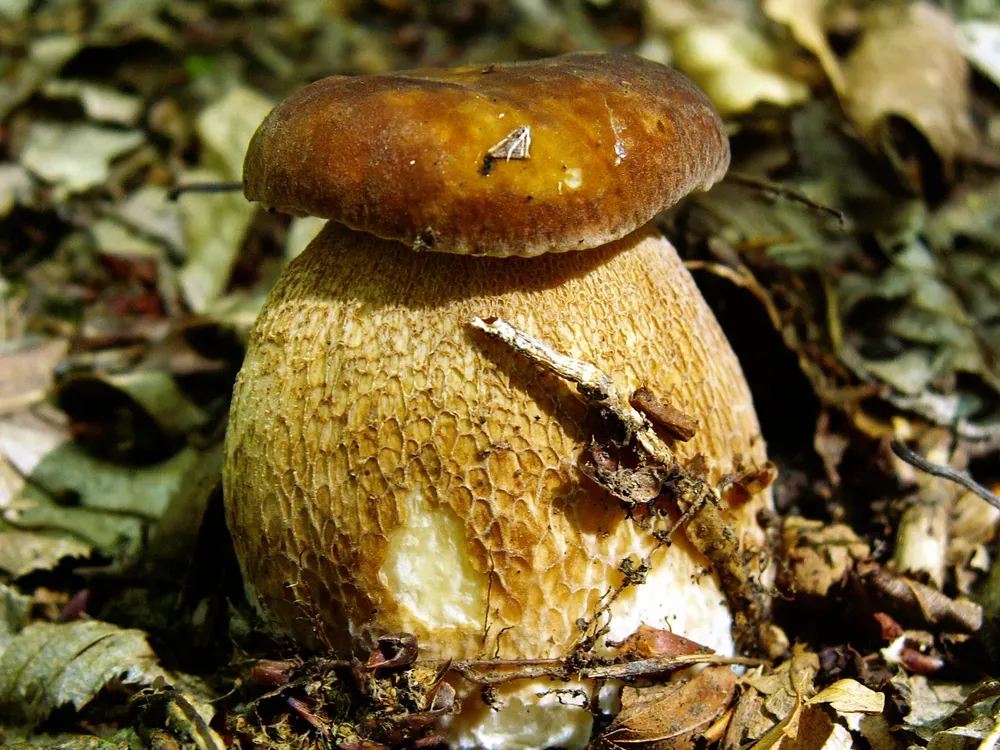
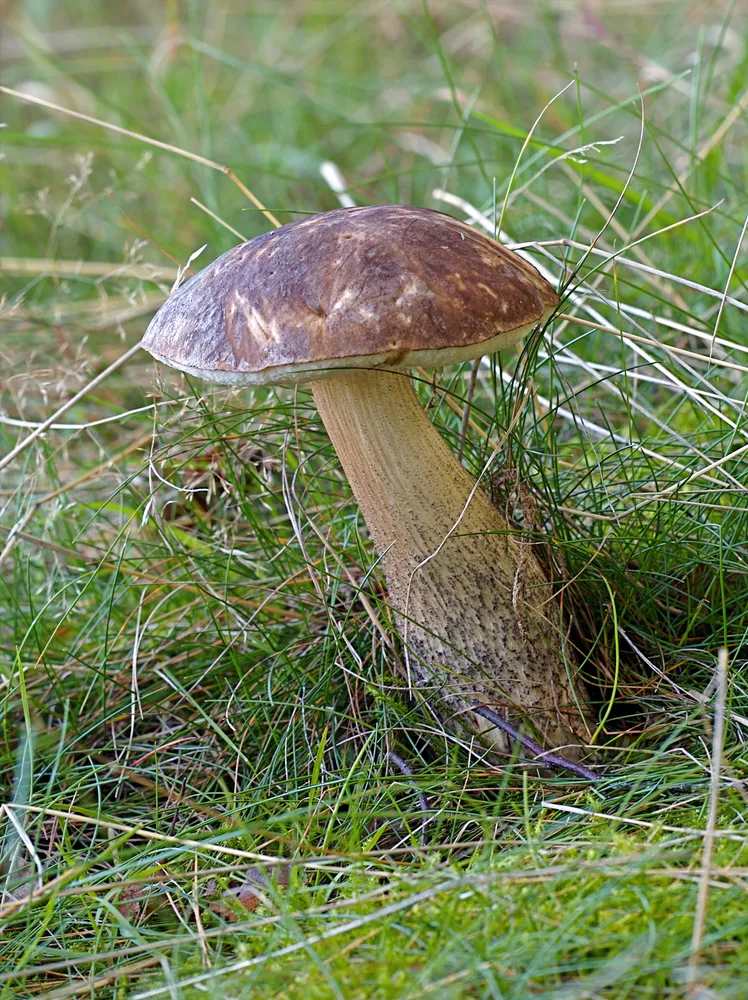
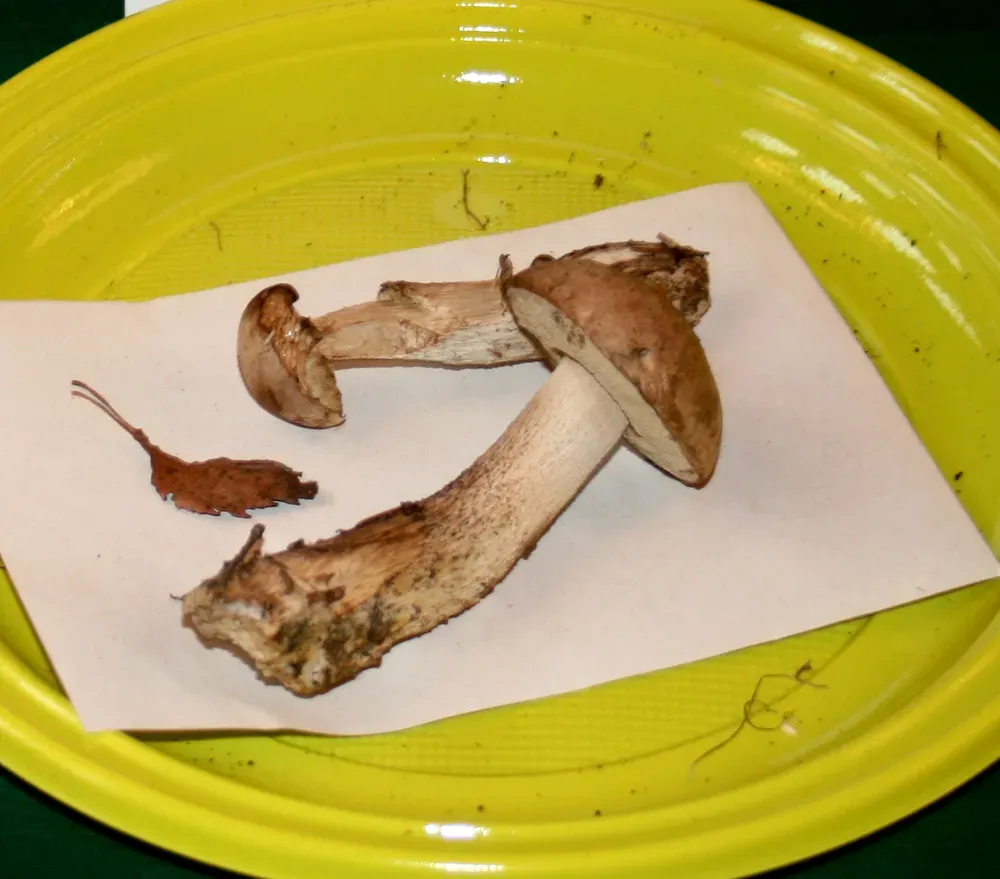
Cap 6–15 cm, hemispherical in young mushrooms, then cushion-shaped. Pale gray, creamy white, silvery grayish, sometimes with a faint pink or ochre tint. Surface matte, slightly sticky in wet weather. Young mushrooms often have a distinctive silvery sheen.
Hymenophore
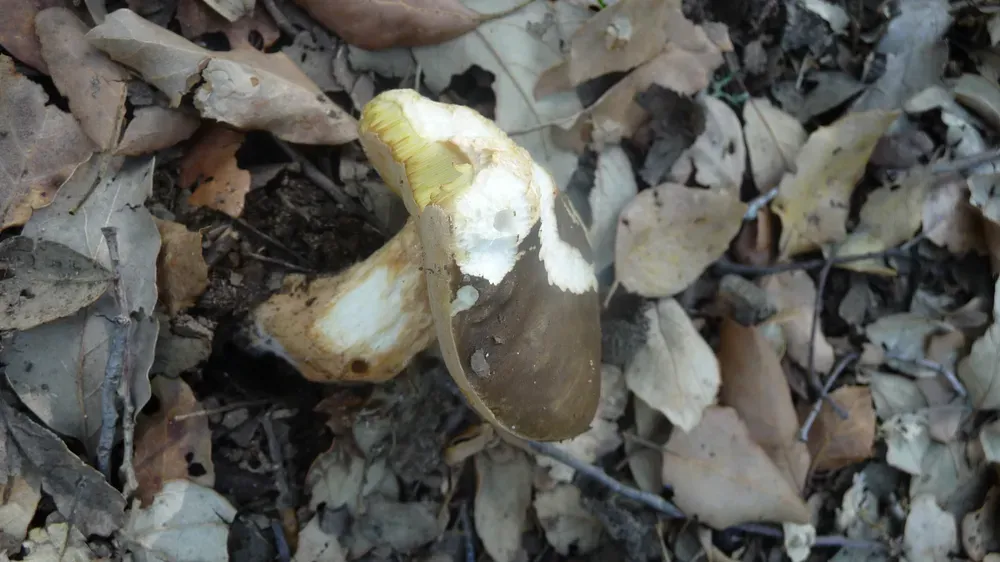
Hymenophor tubular, slightly notched near the stem. Butter-yellow, olive-yellow in mature specimens. Pores small, round. May bruise faintly blue when pressed.
Stem
Stem 5–12 cm tall, 2–4 cm thick, club-shaped in young mushrooms, cylindrical in mature ones. Yellow at the top; the base may have a pink or reddish brown tint. At the top — a fine yellow net (a characteristic feature of the genus).
Flesh
Flesh butter-yellow, very firm in young specimens; may slowly turn blue when cut, especially in the tubes. The stem base sometimes has a pink tint. Texture fibrous, with a pleasant resistance under the knife.
Smell
Smell pleasant, mushroomy and nutty, with a faint honey note. Taste mild, not bitter, with a distinct “buttery” note — a hallmark of the genus Butyriboletus.
›Scientific synonyms (1)
Boletus fechtneri Velen. (1922)
Lookalikes
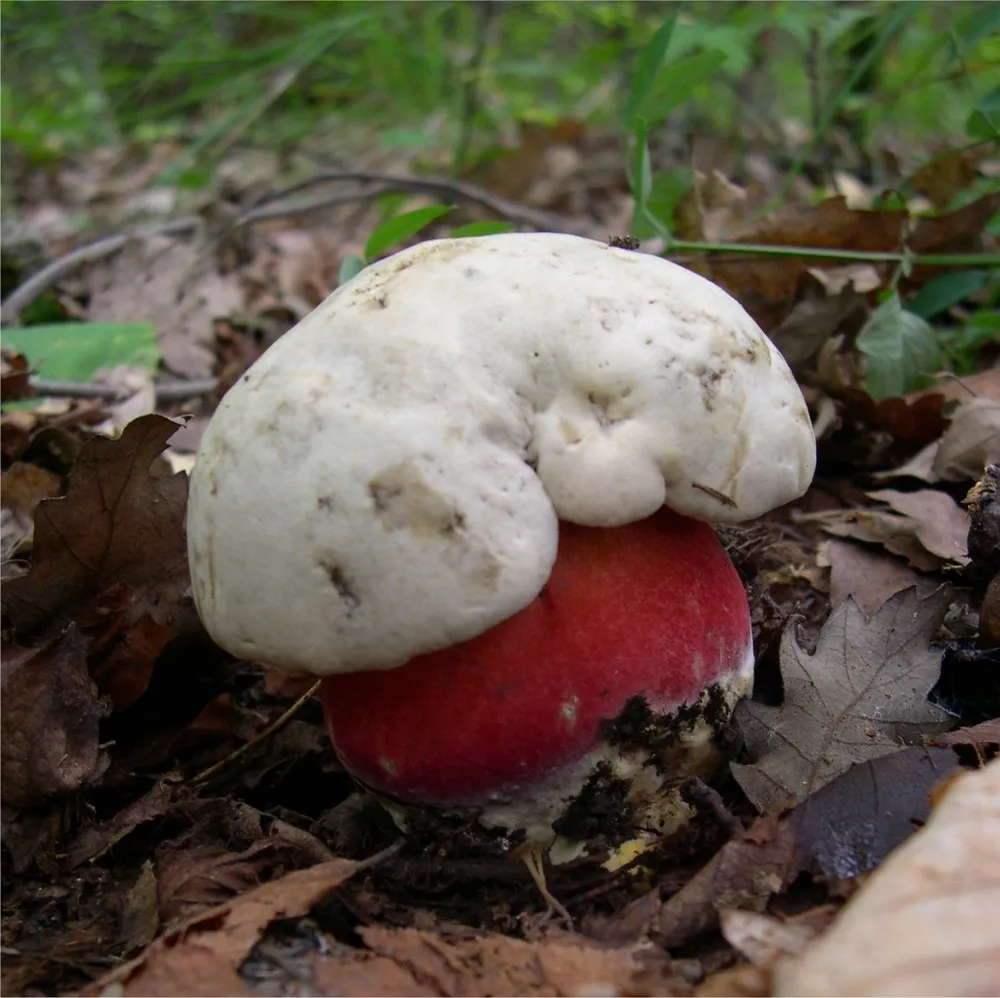
Related species
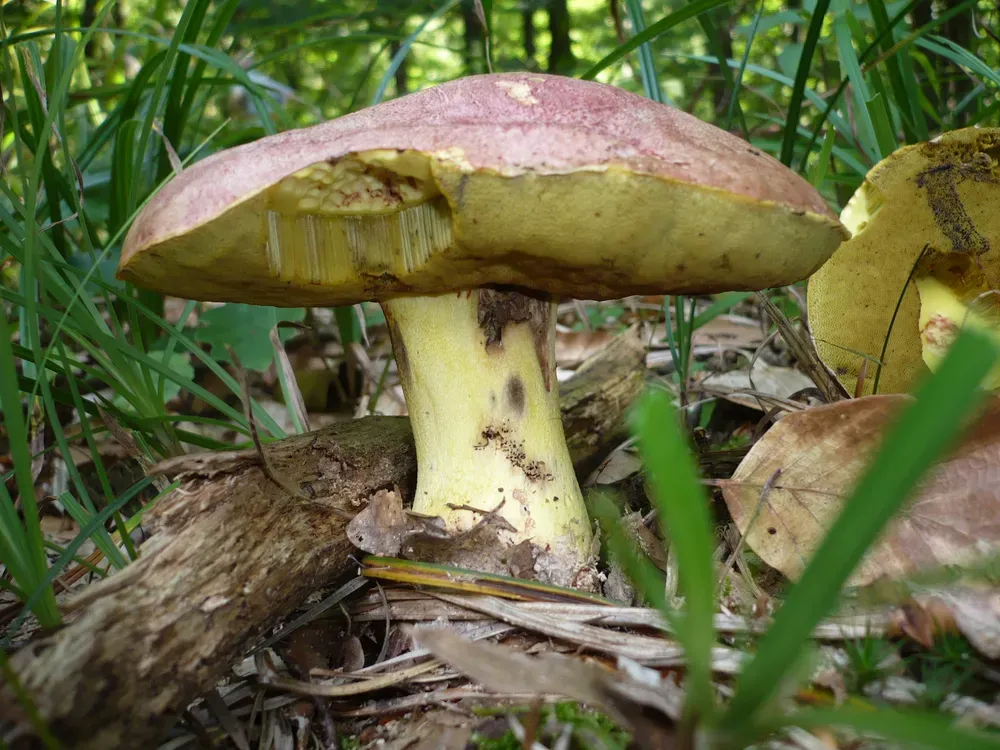
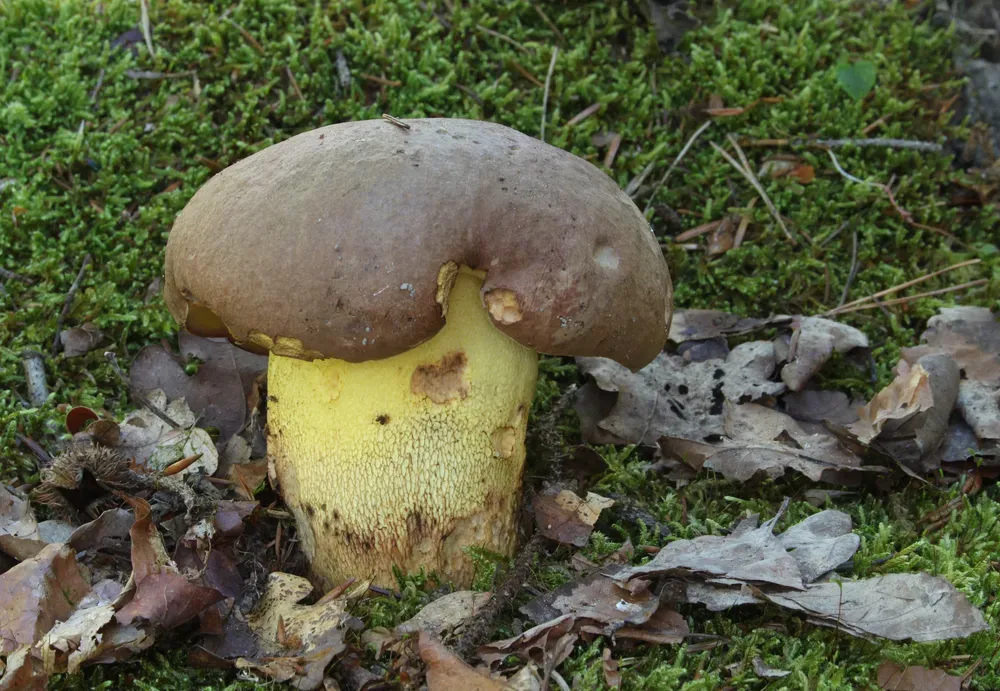
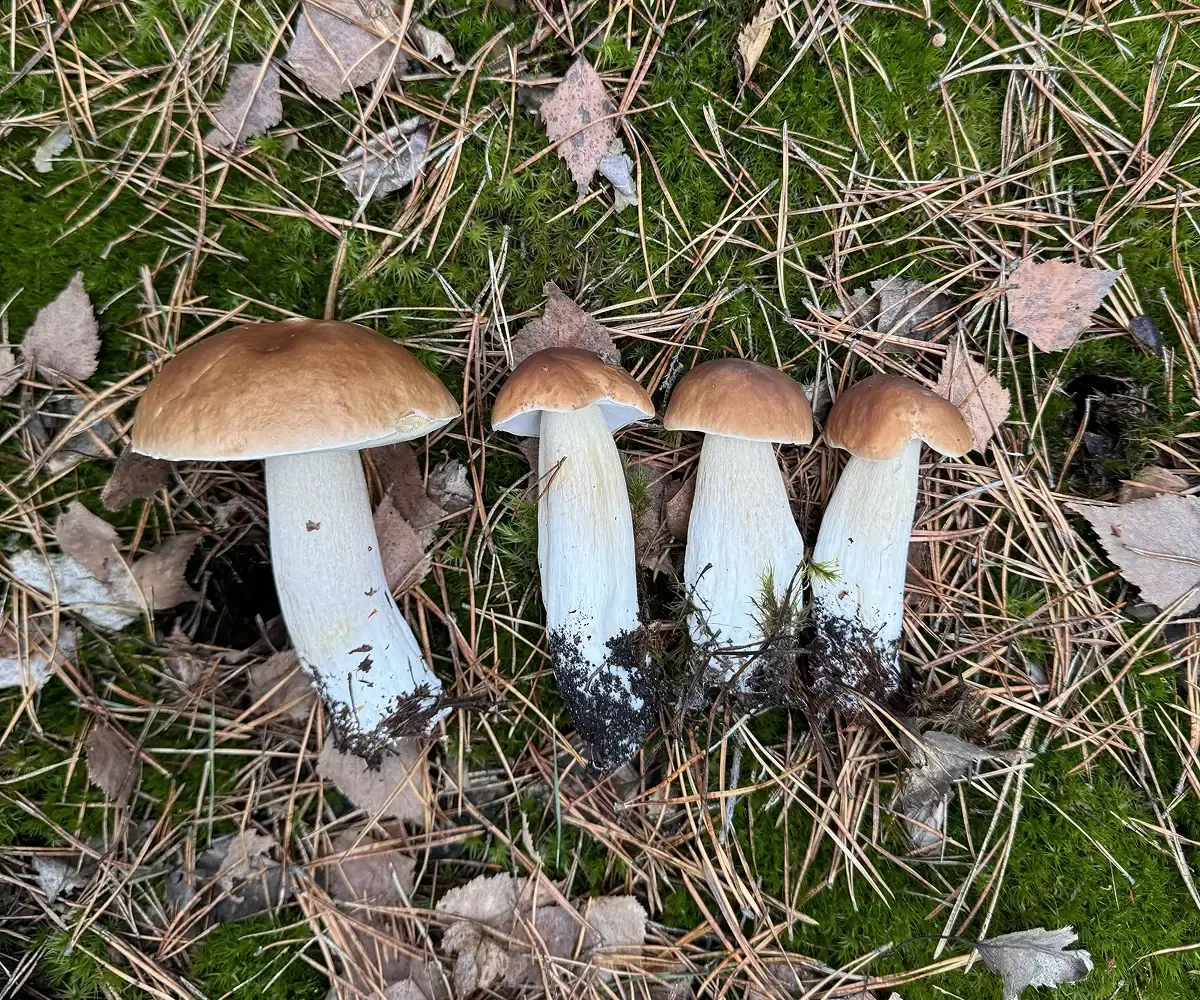
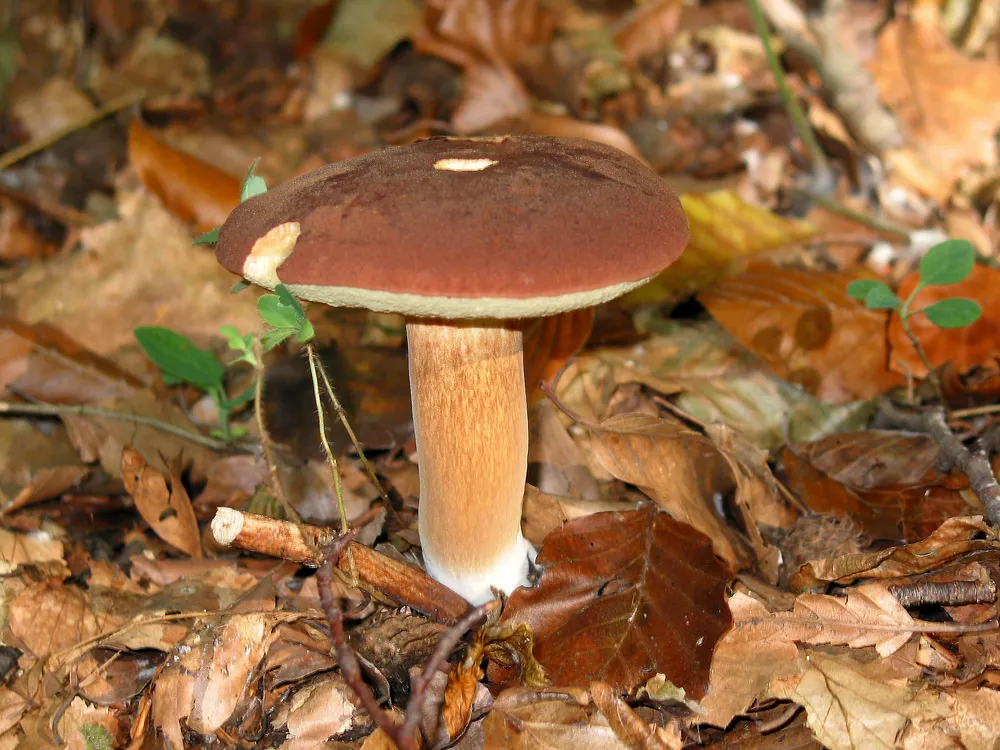
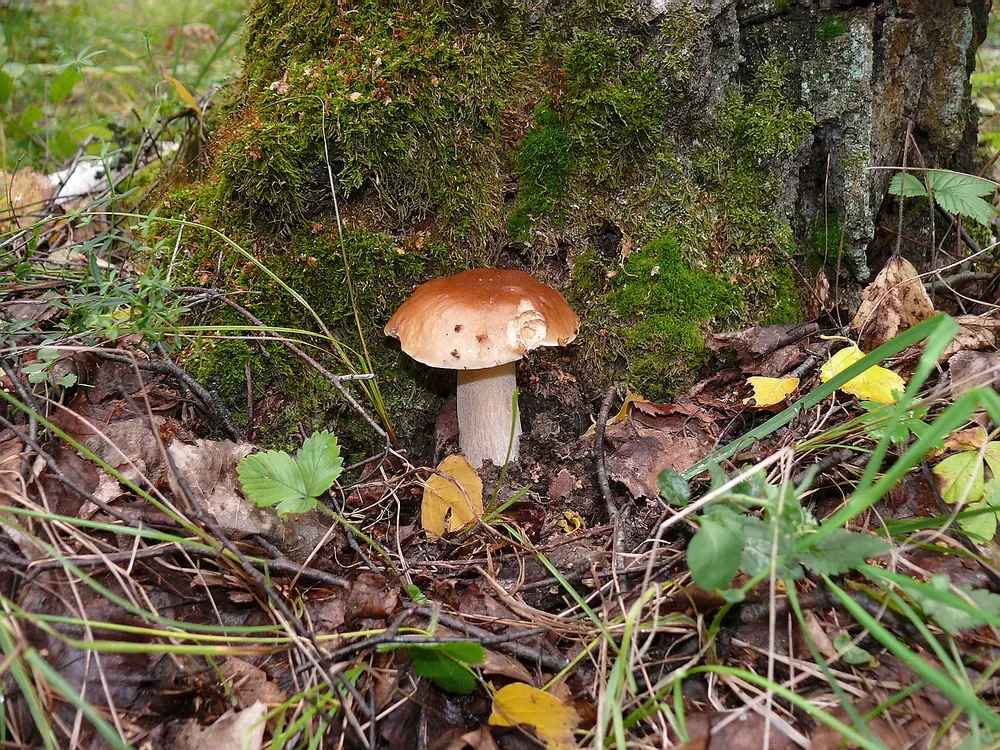
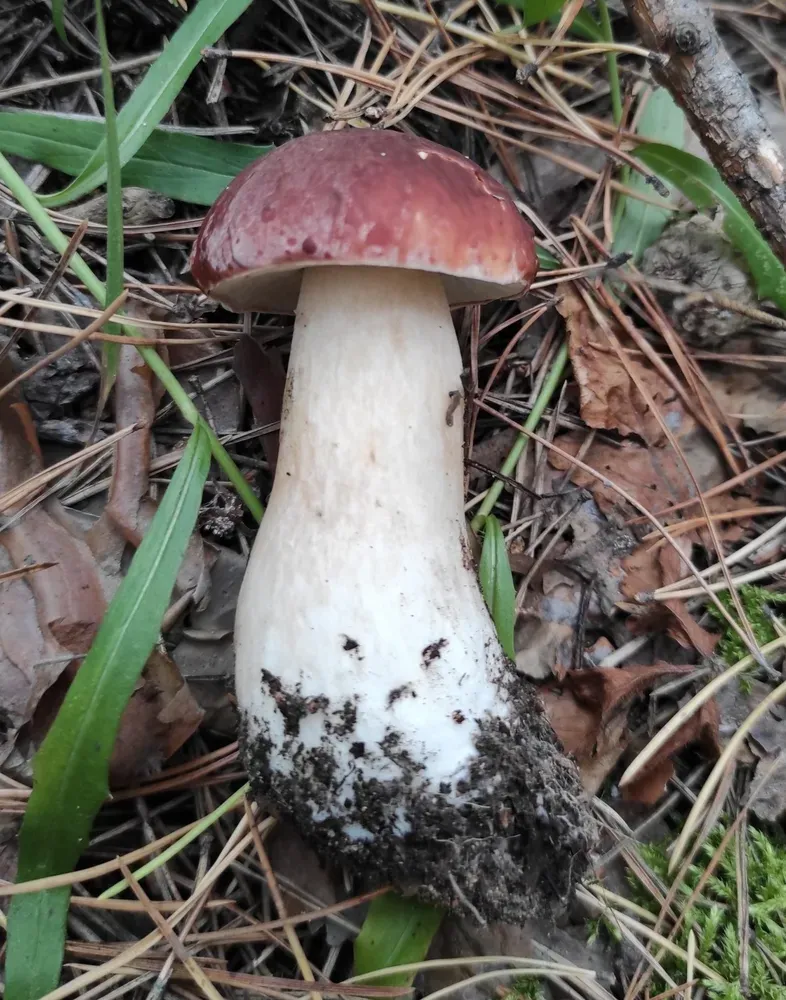
Mushrooms of the same genus and habitat — to study side by side and never mix up.
Frequently asked questions
Can it be confused with the devil's bolete?
The pale bolete can potentially be confused with the devil's bolete (Rubroboletus satanas) — both have a pale gray cap and grow in broadleaf forests. Key differences: the devil's bolete has red-orange pores, the pale bolete yellow ones. The devil's bolete's flesh turns blue strongly and instantly, the pale bolete's faintly and slowly.
Is it legal to pick in Ukraine?
No. The species is in the Red Data Book of Ukraine. If you find one, leave it in nature, take a photo and report it via iNaturalist Ukraine. Buying imported ones from Southern Europe is allowed.
Where does it grow in Ukraine?
Oak and oak-beech forests of Zakarpattia, the Ternopil and Khmelnytskyi regions, and mountainous Crimea. It loves warm, sun-heated slopes, limestone soils and sunny forest edges. It does not occur in the northern regions or in pure coniferous pine forests.
When does it fruit?
June — September, peaking in July–August. It loves warm, moderately humid summer days after prolonged rain. In very dry or cold years it may not appear at all.
How is it different from the royal and oak boletes?
These are three differently colored “brothers” in one genus. The royal bolete (B. regius) has a pink-raspberry cap. The oak bolete (B. appendiculatus) is brownish yellow. The pale bolete (B. fechtneri) is pale gray, cream or silvery. All three are in the Red Data Book of Ukraine.
Which trees does it form mycorrhiza with?
Mainly oak (Quercus robur, Q. petraea) and beech (Fagus sylvatica). In Southern Europe also with chestnut. It does not occur in coniferous forests — it is a Southern European broadleaf species.
Does the flesh turn blue when cut?
Faintly and slowly — in some of the tubes and at the top of the stem. This is the species' normal reaction, not a sign of toxicity. If the flesh of your “gray bolete” turns blue sharply and instantly, it's worth checking that it isn't a devil's bolete.
Why is the species rare?
Several reasons: a narrow ecological niche (limestone soils, warm forest edges), slow spread of the mycelium, and sensitivity to climate change and human pressure. In the Czech Republic it is officially a threatened species. The Ukrainian population is also protected by the Red Data Book.
Is Pale bolete edible or poisonous?
Does Pale bolete have gills or pores?
What does the cap of Pale bolete look like?
What does the stem of Pale bolete look like?
Sources
- [1]Вікіпедія (українська)
- [2]Атлас грибів України, Зеров Д.К. (1979)
- [3]MycoBank Database
- [4]Index Fungorum
- [5]GBIF
- [6]iNaturalist Ukraine