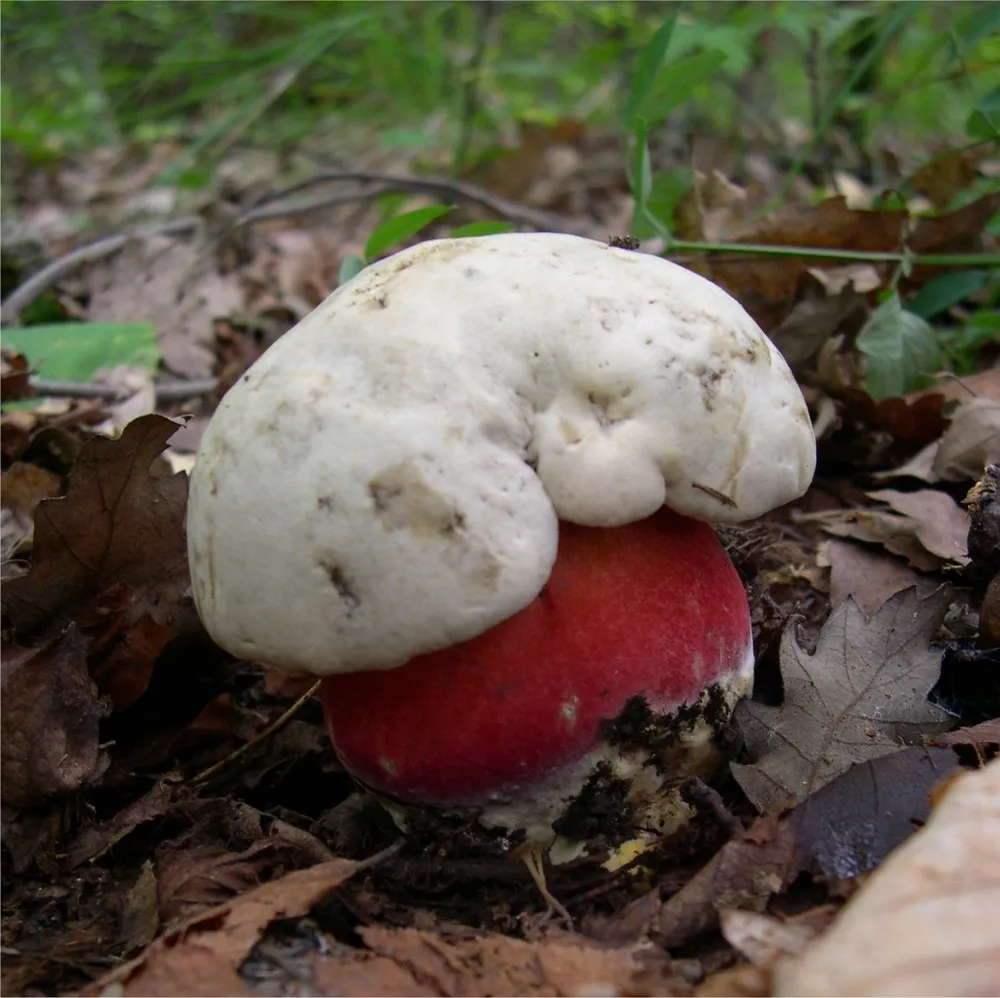
Devil's boleteRubroboletus satanas
Expert-verifiedUpdated October 3, 2026
Passport
- Edibility
- Poisonous
- Season
- Jun — Sep
- Hymenophore
- Pored
- Cap color
- Grey
- Size
- Large (over 15 cm)
- Smell
- Putrid
- Reviewed
- Yes ✓
POISONOUS
Eating it causes poisoning. Do not pick it unless you have identified it with certainty.
Causes severe gastroenteritis even after cooking. Symptoms within 1–6 h: vomiting, bloody diarrhea, dehydration.
If you suspect poisoning, call an ambulance immediately: 112 (the European emergency number) or your local emergency number
Quick answers
Where to look?
Deciduous forest
When does it appear?
Jun — Sep
Active months: June, July, August, September.
How to recognize it? Three signs
- Cap color: Grey, White
- Cap shape: Convex
- Smell: Putrid, Unpleasant
Fruiting season
June – September
Description
The Devil's bolete (Rubroboletus satanas) is a poisonous pored mushroom with striking contrasting colors: a pale cap and bright red pores. It grows in broadleaf woods of Central and Southern Europe, mainly under oak and beech; in Ukraine it is rare, found mainly in the Carpathians and Crimea.
Contains toxins (bolenic acids) that cause severe gastrointestinal poisoning with vomiting and diarrhea. Toxic even in small amounts. Cooking does not fully neutralize it.
Poisonous. The most reliable sign: the flesh turns intensely blue within a few seconds of being cut.
Cap
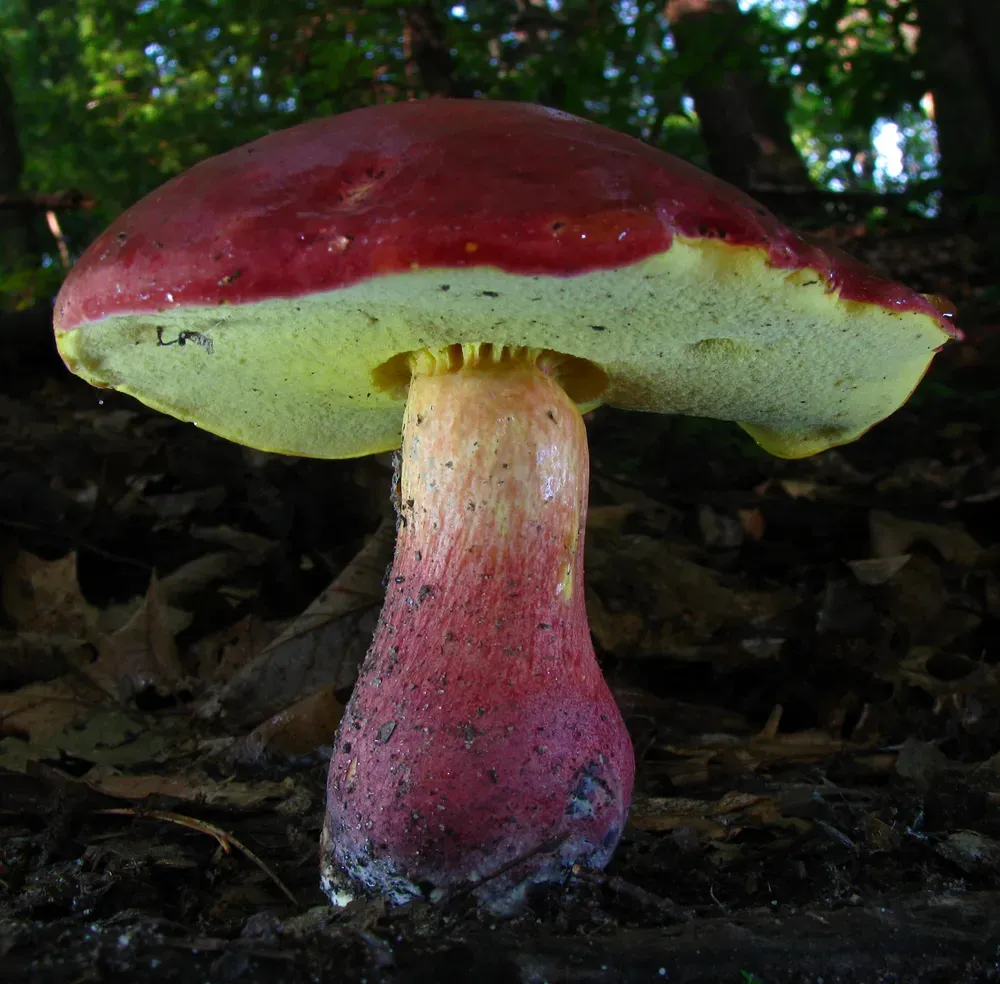
Cap 8–30 cm across, massive, globular in young mushrooms, then cushion-shaped. Surface dry, matte, pale gray or grayish ocher, with no bright coloring — it contrasts with the red pores. In old mushrooms the cap is often blotchy.
Hymenophore
Pored hymenophore. Pores bright red or blood-red — the mushroom's most noticeable feature. When pressed they turn blue very intensely and quickly. Tubes yellow or yellow-green near the stem.
Stem
Stem 5–15 cm tall, 4–10 cm thick, massive, globular or barrel-shaped. Covered with a characteristic bright red net pattern on a yellow background — especially in the upper part. Turns blue when pressed.
Flesh
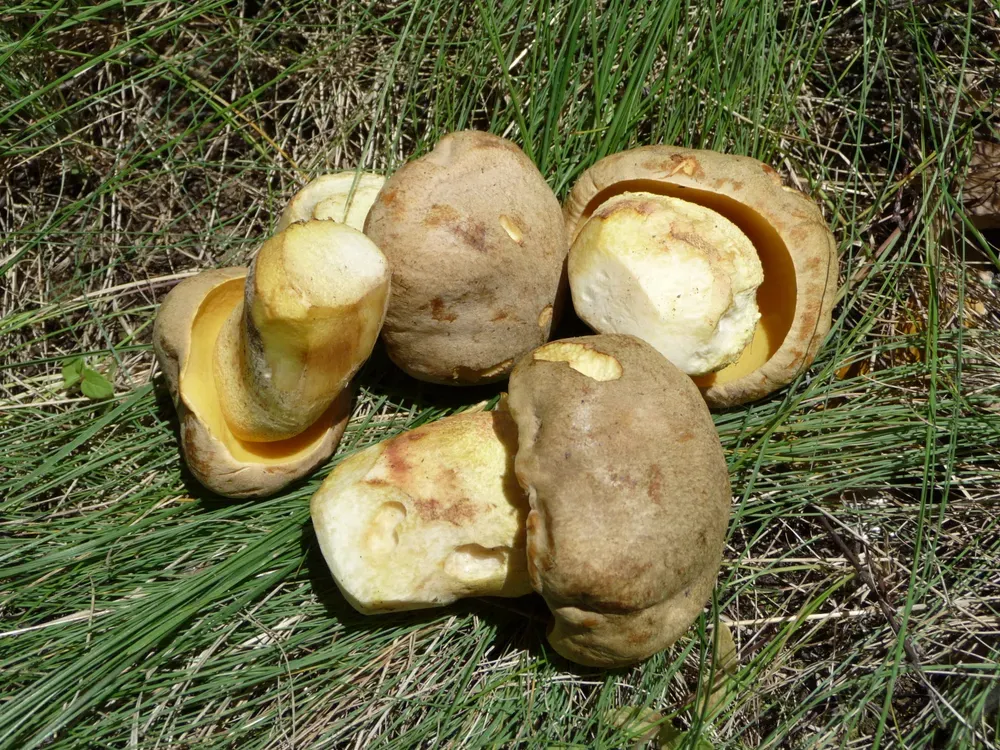
Flesh yellowish, very firm, heavy. Turns blue in a flash when cut — the reaction comes within 3–5 seconds and is far more intense than in edible bluing species. In old mushrooms the flesh has an unpleasant smell.
Smell
In young mushrooms the smell is unobtrusive or absent. In mature mushrooms it is rather unpleasant, rotten or ammonia-like, especially noticeable in hot weather. The smell gets stronger when dried.
Lookalikes
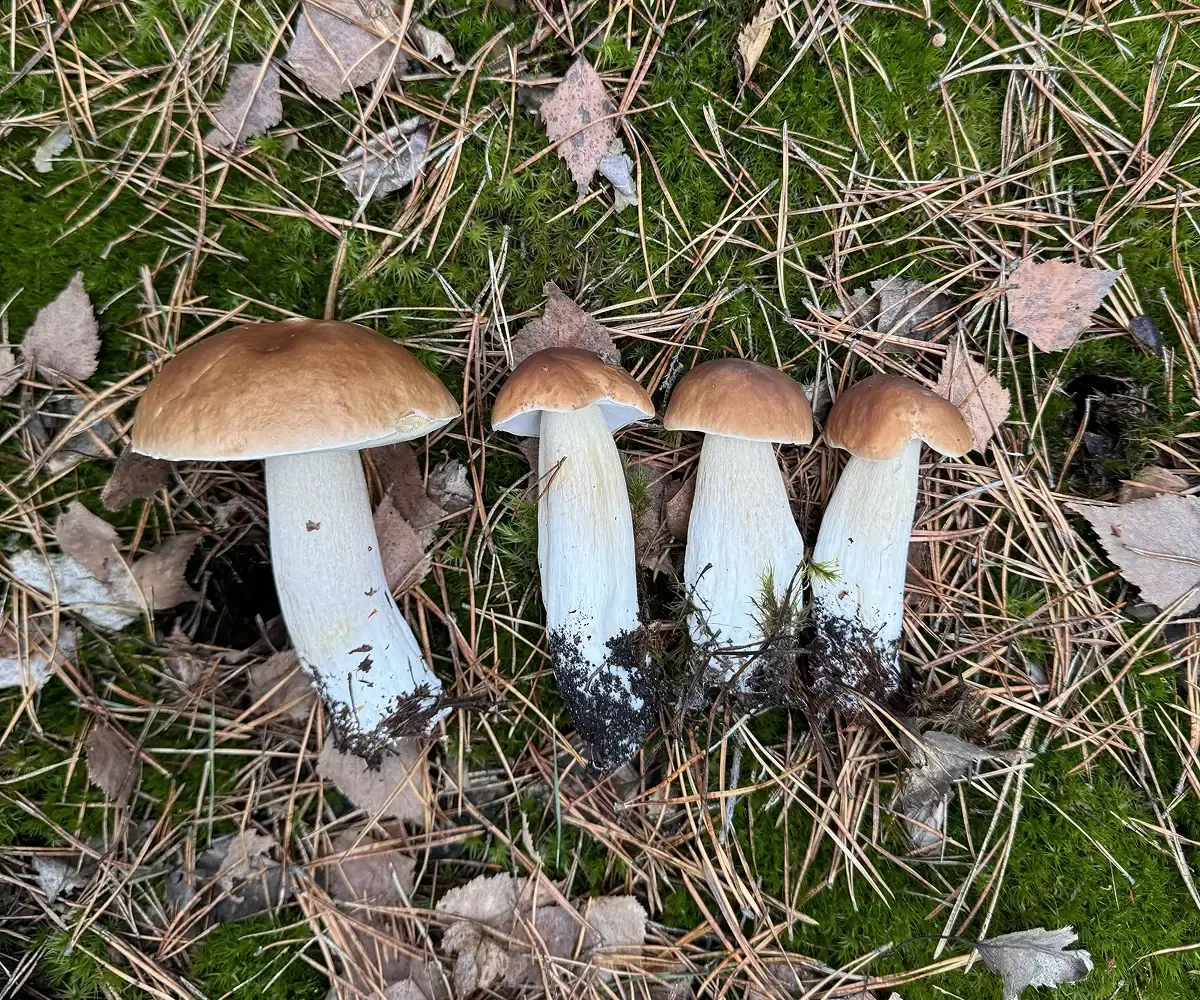
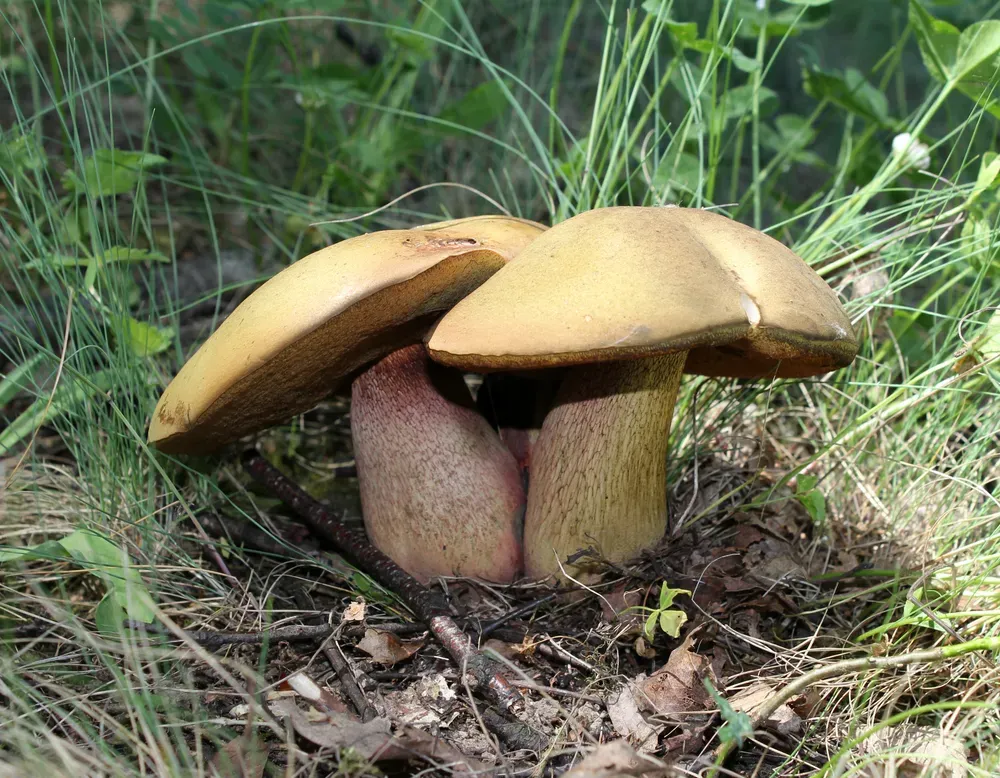
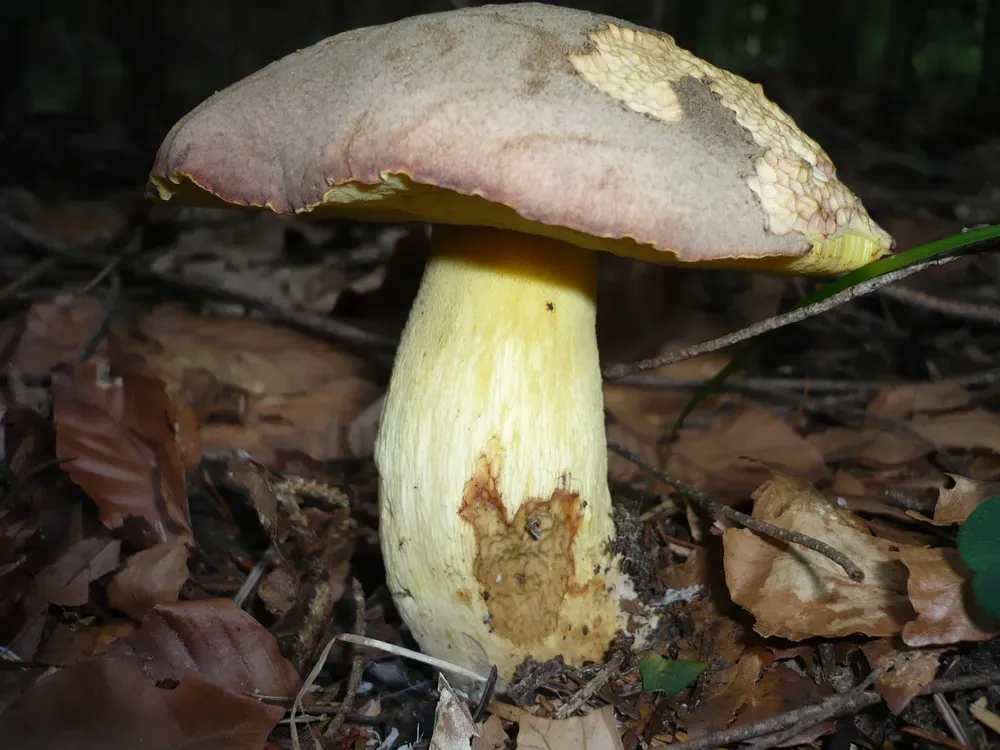
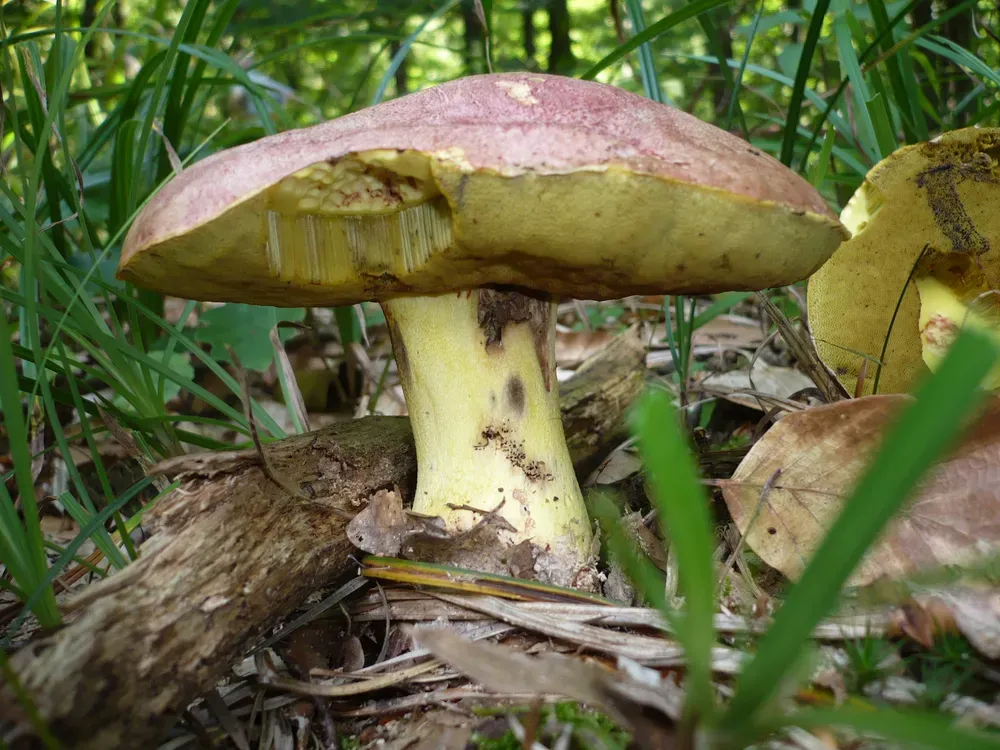
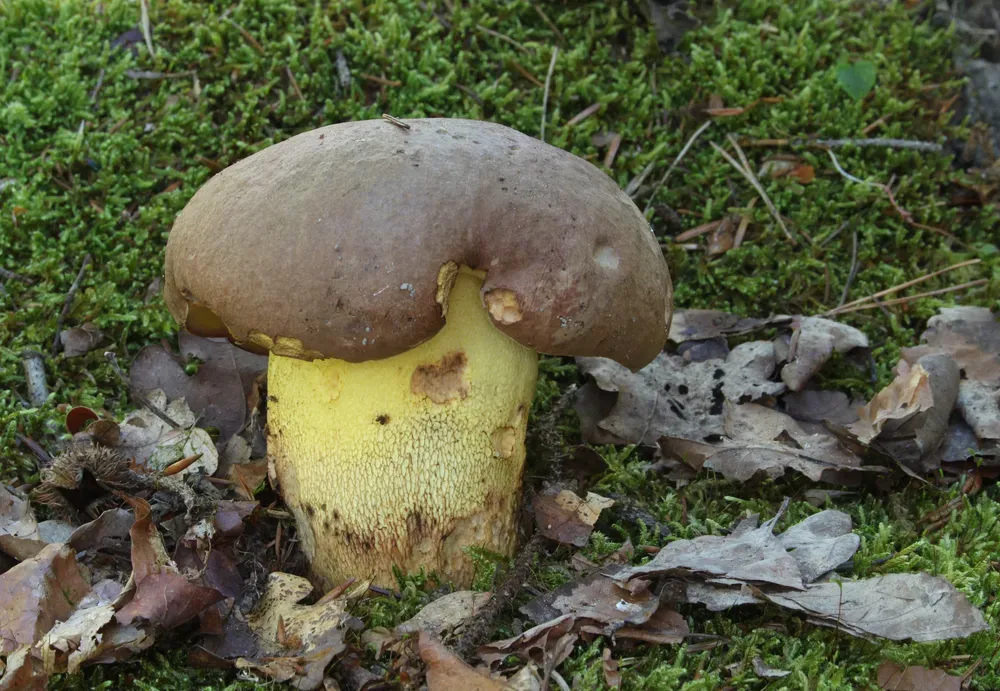
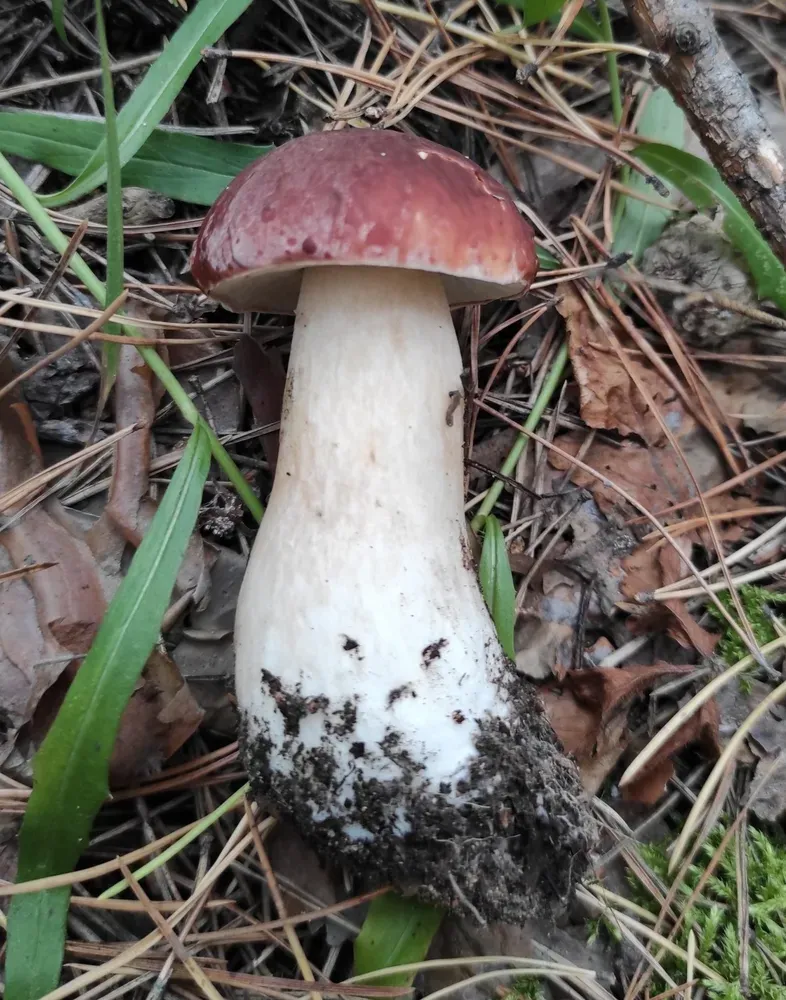
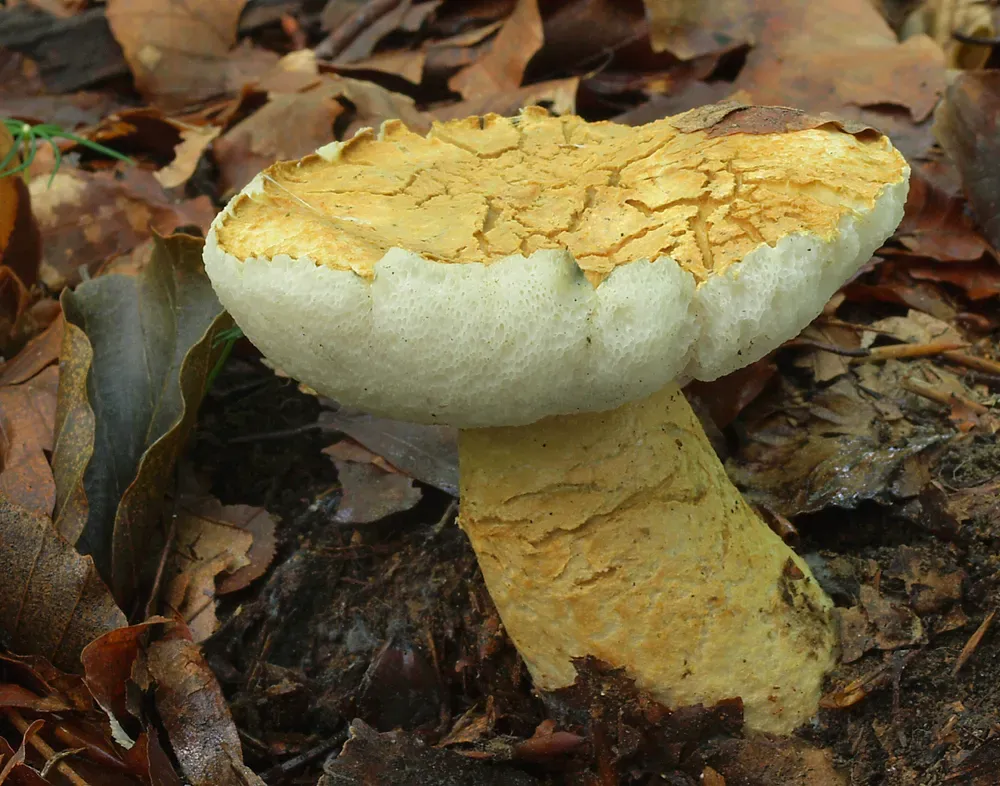
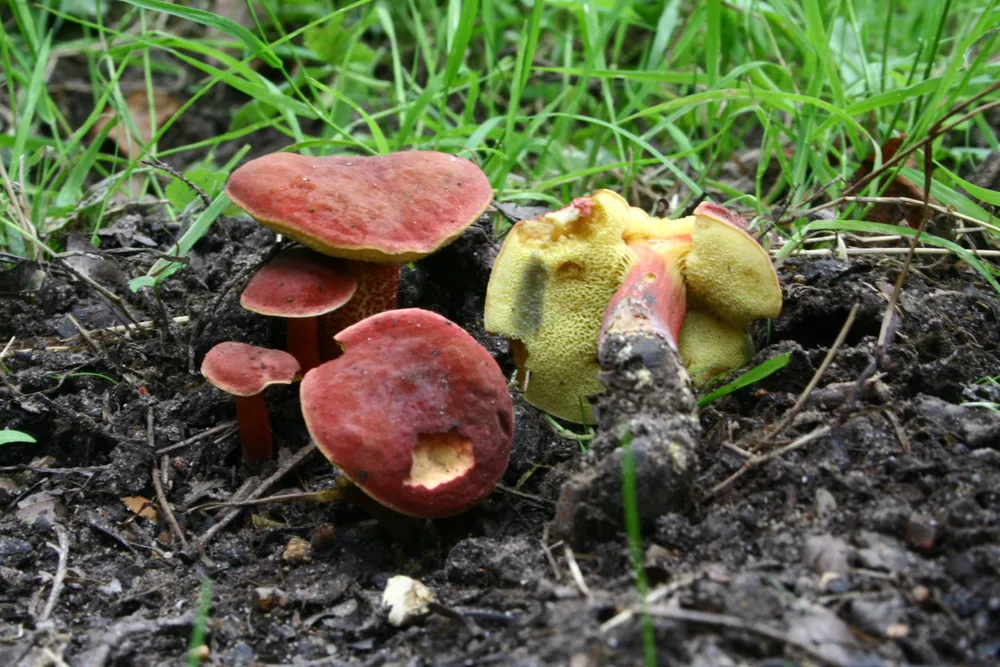
Related species
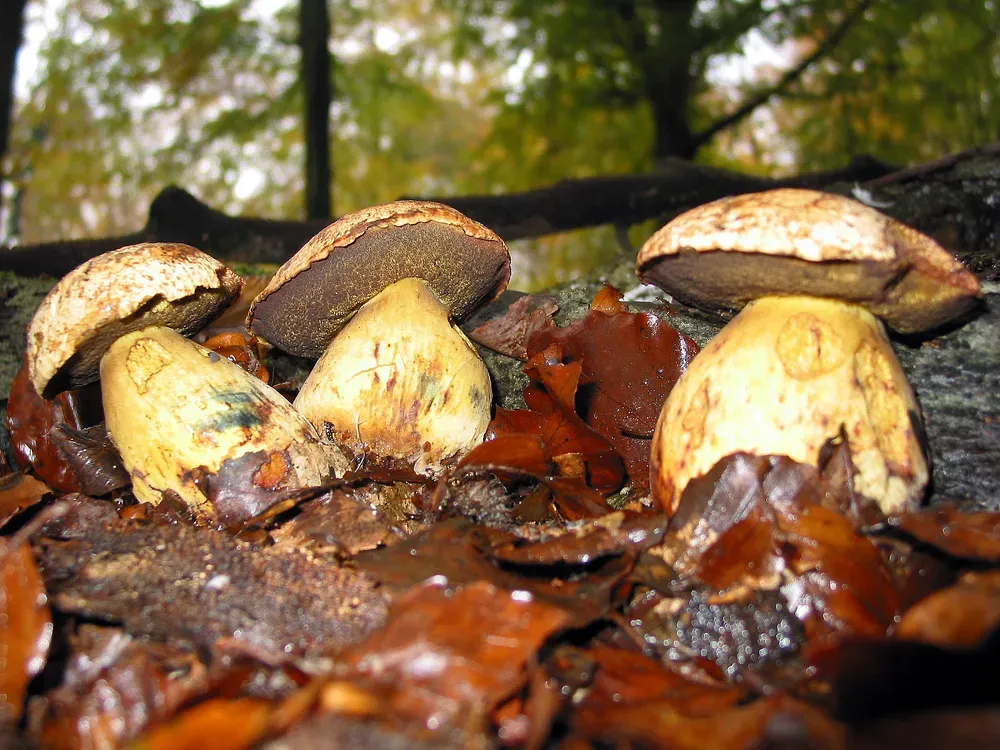
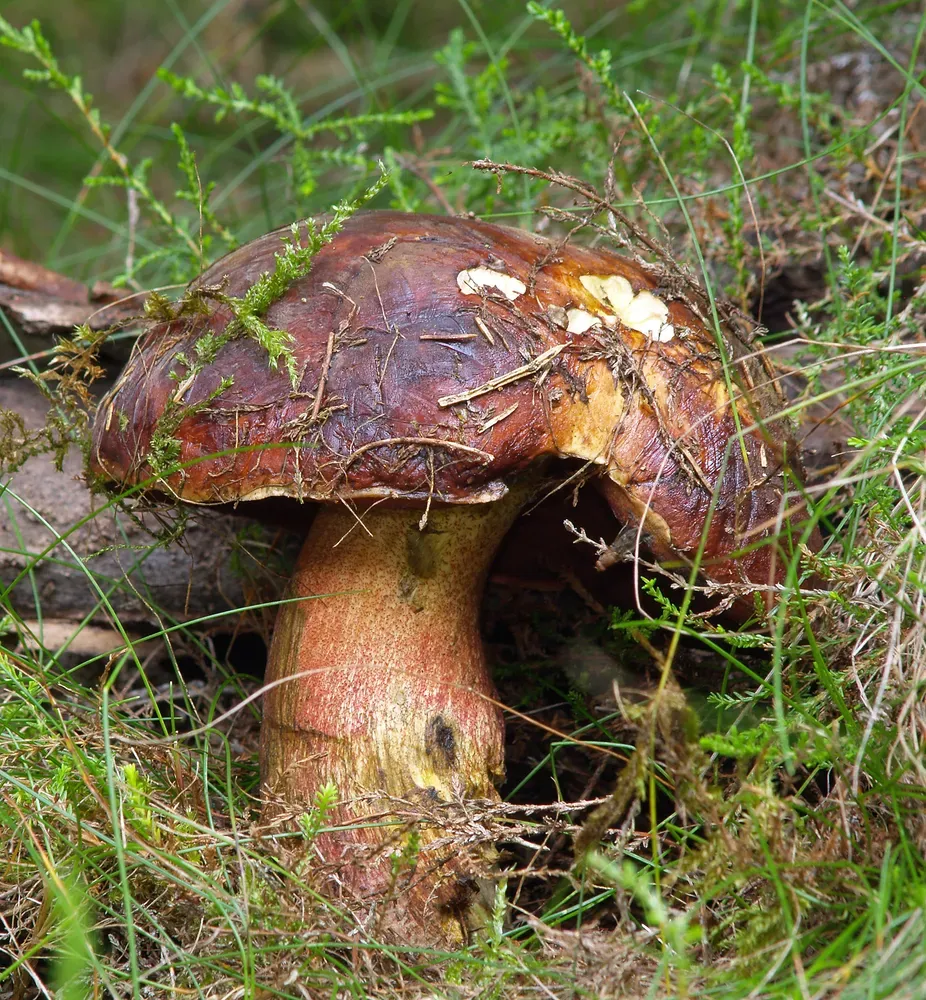
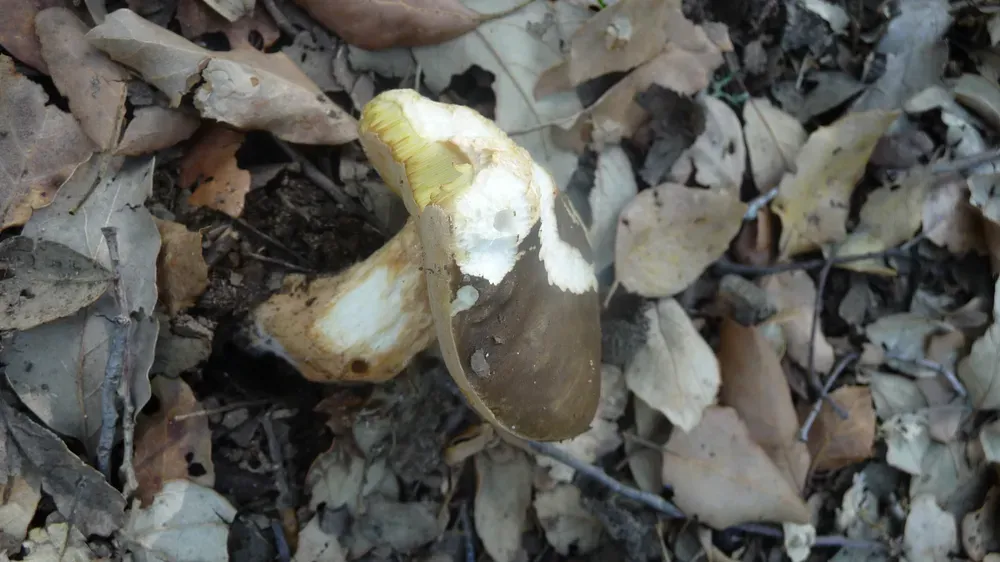
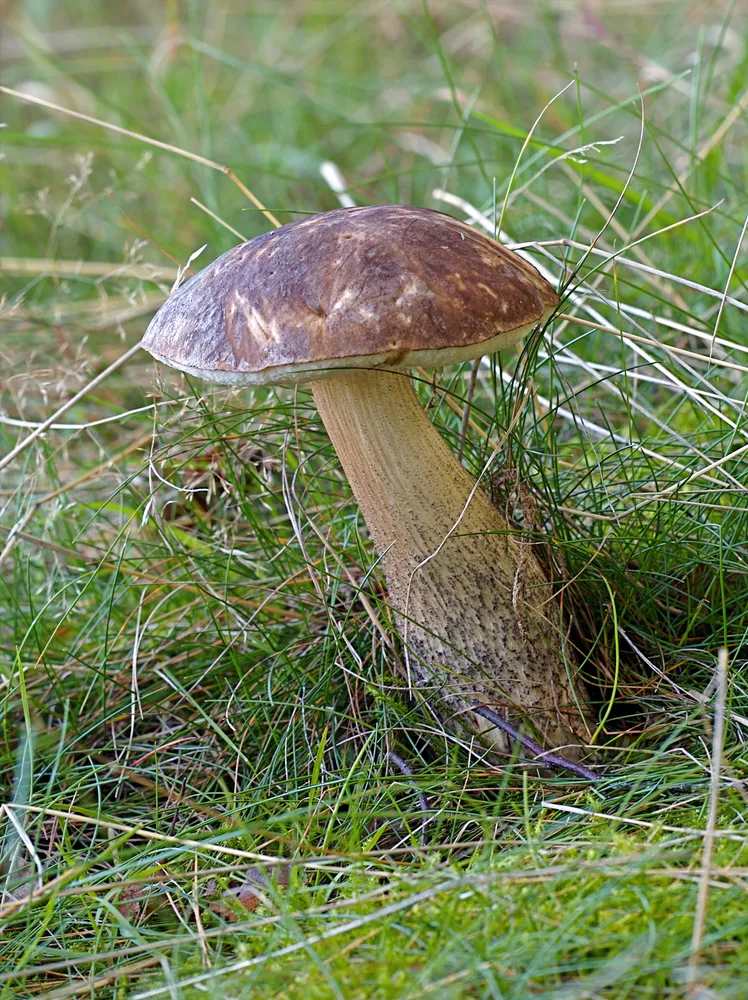
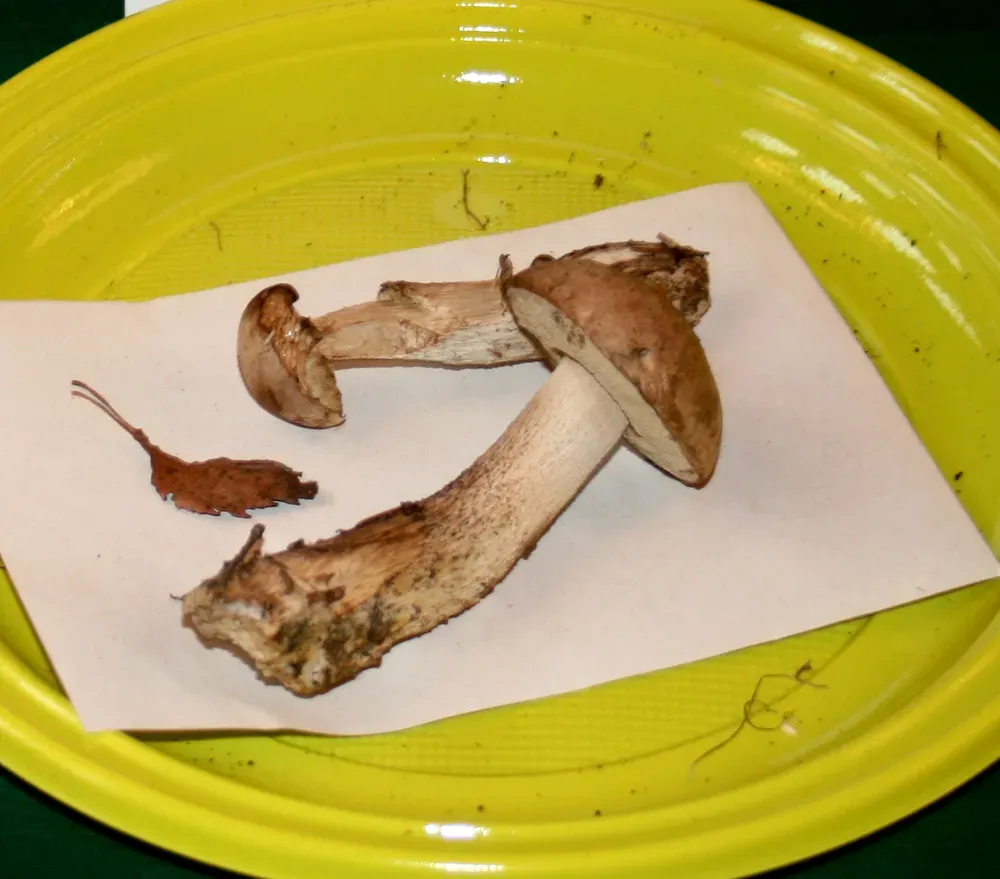
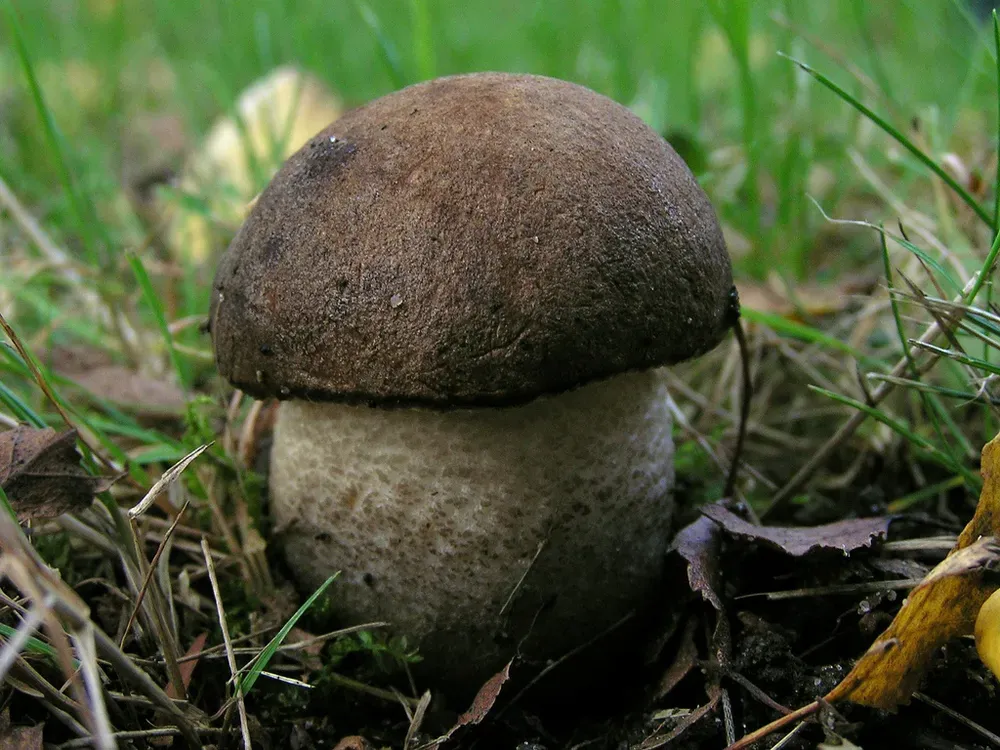
Mushrooms of the same genus and habitat — to study side by side and never mix up.
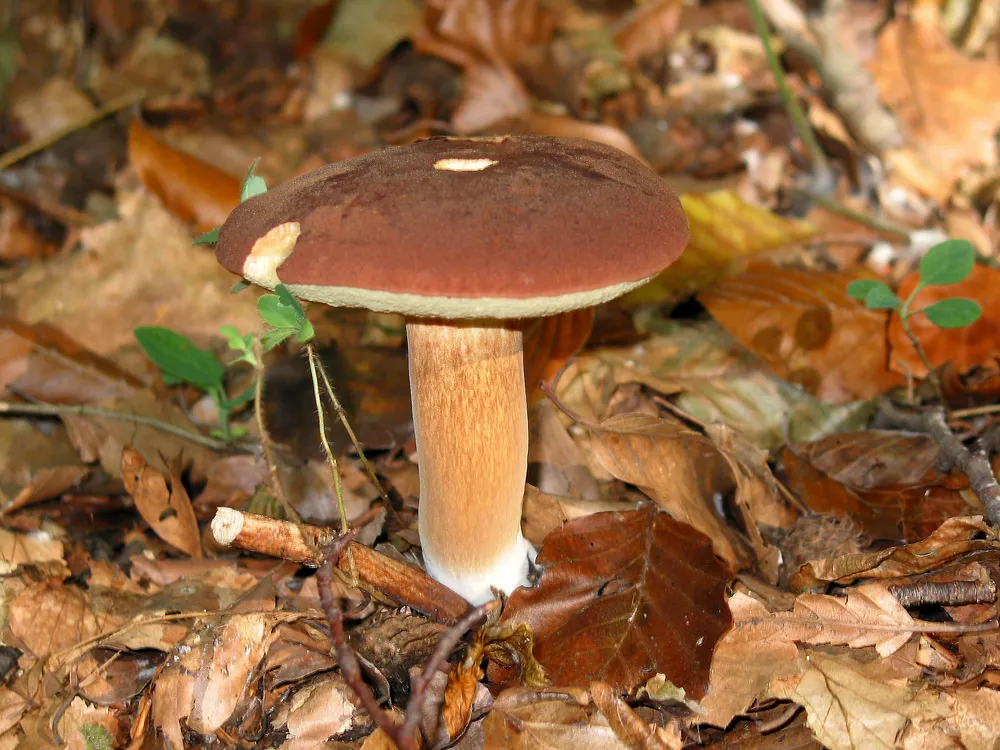
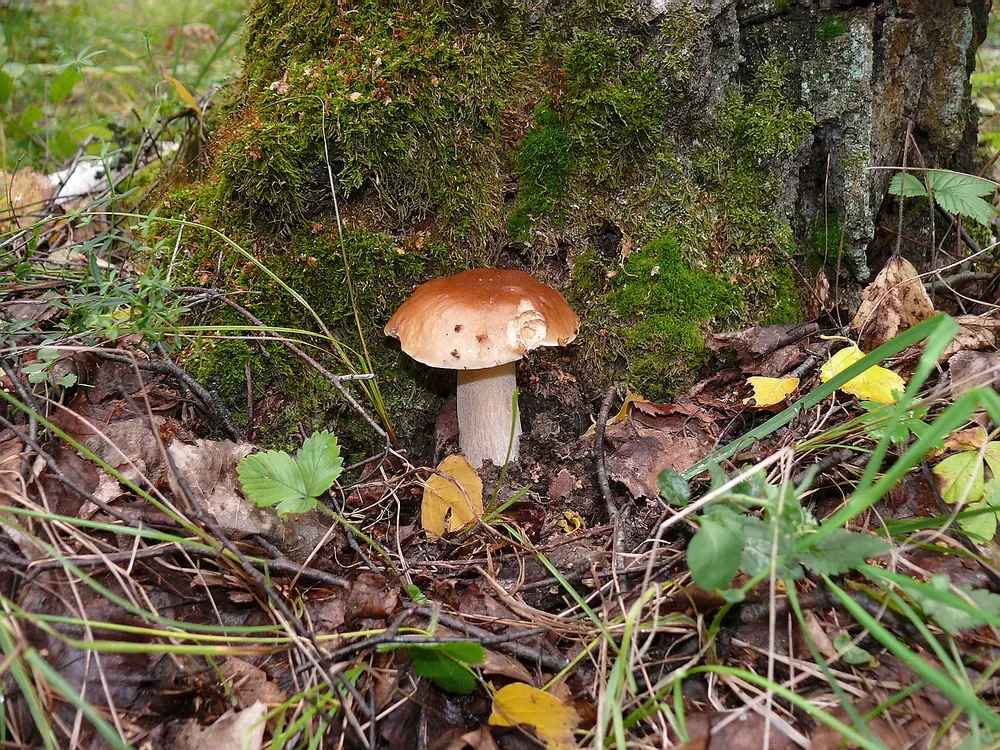
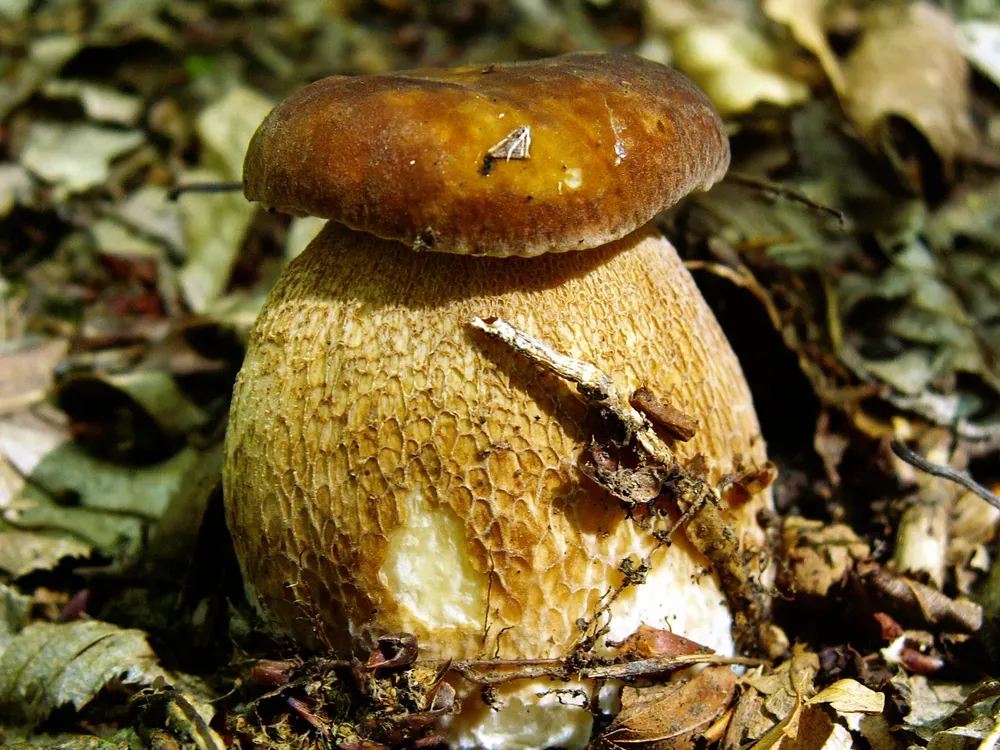
Related reading
 How to identify
Red-capped mushrooms: edible and dangerous
A red cap in the forest is a reason to stop. These mushrooms include both tasty red-capped scaber stalks and p…
August 21, 2026·3 min Safety
Poisonous porcini lookalikes: the bitter bolete and Satan's bolete
Porcini has lookalikes that can ruin a dish or poison you — the bitter bolete and the devil’s bolete. Here’s w…
July 20, 2026·2 min How to identify
June's first lookalikes: the cornflower bolete and the bitter bolete
The first summer boletes have tricky look-alikes. Here's how not to confuse porcini with the bitter bolete, wh…
June 2, 2026·4 min
Frequently asked questions
Is Devil's bolete edible or poisonous?
Does Devil's bolete have gills or pores?
What does the cap of Devil's bolete look like?
What does the stem of Devil's bolete look like?
What do Devil's bolete smell and taste like?
Where does Devil's bolete grow?
Which trees does Devil's bolete grow under?
When should you pick Devil's bolete?
What can Devil's bolete be confused with?
Why is Devil's bolete dangerous?
What is the scientific name of Devil's bolete?
Sources
- [1]Атлас грибів України, Зеров Д.К. (1979)
- [2]GBIF