THIS DATA HAS NOT BEEN VERIFIED BY AN EXPERT. Use at your own risk.
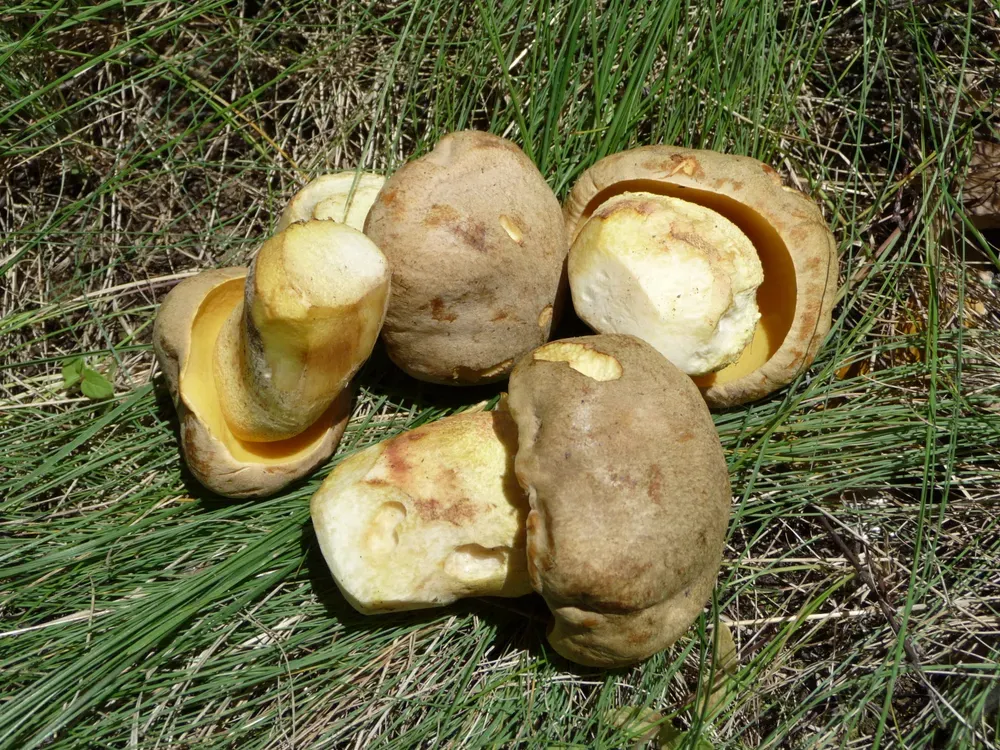
Iodine boleteHemileccinum impolitum
Under reviewUpdated October 3, 2026
Passport
- Edibility
- Edible
- Season
- Jul — Oct
- Hymenophore
- Pored
- Cap color
- Yellow
- Size
- Medium (5–15 cm)
- Smell
- Chemical
- Reviewed
- Under review
Quick answers
Where to look?
Deciduous forest, Mixed forest
When does it appear?
Jul — Oct
Active months: July, August, September, October.
How to recognize it? Three signs
- Cap color: Yellow, Brown, Grey
- Cap shape: Convex, Flat
- Smell: Chemical
Fruiting season
July – October
Description
The iodine bolete, affectionately known in Ukraine as the "half-white bolete," greets you in bright oak woods like a secret witness to ancient ecosystems. This species, known to science as Hemileccinum impolitum, forms a strong mycorrhizal bond with old oaks, less often with beeches and hornbeams. Its presence in a forest often points to lime-rich or clay soils warmed by the gentle August sun. It doesn't try to draw attention to itself, hiding in the shade of broad leaves, yet an experienced mycologist will always recognize it among the forest's variety.
In Ukraine you can find this beauty mainly in Right-Bank Polissia, the Forest-Steppe and the Carpathian foothills, especially in regions such as Zhytomyr, Kyiv or Lviv. Its fruiting peaks in the warm months — from the second half of summer to mid-autumn, when the forests fill with moisture after warm rains.
Despite its peculiar aromatic qualities, which we'll get to later, this tubular mushroom is unquestionably edible and has good culinary value. After proper cooking it reveals a wonderful, delicate flavor that foragers prize highly. It will make a fine addition to your forest haul if you're lucky enough to come across its golden caps.
Cap
The cap of this bolete usually reaches 5 to 15 centimeters across, although larger specimens up to 20 centimeters are sometimes found. When young it is perfectly hemispherical, opening over time to convex-flattened or almost flat, with an even, slightly inrolled margin. Its surface is strikingly matte, true velvet to the touch, and only in old age may become somewhat smoother. The cap's palette ranges from soft light brown and ochre-yellowish to the shade of freshly baked rye bread or a clay riverbank. Notably, the color stays fairly stable and does not change sharply with moisture.
Hymenophore
Under the cap hides a tubular hymenophore that forms a free or slightly notched zone right at the stem. The tubes and pores are very small and tightly packed. In very young mushrooms they are a soft pale lemon, which shifts to a rich bright yellow as the spores mature, and later to olive-yellowish. This hymenophore has one extremely important diagnostic feature: unlike many related species, it does not change color when pressed or damaged and does not turn blue at all, keeping its original sunny shade unchanged.
Stem
The stem of the iodine bolete grows 5 to 15 centimeters tall and 2 to 5 centimeters thick. It is often cylindrical, but when young it can be noticeably widened toward the base, like a sturdy club. In the hand it feels very firm and massive. Its surface is pale yellow or lemon-colored, shading near the base into reddish-brown or even reddish tones. Unlike porcini, this stem has no characteristic net; instead it is slightly rough-fibrous and covered with tiny, barely visible dots. There is no ring or volva at all.
Flesh
The flesh of this mushroom is remarkably meaty, thick and firm to the touch. In the cap it stays whitish or pale yellow, while in the stem it turns distinctly bright yellow. The most important identification marker is its reaction to air: at a break or cut the flesh stays stable and does not change color; only very rarely, when badly damaged, may it take on a barely noticeable pinkish tone. The taste is pleasant, slightly sweetish, without any bitterness, which makes it an excellent ingredient after cooking.
Smell
The smell is the most interesting and most controversial feature of this species. A freshly cut mushroom, especially at the very base of the stem, gives off a distinct medicinal aroma most often compared to iodine or carbolic acid. This unusual "hospital" smell may seem off-putting when you're picking in the forest and is the reason many foragers have doubts. But don't worry: this chemical aroma is purely volatile. When heated, boiled or dried, the smell disappears completely, leaving only a classic, warm mushroom aroma behind.
›Scientific synonyms (3)
Boletus impolitus, Xerocomus impolitus, Leccinum impolitum
Lookalikes
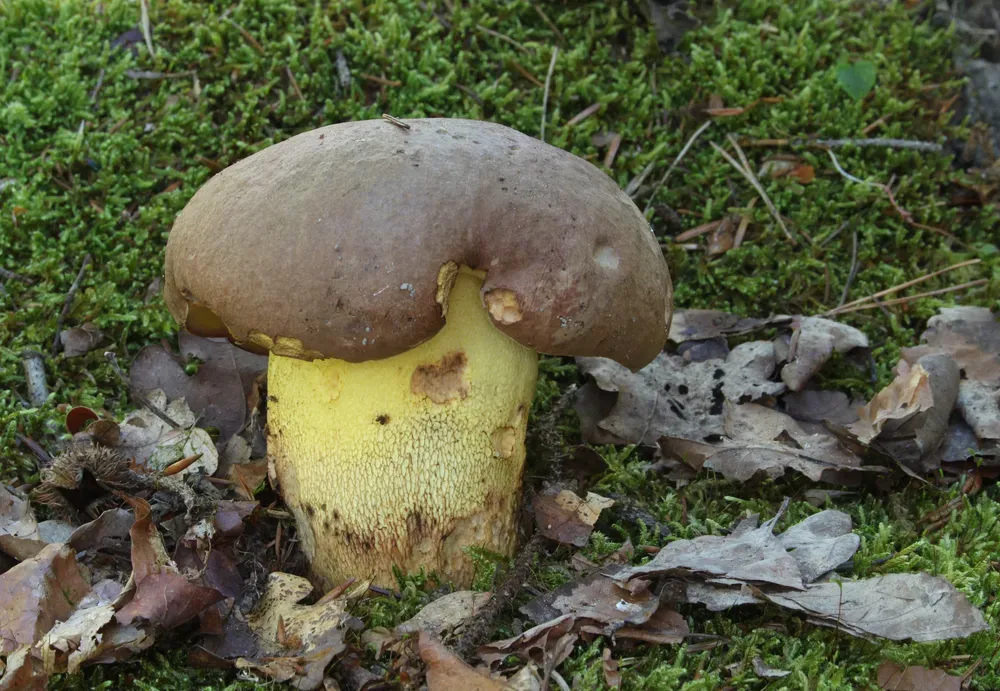
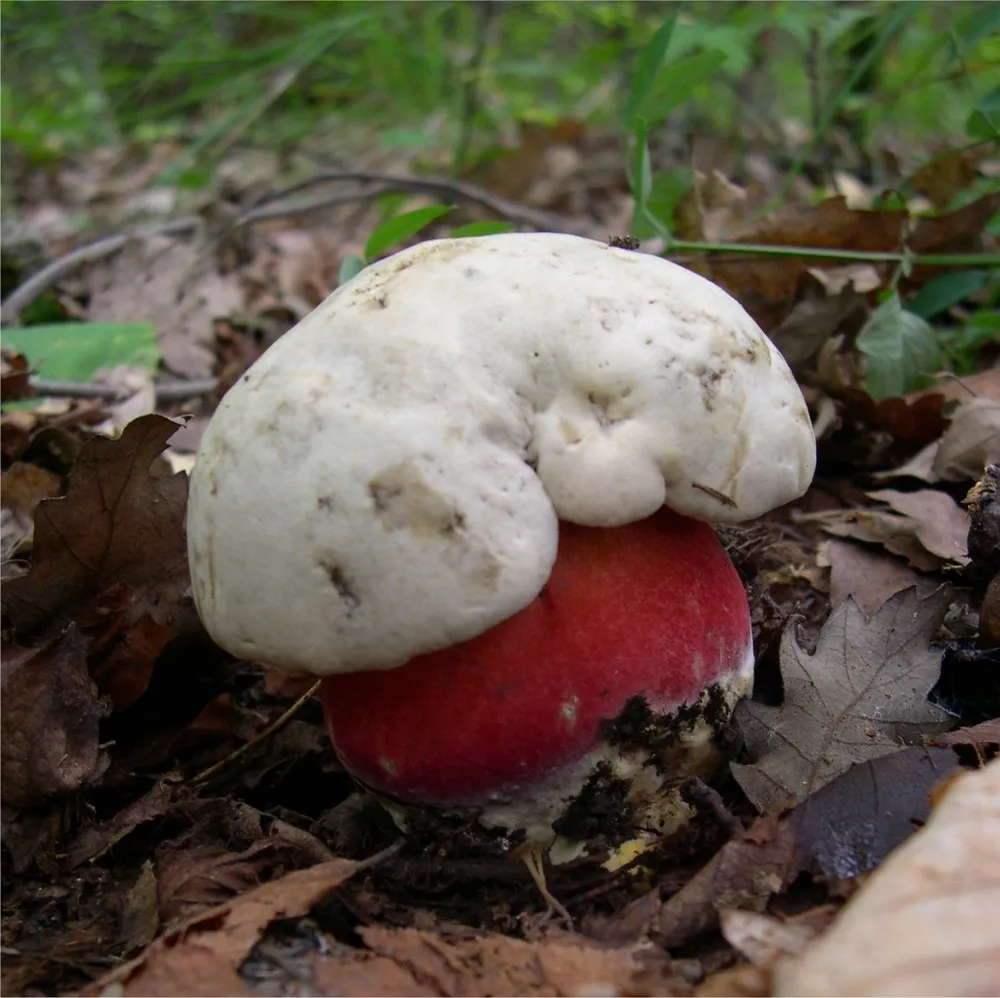
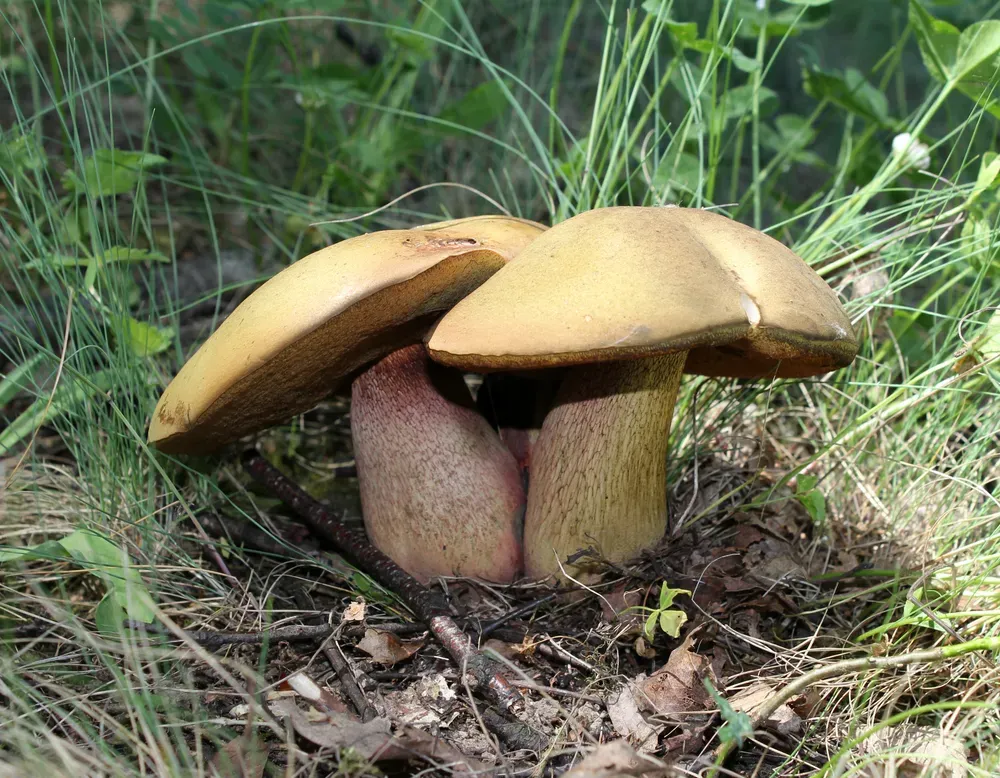
Related species
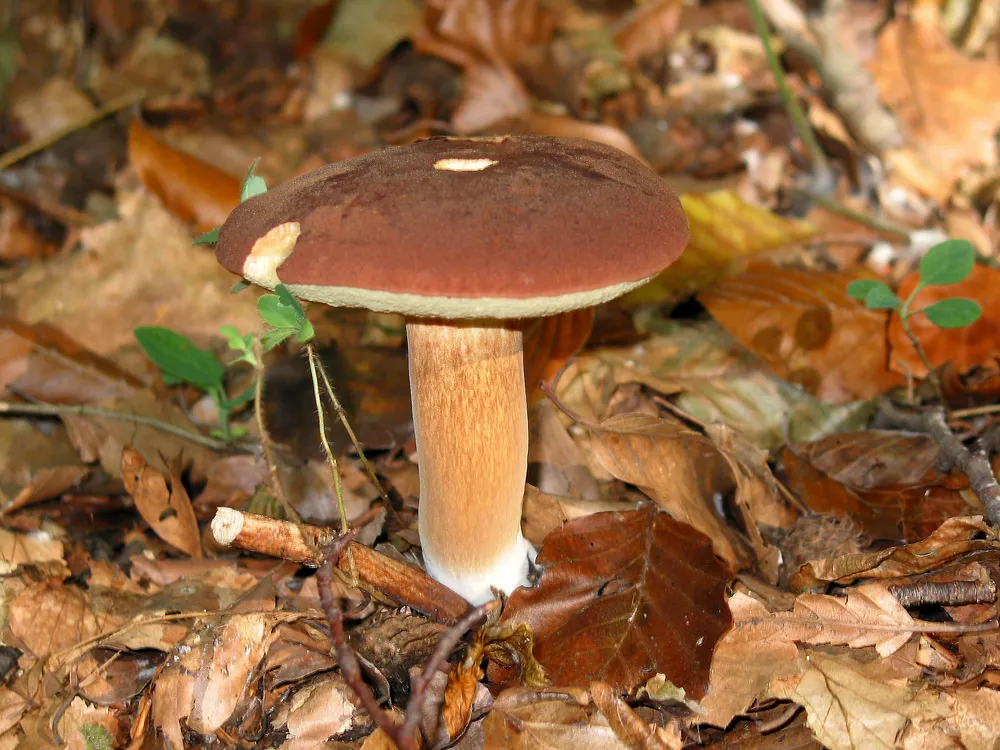
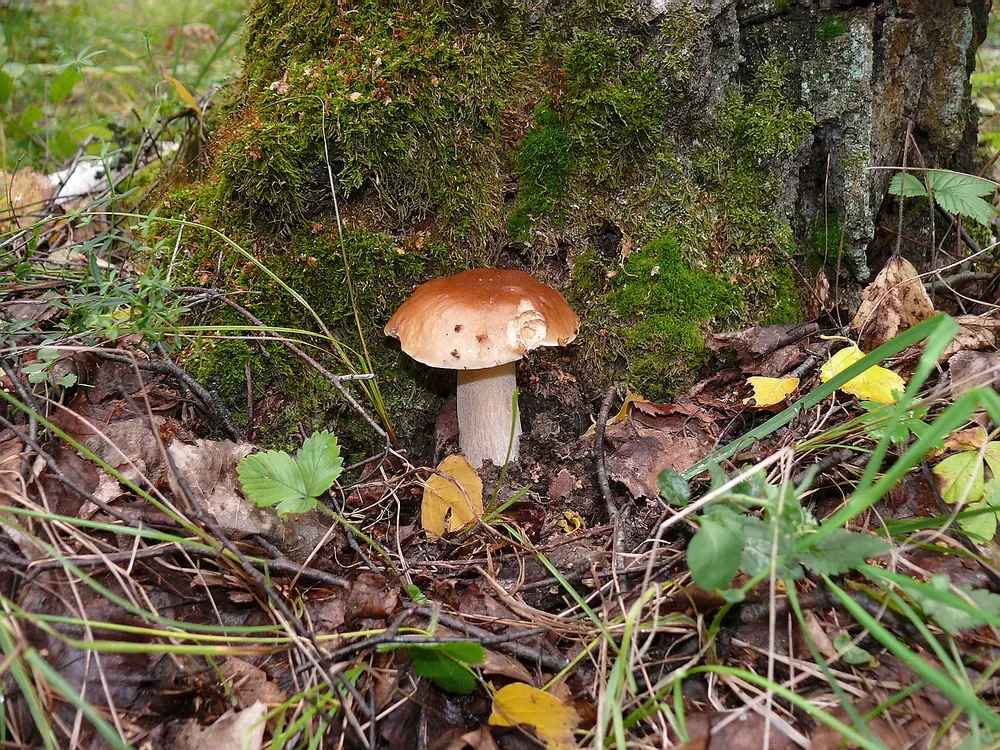
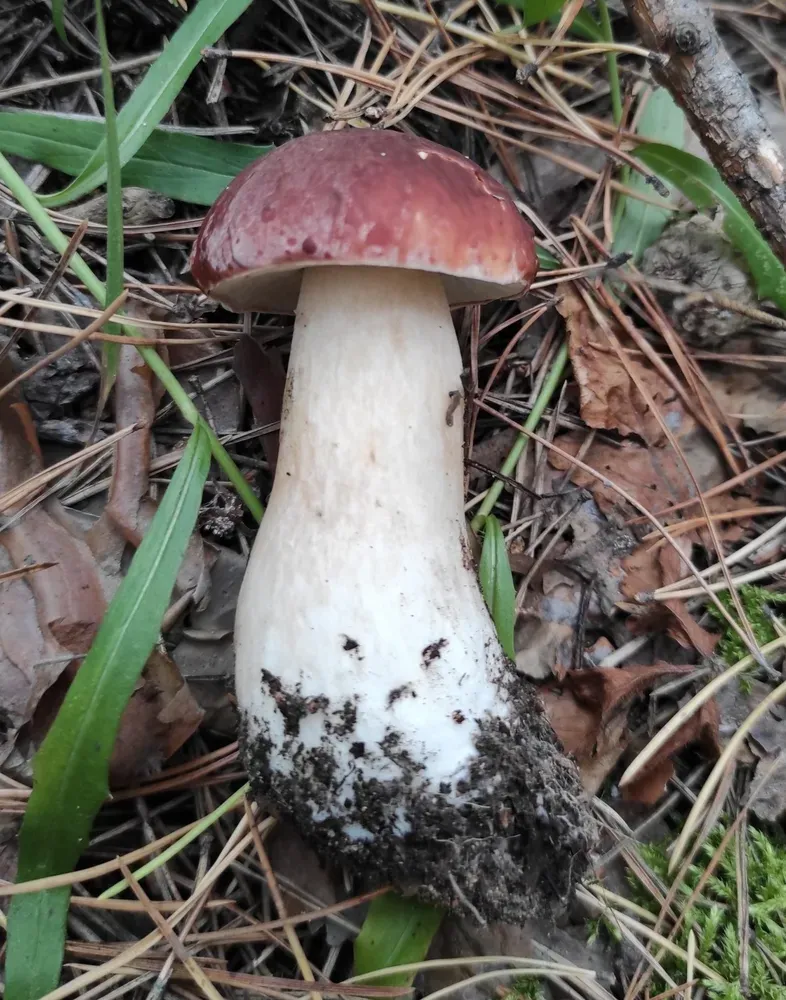
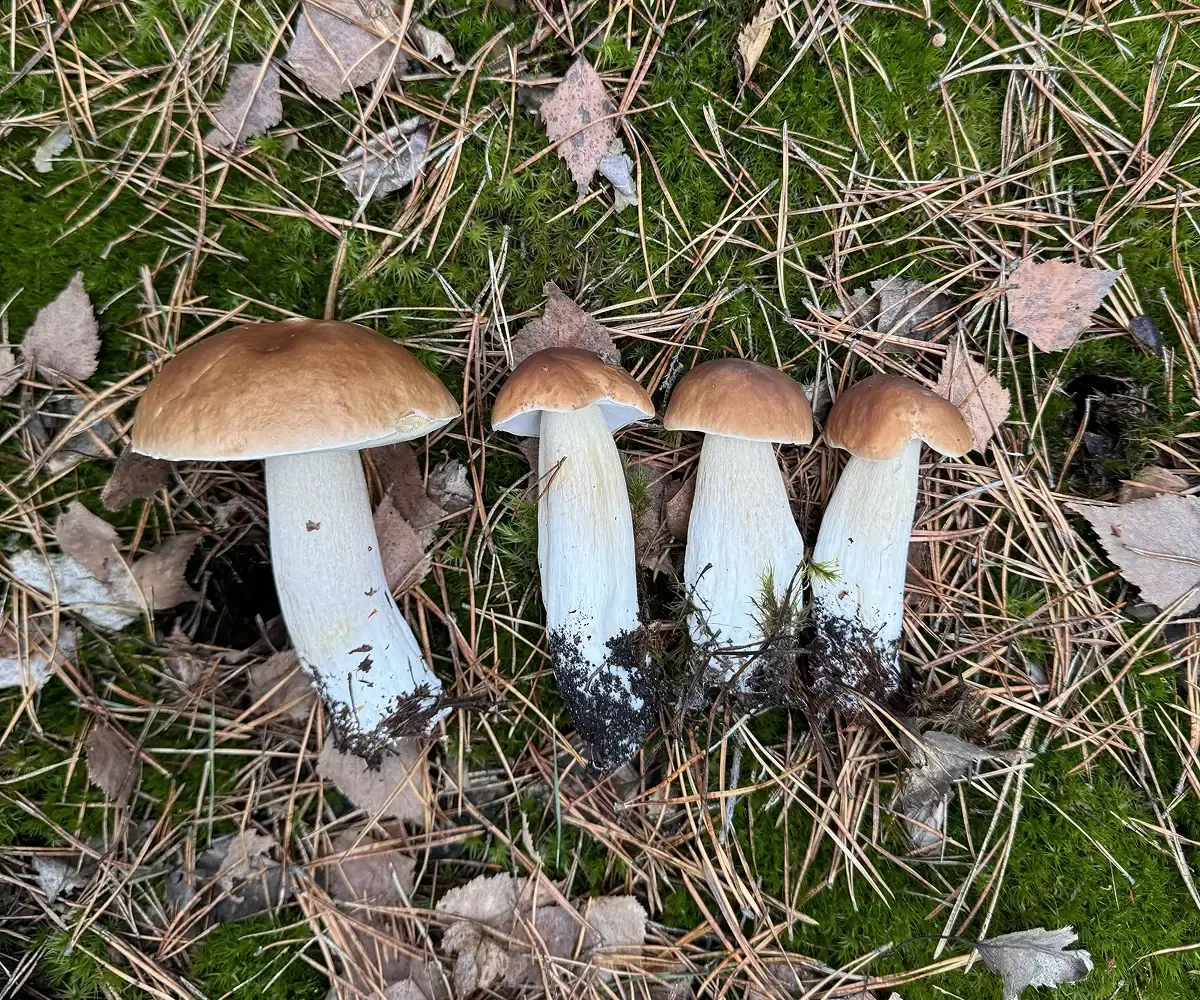
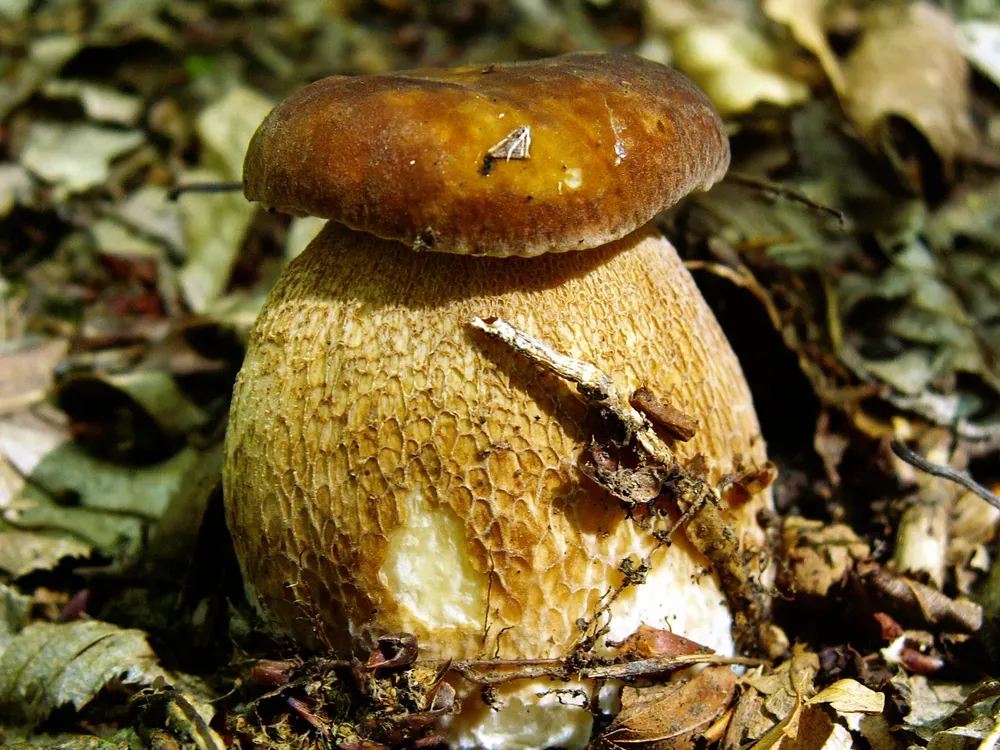
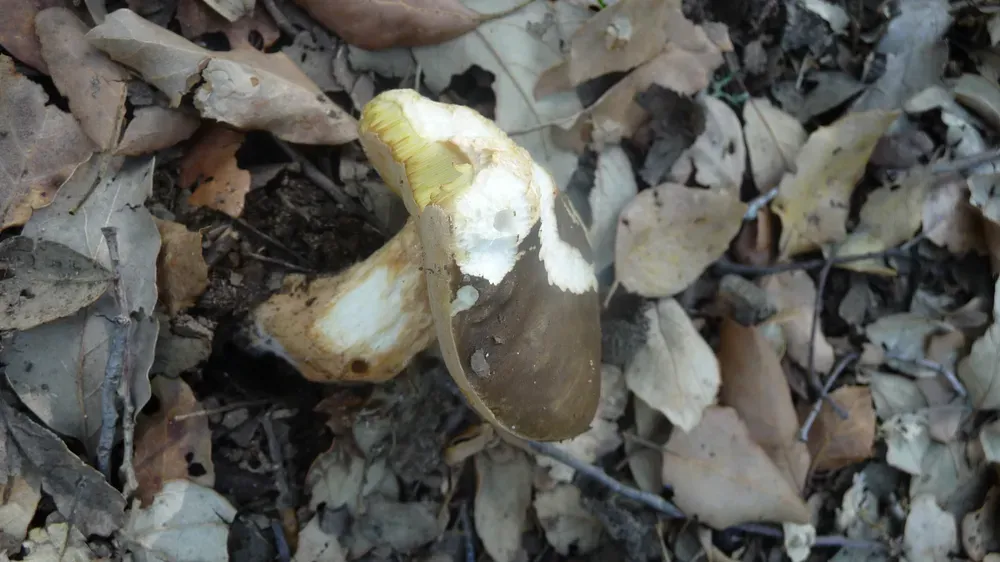
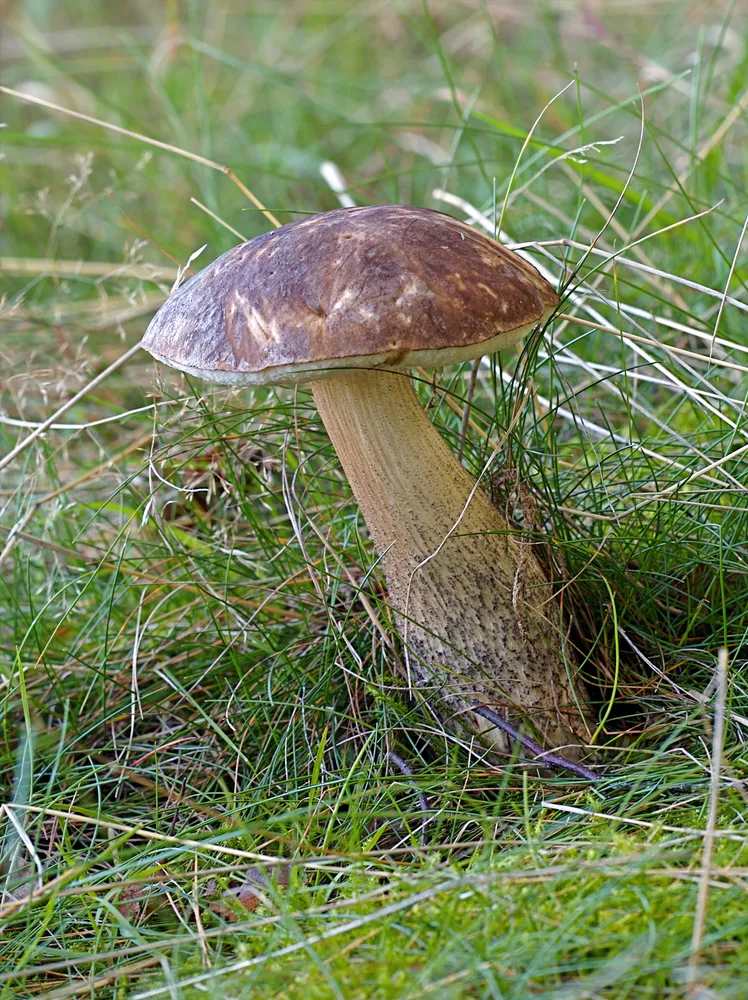
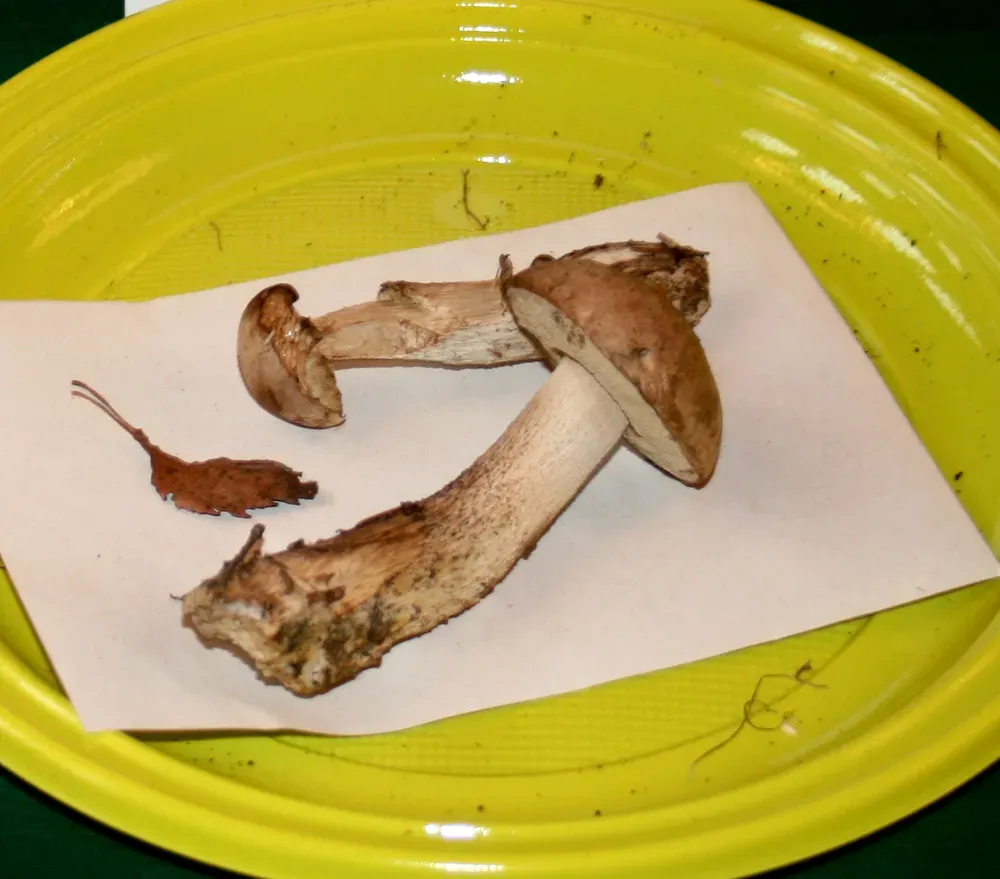
Mushrooms of the same genus and habitat — to study side by side and never mix up.
Frequently asked questions
Can the iodine bolete be confused with poisonous mushrooms?
It is sometimes confused with the devil's bolete, but the iodine bolete never turns blue when cut and has no red pores or net on the stem.
Why does the iodine bolete smell of iodine or carbolic acid?
It's a natural feature of the species, most pronounced at the base of the stem. The smell disappears completely during cooking.
Does the iodine bolete need to be boiled first?
Yes, because of its peculiar smell it's recommended to boil it for 10-15 minutes, drain the water, and then cook it as usual.
Where does the iodine bolete grow most often?
It prefers warm broadleaf forests (especially oak woods) and lime-rich soils.
Does this mushroom grow in conifer forests?
Very rarely. Its main symbiotic trees are oak, beech and hornbeam, so it is almost never found in conifer forests.
When is the best time to pick the iodine bolete?
It fruits most actively from August to October, during periods of warm rain.
Can you find it in spring or early summer?
No, it's a warmth-loving mushroom that appears mainly from the second half of summer.
Which edible mushrooms look like it?
The oak bolete (Butyriboletus appendiculatus), but it has a net on the stem and turns slightly blue when cut.
Is Iodine bolete edible or poisonous?
Does Iodine bolete have gills or pores?
What does the cap of Iodine bolete look like?
What does the stem of Iodine bolete look like?
Sources
- [1]Вікіпедія (українська)
- [2]Визначник грибів України, Зерова М.Я. та ін. (1979)
- [3]Атлас грибів України, Зеров Д.К. (1979)
- [4]Species Fungorum
- [5]Index Fungorum
- [6]GBIF
- [7]MycoBank Database
- [8]NCBI
- [9]ResearchGate