Oak boleteButyriboletus appendiculatus
Expert-verifiedUpdated October 3, 2026
Passport
- Edibility
- Edible
- Season
- Jun — Oct
- Hymenophore
- Pored
- Cap color
- Brown
- Size
- Large (over 15 cm)
- Smell
- Pleasant
- Reviewed
- Yes ✓
Quick answers
Where to look?
Deciduous forest
When does it appear?
Jun — Oct
Active months: June, July, August, September, October.
How to recognize it? Three signs
- Cap color: Brown, Yellow
- Cap shape: Convex
- Smell: Pleasant
Fruiting season
June – October
Description
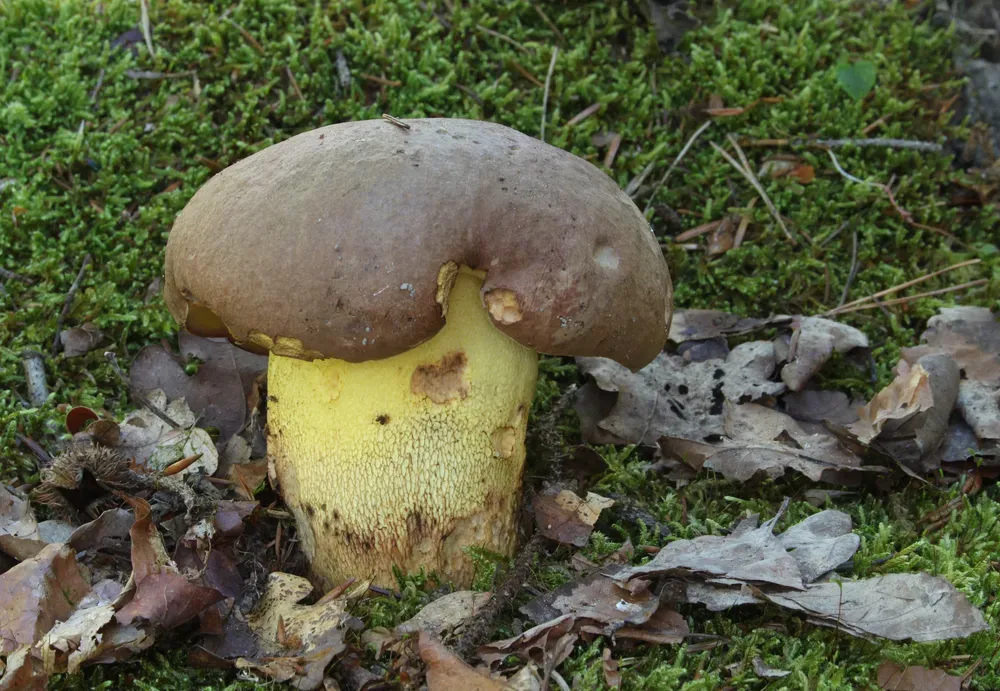
The oak bolete (Butyriboletus appendiculatus) is one of three Ukrainian members of the genus Butyriboletus, alongside the royal bolete and the pale bolete. The mushroom got its name "appendiculatus" ("with an appendage") from a distinctive feature of the stem base: it often tapers into a cone-shaped "appendage" or has an outgrowth, like a nail-shaped stand. Of all three it is the most "classic" in outline — it looks like a sturdy porcini, only a brighter yellow.
It is a warmth-loving, southern European species. In Ukraine it grows in oak and oak-beech forests of Zakarpattia, Prykarpattia, the Western Forest-Steppe and mountainous Crimea. It loves limestone and neutral soils, sunny forest edges and south-facing slopes. It doesn't occur in the northern regions — it is a southern accent of the mycoflora. Because of its rarity it is listed in the Red Data Book of Ukraine.
Edibility is top-class. Tasters rank it on a par with porcini and the royal bolete for flavor: buttery yellow flesh, a mild nutty aroma, a rich taste. In Southern Europe (Italy, Spain) it is actively gathered for the market. In Ukraine, to repeat, the mushroom is in the Red Data Book — picking it in the wild is prohibited. You may buy it imported or from cultivated farms (though mycorrhizal cultivation of this species is poorly developed).
Cap
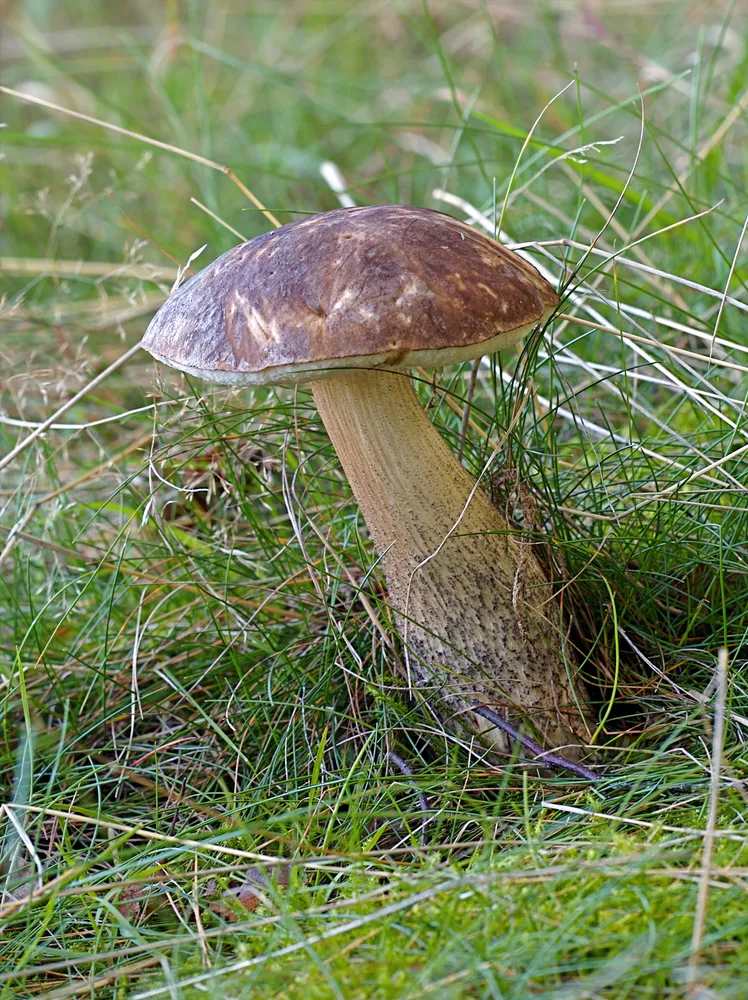
Cap 6–20 cm, hemispherical in young mushrooms, then flat-convex to cushion-shaped. The color varies: brown, yellow-brown, olive-brown, darker in the center. The surface is dry, slightly sticky in wet weather; in mature mushrooms it may crack finely into soft patches.
Hymenophore
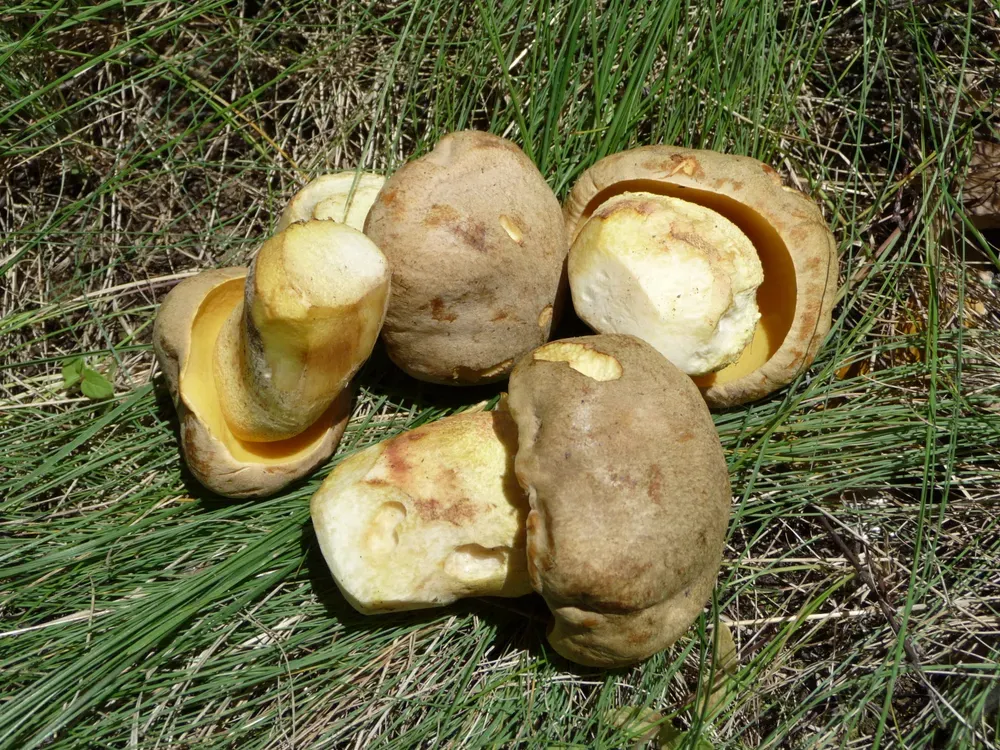
The spore-bearing surface is made of tubes, with a slight notch near the stem. The color is rich yellow (a buttery yellow — hence the genus name "butyri"). The pores are small and round. When pressed they may turn slightly blue, especially in mature mushrooms.
Stem
Stem 5–15 cm tall, 2–6 cm thick. Thicker near the top; toward the base it sometimes tapers or has a cone-shaped "appendage" (hence appendiculatus). Yellow in color, with a barely visible fine net in the upper part, sometimes with reddish-brown spots at the base.
Flesh
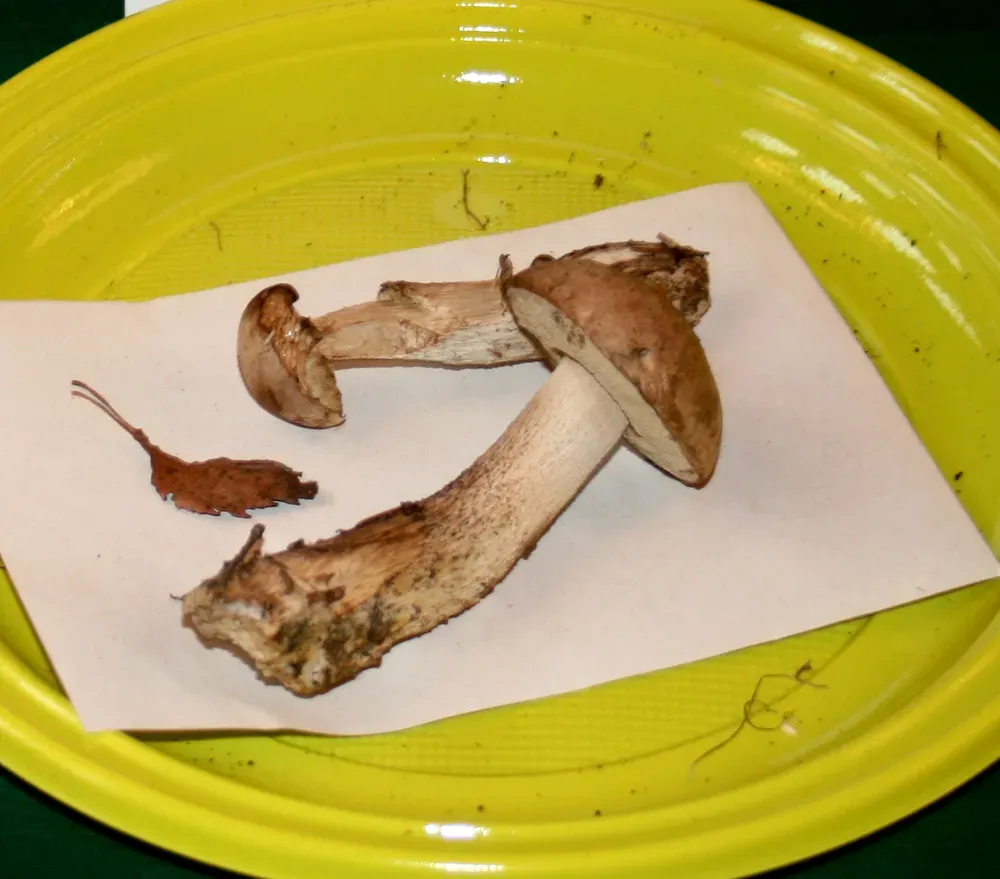
The flesh is buttery yellow, very firm in young mushrooms, softer in mature ones. When cut it may slowly turn blue, especially in the tubes and the upper part of the stem. At the stem base it sometimes has a pink or reddish-brown tint.
Smell
The smell is pleasant, mushroomy-nutty, with a faint note of fresh forest berries. The taste is mild and earthy, with no bitterness — some sources describe it as "buttery nuttiness".
›Scientific synonyms (1)
Boletus appendiculatus Schaeff. (1774)
Lookalikes
Related species
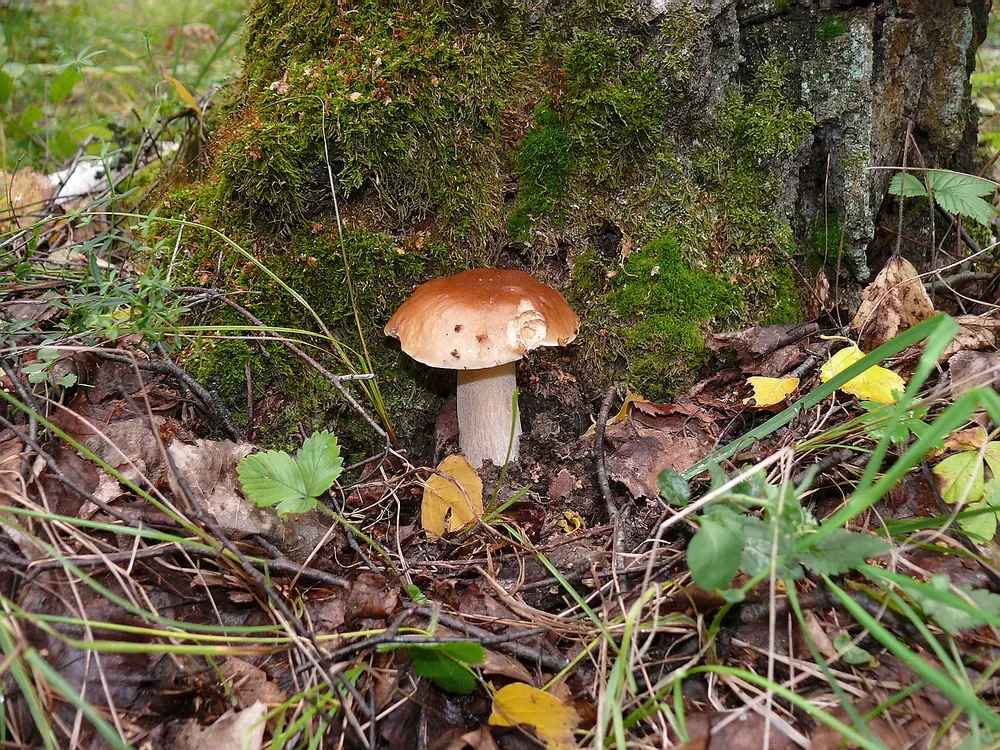
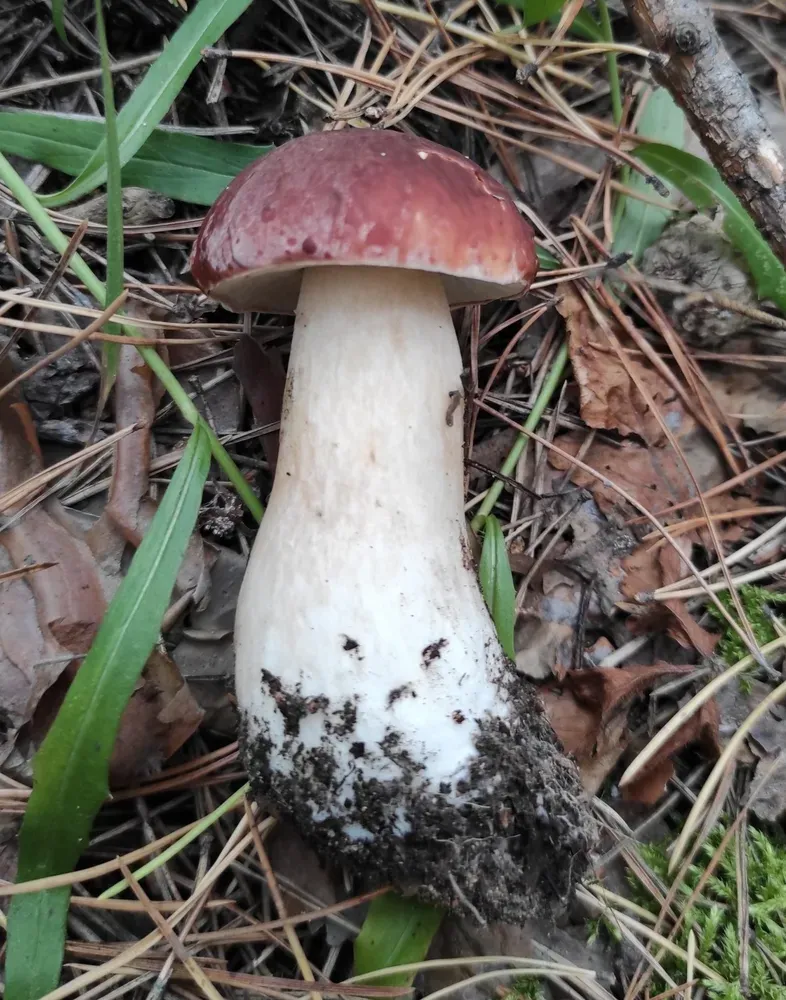
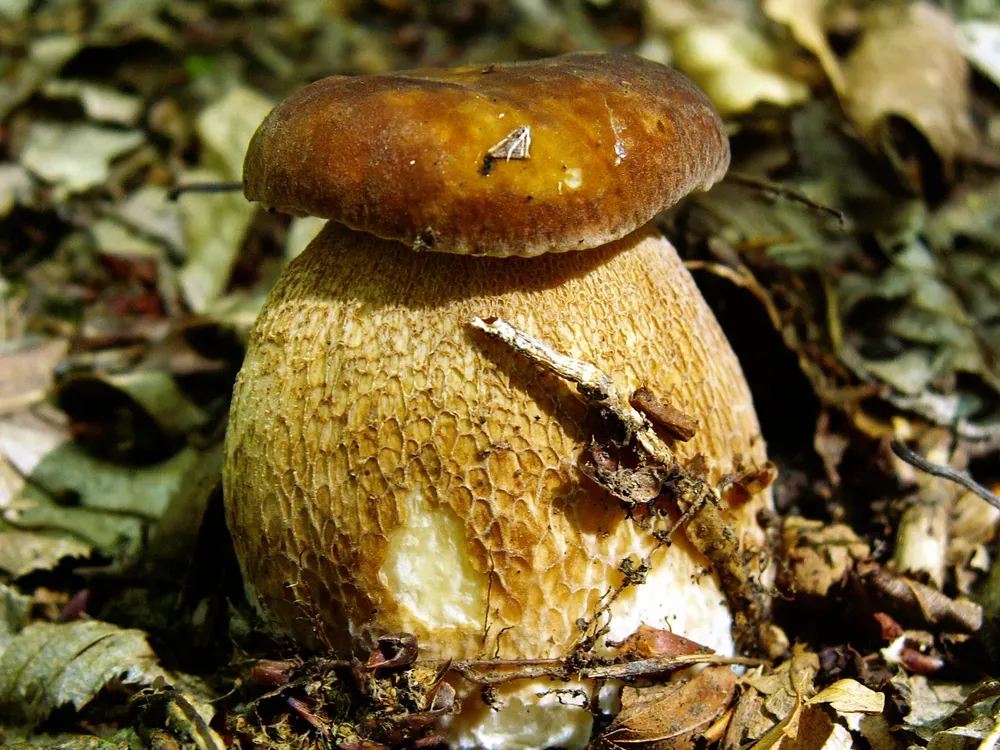
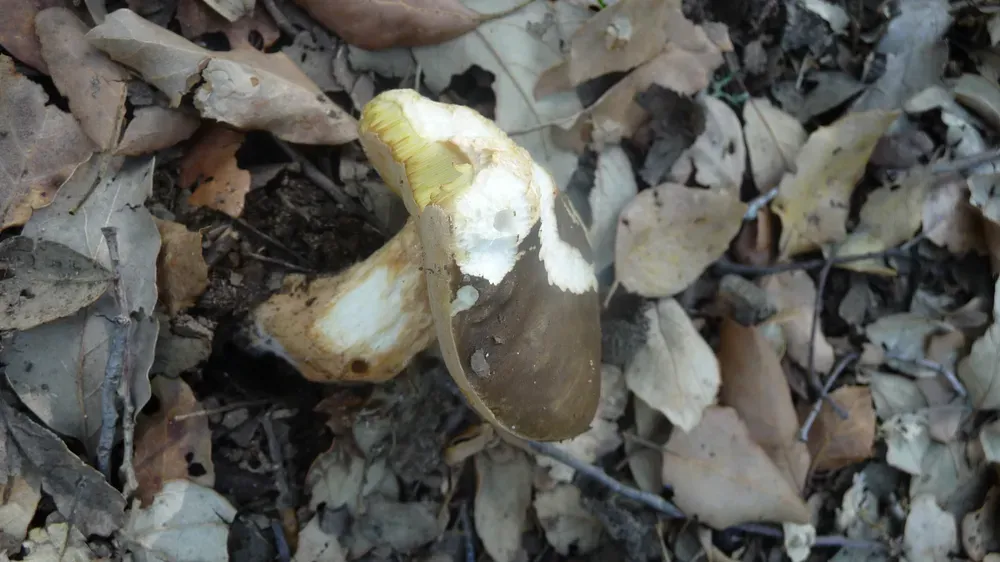
Mushrooms of the same genus and habitat — to study side by side and never mix up.
Frequently asked questions
Can it be confused with the devil's bolete?
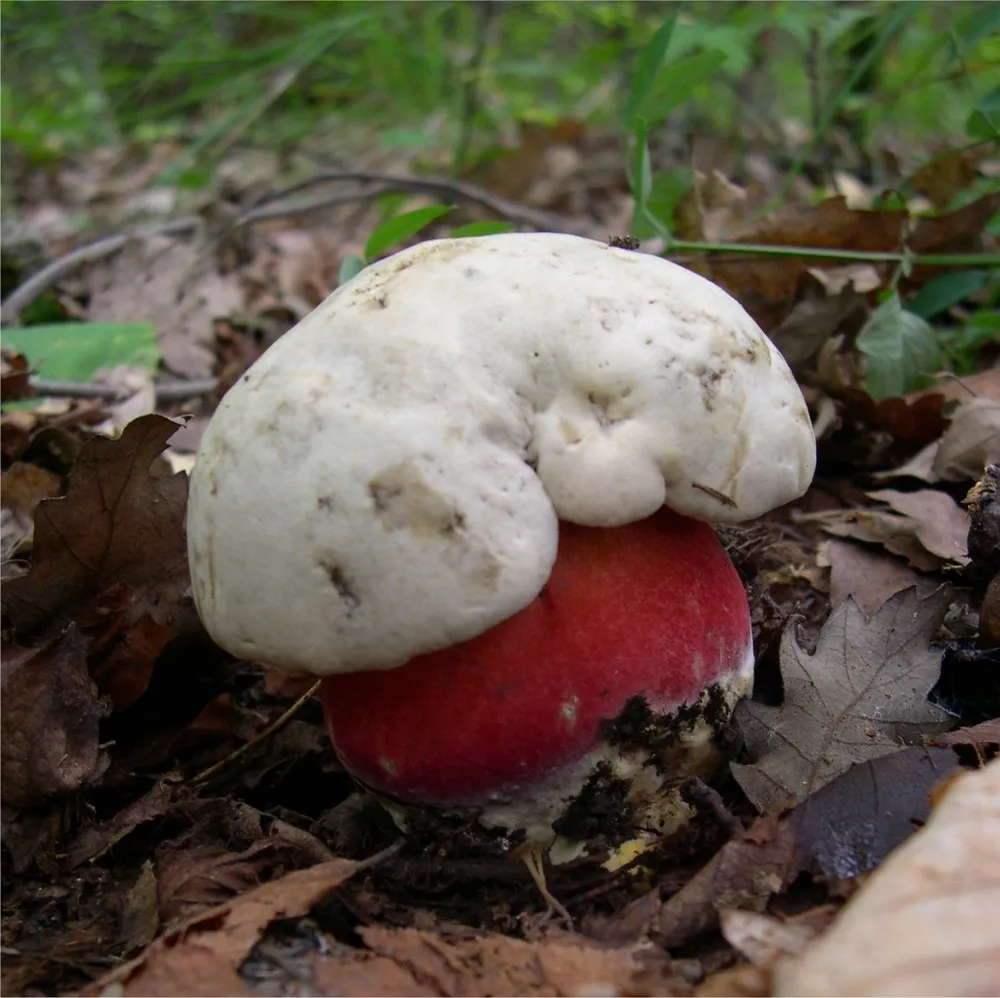
No. The devil's bolete (Rubroboletus satanas) has red-orange pores, the oak bolete has yellow ones. The devil's bolete flesh turns strongly blue immediately, the oak bolete's only weakly and slowly. The devil's bolete cap is pale gray, the oak bolete's a warm brown.
Is it allowed to pick it in Ukraine?
No. The species is in the Red Data Book of Ukraine. If you find one, take a photo, report it via iNaturalist Ukraine and leave the mushroom in the forest to spread its spores. You may buy it imported (from Italy, France, Spain).
Where does it grow in Ukraine?
Oak and oak-beech forests of Zakarpattia, Prykarpattia, the Western Forest-Steppe, and mountainous Crimea. It loves limestone soils, sunny forest edges and south-facing slopes. It does not grow in the northern regions, in pure coniferous forests or in the steppe.
When does it fruit?
June to October, peaking in July–September. It likes warm and moderately damp periods. In very dry or cold years it may not appear at all. In good years it forms groups of 2–4 fruiting bodies.
How does it differ from the royal bolete?
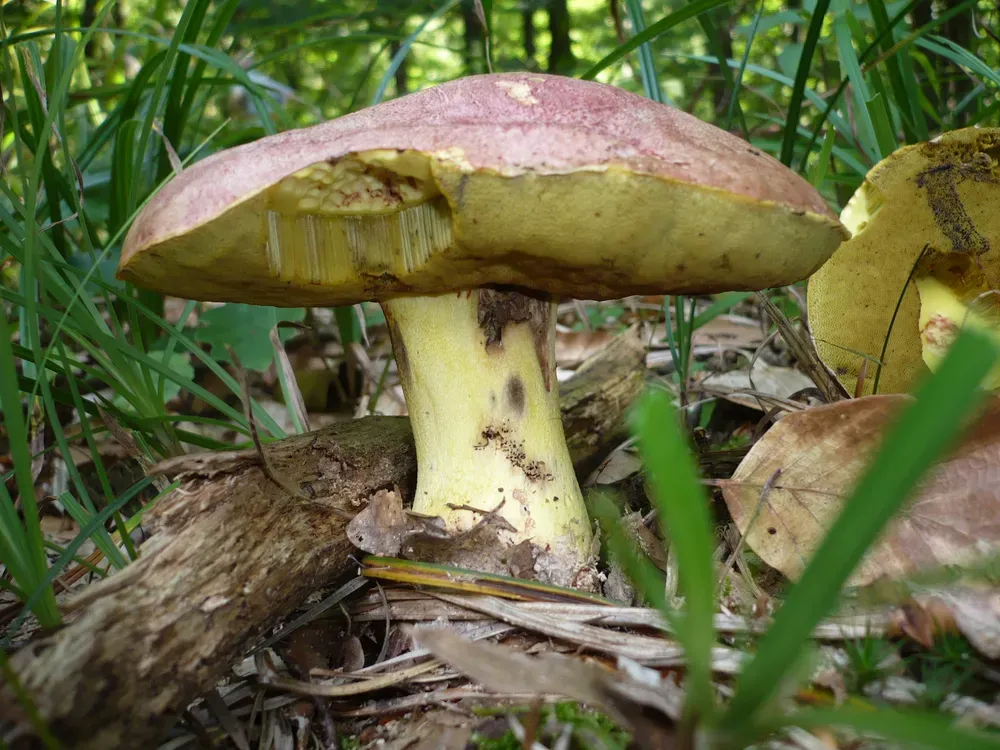
The royal bolete (B. regius) has a pinkish-raspberry cap — that's the most striking difference. The oak bolete's cap is brownish-yellow or yellow-brown, with no pink tints. Both have buttery yellow flesh. Both are in the Red Data Book.
How does it differ from the pale bolete?
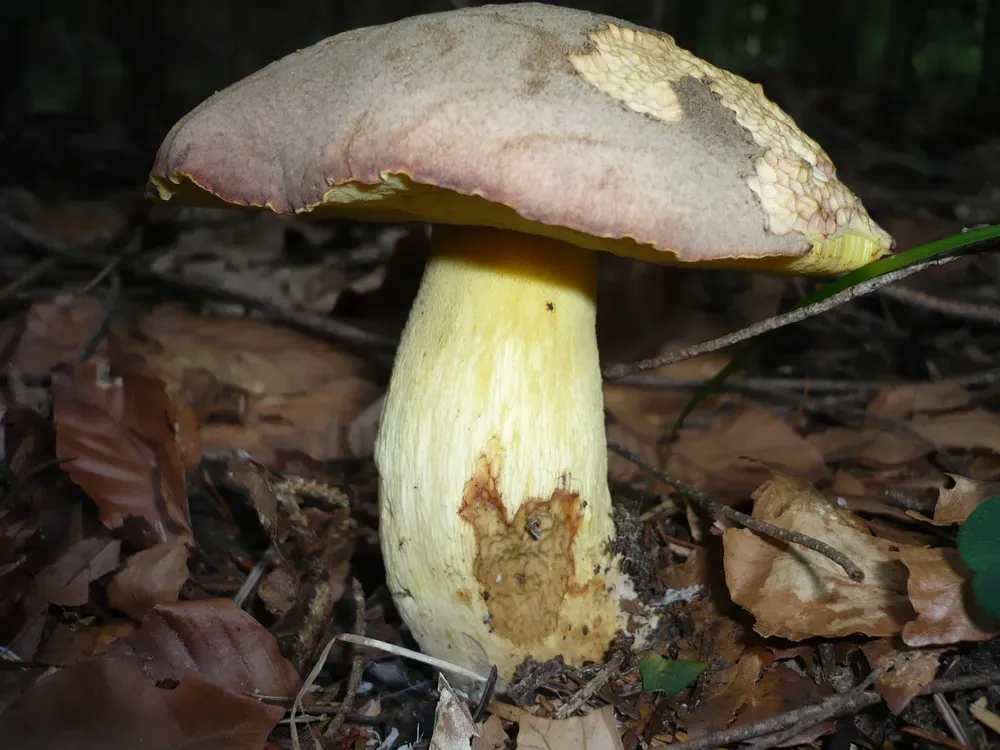
The pale bolete (B. fechtneri) has a grayish-white or pale cream cap. The oak bolete's is brownish-yellow. All three species in the genus Butyriboletus (regius, fechtneri, appendiculatus) differ mainly in cap color.
Which trees does it form mycorrhiza with?
Mainly with oak (Quercus robur, Q. petraea) and beech (Fagus sylvatica). In Southern Europe — with chestnut. It doesn't occur in coniferous forests.
Does the flesh turn blue when cut?
Weakly and slowly — especially in the tubes. This is a normal reaction for the species, not a sign of toxicity. Other boletes with pink pores turn blue much more strongly and instantly — that's where you should be careful. In the oak bolete the bluing is barely noticeable.
Is Oak bolete edible or poisonous?
Does Oak bolete have gills or pores?
What does the cap of Oak bolete look like?
What does the stem of Oak bolete look like?
Sources
- [1]Вікіпедія (українська)
- [2]Атлас грибів України, Зеров Д.К. (1979)
- [3]MycoBank Database
- [4]Index Fungorum
- [5]GBIF
- [6]iNaturalist Ukraine