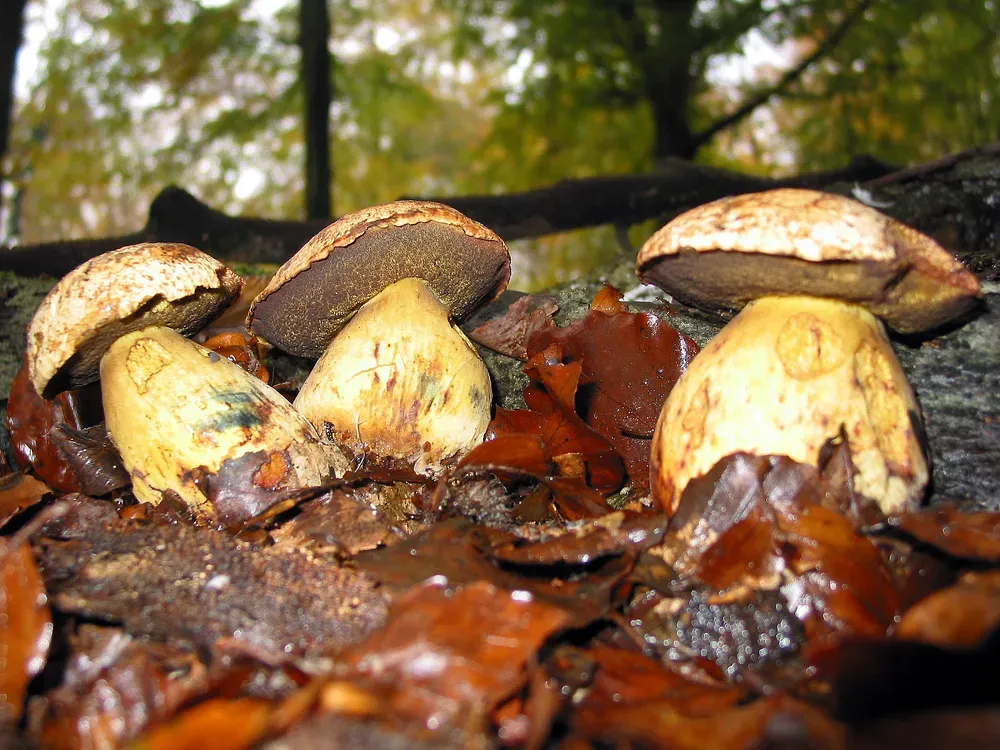
Yellow boleteNeoboletus junquilleus
Expert-verifiedUpdated June 13, 2026
Passport
- Edibility
- Edible
- Season
- Jun — Sep
- Hymenophore
- Pored
- Cap color
- Yellow
- Size
- Large (over 15 cm)
- Smell
- Pleasant
- Reviewed
- Yes ✓
Quick answers
Where to look?
Deciduous forest
When does it appear?
Jun — Sep
Active months: June, July, August, September.
How to recognize it? Three signs
- Cap color: Yellow, Orange
- Cap shape: Convex
- Smell: Pleasant
Fruiting season
June – September
Description
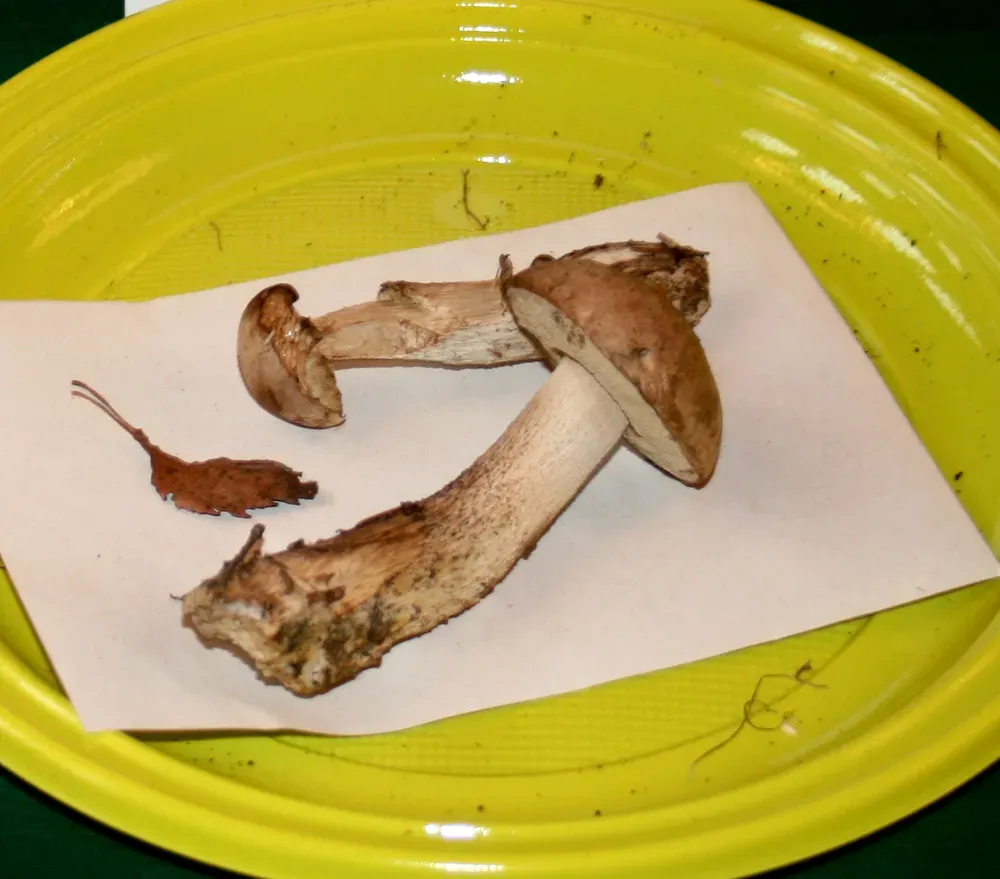
The yellow bolete (Neoboletus junquilleus, synonyms — Boletus junquilleus, Neoboletus xanthopus) is a rare bolete with a southern European range. It is a close relative of the hot-yellow Neoboletus luridiformis, but with a distinctly yellow (not red) stem and pores. It earned the name "yellow" for the rich yellow color of every part — cap, stem and flesh.
In Ukraine it is very rare — mostly in oak and oak-beech forests of Zakarpattia, the Carpathian foothills (Prykarpattia) and mountainous Crimea. It forms mycorrhiza with oak and beech on limestone soils. It does not grow in the northern regions or the steppe. Because of its rarity it is a candidate for protection, although it is not officially listed in the Red Data Book of Ukraine (unlike several other Butyriboletus).
Edibility — good, a category 2 mushroom. The flesh is yellow and quickly turns blue when cut (a typical reaction for Neoboletus). When cooked, the blue color disappears and the mushroom turns an ordinary yellowish-brown, with a pleasant mushroomy taste. Before cooking, it is worth boiling it for 10–15 min and pouring off the first water (a standard precaution for all bluing boletes). It is great fried, stewed and pickled.
Cap
Cap 6–15 cm, hemispherical in young mushrooms, then cushion-shaped. Color bright yellow to ochre-yellow, with a reddish tinge in the center in mature ones. The surface is matte, slightly sticky in wet weather, and dry and faintly rough in dry weather.
Hymenophore
Hymenophore tubular, with a small notch near the stem. Yellow when young, olive-yellow in mature ones. Pores small, round, YELLOW (this sets it apart from its relative Neoboletus luridiformis, which has red pores). They quickly turn blue when pressed.
Stem
Stem 6–14 cm tall, 2–4 cm thick, bulbous or slightly club-shaped. Color bright yellow, with fine reddish dots and streaks, but WITHOUT a continuous red net (unlike N. luridiformis). Turns blue when pressed.
Flesh
Flesh bright yellow, firm in young mushrooms. When cut, it turns blue QUICKLY and STRONGLY — the characteristic reaction of the genus Neoboletus. After 5–10 min it settles to a grayish blue. This is normal and not a sign of toxicity.
Smell
Smell pleasant, mushroomy, with no distinctive notes. Taste mild and delicate, with a nutty hint.
Lookalikes
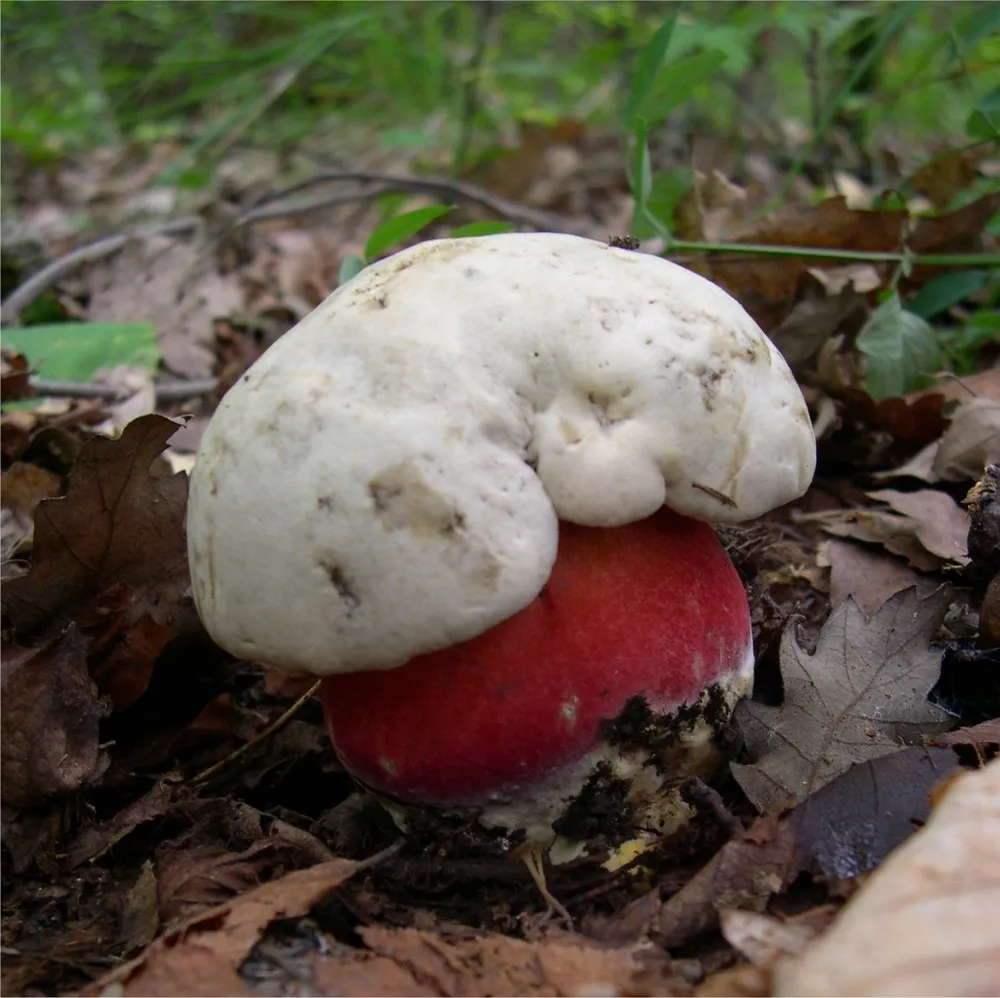
Related species
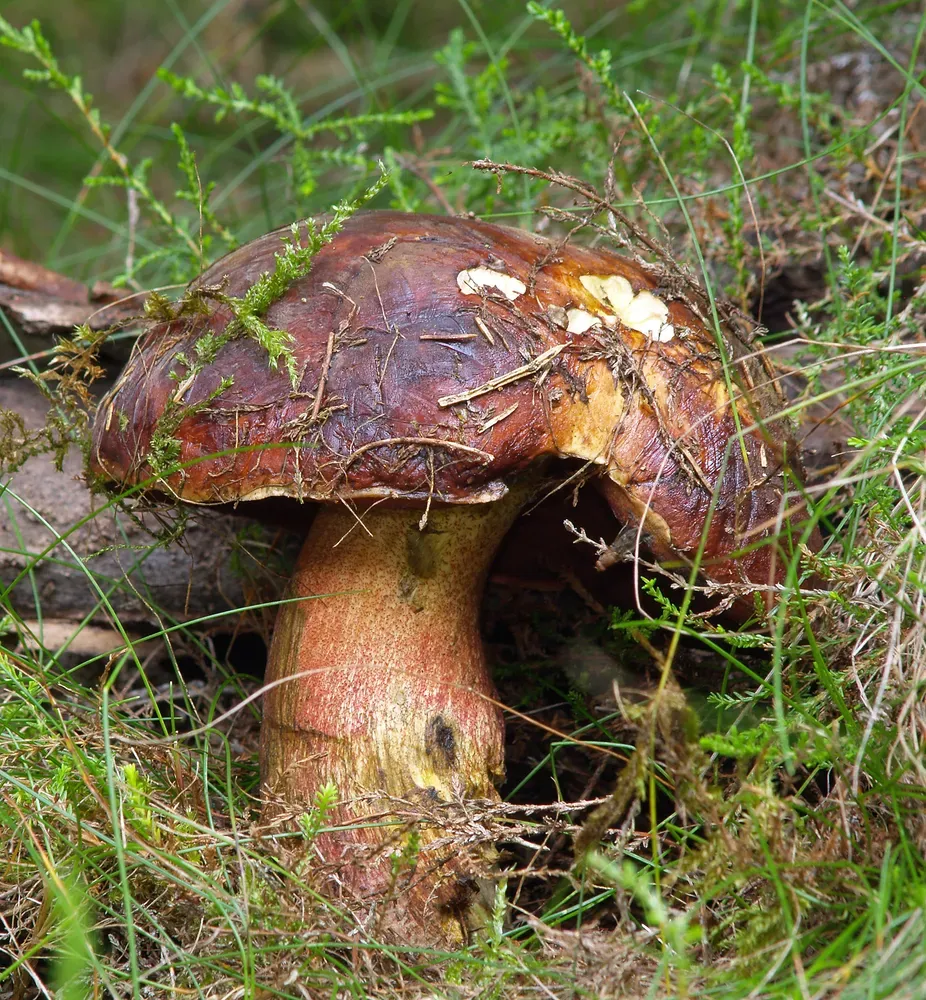
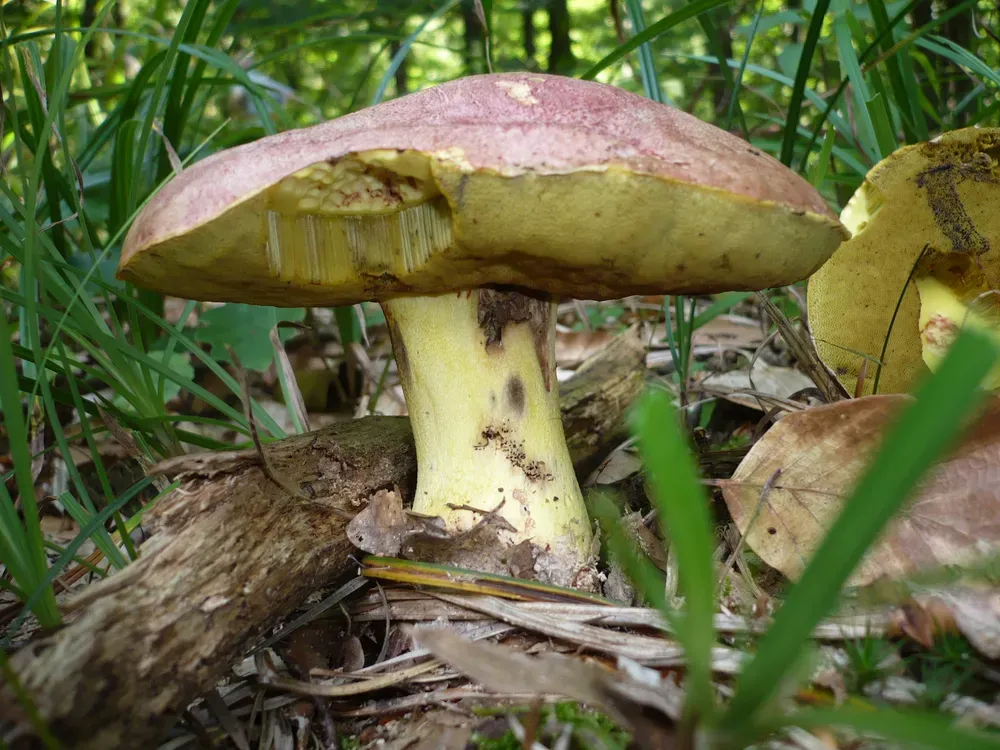
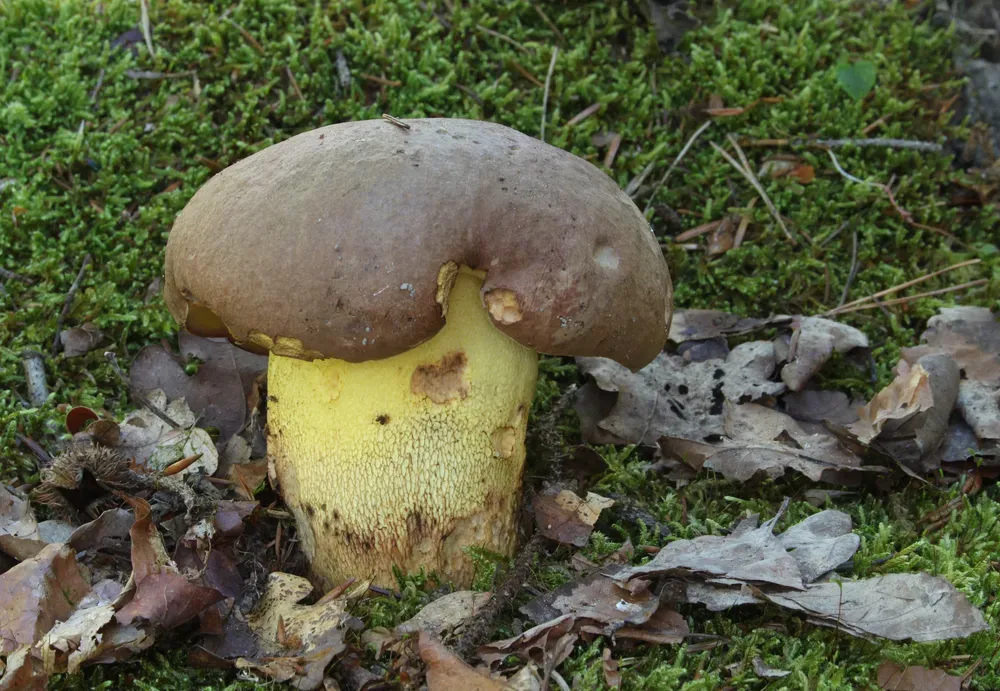
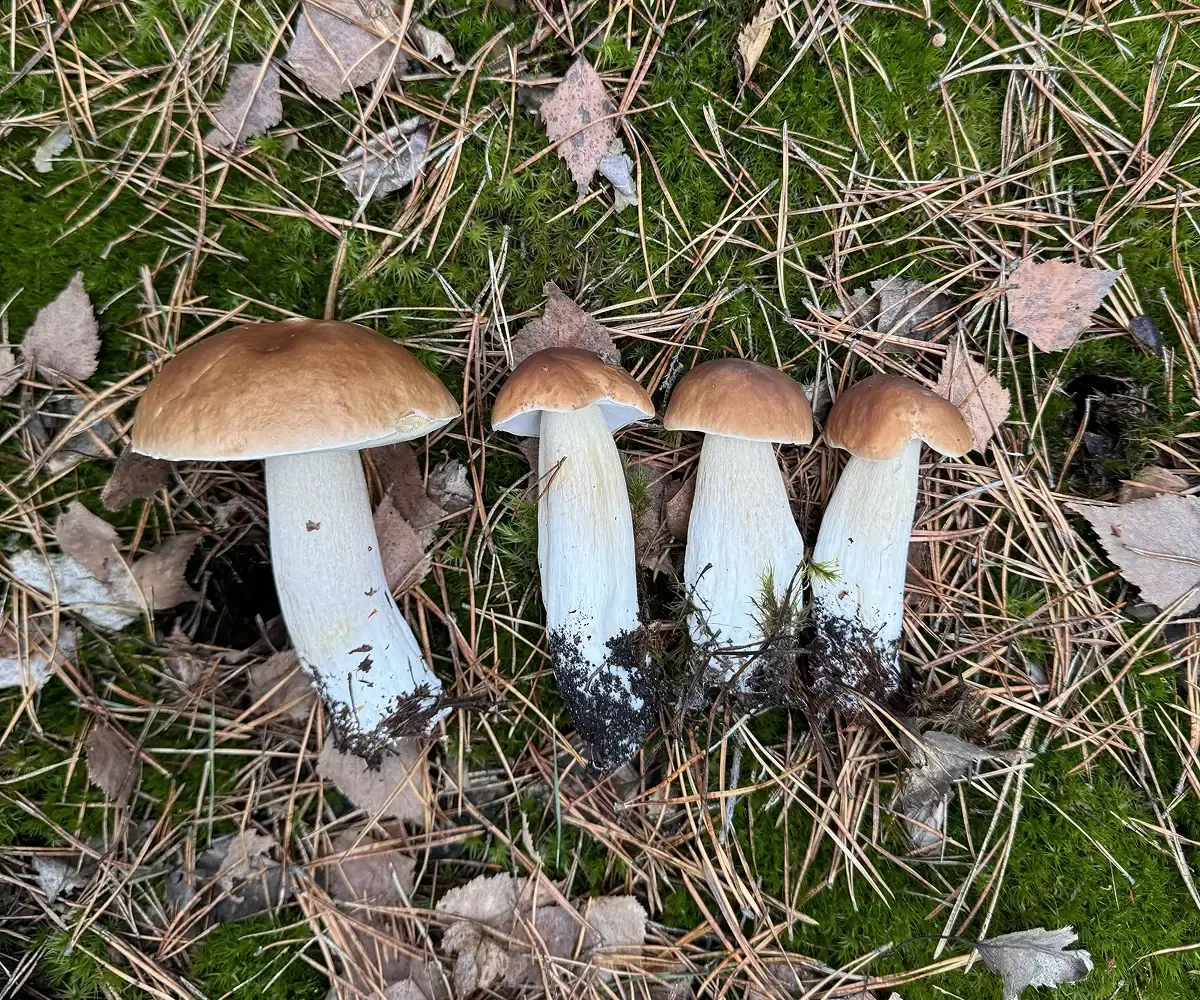
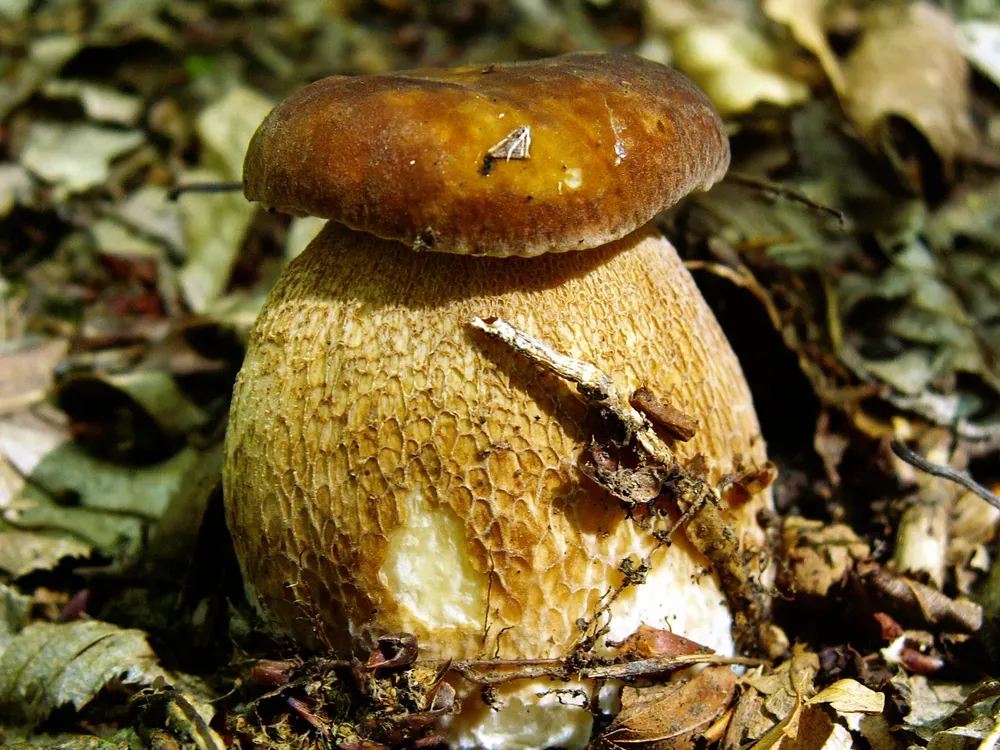
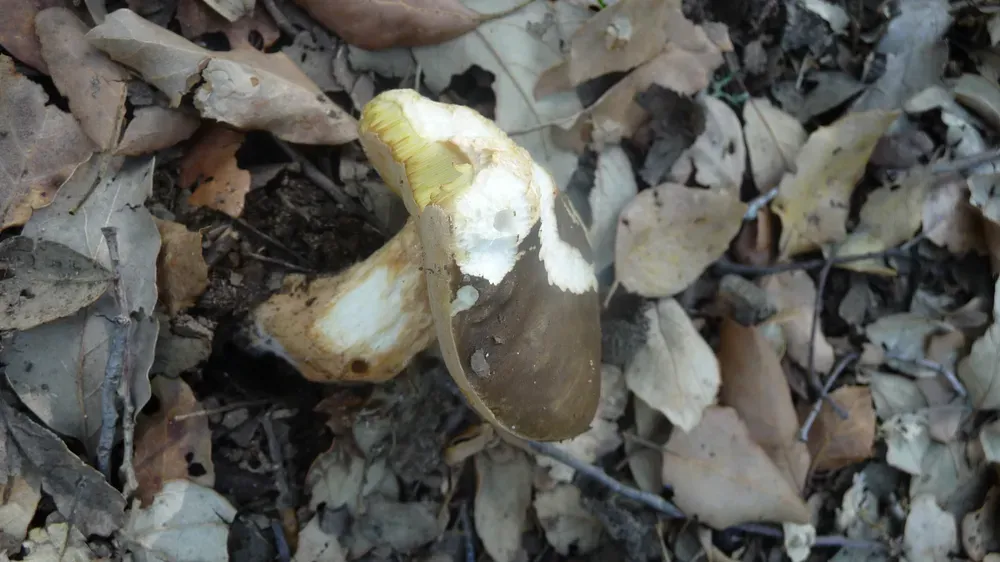
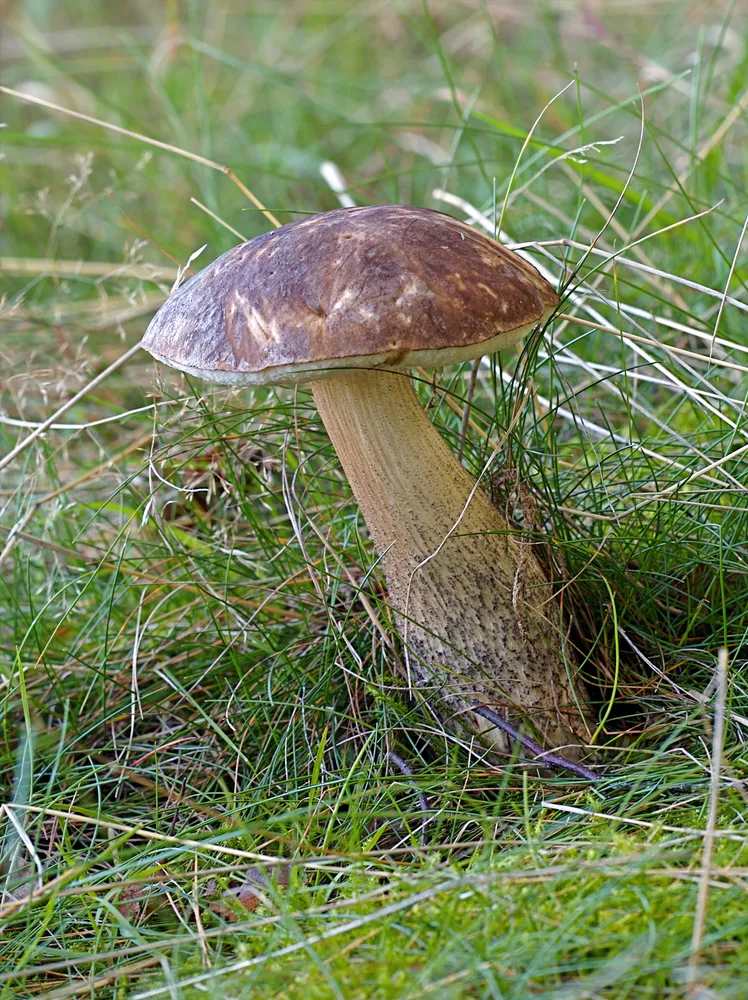
Mushrooms of the same genus and habitat — to study side by side and never mix up.
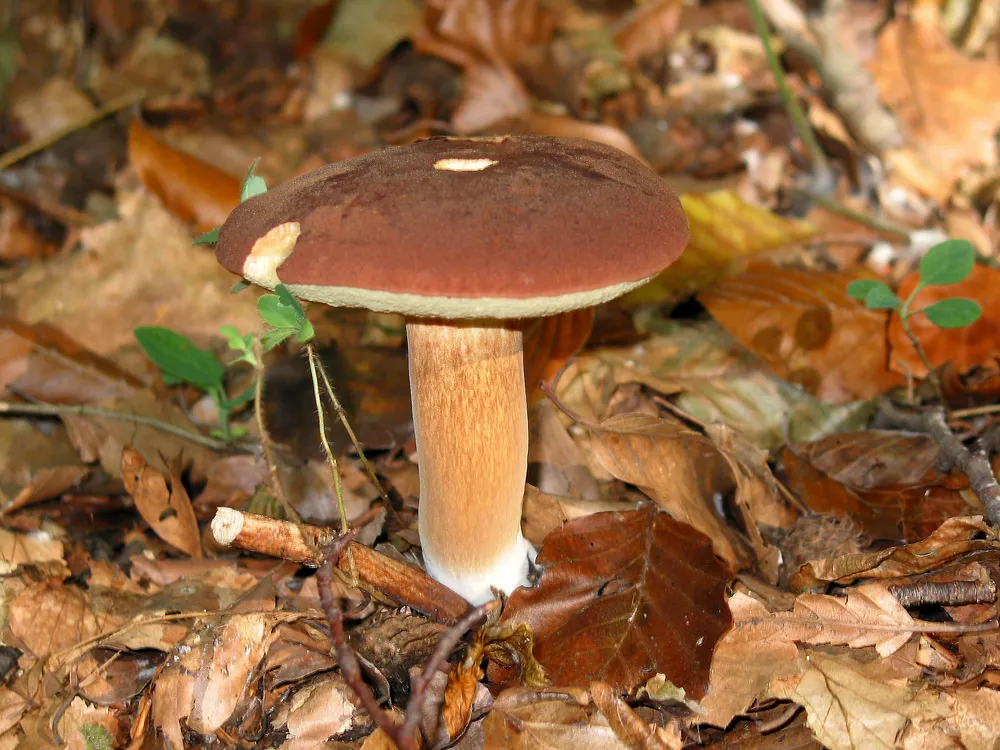
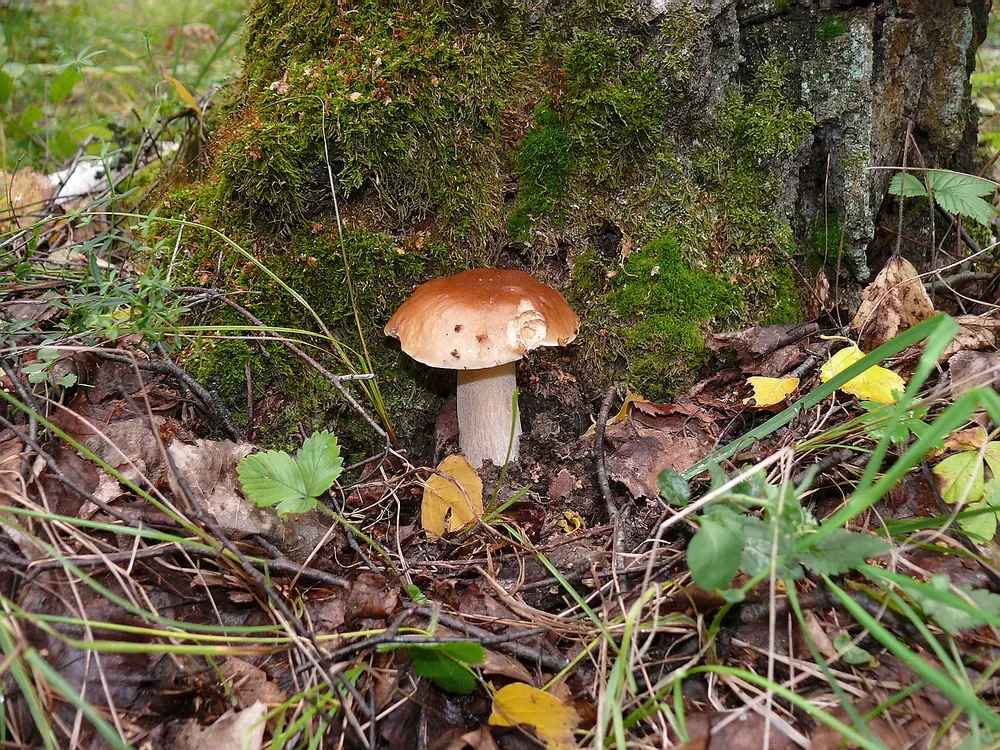
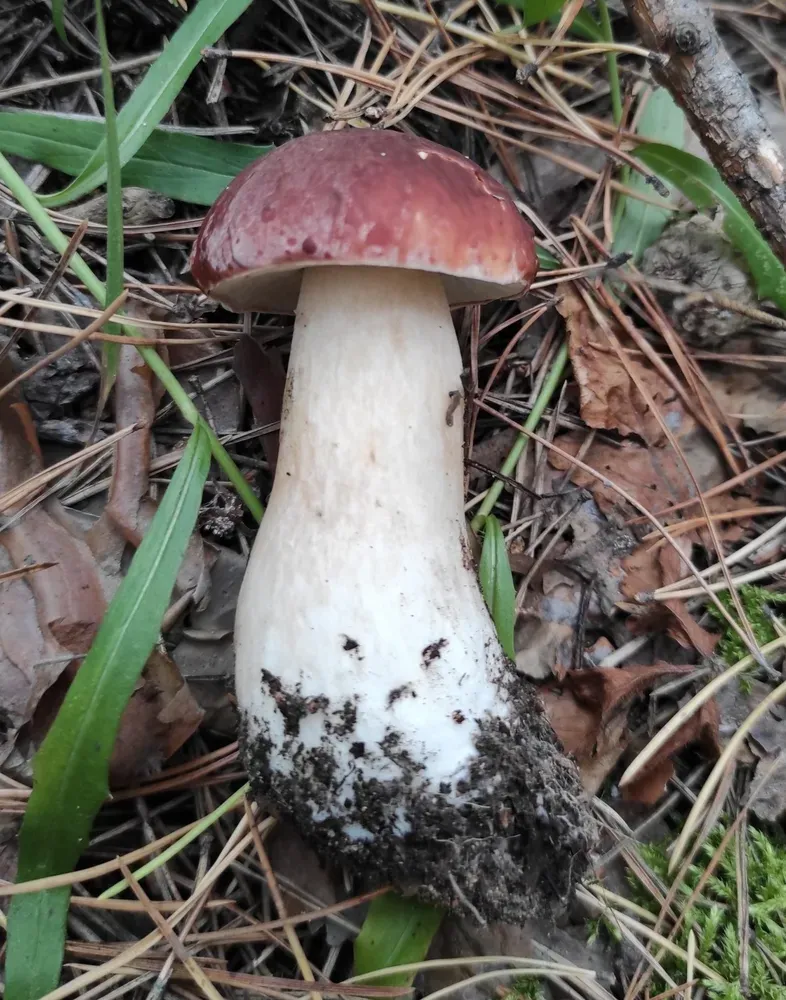
Frequently asked questions
Is it safe that it turns so blue?
Yes. Strong bluing when cut is a characteristic feature of the genus Neoboletus, not a sign of toxicity. The color disappears completely when cooked. Before cooking, it is best to boil it for 10–15 min and pour off the water — a standard precaution for all Neoboletus.
Can it be confused with the devil's bolete?
Yes, potentially. In the devil's bolete (Rubroboletus satanas) the cap and flesh also turn blue. The difference: the devil's bolete has red pores (like Neoboletus luridiformis), while our yellow bolete has yellow pores. The devil's bolete has a pale gray cap, the yellow bolete a bright yellow one. Always check the pore color.
Can it be confused with Neoboletus luridiformis?
That is its closest relative, also edible. Luridiformis has red-orange pores and a stem with a distinct red net. The yellow bolete has YELLOW pores and stem, without a red net. Both are safe, but the pore color is the diagnostic difference.
Where to look in Ukraine?
Oak and oak-beech forests of Zakarpattia, Prykarpattia and mountainous Crimea. It loves limestone soils, warm forest edges and south-facing slopes. It is not found in the northern regions, pure coniferous pine forests or the steppe.
When does it fruit?
June — September, peaking in July–August. It likes warm, moderately humid summer days after long spells of rain. In very dry years it is rare.
Which trees does it form mycorrhiza with?
Mostly oak (Quercus robur, Q. petraea) and beech (Fagus sylvatica). Sometimes chestnut in Zakarpattia. It is not found in coniferous forests — this is a southern broadleaf species.
How to cook it?
Clean and slice. Boil for 10–15 min in salted water and pour off the first water (to reduce the bluing in the pot). Then fry with onion and butter, stew in cream, or pickle. You can dry it, but because of the watery flesh the result is mediocre.
Why is it rare?
A narrow ecological niche (limestone soils, warm oak forests), a small number of fruit bodies each year, sensitivity to climate change. It is almost absent from northern Europe — it is mainly a southern European species whose range reaches its edge in the Carpathians and Zakarpattia.
Is Yellow bolete edible or poisonous?
Does Yellow bolete have gills or pores?
What does the cap of Yellow bolete look like?
What does the stem of Yellow bolete look like?
Sources
- [1]Вікіпедія (українська)
- [2]Mushrooms Demystified, David Arora
- [3]Mushrooms (Roger Phillips), Roger Phillips
- [4]Визначник грибів України, Зерова М.Я. та ін. (1979)
- [5]iNaturalist Ukraine
- [6]Species Fungorum
- [7]Index Fungorum
- [8]GBIF
- [9]MycoBank Database
- [10]Атлас грибів України, Зеров Д.К. (1979)