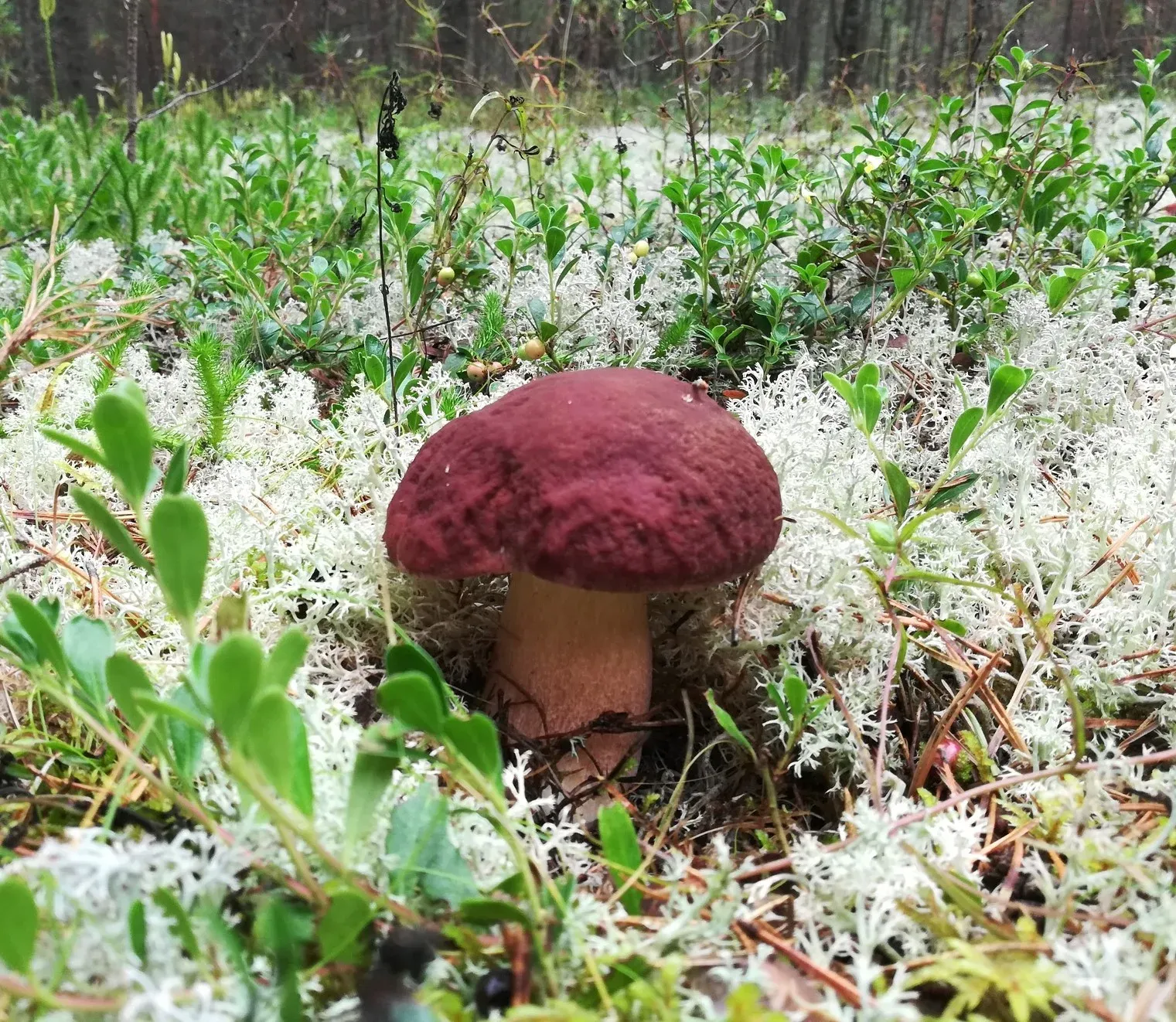
If the summer bolete opens the season, the pine bolete (Boletus pinophilus, listed in our catalog as Pine bolete) closes it in style. This dark-capped beauty of conifer woods is massive and stately, which is why many foragers award it the unofficial title of king of porcini.
It comes up when the morning grass is already gray with dew and the air smells of damp, decaying pine needles. Its firm flesh and rich aroma make it one of the most coveted prizes of the autumn forest.
Why it's called the king
The pine bolete impresses with its looks alone. The cap is a deep chestnut red, sometimes almost wine-colored, the stem is thick and heavy, and the whole mushroom seems brimming with strength. Next to it, an ordinary porcini can look rather modest.
But the “royal” nickname here is a folk one, a nod to its stature and flavor. Don't confuse it with a separate species, the royal bolete (Butyriboletus regius), which has a pink cap and belongs to a different genus. The pine bolete, on the other hand, is a true porcini, the closest relative of the summer bolete.
In flavor it is second to none of the porcini, and sometimes even wins thanks to its especially firm flesh, which holds its shape well both dried and pickled.
What the pine bolete looks like
You recognize it by a combination of features, not just one. Look the mushroom over from top to bottom.
- Cap. Dark, chestnut red or wine brown, hemispherical in young mushrooms, cushion-shaped with age. The surface is smooth, slightly shiny and sticky in damp weather.
- Stem. Thick, massive, often barrel-shaped, with a slight reddish-brown tinge. A pale net pattern covers mostly the upper part.
- Pores. The tube layer underneath: white in young mushrooms, then yellowish, olive green in old ones. It is never pink.
- Flesh. Firm, white, often with a faint wine-colored tinge under the cap skin. It does not change color when cut.
The most reliable check at home is the same as for the other porcini: cut the mushroom. In a true pine bolete the flesh stays white; it does not turn blue or red.
How it differs from the summer bolete
The pine bolete and the summer bolete are easy to tell apart by three details.
- Cap color. In the pine bolete it is dark, chestnut-wine; in the summer bolete it is lighter, hazelnut brown.
- Cap surface. In the pine bolete it is smooth and often moist; in the summer bolete it is matte and cracks into little squares in hot weather.
- Net on the stem. In the pine bolete only at the top; in the summer bolete it runs almost to the base.
And, of course, the trees. The summer bolete favors broadleaf trees, while the pine bolete prefers conifers. We have a separate piece with a full comparison of the summer and autumn boletes.
Where and when to look for it
The pine bolete is linked to conifers through mycorrhiza, meaning it lives in a mutually beneficial partnership with their roots. So look for it under pine, less often under spruce.
The best spots are:
- old pinewoods with moss and bilberry;
- sunny edges of conifer forest and sun-warmed sandy hills;
- patches of mixed forest where pine grows alongside birch.
It doesn't like dense, wet thickets; it needs warmth and a bit of light. The season runs from July to October, with the main flush in September. The best time to go is two or three days after a warm rain, once the ground has warmed up. An easy way to track these windows is our mushroom radar: it shows when moisture and warmth line up just right for boletes to appear.
Caution never hurts
The pine bolete is fairly easy to recognize, but care never hurts. The bitter bolete is common in pinewoods too: it gives itself away with pinkish pores under the cap and a dark net on the stem. The pine bolete has white or yellow pores and a pale net.
The golden rule stays the same: if you're not sure, don't pick it. One doubtful mushroom isn't worth a ruined dish, or worse.
Sources
- “Key to the Fungi of Ukraine” (Kyiv, Naukova Dumka publishing house).
- Boletus pinophilus in GBIF, the global biodiversity database.
- Boletus pinophilus in MycoBank, the international fungal nomenclature database.
- Boletus pinophilus on Wikipedia.
Frequently asked questions
What is the pine bolete?
It's one of the true porcini (*Boletus pinophilus*), growing under pines. It has a dark chestnut-wine cap, a massive stem and white flesh that doesn't turn blue when cut.
Why is the pine bolete called royal?
Because of its stature and rich flavor. It's a folk nickname, not a scientific name. The actual is a separate species with a pink cap, so don't mix them up.
What does the pine bolete look like?
A dark chestnut-red or wine-brown cap, smooth and slightly moist, a thick barrel-shaped stem with a pale net at the top, white or yellowish pores underneath and firm white flesh.
How does the pine bolete differ from the summer bolete?
The pine bolete is darker, its cap is smooth and moist, and the net is only at the top of the stem. is lighter, its cap is matte and cracks in the heat, and the net runs along the whole stem.
Where does the pine bolete grow?
In pine and mixed , under pine and occasionally spruce. It loves old pinewoods with moss and bilberry, sun-warmed sandy hills and bright forest edges.
When to pick the pine bolete?
The season runs from July to October, with the main flush in September. It's best to go a few days after a warm rain, guided by the .
Does the pine bolete turn blue when cut?
No. The flesh stays white, sometimes with a faint wine-colored tinge under the skin. If the cut turns blue or red, it's a different mushroom, and you shouldn't take it.
Is the pine bolete edible?
Yes, it's one of the most prized edible boletes. Its firm flesh holds its shape beautifully when dried or pickled, and its aroma is considered one of the richest among porcini.
Mushrooms in this article
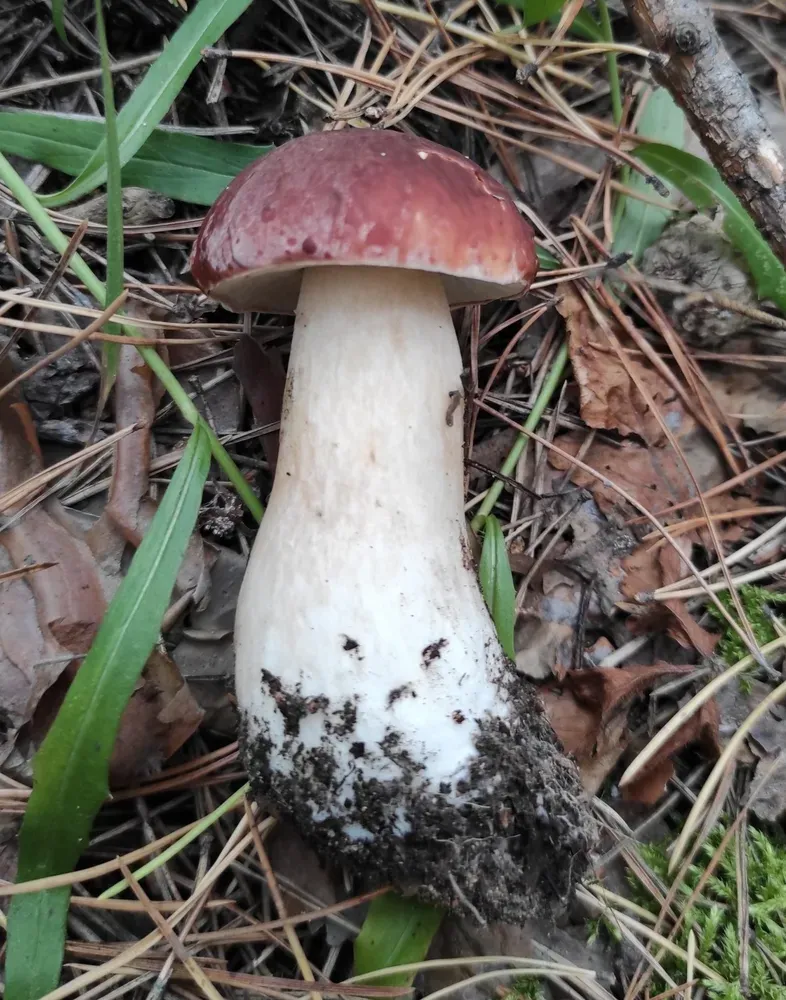
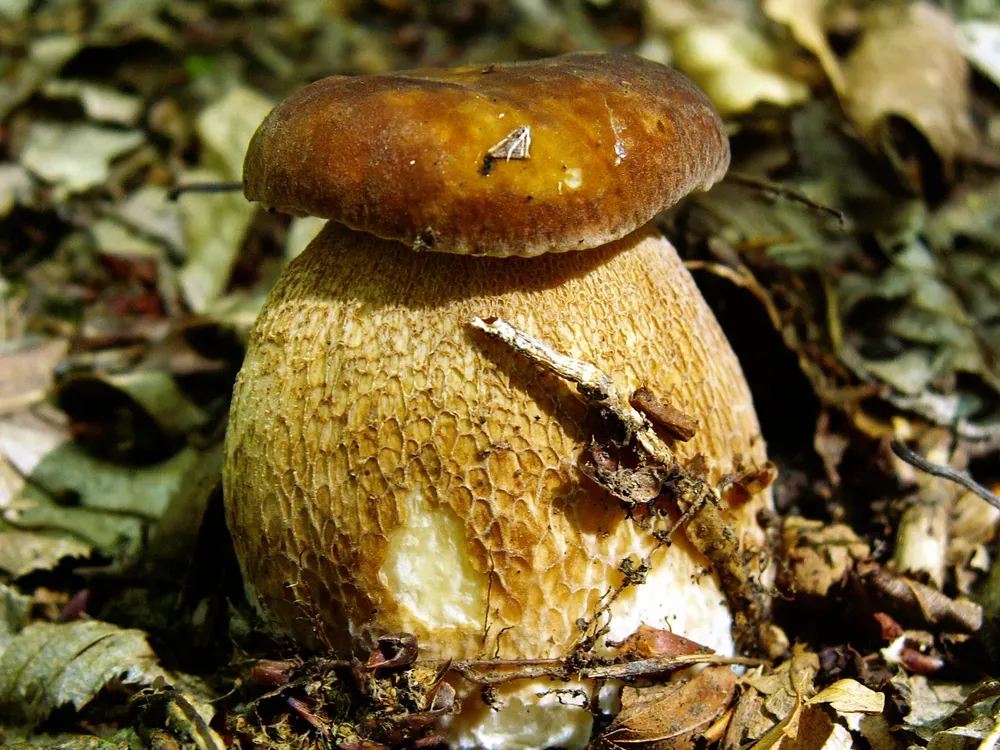
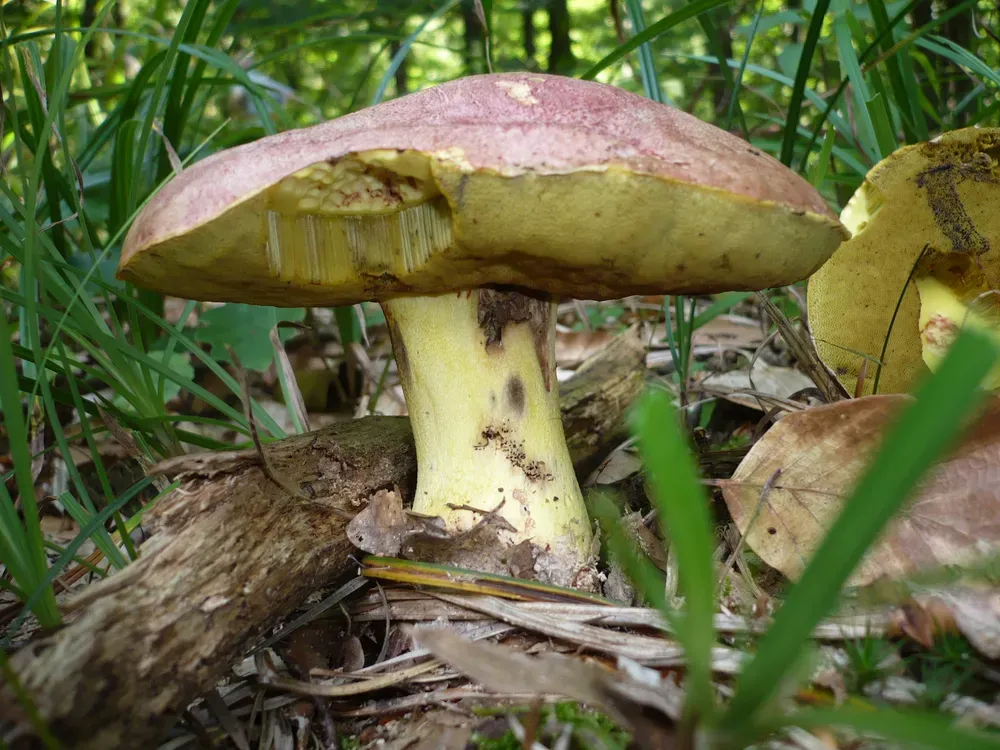
Related articles
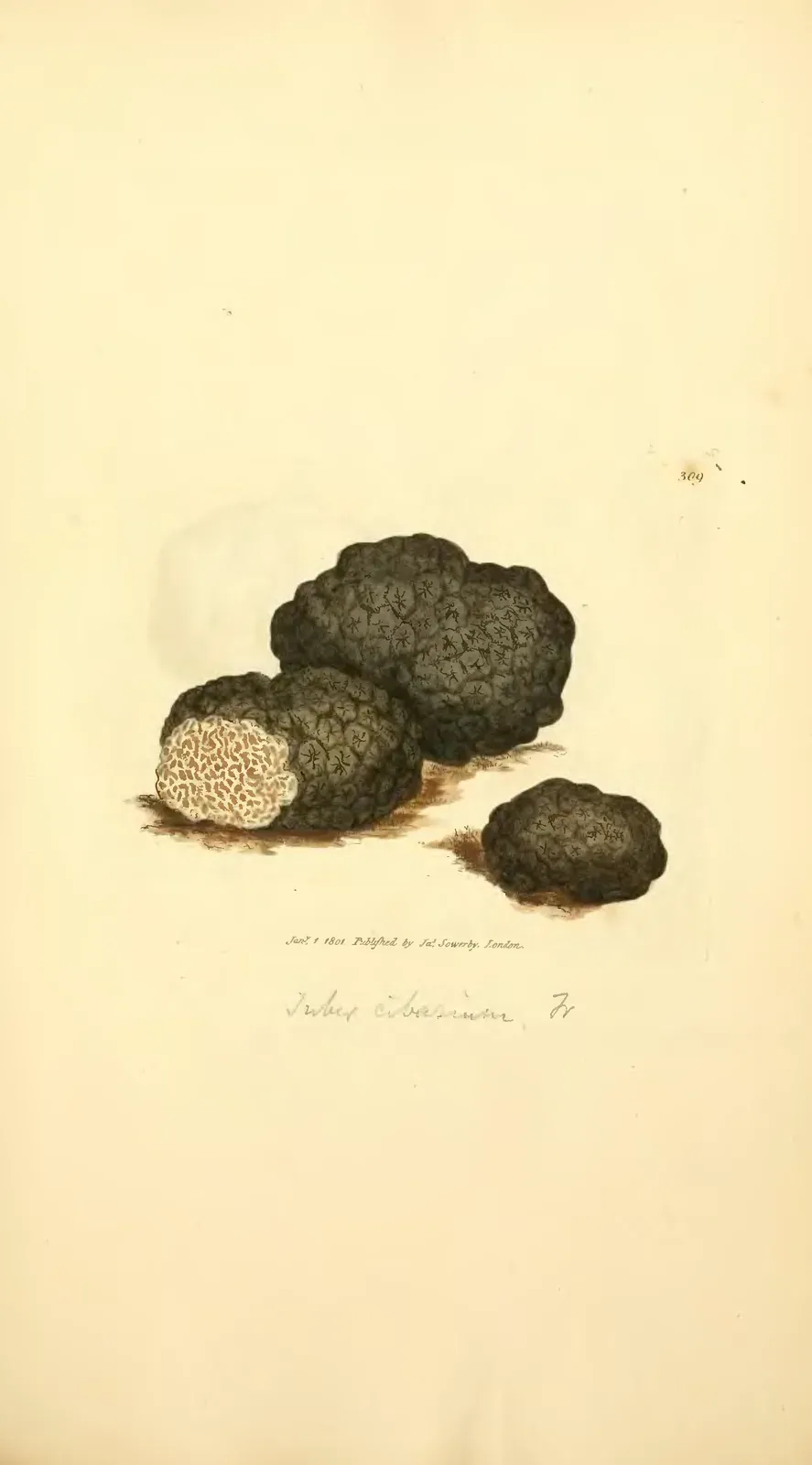 How to identify
Truffles in Ukraine: do they grow here, and where to look
Truffles aren't just a French delicacy. Several species grow in Ukraine too. Here's which ones, where they occ…
August 24, 2026·2 min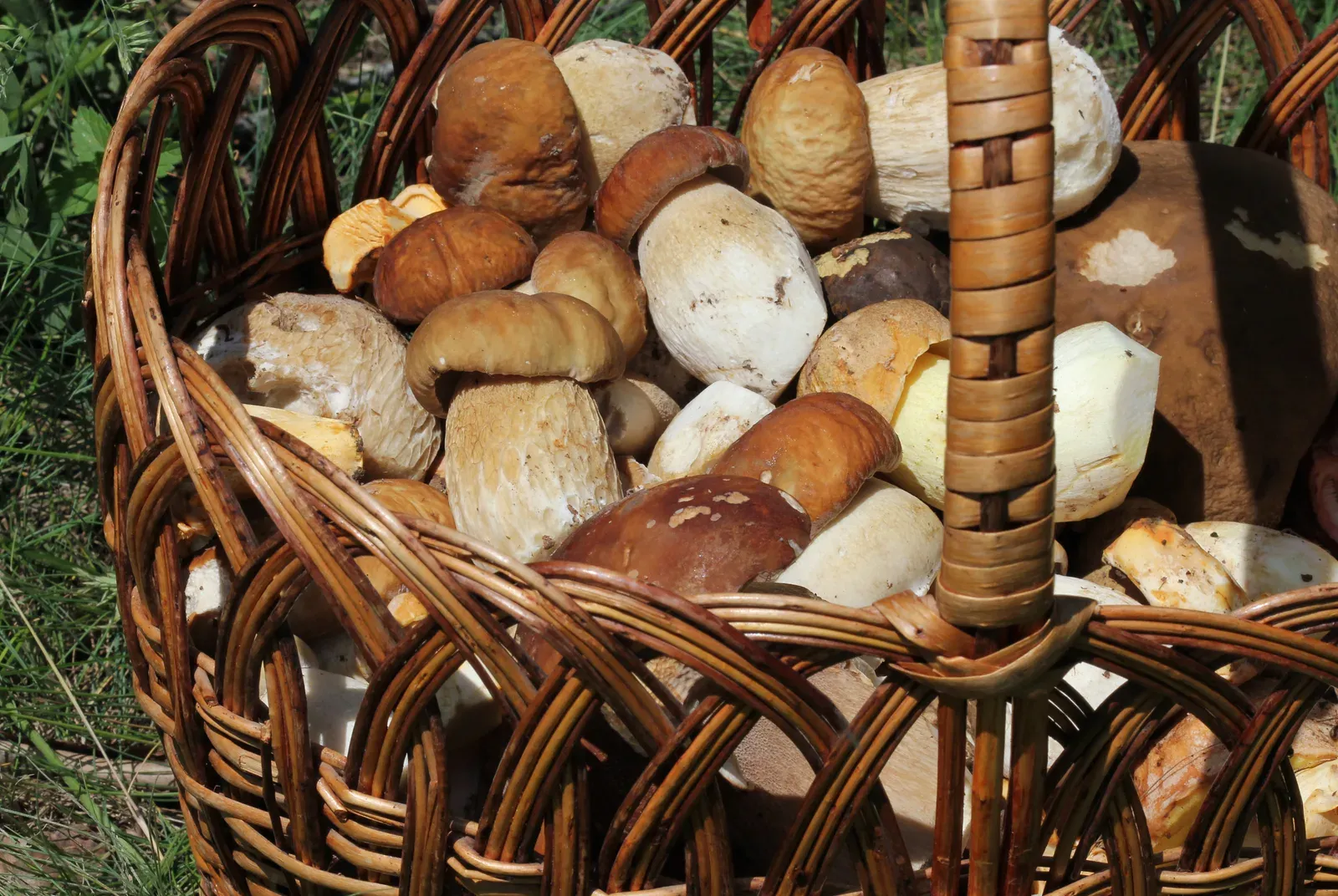 Recipes & cooking
How to store fresh mushrooms, and for how long
Fresh mushrooms spoil faster than you might think. Here's how long they keep in the fridge, how to store them…
August 21, 2026·4 min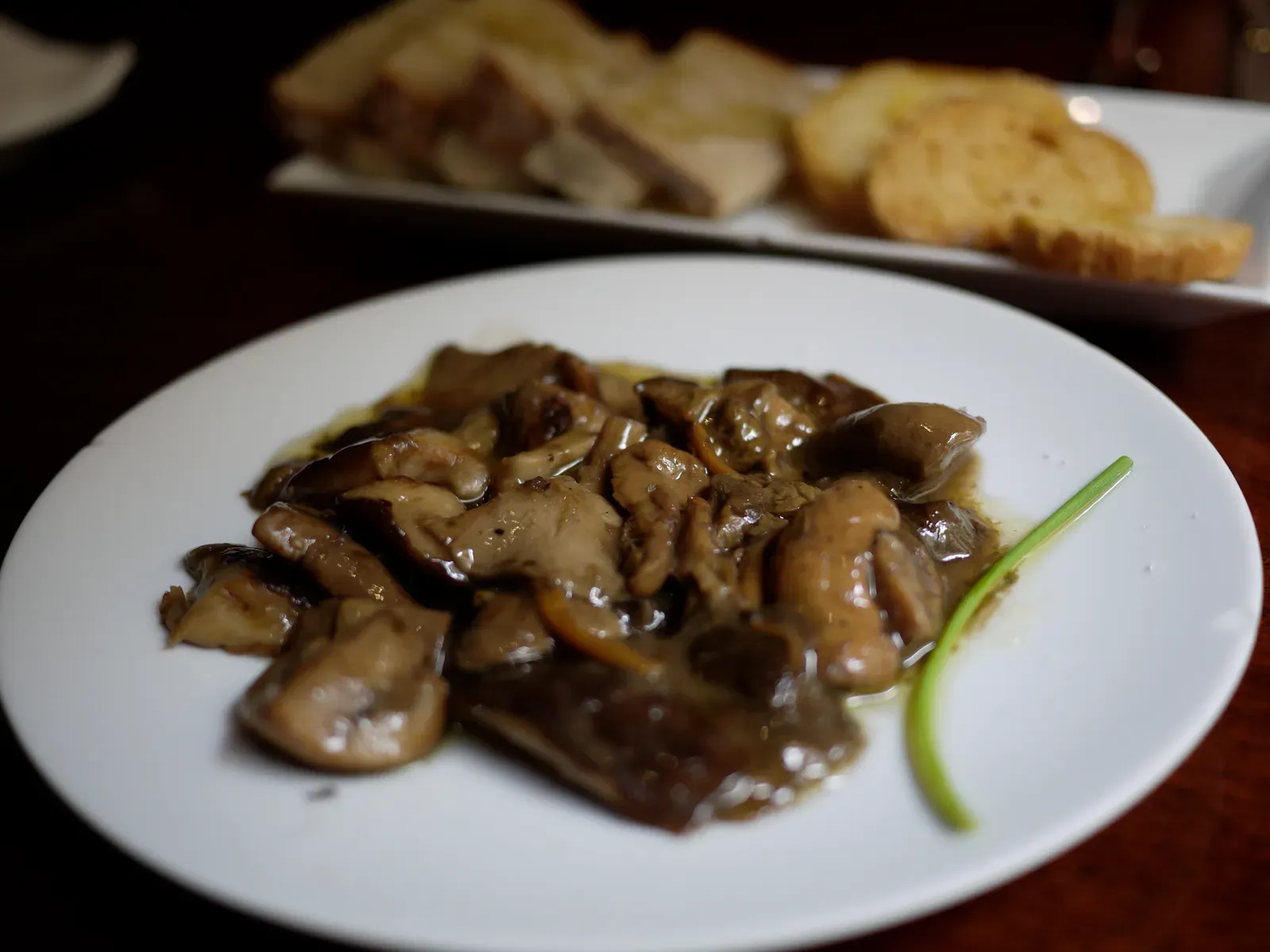 Recipes & cooking
How long to boil mushrooms
Boiling time depends on the type of mushroom and on what you're cooking next. Here's a clear cheat sheet: how…
August 22, 2026·4 min