.webp)
The porcini (Boletus edulis, also called the king bolete) is a coveted mushroom, but not a random one. It doesn't grow just anyhow: it has favorite trees, favorite spots and a quite predictable season. Know these patterns, and a walk in the woods turns into a targeted search.
Let's sort it all out: which forests porcini live in, which trees to look under, which months they come up and what weather sets them off. That way you'll wander less and come home with a full basket more often.
Which forests porcini grow in
Porcini stick to light, not overly damp forests and turn up in all three main forest types.
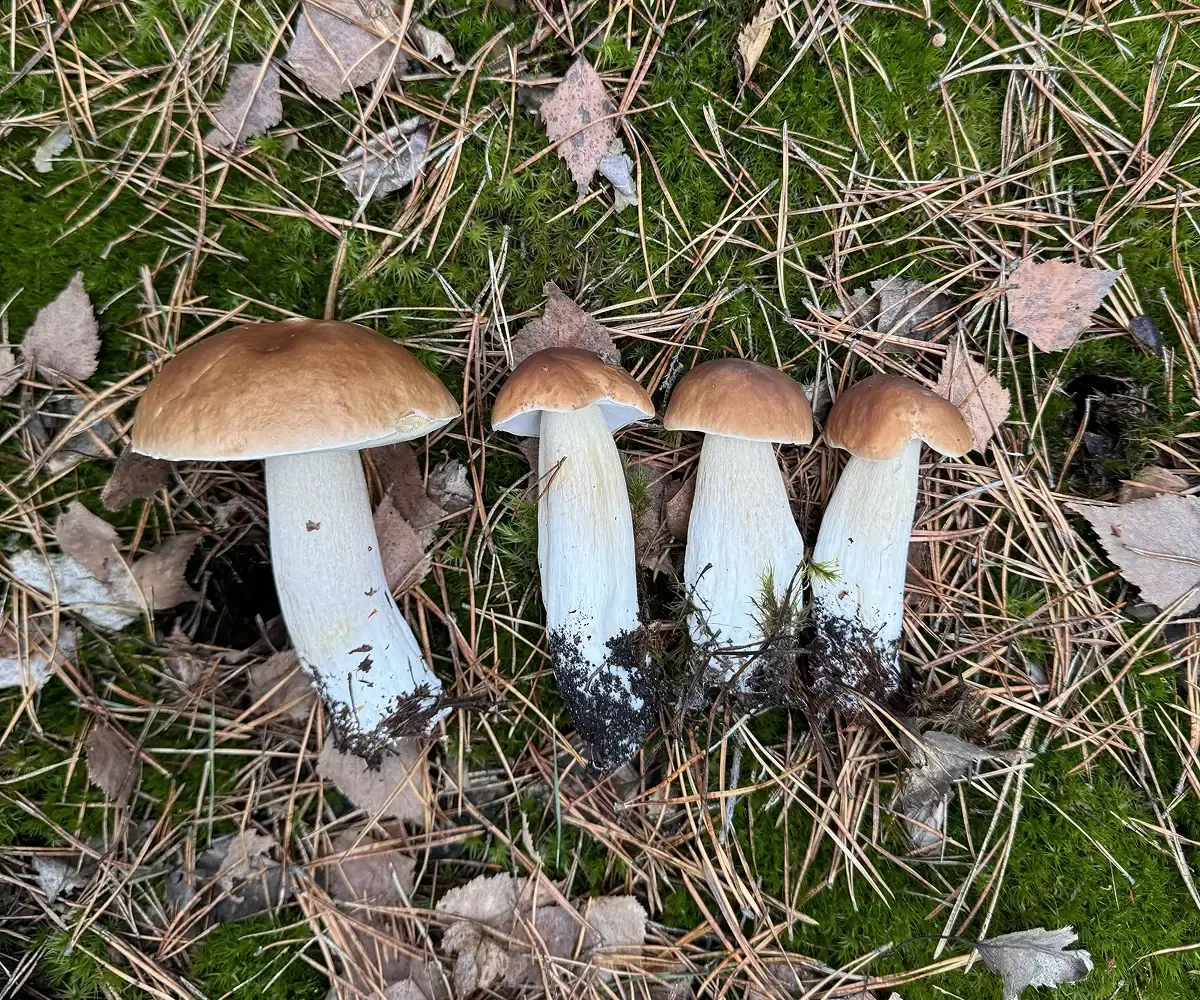
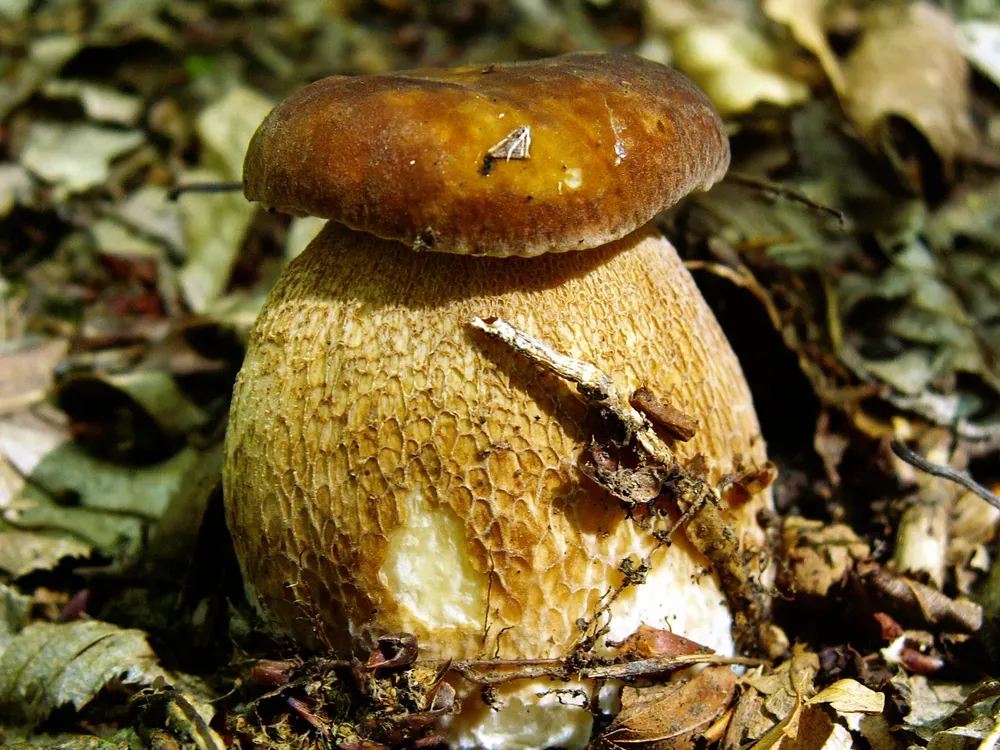
- In deciduous forests under oak, beech and hornbeam, where the dominant one is the summer bolete.
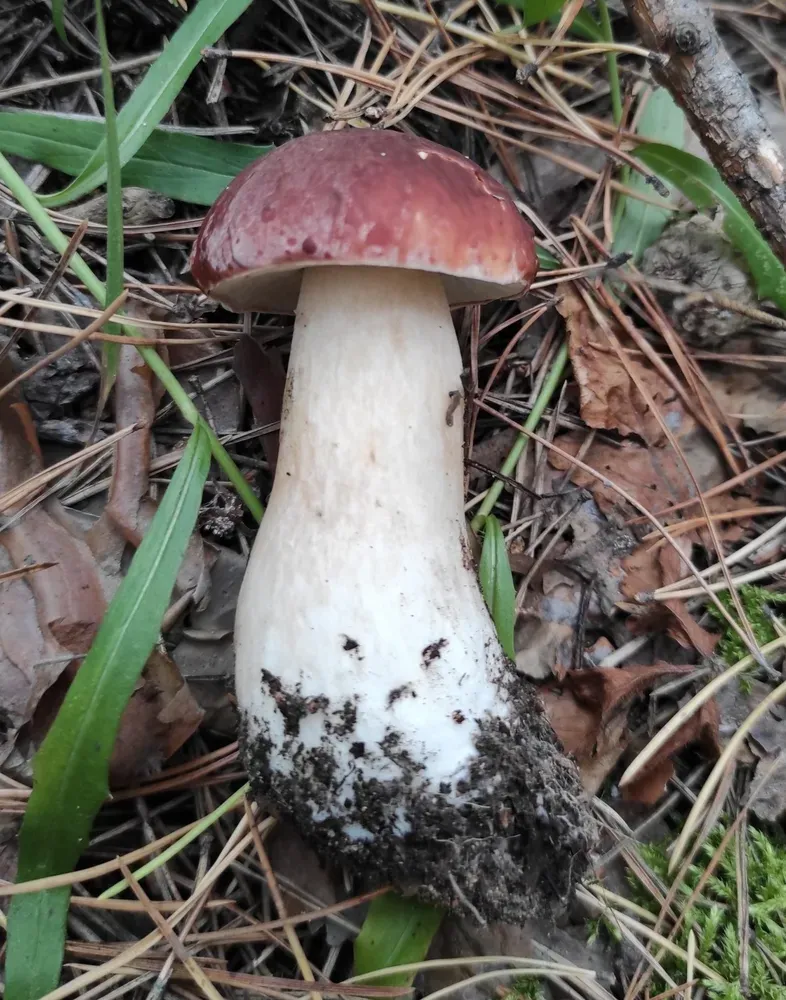
- In coniferous forests under pine and spruce, home of the dark-capped pine bolete.
- In mixed forests, where deciduous and coniferous trees grow side by side, and porcini turn up in especially great variety.
One thing is common to all of them: porcini love light and warmth. They avoid dense, wet thickets, drawn instead to forest edges, clearings and sun-warmed slopes.
Which trees to look under
Porcini are linked to trees through mycorrhiza, meaning they live in a mutually beneficial partnership with their roots. So don't look for them «in the forest in general», but under specific tree species.
The main partner trees of porcini:
- Oak is the most frequent companion, especially in old, light oak woods.
- Pine is the main conifer partner of porcini, especially in autumn.
- Birch is common on light forest edges and in clearings.
- Beech and hornbeam matter especially in the western regions of Ukraine and the Carpathians.
- Spruce in shadier stands of conifers.
If there are acorns, beechnuts or pine cones underfoot, you're in the right territory. That's your signal to stop and look carefully at the ground.
When to look: the porcini season
The porcini season is long, running from June to October, and in warm years it catches the end of May too.
Here's a rough timeline:
- late May and June: the first mushrooms, mainly the summer bolete in deciduous forests;
- July and August: summer flushes, especially abundant after thunderstorms;
- September and October: the main autumn flush, when the deciduous-forest porcini are joined by the pine bolete.
Many foragers consider the second half of summer and early autumn the most generous time. And the first lasting frosts bring the season to a close.
What weather sets porcini off
The calendar is only a guide. In reality, two things decide when porcini appear: warmth and moisture.
While the soil is cold, the mycelium sleeps. When the days stay warm and the nights are no longer cold, the ground warms up and the mushrooms start coming. Porcini appear best two or three days after a good warm rain, once the ground has had time to soak up water and warm up again.
A dry spell can push the season back by weeks, and cold nights slow the flush down. To avoid guessing blindly, keep an eye on conditions with our mushroom radar: it shows when moisture and warmth line up well for porcini to appear. It's more accurate than any calendar.
A few tips from experience
Here's what saves you time in the forest, all in one place.
- Search the edges and borders. Porcini love forest edges, clearings and the verges of old roads, not dense thickets.
- Go back to familiar spots. Porcini are loyal to their trees and come back to the same places every year.
- Don't rush off after finding one. Porcini grow in families, and there are often a few more nearby.
- Go out in the morning. Mushrooms are easier to spot in the morning, and you'll beat other foragers to them.
And the most important rule, true for any mushroom: if you're not sure, don't pick it. One doubtful mushroom isn't worth the risk.
Sources
- «Key to the Fungi of Ukraine» (Kyiv, Naukova Dumka publishers).
- Boletus edulis on GBIF, a global biodiversity database.
- Boletus edulis on MycoBank, an international fungal nomenclature database.
- Boletus edulis on Wikipedia.
Frequently asked questions
Where do porcini grow?
In light under oak, birch, pine, spruce, beech and hornbeam. Porcini love forest edges, clearings and sun-warmed slopes, and avoid dense, wet thickets.
When does the porcini season start?
Usually in late May or June, as soon as the soil warms up steadily. The first ones are mostly the in deciduous forests.
Which month is best for picking porcini?
Many foragers consider August and September the most generous, when the main flush comes. But mushrooms can be plentiful as early as June–July, depending on the weather.
Which trees should you look under for porcini?
Most often under oak, pine and birch, and also under beech, hornbeam and spruce. Porcini live in mycorrhiza with these trees, so you'll hardly ever find them anywhere else.
How many days after rain should you pick porcini?
Usually two to three days after a good warm rain, once the ground has soaked up water and warmed up again. These windows are easy to track with the .
Until what month can you pick porcini?
In a mild autumn, porcini fruit until October, and sometimes even longer. The season ends with the first lasting frosts, after which the mushrooms turn watery.
Why are there lots of porcini in one forest and none in another?
It all comes down to trees, light and moisture. Where there are oaks or pines, light forest edges and enough moisture, porcini turn up. In a dense, damp thicket without the right trees, you won't find them.
How can you find porcini faster?
Search the edges and borders: forest edges, clearings, the verges of old roads under oak, pine or birch. Go back to last year's spots and check all around every mushroom you find, because porcini grow in families.
Mushrooms in this article
Related articles
 Recipes & cooking
How to store fresh mushrooms, and for how long
Fresh mushrooms spoil faster than you might think. Here's how long they keep in the fridge, how to store them…
August 21, 2026·4 min How to identify
Truffles in Ukraine: do they grow here, and where to look
Truffles aren't just a French delicacy. Several species grow in Ukraine too. Here's which ones, where they occ…
August 24, 2026·2 min Recipes & cooking
How long to boil mushrooms
Boiling time depends on the type of mushroom and on what you're cooking next. Here's a clear cheat sheet: how…
August 22, 2026·4 min