
Brittlegills are the most common mushrooms in our forests, and most of them are edible. But this colorful family also includes hot, acrid species that are best avoided. Let's look at which brittlegills not to take, how to tell them apart with a simple rule, and why you should be careful with the bright red ones.
Are there poisonous brittlegills?
There are no deadly poisonous brittlegills in Ukraine, but there are acrid, peppery species that cause stomach upset — nausea, pain, vomiting. They are loosely called “poisonous,” though it is more accurate to call them inedible because of their burning taste. The best known of them is the sickener (the hot one).
The burning-taste rule
The main clue for brittlegills is simple: edible brittlegills taste mild, bland or nutty, while the dangerous ones are hot and sharp, like pepper.
Experienced foragers carefully touch a crumb of the flesh with the tongue: if it burns, the mushroom stays behind. They don't swallow anything, and they spit the crumb out. Beginners are better off not relying on taste and going by the full set of features instead.
What to pay attention to
- Cap color. Hot species turn up more often among the bright red brittlegills, so be more careful with them. Muted green, gray and yellowish ones are more often edible.
- Flesh. In the acrid species it is brittle and often has a sharp smell.
- Habitat. Hot brittlegills often grow in damp, mossy places.
These are only rough guides: brittlegill colors vary a lot, so color alone is not enough.
Don't confuse them with more dangerous mushrooms
It is far more important not to confuse a brittlegill with truly poisonous gilled mushrooms — the death cap and other amanitas. Unlike brittlegills, they have a ring on the stem and a bulb with a sac (volva) at the base. More on this in the article the death cap, Ukraine's most dangerous mushroom, and more about the brittlegill family itself in brittlegills, the forest's most common mushroom.
The general rule: brittlegills are only for those who can identify them with confidence. They are not eaten raw — more on that in which mushrooms you can eat raw.
Sources
- “Key to the Fungi of Ukraine” (Kyiv, Naukova Dumka publishing house).
- Russula emetica in GBIF, the global biodiversity database.
- Russula on Wikipedia.
Frequently asked questions
Are there poisonous brittlegills?
There are no deadly poisonous brittlegills in Ukraine, but there are hot, acrid species (for example the sickener) that cause stomach upset. They are loosely called poisonous because of their inedible, burning taste.
How do you tell an edible brittlegill from a dangerous one?
By taste: edible brittlegills are mild, bland or nutty, while dangerous ones are hot and sharp, like pepper. You carefully touch a crumb with your tongue and spit it out. Beginners are better off weighing all the features.
Which brittlegill is the most dangerous?
The best-known acrid one is the sickener (the hot one) with its bright red cap. It is not deadly, but it causes nausea and vomiting. Hot species turn up more often among the bright red brittlegills.
Can you identify a brittlegill by its color?
Only roughly: bright red ones are more often hot, and muted green and gray ones are more often edible. But brittlegill colors vary a lot, so color alone is not enough for identification.
Can a brittlegill be confused with the death cap?
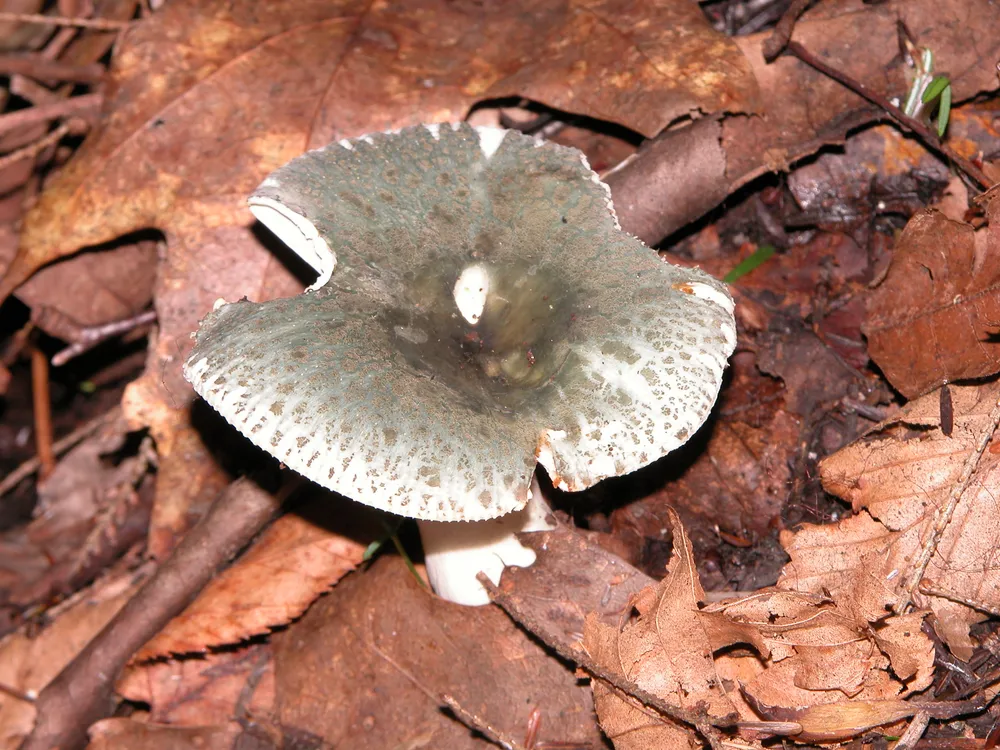
Yes, the greencracked brittlegill gets confused with the death cap. The difference: the death cap has a ring on the stem and a bulb with a sac (volva) at the base, and a brittlegill has neither. This is a critical difference.
What happens if you eat a hot brittlegill?
You may get a stomach upset with nausea, pain and vomiting. It won't be a fatal poisoning, but you will feel unwell. That's why hot brittlegills are left behind.
Do brittlegills need to be boiled?
Many brittlegills are boiled before frying, and hot species are made edible this way for salting, after soaking. Brittlegills are not eaten raw. Beginners are better off taking only clearly mild-tasting species.
Mushrooms in this article
Related articles
 Recipes & cooking
How to store fresh mushrooms, and for how long
Fresh mushrooms spoil faster than you might think. Here's how long they keep in the fridge, how to store them…
August 21, 2026·4 min How to identify
Truffles in Ukraine: do they grow here, and where to look
Truffles aren't just a French delicacy. Several species grow in Ukraine too. Here's which ones, where they occ…
August 24, 2026·2 min Recipes & cooking
How long to boil mushrooms
Boiling time depends on the type of mushroom and on what you're cooking next. Here's a clear cheat sheet: how…
August 22, 2026·4 min