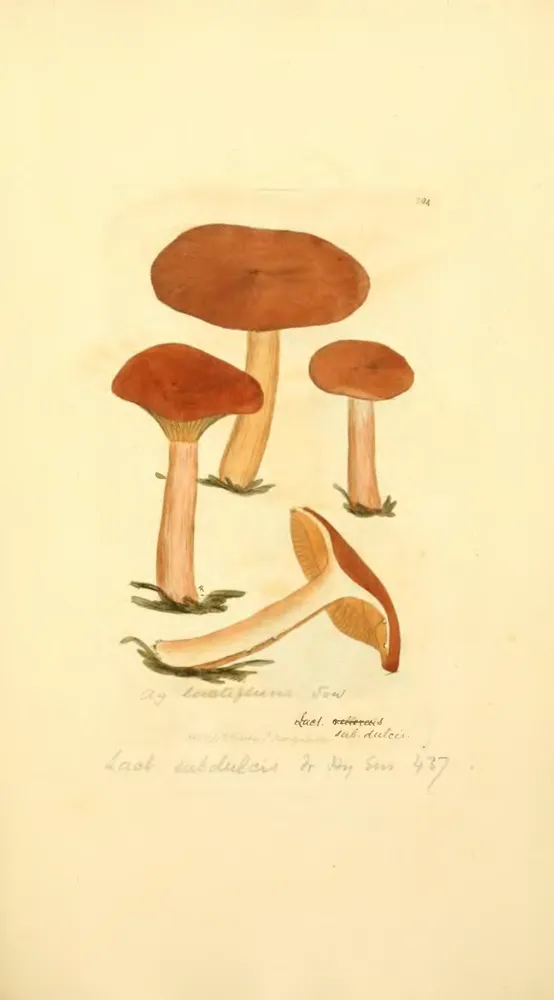
Weeping milk capLactifluus volemus
Expert-verifiedUpdated October 3, 2026
Passport
- Edibility
- Edible
- Season
- Jul — Sep
- Hymenophore
- Gilled
- Cap color
- Orange
- Size
- Medium (5–15 cm)
- Smell
- Pleasant
- Reviewed
- Yes ✓
Quick answers
Where to look?
Deciduous forest, Mixed forest
When does it appear?
Jul — Sep
Active months: July, August, September.
How to recognize it? Three signs
- Cap color: Orange, Red, Brown
- Cap shape: Convex
- Smell: Pleasant
Fruiting season
July – September
Description
The weeping milk cap (Lactifluus volemus, popularly «molochai», «hladysh») is one of Ukraine's tastiest and most recognizable milk caps. Modern taxonomy has moved it into a separate genus, Lactifluus, because genetically it's far from the «classic» Lactarius. In appearance — a hefty orange-brick mushroom with completely mild, sweetish white milk, which it exudes in huge amounts and which, amazingly, smells of fish or herring as it dries.
This is a delicacy-grade edible mushroom that needs no special preparation — you can fry, boil or stew it straight away. The flesh is firm and meaty with a nutty note; salted, it's firm and fragrant. You can also cautiously taste it raw, just not in quantity. The fishy smell as it dries is a normal trait of the species; after cooking it practically disappears, and in fresh dishes it's barely noticeable.
In Ukraine it's found throughout the forest zone in broadleaf and mixed forests, mostly under oak, hornbeam and beech. It's especially abundant in wet years, in the oak and oak–hornbeam forests of Polissia, the Carpathians, the Carpathian foothills and the forest-steppe. Season: July–September. It fruits singly or in small groups of 2-5 fruiting bodies side by side.
Cap
Cap 5-12 (rarely up to 15) cm, convex with an inrolled margin at first, then flattening out with a depressed center. Color orange-brick, rusty brown, apricot — brighter in young specimens, darker in old ones. The surface is dry and smooth, and may crack finely with age. No concentric zones. The cap margin is even.
Hymenophore
Gilled hymenophore. The gills are crowded, narrow, attached or slightly decurrent down the stem. Color pale cream to yellowish; when damaged they darken to brown (a typical reaction for Lactifluus). They exude abundant white milk. Spore print white.
Stem
Stem 5-10 cm tall, 1.5-2.5 cm thick, cylindrical or slightly tapering downward, firm, sometimes with small cavities in mature specimens. Same color as the cap or a little lighter — orange-cream. The surface is smooth, no ring and no volva.
Flesh
Flesh whitish to yellowish, meaty, firm; when cut it slowly darkens to brown within 5-15 minutes — this is a characteristic identification reaction. When damaged it exudes very abundant white milk (hence «molochai», from the word for milk — there's so much that it runs down your hand), which also darkens in air and leaves brown stains on clothing that are hard to wash out.
Smell
A characteristic smell — faint and mushroomy in fresh specimens, but as they dry and in mature ones a distinct smell of fish or herring appears. This is normal, not a sign of spoilage. The flesh and milk taste mild, faintly sweetish, nutty, with no heat and no bitterness.
›Scientific synonyms (5)
Agaricus volemus Fr., Galorrheus volemus (Fr.) P. Kumm., Lactifluus volemus (Fr.) Kuntze, Lactarius wangii J.Z. Ying & H.A. Wen, Lactarius volemus Elias Magnus Fries
Lookalikes
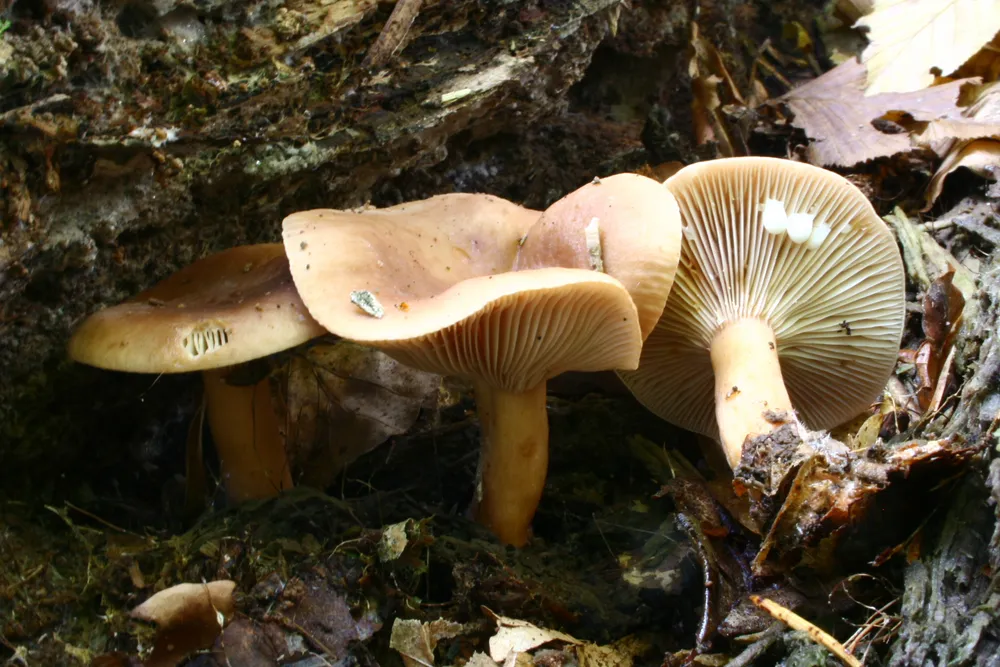
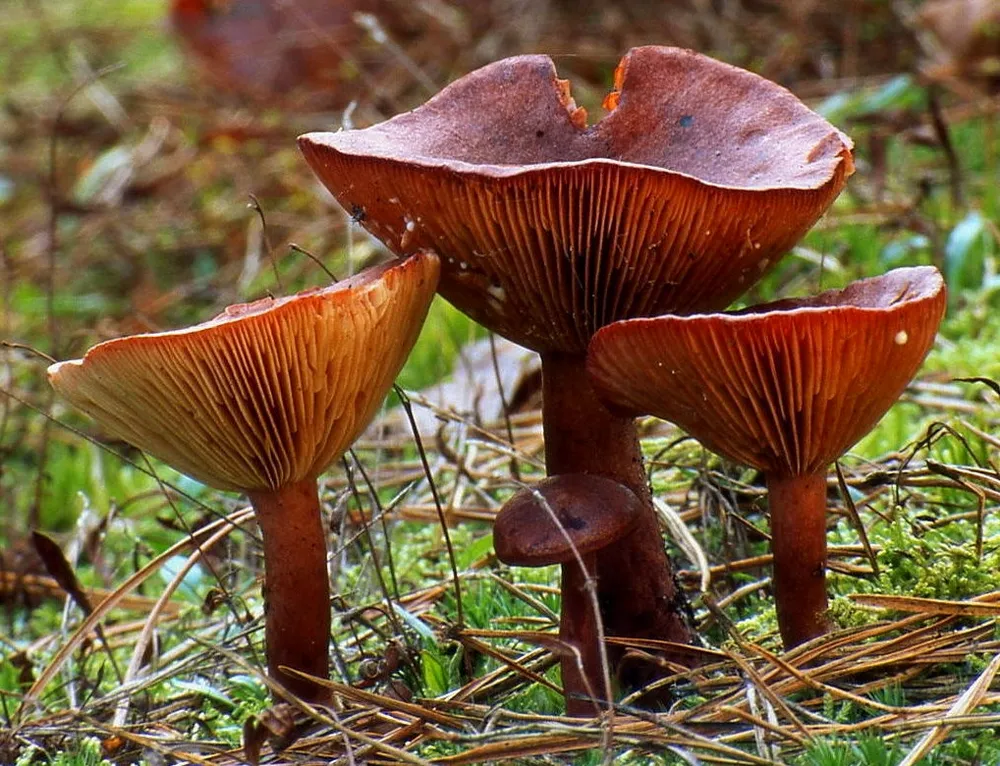
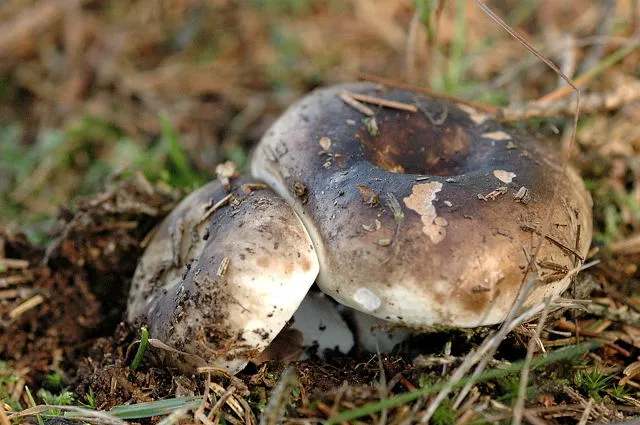
Related species
Mushrooms of the same genus and habitat — to study side by side and never mix up.
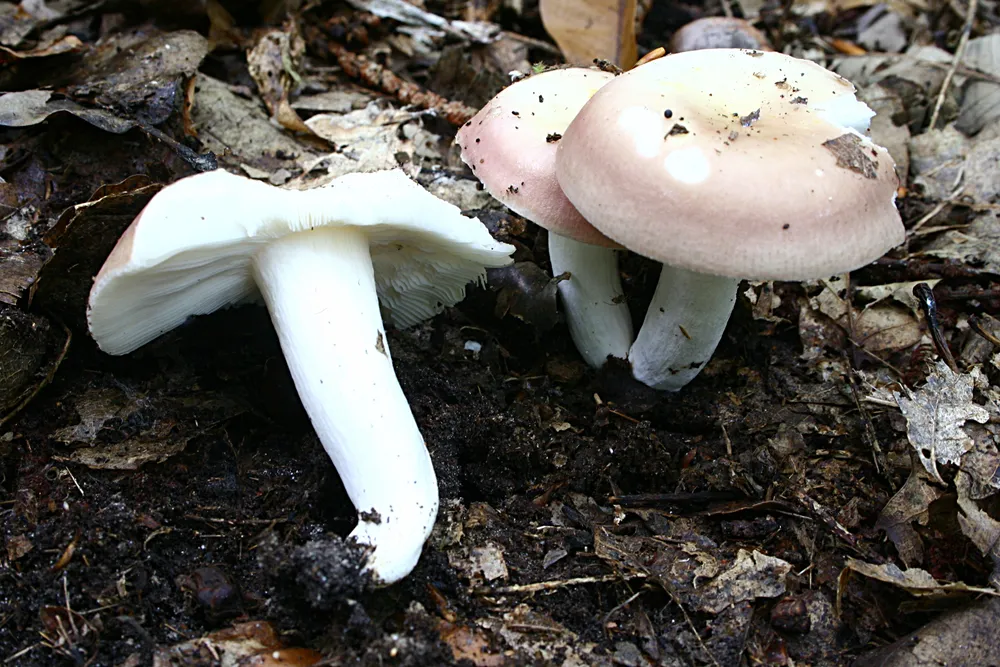
Bare-toothed russula
Russula vesca
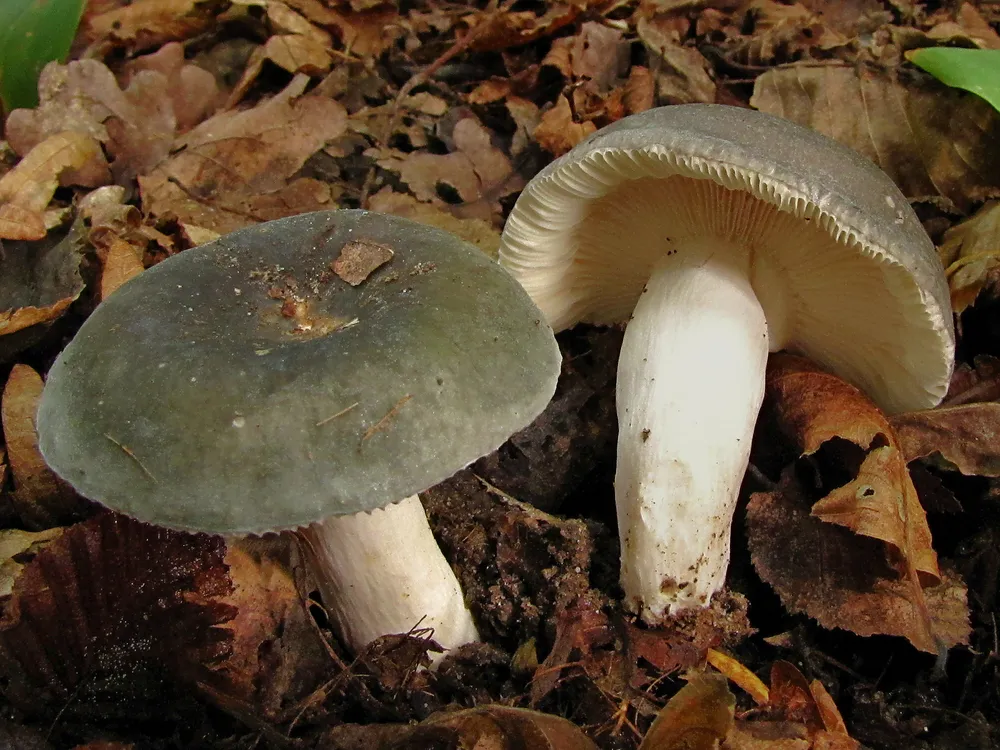
Charcoal burner
Russula cyanoxantha
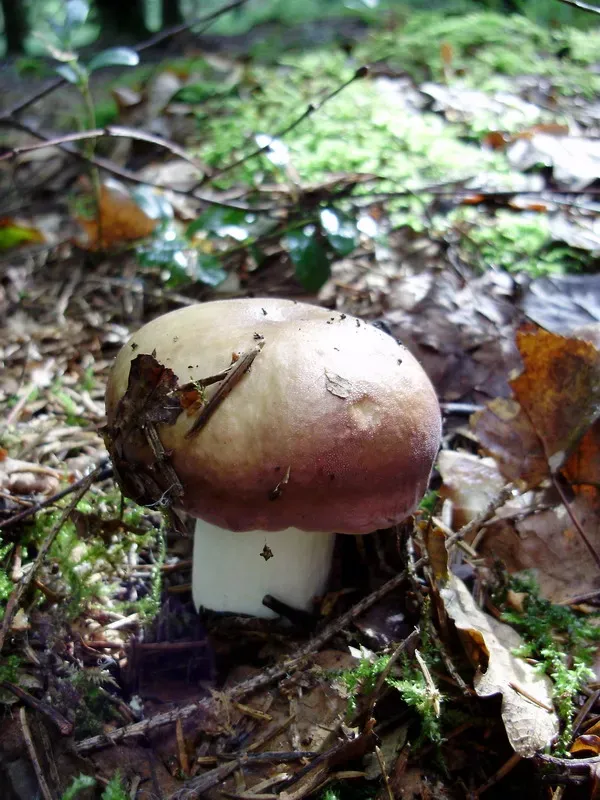
Copper brittlegill
Russula decolorans
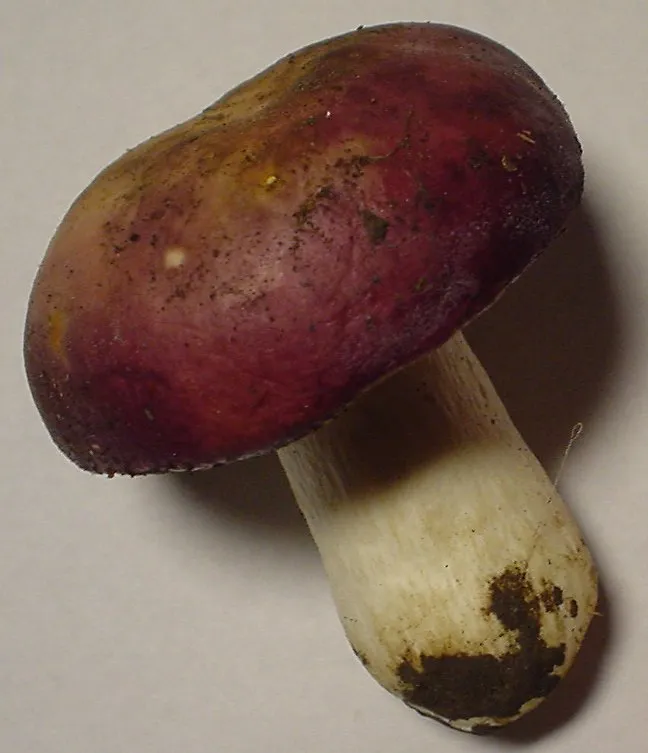
Crab brittlegill
Russula xerampelina
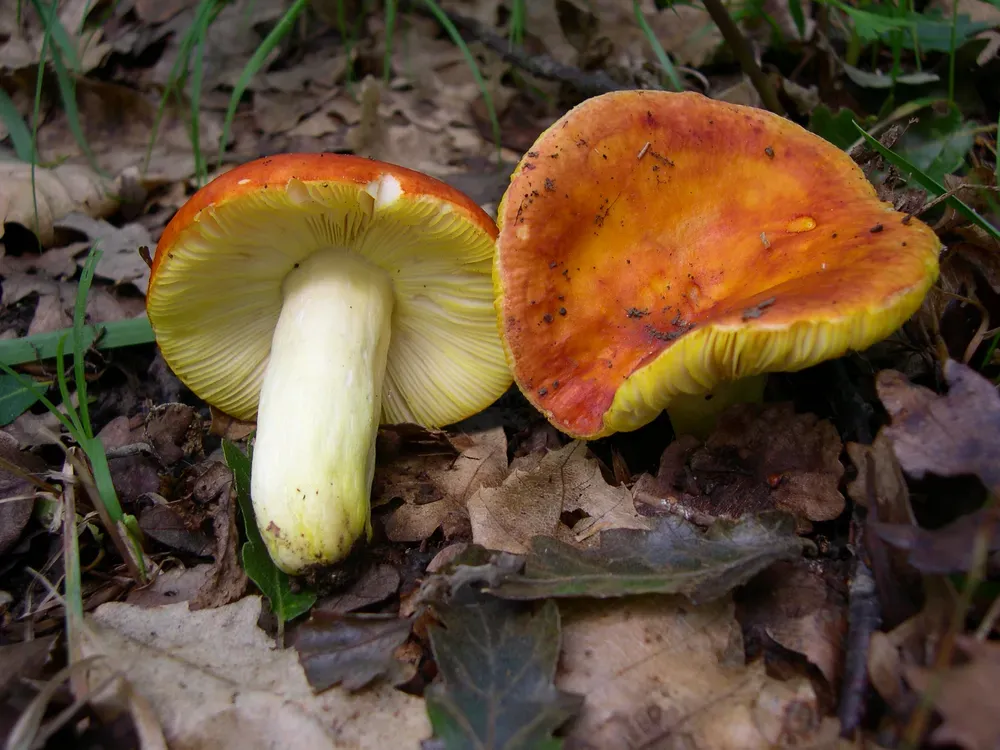
Gilded brittlegill
Russula aurea
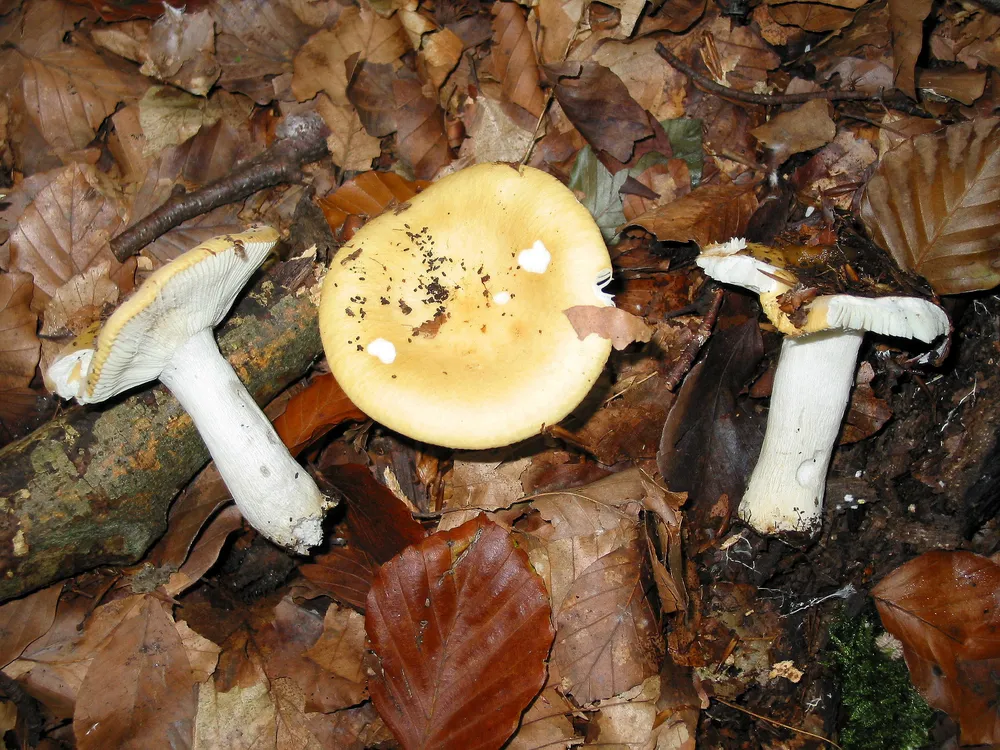
Golden brittlegill
Russula lutea
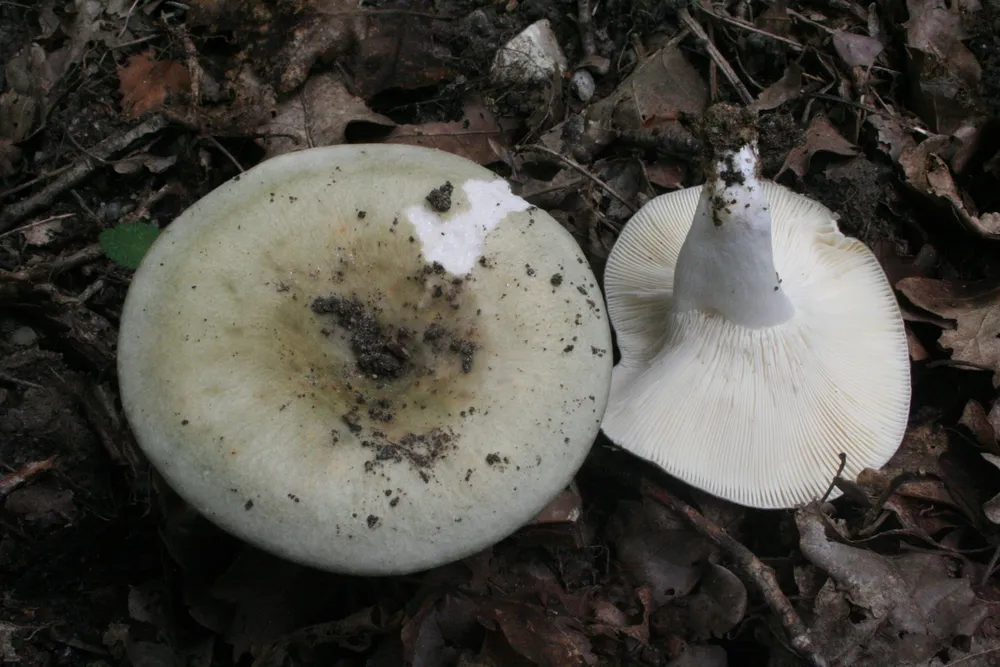
Greasy green brittlegill
Russula heterophylla
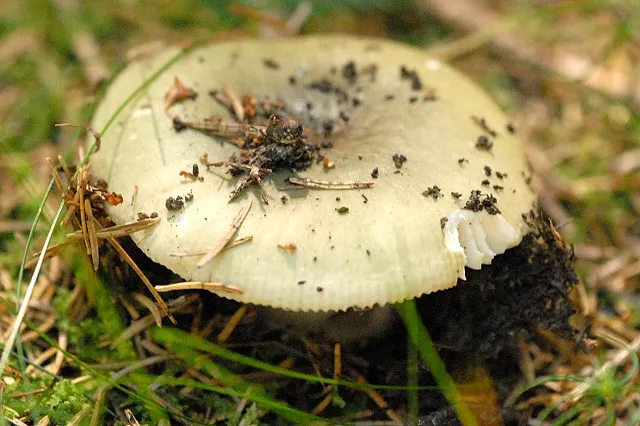
Green brittlegill
Russula aeruginea
Frequently asked questions
Can you eat it without preparation?
Yes, this is an edible mushroom that needs no soaking or pre-boiling. You can fry, stew or boil it, or add it to soups straight away. The flesh is firm with a nutty flavor — one of the best milk caps in the kitchen.
So why does it smell of fish?
It's a normal trait of the species — volatile trimethylamine forms in the flesh (as in sea fish and some red brittlegills). The smell grows stronger as it dries and in mature specimens; in young ones it's barely noticeable. After cooking it practically disappears. It's not a sign of spoilage or toxicity.
Some foragers won't eat it because of the smell. Is that justified?
It's a matter of taste. There's no objective reason to turn it down — the mushroom is safe and tasty. The fishy smell reminds some people of stale fish and puts them off psychologically, but in a finished dish (especially pickled, or fried with onion) you practically can't taste it. In Europe it's one of the most valued milk caps.
Where does it grow?
In broadleaf and mixed forests, mostly under oak, hornbeam and beech, less often under birch and hazel. It loves old forests with a mossy understory, forest edges and sunny clearings. It doesn't occur in purely conifer forests.
Which regions of Ukraine?
Throughout the forest and forest-steppe zones. Especially abundant in the oak and oak–hornbeam forests of Polissia, the Carpathians, the Carpathian foothills and the forest-steppe. In the steppe — in planted oak stands. One of the most familiar edible milk caps.
When should you look for it?
July–September. Peak fruiting is August, after prolonged summer rain. It wraps up its season in September and rarely lasts into October. This is a «summer» milk cap, unlike many others that only come up from September.
How do you recognize it?
Four features together: 1) a large orange-brick mushroom; 2) a smooth cap without zones; 3) abundant sweetish white milk that darkens in air; 4) a fishy smell as it dries. If all of these match — it's definitely Lactifluus volemus. Flesh and milk darkening to brown is an extra marker.
What is it confused with?
With the rufous milk cap (Lactarius rufus) — its milk is very acrid and it grows under pines. With the oakbug milk cap (L. quietus) — that one is smaller, with an «oily» smell and milk that doesn't darken. With the blackening brittlegill (Russula nigricans) — that one is larger and darker, with greenish milk. Fishy smell + darkening milk = volemus.
Is Weeping milk cap edible or poisonous?
Does Weeping milk cap have gills or pores?
What does the cap of Weeping milk cap look like?
What does the stem of Weeping milk cap look like?
Sources
- [1]Вікіпедія (українська)
- [2]Атлас грибів України, Зеров Д.К. (1979)
- [3]MycoBank Database
- [4]Index Fungorum
- [5]GBIF
- [6]iNaturalist Ukraine