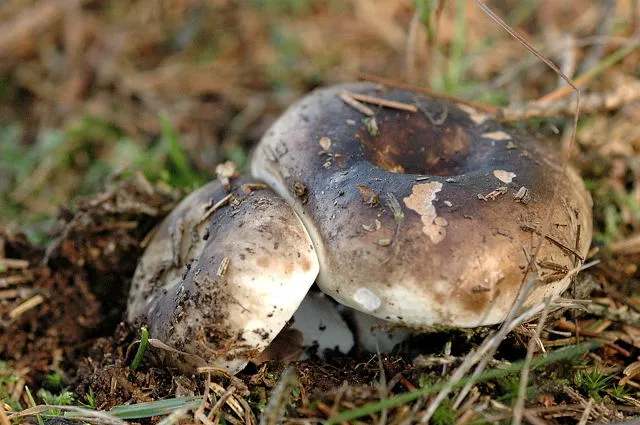
Blackening brittlegillRussula nigricans
Expert-verifiedUpdated October 3, 2026
Passport
- Edibility
- Conditionally edible
- Season
- Jul — Oct
- Hymenophore
- Gilled
- Cap color
- White
- Size
- Large (over 15 cm)
- Smell
- Pleasant
- Reviewed
- Yes ✓
Quick answers
Where to look?
Deciduous forest, Mixed forest
When does it appear?
Jul — Oct
Active months: July, August, September, October.
How to recognize it? Three signs
- Cap color: White, Grey, Black
- Cap shape: Depressed
- Smell: Pleasant
Fruiting season
July – October
Description
The blackening brittlegill (Russula nigricans) is the most recognizable of the blackening brittlegills thanks to the remarkable reaction of its flesh: when damaged, it first turns red to a bright wine color, then within a few minutes blackens to anthracite black. This makes it one of the best "textbook" mushrooms for studying fungal biochemistry — the two-phase oxidation reaction is visible to the naked eye. Outwardly, it's a fleshy brittlegill with a white cap that over time turns dirty gray, ash-gray, then blackish.
Edible, but conditionally. Young flesh is firm, with a neutral taste, and fine after boiling. Skip old specimens with soft, maggoty caps. Because of blackening in the pan, the dish looks unappetizing — the flesh turns dark gray to black. So in the kitchen it's valued less than true brittlegills and milk caps, but as a basket-filler in a lean season it's fine. Best to use young mushrooms with white flesh for pickling.
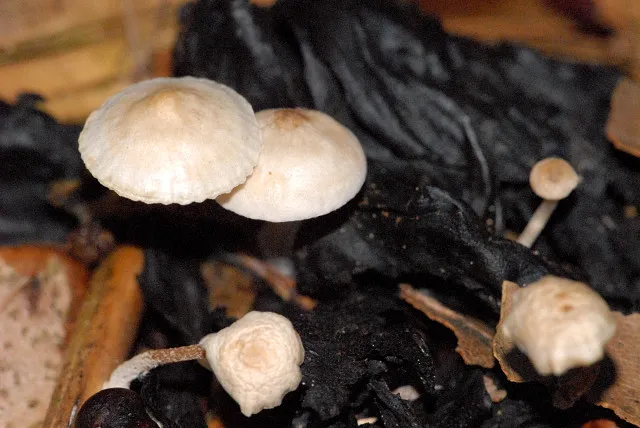
An interesting symbiotic host: on old, fallen, not yet fully decomposed fruit bodies of the blackening brittlegill, a parasitic mushroom often grows — silky piggyback (Asterophora parasitica). It's one of the best-known examples of a mushroom parasitizing another mushroom.
In Ukraine it is widespread in deciduous and mixed forests: the Carpathians, Prykarpattia, Polissia, the forest-steppe. A mycorrhizal partner of beech, oak and spruce. Season: July — October.
Cap
Cap 8-20 cm across; in young mushrooms hemispherical to flat with an inrolled margin, later becoming funnel-shaped. Color white when young, turning dirty gray, ash-gray, then blackish to anthracite black with age. The cap darkens when pressed — unevenly in young specimens. Surface smooth, slightly sticky in wet weather.
Hymenophore
Gilled hymenophore — the gills are attached to the stem, distant and thick, typical of the genus Russula. In young mushrooms — whitish, when damaged they redden to brownish-black, darkening with age to gray, then black. Spore print white.
Stem
Stem 4-8 cm tall, 2-4 cm thick, thick, fleshy, cylindrical, relatively short. Color white when young, turning gray, then blackish with age. Surface smooth. No ring.
Flesh
Flesh firm, fleshy, white when young. When cut, a two-phase reaction slowly unfolds (over 5-10 min): first it reddens to wine-red or bright carmine, then after a few more minutes it blackens to anthracite black. This is the classic diagnostic feature of the species. Faint mushroomy smell.
Smell
Faint, pleasant, mushroomy, with no distinctive notes.
›Scientific synonyms (5)
Lactarelis nigricans (Fr.) Earle, Agaricus nigrescens Bull., Agaricus nigricans Bull., Agaricus adustus var. crassus Alb. & Schwein., Agaricus nigrescens Krombh.
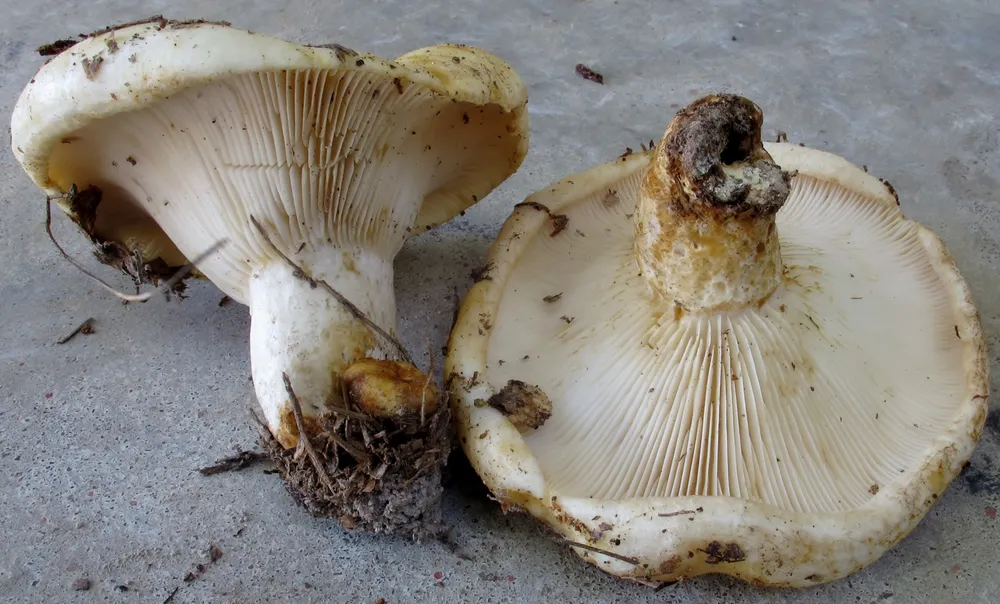
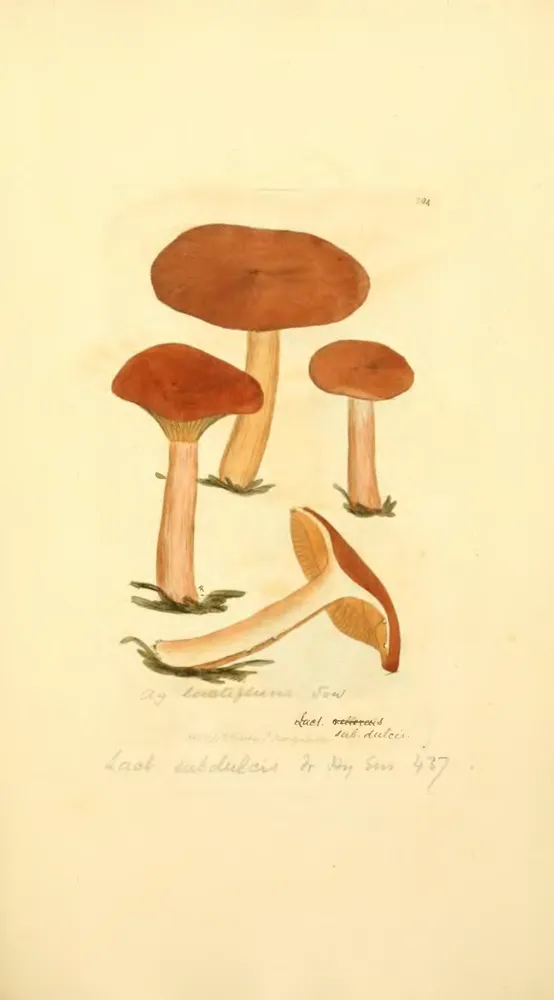
Lookalikes
Related species
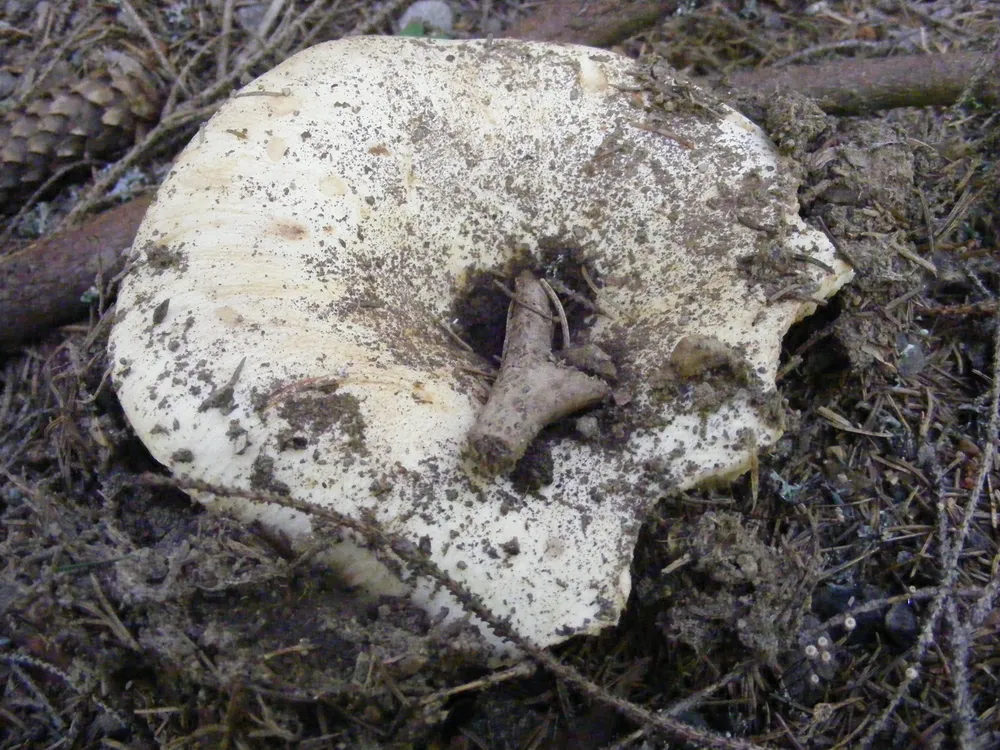
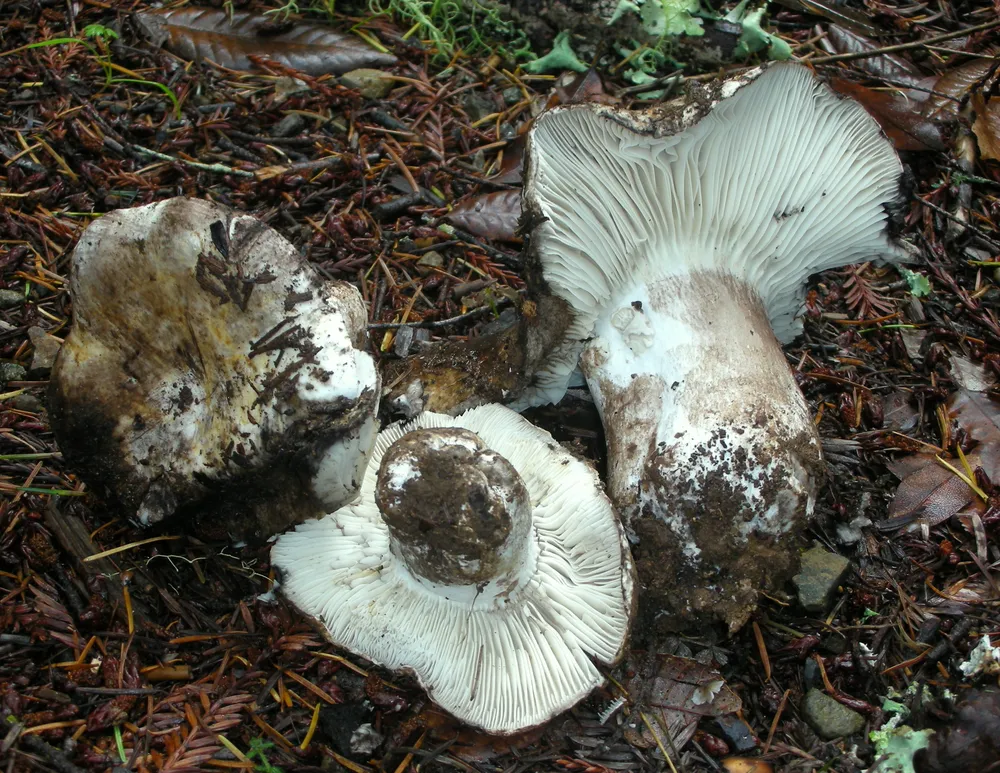
Mushrooms of the same genus and habitat — to study side by side and never mix up.
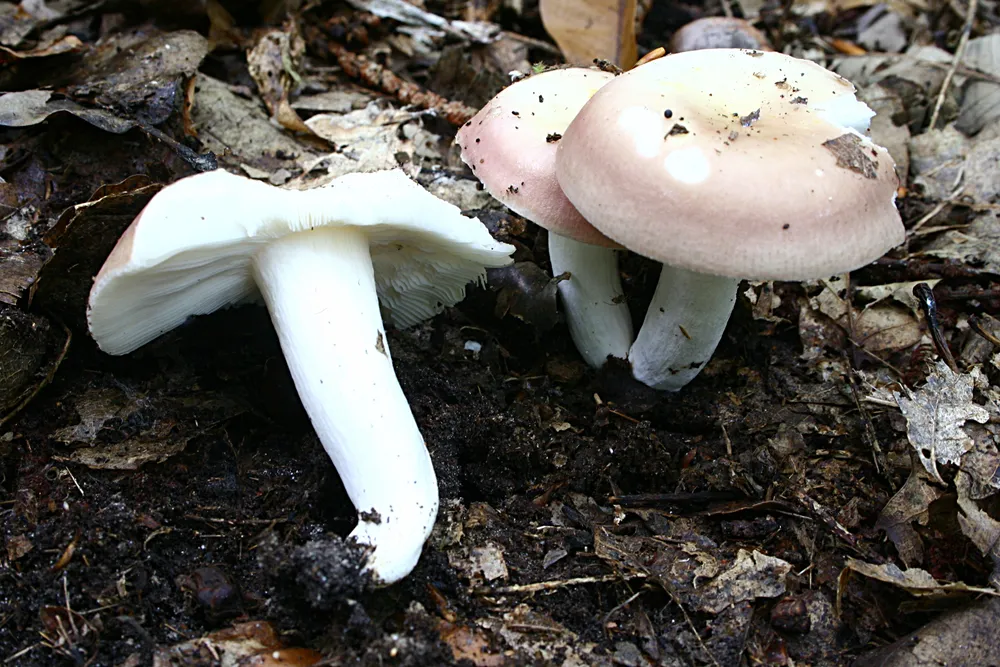
Bare-toothed russula
Russula vesca
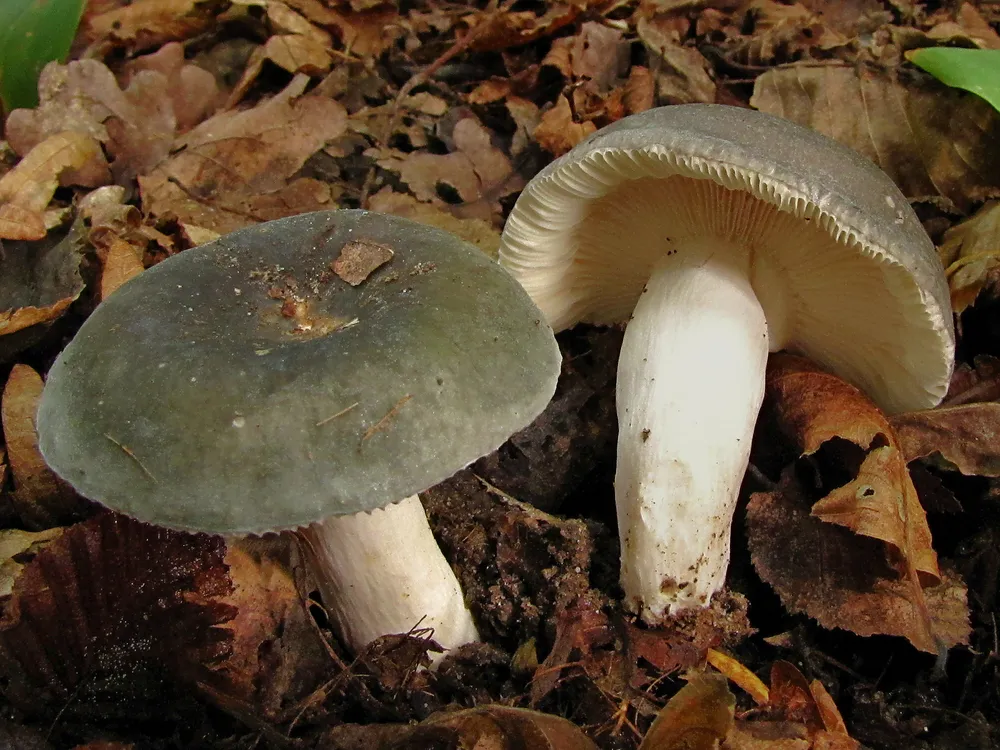
Charcoal burner
Russula cyanoxantha
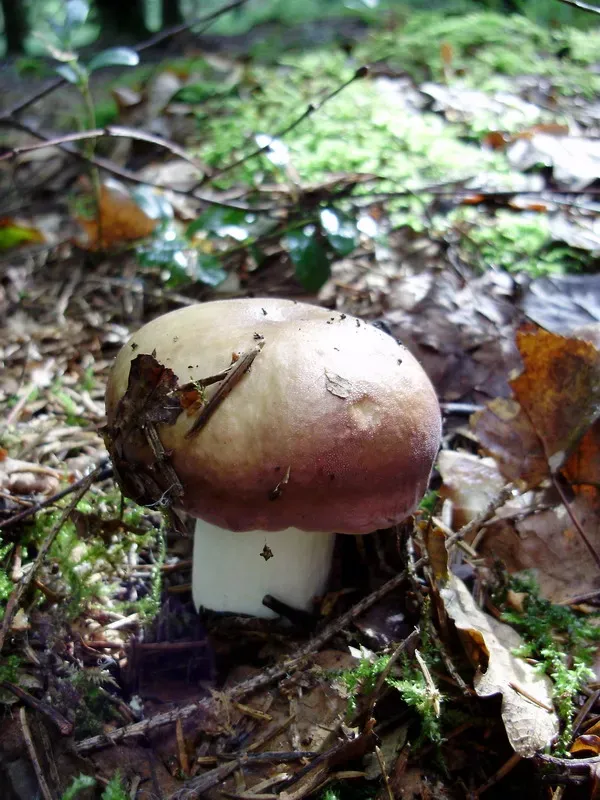
Copper brittlegill
Russula decolorans
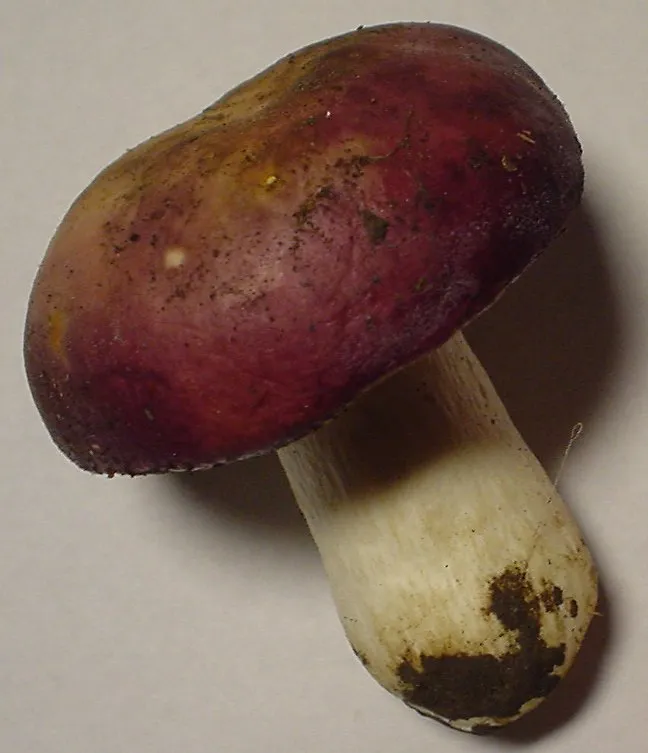
Crab brittlegill
Russula xerampelina
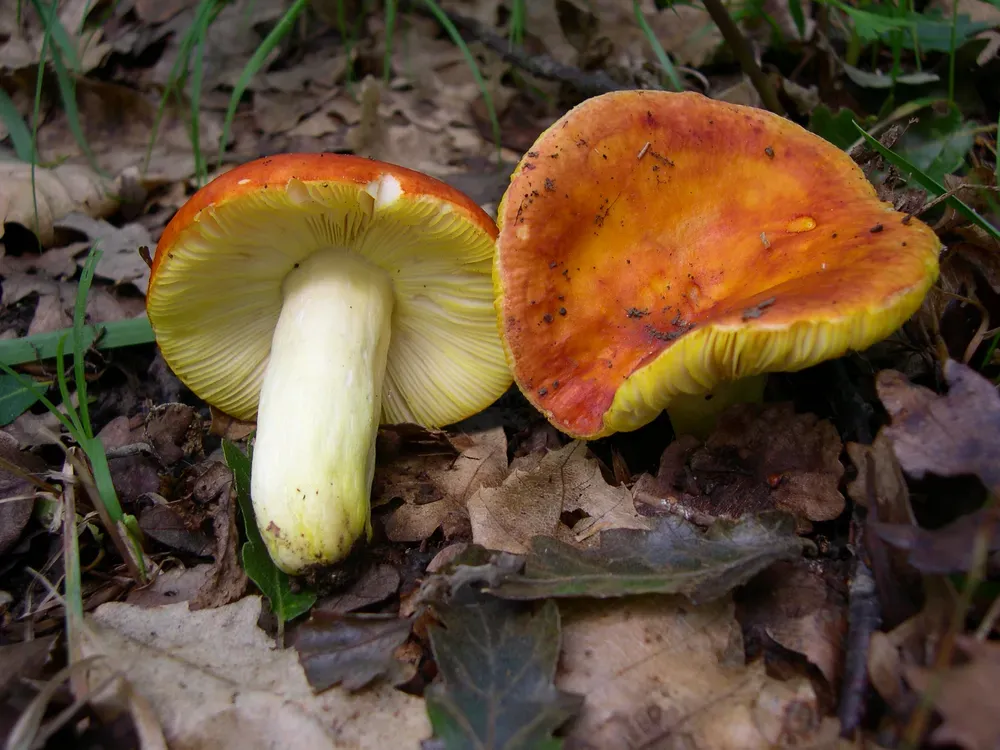
Gilded brittlegill
Russula aurea
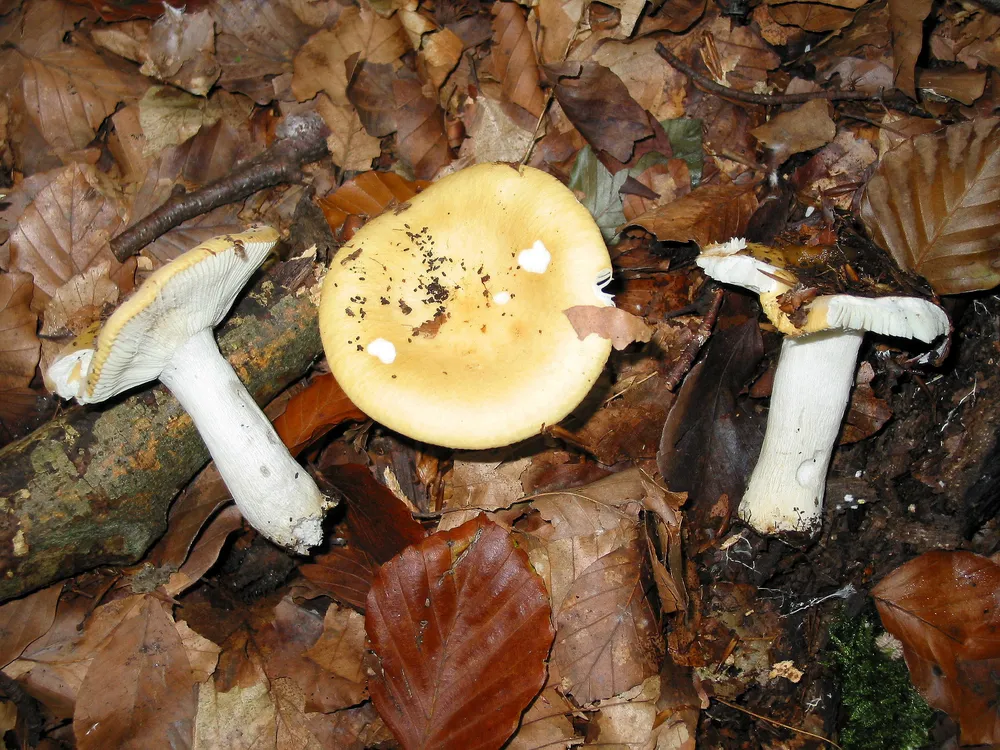
Golden brittlegill
Russula lutea
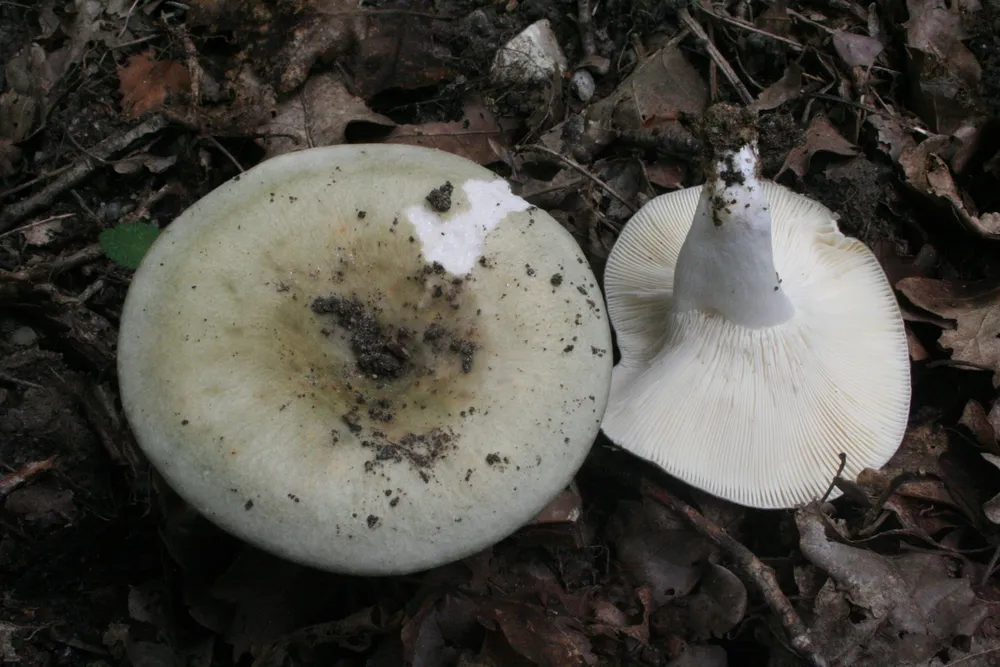
Greasy green brittlegill
Russula heterophylla
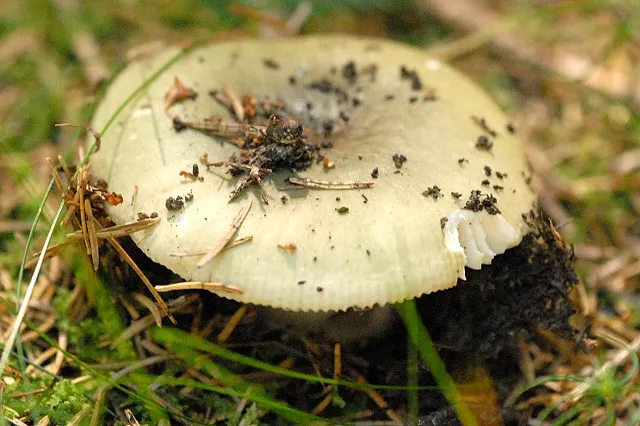
Green brittlegill
Russula aeruginea
Related reading
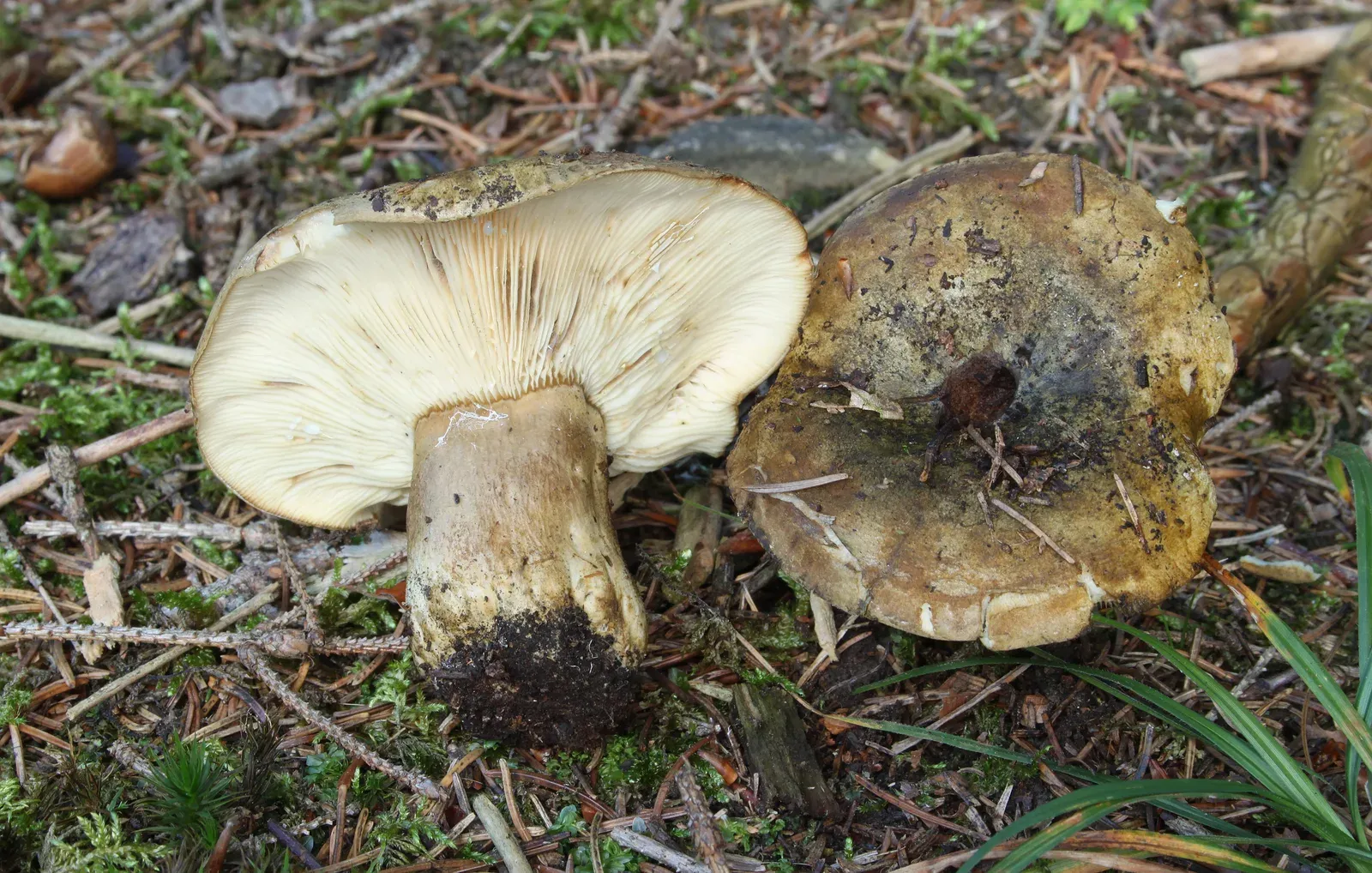 How to identify
Types of milk caps in Ukraine: a complete guide
“Hruzd” isn't one mushroom but a whole family of similar gilled mushrooms with acrid milky latex. Some are pri…
July 11, 2026·3 min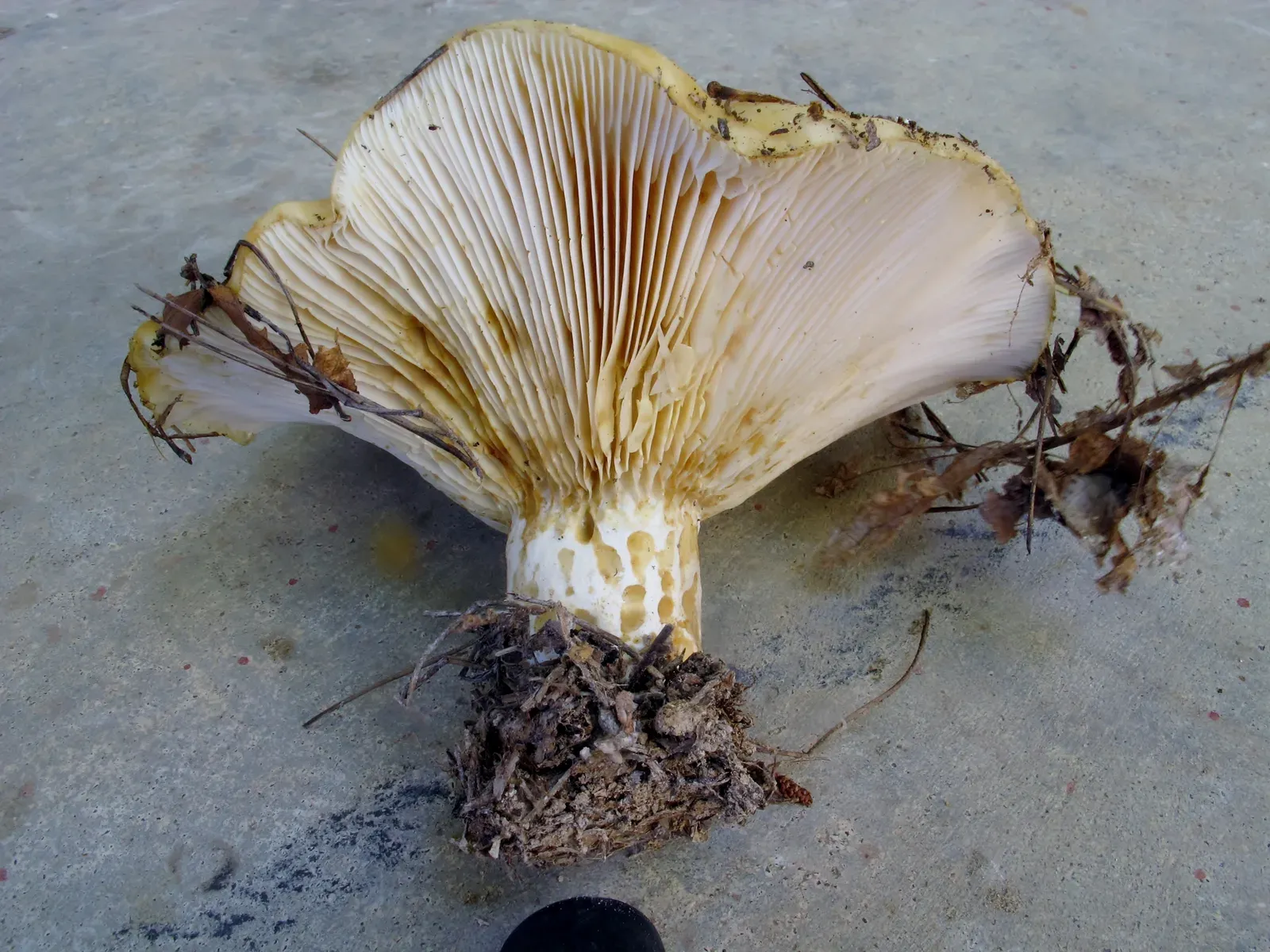 Where & when to forage
Where and when to pick milk caps in Ukraine
Milk caps are the go-to mushrooms for salting: firm and crunchy, they have graced the winter table for centuri…
July 11, 2026·3 min
Frequently asked questions
Is it safe to eat?
Yes, young mushrooms with white flesh, after boiling for 10-15 min. Skip old specimens with soft, maggoty caps. The finished dish will be dark gray because the flesh blackens — that's normal and doesn't affect the taste, but it doesn't look very appetizing. Culinary value — moderate, best for pickling.
Why does the flesh turn black?
This is a unique two-phase oxidation reaction. Stage one — oxidation of β-carotenoid pigments into red derivatives. Stage two — polymerization into melanin, which gives the black color. It's not poison and not spoilage. The reaction is slow (5-10 min on a cut surface), so the dish in the pan gradually darkens too.
Does it have dangerous lookalikes?
Among white-fleshed brittlegills there are no seriously poisonous species. The key thing is to tell it apart from young amanitas (white gills + ring + volva — that's an amanita, not a brittlegill) and from milk caps (Lactarius) — they ooze milky latex when cut. Confusing it with other brittlegills isn't critical — all of them are edible after cooking.
Is it true that another mushroom grows on it?
Yes — it's the silky piggyback (Asterophora parasitica), one of the few mushrooms that parasitize other mushrooms. Its small white or gray fruit bodies are often seen on old, fallen blackening brittlegills, especially in a damp late autumn. Not eaten, but interesting for forest-ecology observations.
Where should you look for it?
In deciduous and mixed forests — mostly under beech, oak and hornbeam, less often in mixed forests with spruce. It likes damp mossy spots and shady forest edges.
Which regions of Ukraine is it found in?
Throughout the forest and forest-steppe zones: the Carpathians, Prykarpattia, Polissia, the forest-steppe. In the steppe — in floodplain oak woods.
When should you look for it?
July — October, peaking in August–September. It likes warm, humid weather after summer rains.
What mushrooms is it confused with?
With other white-fleshed brittlegills — milk-white brittlegill (Russula delica), menthol brittlegill (R. albonigra). All are edible. Of the more serious mix-ups — with young amanitas (volva + ring — amanita) and with Lactarius resimus — also edible, but it oozes white milky latex when cut.
How do you cook it?
Pickling young mushrooms is the best approach. Boil for 10-15 min before pickling and drain the water (it comes out dark gray). Cover with a vinegar marinade and spices. Stewing with potatoes — fine. Frying — the flesh blackens and the dish doesn't look great, but it tastes nice. Drying — not worth it, the dark color intensifies.
Is Blackening brittlegill edible or poisonous?
Does Blackening brittlegill have gills or pores?
What does the cap of Blackening brittlegill look like?
Sources
- [1]Вікіпедія (українська)
- [2]Атлас грибів України, Зеров Д.К. (1979)
- [3]MycoBank Database
- [4]Index Fungorum
- [5]GBIF
- [6]iNaturalist Ukraine