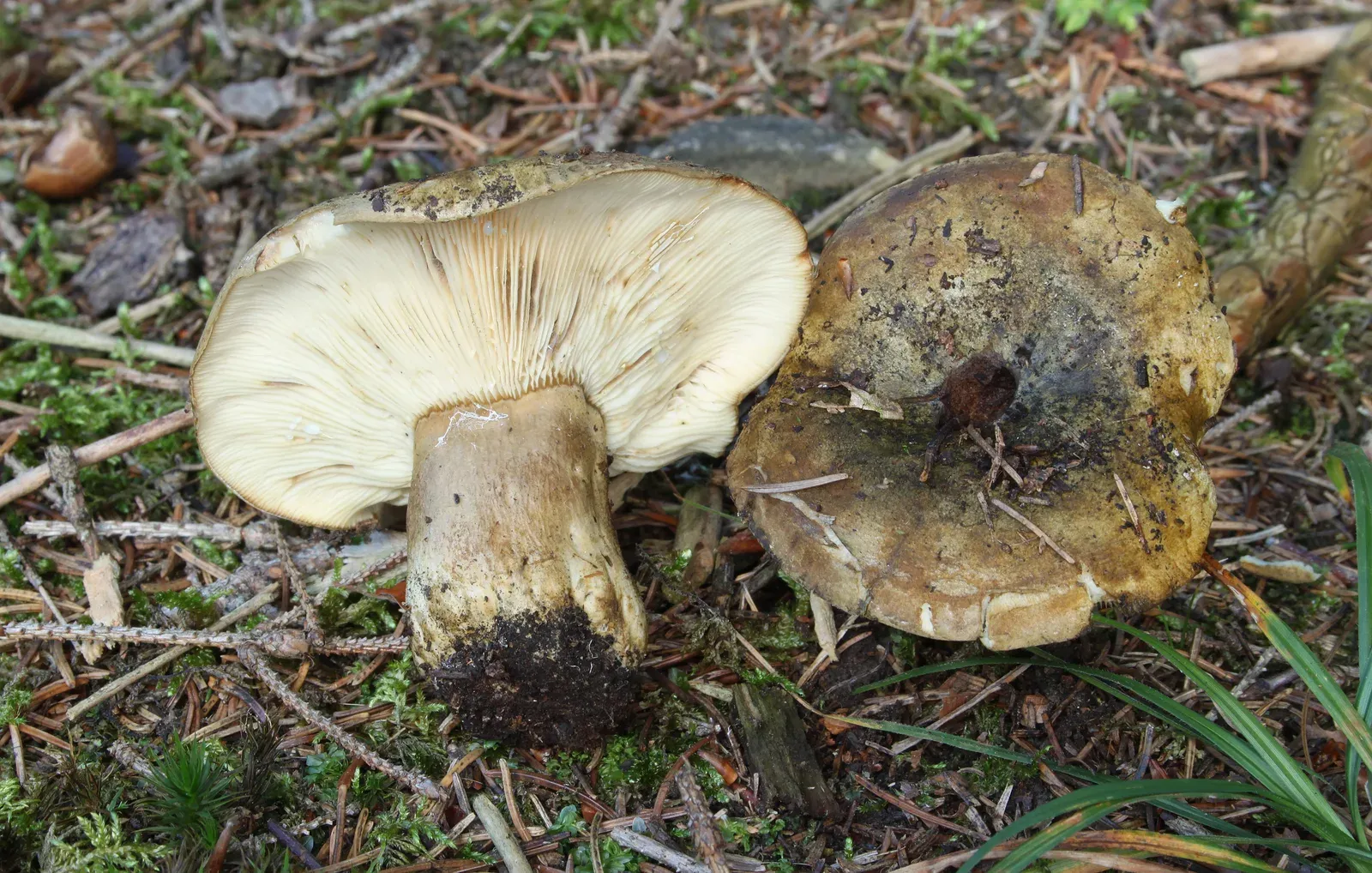
When Ukrainians say they're “going for hruzdi”, they usually mean several different mushrooms. All of them are milk caps (Lactarius), all ooze milky latex when broken, and almost all are used only for salting. But they look and taste different, so it pays for a forager to tell the main species apart.
Let's look at the different milk caps, where to find them and which are the most prized for salting.
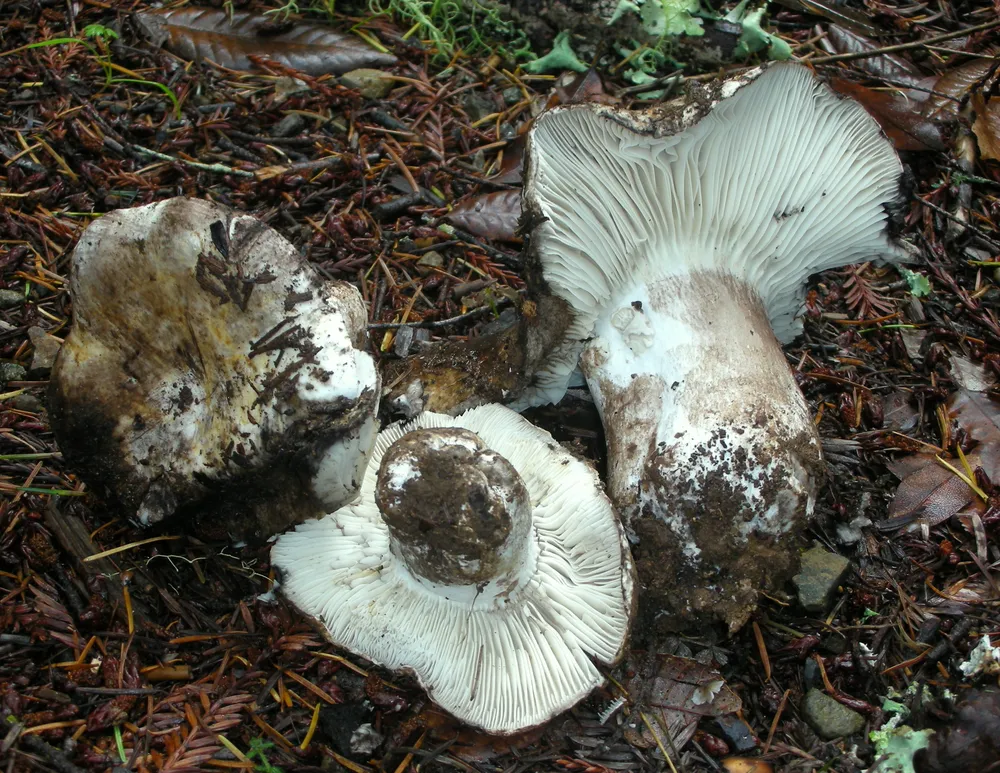
Lactarius resimus (the “true” white milk cap)
The most prized and best known. The cap is white or cream, funnel-shaped, with an inrolled, fringed margin and faint concentric zones; it's often slimy. The milk is white, turns yellow on exposure to air and is very acrid.
It grows in groups in birch and mixed forests, often hiding under leaves. It's the benchmark mushroom for salting — after soaking it makes crunchy, fragrant preserves.
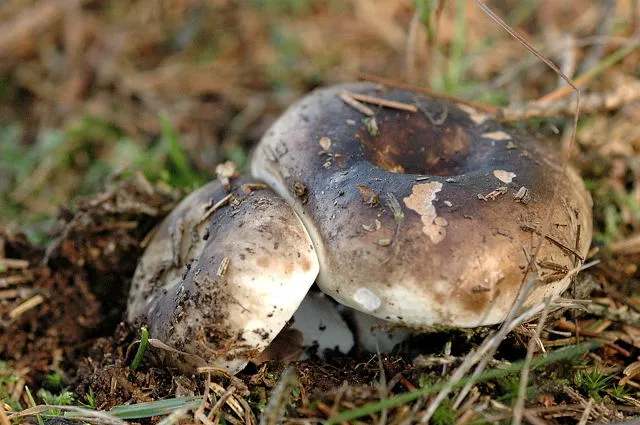
Ugly milk cap
A dense mushroom with a dark olive or almost blackish-brown cap. The flesh is firm, the milk white and acrid. It grows under birches in mixed forests, keeps its shape well when salted and over time takes on a characteristic cherry-red tint.
The ugly milk cap is one of the best for salting; we wrote more about it in a separate article.
Poplar milk cap and Lactarius insulsus
- Poplar milk cap grows under aspens and poplars in damp places. The cap is whitish with pink zones, the milk acrid. It's valued for salting.
- Lactarius insulsus (known in Ukraine as the oak milk cap) sticks to oaks and has a reddish-ochre zoned cap. It's conditionally edible and is salted after soaking.
Both are rarer than Lactarius resimus and the ugly milk cap, but a forager should still know them “by sight”.
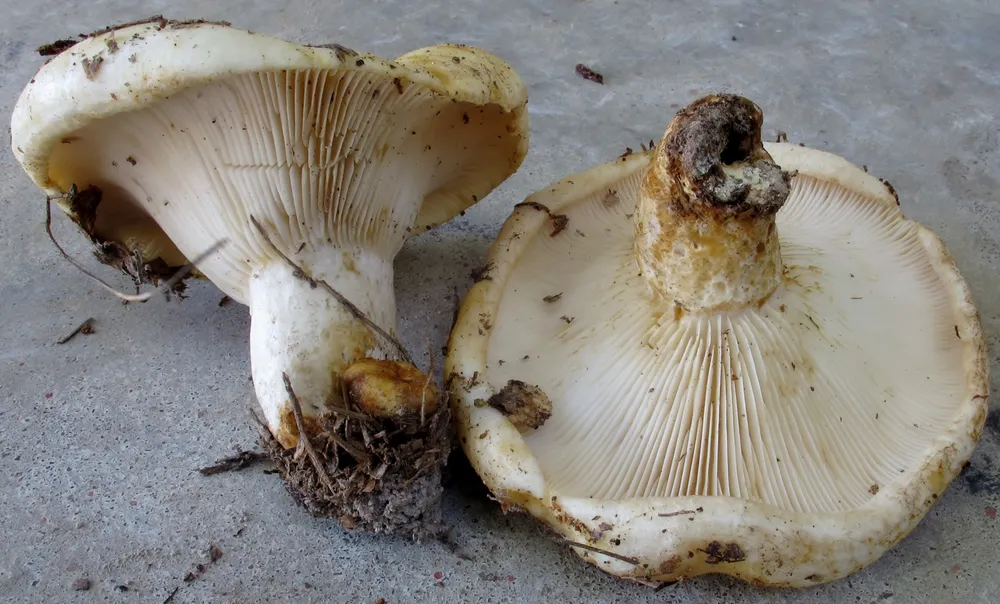
Fleecy milk cap (Lactifluus vellereus)
Similar to Lactarius resimus, but with a dry, felty, downy cap and no slime. Its Ukrainian folk name, “skrypytsia”, comes from the distinctive squeak it makes when you run a finger across the cap. The flesh is very acrid. It's conditionally edible and needs long soaking; it's valued less than Lactarius resimus.
How not to mix up the species
All these milk caps share the key feature of their genus — milky latex where they're broken. You tell them apart by:
- cap color (white, black, reddish),
- surface (slimy or dry and felty),
- host tree (birch, aspen, oak).
Because of the acrid milk, none of these milk caps is eaten fresh — all are soaked before salting. And mind the similar-sounding Ukrainian names: “bilyi hruzd” (Lactarius resimus) is a gilled mushroom for salting, not a porcini; we cover the difference between milk caps and porcini separately. And to learn where and when to pick milk caps, read our companion article.
Sources
- “Key to the Fungi of Ukraine” (Kyiv, Naukova Dumka publishing house).
- Lactarius resimus, Lactarius turpis in GBIF, the Global Biodiversity Information Facility.
- Lactarius in MycoBank, the international fungal nomenclature database.
- Lactarius on Wikipedia.
Frequently asked questions
What kinds of milk caps are there?
The best known are Lactarius resimus (the “true” white milk cap) and the ugly milk cap. There's also the poplar milk cap, Lactarius insulsus and the fleecy milk cap. All are milk caps and all are used for salting.
Which milk cap is the most prized?
Lactarius resimus is the benchmark for salting. The ugly milk cap is highly valued too: it's dense and holds its shape well.
How do these milk caps differ from one another?
By cap color, surface (slimy or dry and felty) and host tree. What they all share is milky latex where broken.
What is the fleecy milk cap?
It's Lactifluus vellereus — similar to Lactarius resimus, but with a dry, downy cap. Its Ukrainian name comes from the squeak it makes when you run a finger across the cap. It's conditionally edible and needs long soaking.
Are all these milk caps edible?
All the species described are conditionally edible — that is, safe to eat only after soaking and salting. They aren't eaten fresh because of the acrid milky latex.
Under which trees do these milk caps grow?
Lactarius resimus and the ugly milk cap under birches, the poplar milk cap under aspens and poplars, Lactarius insulsus under oaks. The type of tree helps identify the species.
Is “bilyi hruzd” the same as porcini?
No. Lactarius resimus is a gilled mushroom with milky latex, used for salting, while porcini (“bilyi hryb”) is a pored bolete. They only get mixed up because of their Ukrainian names.
How are milk caps prepared?
All the species are first soaked for several days, changing the water, to remove the bitterness, and then salted. These are classic mushrooms for winter preserves.
Mushrooms in this article
Related articles
 How to identify
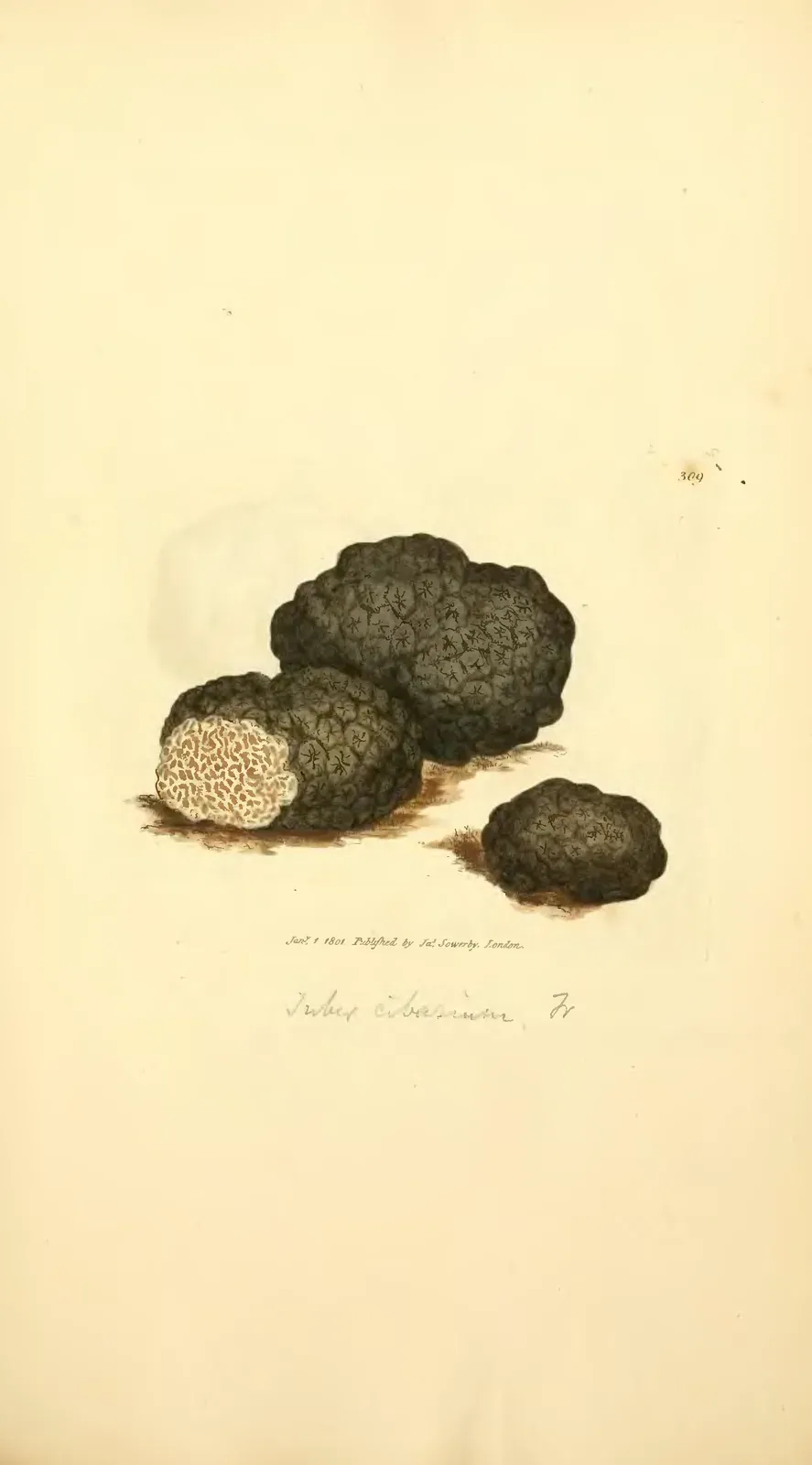
Truffles in Ukraine: do they grow here, and where to look
Truffles aren't just a French delicacy. Several species grow in Ukraine too. Here's which ones, where they occ…
August 24, 2026·2 min Recipes & cooking
How to store fresh mushrooms, and for how long
Fresh mushrooms spoil faster than you might think. Here's how long they keep in the fridge, how to store them…
August 21, 2026·4 min Recipes & cooking
How long to boil mushrooms
Boiling time depends on the type of mushroom and on what you're cooking next. Here's a clear cheat sheet: how…
August 22, 2026·4 min