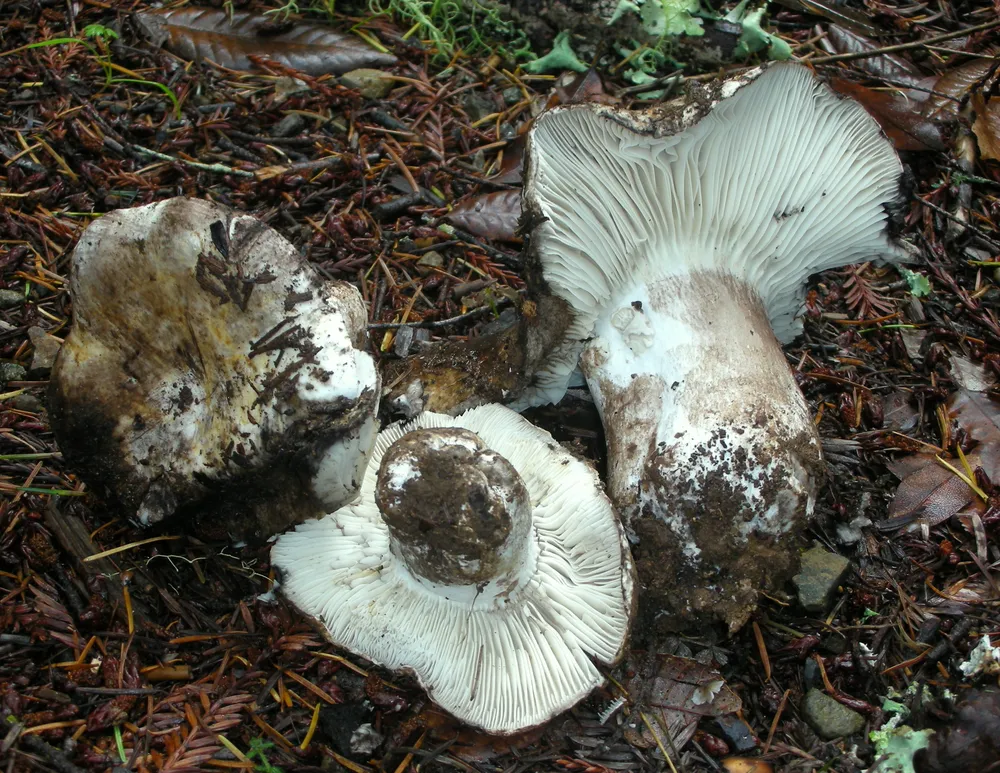
Menthol brittlegillRussula albonigra
Expert-verifiedUpdated June 13, 2026
Passport
- Edibility
- Edible
- Season
- Jul — Oct
- Hymenophore
- Gilled
- Cap color
- White
- Size
- Medium (5–15 cm)
- Smell
- Pleasant
- Reviewed
- Yes ✓
Quick answers
Where to look?
Deciduous forest, Mixed forest
When does it appear?
Jul — Oct
Active months: July, August, September, October.
How to recognize it? Three signs
- Cap color: White, Grey, Black
- Cap shape: Depressed
- Smell: Pleasant
Fruiting season
July – October
Description
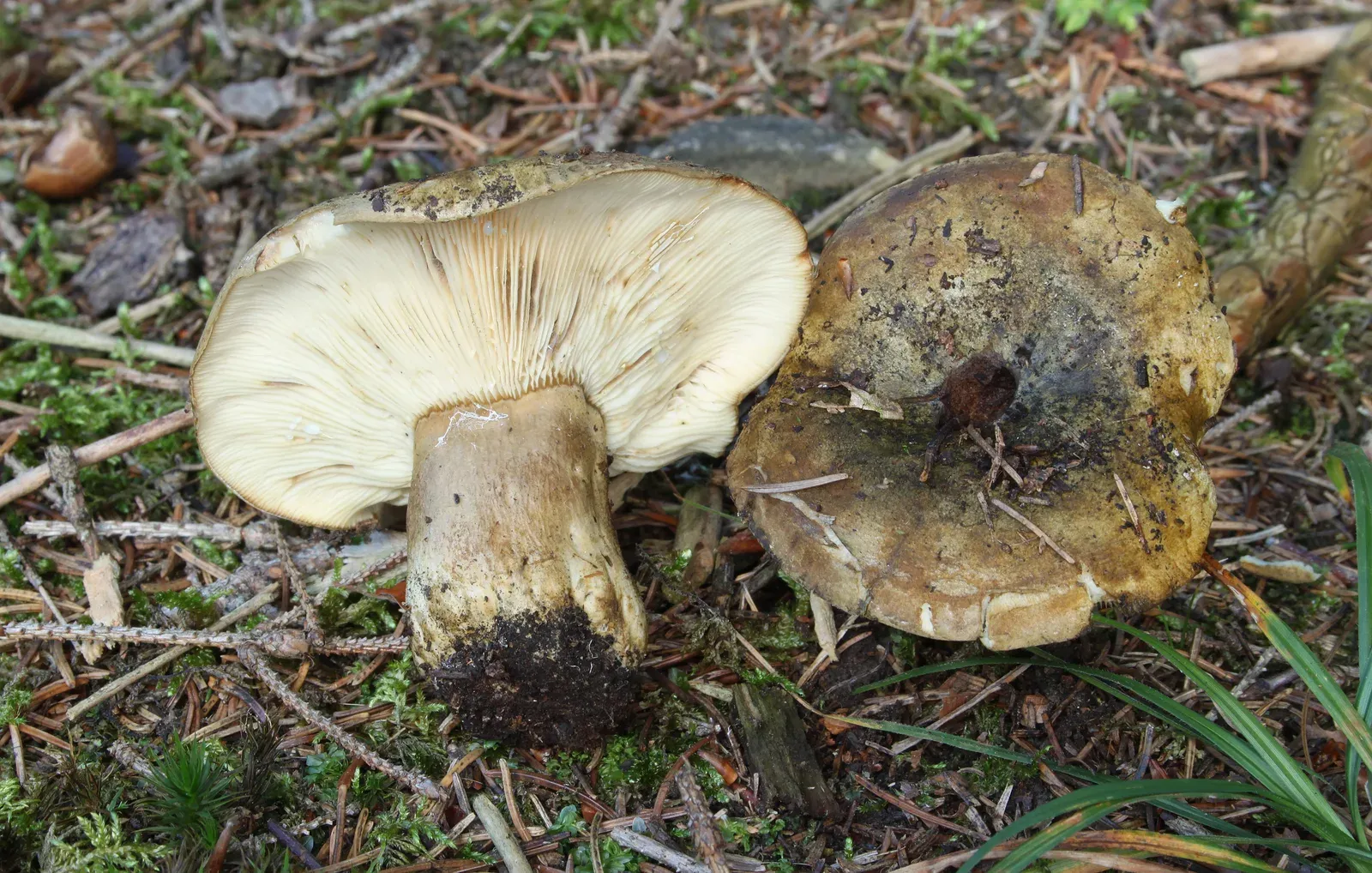
The menthol brittlegill (Russula albonigra) is a close relative of the blackening brittlegill with a striking two-tone look: the young cap is pure white and over time turns gray-black, but without the intermediate reddish stage seen in R. nigricans. When cut, the flesh blackens right away, with no red stage — and that's what sets the species apart. The Latin name literally means "white-black".
Edible, similar in the kitchen to the blackening brittlegill. Young flesh is firm, with a neutral taste, and fine after boiling. Good for pickling and frying, but because it blackens in the pan, the dish comes out dark gray. Skip old specimens.
In Ukraine it occurs in deciduous and mixed forests: the Carpathians, Prykarpattia, Polissia. A mycorrhizal partner of beech, oak, less often spruce. Season: July — October. Less common than the blackening brittlegill, but found reliably.
Cap
Cap 6-15 cm across; in young mushrooms hemispherical to flat with an inrolled margin, later becoming funnel-shaped. Color pure white when young, turning gray, ash-gray, then blackish with age. Surface smooth, slightly sticky in wet weather.
Hymenophore
Gilled hymenophore — the gills are attached to the stem, moderately crowded (unlike R. nigricans, where they are distant). In young mushrooms — whitish, when damaged they blacken with no red stage. Spore print white.
Stem
Stem 3-7 cm tall, 1.5-3 cm thick, thick, cylindrical. Color white when young, gray to blackish with age. Surface smooth. No ring.
Flesh
Flesh firm, fleshy, white when young. When cut, it blackens IMMEDIATELY to gray-black, with no red stage — the key difference from R. nigricans. Faint, pleasant mushroomy smell.
Smell
Faint, pleasant, mushroomy, with no distinctive notes.
Lookalikes
Related species
Mushrooms of the same genus and habitat — to study side by side and never mix up.
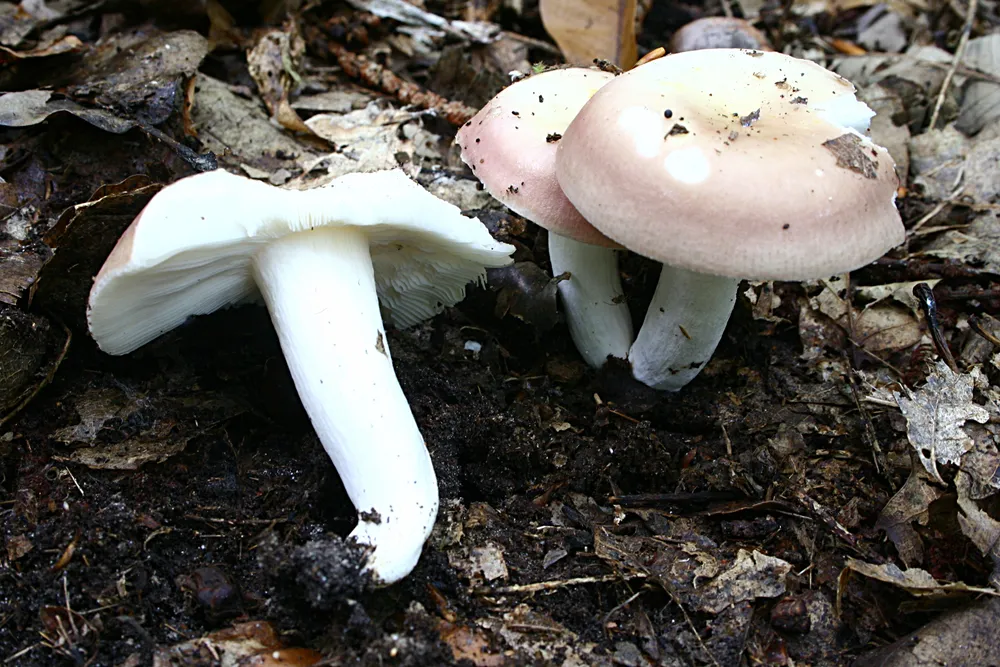
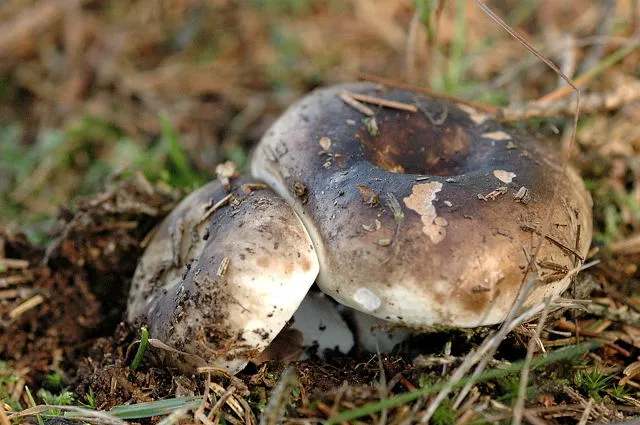
Bare-toothed russula
Russula vesca
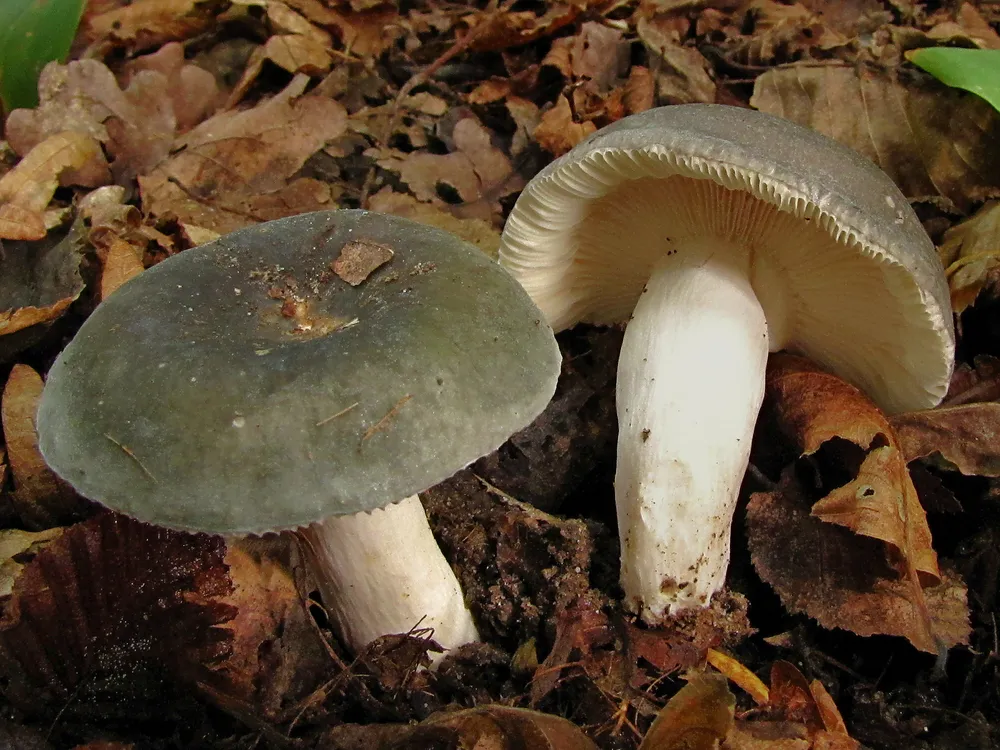
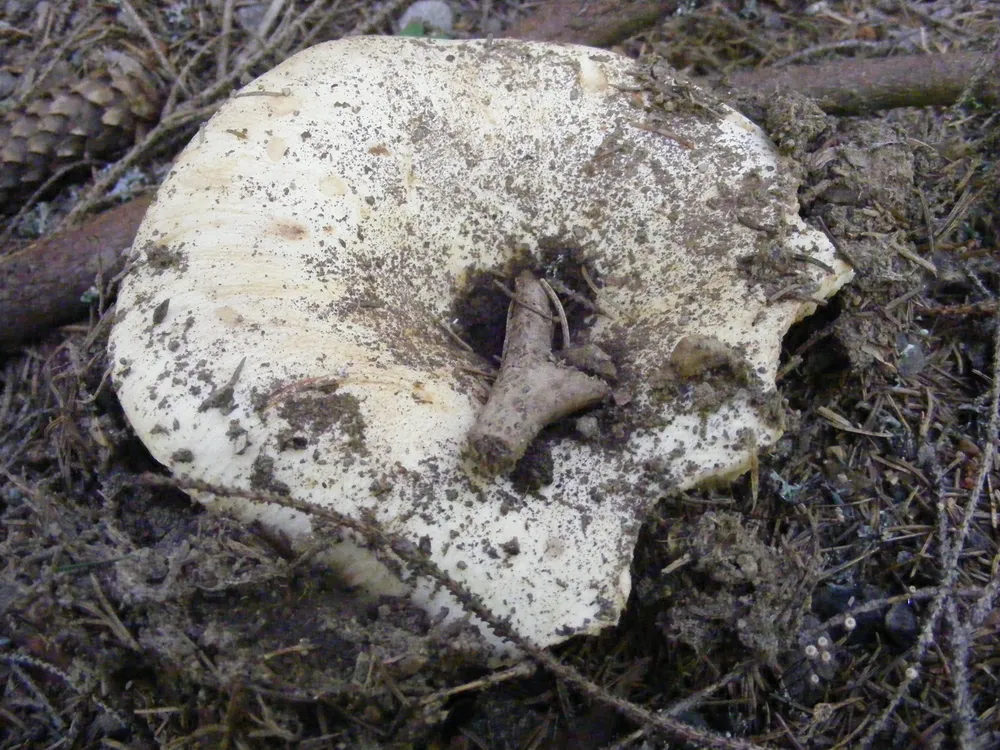
Charcoal burner
Russula cyanoxantha
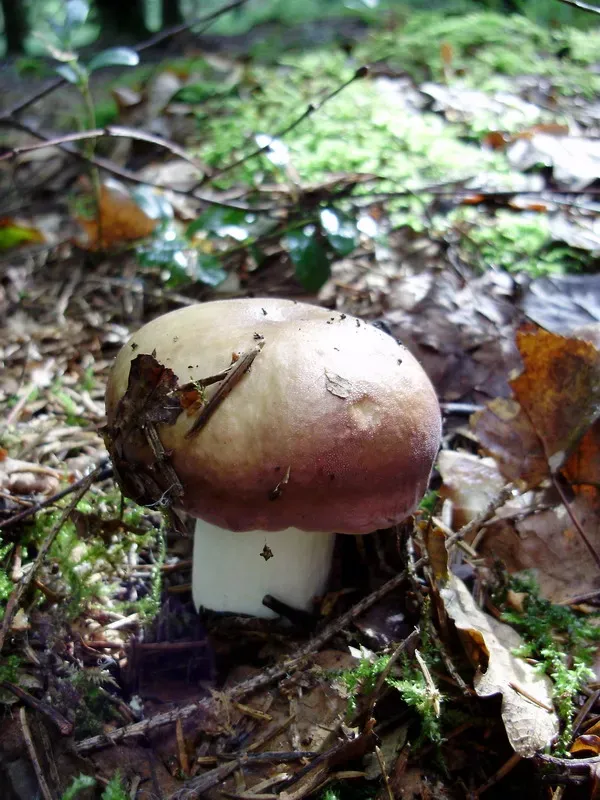
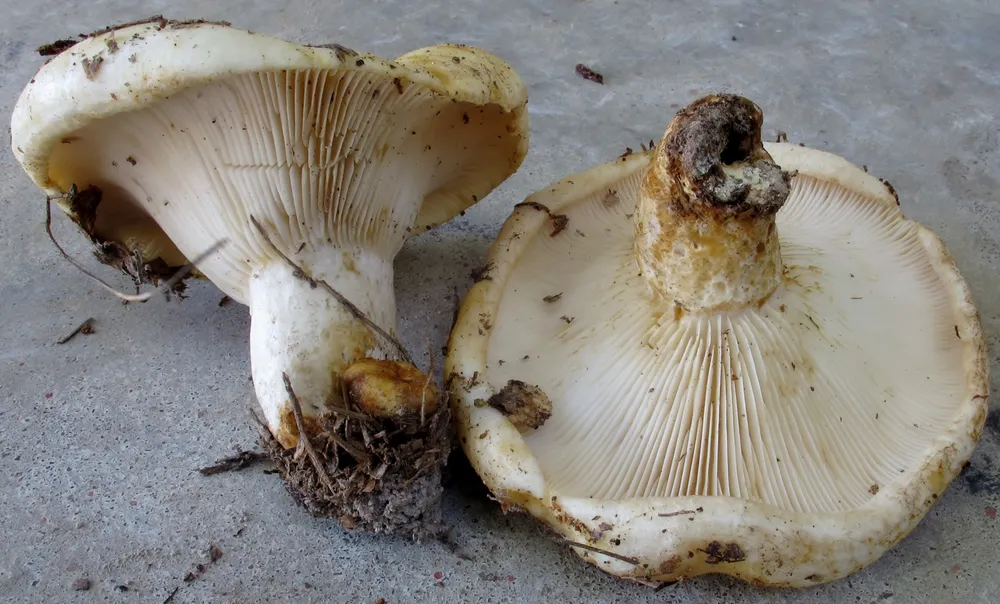
Copper brittlegill
Russula decolorans
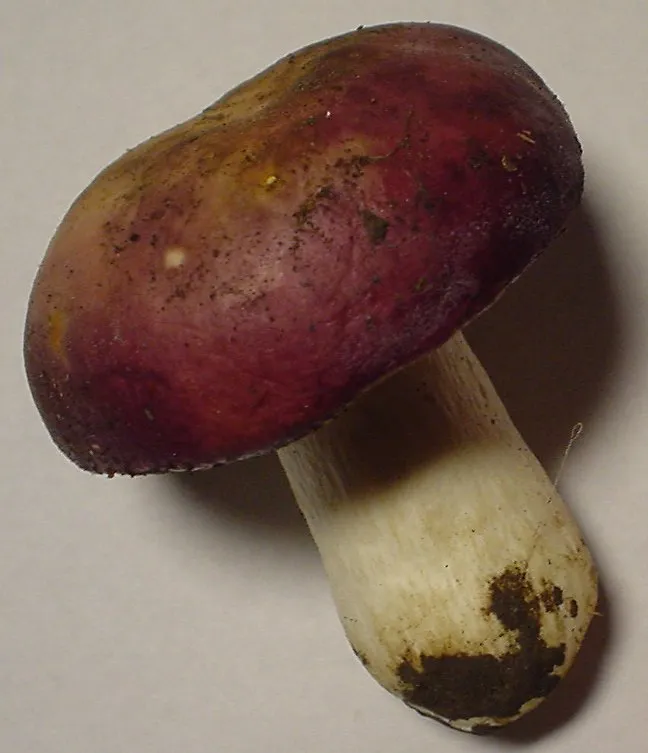
Crab brittlegill
Russula xerampelina
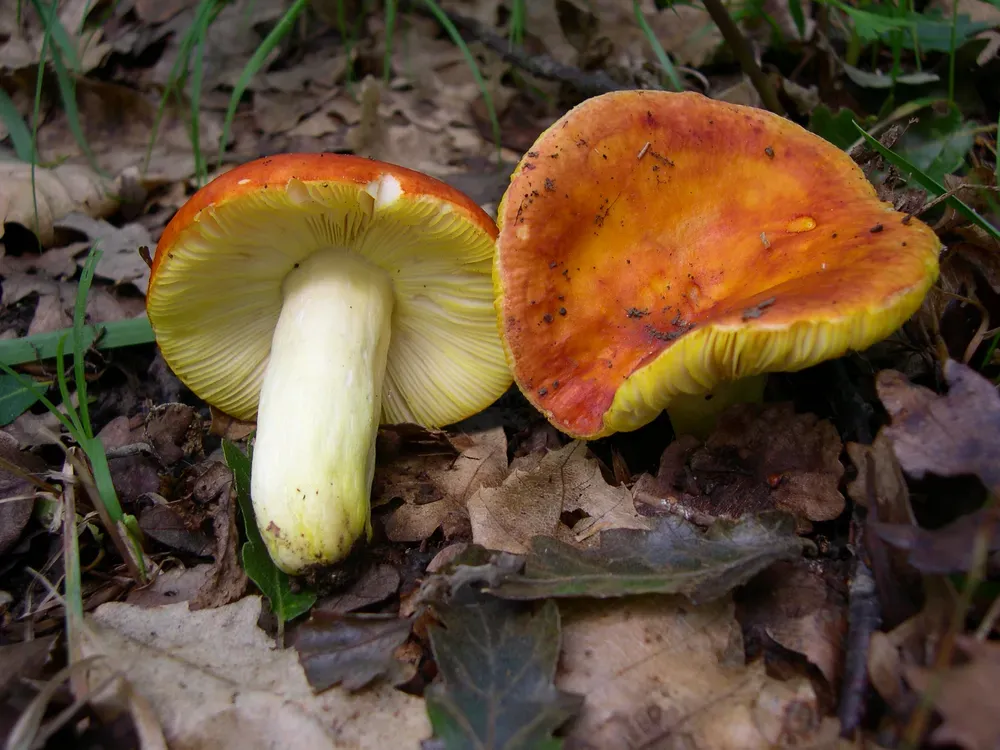
Gilded brittlegill
Russula aurea
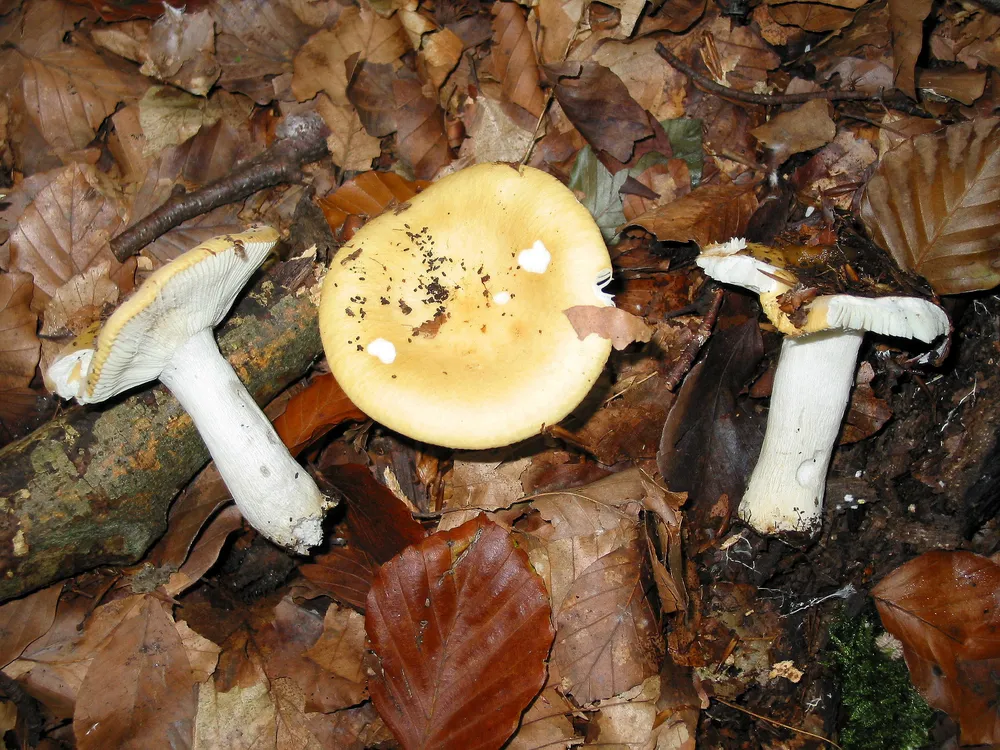
Golden brittlegill
Russula lutea
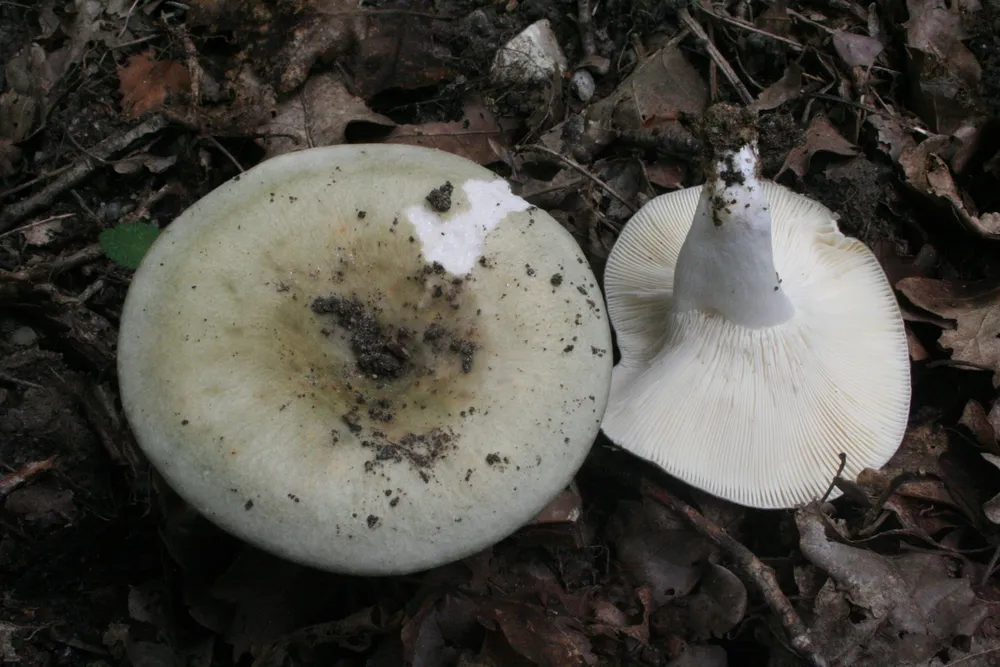
Greasy green brittlegill
Russula heterophylla
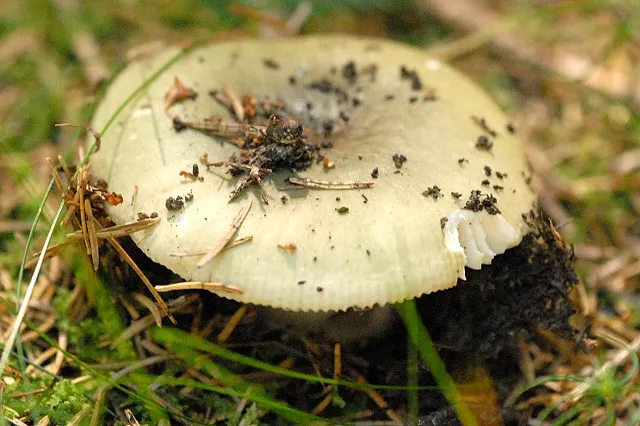
Green brittlegill
Russula aeruginea
Related reading
Frequently asked questions
Is it safe to eat?
Yes, young mushrooms with white flesh, after boiling for 10-15 min. Skip old specimens. Culinary value is moderate — the flesh blackens during cooking.
How do you tell it from the blackening brittlegill?
By how the flesh reacts when cut. In the menthol brittlegill (R. albonigra) — it blackens IMMEDIATELY to gray-black, with no red stage. In the blackening brittlegill (R. nigricans) — it first reddens to wine-red, then blackens. A second feature: the menthol brittlegill has crowded gills, the blackening one — distant, thick ones. Both are edible, so a mistake isn't critical.
Does it have dangerous lookalikes?
None serious. All white-fleshed brittlegills in our flora are edible. The only key distinction is from young amanitas (white gills + ring + volva) — but amanitas don't darken so noticeably when damaged.
Where should you look for it?
In deciduous and mixed forests — mostly under beech, oak and hornbeam, less often in mixed forests with spruce. It likes damp, mossy forest edges.
Which regions of Ukraine is it found in?
Mostly in the forest zone: the Carpathians, Prykarpattia, Polissia. Less common than the blackening brittlegill, but reliably present.
When should you look for it?
July — October, peaking in August–September.
What mushrooms is it confused with?
Most often — with the blackening brittlegill (R. nigricans) (see above). With the milk-white brittlegill (R. delica) — also white and also edible, but they don't blacken when cut. With milk caps (Lactarius) — those ooze milky latex when cut.
How do you cook it?
Pickling young mushrooms is the best approach. Boil for 10-15 min before pickling. Stewing with potatoes. Frying — fine, but the dish will be dark gray.
Is Menthol brittlegill edible or poisonous?
Does Menthol brittlegill have gills or pores?
What does the cap of Menthol brittlegill look like?
What does the stem of Menthol brittlegill look like?
Sources
- [1]Вікіпедія (українська)
- [2]Атлас грибів України, Зеров Д.К. (1979)
- [3]MycoBank Database
- [4]Index Fungorum
- [5]GBIF
- [6]iNaturalist Ukraine