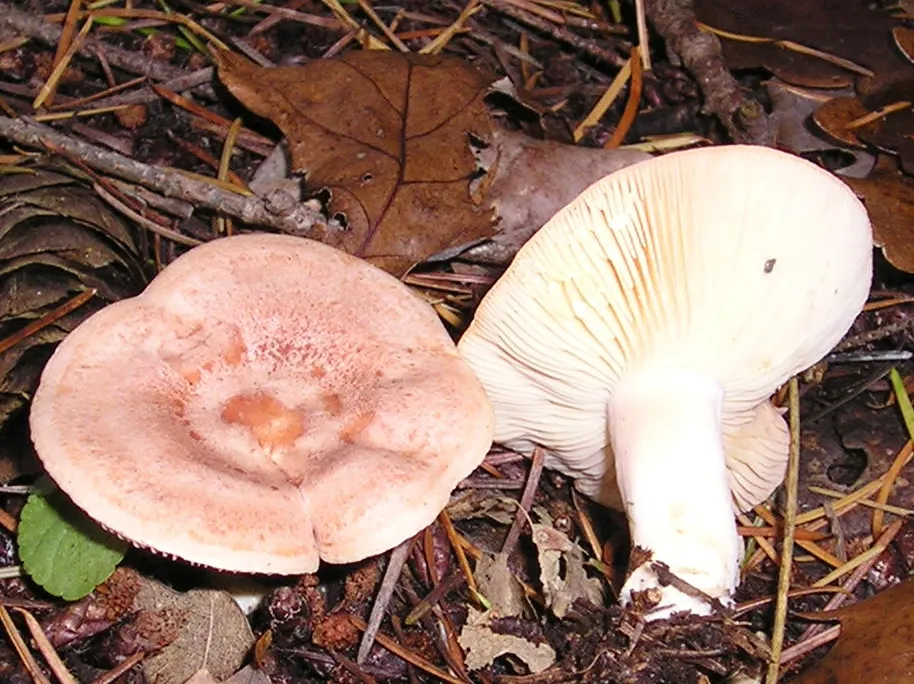
Yellowdrop milk capLactarius chrysorrheus
Expert-verifiedUpdated June 13, 2026
Passport
- Edibility
- Inedible
- Season
- Aug — Oct
- Hymenophore
- Gilled
- Cap color
- Pink
- Size
- Medium (5–15 cm)
- Smell
- Odorless
- Reviewed
- Yes ✓
Quick answers
Where to look?
Deciduous forest, Mixed forest
When does it appear?
Aug — Oct
Active months: August, September, October.
How to recognize it? Three signs
- Cap color: Pink, Cream, Orange
- Cap shape: Depressed
- Smell: Odorless
Fruiting season
August – October
Description
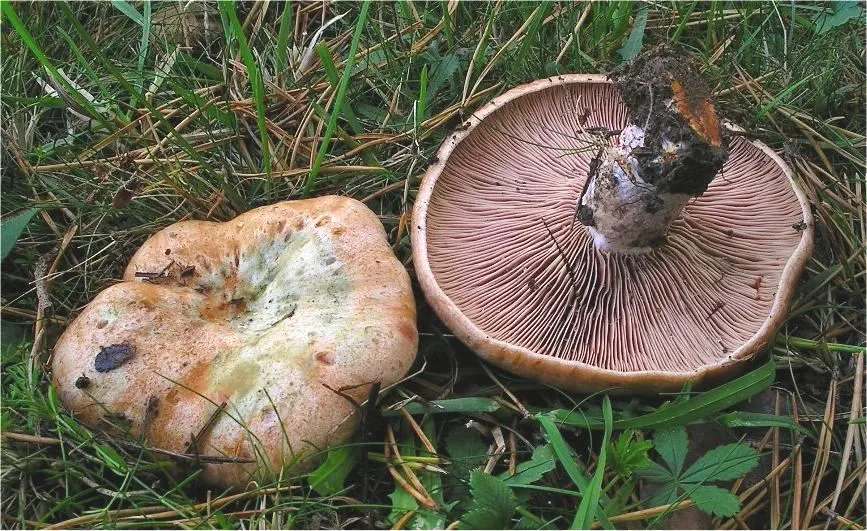
The Yellowdrop milk cap is a pale pink milk cap with a truly unique reaction: when cut, its white milk turns yellow within seconds, becoming a bright sulfur yellow. No other common milk cap in Ukraine shows such fast and striking yellowing of the milk, so you can identify it with literally one squeeze.
This is an inedible (and according to some sources, mildly poisonous) mushroom. The milk isn't just acrid — it also contains substances that cause severe gastroenteritis even after brief boiling. That's why all modern field guides agree: don't pick it, don't put it in your basket, don't use it for salting. Poisoning symptoms — nausea, abdominal pain, diarrhea 2-6 hours after eating, passing within 1-2 days. It leaves no serious after-effects, but it's unpleasant and dangerous for children and older people because of dehydration.
In Ukraine it grows mainly in the Forest-Steppe and southern Polissia, wherever there are oaks. It loves old oak and oak-hornbeam forests, sunny glades and forest edges. The season runs August–October.
Cap
Cap 4-9 cm, convex at first with an inrolled margin, then flattened and finally with a depressed center. Color pale pink, flesh-pink, salmon, with barely visible concentric zones or none. Surface smooth, dry, slightly sticky in wet weather.
Hymenophore
Gills. The gills are crowded, narrow, adnate or slightly decurrent. Color pale cream to yellowish, white in young specimens. When damaged they exude white milk that quickly turns yellow. Spore print cream.
Stem
Stem 3-7 cm tall, 0.8-1.5 cm thick, cylindrical or slightly club-shaped, hollow in mature specimens. Paler than the cap — cream to pale pink. Surface smooth, with no ring and no volva.
Flesh
Flesh whitish; when cut it quickly turns yellow to sulfur yellow or bright yellow within 10-30 seconds. The milk is white at first, but within literally 5-15 seconds it vividly turns yellow — this is the most characteristic and diagnostically unmistakable reaction.
Smell
Smell faint, mushroomy, with no particular notes. The raw flesh tastes sharp, peppery, acrid, with a bitterish aftertaste. Do not taste it raw.
Lookalikes
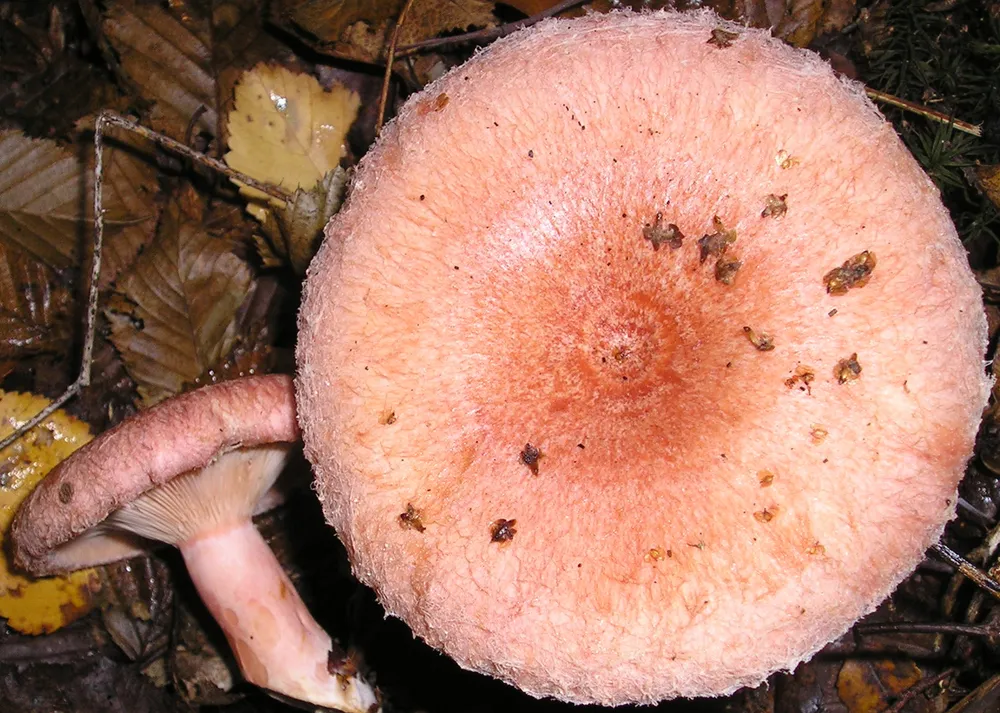
Related species
Mushrooms of the same genus and habitat — to study side by side and never mix up.
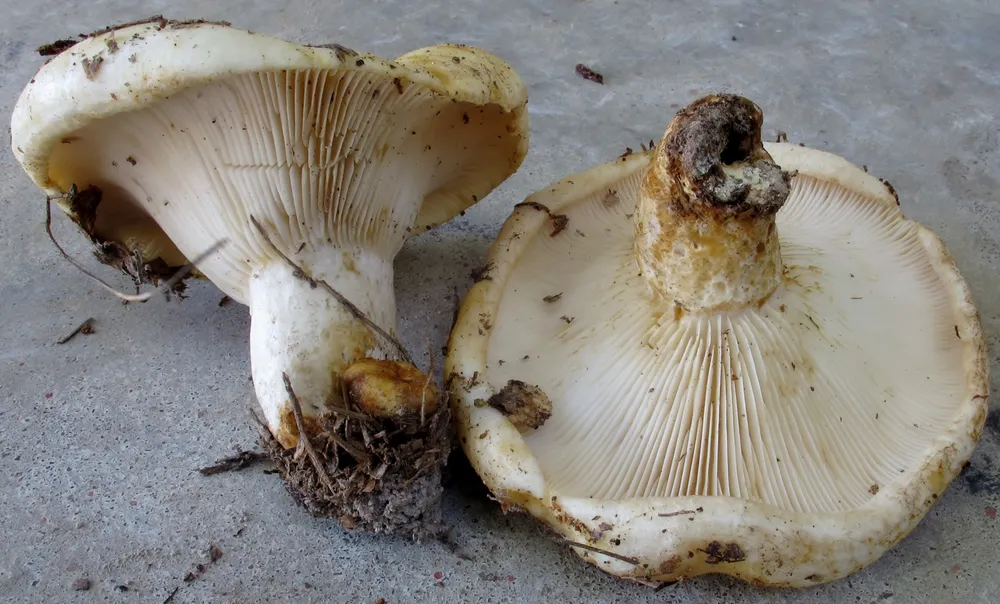
Lactarius resimus

Coconut milk cap
Lactarius glyciosmus
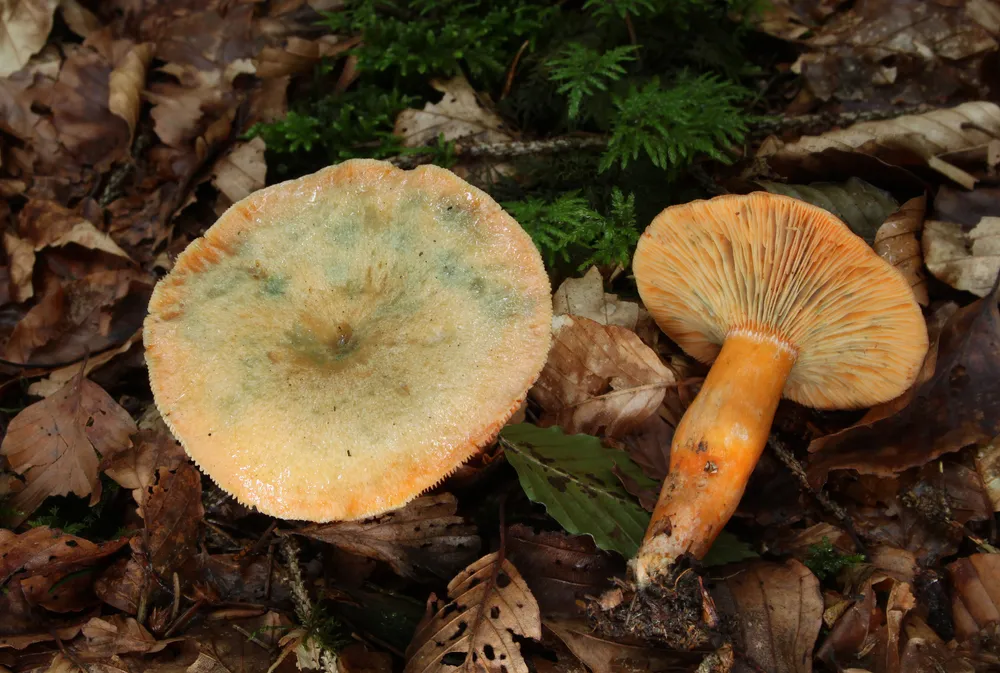
False saffron milk cap
Lactarius deterrimus
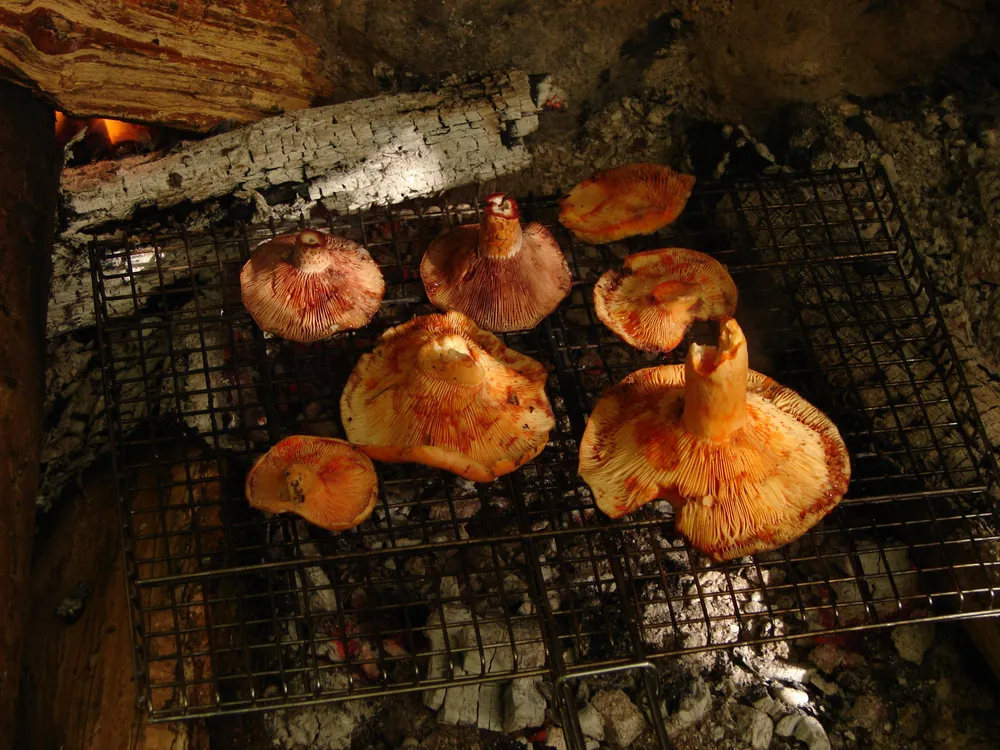
Lactarius salmonicolor
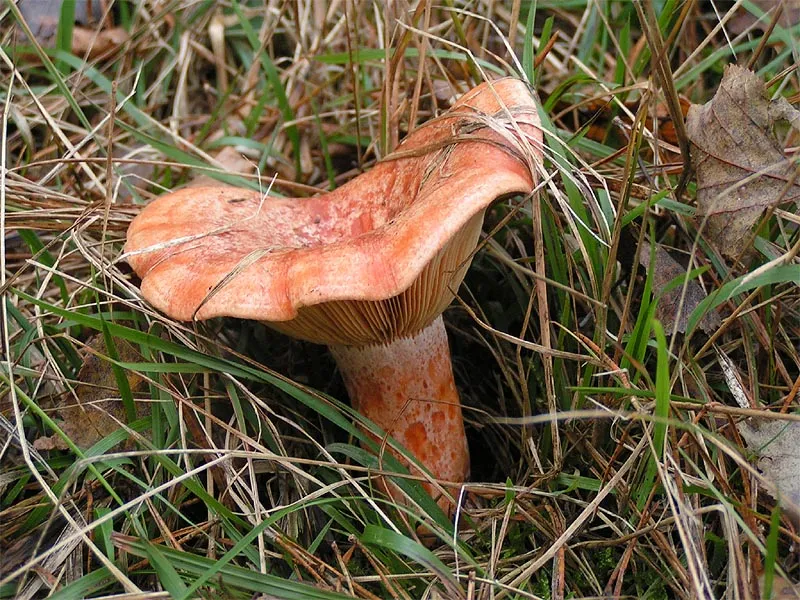
Saffron milk cap
Lactarius deliciosus
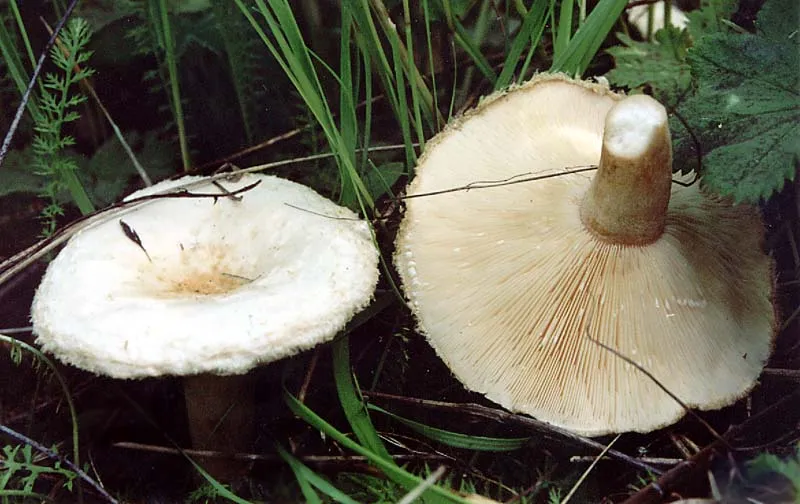
Bearded milk cap
Lactarius pubescens
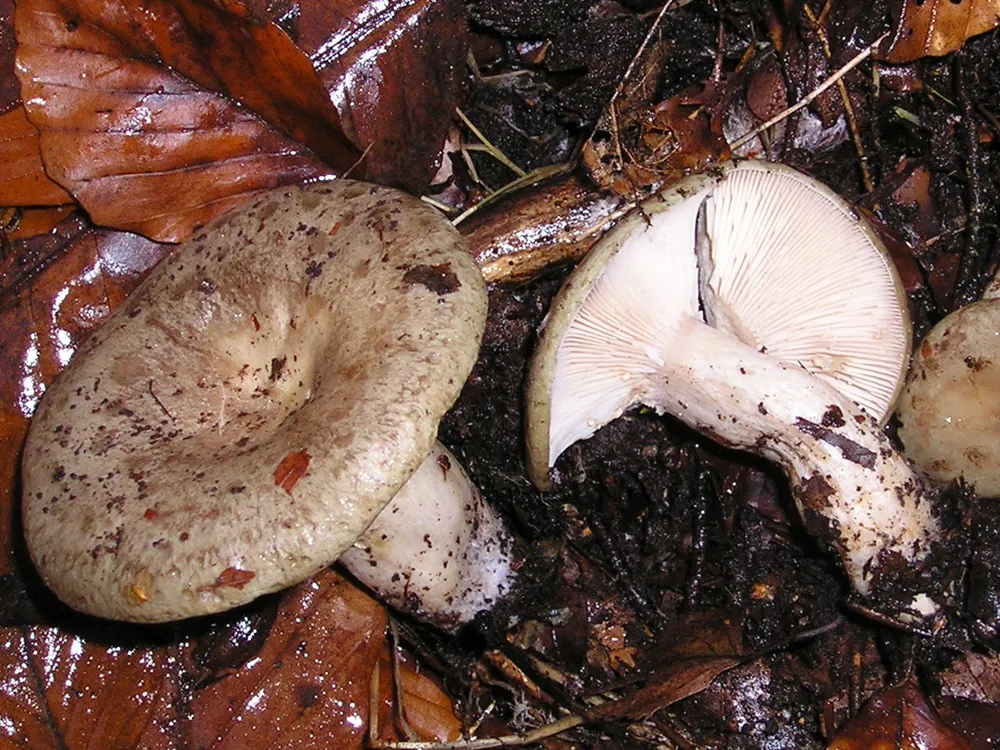
Beech milk cap
Lactarius blennius
Bloody milk cap
Lactarius sanguifluus
Frequently asked questions
Can you eat it?
No. This is an inedible, and according to some sources mildly poisonous, mushroom. It causes severe gastroenteritis even after brief boiling, unlike the “normal” conditionally edible milk caps. Keep it out of your basket and don't use it for salting — better alternatives: Saffron milk cap, Lactarius resimus, Woolly milk cap.
What happens if you eat it by accident?
Within 2-6 hours gastroenteritis develops: nausea, vomiting, abdominal pain, diarrhea. It lasts 1-2 days and passes without serious after-effects — the kidneys and liver are not affected. Drink plenty of water or electrolytes (oral rehydration salts). If there is severe dehydration (dizziness, infrequent urination) or the symptoms are in a child — call an ambulance. There is no antidote; treatment is symptomatic.
What about boiling and salting it?
Not worth it. Although soaking for 1-2 days and prolonged boiling partly reduce the acridity, the toxins are not fully destroyed. Unlike the Saffron milk cap or the Woolly milk cap, where the classic processing method gives a safe product, here safety is doubtful. Modern mycological guides unanimously advise NOT to pick this species.
Where does it grow?
Only under oaks — it's an obligate mycorrhizal partner of oak. In old oak and oak-hornbeam forests, on forest edges and in sunny glades. Without oak it doesn't occur.
Which regions of Ukraine?
Mainly the Forest-Steppe, partly southern Polissia and Prykarpattia — anywhere there are old oak forests. Not a frequent find; it fruits unevenly. In the steppe — only in planted oak stands. In conifer forests it doesn't occur at all.
When should you look for it?
August–October. Peak fruiting is September. It holds out until the first frosts. It's not worth hunting for it for practical purposes, but for your field atlas and for identification it's worth learning to recognize.
How do you recognize it without fail?
One test — cut the stem or cap and watch for 10-30 seconds. If the white milk turns bright sulfur yellow in that time — it's L. chrysorrheus. No other milk cap in Ukraine shows such fast and striking yellowing. That's where the name comes from — chrysorrheus is Greek for “golden flow”.
What is it confused with?
With Lactarius zonarius — it also has a pale cream cap, but its milk stays white. With Lactarius circellatus — also under oak, but the milk doesn't turn yellow so quickly. With the Woolly milk cap — it has a distinctly fluffy margin, and its milk doesn't turn yellow. Yellowing milk is an unmistakable marker; no other species does it this fast.
Is Yellowdrop milk cap edible or poisonous?
Does Yellowdrop milk cap have gills or pores?
What does the cap of Yellowdrop milk cap look like?
What does the stem of Yellowdrop milk cap look like?
Sources
- [1]Вікіпедія (українська)
- [2]Атлас грибів України, Зеров Д.К. (1979)
- [3]MycoBank Database
- [4]Index Fungorum
- [5]GBIF
- [6]iNaturalist Ukraine