.webp)
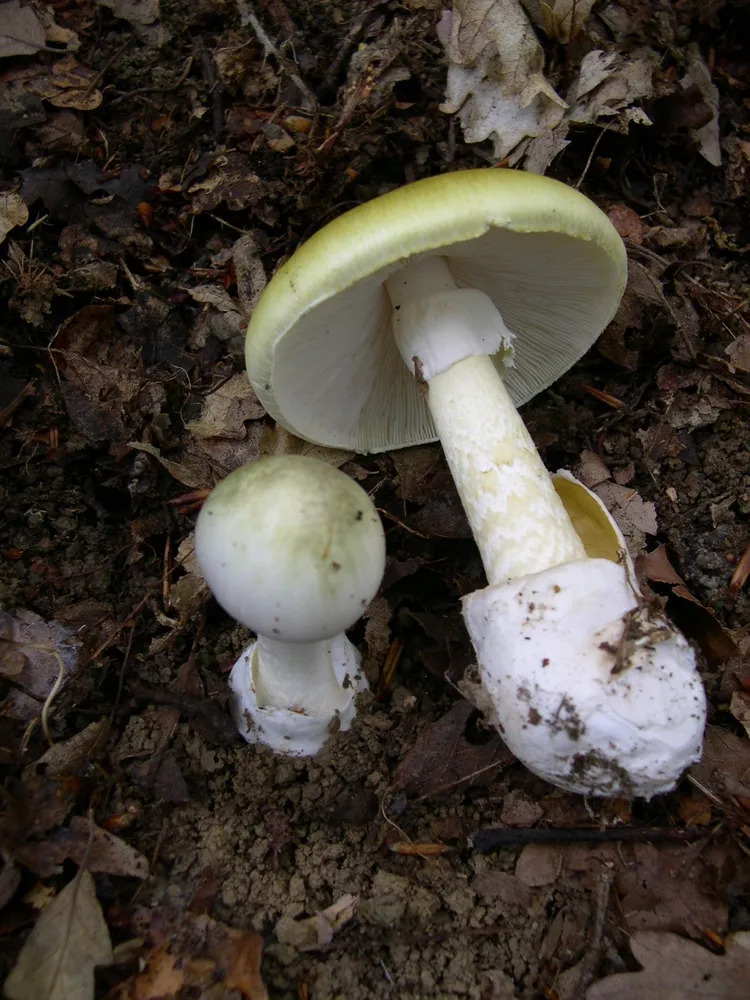
Plenty of folk “tests” surround mushrooms: drop a silver spoon into the pot, add an onion, see whether insects eat the mushroom. The trouble is that none of these methods work, and believing in them has cost people their lives. The most dangerous mushroom, the death cap, passes all these “tests” with ease.
Let's debunk the main myths about identifying poisonous mushrooms and look at what actually protects you from poisoning.
Myth 1. Silver turns black from poison
The most widespread legend: if you drop a silver spoon or coin in with the mushrooms and it darkens, the mushrooms are poisonous.
In reality, silver darkens from sulfur compounds found in many mushrooms regardless of whether they're edible. It will turn just as black from an ordinary field mushroom, and won't react at all to the deadly death cap. There's no connection to poison here at all.
Myth 2. Onion or garlic darkens next to a poisonous mushroom
A similar legend claims that an onion or garlic cooked with mushrooms turns brown if there's a poisonous one among them.
This isn't true either. The darkening is caused by an enzyme found in both edible and poisonous mushrooms. An onion can turn brown from a perfectly safe mushroom and stay pale next to a deadly one. The test shows nothing.
Myth 3. Insects and snails don't eat poisonous mushrooms
Many people are convinced that if a mushroom is wormy or has been nibbled by snails, it's definitely edible.
In fact, insect larvae and slugs happily eat mushrooms that are deadly to humans, including the death cap. Their bodies work differently. So snail marks prove nothing, and worms only spoil the mushroom.
Myth 4. Boiling or vinegar neutralizes the toxin
A very dangerous myth: supposedly any mushroom can be made safe if you boil it for a long time, pour off the water or add vinegar.
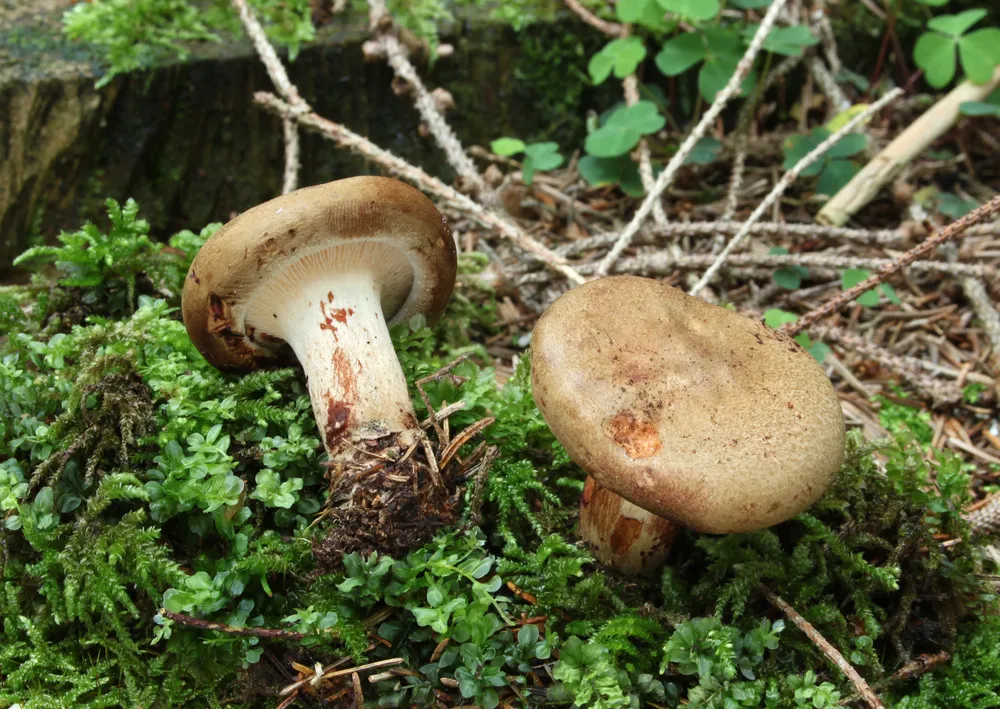
The toxins of the most dangerous mushrooms are heat-stable. Neither long boiling, nor drying, nor salting, nor pickling in vinegar destroys them. The brown rollrim remains dangerous despite soaking and boiling, and the death cap's toxin doesn't go away at all. More on the brown rollrim in a separate article.
Myth 5. Poisonous mushrooms are bitter or brightly colored
A common belief is that taste or color gives danger away: bitter and bright means poisonous, while pleasant and plain means safe.
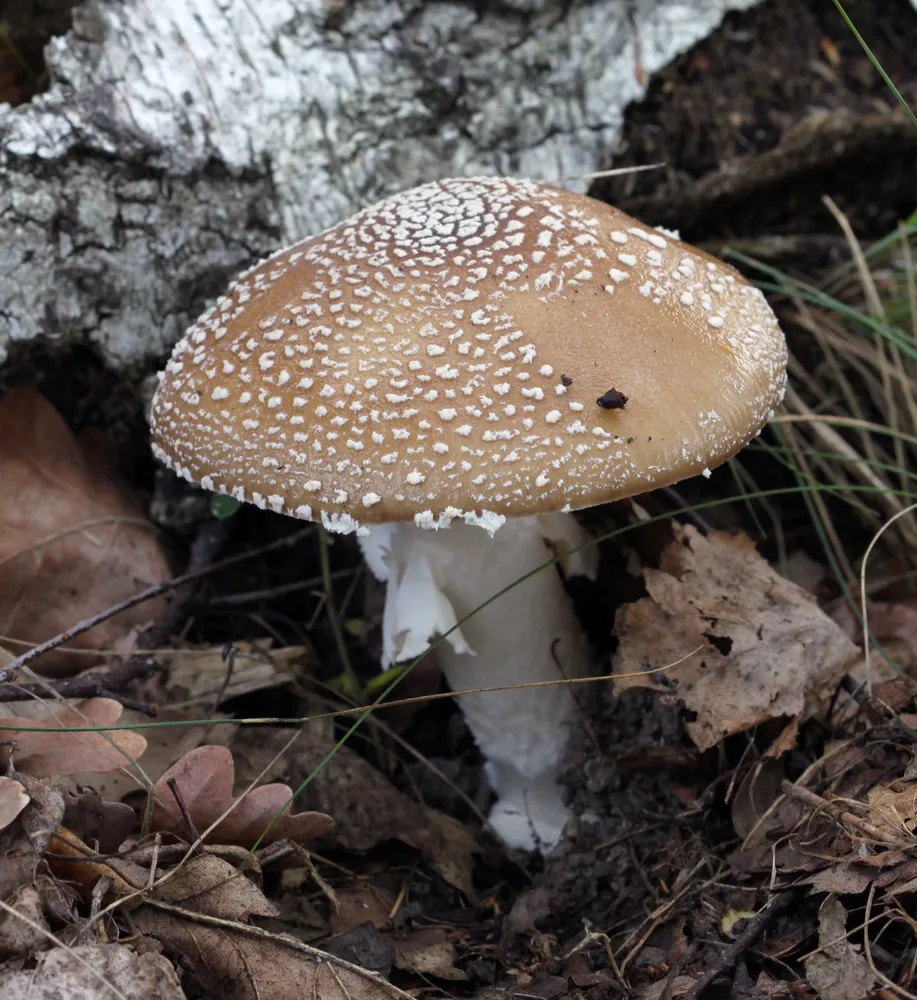
This is false too. The death cap tastes pleasant, and the panther cap is a modest brown, not bright. Meanwhile, the bright red fly agaric gives itself away by its color. So neither taste nor color is a reliable signal.
What actually works
Instead of myths, here are a few rules that really keep you safe.
- Accurate species identification. The only reliable way is to identify the mushroom with certainty. If you know it, pick it; if in doubt, leave it.
- Checking the key features. A skirt on the stem and a sac at the base, white gills on an unfamiliar mushroom, and other morphological details.
- Picking only species you know. Expand your list gradually, learning one mushroom at a time.
- No on-the-spot “tests.” Silver, onions, tasting raw mushrooms: all of this is useless and dangerous.
The full set of guidelines is in our safe foraging rules, and an overview of dangerous species is in our guide to the poisonous mushrooms of Ukraine. If you suspect poisoning, call 112 or your local emergency number immediately and follow our first aid instructions.
Sources
- “Vyznachnyk hrybiv Ukrainy” (Field Guide to the Fungi of Ukraine; Kyiv, Naukova Dumka).
- Amanita pantherina on GBIF, the global biodiversity database.
- Fungi on MycoBank, the international fungal nomenclature database.
- Mushroom poisoning on Wikipedia.
Frequently asked questions
Is it true that a silver spoon turns black from poisonous mushrooms?
No. Silver darkens from sulfur compounds found in many mushrooms regardless of edibility. It will turn black from a field mushroom and won't react to the deadly .
Can you test mushrooms with onion or garlic?
No. The darkening of onion or garlic is caused by an enzyme present in both edible and poisonous mushrooms. The test shows nothing, and relying on it is dangerous.
If a mushroom is wormy, is it definitely edible?
No. Insect larvae and snails happily eat mushrooms that are deadly to humans, including the death cap. Worms prove nothing; they only spoil the mushroom.
Does long boiling neutralize the toxin?
No. The toxins of the most dangerous mushrooms are heat-stable. Neither boiling, nor drying, nor salting, nor pickling in vinegar destroys them. A deadly mushroom stays deadly.
Are all poisonous mushrooms bitter or brightly colored?
No. The tastes pleasant, and the is a modest brown. Neither taste nor color is a reliable sign of toxicity.
Why are folk testing methods so dangerous?
Because they create a false sense of security. A person “tests” a mushroom with silver or onion, gets a reassuring result and eats a deadly mushroom. These methods simply don't work, period.
How can you actually tell a poisonous mushroom apart?
Only by accurate species identification and checking the key features (skirt, sac at the base, gill color). There's no universal “poison test.” If in doubt, leave it out.
What should you do if you trusted a myth and got poisoned?
Call 112 or your local emergency number immediately, keep any leftover mushrooms and don't wait until you feel worse. Self-treatment and yet more “folk remedies” are dangerous. Details in our article on .
Mushrooms in this article
Related articles
 Safety
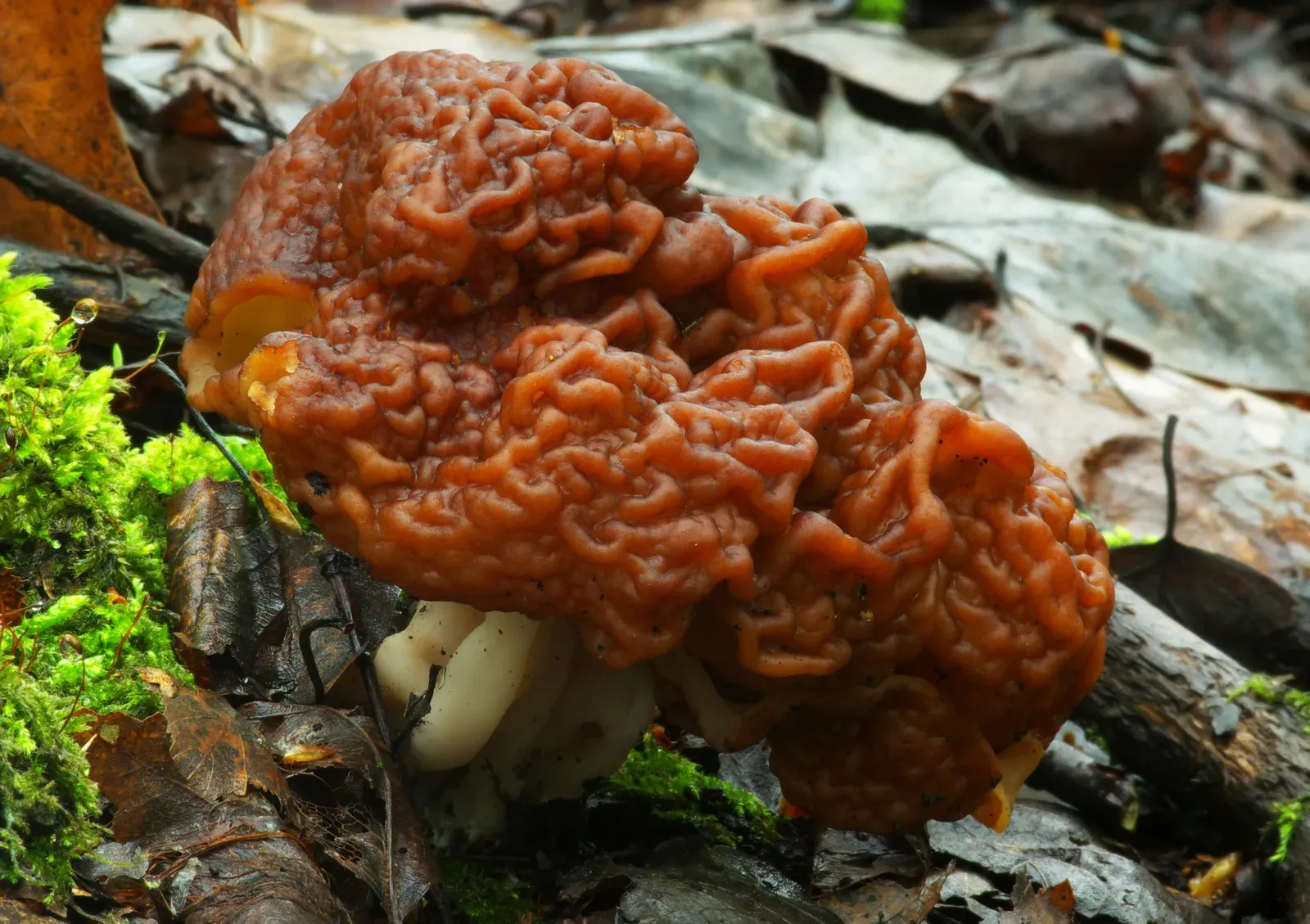
False morel: why this spring mushroom is dangerous
The false morel looks like a morel, but it contains a poison. Here's how to recognize it, why it's dangerous a…
August 24, 2026·2 min Recipes & cooking
How to store fresh mushrooms, and for how long
Fresh mushrooms spoil faster than you might think. Here's how long they keep in the fridge, how to store them…
August 21, 2026·4 min How to identify
Truffles in Ukraine: do they grow here, and where to look
Truffles aren't just a French delicacy. Several species grow in Ukraine too. Here's which ones, where they occ…
August 24, 2026·2 min