_Bresinsky_&_Manfr._Binder_533003_2015-06-29.webp)
Saffron boleteLeccinellum crocipodium
Expert-verifiedUpdated October 3, 2026
Passport
- Edibility
- Edible
- Season
- Jun — Oct
- Hymenophore
- Pored
- Cap color
- Yellow
- Size
- Medium (5–15 cm)
- Smell
- Pleasant
- Reviewed
- Yes ✓
Quick answers
Where to look?
Deciduous forest, Mixed forest
When does it appear?
Jun — Oct
Active months: June, July, August, September, October.
How to recognize it? Three signs
- Cap color: Yellow, Brown
- Cap shape: Convex
- Smell: Pleasant
Fruiting season
June – October
Description
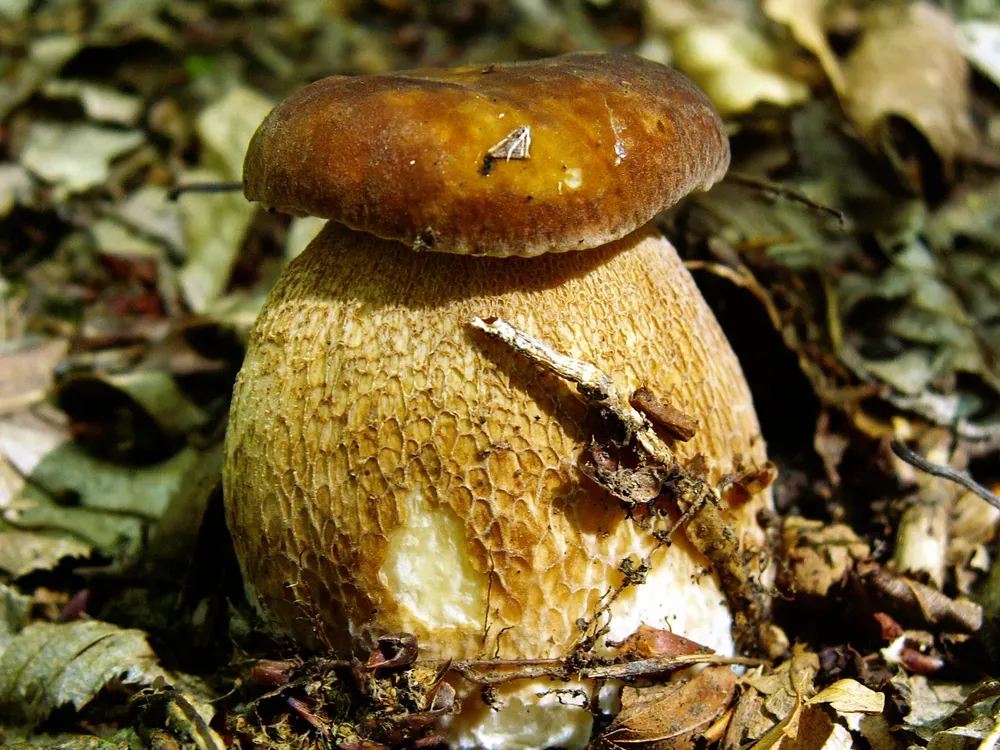
The saffron bolete (Leccinellum crocipodium) is a rare southern European relative of the common brown birch bolete. Like all species of the genus Leccinellum (formerly placed in Leccinum), it has characteristic dark scales on the stem. What sets it apart is the dramatic reaction of its flesh when cut: it quickly turns yellow, then gray-violet, then almost black. It got its species name from this pigment (so-called "crocipodin").
In Ukraine it occurs in oak and oak-beech forests of Zakarpattia, the Carpathian foothills, the Western Forest-Steppe, and mountainous Crimea. It loves warm, sun-heated forest edges with limestone or neutral soils. It doesn't grow in the northern regions or the steppe — it's a southern, warmth-loving species. It forms mycorrhiza mainly with oak, less often with chestnut and beech.
Edibility: good. In young mushrooms the flesh is springy, rich yellow, with a pleasant mushroomy taste. In mature ones it becomes softer, with the characteristic darkening when cut. In the kitchen it's seen as a "dark birch bolete" — when cooked it gives the dish a characteristic gray-black color, which scares some people. Without reason: this is a normal reaction of the species. It fries, stews and pickles nicely (though a dark marinade looks less appealing).
Cap
Cap 5–12 cm, hemispherical in young mushrooms, then cushion-shaped. Color yellow-brown, ocher-yellow, darkening to brown with age. The surface is matte, dry, slightly sticky in wet weather. In mature mushrooms it may crack finely.
Hymenophore
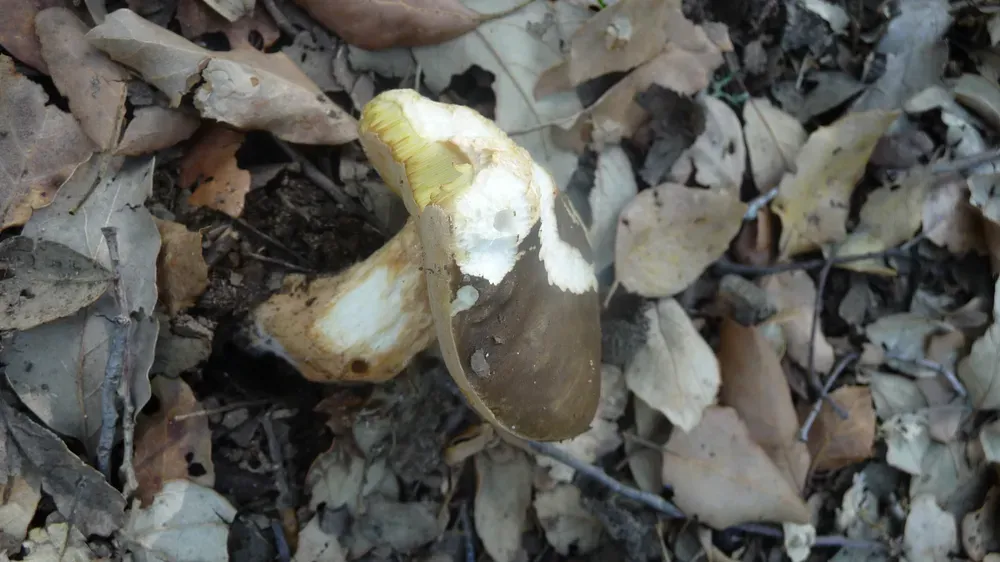
Hymenophore tubular, with a slight notch near the stem. Yellow when young, olive-yellow to brown in mature mushrooms. Pores small, angular, quickly darkening to gray-violet when pressed.
Stem
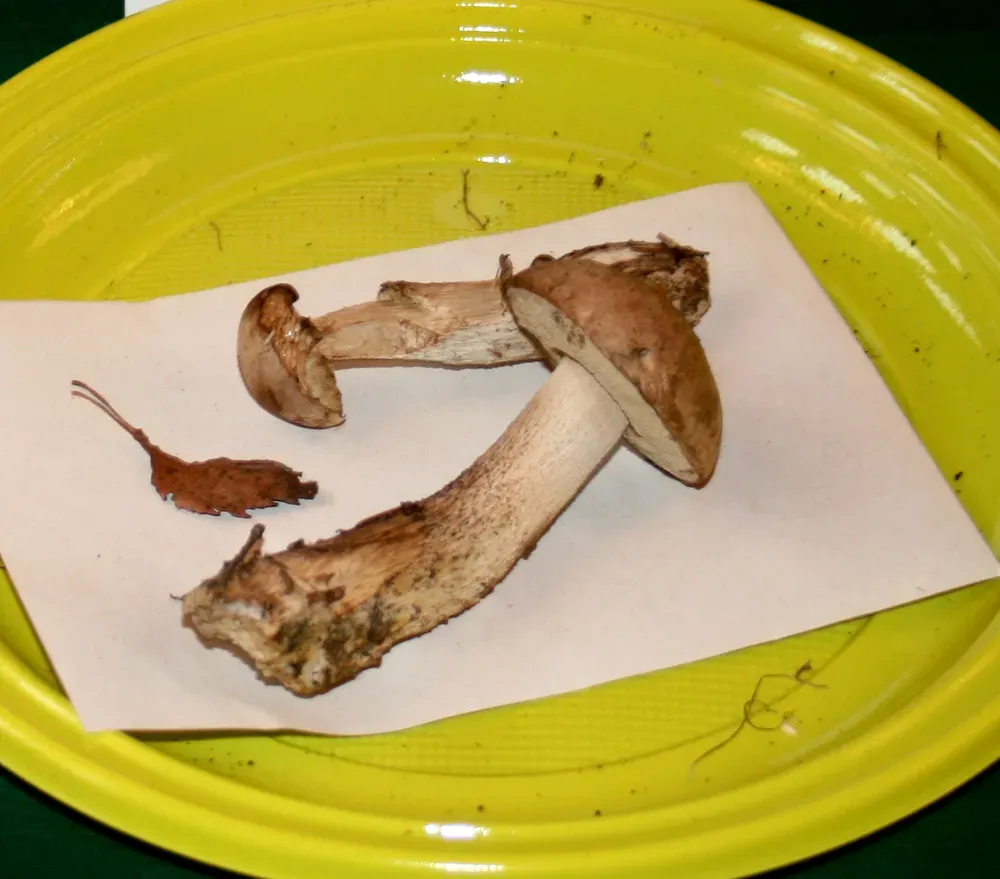
Stem 6–15 cm tall, 1.5–3 cm thick, cylindrical, sometimes bulbous at the base. Yellow-brown, covered with characteristic dense grayish-brown scales — a typical feature of the genus Leccinellum.
Flesh
Flesh bright yellow in young mushrooms. When cut it darkens DRAMATICALLY: within a few seconds it turns yellow, after a minute gray-violet, after a few minutes almost black. This is a normal reaction of the species, not toxicity.
Smell
Smell faint, pleasantly mushroomy. Taste mild, without bitterness.
›Scientific synonyms (10)
Boletus crocipodius Letell. (1838), Boletus tessellatus Gillet (1878), Boletus nigrescens Richon & Roze (1888), Krombholzia crocipodia (Letell.) E.-J. Gilbert (1931), Krombholziella crocipodia (Letell.) Maire (1937), Trachypus crocipodius (Letell.) Romagn. (1939), Leccinum nigrescens Singer (1947), Leccinum crocipodium (Letell.) Watling (1961), Krombholziella nigrescens (Singer) Šutara (1982), Leccinellum nigrescens (Singer) Bresinsky & Manfr. Binder (2003)
Lookalikes
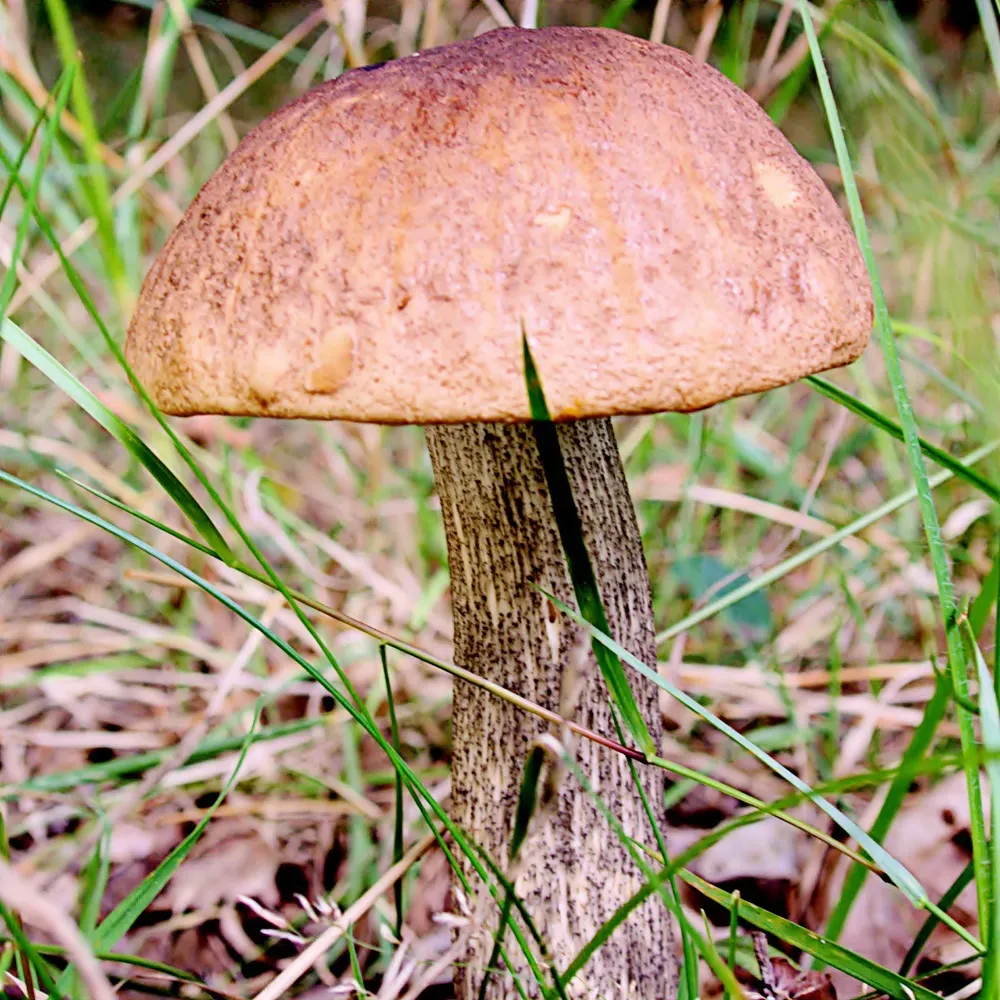
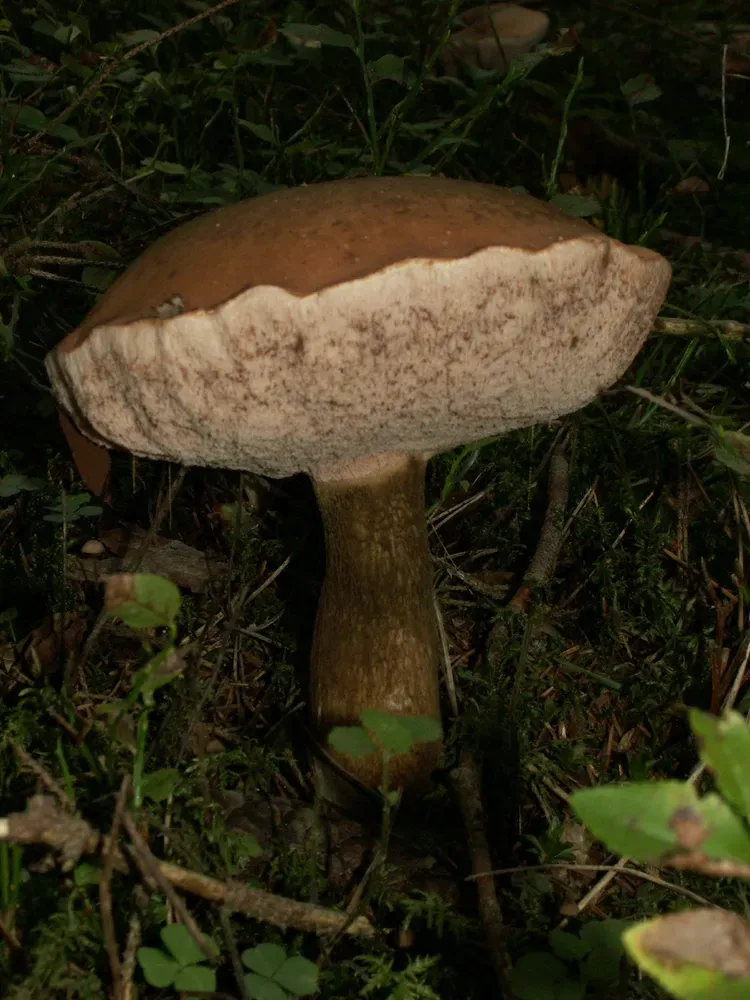
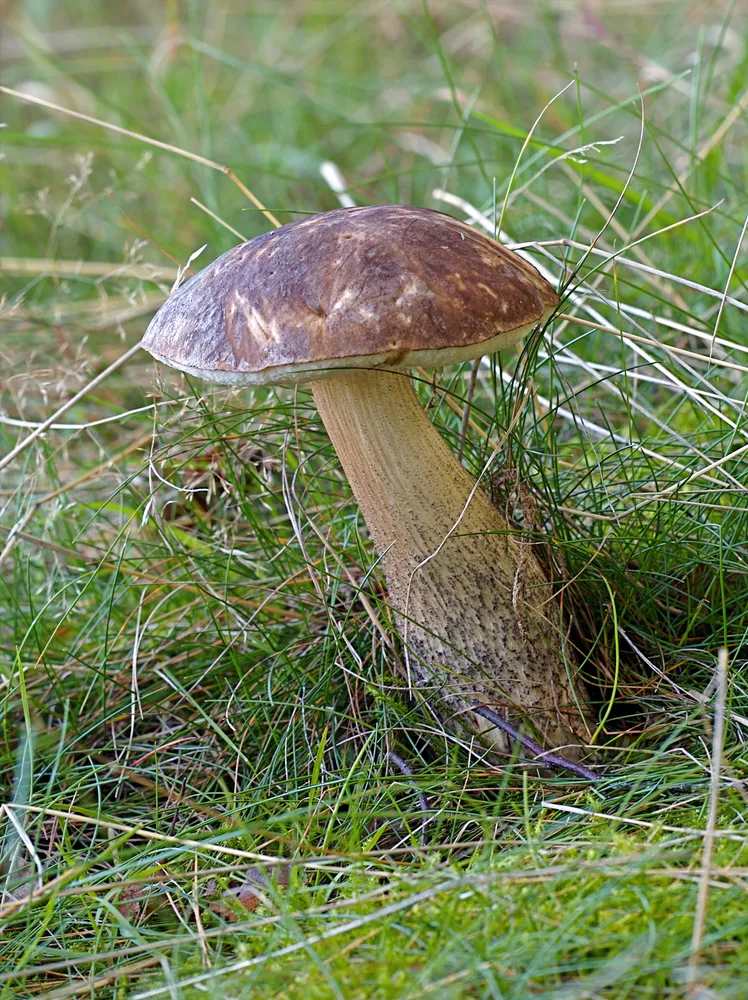
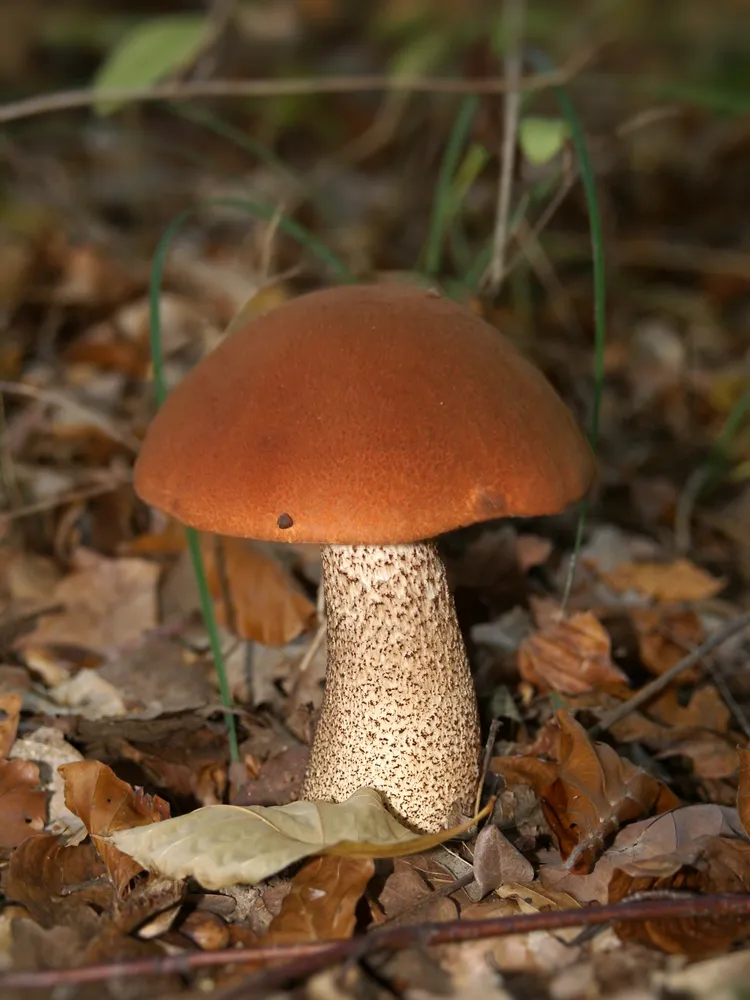
Related species
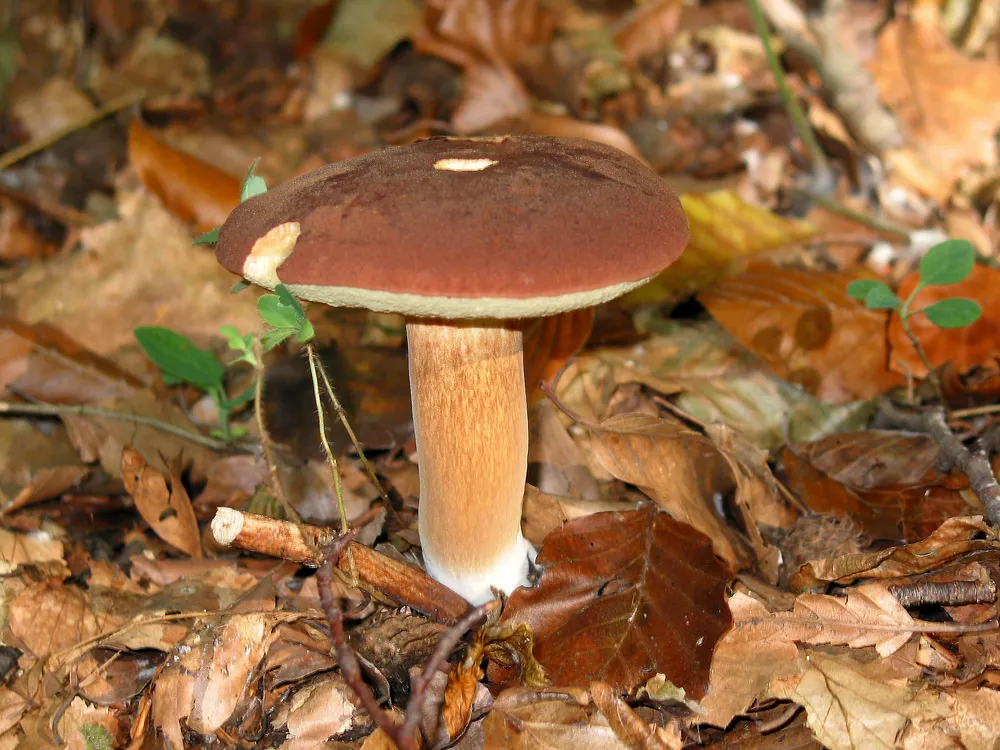
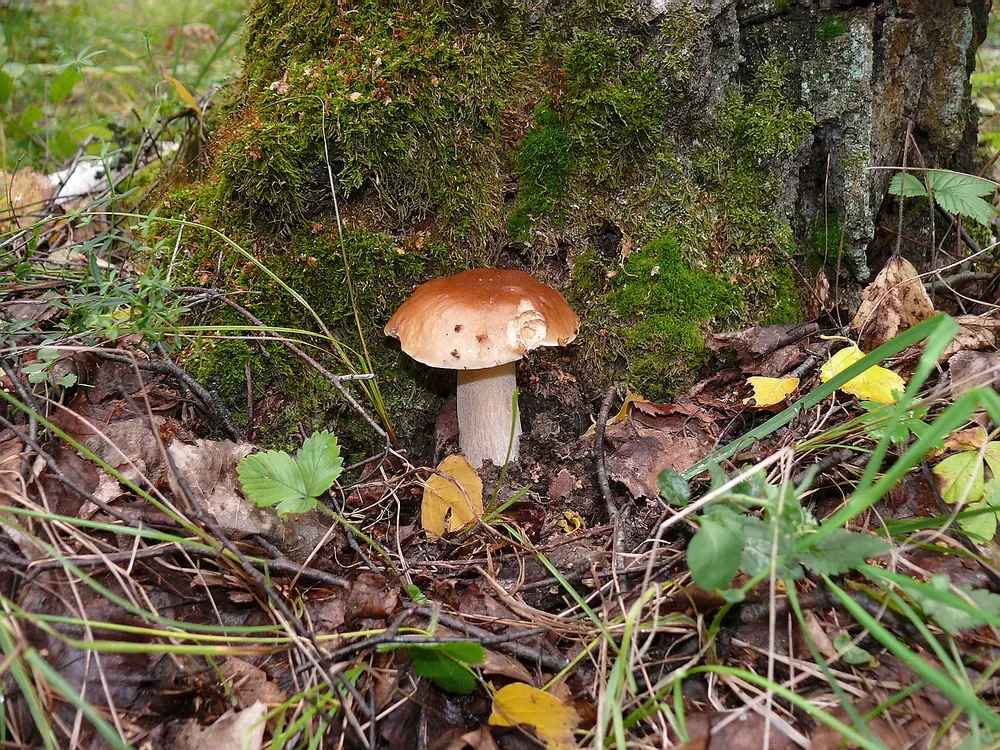
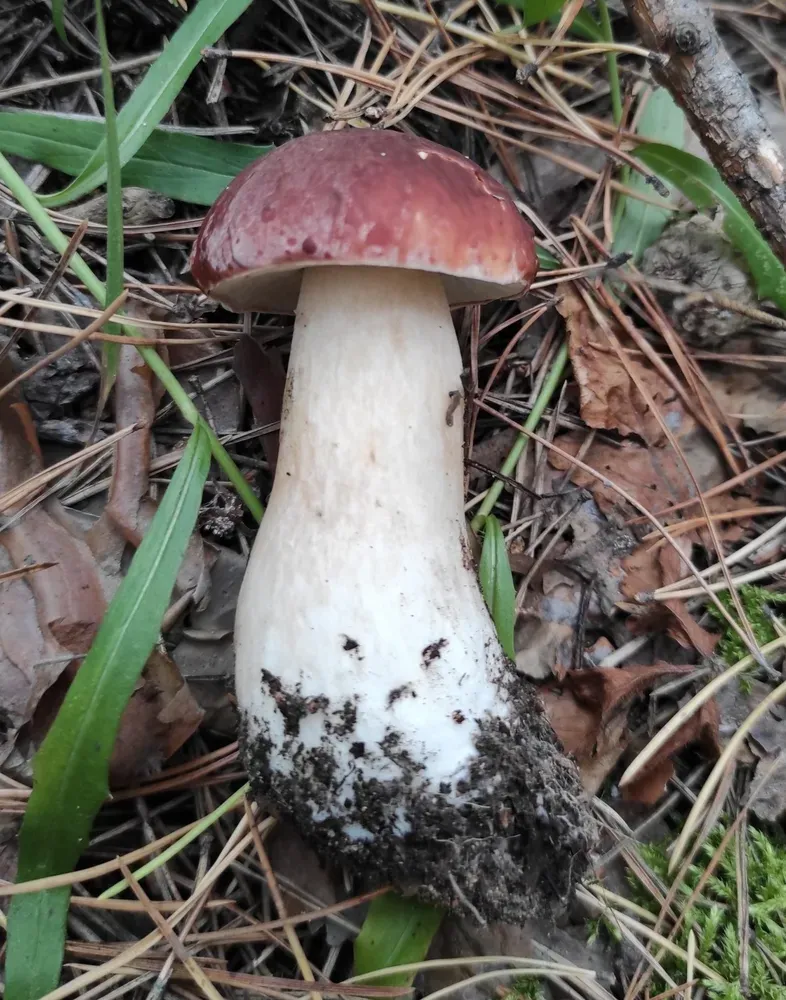
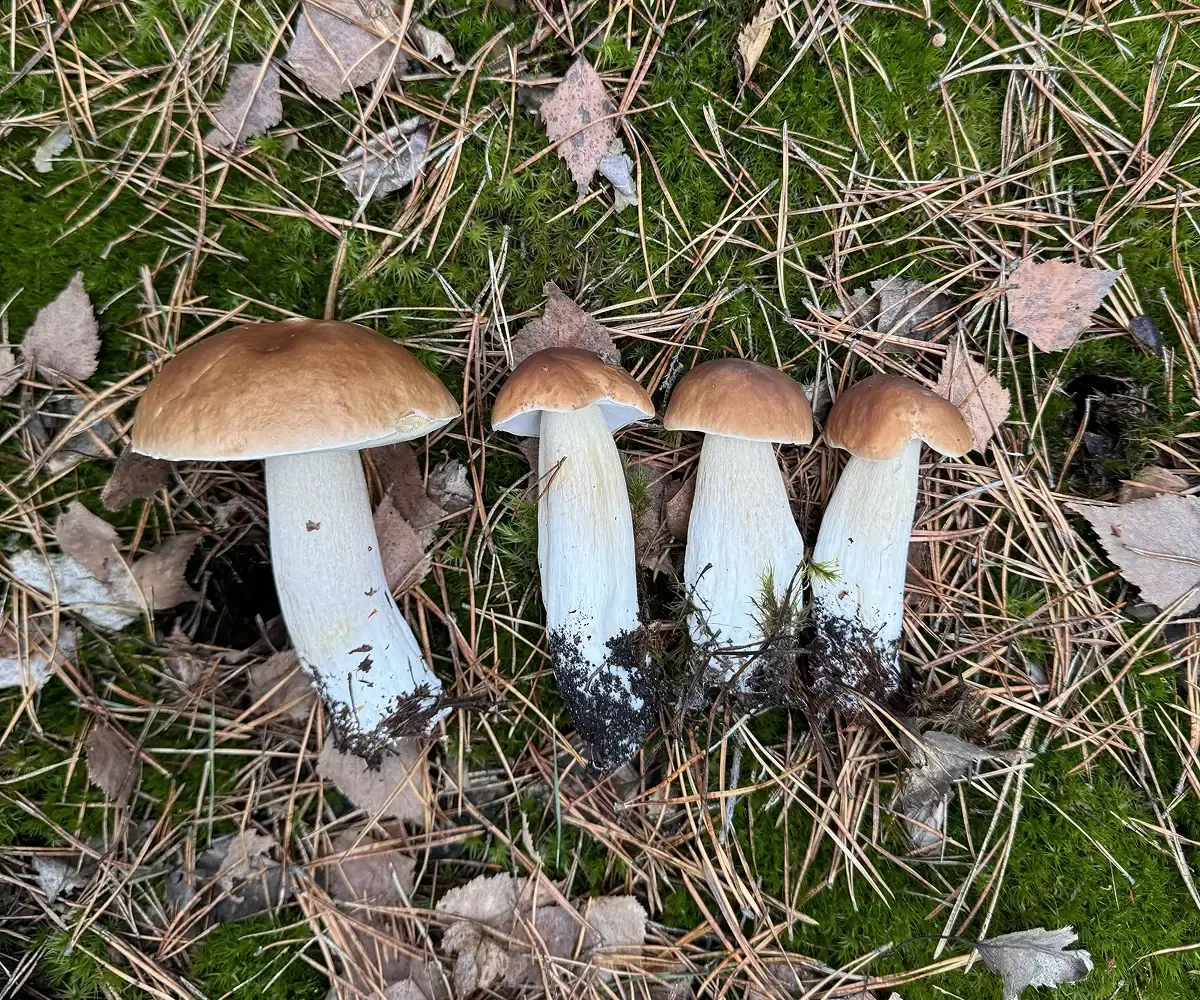
Mushrooms of the same genus and habitat — to study side by side and never mix up.
Frequently asked questions
Is it safe that the flesh turns black?
Yes. Intense darkening when cut is a characteristic trait of the species, not a sign of toxicity. It's the oxidation of the pigment crocipodin. When cooked, the color settles to dark gray or violet-gray — that's normal, and the mushroom stays edible.
Can it be confused with the bitter bolete?
The bitter bolete (Tylopilus felleus) has a dark net pattern on the stem (not scales), and its flesh turns pinkish when cut rather than black. Besides, the bitter bolete has an unbearably bitter taste — tasting a crumb will settle the question.
Where to look in Ukraine?
Oak and oak-beech forests of Zakarpattia, the Carpathian foothills, the Western Forest-Steppe, mountainous Crimea. It loves warm forest edges, limestone soils, south-facing slopes. It doesn't occur in the northern regions or the steppe.
When does it fruit?
June — October, peaking in July–September after heavy rains. It loves warm, moderately damp spells. In very dry or cold years it's rare.
How does it differ from the classic brown birch bolete?
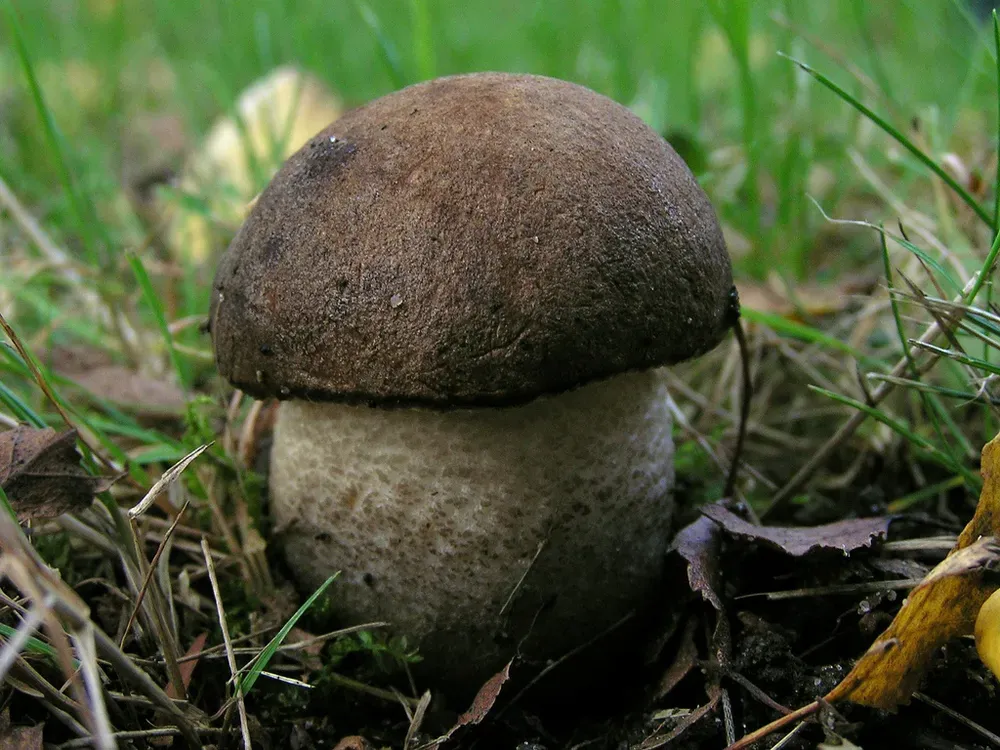
The classic brown birch bolete (Leccinum scabrum) has a gray-brown cap, and its flesh doesn't change color when cut (or turns slightly pink in the stem). The saffron bolete has a yellow-brown cap and bright yellow flesh that quickly darkens to black. That's the telltale sign.
Which trees does it form mycorrhiza with?
Mainly with oak (Quercus robur, Q. petraea), less often with chestnut (Castanea sativa) in Zakarpattia, beech, and hornbeam. It doesn't occur in coniferous forests.
How to cook it?
You can parboil it for 5–10 min first and drain the first water — this reduces the intense darkening in the pot. Then fry with onions, stew with vegetables, or add to soups. You can pickle it, but the jar will be dark. You can dry it — dried, it's much darker than the classic brown birch bolete.
How fast does the flesh darken?
Very fast: the initial yellowing comes after 10–15 seconds, gray-violet after 1–2 minutes, almost black after 5–10 minutes. If your "yellow mushroom" blackens SLOWLY, it's a different species — worth double-checking.
Is Saffron bolete edible or poisonous?
Does Saffron bolete have gills or pores?
What does the cap of Saffron bolete look like?
What does the stem of Saffron bolete look like?
Sources
- [1]Вікіпедія (українська)
- [2]Атлас грибів України, Зеров Д.К. (1979)
- [3]MycoBank Database
- [4]Index Fungorum
- [5]GBIF
- [6]iNaturalist Ukraine